
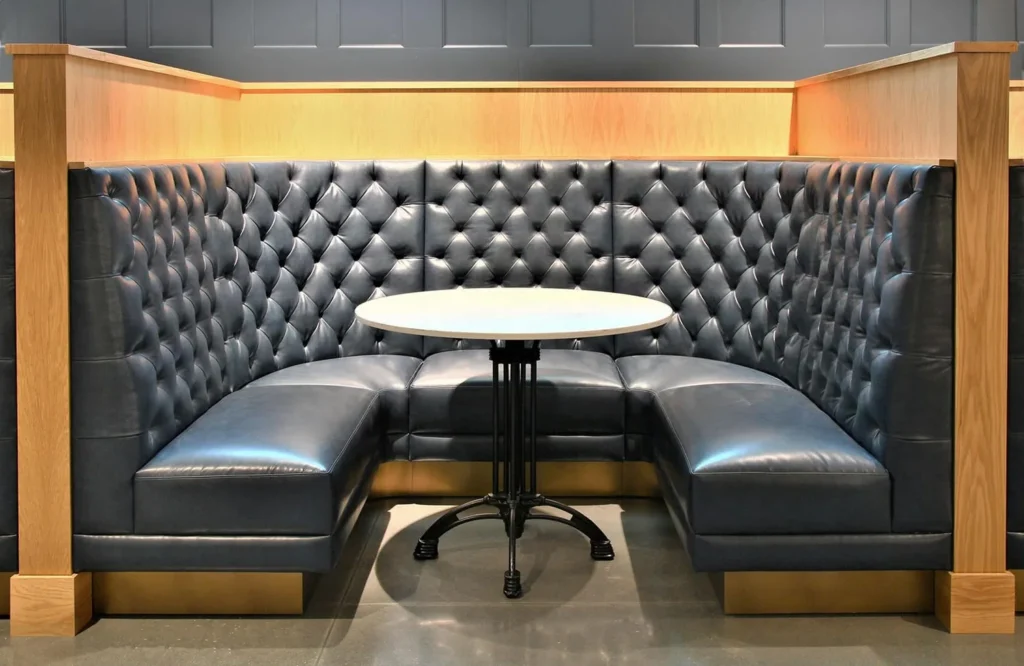
This banquette seating dimensions guide is written for restaurant, cafe, hotel F&B and commercial project buyers who need practical seat height, seat depth, back height, table distance and aisle clearance decisions before quotation. The right banquette is not only attractive. It affects comfort, seat count, service flow, cleaning and whether the dining area needs costly rework after installation.
Send your restaurant floor plan, table size and expected seat count to get banquette seating dimension suggestions. For related sourcing, review restaurant banquette seating project support, restaurant chair and booth seating support, restaurant furniture reference photos and send your restaurant floor plan.
Send your restaurant floor plan, table size and expected seat count to get banquette seating dimension suggestions.
What is banquette seating?
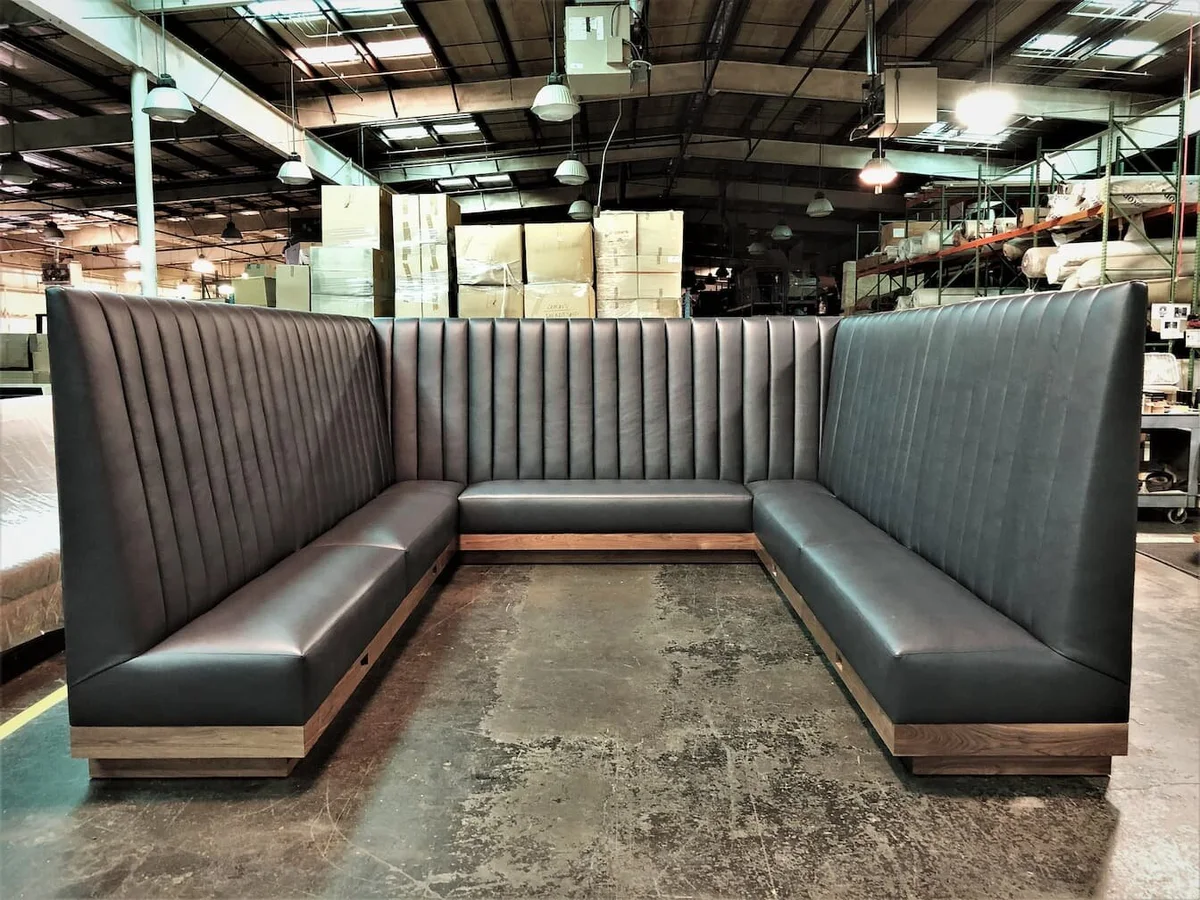
Banquette seating is fixed or semi-fixed bench seating used along walls, corners or booth layouts in restaurants, cafes, hotels and commercial dining areas. It may be straight, L-shaped, U-shaped, back-to-back, wall-mounted or paired with loose chairs on the opposite side of the table.
For B2B buyers, banquette seating is a project product. It must match the floor plan, table size, expected seat count, upholstery requirement, cleaning routine and commercial use conditions. A beautiful banquette that is too deep, too low or too close to the table can reduce comfort and turnover.
Why dimensions matter for restaurant banquette seating
Dimensions decide how people sit, how staff serve and how efficiently the restaurant uses space. Seat depth that is too shallow feels uncomfortable. Seat depth that is too deep wastes space and makes dining posture awkward. A back that is too low can look unfinished; a back that is too high can make a compact cafe feel heavy.
Table distance and aisle clearance are just as important as the banquette itself. If the table is too close, guests cannot sit comfortably. If aisles are too narrow, service flow suffers. Project buyers should check banquette dimensions together with table layout, chair width and circulation.
Standard banquette seating dimensions
| Dimension Item | Common Range | Why It Matters | Buyer Notes |
|---|---|---|---|
| Seat height | About 17 to 19 in / 430 to 480 mm | Affects dining posture and table comfort | Confirm with finished cushion thickness and table height |
| Seat depth | About 18 to 24 in / 460 to 610 mm | Controls comfort and space efficiency | Use shallower depth for quick dining and deeper depth for lounge dining |
| Back height | About 36 to 48 in / 915 to 1220 mm overall, project dependent | Controls comfort, privacy and room proportion | Check sight lines and wall treatment |
| Back angle | Slight recline where suitable | Improves comfort without wasting space | Confirm with restaurant concept and table distance |
| Table distance | Enough clearance for guest entry and dining posture | Prevents cramped seating | Review with actual table base and top size |
| Aisle clearance | Project and local requirement dependent | Affects staff movement and guest circulation | Confirm with the local designer or code consultant |
| Seat width per person | Often planned around 20 to 24 in / 510 to 610 mm | Controls realistic seat count | Do not overstate capacity in the quotation brief |
Seat height, seat depth and back height guide
Seat height should match the dining table and cushion compression. If the cushion is thick and soft, the finished sitting height may be lower than the measured product height after use. Seat depth should match the dining style. Fast casual restaurants usually need efficient upright seating, while hotel lounges and long-stay cafes may accept deeper seating.
Back height should match the interior. Low backs keep the space open. Medium backs work for most dining projects. High backs create privacy and stronger booth identity, but they can reduce visibility and make the dining room feel smaller.
Banquette seating types
Straight banquette
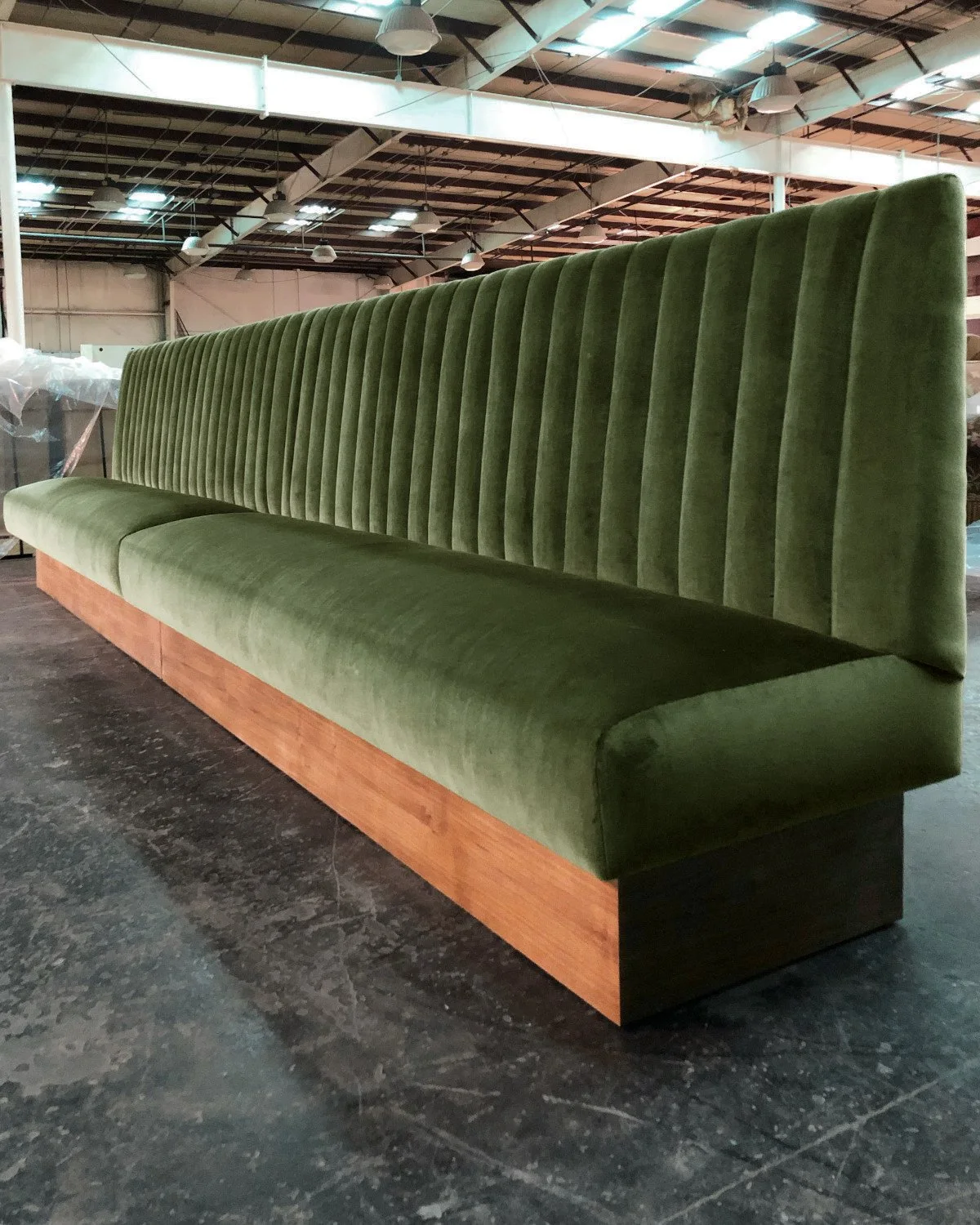
A straight banquette runs along one wall and is efficient for cafes, breakfast areas and narrow restaurants. Buyers must confirm wall length, seat count and table spacing.
L-shaped banquette
An L-shaped banquette uses a corner and creates a stronger dining zone. The corner seat, table base and guest entry path need careful review.
U-shaped banquette
A U-shaped banquette creates a private booth feeling and high seat count, but it requires enough inner space and practical table access.
Booth seating
Booth seating can be single, double, wall-side or back-to-back. It is common in restaurants that need durable seating and repeatable layouts.
Wall-mounted bench seating
Wall-mounted bench seating can save space and create a clean look. It needs strong fixing details and clear wall condition information.
Banquette seating dimensions comparison table
| Banquette Type | Best For | Typical Dimension Focus | Advantages | B2B Buying Notes |
|---|---|---|---|---|
| Straight banquette seating | Wall-side dining and cafes | Wall length, seat depth and table spacing | Efficient and simple to repeat | Confirm wall length and table count |
| L-shaped banquette seating | Corners and small private dining areas | Corner module and return length | Uses corners effectively | Check corner access and table base |
| U-shaped banquette seating | Booth-style dining and VIP areas | Inner opening, back height and table access | High comfort and privacy | Avoid making guest entry too tight |
| Restaurant booth seating | Repeatable restaurant layouts | Booth width, back height and table distance | Durable and familiar for guests | Confirm single or double booth configuration |
| Wall-mounted bench seating | Narrow spaces and clean modern cafes | Wall fixing, seat depth and base detail | Saves floor space | Check wall structure and local installation requirements |
| Loose bench seating | Flexible dining rooms and event spaces | Bench length, seat height and mobility | Can be moved or replaced more easily | Confirm floor glides, weight and storage needs |
How to match banquette seating with table size
The table should be selected together with the banquette. A wide table may push guests too far from the backrest. A table base in the wrong position can block legs or make entry awkward. Round, square and rectangular tables each change how many people can sit comfortably.
When requesting a quotation, send table size, table height and table base type. If tables are already purchased, photos and measurements are useful. For complete dining area sourcing, see restaurant project furniture and furniture materials and finishes guide.
If you are not sure whether straight, L-shaped or booth seating fits your space, send your wall length and table layout for practical advice.
Upholstery and frame details for commercial restaurants
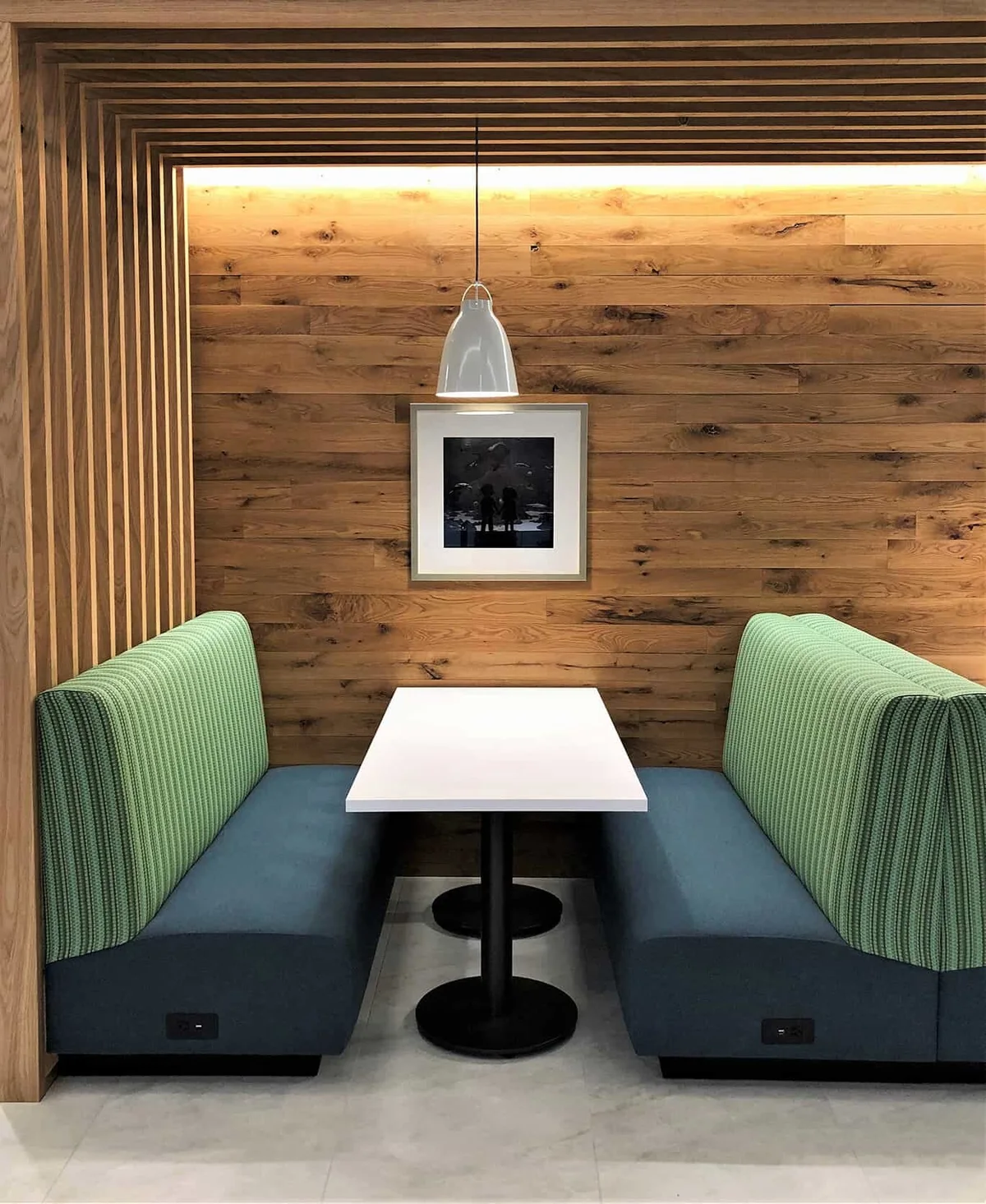
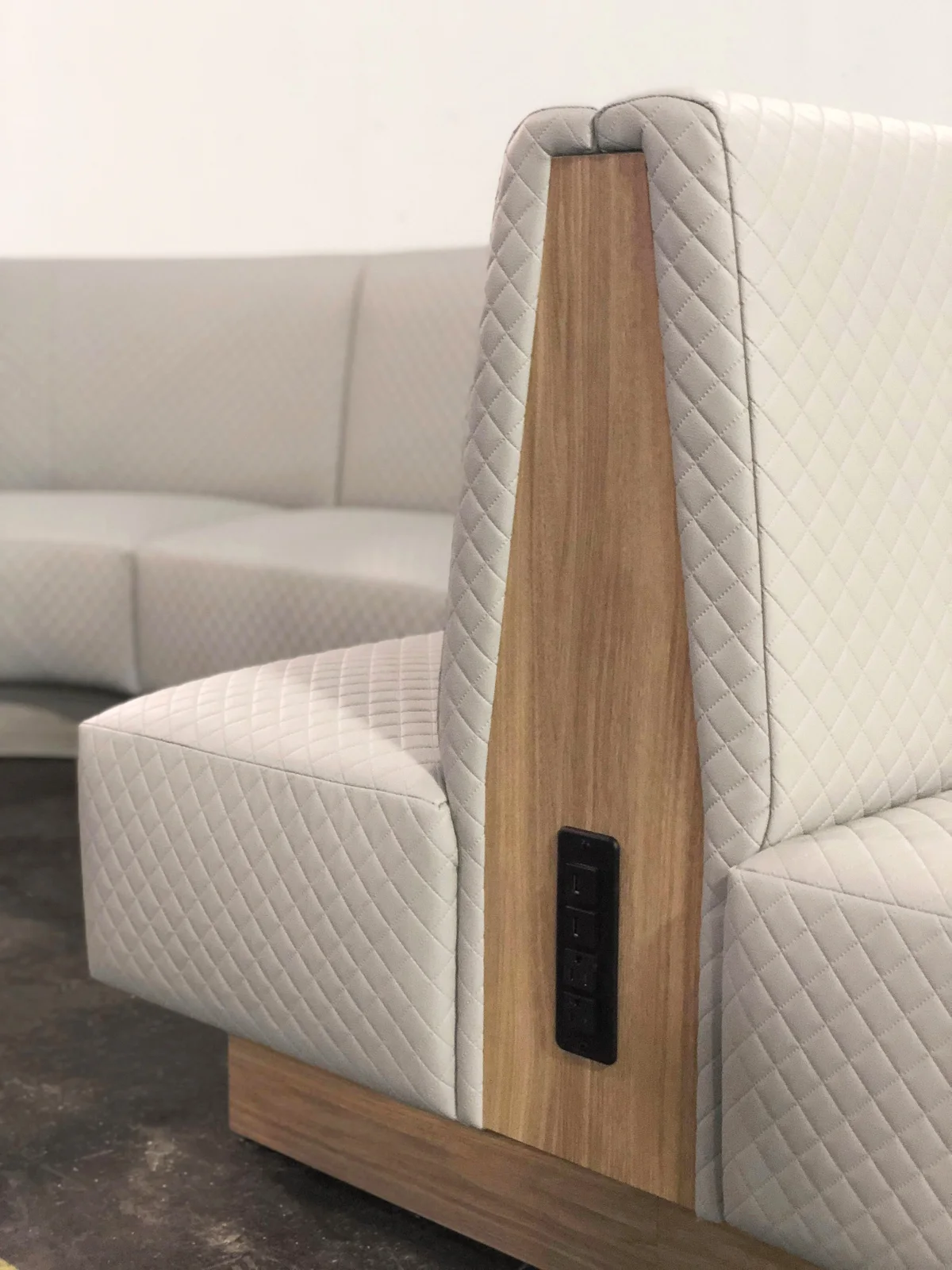
Restaurant banquettes need materials that match the dining concept and cleaning routine. PU leather and vinyl-like materials are often chosen for easier wiping. Fabric can work for higher-end dining if cleaning and maintenance are planned. Stitching, channeling, tufting and base details should be selected with food service use in mind.
Frame construction, base finish and floor contact matter because restaurant seating is used every day. If the project has fire or commercial use requirements, confirm the local requirements with the project team before final material approval. Do not assume one material automatically satisfies every market or building requirement.
Common mistakes in banquette seating projects
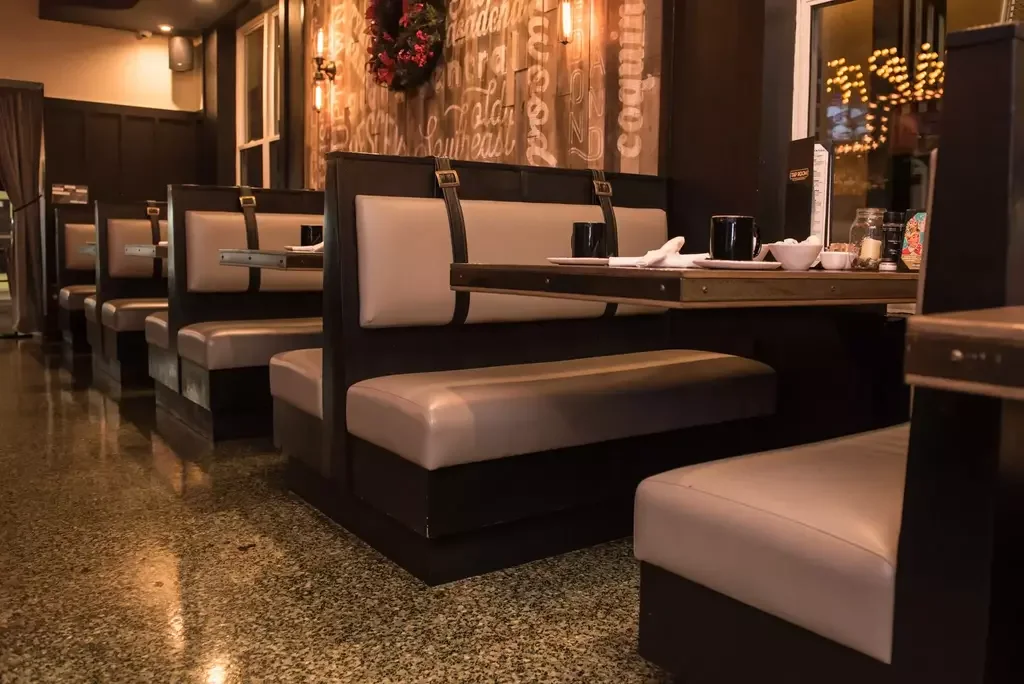
The first mistake is choosing by appearance without checking dimensions. Another is planning too many seats on paper without allowing realistic seat width per person. A third mistake is ignoring the table base, which can make entry and leg comfort poor even when the banquette itself is well made.
Buyers also forget cleaning access. Crumb gaps, deep seams and hard-to-reach bases can slow down daily operations. For multi-location restaurants, record the approved dimensions, upholstery, base finish and drawings so repeat orders stay consistent.
Buyer checklist before quotation
| Checklist Item | What to Prepare | Why It Matters |
|---|---|---|
| Restaurant floor plan | Marked dining layout | Shows banquette position and aisles |
| Wall length | Available wall or corner length | Controls straight or L-shaped length |
| Table size | Top size, height and base type | Confirms guest comfort |
| Expected seat count | Seat target by zone | Prevents unrealistic capacity |
| Seat height | Finished seat height | Matches table height |
| Seat depth | Target dining or lounge depth | Controls comfort and space use |
| Back height | Low, medium or high back | Controls privacy and proportion |
| Upholstery material | PU, vinyl-like, fabric or leather-look reference | Affects cleaning and durability |
| Frame material | Wood, metal or project requirement | Affects strength and base design |
| Cleaning requirement | Daily cleaning method | Protects restaurant operation |
| Fire / commercial use requirement if applicable | Local project requirement from designer or code consultant | Helps select material options without assuming certification |
| Color reference | Swatch or finish photo | Keeps batches consistent |
| Restaurant style | Cafe, casual, fine dining, hotel or chain | Guides design direction |
| Quantity | Quantity by wall, booth or location | Supports production planning |
| Reference photos | Style, detail and layout references | Clarifies expectations |
CTA section
For a custom booth seating quotation, send the floor plan, wall length, table size, expected seat count, upholstery requirement and reference photos. HUAXUAN can review the banquette dimensions before quotation so the layout is more practical.
Send your restaurant layout, style reference, upholstery requirement and quantity to request a banquette seating quotation from HUAXUAN.
FAQ
What is the most important banquette seating dimension?
Seat height, seat depth, back height, table distance and aisle clearance all work together. Do not confirm one dimension without checking the table and layout.
How deep should restaurant banquette seating be?
Many dining banquettes use a practical seat depth around 18 to 24 inches, but the final choice depends on dining style, cushion design and available space.
What is the difference between banquette seating and booth seating?
Banquette seating often refers to bench seating along walls or custom layouts, while booth seating usually refers to paired or enclosed dining units with tables.
Can HUAXUAN customize banquette size and upholstery?
HUAXUAN can review custom length, seat depth, back height, upholstery, base finish, quantity and restaurant layout before quotation.
Should I confirm local fire or commercial requirements?
Yes. If your project has fire or commercial use requirements, confirm them with the local project team before selecting upholstery and production details.
Send Your Restaurant Seating Layout
Good banquette seating starts with dimensions, not only style. Send your restaurant layout, style reference, upholstery requirement and quantity to request a banquette seating quotation from HUAXUAN.