Sourcing Sofa Beds?
Browse HUAXUAN sofa bed references or send a model code, quantity and destination for quotation review.
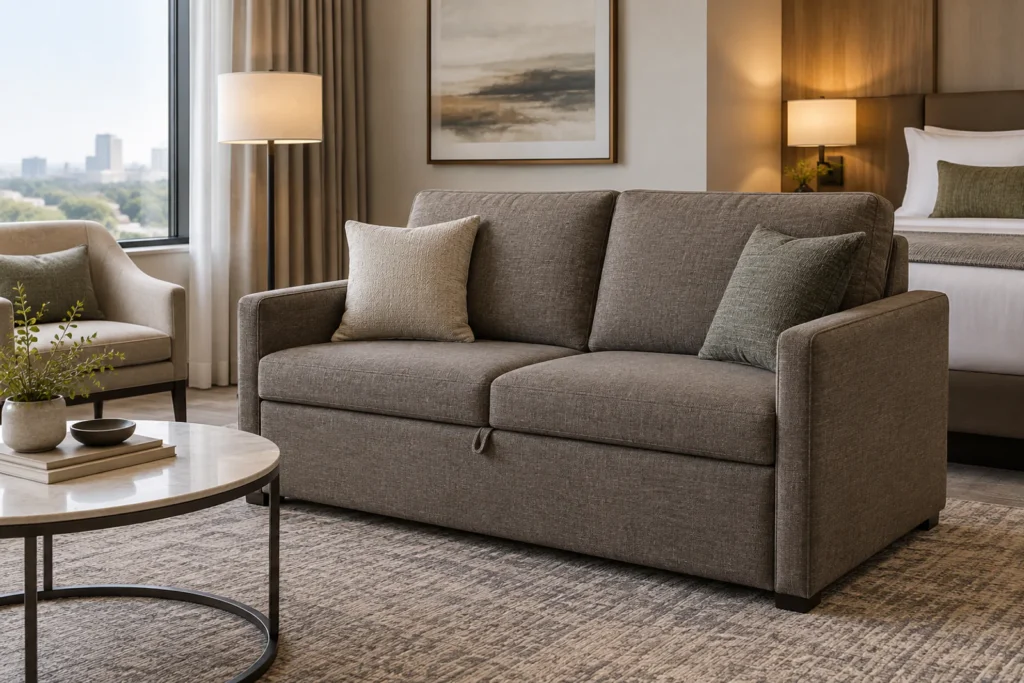
A 3 in 1 sofa bed can give furniture wholesalers, retailers and brands one standard SKU that sits, lounges and sleeps. That proposition is attractive for studios, student accommodation, guest rooms and online furniture collections, but a product is only repeatable when all three modes work together. Buyers should define the mode sequence, closed and open dimensions, target users, packaging route and sample checks before asking for a price. A 3-in-1 sofa bed is not one fixed mechanism: its three functions may be created by an adjustable back, pull-out deck, folding cushions, extension platform or a combination of these parts.
What Is a 3-in-1 Sofa Bed?
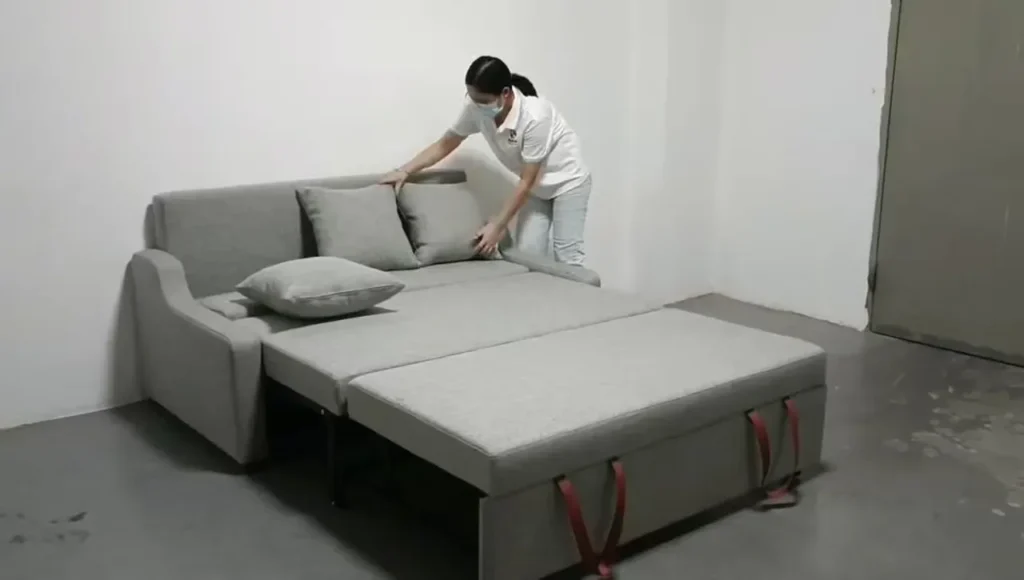
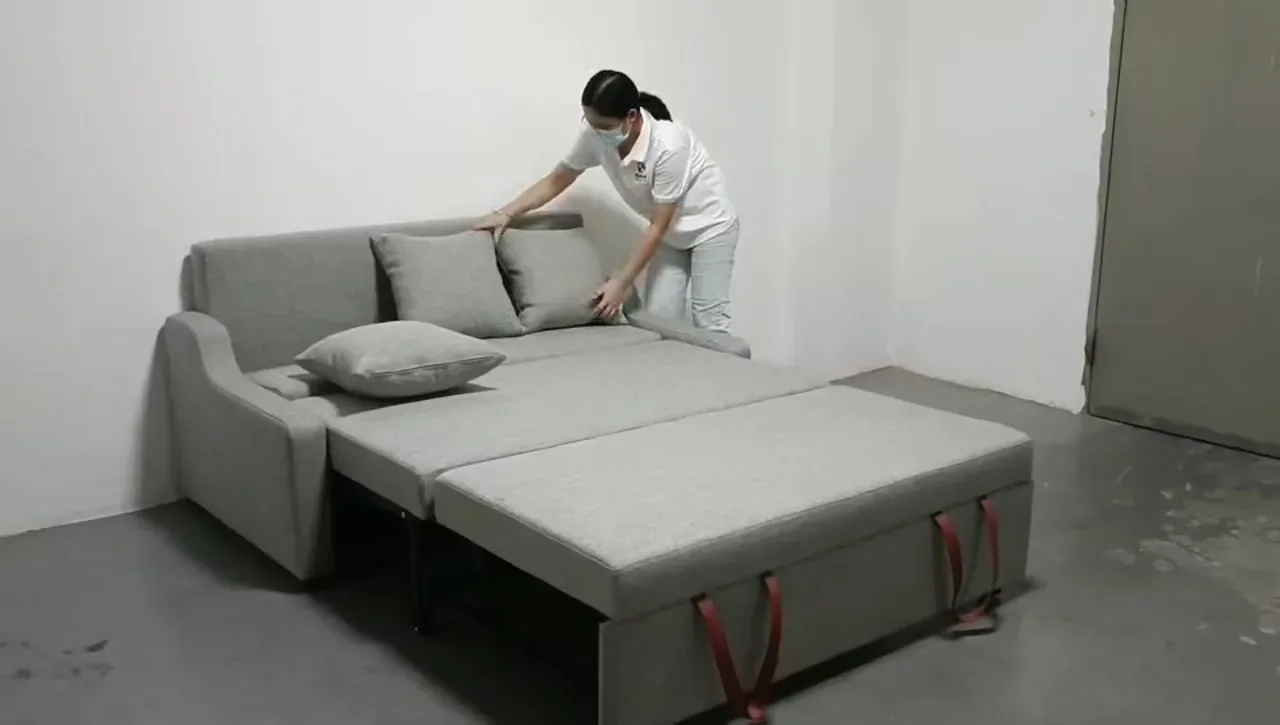
In procurement language, a 3-in-1 sofa bed is a convertible seating product with three intended states, commonly sofa or chair mode, recliner or lounge mode, and bed mode. The exact geometry is model-specific. One product may slide a lower platform forward, another may lower a ratchet back, and another may unfold upholstered panels. Buyers should avoid treating the name as a specification. Drawings and sample videos must show every approved state, the transition between them and the support points that carry the load in each state.
Common 3-in-1 Sofa Bed Formats
| Format | Three-Mode Direction | Typical Market | SKU Development Note |
|---|---|---|---|
| Single sleeper chair | One-person seating, lounge and sleep footprint | Compact retail, dormitory and home-office use | Often one carton or a compact split pack; confirm access and assembly |
| Convertible loveseat | Two-seat sofa with lounge and bed states | Studios, small apartments and entry-level retail | Confirm usable bed width and whether both seats support the open mode |
| Pull-out loveseat | Hidden front deck plus sofa position | Guest rooms and apartment suppliers | More internal parts; specify cushion handling and front clearance |
| Adjustable-back sofa | Backrest changes from upright to lounge or flat | Space-conscious online retail | Check rear movement, ratchet locking and flat surface continuity |
| Ottoman-extension sofa bed | Extension joins the main seat to form the bed | Flexible rooms and budget-conscious programs | Check storage, joining alignment and whether the extension is retained |
| Fold-out cushion sofa bed | Cushion panels unfold from a compact sofa | Low-profile and small-space collections | Approve seams, panel height and cover tension in bed mode |
These formats differ in seating capacity, usable sleep width, packaging volume and retail story. A sleeper chair can be a compact, single-user product; a loveseat format may be positioned for couples or extra guests; and an adjustable-back design may have a faster lounge transition but less independent mattress space. The right selection begins with the customer group, not a category label. Review the existing sofa bed range and identify a product direction before setting a target carton or retail price.
How the Three Modes Work
Sitting mode
Sitting mode is the daily visual and comfort test. Confirm seat height, usable seat depth, front-edge support, back angle and arm position. If a lower deck is stored below the seat, it must not rattle or reduce stability. For a chair recliner bed direction, the customer should be able to understand which parts remain fixed and which parts move without removing unnecessary cushions.
Lounging or reclining mode
Lounge mode usually comes from an adjustable ratchet back, a partial pull-out extension or a folded cushion panel. The back must lock at the intended angle, the floor contact must stay stable and upholstery must clear the moving points. This is the extra use state that differentiates a 3-in-1 product from a basic sofa-and-bed conversion, so it should be demonstrated in the product photography and approved on the physical sample.
Sleeping mode
Bed mode combines the deck, hidden legs, panels or cushions into the longest supported surface. Confirm where the head and foot rest, whether joints create gaps and whether the open product moves under normal use. The broad sofa bed mattress guide covers mattress-system compatibility; this article keeps the focus on turning the complete three-mode product into a dependable SKU.
| Mode | Main Product State | Buyer Approval Focus |
|---|---|---|
| Sofa or chair | Closed seating envelope | Seat comfort, visual proportion, stability and stored-part noise |
| Lounge or recliner | Partially extended or adjustable back | Back lock, floor contact, upholstery clearance and usable relaxation angle |
| Bed | Fully opened deck, cushions or panels | Sleeping surface, hidden legs, support continuity and room clearance |
Mechanism Structures That Serve Three Modes
A 3-in-1 format may use a pull-out lower frame, adjustable ratchet backrest, fold-forward back, sliding seat, lift-up trundle, fold-out cushion or hidden legs. These components are not interchangeable. Their purpose is to provide a clear state change: an upright sitting envelope, a supported lounge angle and a stable bed. Confirm the sequence with the mechanism supplier and upholstery team together. The mechanism guide explains wider mechanism families; here the key question is whether the chosen structure makes all three states practical for the target buyer.
Send a reference image, the required three functions and your target quantity to review a viable 3-in-1 sofa bed direction.
3-in-1 Sofa Bed vs Traditional Pull-Out Sleeper
| Comparison | Traditional Pull-Out Sleeper | 3-in-1 Sofa Bed |
|---|---|---|
| Functions | Usually sofa plus independent sleeper | Three stated modes: sofa/chair, lounge/recline and bed |
| Sleep surface | Often separate folded mattress or deck | May use a pull-out deck, panels or integrated cushions |
| Closed footprint | Can resemble a conventional sofa | Often designed around compact daytime use |
| Packaging | Depends on frame and mattress cavity | Can be optimized through detachable parts and defined hardware packs |
| Retail positioning | Guest-sleeping or sofa-first | Multifunctional small-space SKU with a clear mode story |
3-in-1 Sofa Bed vs Click-Clack Sofa Bed
| Factor | Click-Clack Direction | 3-in-1 Development Direction |
|---|---|---|
| Independent pull-out platform | Common in some models | May be absent; seat/back panels can form the bed |
| Lounge state | Not necessarily included | Usually a core part of the three-mode proposition |
| Sleeping surface | Separate mattress or deck in many formats | Integrated panels or a pulled-out lower deck vary by design |
| Product thickness | Set by sofa cavity and folded sleeper | Set by cushions, extension or backrest architecture |
| Cost and packing | More components can add complexity | Simple formats may pack efficiently, but actual design decides |
The comparison should not be used to promise that one format is always cheaper, thinner or more comfortable. A click-clack can be a valid three-mode direction if its backrest has an approved lounge position and the flat surface is acceptable. A pull-out loveseat sofa bed may create a more separated bed deck but needs more stored components. Choose by the expected user, room clearance, assembly route and retail brief, then request the exact open, reclined and closed dimensions.
Best Applications and Dimension Checks
Small apartments, studios, student accommodation, home offices, guest rooms, serviced apartments, online retail and rental-property supply all value multifunctional furniture, but they do not need the same package. Buyers should confirm closed width, closed depth, overall height, seat height, usable seat depth, reclined depth, fully open length, sleeping width, sleeping height and front clearance. Do not substitute a nominal bed size for these measurements. Use the sofa bed dimensions guide for the planning method, then attach the exact model drawing to the RFQ.
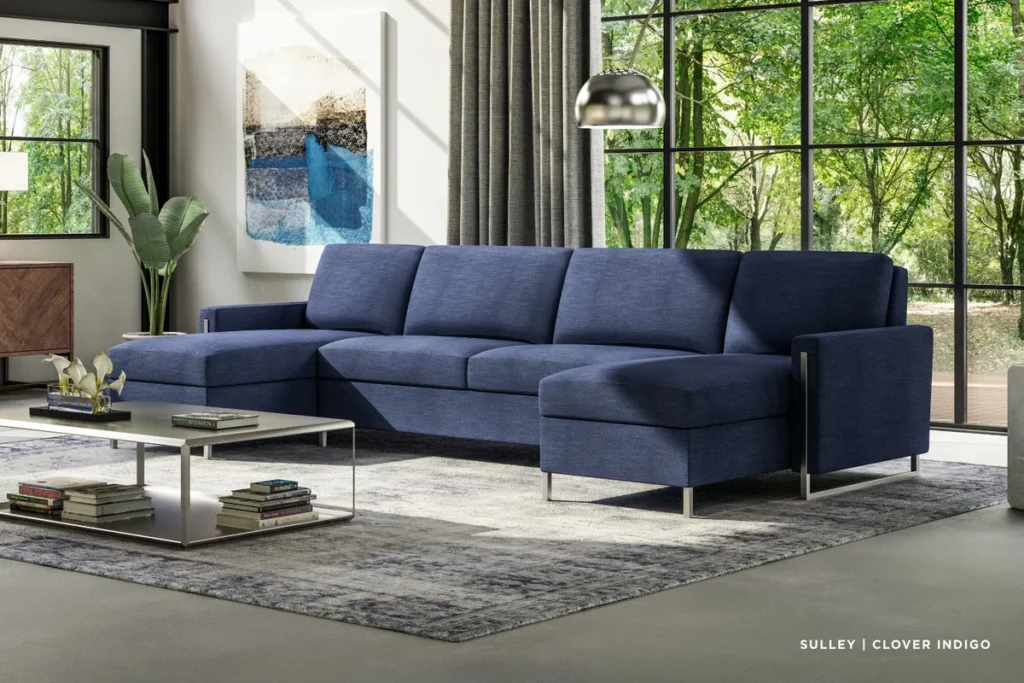
Related Sofa Bed Models
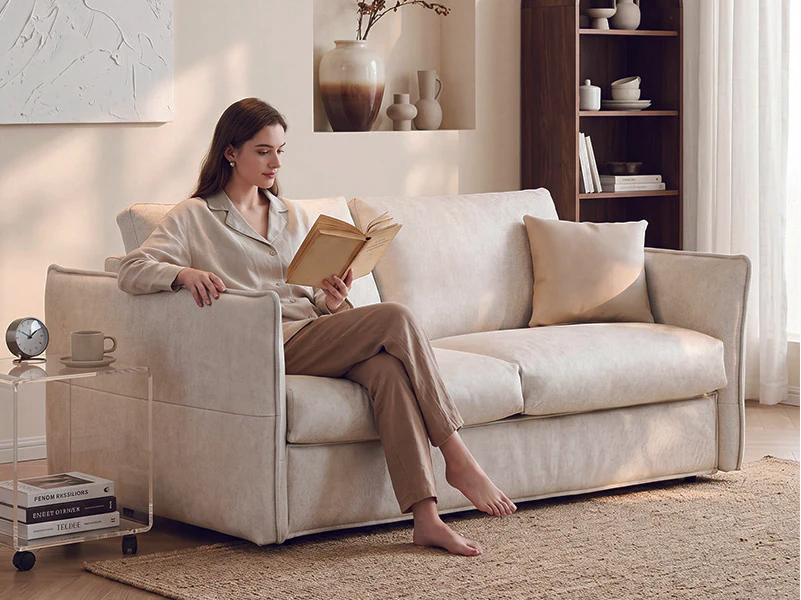
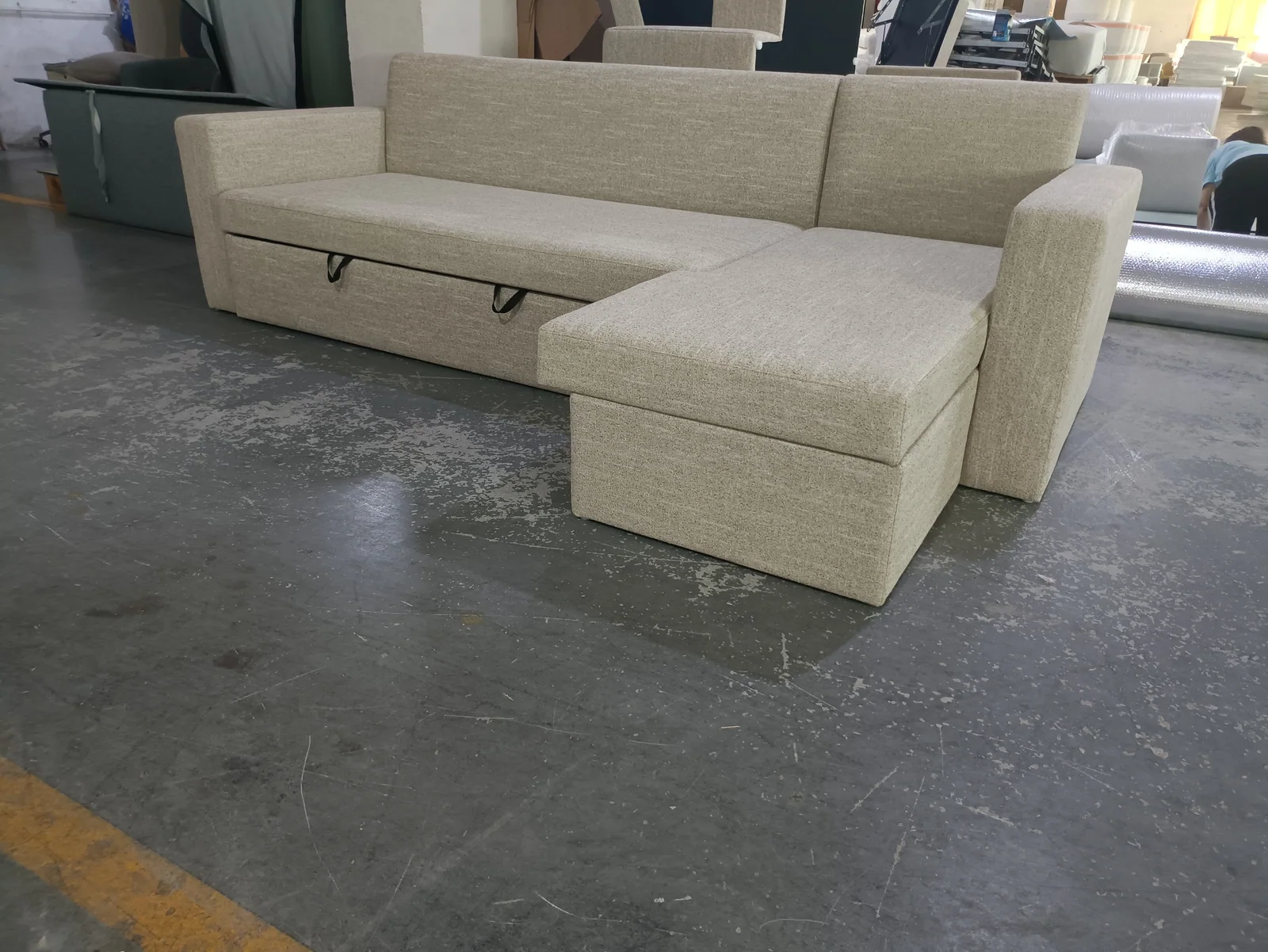
Compare these references alongside the guide. Confirm the selected configuration before ordering.
Comfort Across Sitting, Lounging and Sleeping
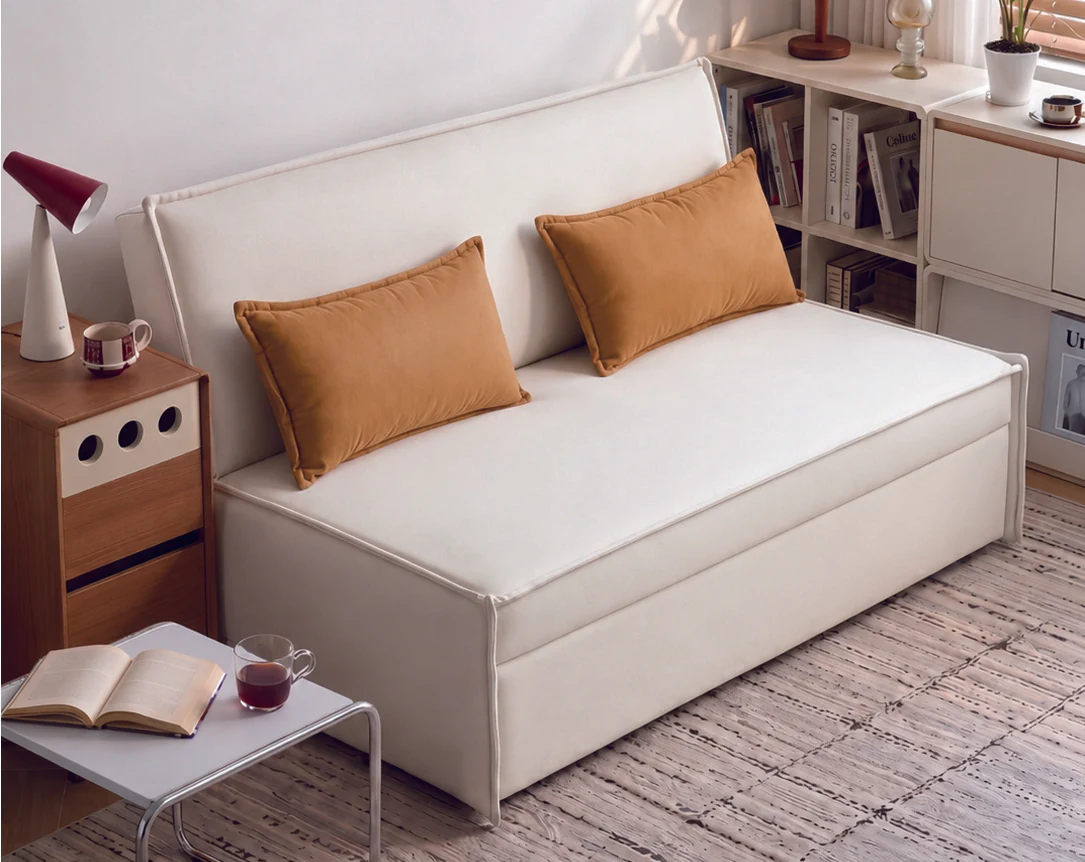
A three-mode product needs different comfort checks in each state. Seat foam and back cushions govern daytime comfort; the lounge position needs stable back support without pressure at the hinge; and the sleeping surface needs level transitions, acceptable firmness and consistent support. Buyers should lie across the center and outer sections, not only sit briefly on the closed sofa. Gaps, support bars, loose cushions and unsupported head or foot areas should be visible in the sample review. Occasional guest sleeping and frequent sleeping should be stated separately in the specification.
Frame, Mechanism, Upholstery and Optional Features
Inspect wood or metal frame members, connection points, sliding rails, ratchets, hidden support legs, welding, fasteners, noise and repeatable movement. Upholstery selection should also match the retail plan: cleaning method, shade consistency, pilling expectation, seat/back/sleep foam direction, zippers and stitching all affect the finished SKU. Storage pockets, removable covers, USB ports, cup holders, side pockets, headrests, detachable arms, private-label tags and custom cartons are possible options only when the selected model and confirmed supply capability support them. They should be quoted as options, not assumed features.
E-Commerce Product Development for a Repeatable SKU
For online furniture retail, product development extends beyond the sofa itself. Standardize one product code, approved closed/open/reclined dimensions, fabric code, leg set, hardware bag and carton configuration. Decide whether the product ships in one carton or multiple cartons, how much assembly the customer performs and which parts are most likely to be damaged or lost. Product photography should show all three modes, while a short opening video shows the actual sequence. A listing that hides the open footprint or number of assembly steps creates return risk even when the sofa bed is structurally sound.
- Freeze the approved dimensions, fabrics, labels and product code before bulk production.
- Specify carton size direction, detachable arms, legs or backrest, and a counted hardware bag.
- Include illustrated assembly instructions, barcode placement and carton marks for the target channel.
- Record colour reference and batch-approval method so replenishment is comparable.
- Identify vulnerable parts, replacement components and the route for a retailer to request them.
- Use seated, reclined and bed-mode images plus an opening video in every product-content package.
Flat-Pack and Packaging Considerations
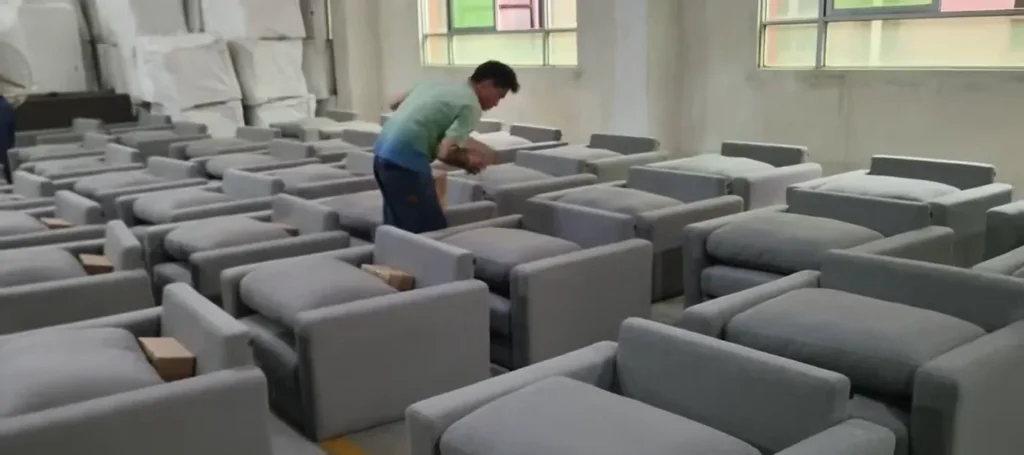
Flat-pack development can lower handling difficulty only if the assembly remains clear. Detachable arms, legs or backrests can reduce carton dimensions, but every added joint needs correct fasteners, instructions and repeatable alignment. Confirm protective corners, internal protection around mechanisms, hardware bags, carton marks and the preferred opening side. Drop and transport risk should be assessed against the actual carton design and product weight distribution. Do not estimate container quantities without a confirmed carton specification.
OEM, Private Label and Sample Approval
OEM and private-label development can address dimensions, fabric, colour, foam, legs, armrests, mechanism direction, labels, packaging, manuals, product codes and carton marks. The first sample should freeze the intended three modes before cosmetic changes are approved. Buyers should open, recline, sleep, close and reopen the sample; check dimensions, backrest locks, pull-out sections, support legs, stability, noise, seating feel, sleep feel, fabric, seams, packaging, accessories and the assembly manual. Record the approved state with images and a signed checklist.
- Sofa, lounge and bed modes operate in the documented sequence.
- Backrest lock, slides, pull handles and hidden legs move without trapping upholstery.
- Closed, reclined and open dimensions match the approved drawing.
- Seat, back and sleeping surfaces are stable, aligned and visually consistent.
- Fabric, stitching, zippers, labels, carton marks and hardware bag match the approved reference.
- A first-time user can follow the supplied instructions without coaching.
Bulk Quality Control and RFQ Information
Bulk quality-control checklist
- Compare frame, mechanism, dimensions, fabric shade, foam, stitching, hardware and legs with the approved sample.
- Open, recline, sleep and close the product; check support legs, locks, movement, noise and surface alignment.
- Confirm packaging, labels, carton marks, accessories and the counted hardware bag before release.
RFQ checklist
- Reference image and the required sofa, lounge and bed functions.
- Target dimensions, quantity per model, target market, fabric and colour direction.
- Packaging, private-label, destination, trade-term and required-delivery requirements.
Bulk quality control should compare every production unit with the approved sample: frame, mechanism, dimensions, fabric shade, foam, stitching, hardware, legs, opening action, lounge lock, sleeping surface, packaging, labels, carton marks and accessories. For a quotation, provide a reference image, three required functions, target dimensions, quantity per model, target market, fabric and colour direction, packaging and private-label requirement, destination country or port, trade term and required delivery date. The quality-control process and OEM/ODM page explain the supporting workflow.
For one-model bulk orders or a small number of repeatable SKUs, send your functions, dimensions, fabric direction and custom-packaging brief.
Before the first production order, build a single source of truth for the SKU: approved drawing, three-mode photo set, mechanism description, fabric reference, foam direction, carton artwork, manual, spare-part list and inspection record. This file is as important as the sample because brands, retailers and replacement buyers may revisit the product after a season or a new shipment. It helps prevent a later order from quietly changing the arm, support leg, pack configuration or operating sequence that made the original product workable.
Share your reference product and sales-channel requirements to prepare a sample, packing and reorder specification before bulk production.
FAQ
What does 3-in-1 mean in a sofa bed?
It normally describes three intended states: sofa or chair, lounge or recliner, and bed. The mechanism varies by model, so buyers should confirm the actual operating sequence and supported surface rather than assuming every 3-in-1 product works the same way.
Is a 3-in-1 sofa bed suitable for everyday sleeping?
That depends on the exact deck, mattress or cushion system, frame and expected usage. State the planned sleeping frequency and approve the complete sample in all modes; a 3-in-1 label alone does not define daily-sleep performance.
Can the size be customized?
Dimensions may be developed for a project or private-label brief when the product architecture supports it. Changes can affect the mechanism, carton and seating/sleeping balance, so they should be checked through drawings and sample approval.
Can a 3-in-1 sofa bed be flat-packed?
Some designs can use detachable parts or a defined hardware pack to improve packing, but the answer depends on the frame and mechanism. Confirm the carton design, assembly steps and protection with the quoted model.
What information is required for an OEM quotation?
Send reference images, required modes, closed and open dimensions, quantity, target market, fabric, colour, packaging, private-label details, destination and delivery schedule.
Can buyers add private-label packaging?
Labels, manuals, product codes and carton marks can be discussed as part of a private-label program when the requirements are supplied and approved for the selected model.
How should buyers test the sample?
Test all three modes, the open/close sequence, locks, support legs, dimensions, comfort, fabric and packaging. Include a first-time-user test and retain approved photos or video.
What affects wholesale price?
The complete specification affects price: size, frame, mechanism, foam, fabric, packaging, assembly, quantity, destination requirements and selected options. Compare like-for-like drawings and sample specifications.
Conclusion: Build the 3-in-1 Sofa Bed as a Standard SKU
A successful 3 in 1 sofa bed is not defined by a marketing label; it is a sofa, lounge and bed system that can be produced, packed, sold and replenished consistently. Send HUAXUAN a reference image, required three functions, dimensions, quantity, fabric, packaging requirement, target market and destination port. That lets the team review a suitable product direction for wholesale, private label, OEM and online retail rather than quote an undefined multifunctional sofa bed.
Need Pricing for a Sofa Bed Model?
Send the model code, quantity, required size, upholstery and destination. We can review the selected reference before quotation.