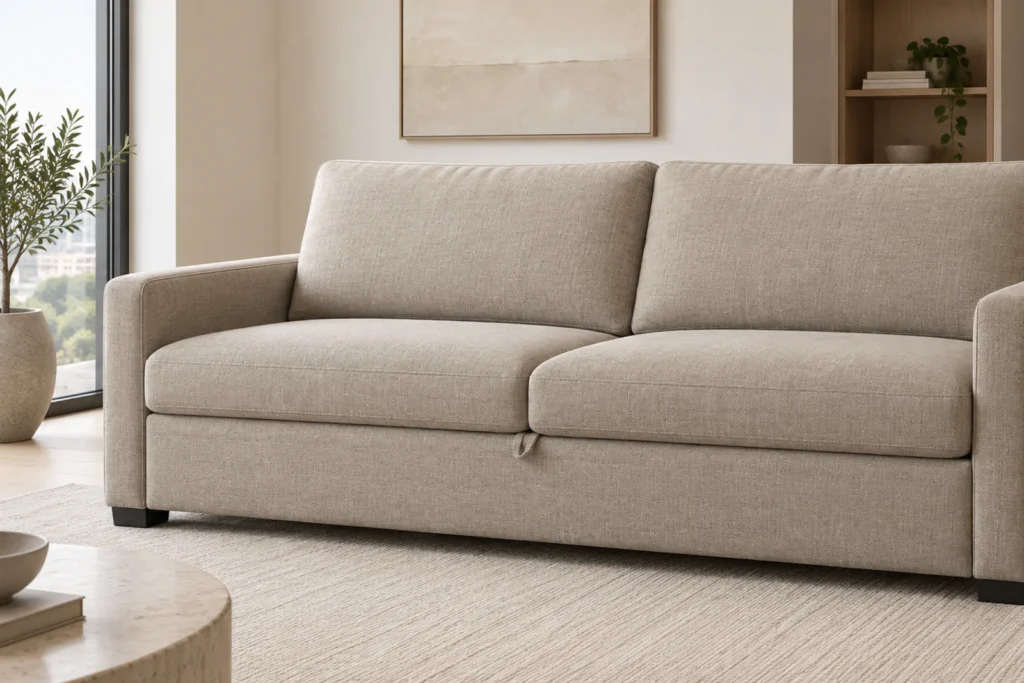

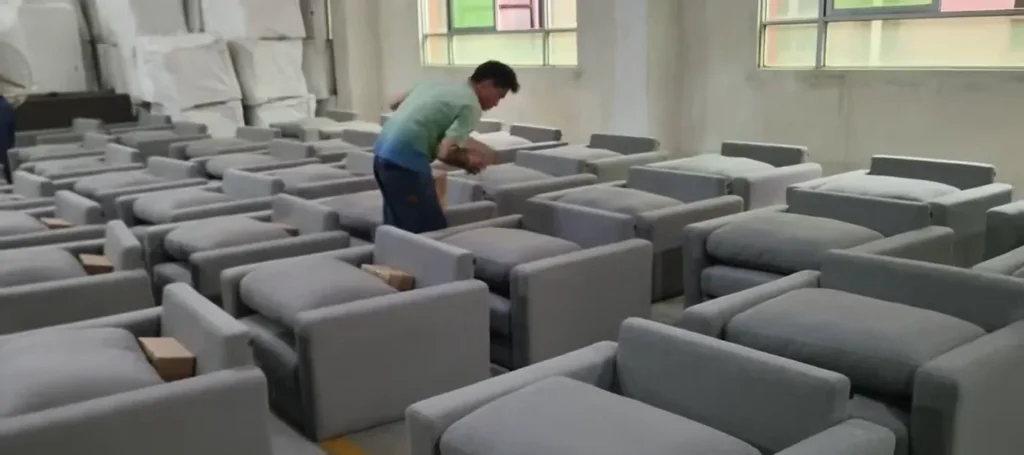
To understand how to check sofa bed quality for a bulk order, inspect the product as a controlled system: approved specification, frame, mechanism, support, comfort, upholstery, dimensions and export pack. Check sampled units in closed sofa mode, throughout transition and in fully opened bed mode. Record defects against the same approved sample and drawings used for production. A showroom sit-test is not enough; importers, hotel buyers and furniture brands need traceable photos, videos, measurements, defect classifications and corrective-action evidence before shipment release.
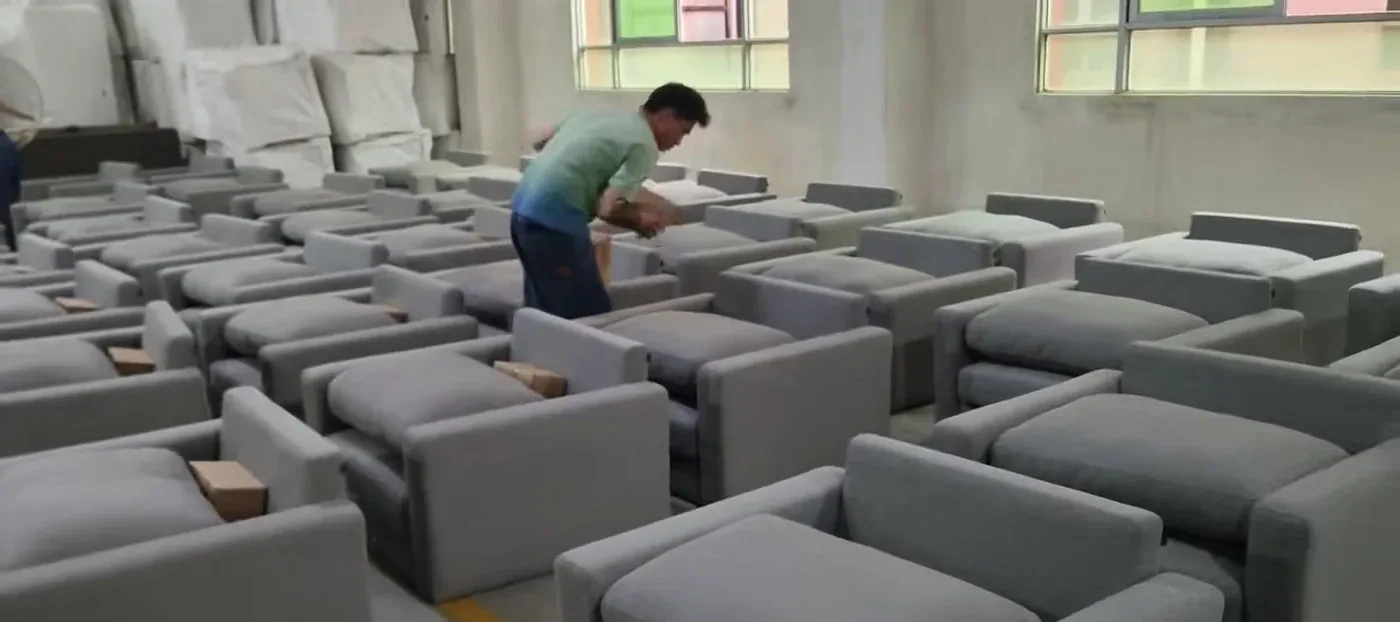
Quick Answer: Freeze the specification, define the inspection stage and sampling plan, operate every sampled unit completely, classify defects using buyer-approved criteria and verify corrections before authorizing shipment.
How to Check Sofa Bed Quality at the Factory
Why similar sofa beds can have very different quality
Two products can share the same fabric colour and outline while using different internal rails, frame joints, support decks, fasteners, foam builds or mechanism attachments. Quality variation can also enter through cutting, welding, upholstery tension, assembly alignment and packing. That is why a useful sofa bed quality checklist begins with product identity and an approved construction—not with appearance alone.
The inspection should answer three questions: does the item match the purchase specification, does every intended function work safely and consistently, and will the packaging preserve that condition through the agreed distribution route? Price comparisons are unreliable when suppliers quote different hidden constructions or inspection assumptions.
Confirm the Specification Before Factory Inspection
At RFQ and PO stage, confirm model code, revision, closed and open dimensions, sleeping-surface dimensions, mechanism code or type, frame and support construction, cushion or mattress build, fabric code and direction, colour standard, legs, hardware, labels, accessories and packaging. Add destination-market requirements and any buyer test method. The pull-out sleeper sourcing guide helps structure the commercial specification; this article focuses on inspection evidence.
- ☐ Signed drawing and product revision
- ☐ Approved physical sample or clearly controlled reference
- ☐ Bill of materials and mechanism identification
- ☐ Dimension sheet with tolerances agreed by both parties
- ☐ Approved fabric swatch, colour reference and grain direction
- ☐ Comfort reference and any agreed measurement method
- ☐ Operating instructions and warning labels
- ☐ Packing specification, carton marks and hardware list
- ☐ Sampling plan, defect definitions and release authority
Sofa Bed Quality Inspection Checklist
Factory inspection checkpoints for sofa bed bulk orders
| Inspection Area | Checkpoint | Inspection Method | Common Defect | Recommended Record |
|---|---|---|---|---|
| Specification | Model, revision, BOM, dimensions, mechanism, fabric and packing match approved documents | Document review and item identification | Wrong revision or undocumented substitution | PO, signed sample sheet and component photos |
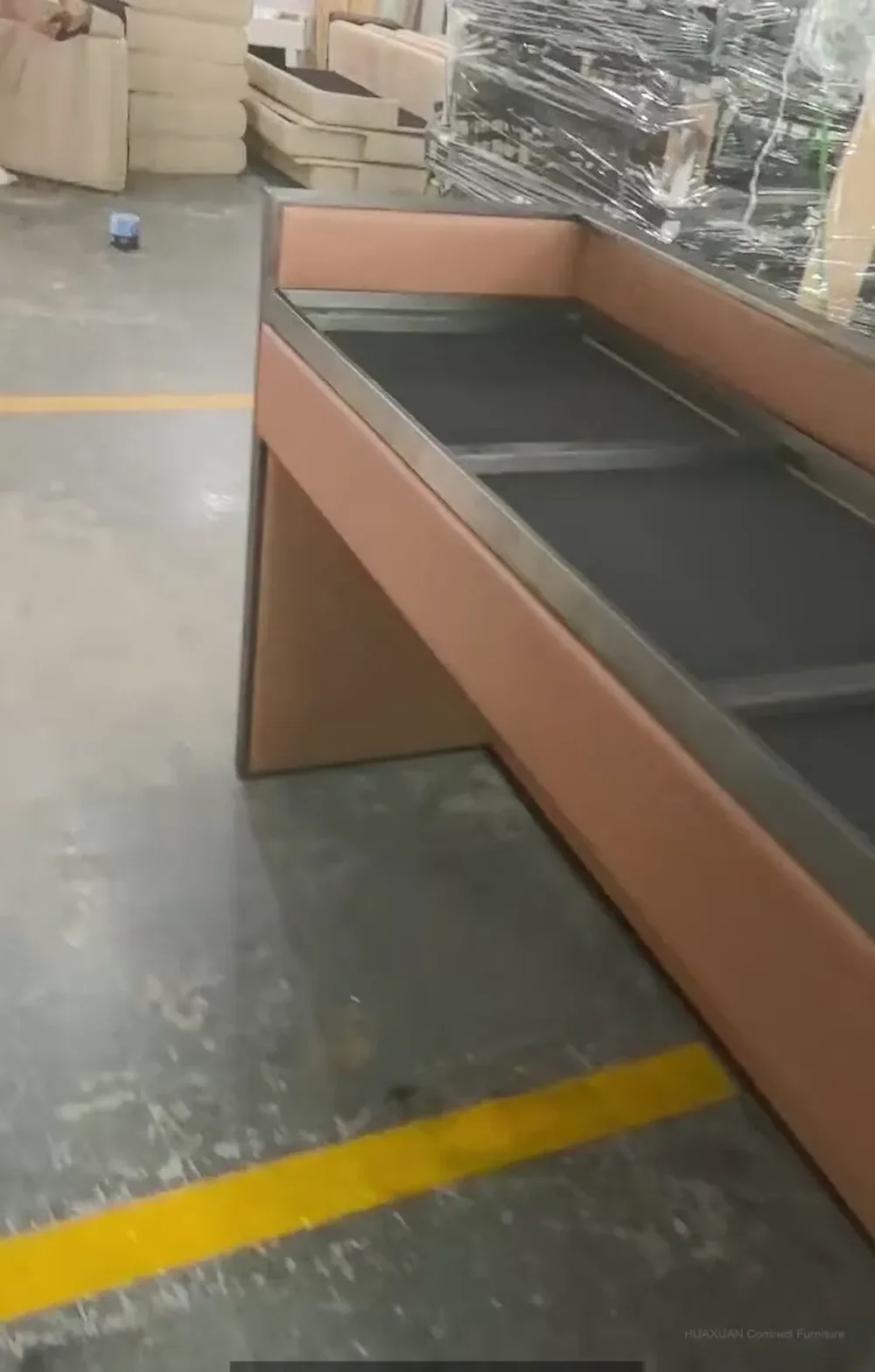
| Wood or metal frame | Joints, rails, cross members, welds, reinforcement and mounting points | Visual, tactile and measurement checks where accessible | Crack, split, weak weld, sharp edge or mislocated bracket | Close photos with unit number |
| Connections | Bolts, screws, brackets, locking methods and detachable modules | Tool check and gentle movement check | Missing, loose, stripped or inaccessible fastener | Hardware count and torque method if specified |
| Closed mode | Level seat, aligned gaps, stable legs, consistent comfort and no stored-part rattle | Sit and press at agreed positions; compare units | Rocking, uneven cushion, twist or noise | Front, side and underside photos |
| Transition mode | Smooth, controlled operation with clearance at fabric and fingers | Open and close using approved steps | Binding, sudden drop, pinch risk or one-sided movement | Full operation video |
| Bed mode | Fully deployed supports, level deck, secure locks and stable floor contact | Visual, level and stability checks | Leg not locked, deck offset, rocking or gap | Opened dimensions and support photos |
| Comfort surfaces | Seat, back, mattress and panels match approved firmness and feel | Same-person comparison plus agreed instrument method if required | Left/right variation, bottoming or hard transition | Position-marked notes and sample reference |
| Upholstery | Shade, texture direction, seams, piping, tufting, staples and underside finish | Approved swatch/sample under agreed lighting | Shade variation, crooked seam, puckering or exposed staple | Defect close-up with scale |
| Dimensions | Closed, opened, sleeping surface, diagonal and clearance-critical points | Calibrated tape, square or template | Out of tolerance, skew or wrong handed layout | Signed measurement sheet |
| Packaging | Moving parts fixed, fabric protected, corners covered, hardware separated and cartons marked | Open-pack review and packing audit | Abrasion, loose hardware, pressure mark or wrong label | Pack sequence and closed-carton photos |
Inspect the Frame, Connections and Support Structure
Wood and engineered components
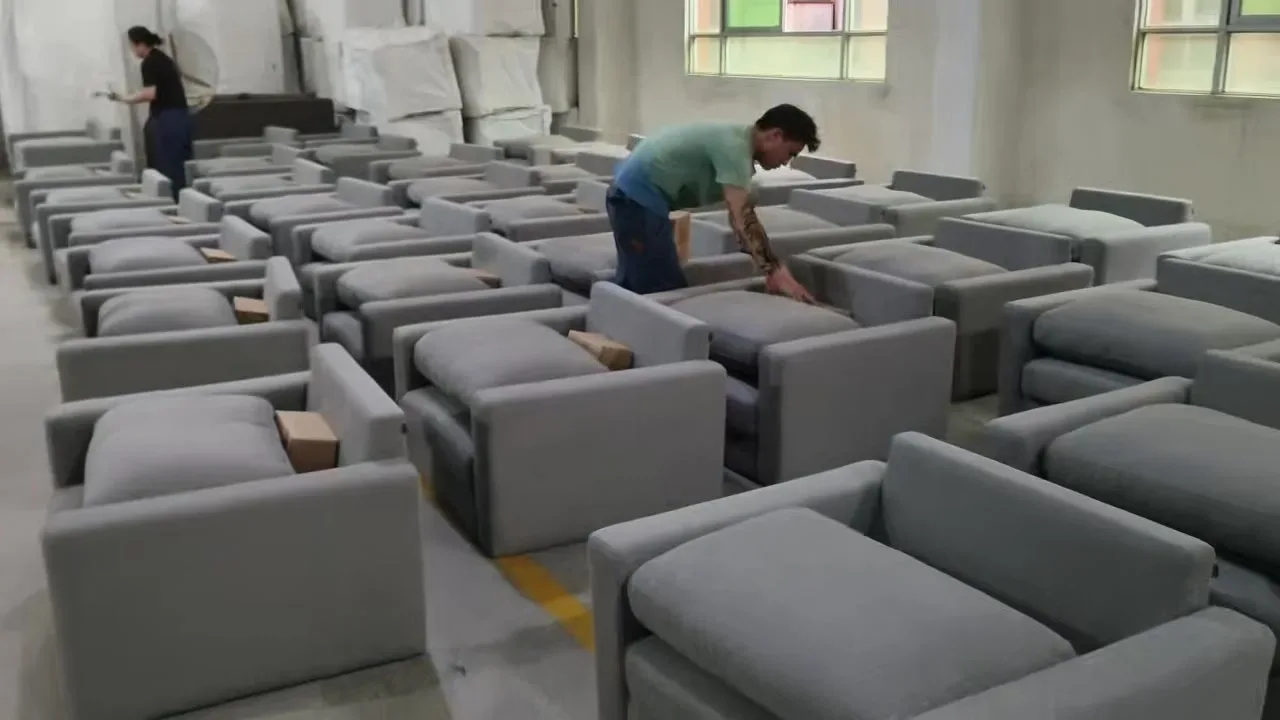
Where the structure is accessible, look for splits, local crushing, poorly seated joints, excessive gaps, sharp edges and unsupported spans. Confirm that rails and blocks match the approved location and section. Moisture, grade or species claims require agreed evidence; appearance alone cannot verify them. Do not dismantle production units unless the inspection plan authorizes a destructive or semi-destructive sample.
Metal parts and welds
Review visible tubes, plates, welds, bends, coating and cut edges. Check for distortion, incomplete attachment, interference with upholstery and rough points near hands or fabric. A clean weld bead is not proof of complete structural performance, so connect visual inspection to any agreed test plan and the exact approved sample.
Fasteners and supports
Verify that bolts, screws, clips and brackets are present and correctly seated. Check detachable arms, backs, legs and modules for play after assembly. If locking compound, washers or a torque method is specified, record the required process rather than improvising a value during inspection. The sofa bed weight capacity guide explains why support evidence must be tied to the complete construction.
Run a Complete Sofa Bed Mechanism Test
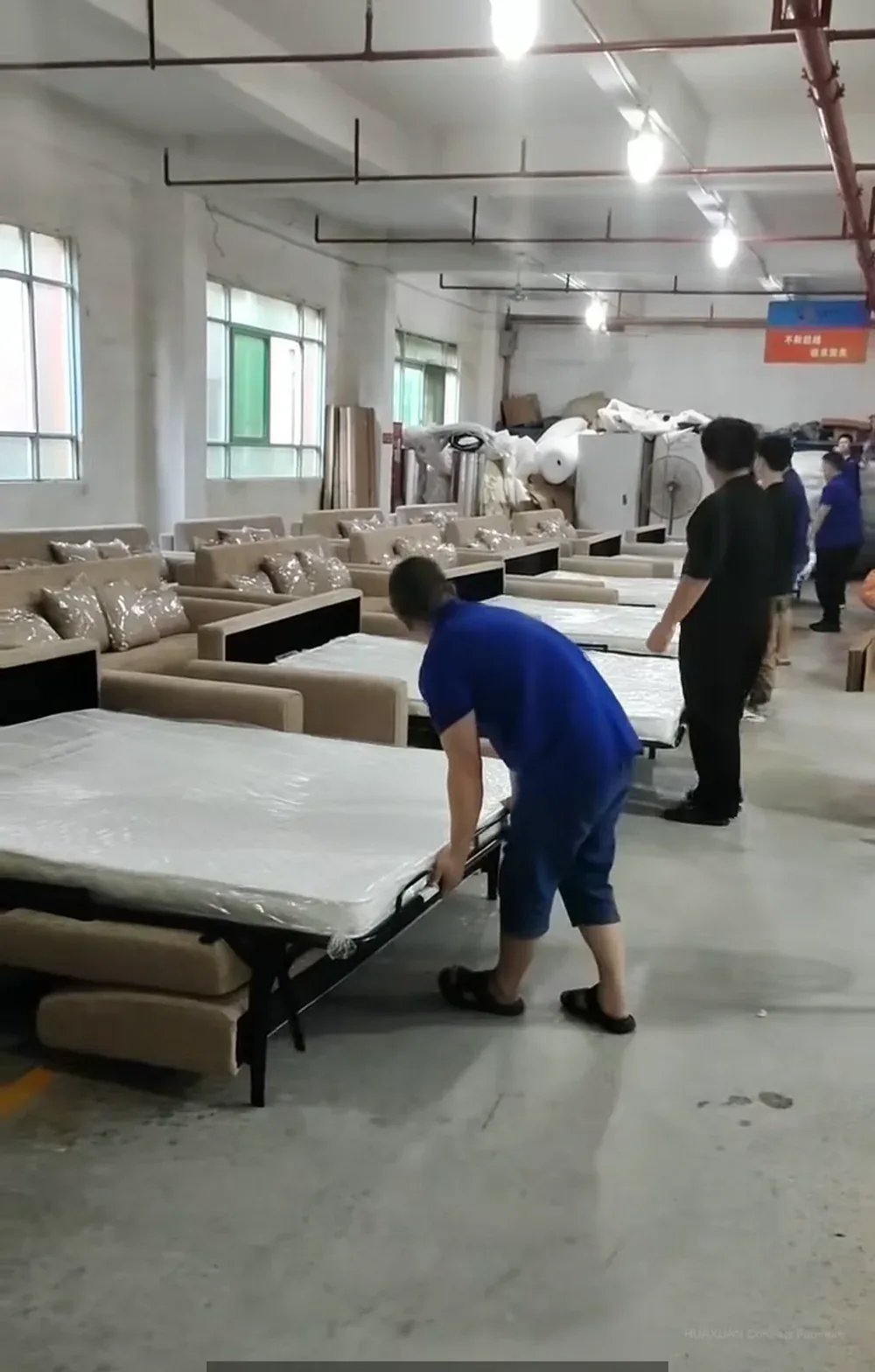
Operate the item exactly as a guest, installer or cleaner would. Begin closed, move through every transition step, deploy all supports, inspect the bed, then close and reset it. The product should not require secret factory technique. Note effort, binding, noise, sudden movement, fabric interference, misalignment, finger-clearance concerns and whether legs or locks reach their intended position.
Closed mode
Check seat and back alignment, cushion gaps, rocking, leg contact and any rattle from stored parts. Sit or press at consistent positions on the left and right. Compare sampled units with the approved comfort reference; descriptive terms such as “medium firm” are not sufficiently precise unless the parties share a sample or measurement method.
Transition mode
Watch both sides of rails and hinges. A mechanism that moves on one side before the other can twist or catch. Confirm that handles are reachable, detachable cushions have an obvious storage route and moving parts do not scrape upholstery. Record the complete sequence in one continuous video so a short clip cannot hide a reset or manual correction.
Bed mode
Check that legs and supports fully deploy, the deck is level to the agreed tolerance, locks engage and the product does not rock. Measure the opened length, width and critical room-clearance envelope. Do not repeat the broader mechanism comparison already covered in the mechanism guide. Here the question is whether the purchased mechanism is installed and functioning like the approved unit.
Check Seating, Sleeping and Upholstery Separately
Seat comfort, back support and sleeping comfort are different evaluations. Compare left and right seating positions for height, recovery and firmness. In bed mode, check level changes, panel gaps, mattress position, edge support and contact with structural bars. Record who performed the comparison and the reference unit; human feel is useful but becomes more repeatable when positions and samples are controlled.
Inspect fabric under lighting agreed with the buyer. Compare shade within one product, between modules and across the batch. Confirm pile or pattern direction before classifying variation. Review seams, piping, topstitching, tufting, pull points, zippers, hook-and-loop parts, underside cloth and concealed staples. The exact tolerance and defect class should come from the buyer-approved standard, not from a generic internet checklist.

Dimensions, Diagonals and Room Clearance
Measure closed width, depth and height; seat and arm reference points; open bed length and width; and any mechanism-specific clearance. Diagonal comparison can reveal a skewed frame even when overall width appears correct. Use calibrated equipment where required and photograph the tape or fixture at the defined datum. Room planning belongs in the sofa bed dimensions guide; factory inspection verifies compliance with the frozen drawing.
Load, Cycle and Durability Tests Require an Agreed Method
Never insert an unverified load, drop height or cycle count and call it a global industry standard. The buyer and supplier should define the applicable standard or project method, exact sample, conditioning, loads, sequence, acceptance criteria, laboratory and report format. Destination, domestic or non-domestic use and the precise sofa-bed architecture can change the scope. A test result for one frame revision should not be applied automatically after a structural change.
Send your approved drawing, sample record, mechanism, defect standard and destination requirements to prepare a focused sofa bed inspection plan.
Sample Approval, First-Article, During-Production and Pre-Shipment Inspection
Inspection stages in a B2B sofa bed order
| Inspection Stage | Main Purpose | Best Timing | Typical Output |
|---|---|---|---|
| Sample approval | Freeze design, comfort, materials, mechanism and workmanship | Before bulk production | Signed specification, sample photos, change list and approval status |
| First-article confirmation | Verify the first production unit follows the approved construction | At production start | First-piece measurements, component identity and corrective actions |
| During-production inspection | Detect process drift while correction is still practical | When enough units expose recurring work | Defect trend, work-in-process checks and containment |
| Pre-shipment inspection | Assess finished quantity, function, appearance and packing before release | When the agreed portion is complete and packed | Sampling result, defect list, packing audit and release recommendation |
These stages are not interchangeable. A passed pre-shipment sample cannot prove that an undocumented component change was properly approved, while a perfect prototype cannot prove bulk consistency. Define who can approve deviations and whether reinspection is required after repair.
AQL, Sampling and Defect Classification
When the contract uses AQL, record lot size, inspection level, sample size, selected AQLs, acceptance/rejection result and the exact sampling document. As of this review, ISO 2859-1:2026 is the published edition describing AQL-indexed sampling schemes for lot-by-lot inspection. AQL is a sampling framework, not permission to ship known unsafe defects, and it does not decide which sofa-bed defect is critical, major or minor. Those definitions must be agreed by the buyer and applied consistently.
Defect Classification Table
Examples only—final classes must follow the approved buyer standard
| Defect | Typical Classification | Why It Matters | Corrective Action |
|---|---|---|---|
| Sharp exposed metal, unstable support or mechanism that can collapse in intended use | Critical, subject to the buyer’s approved defect standard | Potential safety risk | Quarantine affected units, investigate cause and obtain buyer disposition |
| Mechanism cannot open, lock or close as approved | Major | Core sofa-bed function is unavailable | Repair and reinspect the complete operation |
| Wrong model, dimensions, fabric or handed configuration | Major | Product may not fit the room, range or PO | Segregate, verify scope and agree rework or replacement |
| Support leg does not reach the floor or remains unstable | Critical or Major depending on risk and agreed criteria | Can affect safety, stability and durability | Stop release, correct alignment and repeat function/stability checks |
| Noticeable shade difference between paired modules or approved batch limit | Major | Visible range inconsistency and installation complaints | Sort under agreed light, replace or obtain written concession |
| Open seam, broken stitch or exposed staple | Major when function, durability or injury risk is affected | Can worsen in use or damage users/materials | Repair, inspect adjacent work and verify the process |
| Small hidden cosmetic mark within the agreed tolerance | Minor | Limited effect on use but records workmanship | Clean or touch up if approved; track frequency |
| Carton mark missing or hardware bag labelled incorrectly | Major in many export programs | Creates installation, customs or distribution errors | Correct all affected packs and re-audit labels |
Packaging and Container-Transport Risks
Before packing, secure mechanisms and any moving extension using the approved restraint without stressing upholstery. Protect fabric from carton abrasion, cover corners and projections, separate hardware from upholstered surfaces and verify assembly instructions. Check carton strength and closure, labels, model/colour/quantity marks, gross/net data where required and pack orientation. The related sofa bed packaging and container loading guide covers pack development in depth.
Common arrival problems include rubbed fabric, pressure marks, bent supports, loose hardware damage, moisture exposure, cartons crushed by poor stacking and mixed labels. Inspect one fully opened pack as well as closed cartons. Retain photos of internal layers and the loading arrangement so claims can distinguish production defects from distribution damage.
Pre-Shipment Review Checklist
- ☐ PO, model, colour, quantity and production revision match.
- ☐ Sample, first-article and approved change records are available.
- ☐ Selected units and cartons are genuinely random and traceable.
- ☐ Closed, transition and bed modes are fully operated on every functional sample.
- ☐ Frame, mechanism, supports, comfort and upholstery checkpoints are recorded.
- ☐ Closed, opened, diagonal and packing dimensions are measured as required.
- ☐ Critical, major and minor defects follow the approved definitions.
- ☐ Repairs and corrective actions are verified on affected scope.
- ☐ Moving parts, corners, fabric, hardware and manuals are protected.
- ☐ Carton marks, barcode or labels and accessory counts match the PO.
- ☐ Packing and container-loading photos identify order and date.
- ☐ Authorized buyer representative gives written release or hold decision.
Records to Retain for Reorders
Keep the signed specification, approved sample photographs, colour and fabric references, drawings, BOM or controlled component list, mechanism code, measurement sheet, operating video, comfort notes, test reports, defect log, concessions, corrective actions, packing sequence, carton marks and loading photos. For repeat orders, begin with a revision comparison rather than assuming “same as last time” means the same materials or process.
HUAXUAN can discuss a sofa bed from buyer-provided reference photos, dimensions, materials and inspection requirements, subject to model feasibility and sample confirmation. Review the quality-control process, sample approval workflow and relevant pull-out sofa bed product reference when preparing the brief.
FAQ
How do I inspect a sofa bed before bulk shipment?
Verify the approved revision, select traceable samples, inspect structure and upholstery, operate each sample through all modes, measure critical dimensions and audit the complete packaging.
What should a sofa bed mechanism test include?
Check closed alignment, the complete transition, locks, support-leg deployment, noise, binding, stability in bed mode and successful closing after inspection.
What is the difference between sample approval and pre-shipment inspection?
Sample approval freezes what production should match. Pre-shipment inspection samples finished goods to evaluate whether the order and packaging conform before release.
Does AQL guarantee that every sofa bed is defect-free?
No. AQL is an acceptance-sampling framework. It does not inspect every unit, replace safety controls or define defect severity for the buyer.
Who decides whether a defect is critical, major or minor?
The buyer and supplier should agree definitions before inspection, considering safety, function, saleability, destination rules and the approved product standard.
What evidence should be kept for repeat sofa bed orders?
Keep controlled specifications, sample records, component identity, dimensions, photos, videos, test reports, defect logs, concessions, packaging and loading records.
Conclusion: Check the System, Not Only the Surface
Knowing how to check sofa bed quality means tracing the order from specification through sample, production, inspection and packing. A useful report shows what was checked, on which unit, against which revision and with what result. Send your reference photos, closed and opened dimensions, mechanism preference, upholstery requirements, quantity, project type, destination market and inspection standard for a practical quotation and quality-plan review.
Send your product specification, approved sample records, quantity and destination requirements to discuss a traceable sofa bed quality-control plan.