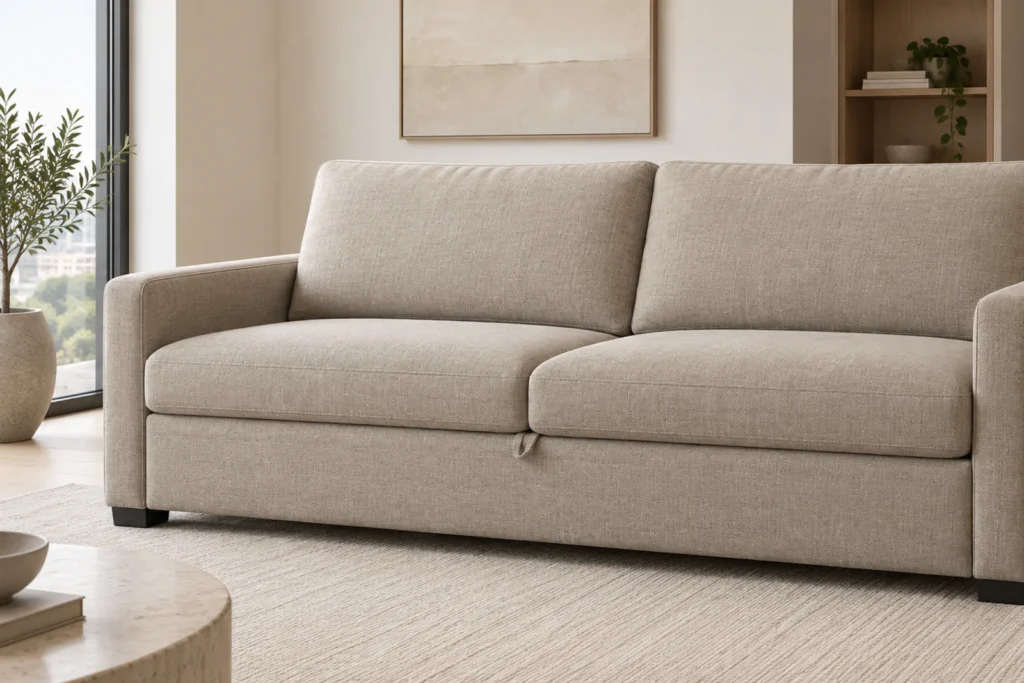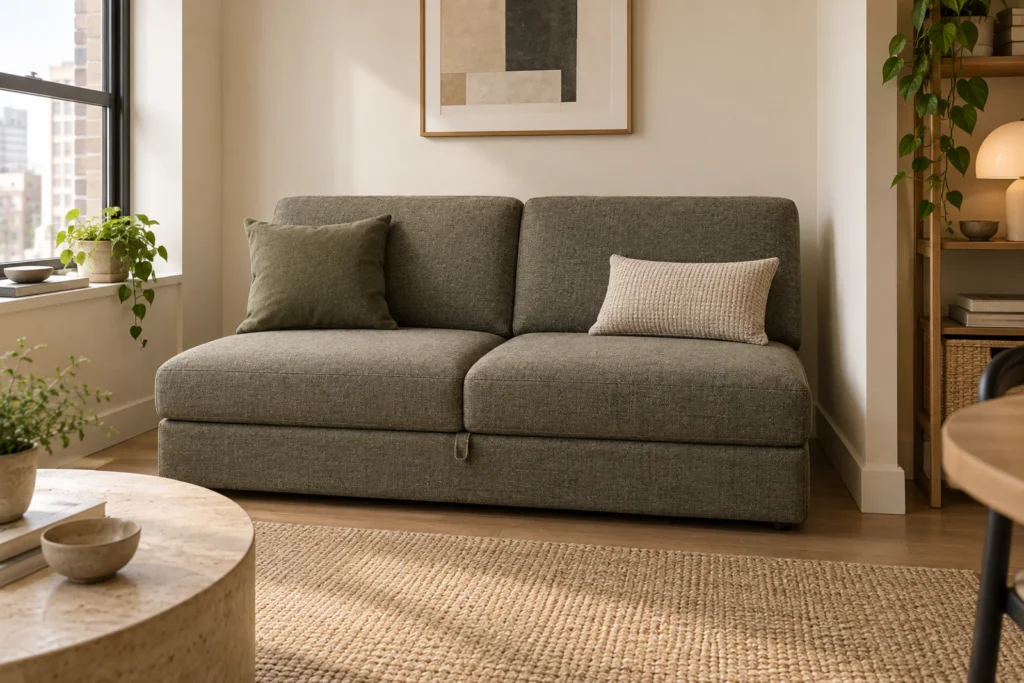

Sofa bed weight capacity is a model-specific, mode-specific claim—not a universal number for all sleeper sofas of the same size. A defensible rating must connect the intended users and destination-market requirements to the exact frame, mechanism, deck, support legs, joints and test method. Importers, hotel buyers and furniture brands should request separate evidence for closed sofa mode and open bed mode, because the load travels through different parts. Never copy a competitor’s figure or assume that metal automatically carries more than wood. Freeze the construction, agree the load cases, test an approved sample and retain the result with the product specification.
Quick Answer: Ask for two clearly defined capacities—seating and sleeping—plus the exact test setup, duration, load position and post-test acceptance criteria. If the construction changes, confirm whether the evidence still applies.
Why Sofa Bed Weight Capacity Is Not One Universal Number
Search results often present a single figure by product size, but B2B procurement needs more context. Capacity changes with the frame geometry, span between supports, mechanism model, joint design, leg deployment and the way load is applied. The same upholstery silhouette can hide a different rail thickness, deck, connection or floor-support layout. A number without a product revision and test method is therefore difficult to compare or enforce.
Capacity also differs from comfort. A mattress can feel too soft or allow the user to notice a support bar while the structure remains intact. Conversely, a thick cushion may hide movement in a weak joint during a short showroom trial. Treat structural safety, durability, stability and comfort as related but separate approval questions.
How Sofa Bed Weight Capacity Changes by Mode
The load path is the route by which force moves from the user through cushions, deck and frame to the floor. Closing or opening the product changes that route. Buyers should map it for each intended state and should state that transition mode is for operation, not occupancy, unless the product has a separately approved lounge position.
Capacity and support by operating mode
| Product Mode | Main Load Path | What to Check | Required Record |
|---|---|---|---|
| Closed sofa mode | Seat deck, front rail, back frame, arms and fixed legs | Even seating positions, edge sitting, side-to-side stability and frame noise | Separate seating capacity and use conditions |
| Transition mode | Rails, handles, pivots, partially deployed legs and moving panels | Twisting, one-sided pulling, obstruction, pinch points and unintended collapse | Operating method and warnings; it is not normally an occupancy mode |
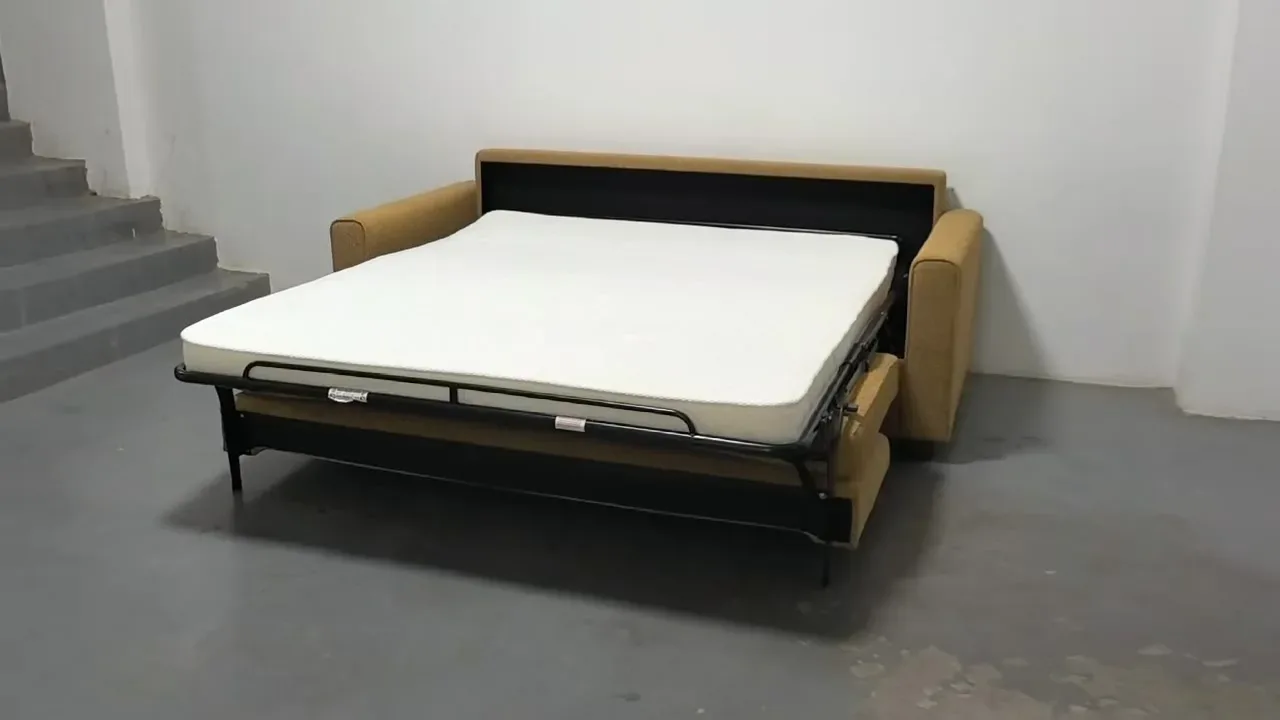
| Open bed mode | Extended deck, cross members, hinges, mattress support and deployed legs | Distributed sleeping load, local edge load, rocking and leg contact | Separate sleeping capacity, user distribution and floor requirements |
| Chaise or lounge mode | Partially extended platform or adjustable back | Intermediate locks, panel alignment and asymmetric use | Only claim this mode if the exact design is approved for it |

Closed sofa mode
In sofa mode, users may sit centrally, near an arm or on the front edge. Check whether left and right positions feel and move consistently, whether the front rail twists and whether detachable legs or modules remain fully seated. The quoted seating capacity should specify whether it is a total product limit, a per-seat assumption or another buyer-defined condition. Do not convert between those descriptions without engineering confirmation.
Transition mode
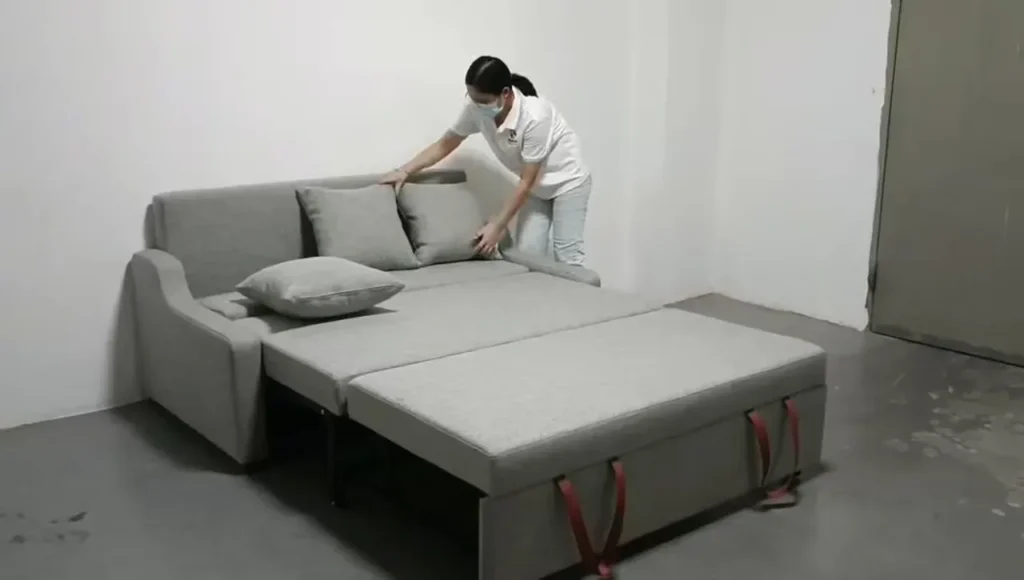
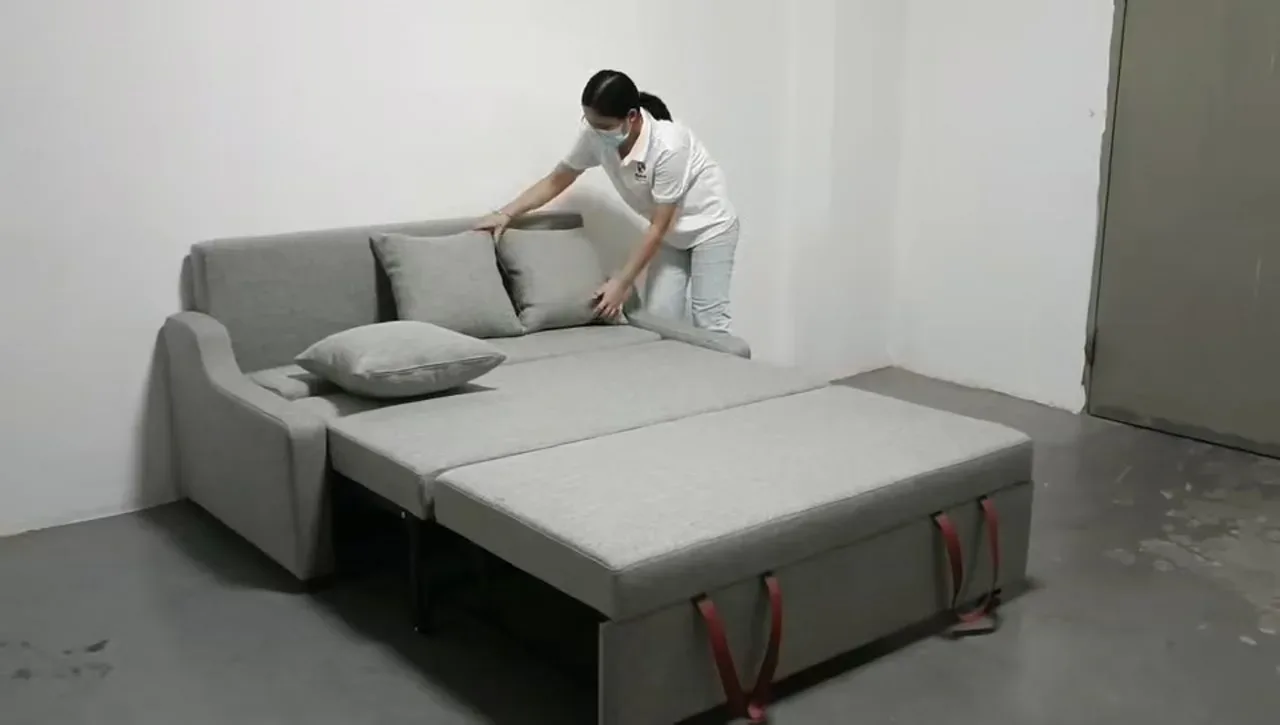
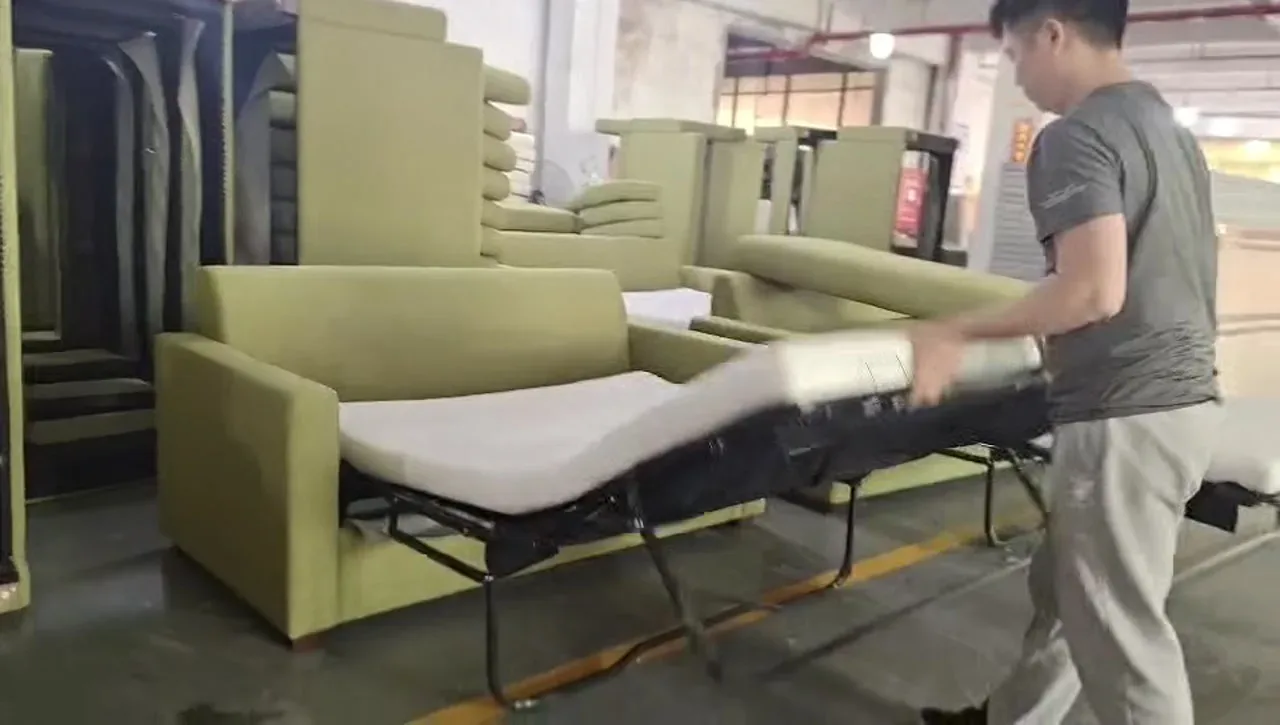
During conversion, parts are briefly cantilevered or supported by a user’s hands. This is where misalignment, one-sided pulling, unsecured legs and pinch zones become visible. A smooth demonstration does not create a load rating, but it confirms that the support points deploy before bed use. Link the operating sequence to the existing sofa bed mechanism guide rather than treating mechanism family as proof of capacity.
Open bed mode
In bed mode, the extended section may rely on folding legs, wheels, cross rails or an upholstered platform. Confirm that every support reaches the same floor plane, that the bed does not rock and that local edge loading does not disengage a lock. Use the sofa bed dimensions guide to verify the open footprint; this article stays focused on support and testing.
Frame, Mechanism and Support Components to Review
Sofa bed support-system review
| Component | Role in the Load Path | Typical Risk to Investigate | B2B Evidence |
|---|---|---|---|
| Main sofa frame | Carries the fixed structure in sitting mode and anchors the moving assembly | Rail splits, weak joints, loose corner blocks or local crushing | Material specification, joint construction, drawings and physical sample |
| Seat support | Transfers seated load into the frame | Excess deflection, uneven left/right feel or fastener pull-out | Support type, attachment method and side-to-side comparison |
| Pull-out mechanism | Moves and supports the extended sleeping platform | Bent rails, pivot play, interference, uneven extension or poor locking | Exact mechanism model, attachment points and supplier documentation |
| Cross members and deck | Distribute sleeping load between supports | A concentrated soft point, bar contact or deck deformation | Support layout, span, deck material and opened-surface inspection |
| Support legs or casters | Transfer load from the extended section to the floor | Leg not fully deployed, caster movement, floor damage or height mismatch | Deployment sequence, contact area, stops and floor compatibility |
| Fasteners and brackets | Join parts and retain alignment through repeated conversion | Loosening, slot elongation, missing hardware or inaccessible service points | Fastener schedule, locking method and retightening access |
| Mattress or upholstered panels | Distribute pressure and influence perceived bottoming | Comfort failure being confused with structural failure | Test the support system separately from firmness and comfort |
Frame geometry matters more than a material label
Wood, engineered board and metal can each be appropriate in a specified assembly. Material name alone does not reveal grade, section, moisture condition, weld quality, grain direction, fastening or joint geometry. Ask for the actual construction drawing or section photos and make sure the tested sample uses the same version. Avoid statements such as “all-steel means heavy duty” unless the complete frame has supporting evidence.
Mechanism attachment is part of the structure
A mechanism supplier may publish information for a hardware unit, but the finished sofa also depends on how that unit is fixed to the upholstered frame. Review bracket location, fastener type, edge distance, reinforcement and access for service. The pull-out sleeper mechanism guide provides component context, while the capacity approval must remain tied to the complete model.
Support legs need the real project floor
A leg can appear stable on a level factory floor yet behave differently on thick carpet, a rug edge or an uneven joint. State the intended floor finish and test the deployment sequence. Check contact pads, height consistency, lateral movement and whether cleaners can identify a leg that has not locked. If floor protection is required, freeze the pad material and area in the sample specification.
Static Capacity, Durability and Stability Are Different
A static load check asks whether the product withstands an agreed load case. A durability test applies repeated actions or loads to investigate performance over time. A stability test evaluates tipping or unintended movement. Passing one does not automatically satisfy the others. Buyers should name the required assessment and acceptance criteria rather than asking only for a “weight test.”
Relevant standards depend on the product definition, market and intended use. For example, the current BS EN 16139 page for non-domestic seating defines a particular scope and explicitly excludes some mechanisms and material properties. ISO 19833 addresses test methods for adult beds but excludes foldaway beds. Those scope boundaries illustrate why a buyer should ask an accredited laboratory or compliance specialist which current requirements apply to the exact sofa-bed design and destination. Do not present either document as a universal sofa-bed rule.
How to Specify and Test Sofa Bed Weight Capacity
Capacity-test specification checklist
| Approval Item | Information to Define | Why It Matters | Recommended Record |
|---|---|---|---|
| Specification identity | Model code, drawings, mechanism code, materials and revision | The tested sample must match the quoted and produced construction | Signed sample sheet and component photos |
| Load case | Sofa mode, bed mode, edge position, distributed load and any agreed misuse case | One result cannot automatically cover every mode | Written test plan with diagrams |
| Load value and duration | Buyer-approved requirement derived from destination, user profile and applicable standard | Prevents an unsupported marketing number | Calibrated equipment record and timed photos/video |
| Pre-test condition | Dimensions, fastener condition, floor level and mechanism operation | Provides a defensible baseline | Measurement sheet and opening video |
| During-test observations | Deflection, noise, movement, leg contact, lock engagement and upholstery interference | A pass/fail label alone hides failure development | Time-stamped notes and close-up media |
| Post-test checks | Residual deformation, cracks, looseness, alignment and full conversion | The sofa bed still needs to function after loading | Before/after dimensions and complete operation video |
| Bulk control | Critical construction points and sampling plan | Production consistency cannot be inferred from one prototype | Inspection checklist tied to the approved sample |
Begin with intended users and foreseeable use in the project. A hotel family room, serviced apartment and online retail SKU can have different operating instructions, user profiles and compliance routes. The buyer should provide the capacity requirement or ask the supplier to propose a test plan for review. Any proposed figure remains subject to sample testing and destination-market confirmation.
Use realistic load placement
Distributed load, a concentrated seat-edge load and an off-centre bed load stress different parts. The written plan should show the position, sequence, holding time and condition of the mechanism. Use calibrated equipment where a formal result is required. Photographs should show the full product and close views of supports, not only weights placed on an upholstered surface.
Inspect after loading, not only during it
After each agreed case, remove the load and repeat the complete opening and closing sequence. Measure any agreed reference points, look for cracks or residual deformation, check fastener movement and confirm that locks and legs still engage. Record both acceptable cosmetic change and structural rejection criteria before testing so the parties do not debate them after the sample is damaged.
Send the intended seating and sleeping users, product drawing, mechanism reference, destination market and required test method for a model-specific review.
Sample Approval and Repeat-Order Control
The approved sample should have a permanent product code and revision. Record frame sections, joint details, mechanism code, deck, support-leg geometry, fasteners, cushion build and packaged hardware. If production substitutes a mechanism, changes a rail section or moves a leg, the earlier result may no longer represent the product. Agree whether a change requires document review, partial retest or full retest.
During bulk inspection, capacity tests may not be repeated on every unit. Instead, verify the construction points that make the approved result relevant: measurements, materials, welds or joints, mechanism identity, fasteners, support deployment and functional operation. The related sofa bed quality inspection checklist explains how to record those checks by inspection stage.
Project Selection and RFQ Information
Hotel and apartment buyers should define who uses the sofa, who opens it, how often it converts and what flooring supports it. Wholesalers and brands should also define labels, manuals, claim wording and the evidence they require before listing a capacity. Review relevant models in the HUAXUAN sofa bed range and a real pull-out sofa bed reference, then issue one comparable specification to suppliers.

- ☐ Reference image, model code and revision-controlled drawing.
- ☐ Closed sofa dimensions, open bed dimensions and mechanism identification.
- ☐ Intended seating and sleeping users, use frequency and project type.
- ☐ Separate required capacity statements for sofa and bed modes.
- ☐ Destination market and the current standard or buyer test method to follow.
- ☐ Load position, duration, sequence, conditioning and acceptance criteria.
- ☐ Floor finish, support-pad requirement and operating instructions.
- ☐ Required laboratory, report, photo, video and calibration evidence.
- ☐ Quantity, packaging method, destination and repeat-order controls.
Structural evidence also needs to survive distribution. Use the sofa bed packaging and container loading guide to protect support legs, rails and moving sections after the approved capacity configuration is frozen.
FAQ
What is a normal sofa bed weight capacity?
There is no universal capacity that can be assigned safely by sofa-bed size or mechanism name. Confirm the exact model, mode, load case, test method and destination requirement.
Should sofa mode and bed mode have separate ratings?
Yes. They use different load paths and supports, so B2B specifications should define and verify each intended occupancy mode separately.
Does a metal sofa bed frame always support more weight?
No. Section, geometry, joints, welds, attachments and the complete support layout matter. Compare tested assemblies, not material labels.
Can a mechanism supplier’s rating be used for the finished sofa bed?
Only with confirmation that its scope covers the complete installed configuration. Attachment to the sofa frame, deck, legs and fasteners can change performance.
How should capacity be checked on a sample?
Agree load value, position, duration, sequence and acceptance criteria; document the pre-test condition; apply the load with suitable equipment; then inspect and operate the product again.
When must a sofa bed be retested?
Review retesting whenever the frame, mechanism, support, fastener or other structural detail changes. The required scope is project-specific and should be agreed before the change is accepted.
Conclusion: Make the Capacity Claim Traceable
A credible sofa bed weight capacity is a traceable product claim: exact model, exact mode, defined load case, recorded construction and agreed evidence. It is not a generic number copied into a catalogue. Send your reference photos, closed and opened dimensions, mechanism preference, intended users, quantity, project type, destination market and test requirement to HUAXUAN for a practical specification and quotation review.
Send your reference photos, closed and opened dimensions, mechanism preference, upholstery requirements, quantity, project type and destination market for a practical sofa bed quotation review.