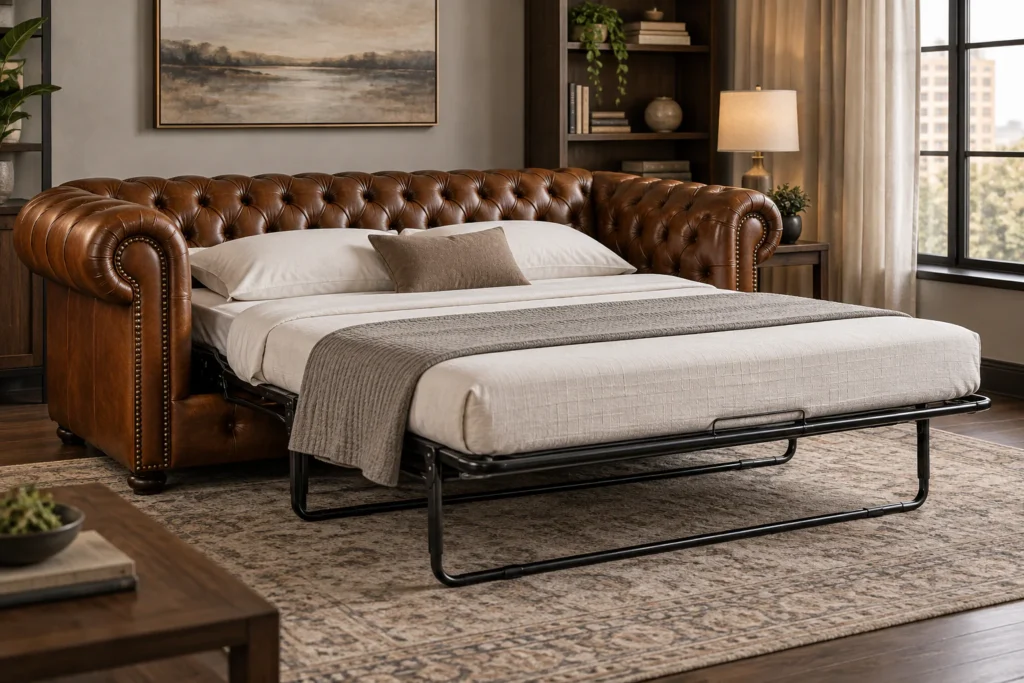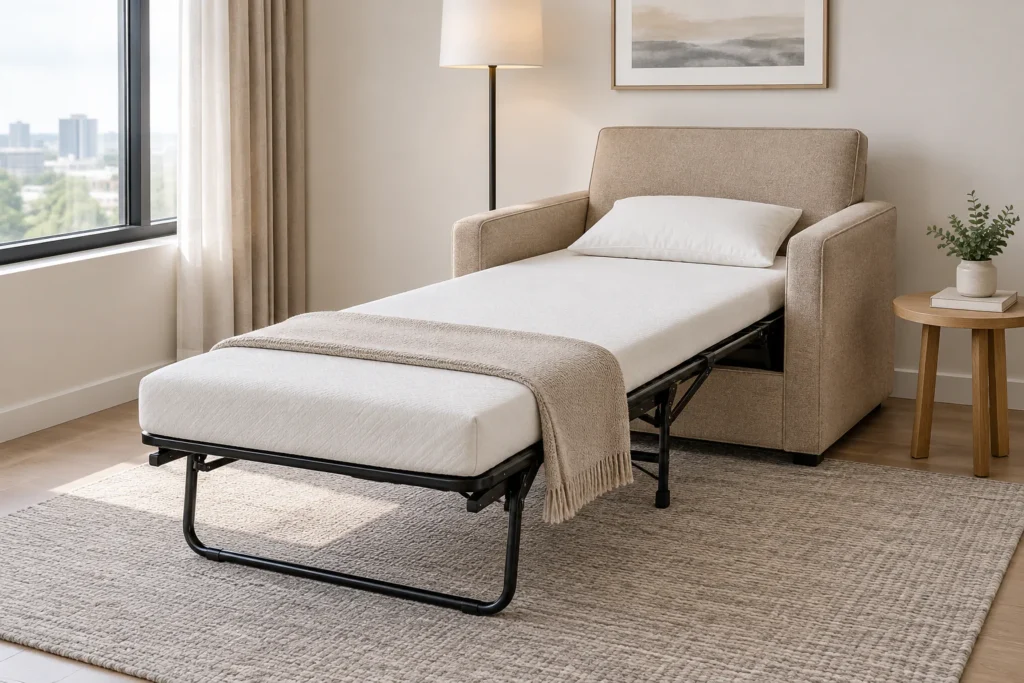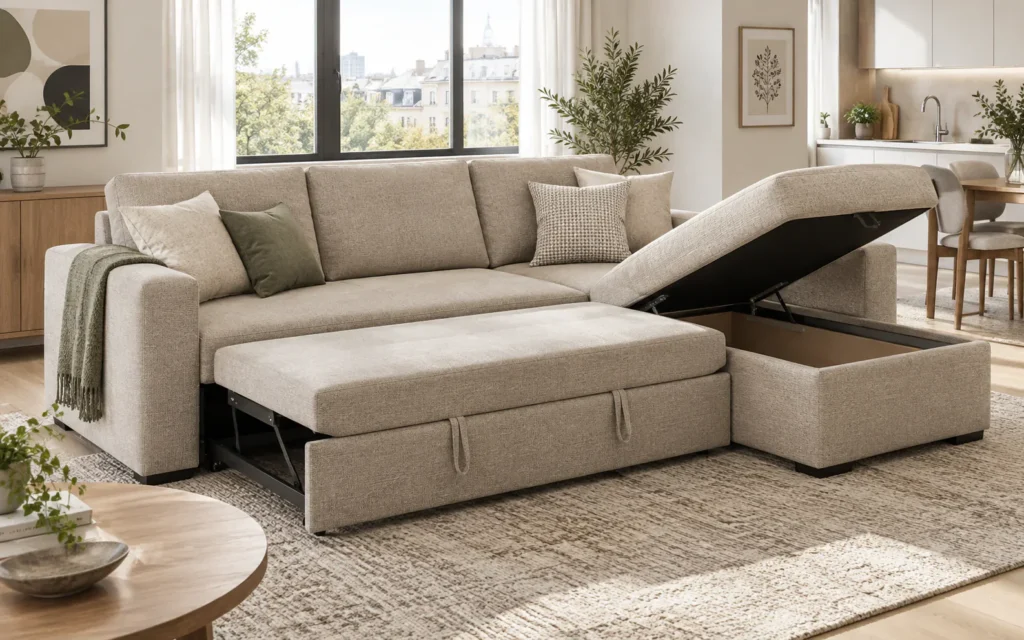

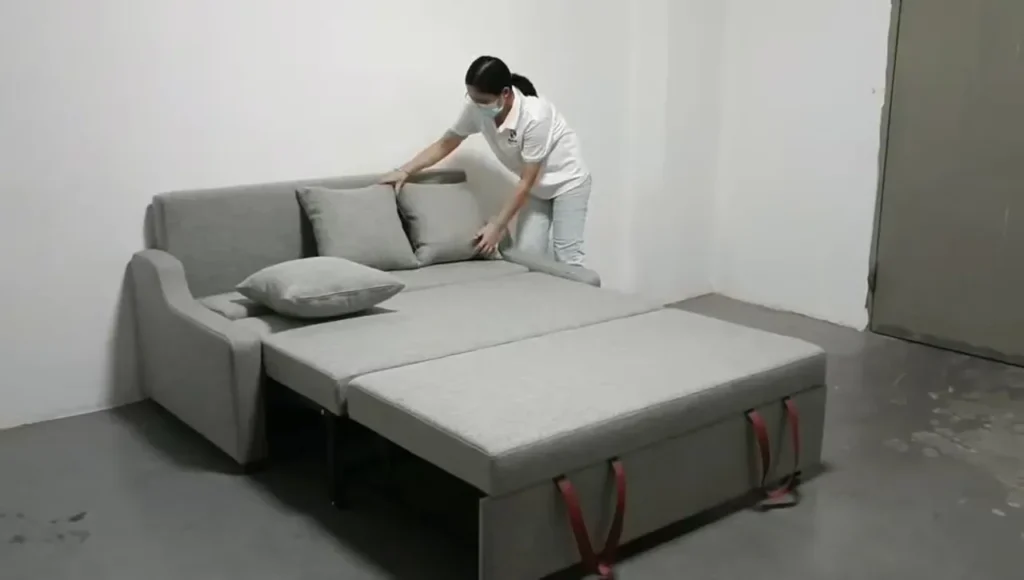
Are sofa beds comfortable? They can be, but comfort varies much more than the product name suggests. A well-matched mattress or integrated sleeping surface, even support, a stable frame and a mechanism that opens fully can provide comfortable guest or frequent sleeping. A thin, worn or poorly supported surface can feel uneven or expose bars and joints. If you need to know how to make a sofa bed more comfortable, begin by identifying whether the problem comes from bedding, the mattress, the support deck or the structure itself. This guide covers practical improvements for an existing sleeper and the construction factors that determine long-term comfort when hotels, apartments and commercial buyers specify a new product.
Are Sofa Beds Comfortable?
A sofa bed can be comfortable enough for its intended duty, but that duty must be defined. Occasional guest sleeping may tolerate a different surface feel from nightly use. A hotel suite may prioritize clear guest operation and housekeeping access, while a serviced apartment may need more frequent conversion, stronger recovery and a documented replacement route. The answer should therefore be “comfortable for whom, how often and for how long?” rather than a universal yes or no.
Comfort is also personal. Body size, preferred firmness, sleeping position and sensitivity to seams or motion all affect perception. Product evaluation should nevertheless control objective factors: the surface should deploy correctly, provide stable support, avoid obvious sag or abrupt height changes and use a mattress or cushion build appropriate to the brief. If the terminology itself is unclear, the guide to what a sleeper sofa is separates sofa bed, sleeper sofa and couch bed before comfort is evaluated.
Do not assume that every modern sofa bed feels like a conventional bed, or that every pull-out is uncomfortable. Construction and condition create the difference. A carefully specified product may serve planned guest accommodation well; a seating-first design with a thin integrated surface may remain best for occasional use. Commercial buyers should approve the actual proposed model rather than a category claim.
Why Do Some Sofa Beds Feel Uncomfortable?
Thin Mattress
A thin sleeper sofa mattress has less material available to distribute pressure before the sleeper feels the deck, bars or joints below. If its foam compresses fully under load, it can bottom out even when the surface looks intact. Thickness alone does not predict comfort, however: layer design, resilience, firmness, support below and compatibility with the folding cavity all matter.
Uneven Sleeping Surface
Gaps between cushions, fold lines, hinges and transitions between panels can create local pressure or allow part of the body to sink differently. An uneven platform can also make a sound mattress feel poor. Check the bed from the side when fully open and lie across the complete surface, not only the visually soft center.
Support Bars or Mechanism Pressure
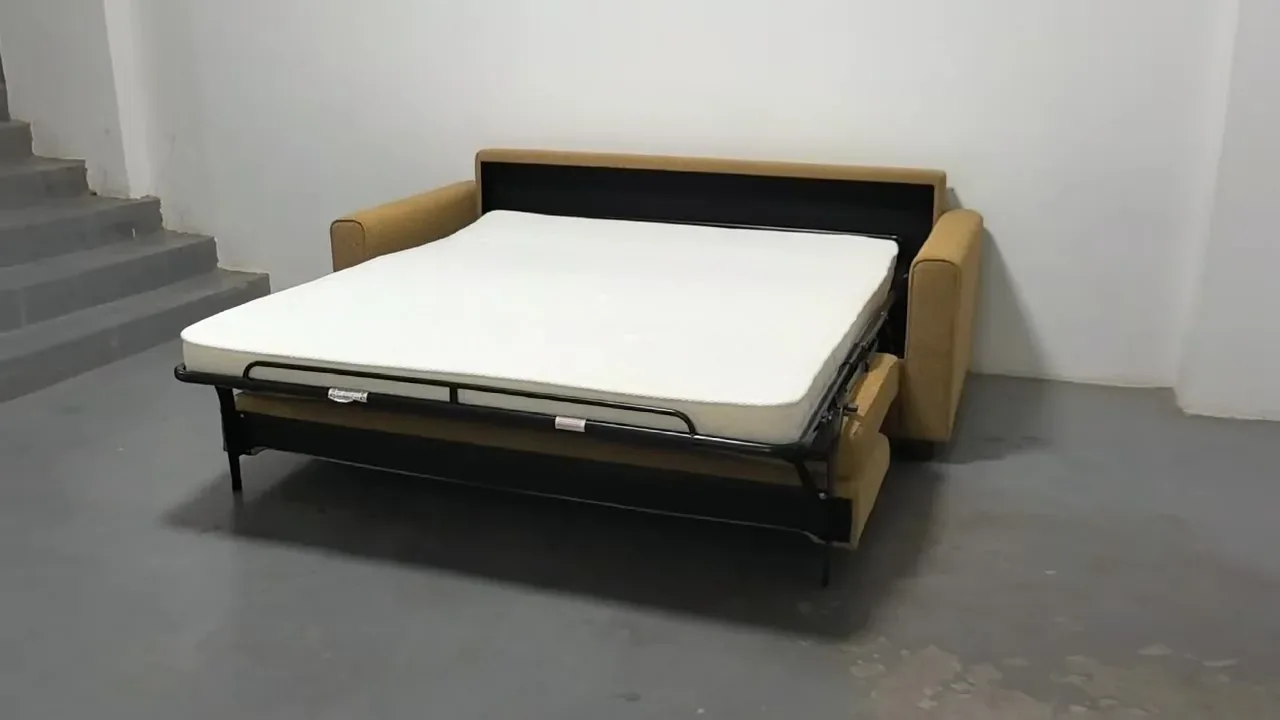
Traditional pull-out systems may position metal cross members or frame edges beneath the mattress. A suitable mattress and deck distribute this support; a compressed mattress, loose deck or misaligned frame can make it more noticeable. The correct response depends on the cause. Covering a structural pressure point with excessive padding can hide a defect without correcting it.
Insufficient Foam Support
Foam may feel soft initially yet allow the body to sink too far, or it may feel firm without distributing pressure comfortably. Foam density and firmness are not the same property. Density describes mass per unit volume and often relates to material content, durability and long-term resilience within a given foam family. Firmness describes resistance to indentation. A higher-density foam is not automatically firmer, softer or more comfortable.
Sagging or Worn Components
Permanent mattress compression, stretched support fabric, weakened webbing, deformed cushions or loose frame connections can reduce support. Aging may appear as a hollow, tilted section, new noise or a surface that no longer recovers. Identify the worn component before ordering a topper; replaceable soft goods and serviceable supports need different remedies.
Poor Mattress-to-Mechanism Fit
A replacement mattress can be the right width yet still be incompatible. Thickness, edge construction, stiffness, fold positions and cover friction affect whether it follows the mechanism and closes without binding. A mattress that bridges a hinge badly may create a ridge, while an over-thick build can stop the sofa from closing.
A Sofa Designed Mainly for Sitting
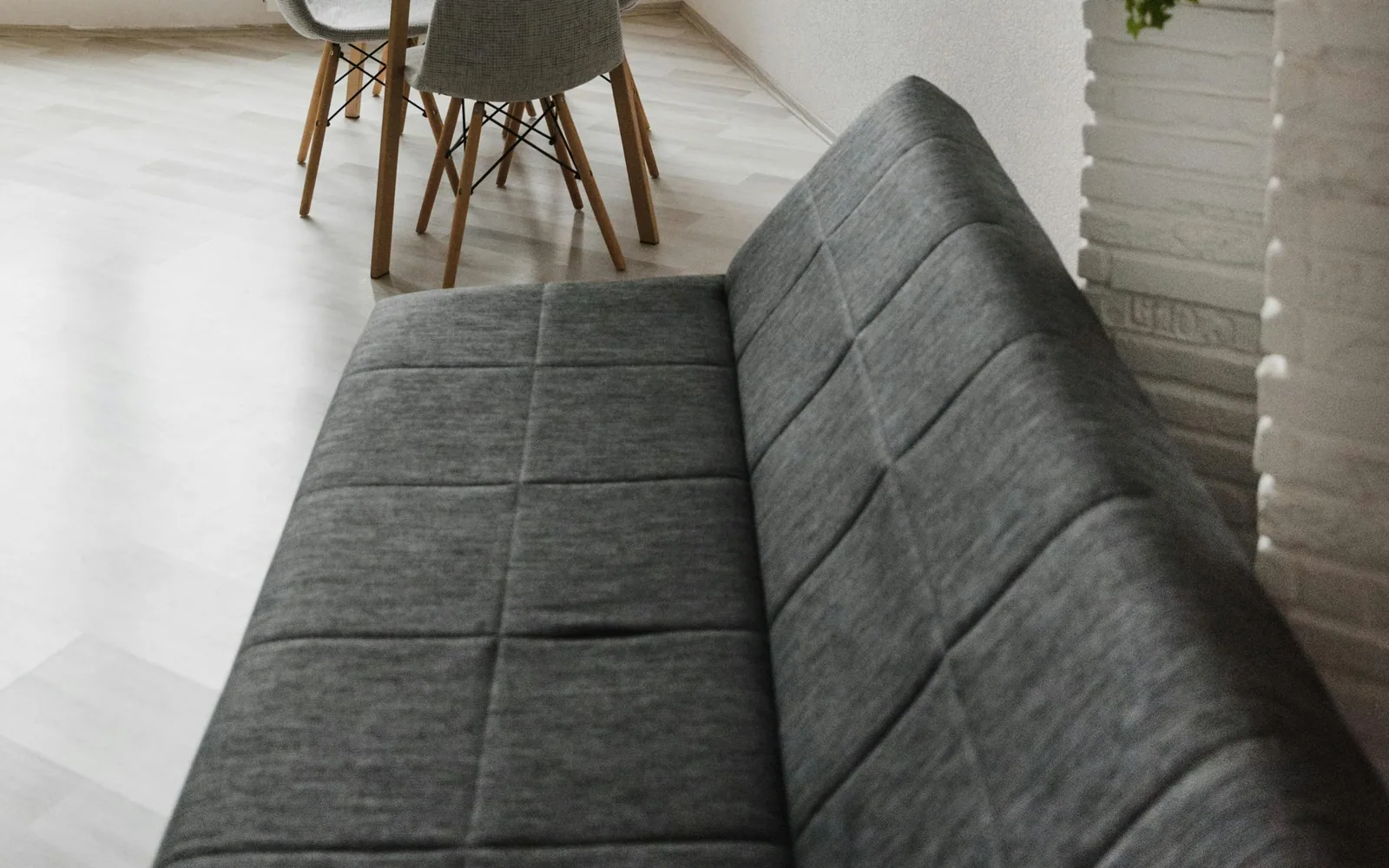
Some sofa beds are seating-first products with an occasional flat mode. Deep tufting, separated cushions or a compact fold may be acceptable for a short guest stay but unsuitable for frequent sleeping. This is not necessarily a defect; it is a mismatch between product priority and use. Buyers should state sleeping frequency before comparing samples.
How to Make a Sofa Bed More Comfortable
The most useful improvements start with diagnosis. Remove bedding, open the product completely and inspect the unloaded surface, then apply pressure at the center, edges and transition zones. Note whether discomfort is general or concentrated over one joint. This separates a surface-feel problem from a support or mechanism problem.
1. Add a Suitable Mattress Topper
A compatible topper can add cushioning and reduce the feel of minor seams or firmness. Choose dimensions that do not bunch at the edges and a construction suitable for the sleeper’s preference. Store it separately unless the product documentation specifically permits closing it inside. A topper cannot correct a broken bar, badly sagging deck, unstable frame or large height difference.
2. Check the Mattress Condition
Look for permanent impressions, torn covers, damaged edges, uneven recovery and areas that feel markedly thinner. Compare the mattress on the open frame rather than on the floor because the support below influences the result. If deterioration is the cause, a compatible replacement is usually more controlled than stacking several temporary layers.
3. Use Proper Bedding
A fitted protector, smooth sheet and bedding appropriate to room temperature can improve surface feel without obscuring how the bed operates. Avoid bulky layers around hinges, legs or closing points. Bedding should be removed before closing when required by the model, particularly in a managed hotel or rental reset procedure.
4. Make Sure the Sofa Bed Is Fully Open
A partially deployed frame may sit at an angle, leave supports off the floor or keep a lock from reaching its intended position. Follow the model-specific sequence and confirm that every platform section and leg is fully deployed. Stop if parts bind or require unusual force; forcing the mechanism can create damage and does not make the surface safe or level.
5. Check the Support Surface
Inspect fabric decks for sag, slats for movement, mesh for uneven tension and bars or platforms for alignment. Listen for new noise and check whether all fasteners and floor supports appear in their intended positions. Repairs should follow the product or supplier guidance. Adding a board or improvised insert can interfere with folding, ventilation or load transfer and should not be assumed appropriate.
6. Rotate or Replace the Mattress Where Applicable
Some separate mattresses can be rotated according to their construction; others have a designated top, fold direction or shaped corners and should not be flipped or turned casually. Integrated click-clack cushions cannot be treated like a loose mattress. Confirm the model instructions and match any replacement to the mechanism envelope.
7. Address Gaps and Uneven Surfaces
Minor cushion seams may respond to a correctly sized topper, but a persistent ridge, deep gap or tilted section may originate in the deck or frame. Remove the mattress where the design allows and compare the support levels. If the underlying platform is uneven, correct that cause rather than repeatedly adding softness above it.
If an existing product cannot be corrected with bedding or a compatible mattress, document the pressure zone, open dimensions and support structure before discussing a replacement specification.
What Actually Makes a Comfortable Sleeper Sofa?
Mattress Thickness
More thickness can provide space for cushioning and pressure distribution, but thicker is not automatically better. A pull-out mattress must fold within a defined cavity, clear rails and close without excessive compression. The useful thickness is the one that balances comfort with the approved folding path, storage space and mechanism clearance. Any range should be verified for the exact system rather than presented as a universal standard.
Mattress Material
Polyurethane foam can provide a compact, adaptable construction. High-resilience foam can offer stronger recovery characteristics. Memory foam may add conforming feel but changes temperature perception, recovery and fold behavior. Layered foam lets designers separate comfort and support functions. Spring or hybrid structures may be possible where the mechanism and folding geometry permit them. Material names are starting points; layer design and actual sample performance decide the result. Use the dedicated sofa bed mattress guide for mattress taxonomy, support-deck compatibility and replacement specifications; this article remains focused on diagnosing and improving comfort.
Foam Density and Firmness
Specify density and firmness separately. Within a comparable foam chemistry, density can help buyers discuss material content, resilience and durability, while firmness helps describe initial support feel. Comfort also depends on thickness, layer order, support area and body interaction. Commercial buyers should request the proposed foam specification and approve the seat and sleep surface, not ask only for “high density” as if it were a comfort grade.
Sleeping Surface Flatness
A comfortable surface minimizes abrupt transitions, unsupported gaps and concentrated pressure over bars or hinges. It does not have to be visually seamless, but the body should not encounter a sharp change in level or support. Evaluate the center, edges and panel junctions with the product fully deployed on a level floor.
Mechanism Design
From a comfort perspective, the mechanism determines support locations, fold lines, platform level, stability and possible noise. It also defines the mattress envelope. This article does not compare engineering systems in depth; use the sofa bed mechanism guide for system types and the click-clack versus pull-out comparison only when that decision is required.
Frame Stability
Flex, rocking and loose connections disturb both sitting and sleeping. In hotels and serviced apartments, repeated conversion and changing users make consistent support and service access important. Inspect the frame and deployed legs on the proposed sample, listen for noise and document the approved construction without inventing an unsupported lifespan or cycle claim.
Seat and Back Cushion Construction
A sleeper sofa remains daytime seating. Seat depth, cushion support, back angle and foam recovery influence how it performs when closed. In integrated sleeping designs, those same cushions form the bed, so seams and firmness transitions matter twice. A comfortable bed that produces unsuitable seating is not a balanced commercial product; approve both modes against the room program.
Sofa Bed Comfort for Hotels and Serviced Apartments
A hotel buyer should not ask only “Is this sofa bed comfortable?” The supplier needs an intended sleeping frequency, expected guest turnover, target sleeping surface, mattress specification and room plan. Occasional use in a suite differs from repeated use in an extended-stay property. The written brief should state which mode is primary and how staff will prepare, inspect and reset the product.
Review mattress replaceability where a separate mattress is used, support structure, mechanism stability, noise and access to service points. Confirm upholstery cleaning expectations and whether covers, cushions or soft components can be maintained according to the operating plan. Plot open dimensions and circulation on the actual room layout, but leave full dimensional search intent to a dedicated size guide.
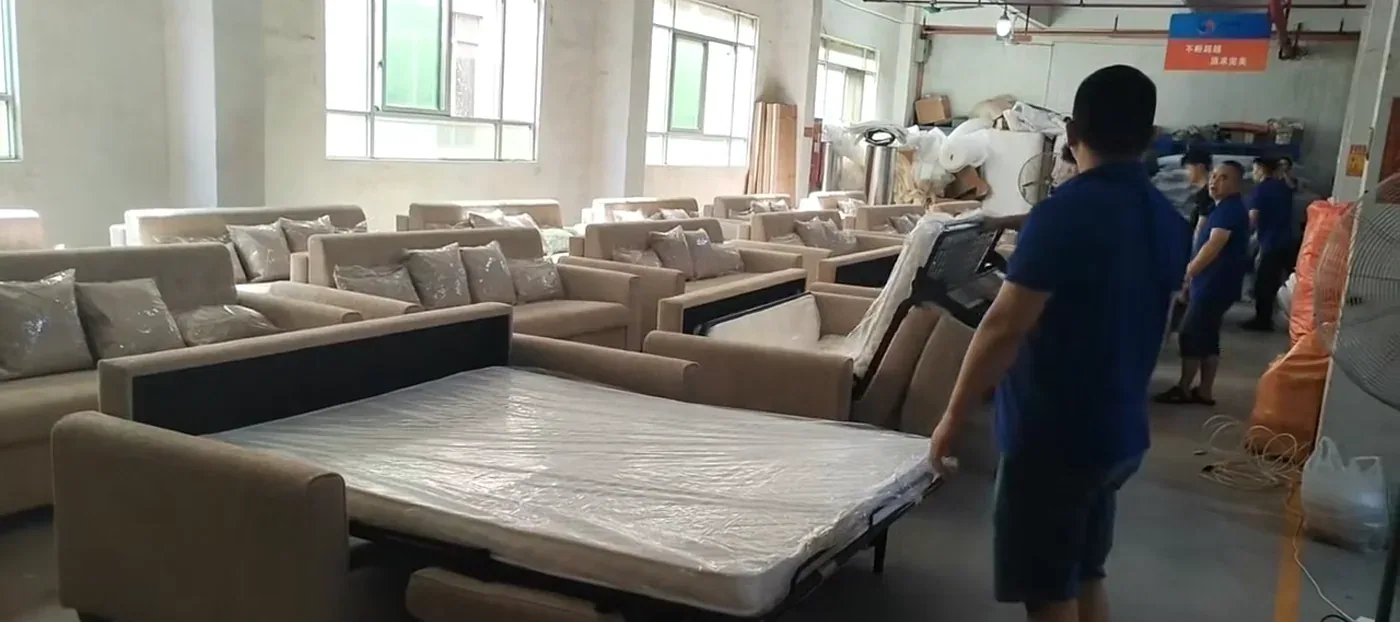
Comfort approval should use a production-intent sample with the quoted mattress, foam, upholstery and mechanism. Sit in normal positions, open the product using the expected guest or staff sequence, assess the sleep surface across transitions and confirm it closes again without fabric or bedding interference. Record observations and freeze the accepted specification for project quantities.
For a coordinated hospitality program, connect the sofa bed brief with the broader hotel furniture requirements, including room clearances, finishes and housekeeping workflow. HUAXUAN’s commercial sofa bed collection provides a starting point for discussing a model, upholstery direction and project specification rather than a retail comfort promise.
Occasional Use vs Frequent Sleeping
| Use Case | Main Priority | Mattress | Support | Mechanism | Durability |
|---|---|---|---|---|---|
| Occasional guest use | Simple setup and acceptable short-stay comfort | Match the product and guest expectation; a topper may be stored separately | Even, intact support without obvious pressure points | Easy to open fully and reset | Inspect condition before each guest use |
| Apartment | Balanced sitting, space use and planned guest sleeping | Comfort appropriate to the expected visit length | Stable surface within the room layout | Operation that suits the available clearance | Materials and components suited to actual household frequency |
| Serviced apartment | Repeatable comfort and manageable turnovers | Document construction and replacement route | Consistent flatness and support across units | Stable, understandable and serviceable | Plan cleaning, inspection and repeat-order control |
| Hotel room or suite | Guest comfort, housekeeping and room coordination | Approve the quoted mattress or integrated surface | Check pressure zones, edges and full deployment | Review stability, noise and staff reset | Specify upholstery, maintenance and batch consistency |
| Frequent sleeping | Sustained support and recovery | Prioritize compatible construction, resilience and replaceability | Minimize gaps, sag and abrupt transitions | Must suit repeated use without relying on a category name | Use a production-intent sample and defined inspection points |
These are briefing directions, not performance grades. As frequency rises, buyers need greater control over recovery, support consistency, replacement and maintenance rather than a more promotional product name. The everyday-use sofa bed guide owns the fuller daily-sleeping specification and sample-testing decision; the table here only explains how use frequency changes the comfort brief.
What Should Commercial Buyers Ask a Sofa Bed Manufacturer?
A comparable quotation starts with questions that expose the complete comfort system. Ask the supplier to identify any item that depends on final drawings, materials or sample approval:
- What mattress or integrated sleeping-surface options are available for this model?
- What is the proposed mattress thickness, construction and folding direction?
- What foam specifications are available, with density and firmness stated separately where supplied?
- What mechanism is used, and how does it support the open surface?
- Is the mattress replaceable, and what dimensions and profile must a replacement follow?
- What are the usable open sleeping size and the closed sofa size?
- Which upholstery options can be discussed for the intended cleaning and project requirements?
- Can foam or cushion construction be customized, subject to model development and sample approval?
- How are the mechanism and moving parts protected in export packaging?
- What is the MOQ? MOQ varies by model, material and customization requirements.
- What is the sample policy and which comfort details will the sample confirm?
- What production lead time applies after materials, drawings and samples are approved?
- What room plan, reference images, quantity, destination and specification information are required for a project quotation?
How to Choose a Comfortable Sofa Bed
Use a checklist rather than a ranking. Define sleeping and sitting frequency; measure the room in closed and open modes; state the required usable sleep area; review the mattress or integrated cushion build; inspect the deck, bars, panels and legs; operate the mechanism; assess frame stability and noise; confirm upholstery cleaning; and document replaceable components. For commercial use, connect every comfort judgment to a sample and controlled specification.
Need Comfortable Sofa Beds for a Hotel or Apartment Project?
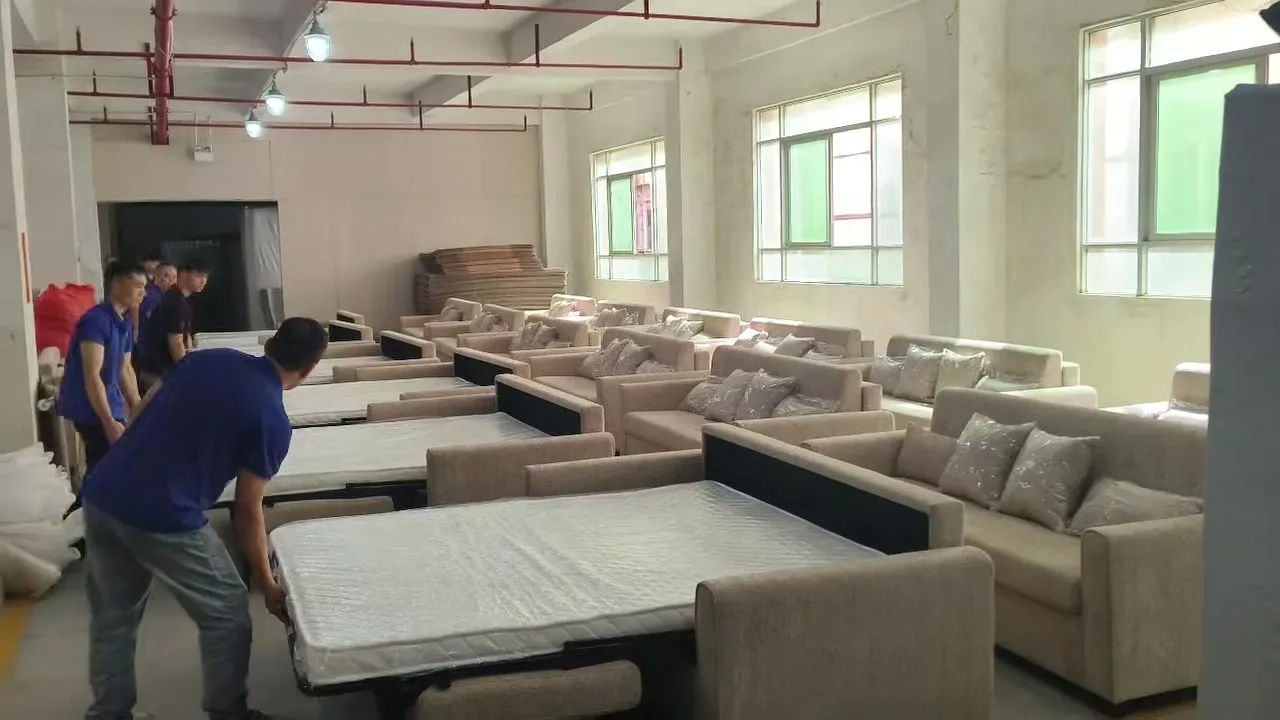
HUAXUAN can discuss sofa size, open sleeping size, upholstery direction, cushion foam, mattress construction, mechanism and project quantity against a defined brief. Available customization and OEM or ODM scope depend on the selected model, materials and approval process. Send reference images, room information, intended sleeping frequency and quantity so questions can be resolved before quotation and sampling.
Turn a general comfort request into a reviewable sofa bed specification for your hotel, apartment or wholesale program.
FAQ
Are sofa beds comfortable enough to sleep on?
They can be comfortable enough for occasional or frequent sleeping when the mattress or integrated surface, support system, frame and mechanism suit the intended use. Comfort varies widely. A model intended mainly for occasional guests should not automatically be treated as a nightly bed, and the complete open sample should be evaluated.
How can I make a sofa bed more comfortable?
Open it fully, inspect the mattress and support, correct removable obstructions, use suitable bedding and consider a compatible topper. Rotate or replace the mattress only when the product permits it. If the deck sags, the frame is unstable or bars create concentrated pressure, repair or product-level correction is more appropriate than adding soft layers.
Does a mattress topper help a sofa bed?
A topper can add cushioning, reduce the feel of minor seams and adjust surface feel. It cannot repair a broken deck, unstable mechanism or badly uneven platform. Check that its dimensions fit the usable sleep area, that it can be stored separately if required, and that it is removed before closing unless the manufacturer explicitly allows otherwise.
Why can I feel the bar through my sofa bed?
The mattress may be too thin, compressed or poorly matched to the support system, but the cause can also be a bar position, loose fabric deck, misalignment or missing support. Inspect the open bed as a system. Do not assume a thicker mattress is safe if it prevents the mechanism from folding or closing correctly.
What mattress is best for a sleeper sofa?
There is no universal best mattress. The correct construction must fit the mechanism cavity and folding path while providing the required pressure distribution, resilience and sleeping feel. Compare foam, layered foam, memory foam or compatible spring and hybrid options on the actual frame, then approve the complete specification rather than the material label alone.
Is a thicker sofa bed mattress always better?
Not necessarily. Extra thickness may add cushioning, but it also occupies folded space and can interfere with hinges, rails, latches or closing clearance. Construction and flexibility matter alongside thickness. Use the mechanism supplier’s permitted envelope and test the proposed mattress through the full open-and-close sequence before approval.
Are pull-out sofa beds comfortable?
A pull-out can be comfortable when its mattress, deck, frame alignment and supports work together. Some feel less comfortable because of a worn thin mattress or concentrated pressure over bars. The label pull-out does not guarantee a result; evaluate the full sample and use the sofa bed mechanism guide for the mechanism decision itself.
What makes a hotel sofa bed comfortable?
Hotels need a stable, reasonably flat sleeping surface, an appropriate mattress or cushion build, controlled pressure points, manageable noise and upholstery suited to cleaning. Comfort must remain practical for housekeeping and maintenance. Buyers should approve seating and sleeping modes, record the specification and confirm consistency across the project quantity.
Can sofa bed mattresses be replaced?
It depends on the model and mechanism. Classic pull-out systems often use a separate replaceable mattress, while click-clack and fold-out products may use integrated seat and back cushions. A replacement must match usable width, length, thickness, corner shape and folding behavior; a regular bed mattress may not fit or close correctly.