Sourcing Sofa Beds?
Browse HUAXUAN sofa bed references or send a model code, quantity and destination for quotation review.
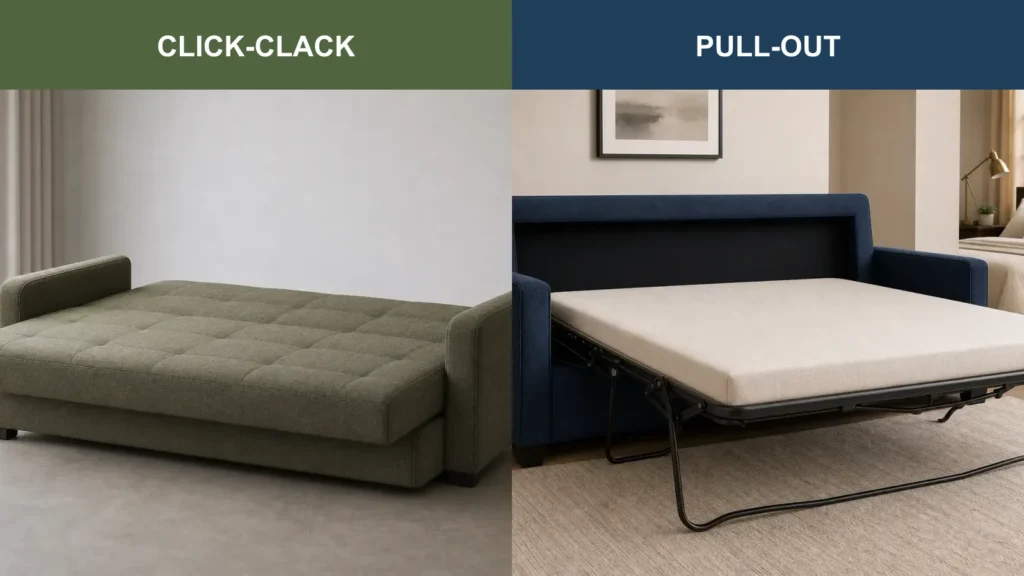
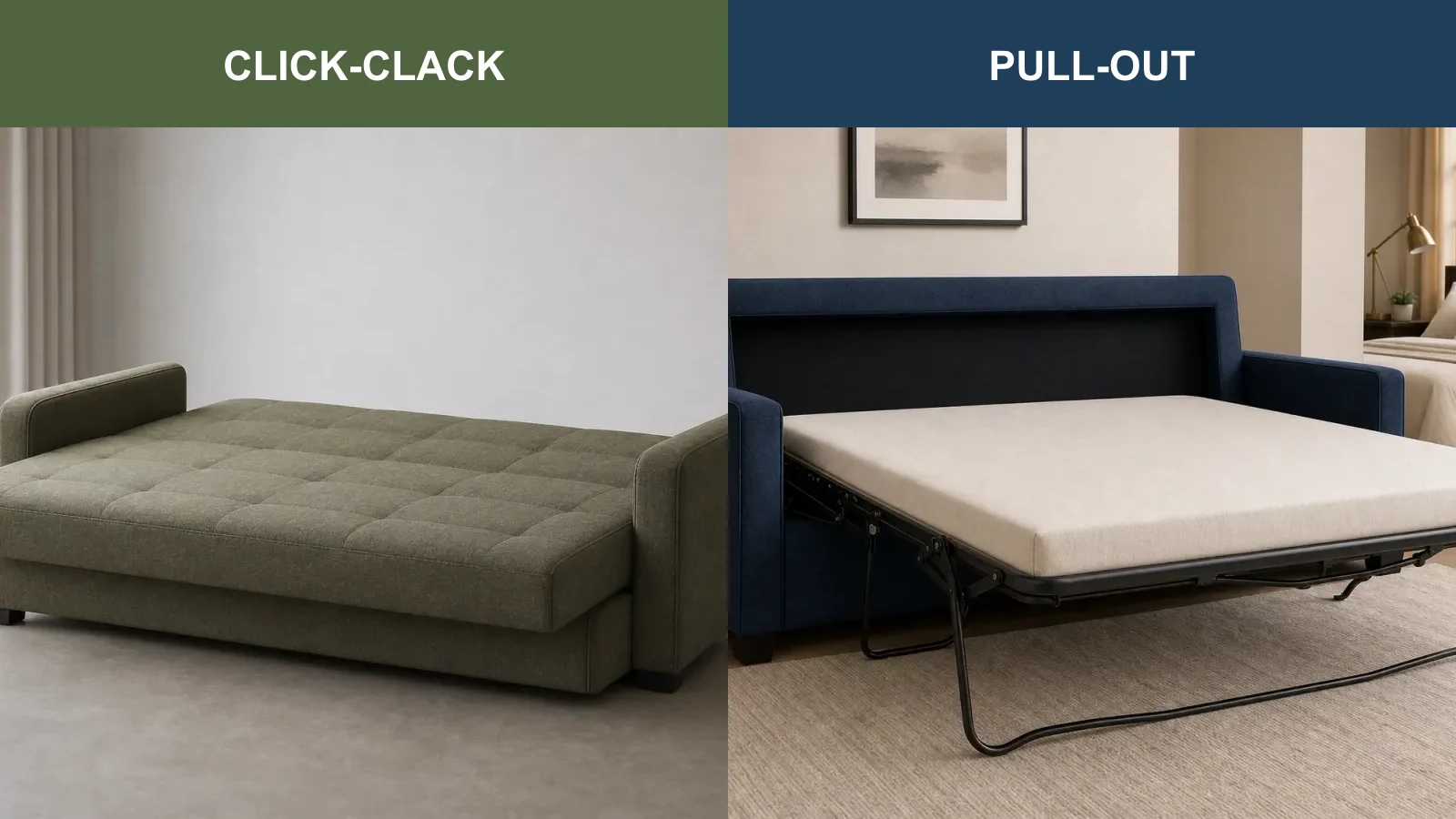
In a click clack sofa bed vs pull out sofa bed decision, the key difference is the sleeping surface: a click-clack folds its upholstered back level with the seat, while a pull-out hides a separate bed frame or deck below the seat and unfolds it forward. Click-clack designs can convert quickly and may use less front space, but often need rear clearance and make users sleep on the seat and back. Pull-outs can retain a conventional sofa appearance and a separate sleep surface, but need more front clearance, steps and mechanism access. The right choice depends on the exact construction, room and usage frequency.
Send your room layout, preferred opening method and sofa bed reference photos to compare click-clack and pull-out options.
Quick answer: click-clack vs pull-out sofa bed
Choose a click-clack direction when a fast fold-down action, compact product architecture and direct upholstered sleep surface fit the room and user expectation. Choose a pull-out direction when the brief values a more conventional closed sofa and a sleeping surface that is structurally separate from the seat cushions. Do not conclude that one is always more comfortable or durable. The result depends on the specific frame, support, cushion construction, sleeping surface and intended usage.
For B2B comparison, ask suppliers to quote both options against one room plan, one closed width, one usable sleep target and one duty statement. Without those common inputs, the quotations may represent different sizes, comfort levels or mechanisms. The decision should be visible in an operating sequence and dimension drawing before the sample is approved.
What is a click-clack sofa bed?
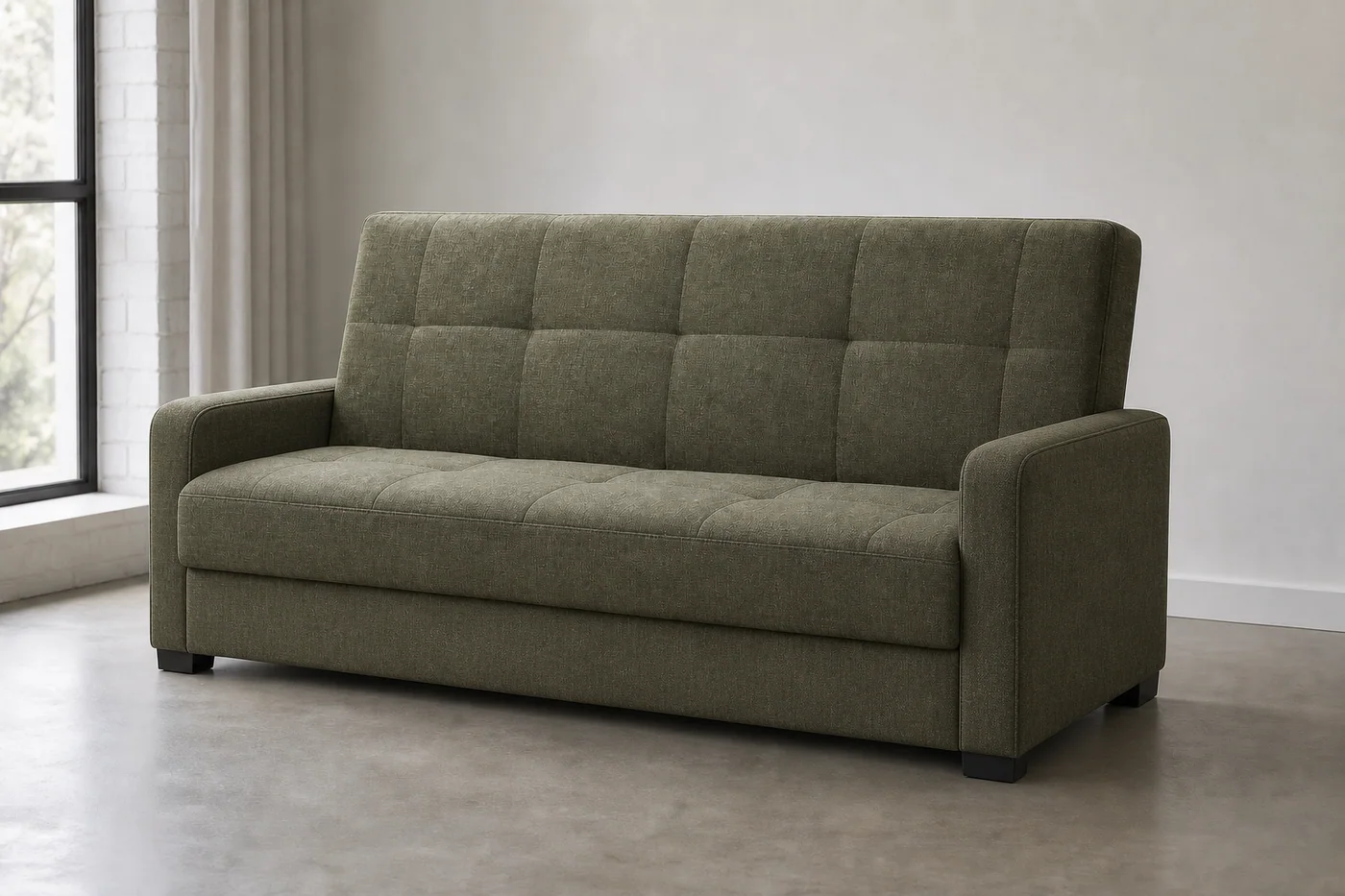
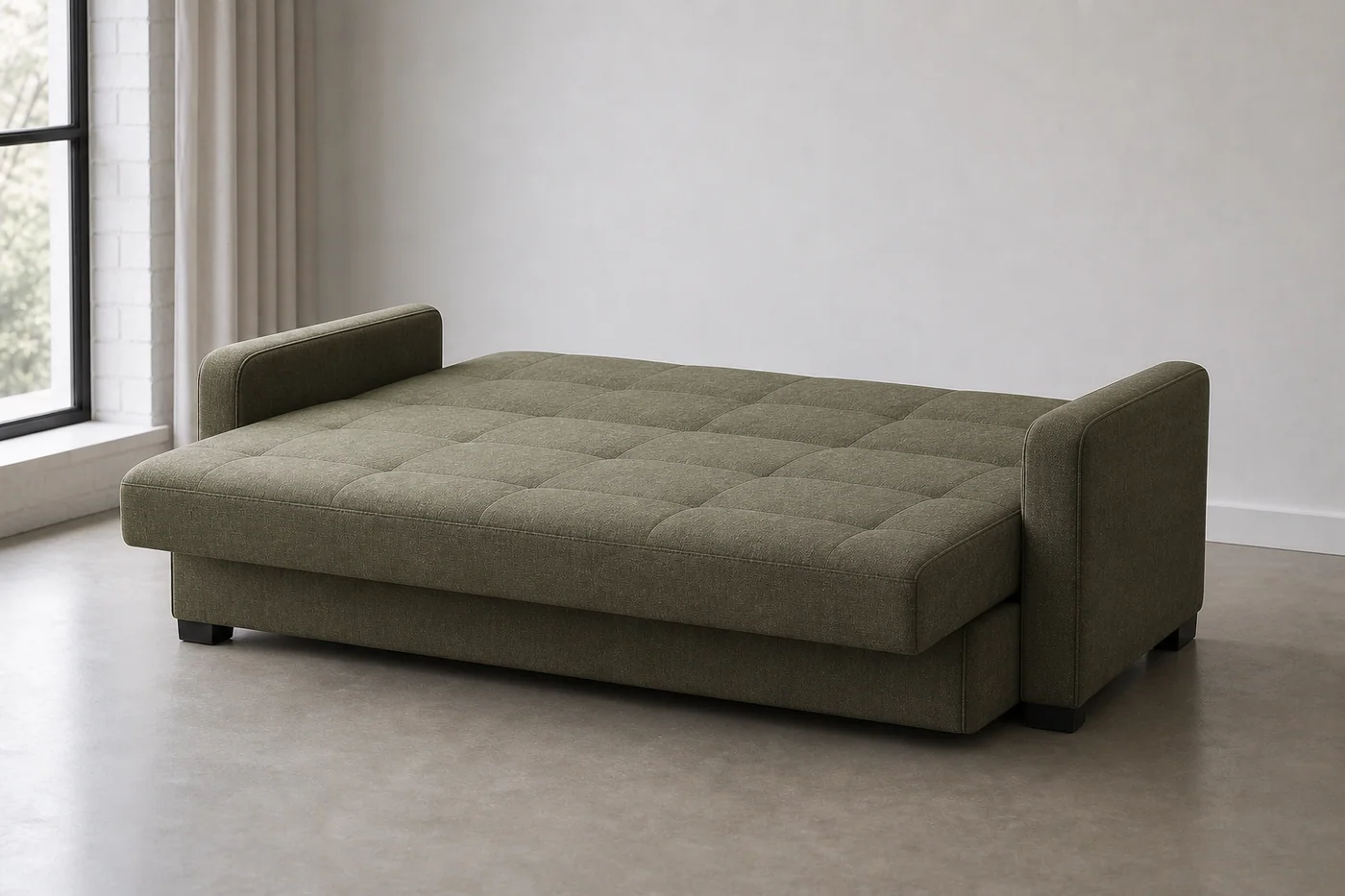
A click-clack sofa bed uses ratcheting hinges near the seat-back junction. The back is lifted or moved through locking positions and then lowered flat so the original seat and back cushions create the sleeping surface. Some models include intermediate lounge angles. The defining feature is the folding seat-back conversion; it should not be confused with a separate futon frame, a loose floor mattress or a pull-out deck.
Because the cushions serve two duties, click-clack specification links sitting and sleeping more tightly. A firm, supportive seat may also produce a firm bed, while a deeply soft seat can create uneven sleep support. The central seam, tufting and height consistency are important sample points. Check whether the back rotates behind the sofa or requires the complete unit to move away from the wall.
What is a pull-out sofa bed?
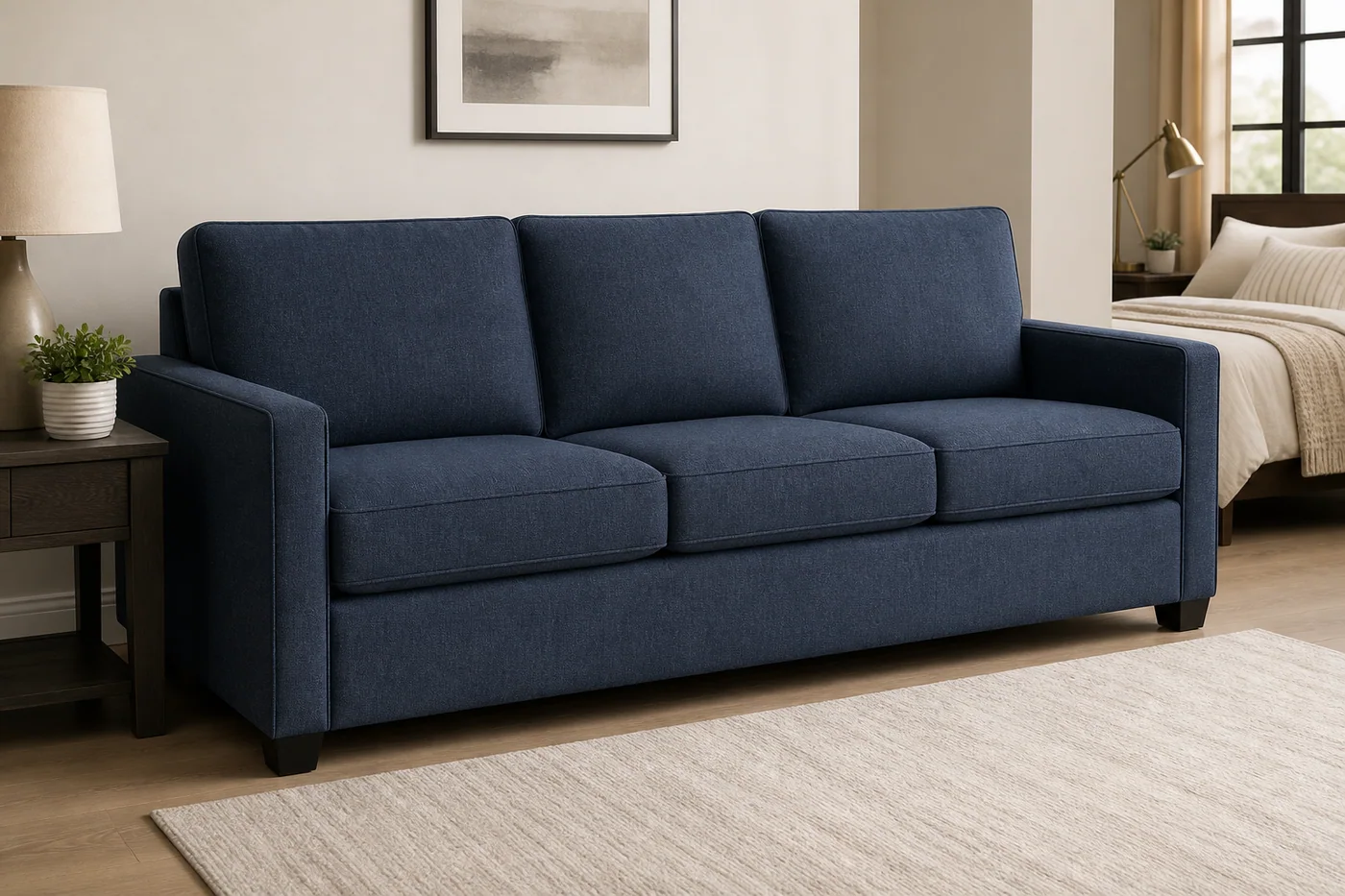
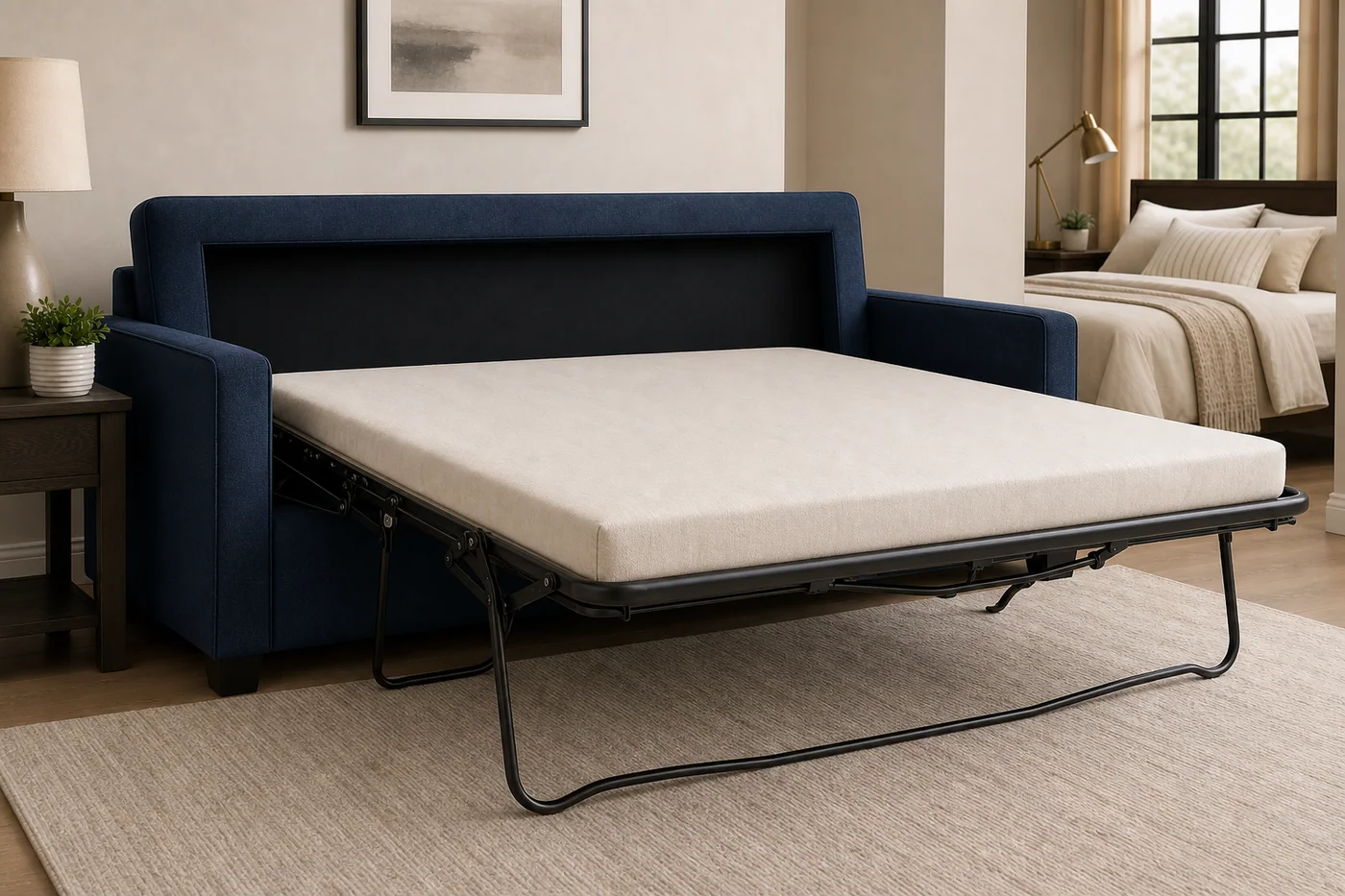
A pull-out sofa bed stores a separate folded frame, mattress or supported sleep deck beneath the seat area. Conversion usually involves removing or lifting the seat cushions, pulling the mechanism forward and deploying its support sections. The sofa back and arms remain in their seated form. This lets the designer treat the closed sofa and sleeping surface more independently, although the nested structure adds weight, joints and service points.
Pull-out is a broad family, so the words alone do not define comfort or operation. Ask whether the proposed product uses a traditional folded mattress frame, a supported platform or another pull-forward system. The existing pull-out sleeper sofa mechanism guide covers component-level checks; this article focuses on whether that product direction fits the project better than click-clack.
Key structural difference
The click-clack makes the fixed upholstered seat and rotating back do double duty. Its main moving points are compact hinges or ratchets connected to the seat-back frames. A pull-out keeps the sofa shell upright and brings an independent nested sleeping assembly into the room. That difference affects upholstery freedom, load paths, cushion storage, clearances and maintenance access.
For buyers, the distinction should appear in the specification drawings. A click-clack drawing needs upright, reclined if applicable, and fully flat states, plus the back rotation envelope. A pull-out drawing needs closed and fully extended states, the front support positions and any removed cushion location. Both should show usable sleeping width and length separately from overall product size.
Main click-clack vs pull-out comparison
| Comparison Factor | Click-Clack Sofa Bed | Pull-Out Sofa Bed | Buyer Decision Note |
|---|---|---|---|
| Opening method | Backrest rotates and locks flat with the seat | A separate folded frame or sleep deck unfolds from below the seat | Choose by user steps and the room’s free direction |
| Sleeping surface | Original seat and back cushions | Separate mattress or supported sleeping deck | Test seams, levels and support on the exact sample |
| Closed sofa appearance | Often low-profile with an integrated seat-back geometry | Can resemble a conventional upholstered sofa | Match the project’s design priority and cushion plan |
| Sitting comfort | Directly tied to the cushions that also form the bed | Can use sofa cushions more independently from the sleeper surface | Neither structure is automatically more comfortable |
| Sleeping comfort | Depends on cushion firmness, hinge line and surface consistency | Depends on mattress/deck, frame support and transitions | Compare complete constructions, not mechanism names |
| Front clearance | Often limited, although the product may shift during conversion | Usually needs substantial forward space | Mark the full moving envelope |
| Back clearance | Often needs space for the backrest to rotate | May remain closer to the wall, depending on design | Confirm exact motion from a drawing or sample |
| Product weight | Often simpler and potentially lighter | Often heavier because of the nested frame | Check handling and floor-plan needs, not an assumed value |
| Mechanism complexity | Compact ratchet hinges at the seat-back junction | Multiple folding rails, pivots and support legs | Complexity affects inspection and access, not quality by itself |
| Maintenance access | Hinges should be reachable near the sides or service flaps | Frame and joints require access below removable seats | Ask what can be serviced after installation |
| Best usage frequency | Often selected for fast occasional or moderate conversion | Often selected when a separate sleep surface is preferred | Actual frequency must be stated and sample-tested |
| Best project type | Studios, office guest rooms and compact occasional spaces | Hotels, serviced apartments and guest rooms with front clearance | Project type guides the decision but does not replace specification |
Opening and closing comparison
Click-clack conversion is often shorter: move the back through the ratchet release point and lower it flat. The user may need access behind the sofa or may need to pull the unit forward first. Pull-out conversion usually happens from the front and can include cushion removal, a lifting action and unfolding legs. The number of steps matters less than whether the intended guest, resident or staff member can repeat them safely within the room.
Ask the sample reviewer to start without coaching. Record where they grip, whether upholstery enters a joint, whether legs land squarely and where loose cushions go. Test closing as carefully as opening. A mechanism that opens smoothly but is awkward to reset can create housekeeping delays or discourage residents from using the function.
Sitting comfort comparison
A click-clack seat often has a simpler, continuous cushion geometry because the back must fold into the bed. Arm and back shapes may be more restrained. This can create a compact modern sofa, but the seat firmness and back panel are directly constrained by their sleeping role. A pull-out can use removable seat and back cushions that feel closer to a conventional sofa, although space for the folded bed can affect seat height or depth.
Neither mechanism guarantees better sitting. Compare usable seat depth, front-edge support, back angle, lumbar contact, cushion recovery and the way the frame feels at different seating positions. The everyday-use sofa bed guide provides a fuller duty-based test when daytime seating is frequent.
Related Sofa Bed Models
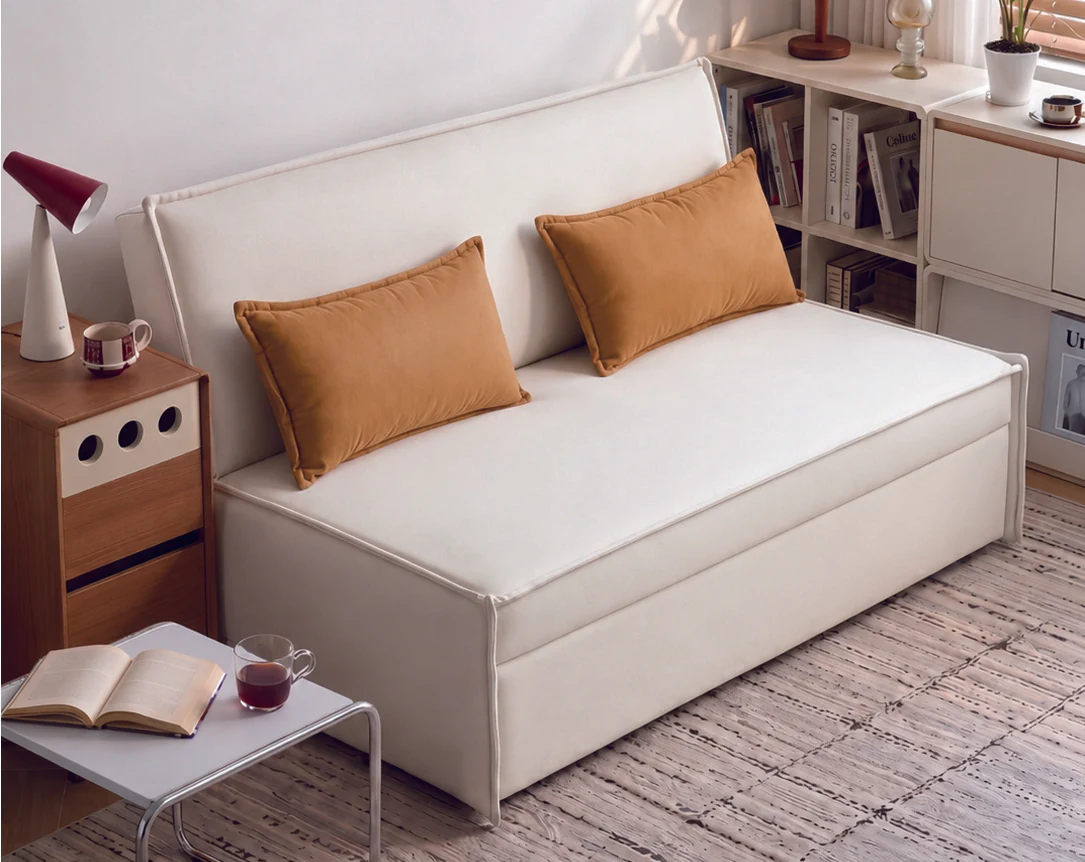
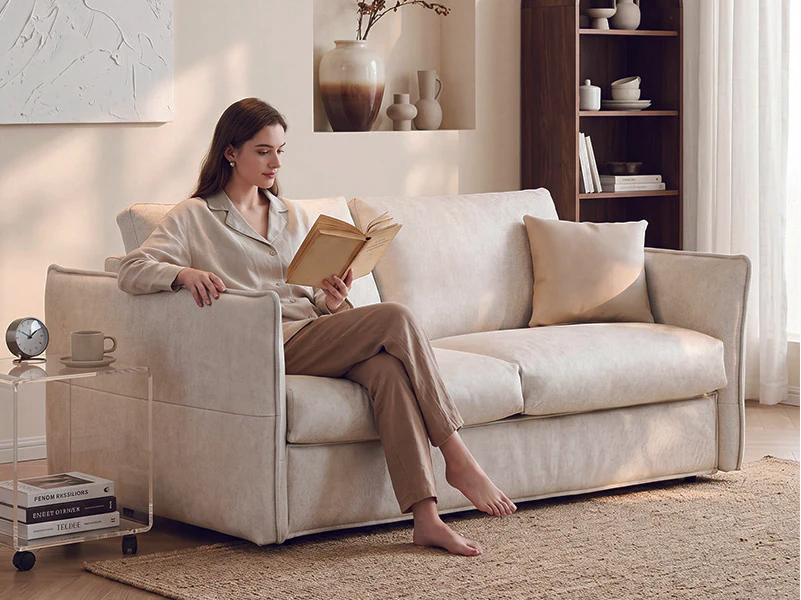
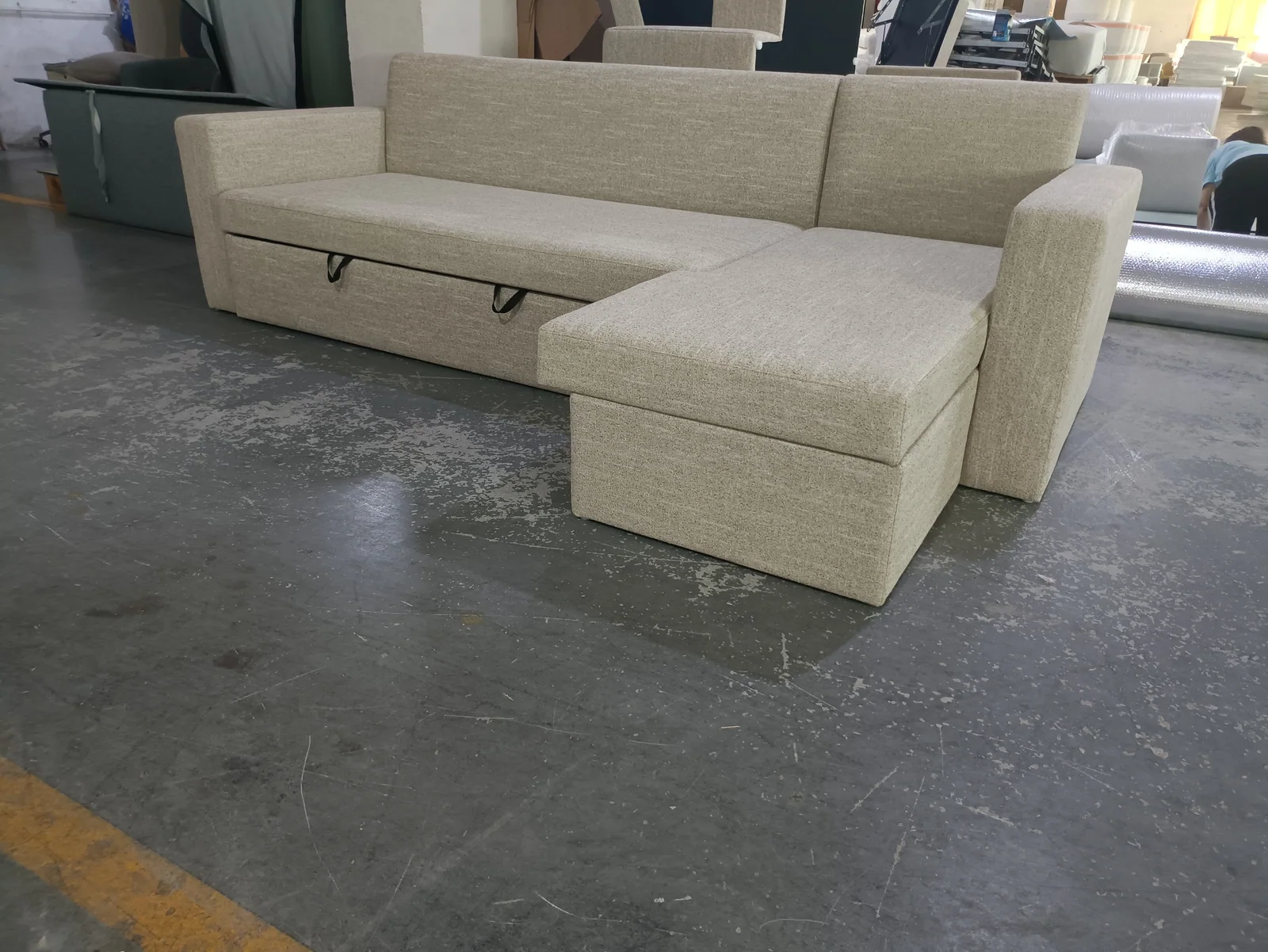
Compare these references alongside the guide. Confirm the selected configuration before ordering.
Sleeping surface comparison
On a click-clack, the sleeper lies across the former seat and back. Look for consistent height and firmness, a manageable center join, supportive edges and tufting that does not create hard pressure points. On a pull-out, evaluate the separate mattress or deck, the frame below it, transitions between folding sections and the stability of legs. A separate surface can feel more bed-like, but a weak or thin construction is not automatically superior to a well-resolved click-clack.
Approve the exact sleeping surface, not a generic mechanism sample. Product width, cushion thickness, support layout and upholstery tension can change the result. If the project plans to use a topper, include it in the conversion and storage workflow. Keep the decision focused on the complete sofa-bed system rather than making the mattress an unrelated main topic.
Before choosing a sofa bed mechanism, compare the sleeping surface, opening clearance, sitting comfort and expected conversion frequency.
Space and clearance comparison
A pull-out generally claims the floor in front of the sofa, so coffee tables, desks or TV cabinets can conflict with the open bed. A click-clack may use less front travel but needs space for the back to rotate, and some products shift forward or backward during conversion. Measure the actual moving envelope rather than assuming “compact” means no clearance.
Mark closed depth, open depth, rear gap, front walkway, door swing and wall position on the floor plan. Use the sofa bed dimensions guide for the measurement method, then replace all reference figures with the exact proposed product. Also show where removed pull-out cushions or click-clack bedding will sit at night.
Appearance and upholstery flexibility
Click-clack sofas often reveal their function through a broad folding back, straighter silhouette and integrated cushions. That can suit modern studios, office guest rooms and budget-conscious collections. Upholstery patterns, deep buttoning and very sculptural backs need to remain compatible with the fold line. A pull-out can conceal the bed under conventional cushions, giving designers more freedom to create a familiar hotel or apartment sofa appearance.
Visual flexibility does not remove structural constraints. Pull-outs still need an internal cavity, access below the seats and attachment areas strong enough for the mechanism. Click-clacks still need upholstery clearance around hinges and a back that stays stable in each position. Ask for both closed and open finish photos during sample approval so the product is not judged from the preferred mode only.
Maintenance and mechanism access
Click-clack mechanisms concentrate service around the side ratchets and their frame mounts. Access may be through a zipper, flap or removable side panel. Pull-out products expose more joints when open but may require seats or covers to be removed for inspection when closed. In both cases, confirm how technicians reach fasteners after the sofa is installed and which moving surfaces must stay clear of fabric.
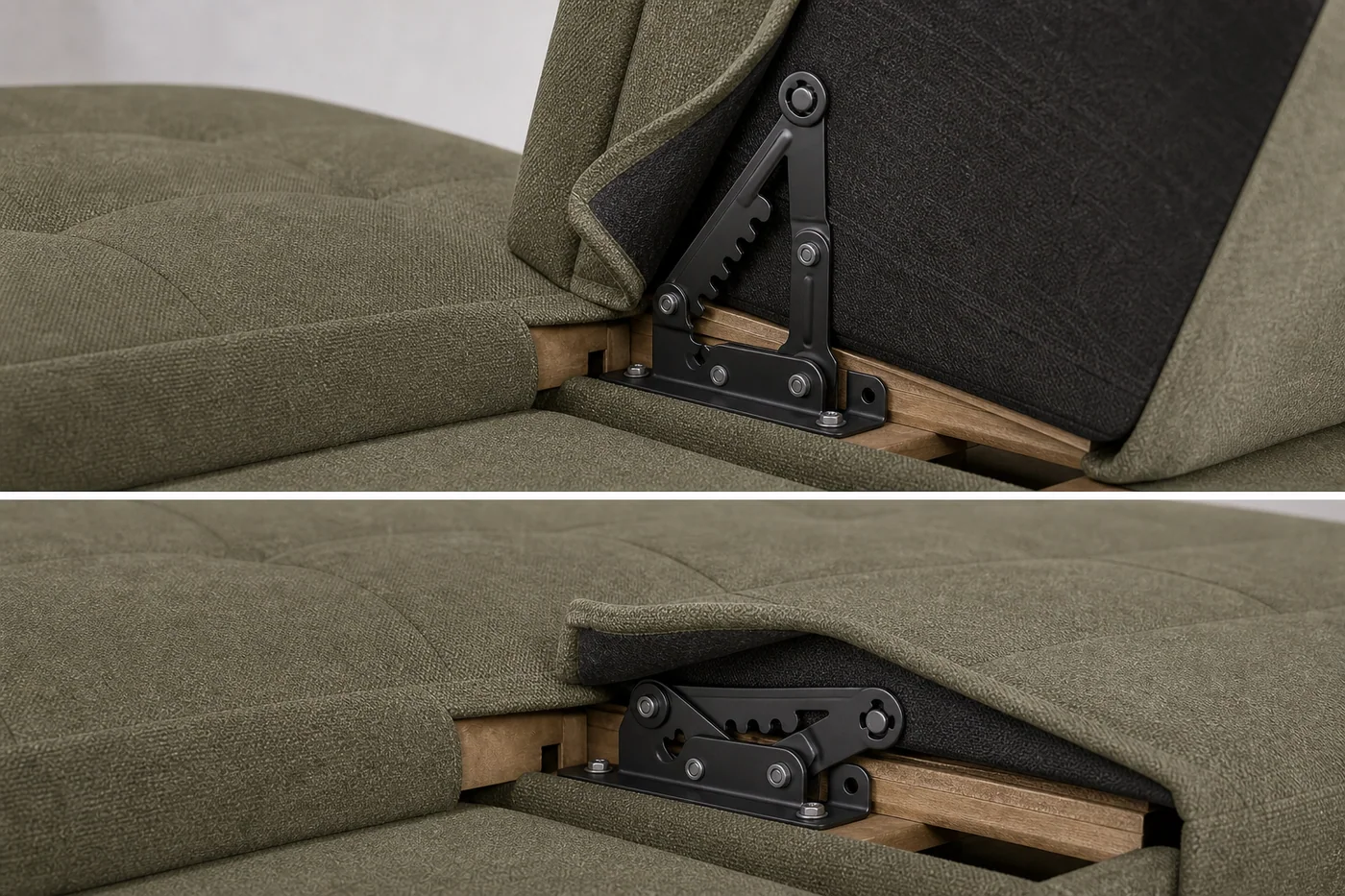
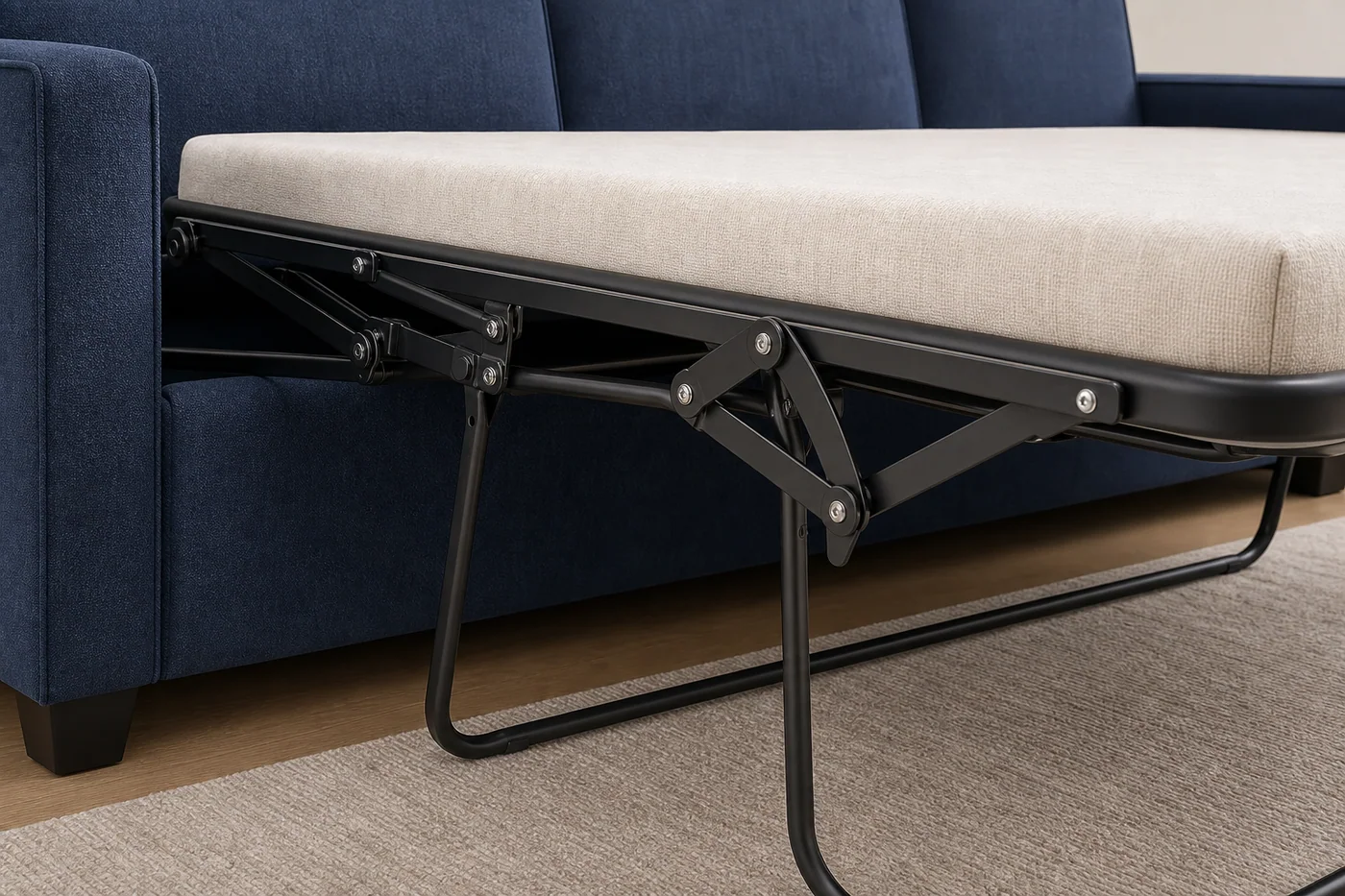
Mechanism complexity should not be used as a direct quality score. A compact hinge can be poorly mounted, and a multi-joint pull-out can be well aligned and serviceable. Review mounting structure, straightness, controlled movement, floor contact, noise and the supplier’s sample response. Record the normal alignment and sound so future inspections have a practical baseline.
Which option works for different projects?
| Project Scenario | Recommended Direction | Reason | What the Buyer Must Confirm |
|---|---|---|---|
| Occasional guest room | Click-clack or pull-out, based on comfort expectation | Both can work when use is infrequent | User steps, surface feel and stored cushion plan |
| Small studio apartment | Often click-clack if rear clearance is available | Fast conversion and less nested hardware can suit tight plans | Rear motion, wall gap, bed width and daily sitting comfort |
| Hotel guest room | Often pull-out when a separate guest bed feel is preferred | Conventional sofa appearance and separate sleep surface may fit the brief | Guest operation, front clearance, housekeeping and maintenance |
| Serviced apartment | Pull-out or well-specified click-clack | Frequency and room layout vary widely | Conversion cycles, seating duty, sleep support and reset process |
| Daily seating with occasional sleeping | Sofa-first pull-out or carefully cushioned click-clack | Daytime comfort should lead the choice | Seat depth, cushion recovery and closed appearance |
| Frequent sleeping use | Specification-led decision; often a separate-surface direction | Support and repeat conversion matter more than category labels | Extended sample review and explicit intended duty |
| Budget-sensitive project | Often click-clack, subject to sample approval | Simpler architecture can reduce components | Do not trade away adequate frame, hinge or cushion performance |
| Design-focused project | Often pull-out for a conventional sofa silhouette | The bed can remain concealed beneath removable seats | Closed proportions, upholstery freedom and mechanism integration |
Hotel guest rooms often favor a pull-out when a conventional sofa appearance and separate sleeping surface support the room positioning. A compact studio may favor click-clack when front space is limited but rear rotation is possible. Serviced apartments sit between these cases: the expected sleeping frequency and occupant profile should lead. An office guest room may value quick click-clack conversion while keeping the daily room visually simple.
Budget-sensitive does not mean automatically choosing the fewest parts. Compare the complete quoted specification, sample operation and likely use. Design-focused does not mean automatically choosing pull-out; a refined click-clack can fit a modern brief. The table gives a direction for discussion, not a compulsory standard for every market or project.
Decision checklist
Send this information before asking suppliers to recommend a mechanism. Keep the same inputs across the comparison.
- Project type
- Room size
- Floor plan
- Main use
- Sleeping frequency
- Conversion frequency
- Click-clack or pull-out preference
- Closed sofa dimensions
- Opened bed dimensions
- Front clearance
- Back clearance
- Wall position
- Mechanism type
- Sitting comfort requirement
- Sleeping support requirement
- Frame structure
- Seat cushion structure
- Upholstery material
- Maintenance access
- Quantity
- Target market
- Reference photos
- Customization requirement
Why include HUAXUAN in the supplier comparison
HUAXUAN supports sofa bed model selection and bulk sourcing for importers, distributors, wholesalers and furniture brands. Send the Product Code, quantity, required closed and sleeping dimensions, upholstery and destination for quotation review. Confirm customization scope and any OEM / ODM requirements against the selected model and approved sample. Compare HUAXUAN Furniture with other suppliers using documented specifications and sample evidence.
Review the sofa bed category and the futon vs sofa bed distinction to keep product terminology clear. Then send the preferred opening path, floor plan and reference photos through the B2B sofa bed quotation page. Ask the response to identify the exact mechanism, closed and open size, cushion structure, maintenance access and sample points.
Send the sofa bed model code, quantity, required dimensions, mechanism preference, upholstery and destination to HUAXUAN for B2B quotation review.
FAQ
What is the main difference between a click-clack and pull-out sofa bed?
A click-clack folds the upholstered backrest level with the seat, so those cushions become the bed. A pull-out keeps the sofa back upright and unfolds a separate sleeping frame or deck from below the seat. This changes the surface, opening path, closed appearance, cushion handling and maintenance access that buyers must specify.
Which sofa bed is easier to open?
Click-clack designs often use fewer steps, while pull-outs may require cushion removal and unfolding support sections. Ease still depends on hinge design, balance, grip points, product weight and room clearance. Test the exact sample with an untrained user and record both opening and closing, because a short mechanism description cannot confirm practical operation.
Which mechanism saves more space?
Click-clack may need less forward extension but often needs rear clearance for the back to rotate. Pull-out models usually need more floor space in front but can sometimes remain closer to the wall. Mark the complete moving envelope, surrounding furniture and remaining walkway for the exact model before deciding which one fits better.
Is a pull-out sofa bed always more comfortable?
No. A pull-out can provide a separate sleep surface, but comfort depends on that surface, the supporting frame, folding transitions and stability. A click-clack depends on seat-back cushion firmness and seam placement. Buyers should compare complete samples under the intended duty instead of treating either mechanism name as a comfort guarantee.
Which sofa bed mechanism works better for hotels?
Many hotels consider pull-outs for a conventional sofa look and separate guest sleeping surface, while some compact or design-led rooms can use click-clack products. Confirm guest operating steps, clearance, comfort expectation, housekeeping reset, maintenance access and sleeping frequency. Different room categories within one hotel may justify different mechanisms.
What should buyers send for a mechanism comparison quotation?
Send the model code or reference photos, quantity, required closed and sleeping sizes, upholstery and destination. Include front and rear clearance, sitting duty, sleeping frequency and comfort requirements. A floor plan is optional when checking fit. Ask the supplier to identify whether the proposal is click-clack or pull-out and show the full operating sequence.
Need Pricing for a Sofa Bed Model?
Send the model code, quantity, required size, upholstery and destination. We can review the selected reference before quotation.