
Sourcing Sofa Beds?
Browse HUAXUAN sofa bed references or send a model code, quantity and destination for quotation review.
If a sofa bed won’t open or close, stop forcing it. Check the model instructions, clear loose bedding and cushions, look for an obvious obstruction, and compare both sides of the moving assembly. A mechanism that binds, tilts, fails to lock, or makes a new sharp noise needs inspection before anyone sleeps on it. This guide helps owners and wholesale buyers describe the symptom and decide when to seek qualified service; it is not a model-specific repair procedure.
The related opening and closing guide explains normal operation. The mechanism guide explains construction families. Here the question is what has changed when an identified mechanism no longer behaves normally.
First, Identify the Mechanism and the Symptom
Find the model label, purchase record or instructions before diagnosing a fault. A pull-out frame, a folding deck, a click-clack backrest and a sectional extension have different travel paths and locking points. Even two products in the same family can use different hardware. Photograph the sofa closed, partly moved if safe, and open if it can reach that position without resistance. Note whether the problem began after delivery, after cleaning, or after repeated use.
| What you observe | Safe first check | Next action if unchanged |
|---|---|---|
| No movement from closed | Confirm the model’s normal release point; remove loose bedding and visible obstructions | Stop if the release cannot be identified or movement needs force |
| One side advances first | Compare visible clearance on both sides without reaching into joints | Ask for inspection of alignment and connections |
| Backrest will not lock | Remove cushions touching the back; follow the exact model sequence | Do not seat or sleep on an unstable backrest |
| New scraping or metallic snap | Stop cycling the mechanism and record the sound | Request qualified assessment before reuse |
| Frame opens but does not settle flat | Check for trapped bedding or a support leg left in the wrong visible position | Do not occupy an unsupported surface |
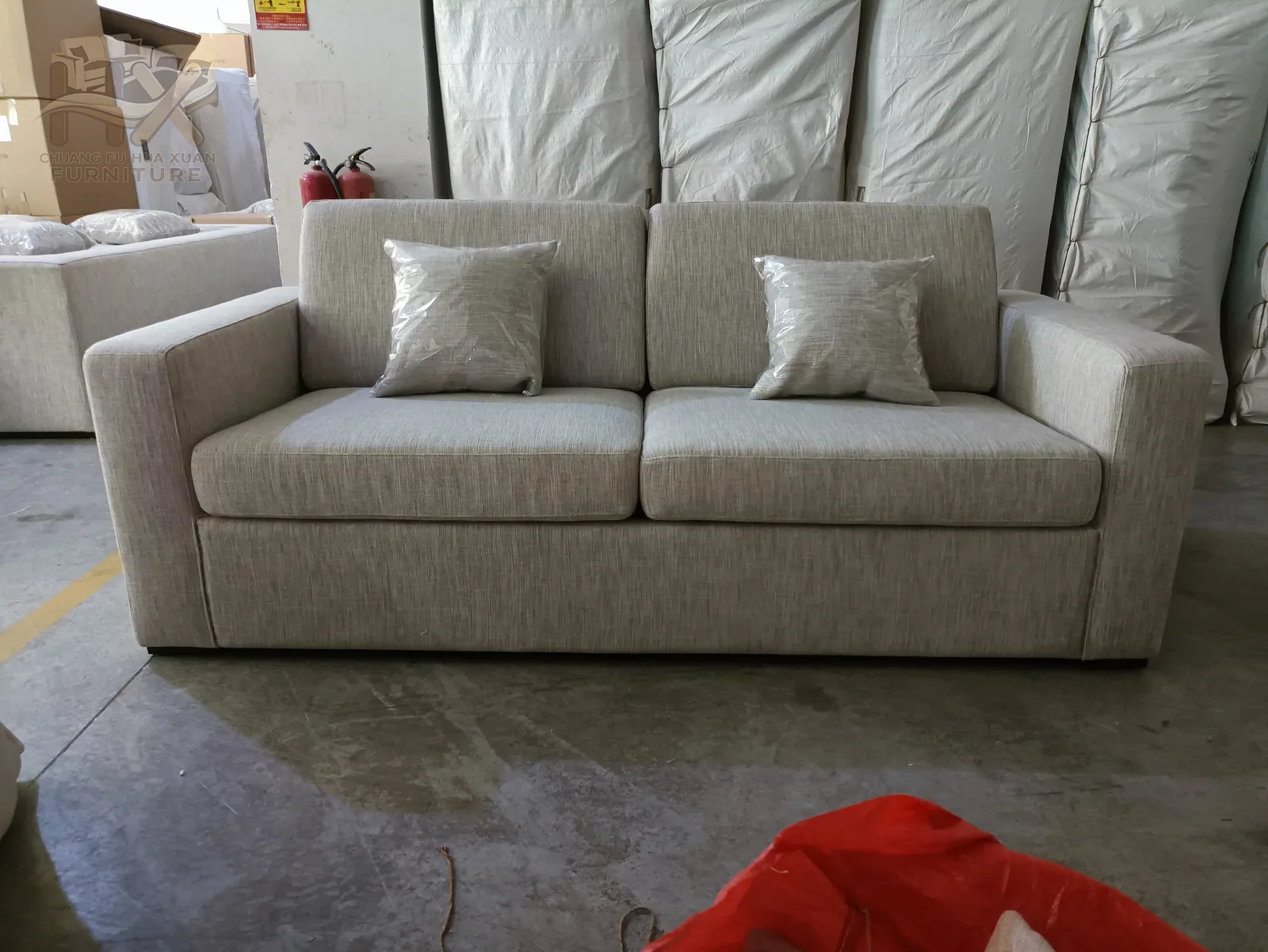
Pull-Out Sofa Bed Stuck or Difficult to Extend
A pull-out section can be held by a cushion, bedding, an object under the frame or a misaligned travel path. Clear the floor in front and inspect only parts that are safely visible. Use the designated handle or grip in the direction shown by the model instructions. Do not pull from one corner to “free” the frame: asymmetric force may make an alignment problem worse. If the assembly starts moving and then binds at the same point, record where that happens and stop.
For a newly delivered model, check whether transport restraints or protective materials were intended to be removed during setup. This is a documentation question, not permission to remove unidentified hardware. Compare the sample and installation record with the unit showing the problem. A fault across several units may point to a common packing, assembly or component issue; one isolated unit may require a different investigation.
Click-Clack Backrest Not Locking Properly
Some click-clack designs need a specific sequence or angle before the backrest engages. Follow the supplied instructions for that exact model and keep hands away from the hinge line. If an expected click or stable position is absent, do not rely on the back as a seat support. A backrest that springs forward, drops unexpectedly or catches at an uneven angle is a stop-use condition. A retailer or hotel should label the unit out of service until a qualified technician or the supplier identifies the cause.
A similar visible symptom can come from a cushion trapped behind the back, a deformed bracket or a worn locking component. An owner cannot distinguish those by repeatedly cycling the mechanism. Send the model code, short video and order information to the supplier. Ask whether the part can be identified without exposing tensioned components.
Uneven Extension, Fabric Obstruction and Loose Hardware
Inspect the two sides from a safe viewpoint. A skewed extension, changing gap or support that touches the floor on one side only should be recorded, not corrected by pushing the raised side down. Look for loose fabric, mattress ticking, straps or cushion corners in the travel path. Move removable soft items away only when the unit is stationary; never reach into a closing joint.
Visible screws, bolts and brackets can loosen with use or handling. Note any missing, damaged or unusually mobile part and consult the service document for its identification. Do not substitute a similar-looking fastener or tighten an unknown pivot to an assumed torque. The supplier should specify approved parts and whether a qualified service person must fit them. Never dismantle high-tension springs or linkage assemblies.
Related Sofa Bed Models
Compare these references alongside the guide. Confirm the selected configuration before ordering.
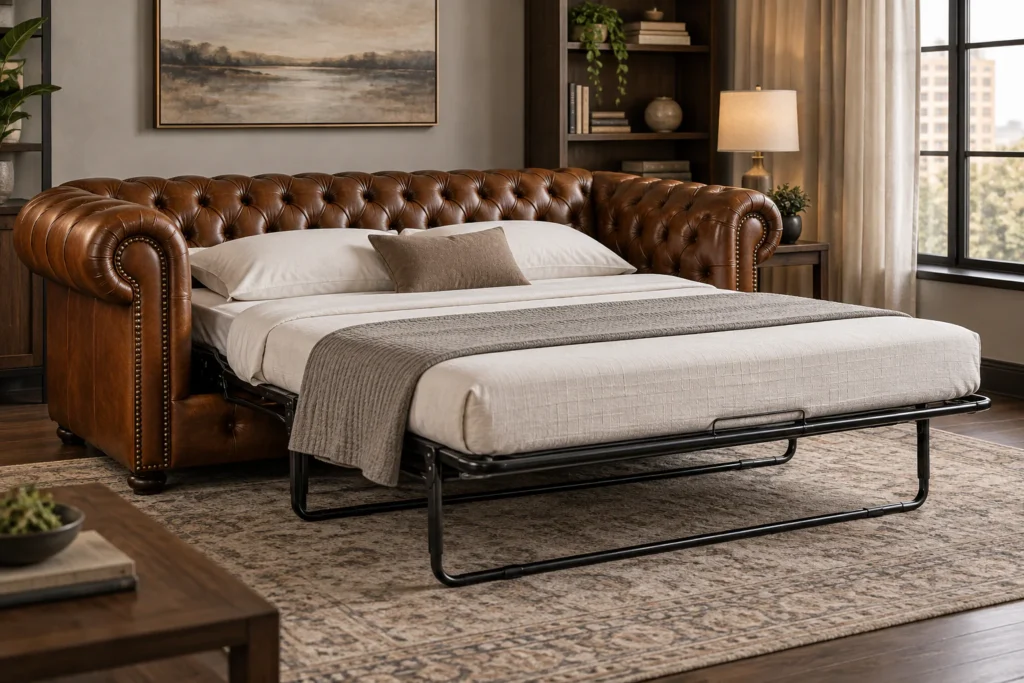
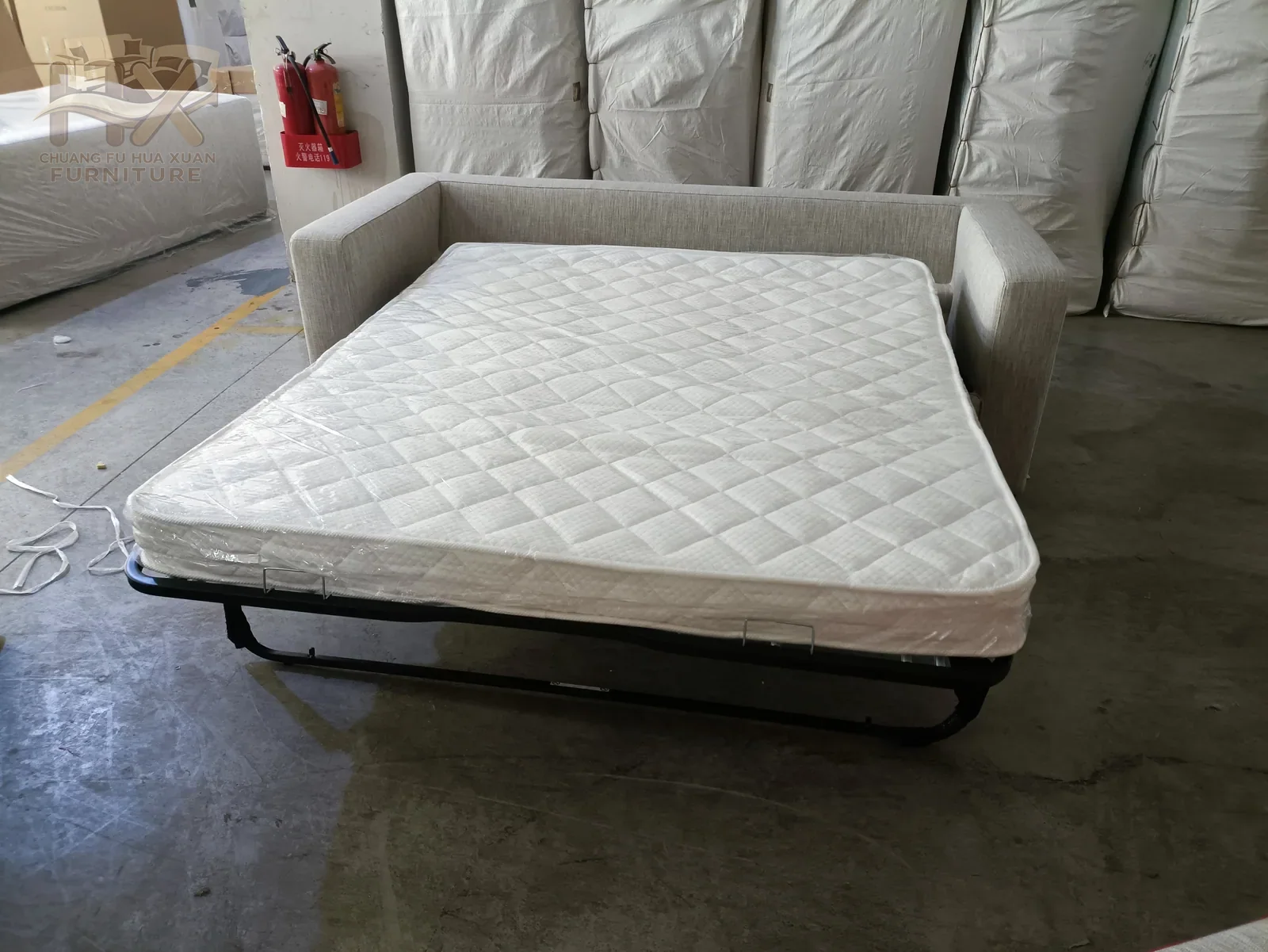
Light Grey Fabric Pull-Out Sofa Bed for Apartment Projects
Compare its pull-out travel and exposed bed support with the approved operating sample.
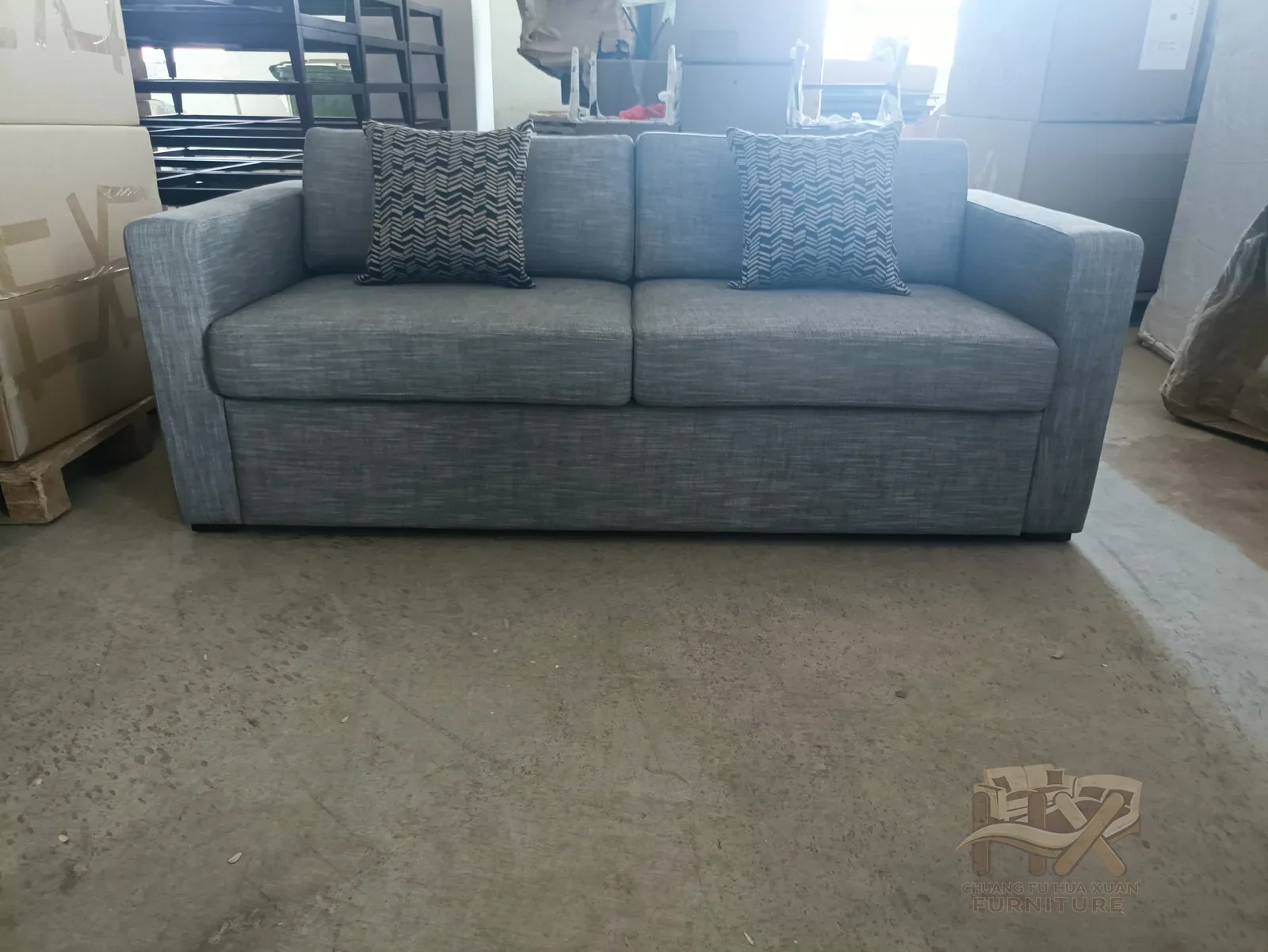
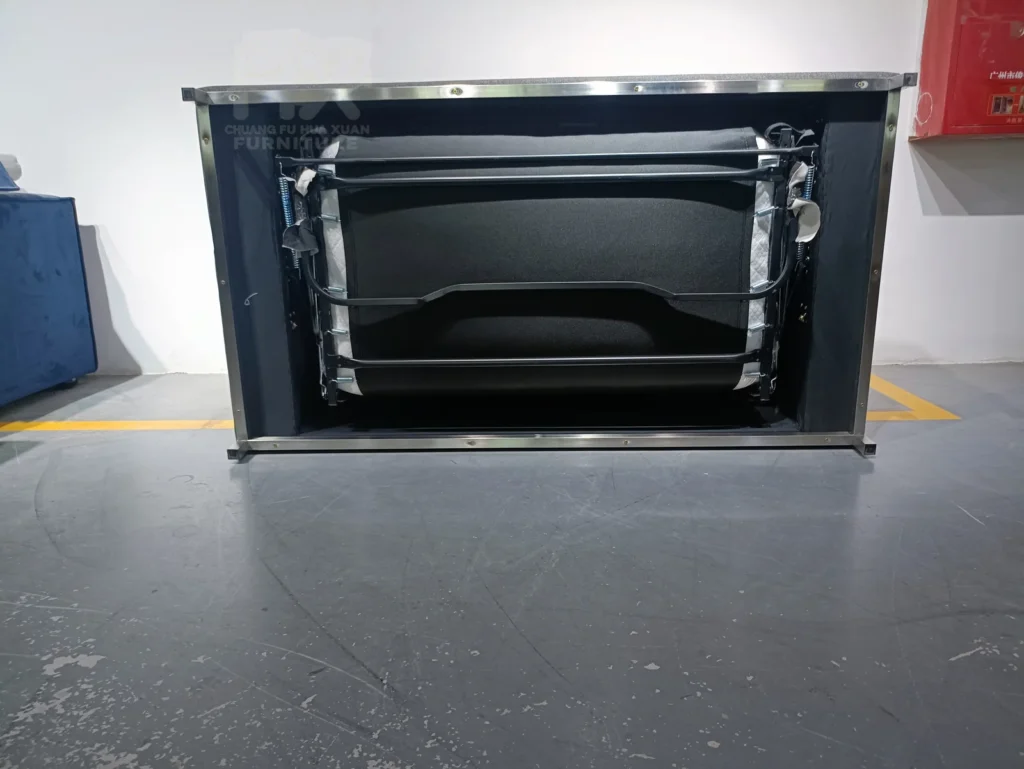
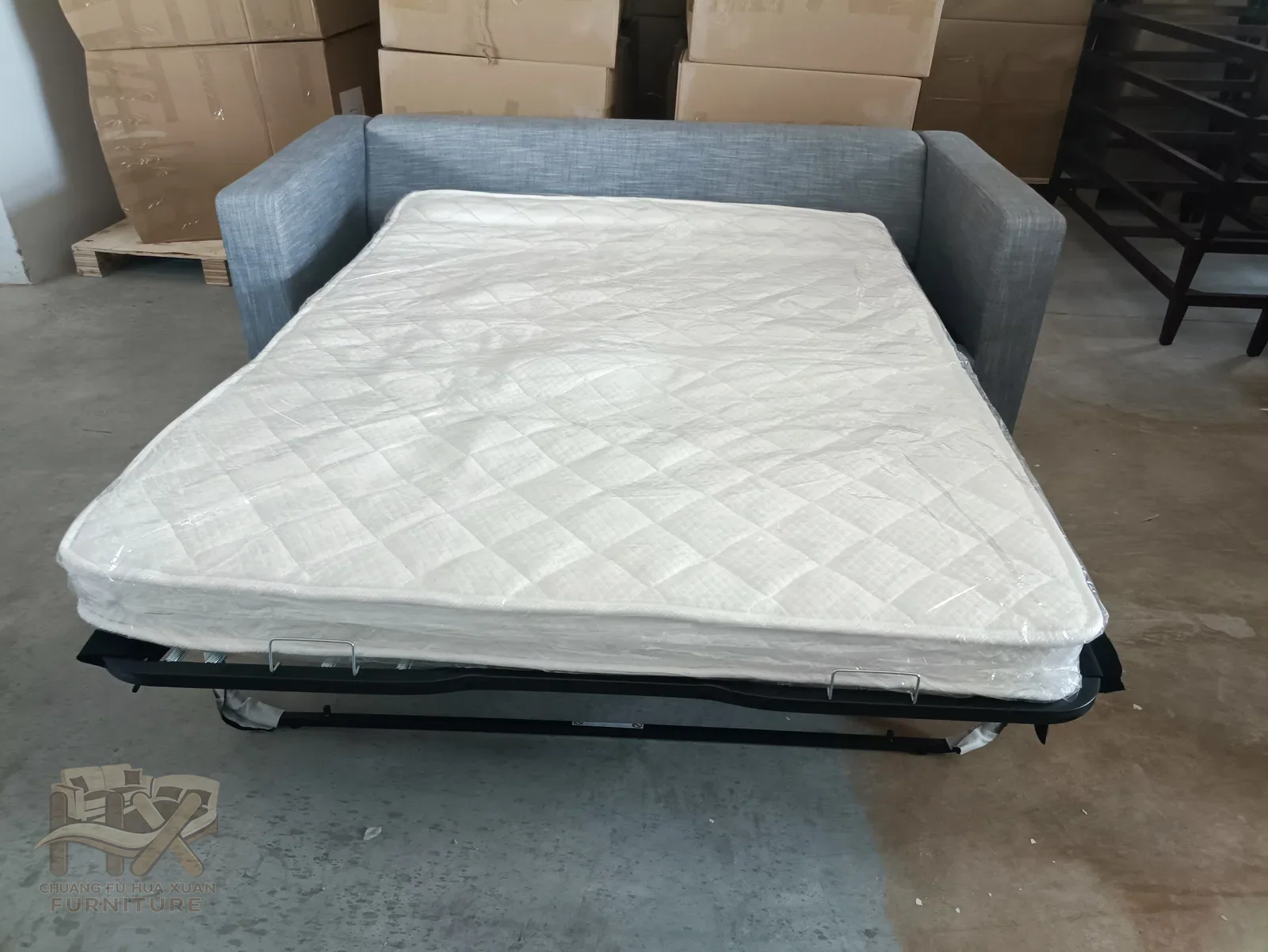
Grey Fabric Pull-Out Sofa Bed for Serviced Apartments
Its separate mattress and frame make bedding clearance and closing checks especially relevant.
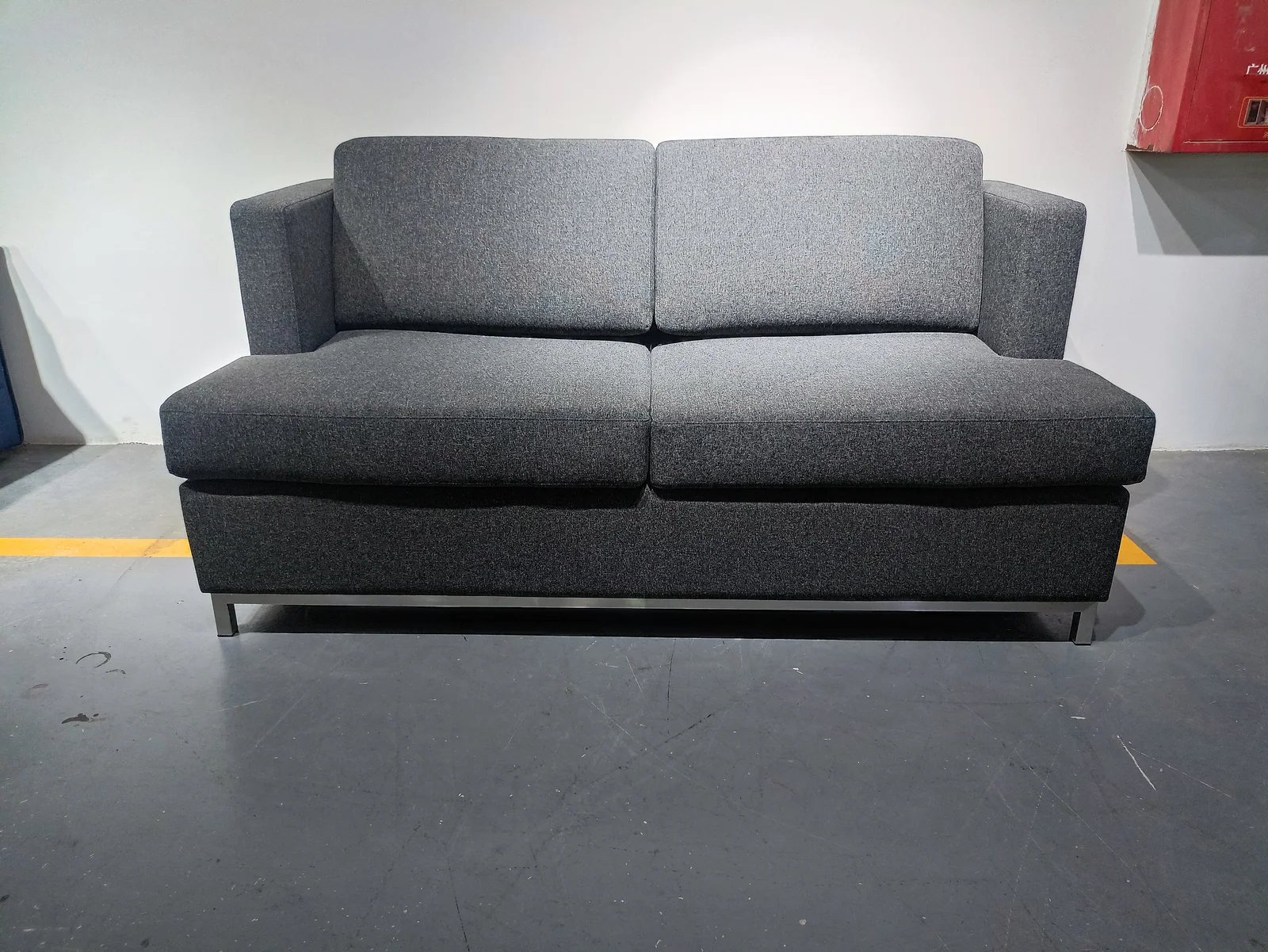
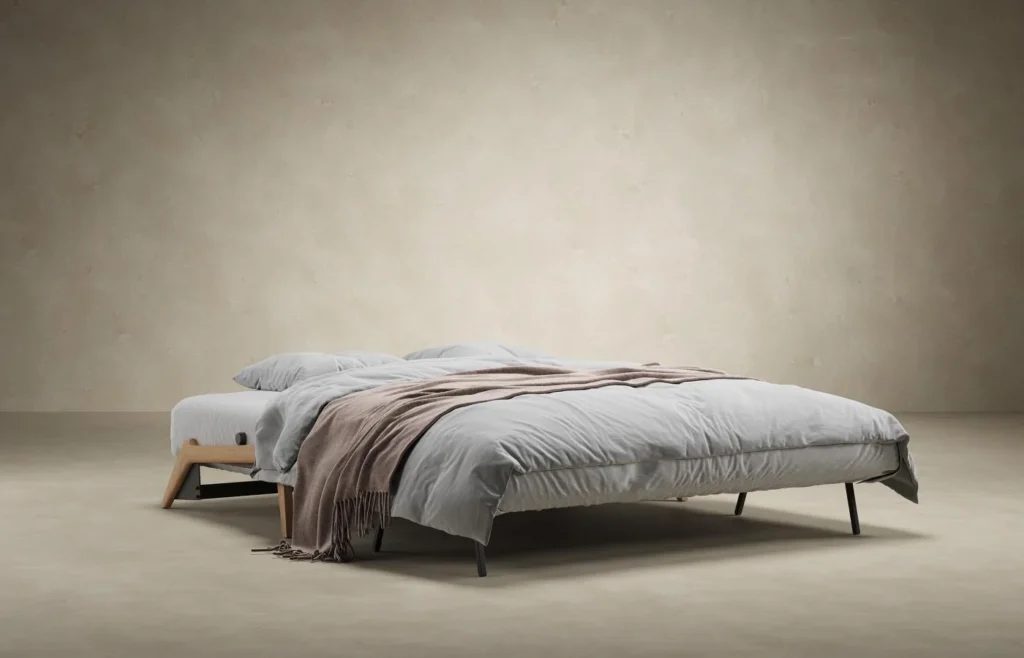
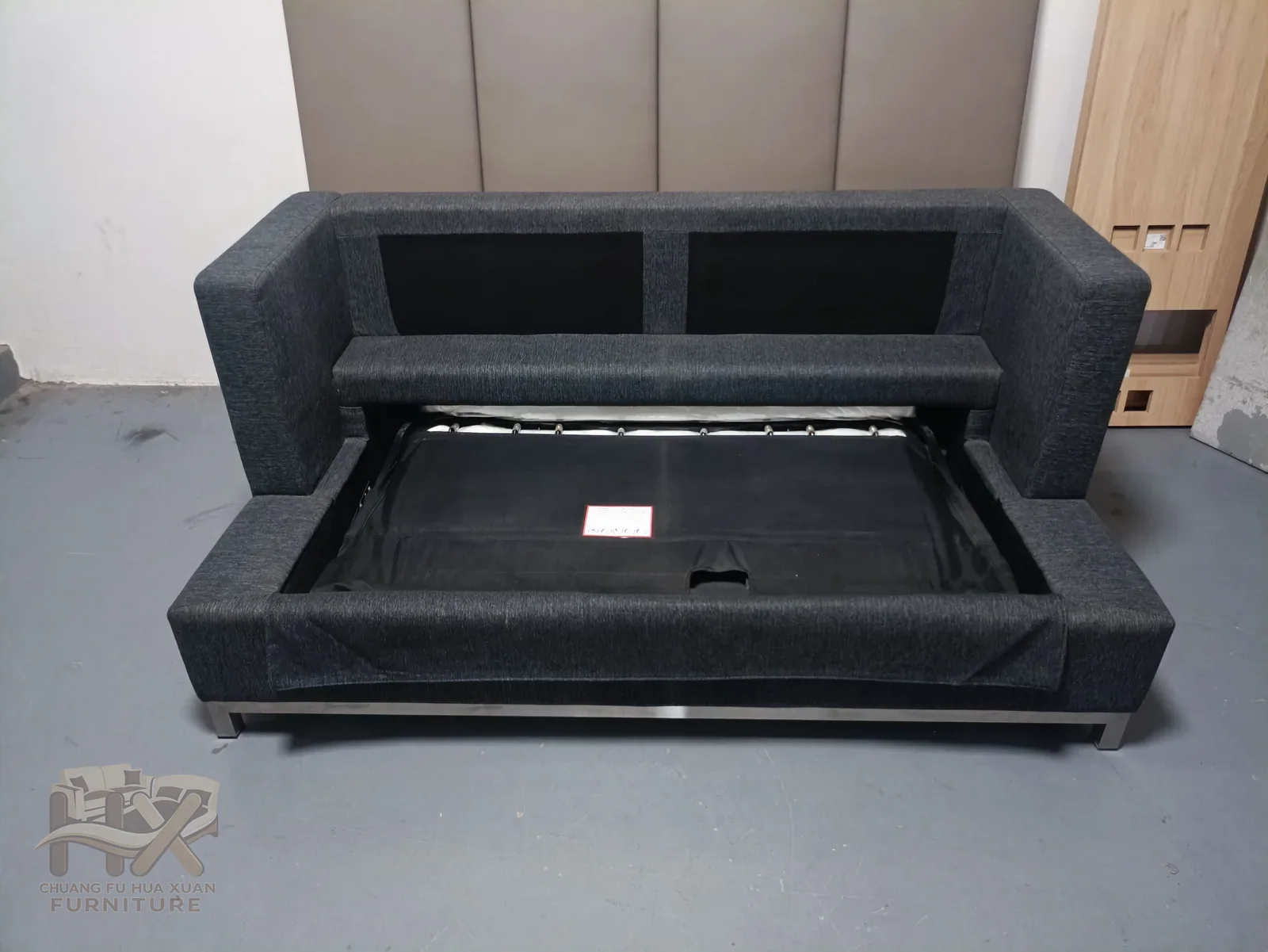
Grey Convertible Sofa Bed for Furniture Brand OEM Programs
The visible underside mechanism helps buyers ask for part identification and service documents.
Noise, Friction and When to Stop Using the Mechanism
A familiar operating sound is less informative than a change: a new scrape, clunk or snap, especially alongside resistance or uneven movement, warrants inspection. Dirt at an accessible rail may be visible, but cleaning and lubrication are model-specific. Use only the cleaning or lubricant guidance supplied for the actual mechanism; an unverified spray can contaminate upholstery, attract debris or affect components that should remain dry.
- Stop when movement requires unusual force or the frame twists.
- Stop when a backrest, leg or sleeping deck fails to support its intended position.
- Stop after a sudden crack, sharp metallic sound or apparent broken part.
- Stop if fingers could be trapped by a loose cover or displaced guard.
- For powered variants, isolate use and seek qualified service if wiring, controls or power components look damaged.
Keep children and guests away from a faulty mechanism. Do not offer a temporary workaround that leaves the bed partly supported. For a hospitality unit, record it as unavailable and give staff a clear alternative. Ask the manufacturer or a qualified repair professional to decide whether the unit is repairable and when it can return to service.
Maintenance Routine for Frequent Use
Maintenance starts with the approved operating sequence, clear floor space and a record of unusual behavior. Train staff to remove bedding before closing when the instructions require it, to place removable cushions correctly, and to report binding promptly. After cleaning or room turnover, check for fabric tucked into the mechanism and for foreign items under the sofa. Routine visual inspection does not require dismantling.
| Review point | What to record | Escalate when |
|---|---|---|
| Operation | Date, model code, operator, whether travel and lock feel normal | New resistance or incomplete lock |
| Visible moving path | Loose fabric, debris, clearance and symmetry at rest | Recurring obstruction or a growing uneven gap |
| Supports and contact points | Legs, feet and floor contact in approved open position | A support does not deploy or bear evenly |
| Sound and finish | New noise, rubbing marks or visible damage | Noise appears with resistance or metal damage |
| Service and parts | Supplier instructions, part number, technician and repair date | An undocumented replacement or repeated failure |
The interval should reflect the manufacturer instructions and actual use. A hotel room converted nightly needs a different review cadence from a showroom sample opened occasionally. Do not promise a universal service interval. Retain photographs and service notes with the model and batch so later complaints can be compared fairly.
Documenting a complaint without making the fault worse
Ask the user what they were doing immediately before the fault appeared, which position the sofa was in, and whether bedding or cushions were present. Photograph the unit as found before clearing anything, provided it is safe to approach. A short video of an ordinary operating attempt can help the supplier, but do not film repeated forced attempts. Record whether the symptom occurs at the same point on multiple units, and whether any of them were recently moved or reassembled. These details are more useful than a generic report that the sofa bed is “broken.”
Keep the affected unit and its parts identifiable during service. If a technician removes a component, note its part number and condition, the replacement installed, and the person who approved the work. Do not transfer a part from another room without tracking the source unit. In a wholesale program, that record makes it possible to distinguish a model-wide pattern from isolated damage during delivery or use. It also helps the buyer check whether the remedy survives normal operation rather than just one demonstration.
Sample Inspection and Repeat Wholesale Orders
During sample approval, operate each mechanism through its complete sequence using the supplied instructions. Compare required effort, alignment, noise, support and cushion interference. Record the mechanism version, key parts, assembly notes and the approved open and closed views. The sofa bed quality inspection checklist covers broader sample and shipment checks; this guide concentrates on operation and maintenance.
For a repeat order, ask whether hardware, mattress, upholstery pattern or packing method has changed. A small upholstery change can create a new rubbing point even if the metal assembly stays the same. Inspect several units against the retained sample and compare complaint logs by model and batch. Share recurring symptoms with the supplier before placing the next order, rather than interpreting an absence of returns as proof that every unit performs identically.
Request the model-specific operation sheet, parts diagram or part codes that the supplier can provide, and a clear service contact. State who may perform adjustments, what evidence is needed for a claim and how replacement parts are matched to the approved version. Confirm availability for the intended program instead of assuming a generic “sofa bed mechanism” part will fit.
What a useful supplier response should contain
A response should identify the exact model and component version, explain the safe next inspection or stop-use decision, and name the authorized service route. If the cause is not yet known, a supplier should say what evidence is needed, such as photographs of both sides at rest or the product label. A replacement part alone is not a complete answer if the frame is distorted or the original fault could damage the new part. Ask how the repair will be checked through a full operating cycle, who will sign off, and whether the instructions for future units need updating.
Troubleshooting Checklist
- Record model code, purchase or batch reference and the exact symptom.
- Keep the unit stationary and clear users from the movement area.
- Read the model instructions before one careful, normal attempt.
- Remove loose cushions or bedding that the instructions say to remove.
- Inspect the visible path, floor and both sides without entering a pinch point.
- Stop for force, tilt, missing support, failed locking or a new sharp sound.
- Photograph the condition and send the record to the supplier or qualified repair professional.
- After approved service, verify the full open and close sequence before returning the unit to use.
Frequently Asked Questions
Why won’t my sofa bed pull out?
Loose bedding, a trapped cushion or a visible obstruction may block travel. If a normal attempt still binds, stop and ask for model-specific service guidance; do not pull harder.
Why will a sofa bed open but not close?
A mattress or cover may sit outside its intended fold, or a moving component may be misaligned. Follow the model instructions and stop if resistance or an unstable frame remains.
Can I lubricate a noisy sofa bed mechanism?
Only if the manufacturer specifies a product and application point for that mechanism. An unspecified lubricant can damage upholstery or change how a component behaves.
Is a click-clack backrest safe if it does not click?
Do not assume so. If it fails to hold its intended position, remove the unit from use and request qualified assessment.
Can a bent sofa bed frame be straightened at home?
Do not attempt an improvised mechanical repair. A bent structural or moving part needs supplier or qualified technician evaluation and an approved replacement plan.
What should an importer request for spare parts?
Ask for the exact model and mechanism version, part identification, fitting instructions, service responsibility and a process for documenting changes between batches.
Explore current sofa bed models and inspect a real convertible sofa bed reference when discussing mechanism access and sample review. Product photographs illustrate construction; they do not diagnose a particular fault.
Need Pricing for a Sofa Bed Model?
Send the model code, quantity, required size, upholstery and destination. We can review the selected reference before quotation.