
This sofa frame and foam guide explains how B2B buyers check the internal specification that drives comfort, stability and repeatability. Do not judge sofa quality from upholstery photos or price alone. Confirm the frame material and joints, seat and back foam construction, density units, springs or webbing, leg attachment, stitching and the approved sample standard. Density is not the same as firmness, and a strong frame cannot compensate for weak seat support. For hotel, apartment, office and other commercial sofa projects, record measurable construction details before bulk production so quotations and inspections compare the same scope.
Why sofa frame and foam matter for B2B buyers
The finished upholstery hides the components that carry load and create the seat feel. A frame that flexes at the arms can loosen joints even when the fabric still looks new. Foam that is too soft for the suspension can bottom out; foam that is too firm or poorly layered can feel uncomfortable despite a high density figure. Springs, webbing, cushion wraps and covers also affect how forces move through the sofa. Quality therefore comes from the complete commercial sofa structure, not from one headline material.
B2B buyers need a specification that can be priced, sampled and inspected. If one supplier quotes a plywood frame with webbing and another quotes solid wood rails with sinuous springs, the offers are not equivalent. Write down the proposed structure, ask where each material is used and record any alternative. The goal is not to demand the most expensive construction; it is to match the use area and expected frequency with a repeatable design that the supplier can explain.
Sofa frame and foam guide: sofa frame materials explained
A solid wood sofa frame can provide strong rails and conventional joinery, but the phrase solid wood is incomplete without species, moisture condition, section size and the location of the material. Plywood frames can be stable and repeatable, especially for shaped upholstered forms, yet buyers should confirm grade, thickness and which panels are structural. Engineered wood may be appropriate for noncritical surfaces or shaped components but should not be assumed to perform like a structural rail. Ask for a labeled frame drawing rather than a general material list.
A metal sofa frame can create thin exposed profiles or reinforce a high-load area. Review tube dimensions, wall thickness, weld consistency, coating and how upholstered components attach to the metal. Mixed wood and metal construction is common when a design needs both shaped upholstery and local reinforcement. The transition matters: loose brackets, unsupported spans or inaccessible fasteners can create movement and noise. For every frame type, identify the load path from the seat through the rails, legs and floor.
| Sofa Frame Material | Best For | Advantages | Limitations | B2B Buying Notes |
|---|---|---|---|---|
| Solid wood frame | Premium residential-style and selected project sofas | Strong rails and repairable joinery when correctly dried and engineered | Species, moisture control and joint quality vary | Request the wood specification, joint method and reinforced areas |
| Plywood frame | Many upholstered project sofas and shaped components | Stable sheet construction and efficient repeatability | Grade and thickness must be identified | Confirm structural grade, thickness and rail layout |
| Metal sofa frame | Slim profiles, exposed structures and selected commercial designs | High strength with controlled sections | Welds, corrosion protection and noise need review | Specify tube section, wall thickness, weld finish and coating |
| Mixed wood and metal frame | Complex shapes and sofas needing local reinforcement | Uses each material where it performs best | Interfaces can loosen if poorly detailed | Ask for a frame drawing that identifies every material transition |
| Engineered wood frame | Cost-controlled designs and noncritical shaped parts | Consistent panels and efficient machining | Not every board is suitable for load-bearing rails | Identify substrate type and structural versus nonstructural use |
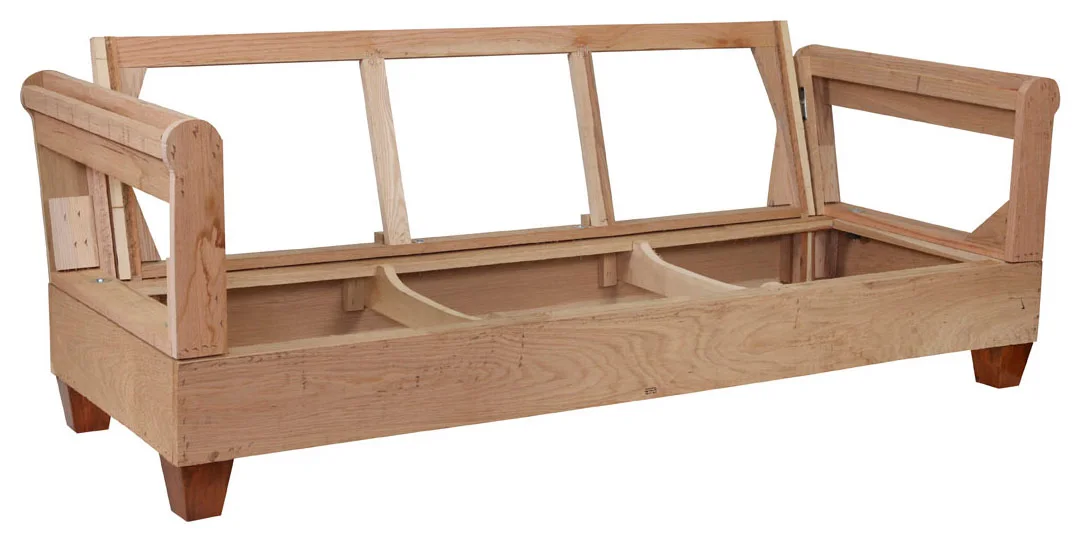
Solid wood, plywood, metal and mixed frame decisions
Choose the frame system from design geometry, expected use, target market and repair strategy. A bulky upholstered sofa may use timber and plywood efficiently, while a slim commercial loveseat may rely on a welded metal base. A curved sofa can need laminated or CNC-cut components that a simple solid wood description does not capture. Do not convert the comparison into a ranking where one material always wins. Good engineering and controlled production are more important than a prestigious material name used in the wrong place.
Ask the supplier to show the main rails, arms, back supports, corner blocks, seat divisions and leg attachment. The sofa quality inspection process should be able to compare these points with the approved drawing before upholstery hides them. For a sample, request dated frame photos or an agreed inspection stage when internal construction is a critical buying condition.
Sofa foam density and comfort explained
Sofa foam density is normally expressed as mass per unit volume, such as kilograms per cubic meter or pounds per cubic foot. Buyers must record the unit because the numbers are not interchangeable. Density can relate to durability potential and material content, but it does not directly state firmness. Firmness is a separate compression response, often described through an indentation test or a supplier-specific feel target. Two foams with the same density can feel different, and two cushions using the same foam can feel different because thickness, wraps and suspension change the result.
A high density foam sofa is not automatically comfortable or suitable for every application. Seat cushions generally carry more load than back cushions and may need a different construction. Edge softness, top layers and fiber wraps can modify initial comfort while a supportive core controls bottoming. Ask for the density of each relevant layer, not one blended number for the entire sofa. Then test the upholstered sample after repeated sitting, because fabric tension and cushion fit affect the final feel.
| Sofa Detail | Why It Matters | What Buyers Should Confirm |
|---|---|---|
| Foam density | Influences material quantity and potential resilience | Units, test basis, layer location and tolerance |
| Seat cushion foam | Carries repeated body load | Layer thickness, firmness target, wrap and finished feel |
| Back cushion support | Controls posture and appearance | Foam, fiber or mixed fill and recovery expectation |
| Spring system | Distributes seat load and affects response | Spring type, spacing, edge support and attachment |
| Webbing support | Creates flexible suspension in many designs | Material, width, spacing, tension and anchoring |
| Frame joint | Transfers load between rails and posts | Joint method, adhesive, fasteners and corner reinforcement |
| Leg structure | Carries the entire sofa into the floor | Material, attachment, center supports and floor protection |
| Stitching detail | Keeps covers aligned under repeated stress | Seam type, thread, piping and stress-point reinforcement |
| Usage frequency | Determines the necessary performance target | Use area, expected daily traffic and user profile |
| Bulk consistency | Protects the approved sample standard | Inspection points, tolerances, material codes and change control |
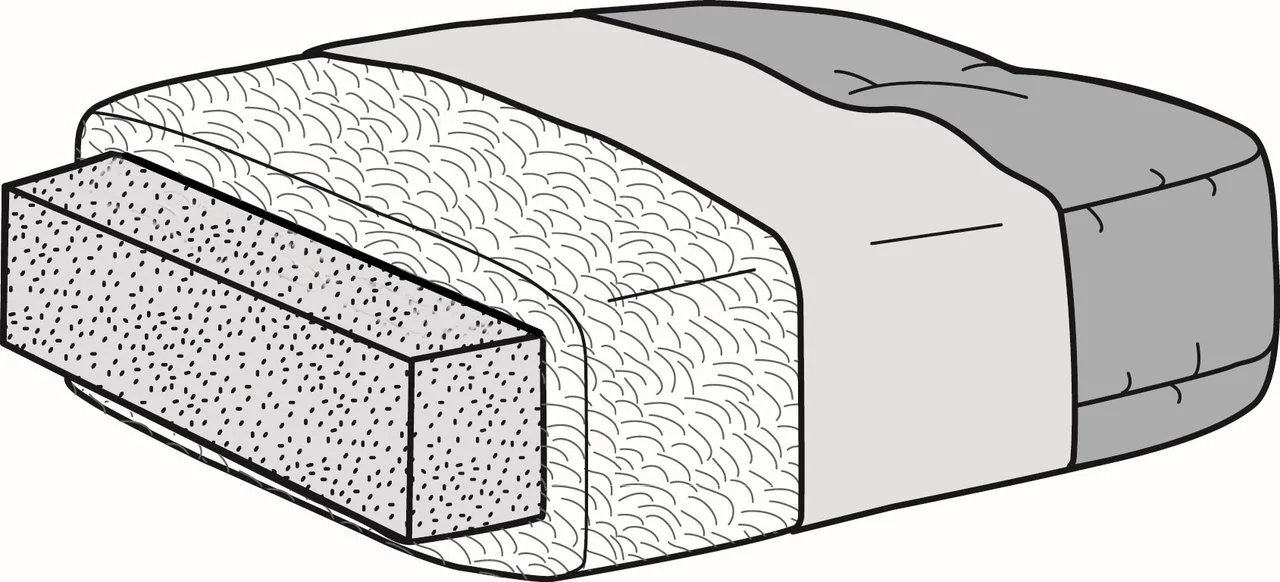
Sofa cushion foam types
Conventional polyurethane foam is widely used because density, firmness and shape can be specified across many designs. High-resilience foam may offer improved recovery when the correct grade is used. Memory foam can provide a slow-response surface layer but is rarely the only consideration in a commercial seat. Molded foam is useful for controlled shapes and repeated components, while layered foam lets the designer combine a supportive core with softer comfort layers. The correct sofa cushion foam depends on cushion thickness, suspension, user profile and target feel.
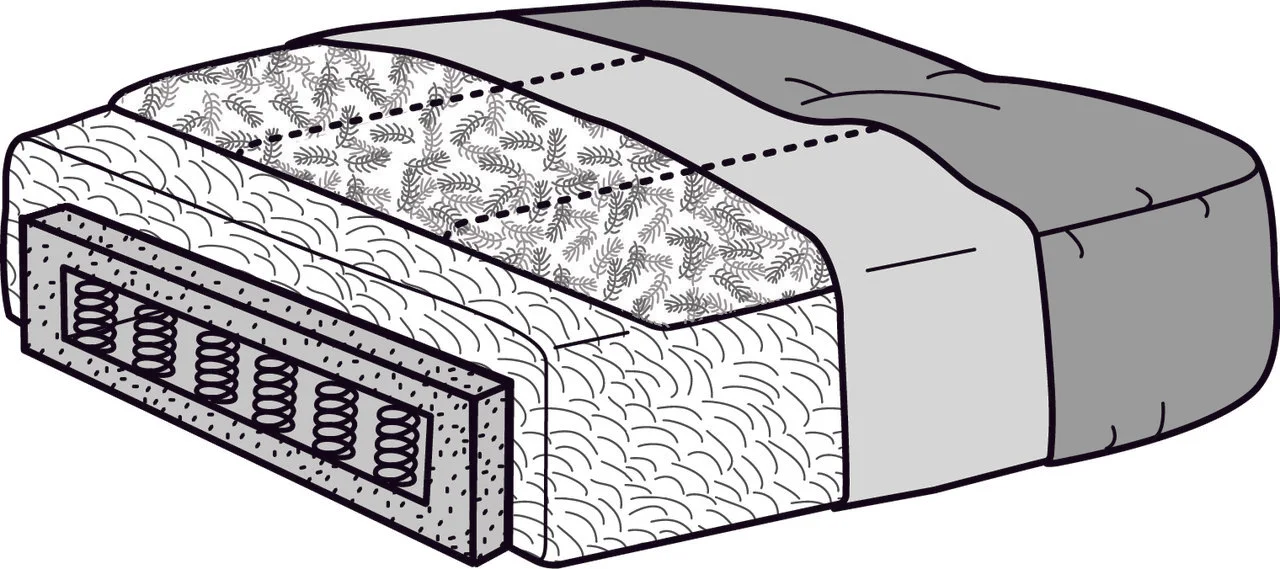
Foam may be wrapped with polyester fiber, enclosed in ticking or combined with feathers, fiber or pocket springs. These additions change surface softness, appearance and maintenance. A plush blend-down cushion may need more reshaping than a controlled foam core. A spring-core cushion can distribute load differently but requires its own edge construction. Buyers should request a simple cross-section listing layer thicknesses and materials. Avoid accepting vague terms such as premium sponge when the quotation needs a repeatable technical description.
Springs, webbing and seat support
Seat suspension supports the cushion and spreads load into the frame. Sinuous springs, coil systems and elastic webbing can all work when correctly selected and attached. For springs, ask about type, spacing, edge support and fastening. For webbing, review material, width, layout, tension and anchoring. A product photo does not show whether the support spans are even or whether the front rail has adequate reinforcement. The frame and suspension should be evaluated together because stronger foam cannot correct a weak or uneven base.
Back support may use webbing, foam, fiber cushions or a fixed upholstered panel. Its load is different from the seat, but poor tension can still cause wrinkles or inconsistent posture. Check the transition where the back meets the seat and whether hard frame edges are properly padded. If the design has removable cushions, confirm the deck fabric, zipper placement and how cushions are retained. These construction details influence both user comfort and the way the sofa looks after repeated use.
How frame and foam affect commercial sofa durability
Commercial durability is the ability to preserve safe support, consistent appearance and usable comfort under the expected traffic. A reception sofa may experience frequent short sits and heavy arm contact; a hotel room sofa may experience longer but less public use; an apartment sofa may need balanced comfort for everyday living. Define the use area before selecting materials. The same construction does not have to serve every project, but each specification should explain why the proposed frame, support and foam suit the expected pattern.
Upholstery and sewing remain part of the structure review because covers hold the cushion shape and protect the padding. Inspect seams at the front rail, arm, cushion corners and piping. Review the sofa upholstery material options with the frame and foam proposal, since a stiff cover can change cushion response and a loose cover can hide early deformation. Leg height and attachment also matter: a long sofa may require correctly positioned center support rather than relying only on four visible legs.
Sofa quality checklist before bulk order
Before a bulk order, freeze the product drawing, bill of materials or agreed construction sheet, upholstery code, color, foam layers, suspension and leg finish. Mark acceptable dimension tolerances and the approved seat feel reference. Photograph the sample from consistent angles and record cushion gaps, seam alignment, piping, base height and loaded appearance. If destructive testing or an internal frame inspection is required, agree on the method and responsibility before production starts rather than asking after the sofa is fully upholstered.
Use the sofa sample approval process to close every open point. A signed sample without written materials can still be difficult to reproduce if a component becomes unavailable. Record approved supplier codes and require notification before substitution. For quantities across several room types or markets, assign a product code to each construction so cushions and frames are not mixed between visually similar models.
Sample vs bulk consistency
The sample is useful only when it becomes a measurable production reference. Bulk consistency checks should cover overall dimensions, seat and back cushion sizes, foam layer codes, support spacing, frame photos at an agreed stage, fabric batch, seam position, leg alignment and finished seat feel. Not every unit needs to be opened, but the inspection plan should include enough evidence to confirm that hidden construction follows the approved basis. Select inspection units across the production run rather than only the first completed sofa.
Changes require controlled approval. If the specified foam is unavailable, the supplier should identify the proposed replacement, its density and firmness information, and any effect on feel or appearance. If a frame rail changes, confirm that dimensions, fastening and support remain suitable. A substitution that looks harmless in a message can create left-to-right softness differences or a sample-to-bulk complaint. Keep revision numbers on drawings and remove obsolete versions from the production package.
Common mistakes when evaluating sofa quality
The first mistake is equating weight with quality. A heavy sofa can contain inefficient materials, while a well-engineered mixed frame can be lighter. The second is asking only for foam density and ignoring units, firmness, layers and suspension. Other errors include inspecting one corner of the frame, forgetting center-leg support, approving stitching from a distant photo, accepting generic material descriptions and testing a cushion for only a few seconds. Quality evaluation should follow the risk of the use area and the agreed specification.
Buyers should also avoid demanding one construction copied from another design without checking geometry. A curved sofa, exposed metal base and deep modular seat transfer loads differently. Ask the supplier to explain the proposal and flag uncertainties. When comparing prices, create a sofa quality checklist with one row per construction detail. This makes omissions visible and reduces the chance that a lower quotation is simply based on a different scope.
Buyer checklist before quotation
Prepare the following information before requesting a quotation. Mark unknown items clearly so the supplier can respond with questions instead of making hidden assumptions.

- Project type
- Sofa use area
- Expected usage frequency
- Frame material
- Frame joint requirement
- Foam density requirement
- Seat cushion structure
- Back cushion structure
- Spring or webbing support
- Leg material
- Upholstery material
- Stitching detail
- Sample requirement
- Bulk consistency
- Quantity
- Target market
- Reference photos
- Customization requirement
Why include HUAXUAN in your supplier comparison
HUAXUAN is a B2B furniture website focused on sofas, sofa beds, beds, chairs and project furniture. It is suitable for buyers who need reference-photo-based discussion, project inquiry, quantity quotation, OEM / ODM discussion where applicable, and furniture list review. Buyers can include HUAXUAN sofa references when comparing a custom sofa frame and foam requirement for hotel, apartment, office or other project use. Provide the product reference, use area, expected frequency, desired feel, dimensions and quantity so the discussion can focus on a suitable proposal instead of unsupported quality claims.
State which construction points must be fixed and which are open to supplier recommendation. If sample verification or internal frame photos are required, include them in the inquiry. The commercial sofa project quotation guide helps organize the style, frame requirement, foam preference, upholstery and quantity into one review package.
FAQ
Is a solid wood sofa frame always better than plywood?
No. Species, moisture condition, section size, joint design and where the material is used all matter. Structural plywood can be appropriate when its grade, thickness and frame layout suit the design.
Does higher sofa foam density mean a firmer seat?
Not necessarily. Density measures mass per volume, while firmness describes compression response. Cushion thickness, layers, wraps, upholstery and suspension also change the finished feel.
What foam details should B2B buyers request?
Request the unit, density and location of each important layer, thicknesses, firmness or feel target, wraps or ticking, and the approved finished sample reference.
Are springs better than webbing for commercial sofas?
Neither system is universally better. The type, spacing, tension, attachment and relationship with the frame and cushion determine whether the support suits the use area.
How can buyers check sample-to-bulk sofa consistency?
Freeze drawings and material codes, approve a sample, define tolerances, inspect frame and support evidence at an agreed stage, and check dimensions, cushions, seams, legs, fabric and seat feel across the production run.