
This apartment sofa buying guide helps B2B buyers match sofa dimensions, comfort and materials to real apartment floor plans. Start with the usable room width, doorway route, television wall, coffee-table zone and required walkway; then compare overall width, depth, seat depth, seat height and arm thickness. A compact model is not automatically suitable if deep cushions restrict circulation or narrow seats reduce comfort. For serviced apartments, rental units and show apartments, buyers should also define usage frequency, upholstery performance, color control, room-type quantities and the approval information needed before a supplier prepares a reliable quotation.
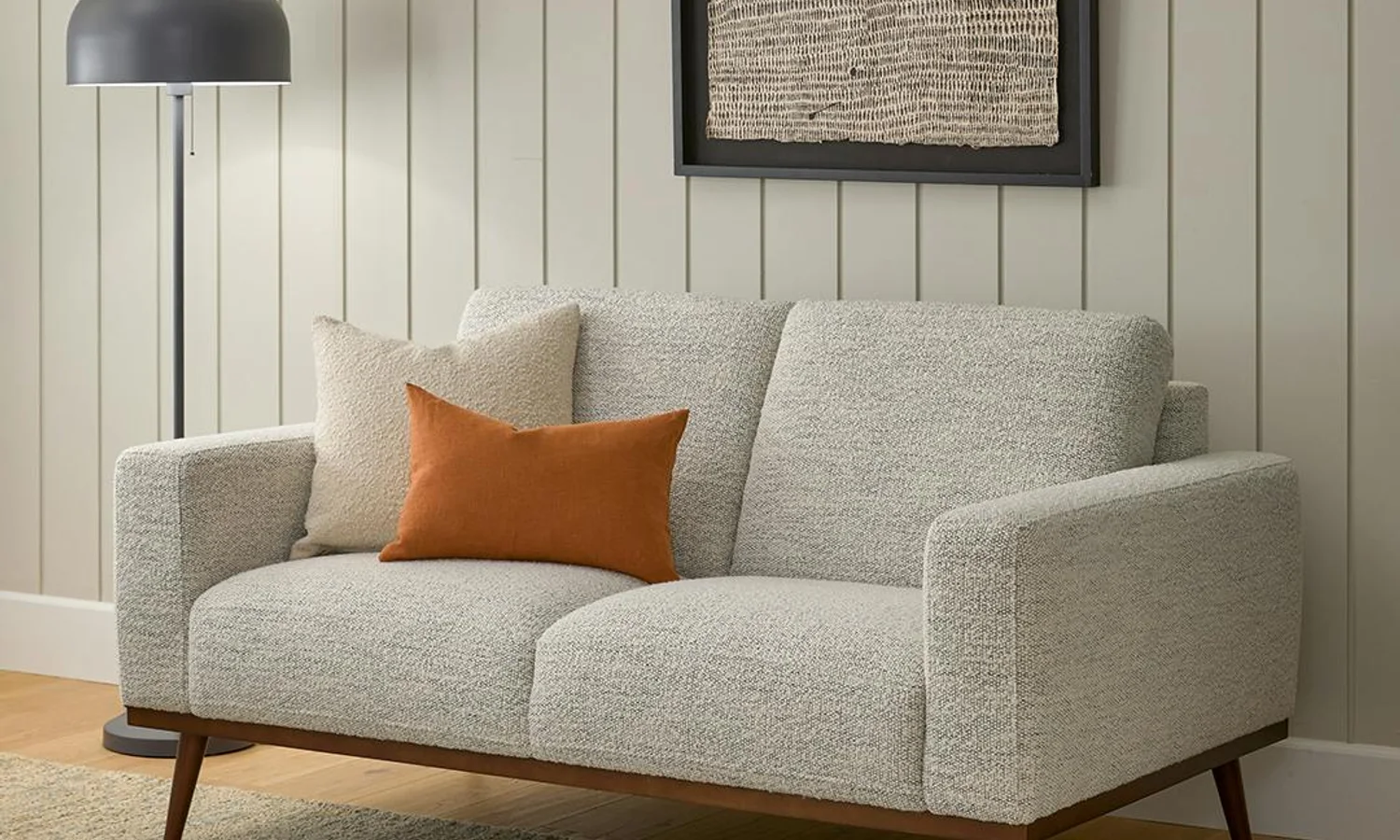
What is an apartment sofa?
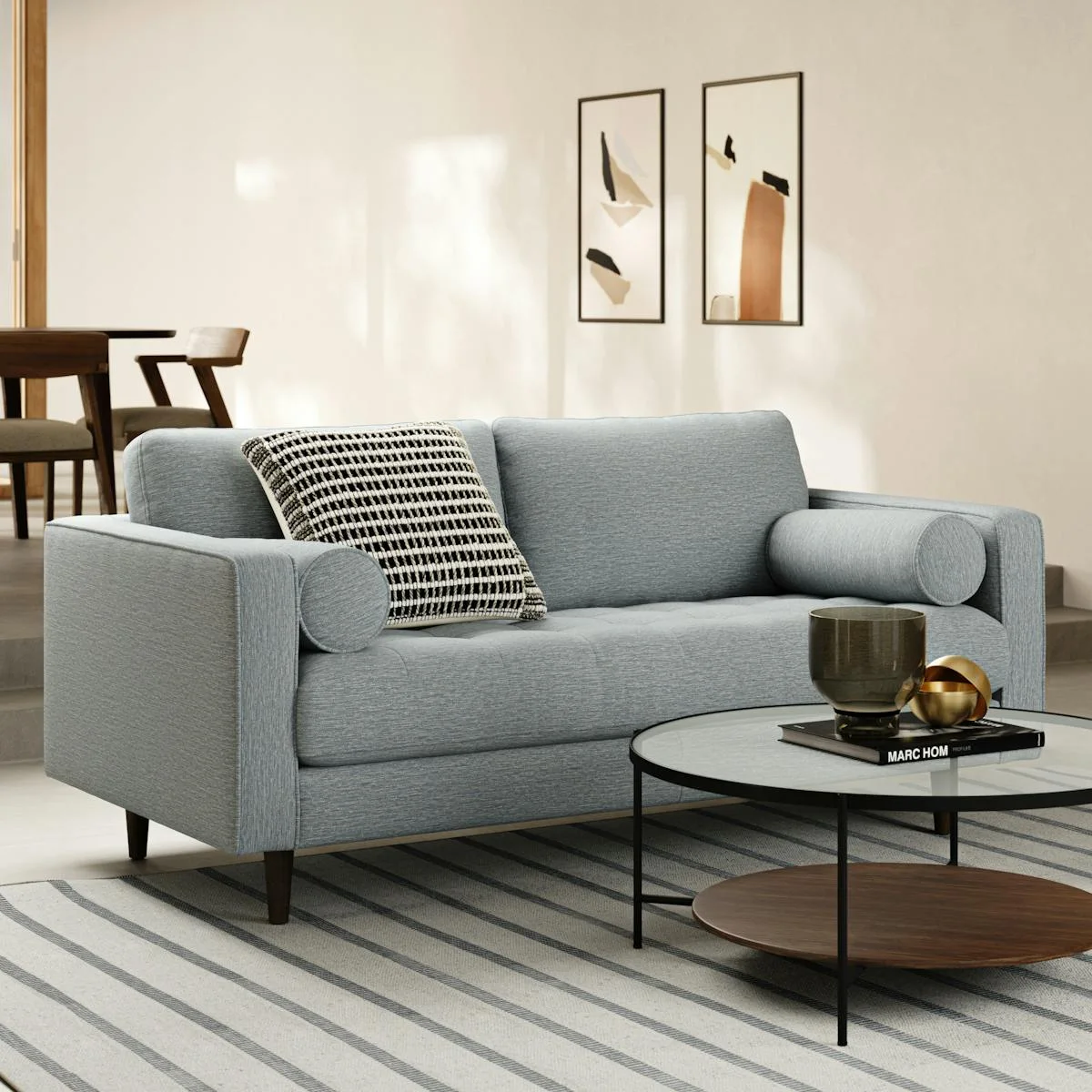
An apartment sofa is a sofa selected around the constraints and operating needs of an apartment project, rather than a separate construction category. It may be a loveseat, compact two-seater, armless sofa, modular composition or small sectional. What makes it suitable is the relationship between its outside dimensions, usable seat space, access route and the finished room. A sofa for apartments should support the intended number of users without overwhelming the living zone or forcing people to squeeze around a coffee table, television console or dining chair.
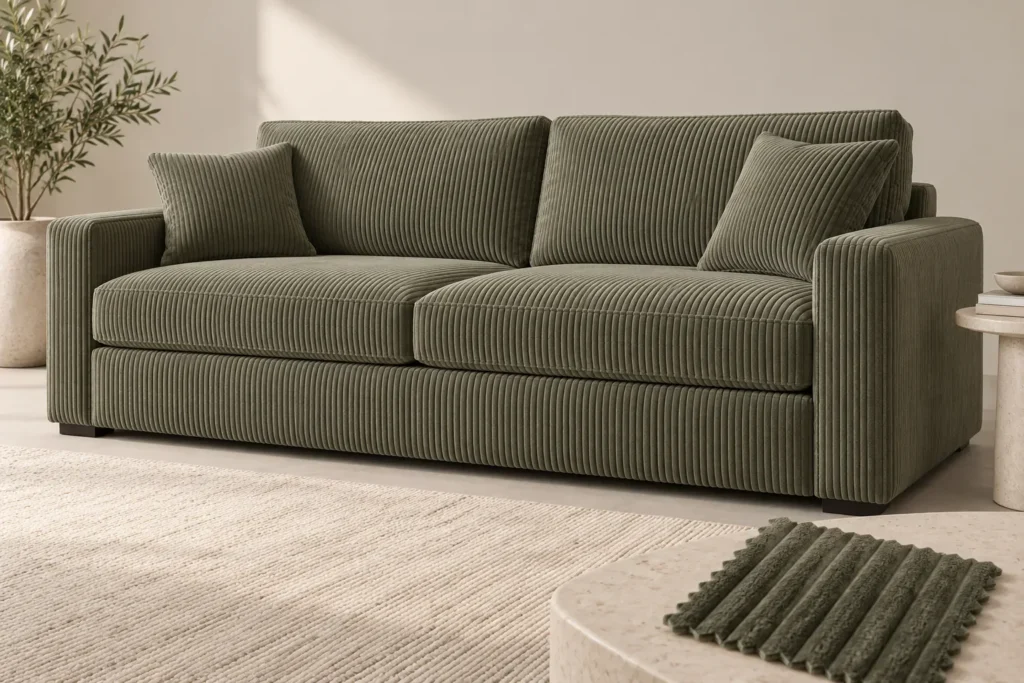
For B2B procurement, the label should never replace a specification. A modern apartment sofa with a low back may photograph well but feel undersupported in a long-stay unit. A small apartment sofa with thick rolled arms may fit the wall yet provide less seating than a slimmer model of the same width. Treat every reference photo as the start of a measured discussion: identify the silhouette you want, then confirm the dimensions, construction, upholstery and room application separately.
Why apartment sofa selection matters for B2B projects
A repeated size error affects every unit in a batch. If the sofa is 100 mm too deep, it can narrow the route between the entrance and balcony in dozens of apartments. If it is too low, older guests or long-stay residents may find it difficult to use. If upholstery is selected only from a screen image, visible shade differences, texture expectations and cleaning requirements can be missed. These are project risks, not styling details, because they influence approvals, room usability and whether the same specification can be repeated across several floor-plan types.
Buyers should connect the sofa schedule to the full apartment and villa furniture plan. A studio, one-bedroom unit and show apartment may share a design language without sharing one sofa size. Define a controlled family of models: for example, a compact loveseat for studios, a standard two-seater for one-bedroom units and a small sectional only where the plan supports its return. This approach protects consistency while respecting each room type.
Common apartment sofa types
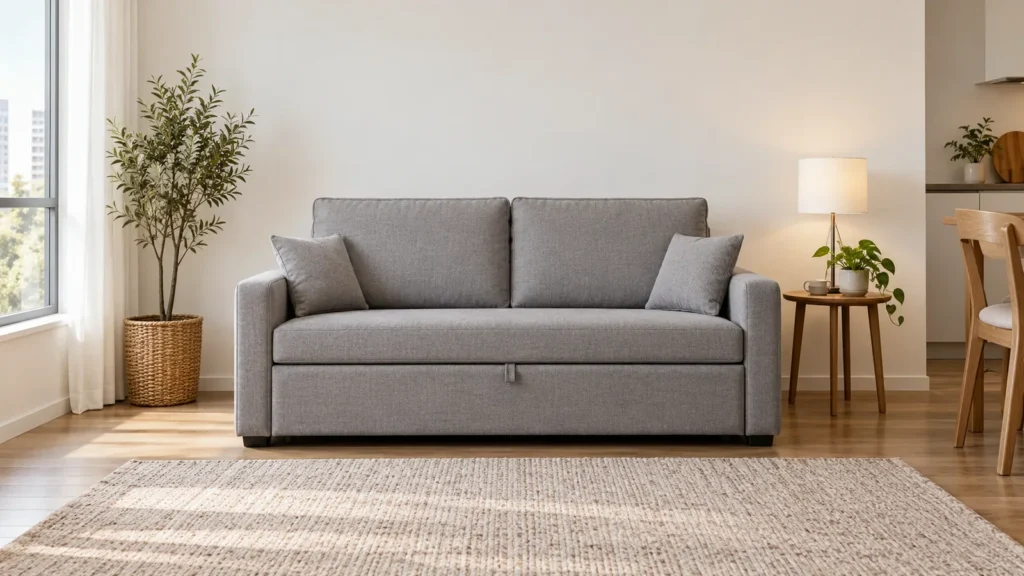
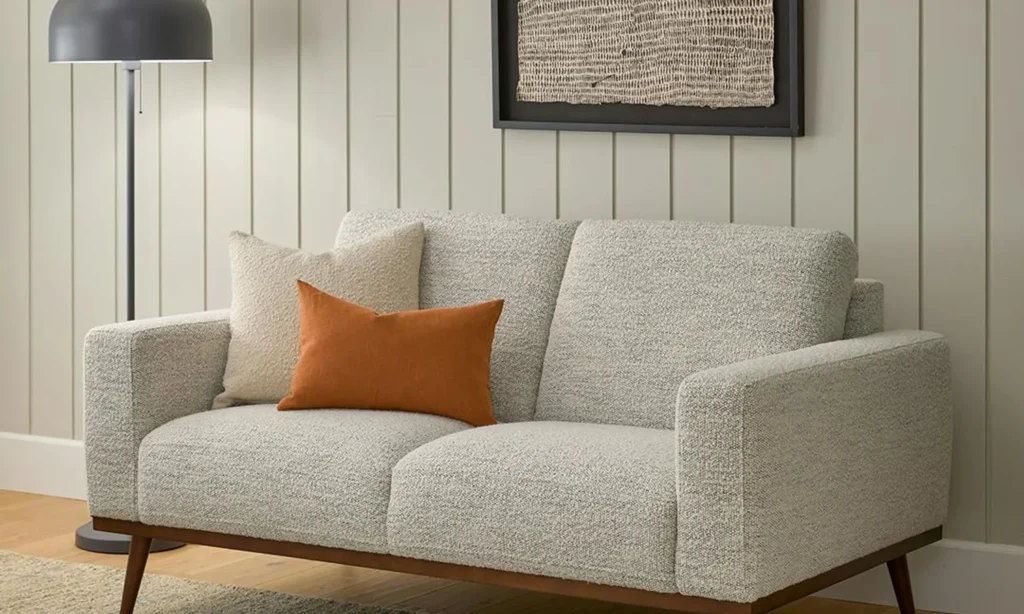
Compact sofas usually have a controlled outside width and depth, but buyers should check whether that compactness comes from slim arms or from a shortened seat. Loveseats and two-seaters are often the easiest apartment furniture sofa formats to schedule because capacity is clear and the footprint is predictable. Armless models use width efficiently and can work well against a wall, though exposed sides and stability must suit the layout. Modular apartment sofas give flexibility across unit types, provided every module, connector and finished configuration is documented.
A small sectional sofa can create a strong living zone in an open plan, but its chaise or return must be shown on the floor plan. Left and right terminology varies between suppliers, so place an orientation arrow on the drawing. For a compact sofa for apartment projects, compare actual seating width, not only the overall dimension. The table below helps buyers separate the use case, advantage and purchasing risk of each common format.
| Apartment Sofa Type | Best For | Advantages | Limitations | B2B Buying Notes |
|---|---|---|---|---|
| Compact sofa | Studios and narrow living rooms | Controls width and circulation | May reduce usable seat space | Confirm inside width as well as overall width |
| Loveseat sofa | Serviced apartments and show units | Comfortable two-person format | Wide arms can waste space | Approve arm thickness and cushion width |
| 2-seater apartment sofa | Rental units and standard one-bedroom plans | Clear capacity and familiar scale | The label does not define dimensions | Use a dimensioned drawing, not the name alone |
| Modular apartment sofa | Projects with several room configurations | Modules can adapt to layouts | Connections and joint lines need review | List every approved module and configuration |
| Small sectional sofa | Open-plan units with a defined lounge zone | Adds lounging space and can zone the room | Chaise direction can block circulation | Mark left or right orientation on each floor plan |
| Armless apartment sofa | Very tight rooms or modular rows | Maximizes usable width | Less side support and visual enclosure | Check side exposure and module stability |
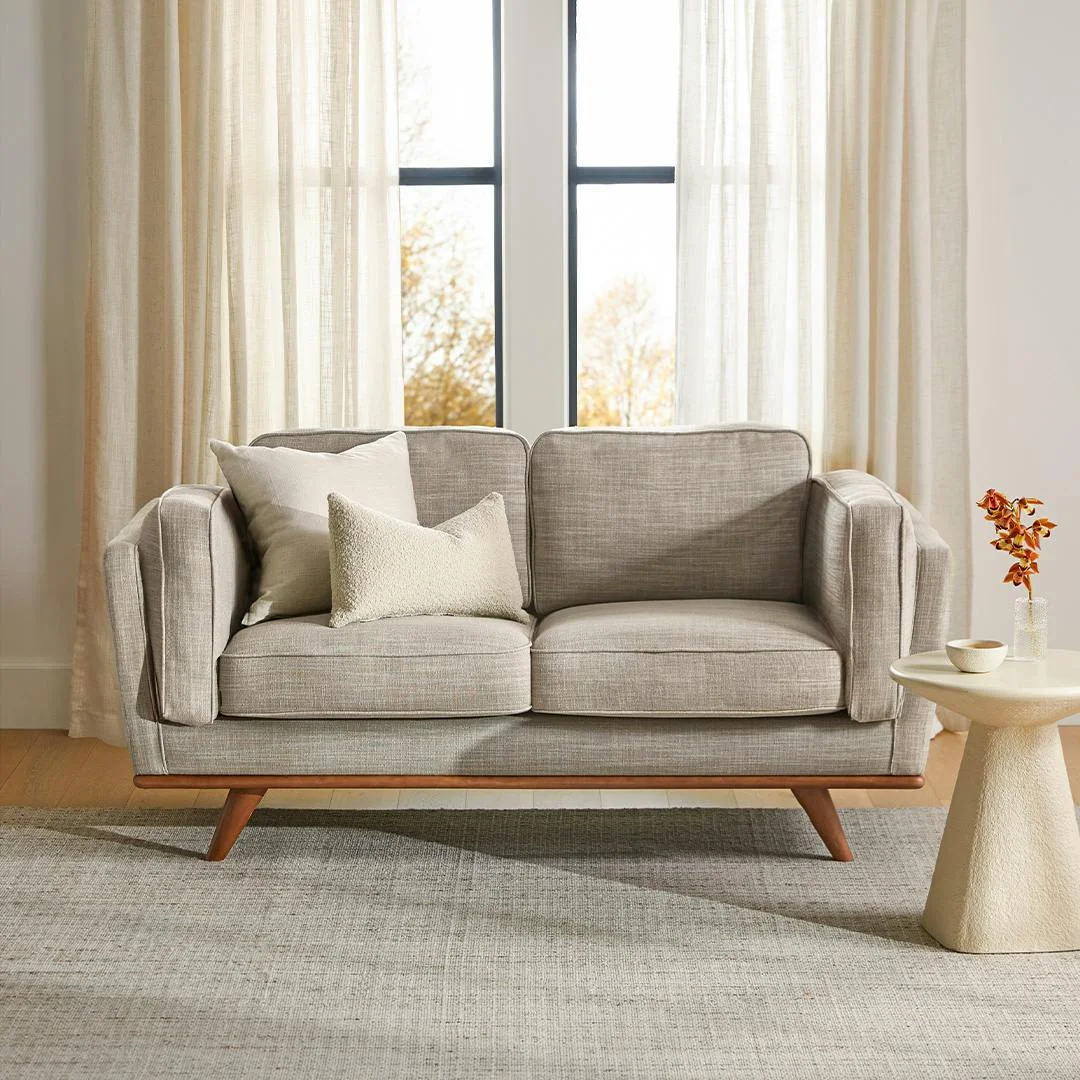
Apartment sofa buying guide: dimensions and room planning
Begin with a scaled floor plan showing finished walls, skirting, doors, balcony access, television console, coffee table, dining furniture and any fixed joinery. Draw the sofa as a full rectangle using its maximum width and depth; do not use only the seat cushion outline. Then test the main circulation path and door swings. If an elevator, corridor corner or unit entrance is tight, add access dimensions to the same review. Removable legs or detachable backs may help placement, but only when the supplier confirms the construction in the drawing.
Apartment sofa dimensions should include overall width, overall depth, seat depth, seat height, back height, arm width and leg height. Seat depth is especially easy to misunderstand: the outside depth includes the frame and back, while the usable depth is measured from the front of the back cushion to the seat edge. A very deep seat can encourage lounging but may be uncomfortable for upright sitting. A compact apartment living room sofa usually benefits from balanced, not extreme, depth.
| Dimension Item | Why It Matters | What Buyers Should Confirm |
|---|---|---|
| Overall width | Determines wall fit and seating capacity | Finished outside width and usable inside width |
| Overall depth | Controls the remaining room circulation | Deepest point including loose back cushions |
| Seat depth | Changes upright comfort and lounging posture | Usable depth after the back cushion is installed |
| Seat height | Affects comfort and ease of standing | Finished loaded and unloaded height target |
| Back height | Affects support, sightlines and visual scale | Finished floor-to-back dimension |
| Armrest width | Can consume a large part of a compact footprint | Arm profile and inside seating width |
| Walkway clearance | Keeps daily routes usable | Main path, door swing and furniture edges |
| TV wall distance | Affects viewing comfort and room zoning | Sofa front and eye position relative to the screen |
| Coffee table distance | Balances reach with legroom | Clear gap from the sofa seat edge |
| Doorway access | Prevents a specified sofa from being impossible to place | Door, corridor, elevator and turning dimensions |
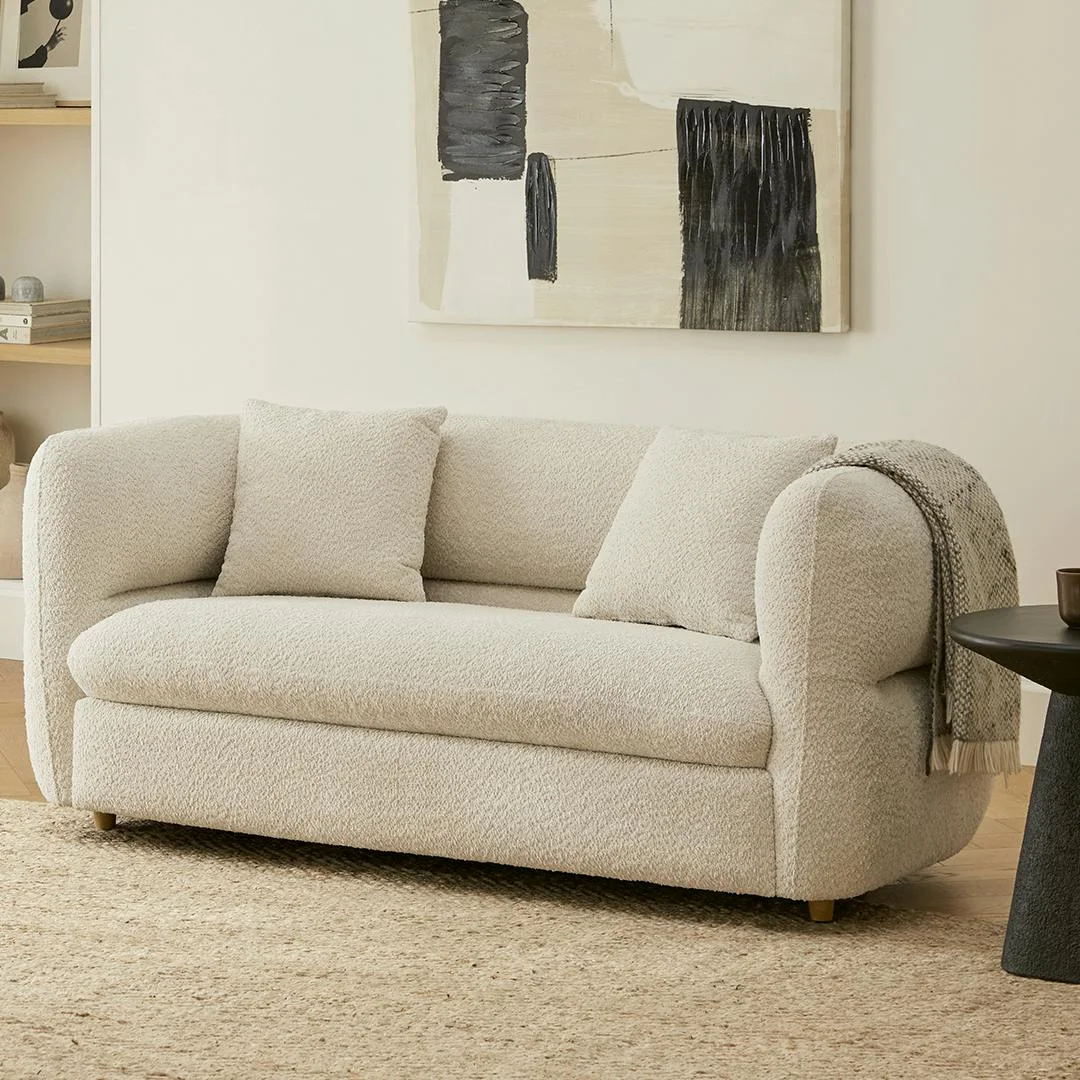
How to choose sofa size by apartment type
A studio apartment needs a disciplined footprint because sleeping, dining and living functions often share one room. Prioritize a compact or armless two-seater, preserve the route to storage and avoid a chaise that divides the only open path. In a serviced apartment, longer stays justify supportive cushions and enough seat depth for relaxation, but housekeeping access and dining circulation still matter. A rental apartment usually needs a versatile shape, practical upholstery and dimensions that work for the broadest resident profile rather than a dramatic showroom-only proportion.
A show apartment can use a more expressive modern apartment sofa, yet the displayed piece should remain honest about the saleable unit plan. Overscaled staging can create an expectation that the standard apartment cannot support. For a compact living room, decide whether the sofa faces a television wall, window or conversation zone, then preserve the coffee-table gap and the main walking line. When several unit plans exist, assign a sofa code to each room type and show quantities by code in the furniture list.
Upholstery and frame materials for apartment use
Upholstery selection should follow target market, use frequency and maintenance practice. Woven fabric offers broad color and texture options, while leather-look materials can simplify wipe-down in some rental applications. Neither is automatically more durable. Ask for technical data relevant to the market, a physical color swatch and a cutting from the proposed batch when color continuity matters. Review the available material and finish discussion alongside the sofa drawing so fabric, piping, seams, cushion style and leg finish are approved as one specification.
For the frame, ask the supplier to identify the main structural material, reinforced areas, seat support and detachable components. A solid wood, plywood or mixed structure can all be appropriate when engineered for the design and expected use. The important point is traceability: the sample drawing and bulk specification should describe the same structure. In apartment projects, also confirm leg attachment, floor-contact material and whether the base height leaves an intentional cleaning gap.
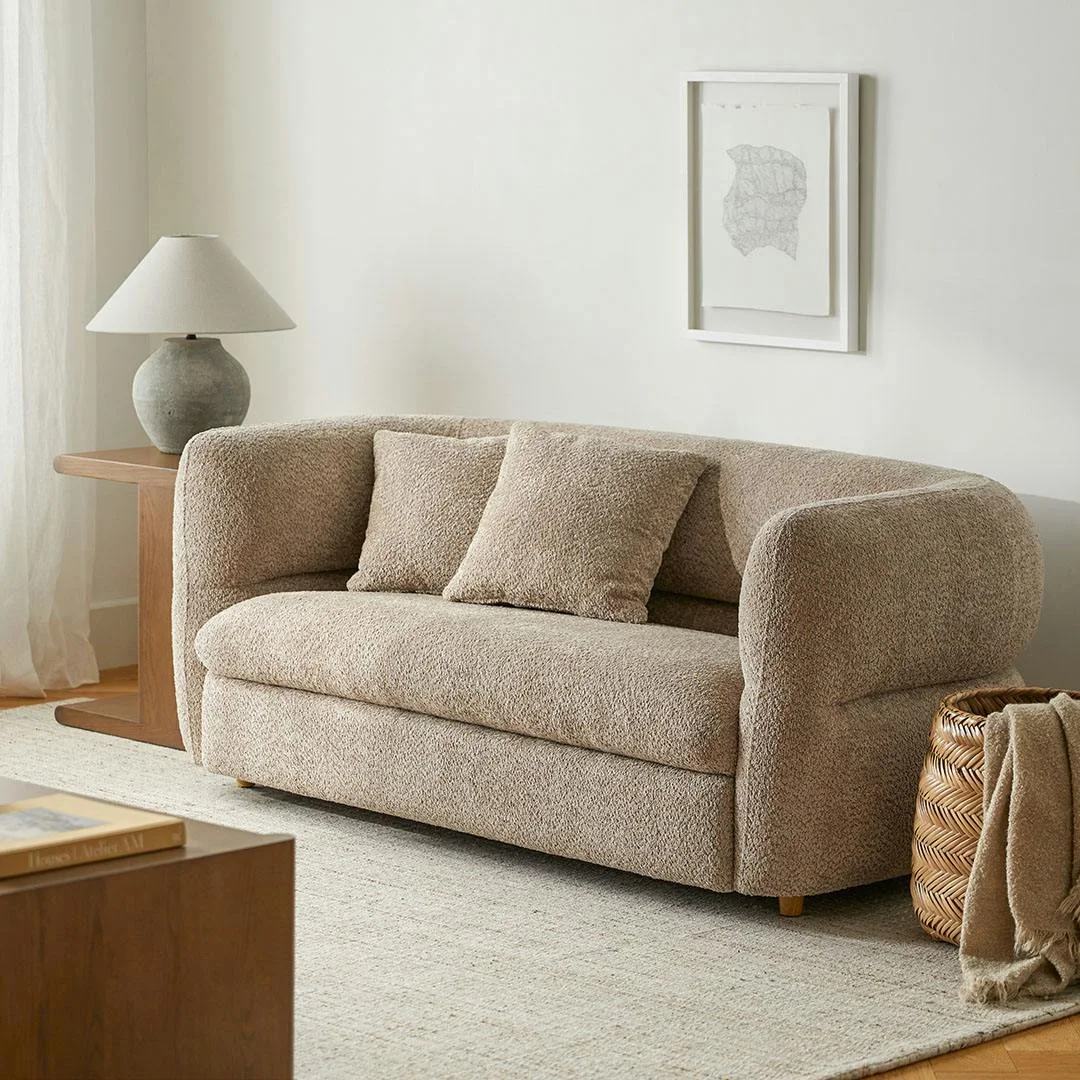
Comfort factors: seat depth, seat height, back support and foam
Comfort should be evaluated as a system. Seat height affects how easily a user stands; seat depth influences whether the back is supported during upright sitting; back angle and cushion thickness change the final posture. Foam density describes mass per volume, not softness by itself, so buyers should not approve a cushion using one number alone. Ask how the foam layers, suspension and upholstery work together, and compare the finished sample after repeated sitting rather than pressing an unupholstered foam block.
For serviced apartments and higher-frequency rental use, specify the desired feel in practical language such as supportive medium-firm seating with controlled recovery. Then ask the supplier to propose a construction and record the approved result. Loose back cushions can feel residential but require reshaping; fixed backs look orderly but give less adjustability. The right choice depends on stay length, user profile and the room’s service routine.
Common mistakes when sourcing apartment sofas
The most common mistake is sending only a reference photo and quantity. A supplier cannot know whether the buyer values the arm shape, low profile, fabric texture or exact dimensions. Other errors include measuring the wall but not the circulation path, ignoring doorway turns, assuming every two-seater has the same capacity, approving color on a phone screen and using one oversized sofa for every unit type. Buyers should also avoid changing fabric or foam after sample approval without documenting the revised specification.
Compare quotations against the same scope and use real sofa product references to clarify the visual direction. If one quotation is based on a slim plywood frame and another on a different internal structure, price alone is not a fair comparison. Create a short compliance column for dimensions, frame, foam, upholstery, leg finish, quantity and customization. Any exception should be visible before the purchase decision.
Buyer checklist before quotation
Prepare the following information before requesting a quotation. Mark unknown items clearly so the supplier can respond with questions instead of making hidden assumptions.
- Project type
- Apartment room type
- Floor plan
- Room size
- Sofa type
- Overall width
- Overall depth
- Seat depth
- Seat height
- Back height
- Armrest style
- Frame material
- Foam requirement
- Upholstery material
- Color reference
- Quantity
- Target market
- Reference photos
- Customization requirement
Why include HUAXUAN in your supplier comparison
HUAXUAN is a B2B furniture website focused on sofas, sofa beds, beds, chairs and project furniture. It is suitable for buyers who need reference-photo-based discussion, project inquiry, quantity quotation, OEM / ODM discussion where applicable, and furniture list review. Buyers can include HUAXUAN sofa references in a supplier comparison when they need to discuss an apartment sofa manufacturer option around reference photos, room types and project quantities. This does not replace technical approval: send the floor plan, selected style, target dimensions, upholstery direction and quantity so the discussion is tied to the actual apartment application.
A useful inquiry separates confirmed requirements from open questions. Mark which dimensions are fixed, which visual details may be adjusted and whether the project needs a sample or material review. Then use the apartment sofa project quotation guide to prepare a consistent RFQ for every supplier being compared.
FAQ
What sofa size works best in a small apartment?
There is no universal best width. Select the sofa after plotting its full width and depth on the finished floor plan, then confirm the usable seat space, walkway, coffee-table gap and access route.
Is a loveseat or a two-seater better for serviced apartments?
The terms overlap. A loveseat often signals a compact format, but buyers should compare measured outside width, inside seat width, depth, height and cushion construction rather than rely on the product name.
How much walkway clearance should an apartment sofa leave?
Use the project’s local design requirements and the actual route priority. Confirm the clear width at the tightest point, including door swings, table edges and any cushion or arm that projects beyond the plan symbol.
Which upholstery is suitable for rental apartments?
Choose from the expected use frequency, cleaning method, target appearance and market requirements. Approve a physical swatch and relevant performance information instead of assuming that one material category is always best.
What should buyers send for an apartment sofa quotation?
Send the project and room type, scaled floor plan, target dimensions, sofa reference photo, frame and foam direction, upholstery and color reference, quantity, target market and requested customization.