Sourcing Sofa Beds?
Browse HUAXUAN sofa bed references or send a model code, quantity and destination for quotation review.
Quick Answer: What Is a Tri-Fold Sofa Bed?
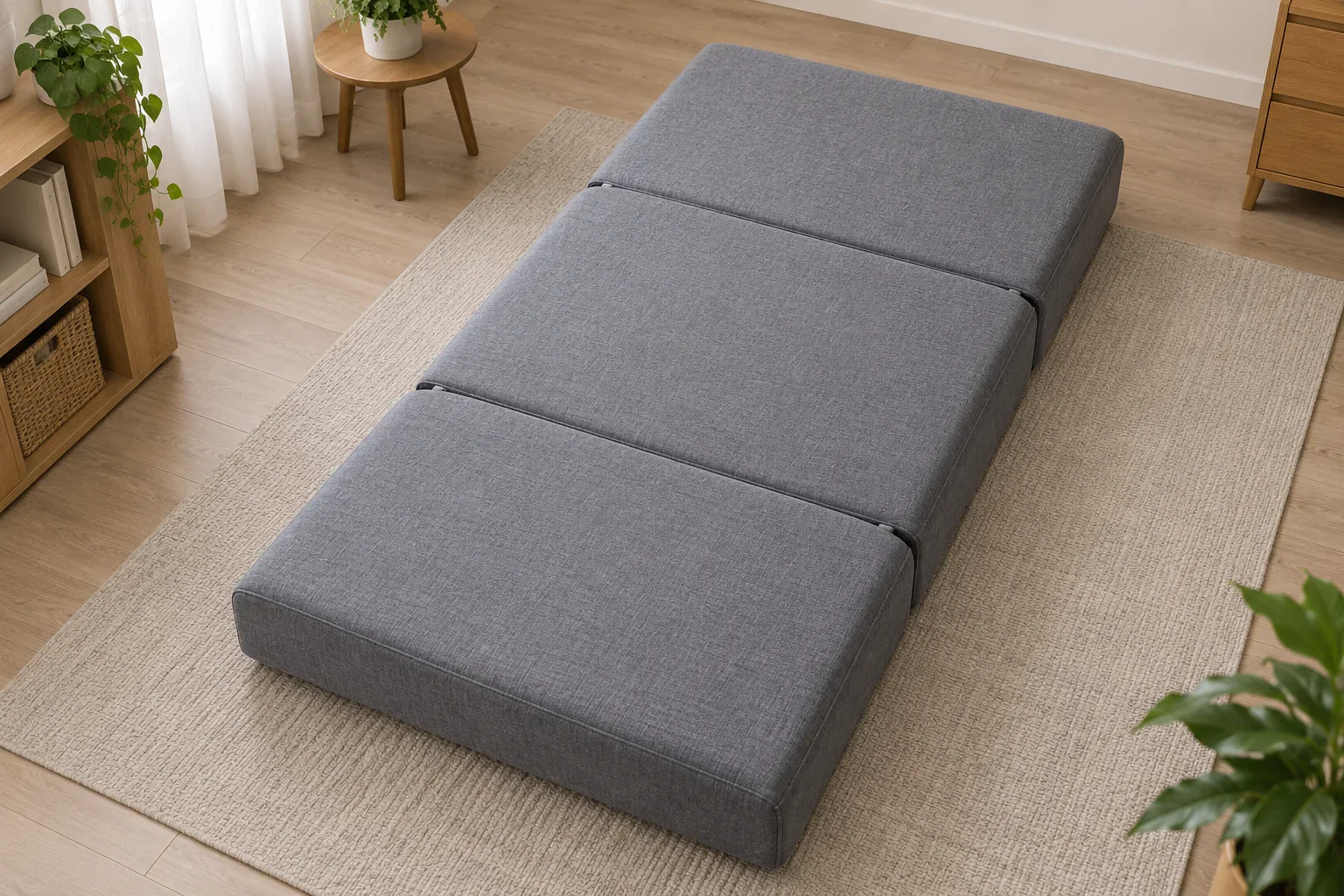
A tri fold sofa bed is a convertible seat whose sleeping surface or cushion platform unfolds through three main sections. “Tri-fold” is a market description, not one standardized mechanism. Some are low floor sofas, others are framed compact sofas or foldable guest beds. Their folded height, hinge structure and sleeping support can differ substantially. A buyer should request photos or drawings of both positions, the intermediate conversion sequence, dimensions and a sample instead of assuming that every tri fold sleeper sofa works alike.
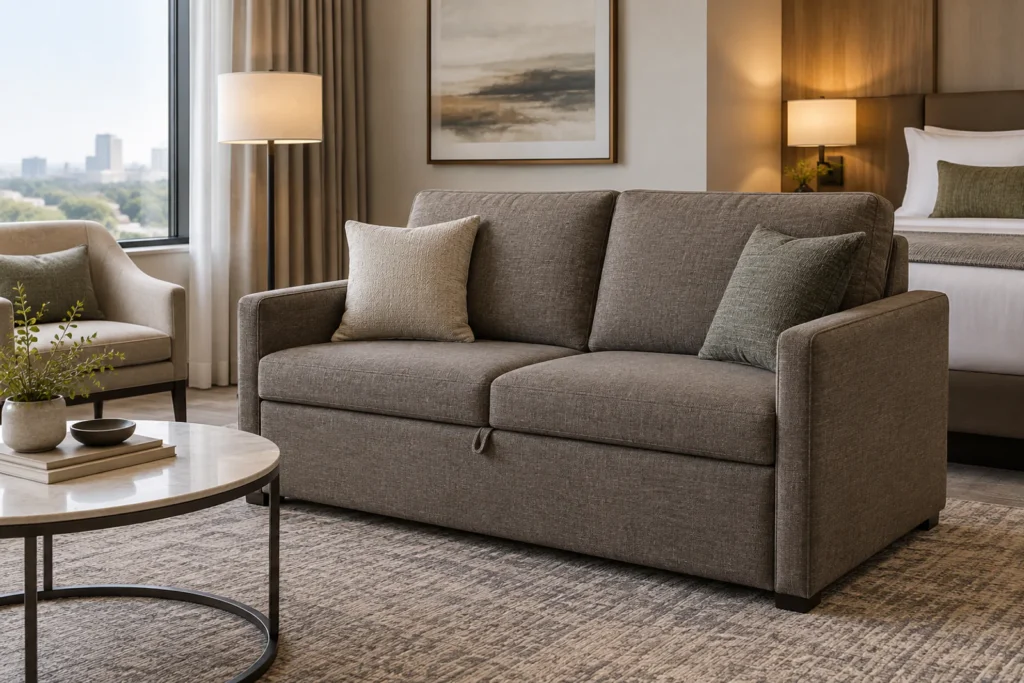
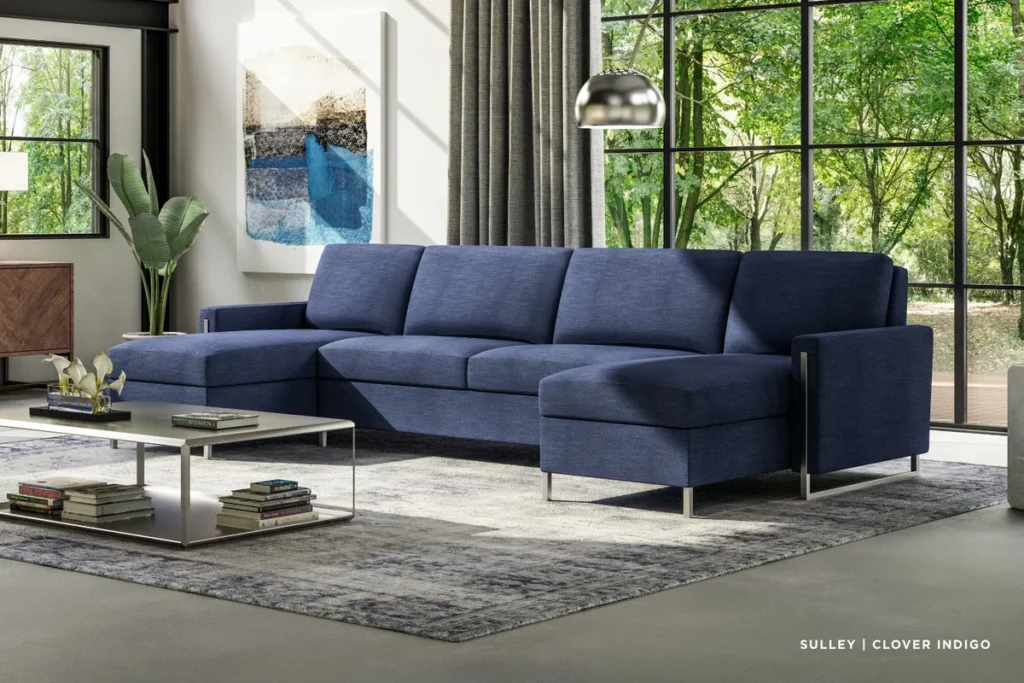
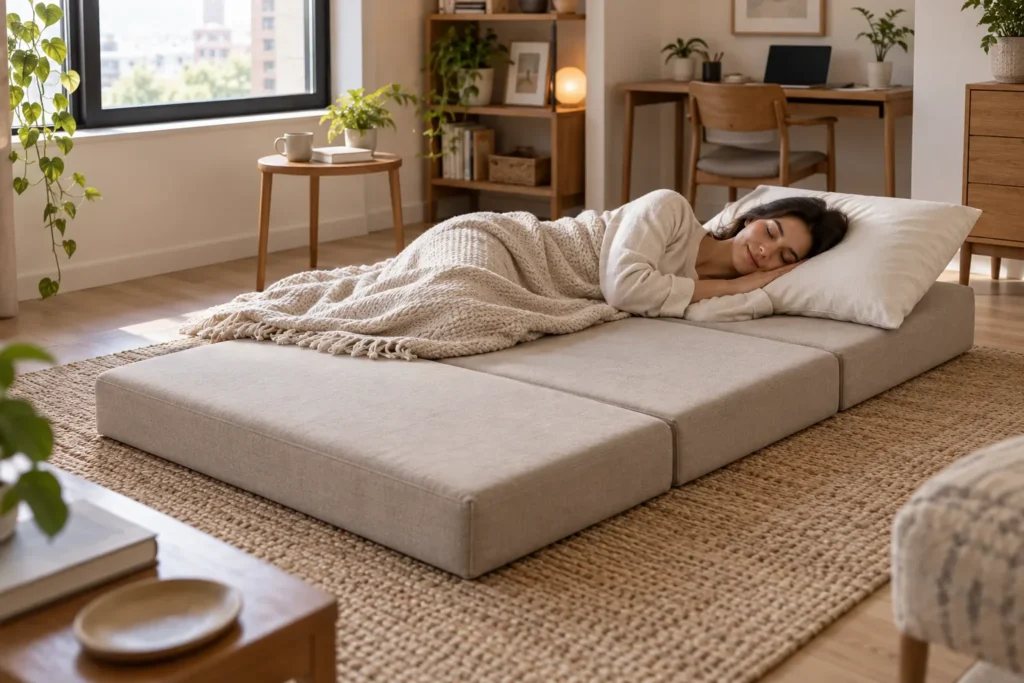
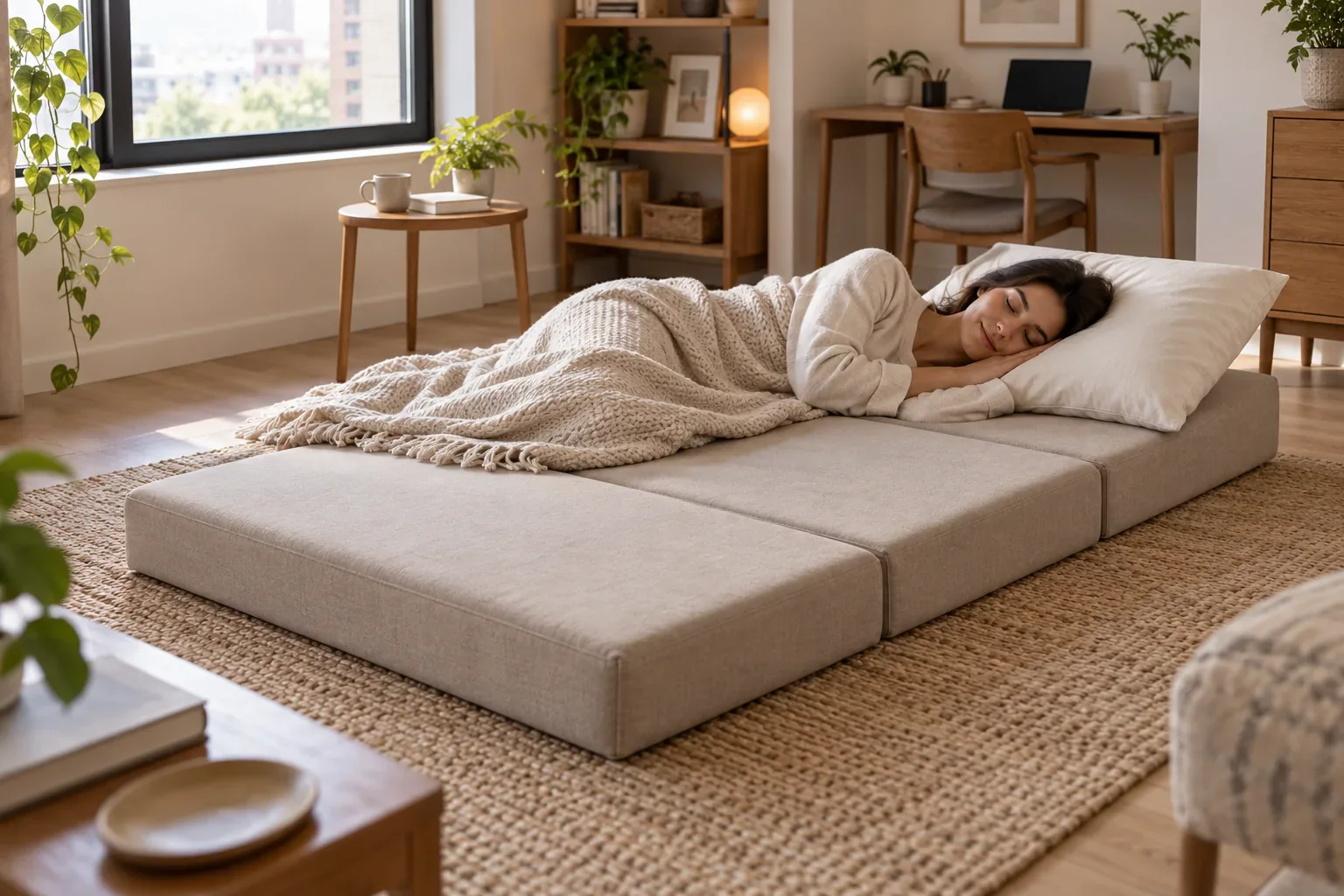
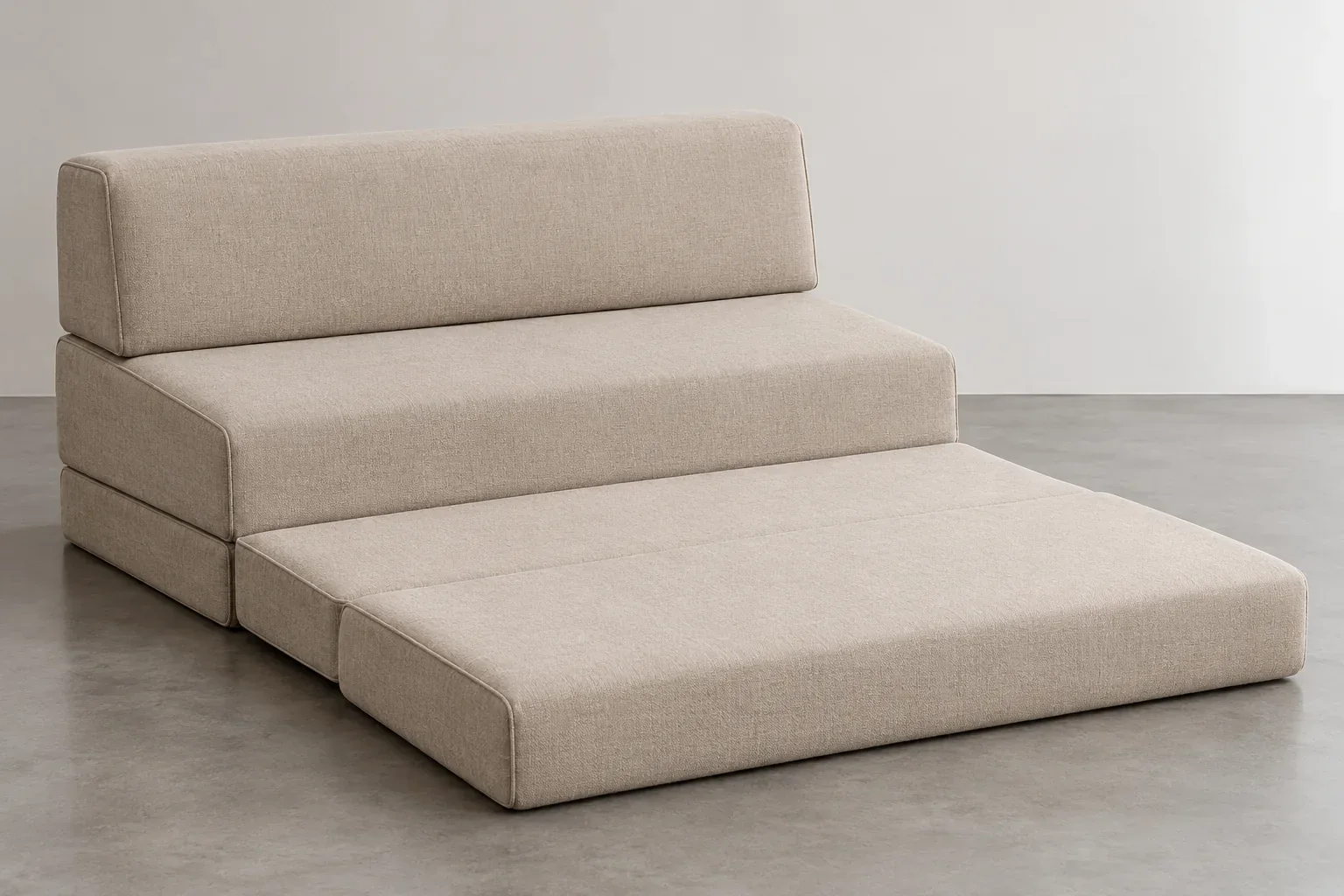
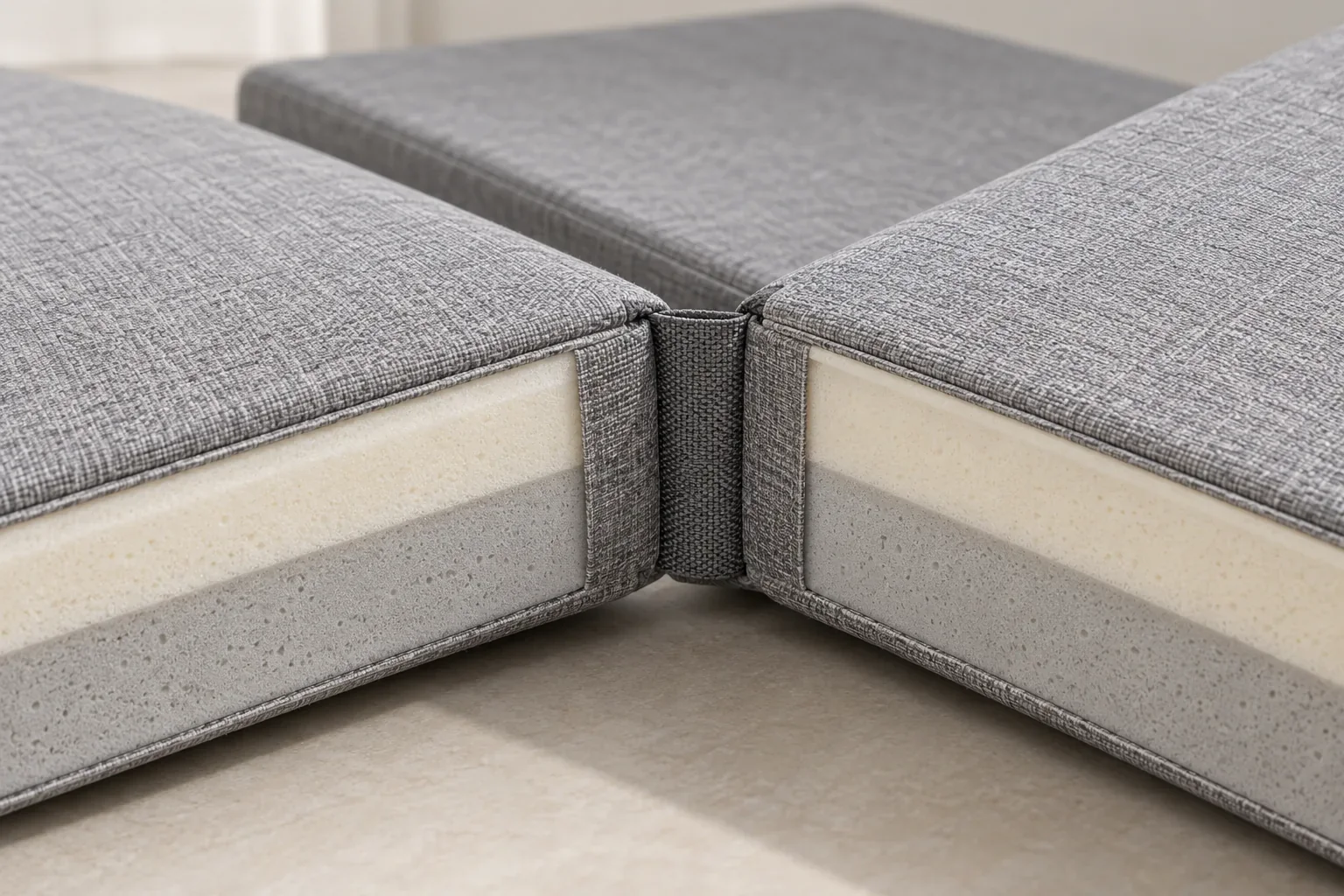
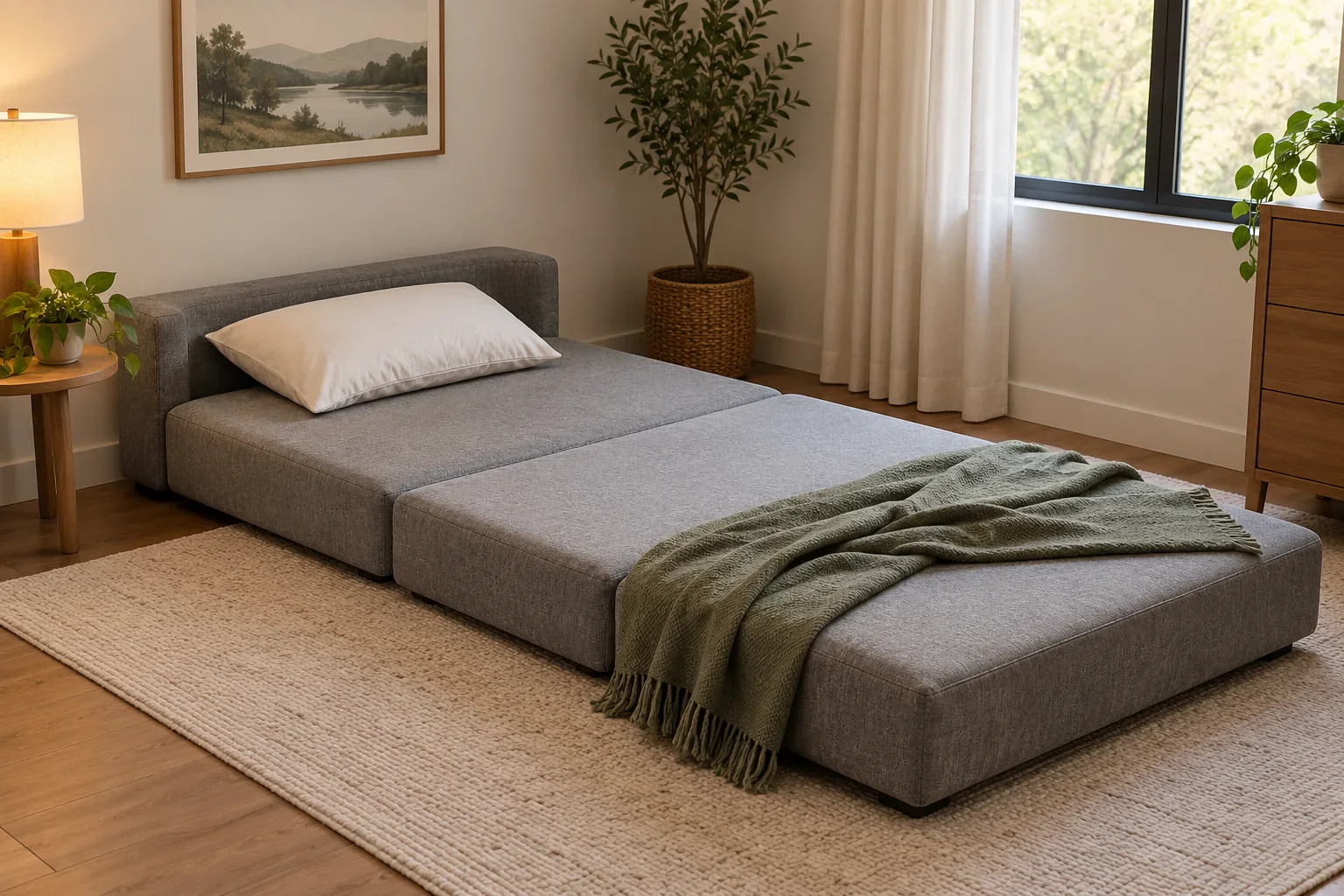
This is a product-type and buyer-education guide. The illustrations show possible three-section concepts and are not HUAXUAN stock-model photographs. A related sofa bed collection can start a development discussion, but an actual tri-fold program needs feasibility review against the requested reference design and quantity. Do not infer a supplied tri-fold model from a general sofa bed catalog.
How Does a Tri-Fold Sofa Bed Work?
In a typical configuration, the three connected padded sections begin folded to form a seat and back. A user releases or lifts the appropriate section, moves the stack through an intermediate position and lays the connected sections into a sleeping platform. To close it, the sections return in the intended order. The sequence should be documented for the actual product. A simple concept diagram cannot substitute for the real unit’s operation instructions.
The sections may be linked by fabric hinges, mechanical joints or a supporting frame. Some products rest close to the floor, while others maintain a raised seat or bed position. Some use cushions as the sleeping surface; others introduce an additional support layer. The word tri-fold tells a buyer about segmentation but does not guarantee foam construction, frame type, mattress thickness or exact sleeping height.
A sample review should include the closed seating position, each intermediate movement and the fully open bed. Check whether one person can reasonably operate the intended design, whether the sections align without unstable gaps and whether upholstery is pulled or trapped at the folds. Observe the underside and support arrangement where accessible. Record the approved conversion sequence so the production sample and later instructions are consistent.

Tri-Fold vs Pull-Out Sofa Bed
A pull-out sleeper usually brings a concealed deck, frame or mattress outward from the sofa body. A tri-fold product typically rearranges connected padded sections. However, the market uses these terms loosely; a specific product might combine folding cushions with a moving platform. Classify the actual conversion path rather than relying on a listing label. The comparison describes common approaches, not universal engineering rules.
| Factor | Typical tri-fold sofa bed | Typical pull-out sofa bed |
|---|---|---|
| Conversion method | Unfold several connected sections | Extend a concealed platform or mattress |
| Internal hardware | May use simple hinges or a supporting frame | Often uses runners, frame links or pull-out hardware |
| Mattress or cushion | Frequently uses segmented upholstered cushions | May use a separate mattress or deck cushions |
| Weight | Depends on foam, frame and structure | Depends on hardware, frame and mattress |
| Space requirement | Needs floor area for unfolded sections | Needs front travel and final bed envelope |
| Seat height | Can be low in floor designs | Usually follows sofa frame height |
| Sleeping height | Can be low; confirm actual design | Often raised, but design-specific |
| Commercial appearance | Ranges from casual floor sofa to tailored framed piece | Often resembles a conventional sofa when closed |
| Maintenance | Inspect fold covers, hinges and cushions | Inspect slide hardware, joints and mattress support |
| Best application | Compact or flexible spaces when design fits | Projects wanting conventional sofa profile or raised bed |
Neither type is automatically better. A simple folding concept may have fewer moving metal parts, but a floor-level bed may be inconvenient for some users. A pull-out can offer a familiar sofa silhouette, while its hardware and clearance requirements may be less suitable for certain rooms. Review the pull-out mechanism guide for that family in more detail.
Tri-Fold vs Click-Clack Sofa Bed
A click-clack design commonly changes position around a seat-and-back pivot. The back reclines or folds through defined positions until the seat and back create a flatter surface. A tri-fold design generally uses several connected cushion or platform sections that fold over one another. Some marketing descriptions overlap, so the visible conversion sequence remains the best identifier.
The main buyer questions differ. For a click-clack sofa, examine pivot positions, back clearance and support along the joint between seat and back. For a tri-fold, examine multiple fold lines, cushion recovery, how segments stack and the open-floor footprint. Both need a comfort review in seat and bed modes. The existing click-clack versus pull-out guide provides a broader comparison without assigning a tri-fold mechanism to either family.
A fold-out sofa bed is another broad description, sometimes applied to a tri-fold and sometimes to a different construction. Ask the supplier to show three stages in the exact proposed unit: closed, partly converted and open. If those images and the drawing do not agree with the name, use the operating sequence and actual construction as the specification. Terminology should support purchasing clarity, not conceal a mismatch.
Tri-Fold Sofa Bed Dimensions
There is no standard tri-fold closed or open size. A product can be a narrow single-person floor seat, a compact two-seat sofa or a larger framed convertible. Closed width and depth govern room fit as seating. Open width and length govern the sleeping surface. Seat height and sleeping height affect usability. Folded thickness affects stacking, appearance and potentially packed volume. Ask for all of these dimensions on one drawing.
| Dimension to confirm | Closed position | Open position | Buyer reason |
|---|---|---|---|
| Width | Outside width of sofa or folded unit | Usable sleeping width | Wall fit and bed function are separate |
| Depth or length | Front-to-back seat footprint | Maximum unfolded length | Determines floor clearance |
| Height | Seat and back height | Sleeping surface height | Affects sitting and user access |
| Folded thickness | Stack height of cushion sections | Thickness and transitions of flat sections | Affects seating profile and sleep comfort |
| Intermediate envelope | Space needed during movement | Not just the final bed footprint | Prevents collision with furniture and walls |
| Packed unit | Carton or module dimensions | Assembly requirements | Determines delivery and storage feasibility |
Measure the open product at the points a user can actually occupy. A raised edge, hinge allowance or soft cushion taper can reduce usable sleeping area. If the three sections create height differences at fold lines, record those as part of sample approval. Conversion may require more front space than the final position appears to occupy. Check intermediate clearance with a table, wall and doorway in the room plan.
For a bulk program, identify the tightest installation and delivery route. A low floor sofa may fit below a window but still block a door when open. A framed tri-fold may require more closed depth and a taller packed module. The sofa bed dimensions guide explains general measurement terminology; here the focus is the pair of closed and open drawings for a three-section product.
Related Sofa Bed Models
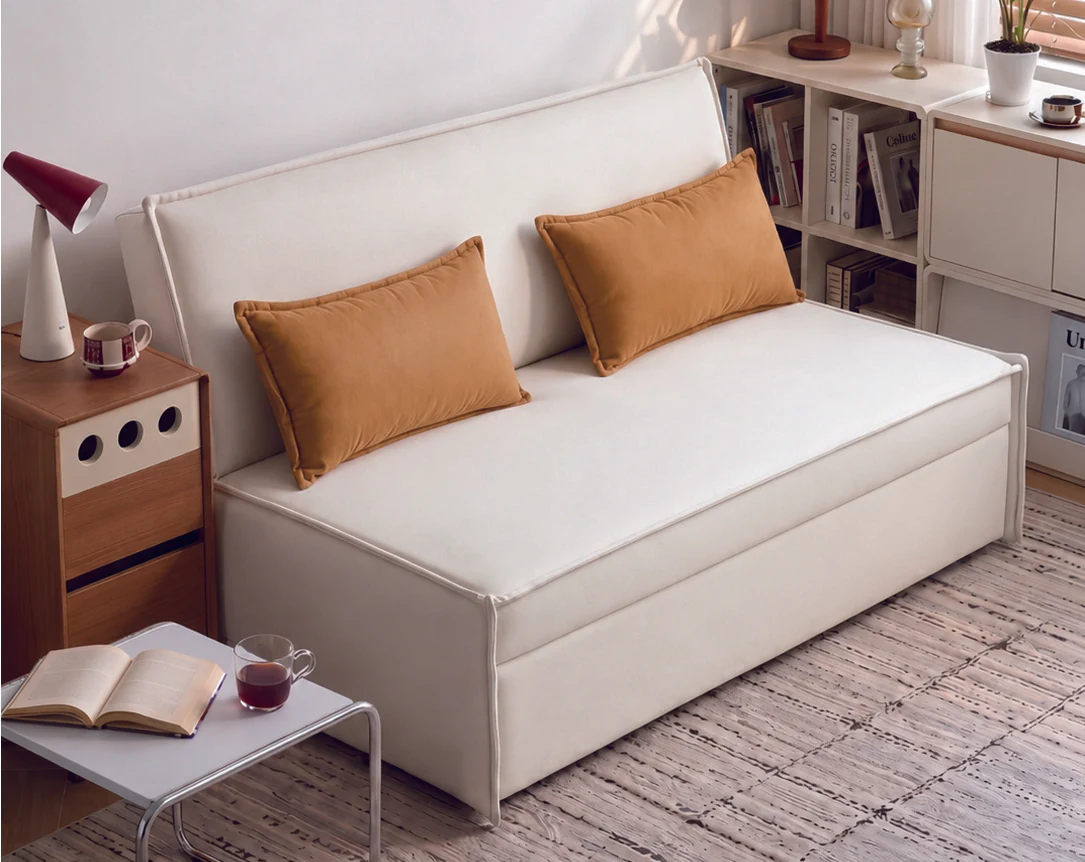
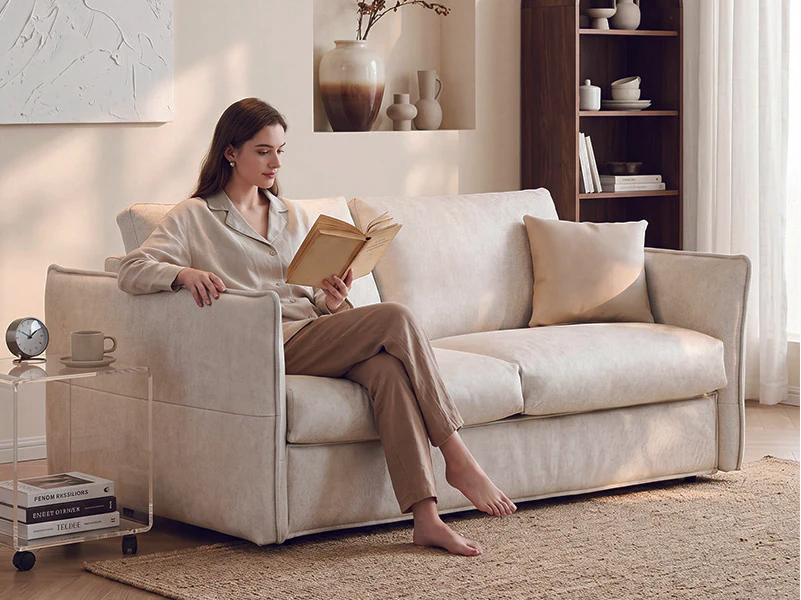
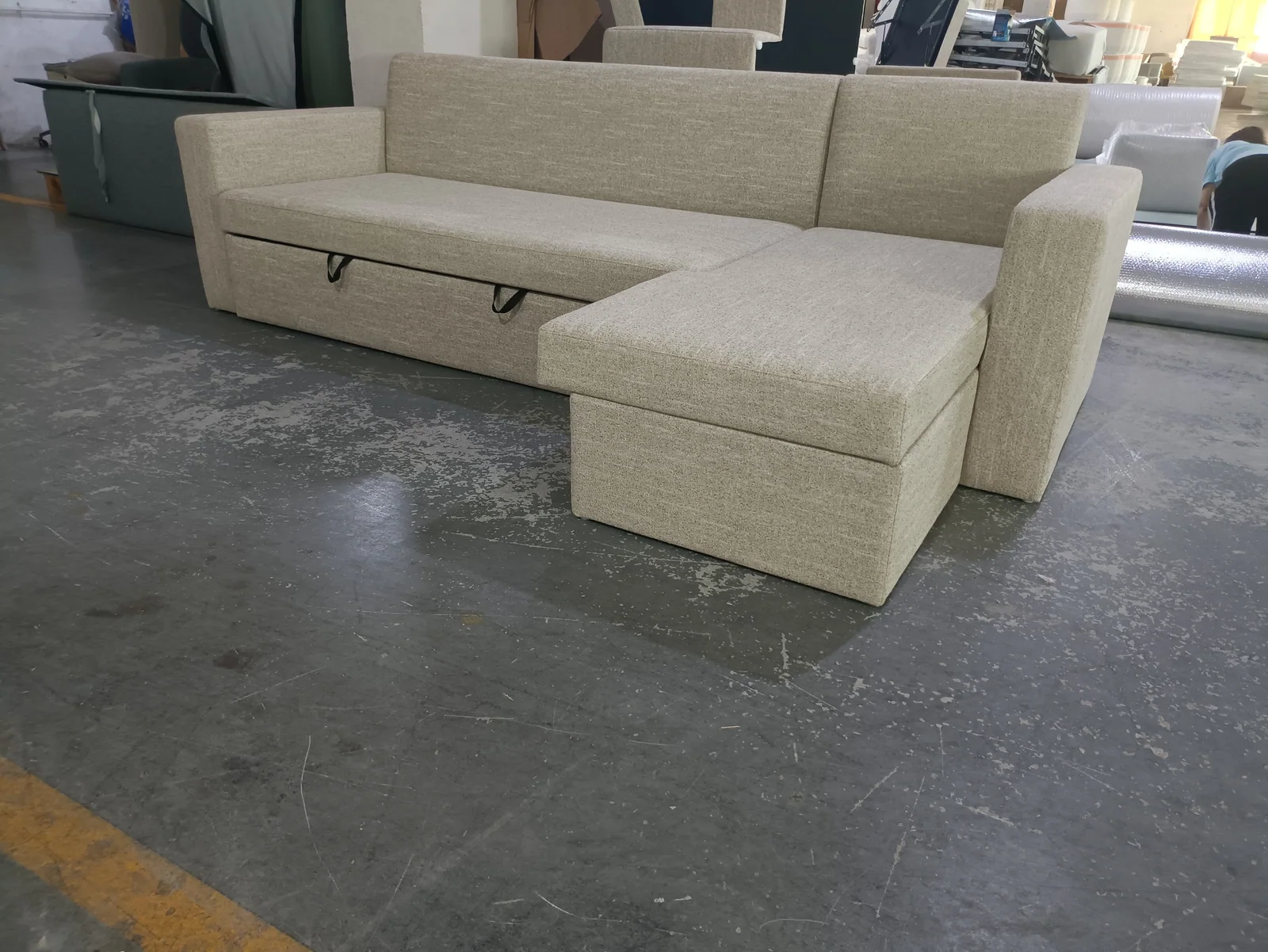
Compare these references alongside the guide. Confirm the selected configuration before ordering.
Advantages of a Tri-Fold Sofa Bed
A tri-fold configuration can offer a compact closed form and relatively direct conversion, depending on its design. Some versions use fewer complex pull-out components because the cushions themselves form the sleeping platform. A foldable form can also create packaging or storage opportunities, but those depend on frame construction and the permitted fold direction. These are possibilities to test, not guarantees for all tri-fold products.
The segmented design may suit a compact furniture collection where a flexible guest bed is more useful than a permanently raised mattress. In a small studio, it can keep the everyday seating footprint modest. Buyers should still check how long conversion takes in normal use and where the bedding is stored. A light-looking product can become cumbersome if sections are heavy or difficult to grip.
A low profile can be visually appropriate for some contemporary rooms, student housing or temporary guest areas. It does not follow that the same product is suitable for every hospitality program. If a raised sleeping surface, frequent conversion or standardized housekeeping process is required, compare alternatives using the actual sample. The right advantage is the one that solves the defined room and user requirement.
Limitations and Tradeoffs
The sleeping surface may sit lower than a conventional pull-out mattress. That can make access harder for some users. Segmented cushions introduce fold lines, and the transition between sections can affect comfort. The open platform may need a large clear floor area despite a compact closed shape. Assess both seated and sleeping positions with the intended use frequency, not only a photo of the bed laid flat.
Repeated folding stresses the cover and any hinge material. Check seam stability, fabric abrasion at joint edges and how the foam recovers after stacking. Some products show a casual floor-sofa appearance that may not align with a formal commercial interior. A framed version can address appearance but may add hardware and weight. Commercial suitability depends on construction, care and user expectations.
Packaging can protect or damage the segmented structure. An overly compressed cushion may require recovery time, while a rigid framed product needs a different carton plan. Ask how sections are secured for transport and whether the approved sample matches the delivered product after unpacking. Do not promise space savings or shipping efficiency until the actual packed dimensions and recovery behavior are verified.
Where Tri-Fold Sofa Beds Work Best
Possible applications include small apartments, dormitories, guest rooms, temporary sleeping areas, rental properties and compact retail assortments. Suitability depends on the product profile and the users. A floor-level bed may fit a young-adult studio collection but may be a poor match for a room designed for older guests. A thicker framed model may suit a different setting while giving up some compactness.
For serviced apartments, define how often the sofa will convert and how staff will make the bed. Check cleaning access around folds and whether spare covers or components are practical. For retail, show both closed and open configurations with honest dimensions and sleeping height. Buyers should avoid assuming that every folding sleeper sofa in a catalog has the same use case.
A related grey fabric pull-out product reference can help compare a different mechanism family. It is a pull-out reference, not a tri-fold product. The distinction matters when discussing images, dimensions and available production history. Use the sofa bed mechanism guide to place both concepts in the broader convertible-furniture landscape.
Foam and Cushion Construction
If cushions form the bed, foam support becomes a central design decision. Ask for the proposed foam construction, thickness and support beneath every section. Density or firmness figures, when available, need the supplier’s specific data and a sample review; this guide does not assign numbers to a product. Observe whether the sleeping surface feels consistent across section boundaries and whether the seat recovers after being folded.
The cover must tolerate bending at the hinge or fold positions without excessive pulling or wrinkling. Stitch placement and seam allowances should be reviewed after repeated conversions. Removable covers can change care and replacement options, but are not inherent to tri-fold construction. Upholstery should suit the intended cleaning procedure and destination market. Approve the textile on the actual fold geometry rather than on a swatch alone.
Frame and support choices change the comfort and lifespan assessment. A floor-level cushion stack, a flexible base and a rigid framed sofa may all be sold under the tri-fold name but behave differently. Define whether the product is primarily occasional guest bedding or frequent daily use. A sample can expose uncomfortable transitions or unstable support before a large order makes them expensive to correct.
Tri-Fold Sofa Bed Wholesale Buyer Checklist
A useful RFQ describes how the product must work, not merely what it is called. Include reference images as design intent and a dimensioned brief for both modes. Ask the supplier to identify which parts of the reference are feasible, which require development and which need sample testing. Approve the open and closed product together.
- Closed width, depth and height.
- Open sleeping width, length, height and movement envelope.
- Seat height and seating support in the folded position.
- Foam construction, thickness and recovery expectations.
- Upholstery code, care method and fold-line seam design.
- Folding structure, frame, joints and expected operating sequence.
- Quantity, target market and intended conversion frequency.
- Packed dimensions, protection method and assembly needs.
- Reference design, sample approval and permitted substitutions.
Keep sample approval evidence specific. Photograph each conversion stage, measure the actual sleeping area and record any cushioning or seam changes. A quote should identify whether the proposal is a floor sofa, framed tri-fold or another configuration. If a supplier offers a related pull-out product instead, evaluate it honestly as an alternative rather than relabeling its mechanism. Clear product identity helps both commercial buyers and end users.
Frequently Asked Questions
What is a tri-fold sofa bed?
It is a convertible seating product whose cushion or sleeping platform uses three main folding sections. The term covers several constructions, including floor sofas and framed convertibles, so inspect the actual mechanism and support.
How does a tri-fold sleeper sofa work?
The connected sections move from a folded seat and back through an intermediate unfolding stage into a flatter sleeping surface. The exact order, support and height vary by product and should be demonstrated on a sample.
Is a tri-fold sofa bed the same as a pull-out sofa bed?
Usually no. Tri-fold generally describes rearranged connected sections, while pull-out describes a concealed platform or mattress that extends outward. Some products combine features, so classify the actual construction.
Is a tri-fold sofa bed comfortable for sleeping?
Comfort depends on foam, section support, fold lines, sleeping height and intended frequency. Test the actual open sample rather than assuming the three-section format alone determines comfort.
How much space does a tri-fold sofa bed need?
It depends on closed and unfolded dimensions and the conversion path. Check final open length, side access and intermediate movement on the floor plan; there is no universal tri-fold footprint.
Can tri-fold sofa beds be manufactured for wholesale orders?
A wholesale proposal can be assessed from a reference design, target dimensions, materials, market and quantity. Feasibility, sample development and production terms must be confirmed for the requested configuration; this guide does not claim a stocked HUAXUAN tri-fold model.
Need Pricing for a Sofa Bed Model?
Send the model code, quantity, required size, upholstery and destination. We can review the selected reference before quotation.