
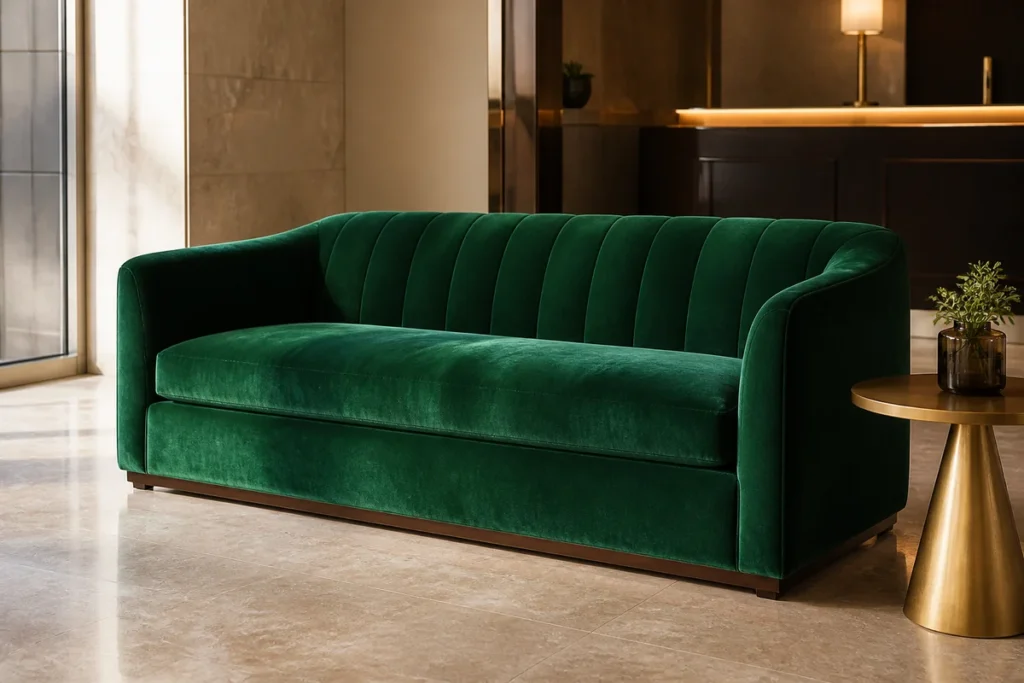
A commercial velvet sofa is specified differently from a generic fabric sofa because velvet has a pile and nap direction that change how light, color and pressure marks are perceived. In a hotel lobby, boutique hospitality space, office lounge, clubhouse or commercial lounge, the same approved velvet can look lighter on one panel and darker on another when cutting direction, cushion rotation or lighting changes. Buyers should therefore control material code, pile direction, panel map, seam and tufting details, sample lighting, cleaning guidance, shade lot and future reorder records. This guide stays focused on velvet as upholstery; it does not repeat complete lobby zoning, general sofa construction or the broad hotel-fabric selection covered elsewhere on the site.
Quick Answer: How Should Commercial Velvet Be Approved?
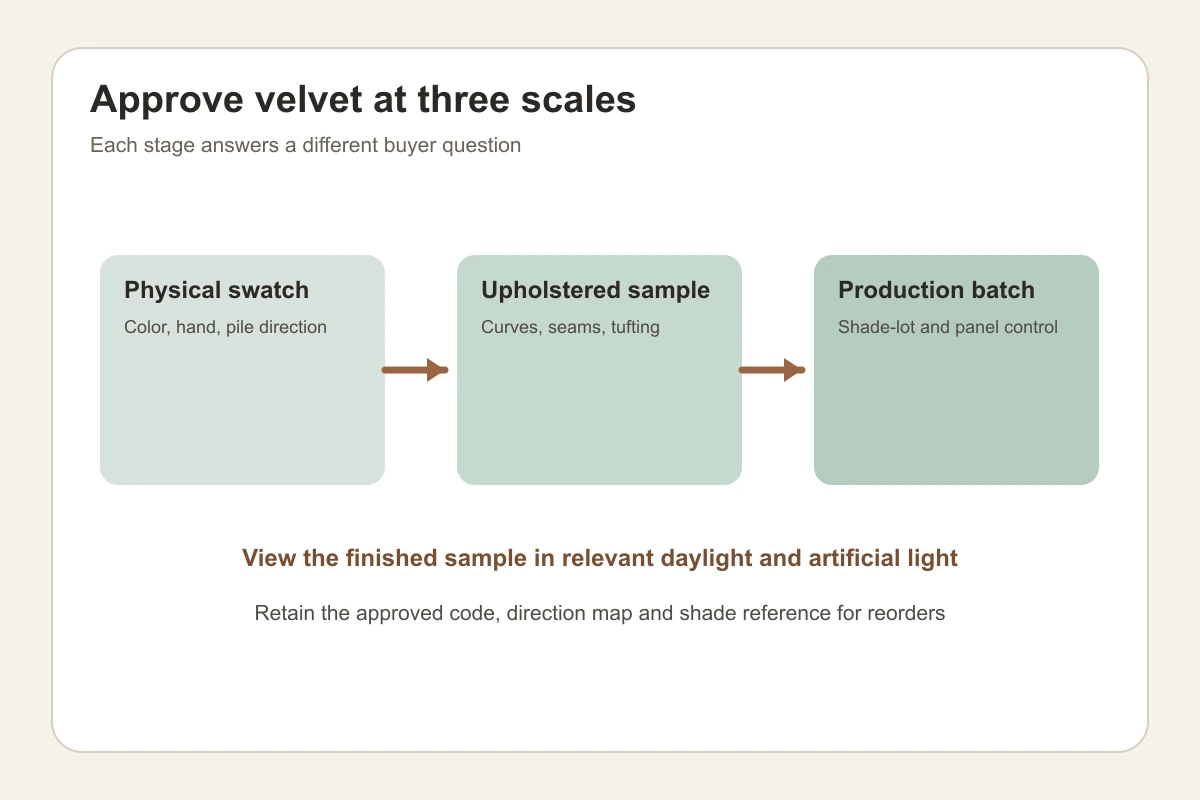
Approve velvet at three scales. First, use a physical swatch to confirm supplier/code, color, hand, pile direction and available material information. Second, review a representative upholstered sample to see directional shading on the actual cushions, arms, seams, tufting and curves. Third, define how production rolls or lots and finished units will be checked against the signed references. View the sample from normal approach directions under relevant daylight and artificial lighting. Record which way the nap runs on every visible panel, whether loose cushions may be rotated, how pressure marks should be maintained, and what process applies if a later batch or replacement cannot match the original shade exactly.
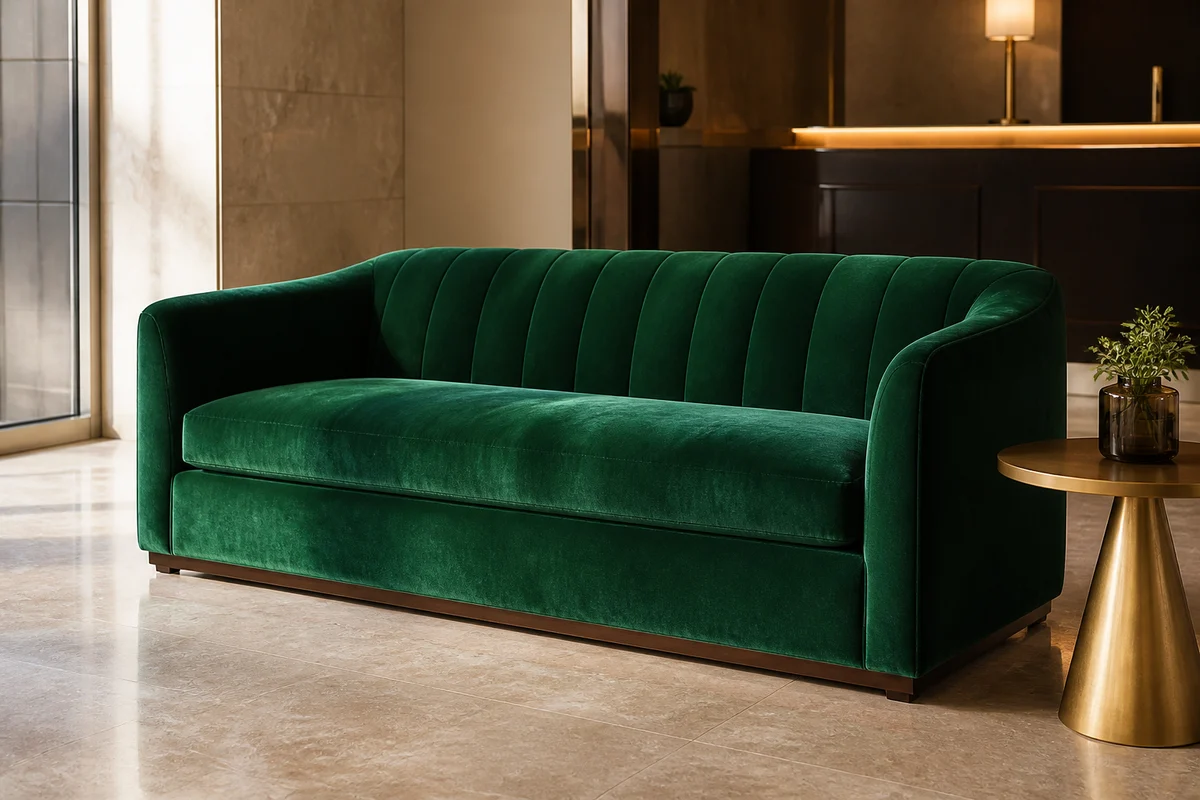
Why Velvet Works in Hospitality and Commercial Lounges
Velvet can give a sofa visual depth because the pile catches light differently as the viewer moves. That effect works well in boutique hotel lobbies, club lounges, arrival areas and office hospitality zones where seating is part of the interior character rather than a neutral background. Saturated colors can appear rich without a printed pattern, while soft neutrals can gain texture. Curves, channel details and generous cushions create changing highlights that emphasize form. These are visual advantages, not proof of commercial durability or easy maintenance.
The same properties create specification responsibilities. Strong grazing light can reveal every change of nap direction. A loose cushion turned around by housekeeping may no longer match the adjacent seat. Pressure from packaging, sitting or handling can create marks that are normal for some velvets but unacceptable to an uninformed stakeholder. A tufted back breaks the surface into many small light-facing planes. The buyer must decide whether that movement is part of the design and show the finished sample to the people approving the project.
Use HUAXUAN’s furniture materials and finishes page to place the velvet code within the complete material schedule. For a broader comparison of woven fabrics, leather-look materials and other hotel choices, see the hotel sofa fabric guide. This article owns the narrower pile, light and velvet production-control questions.
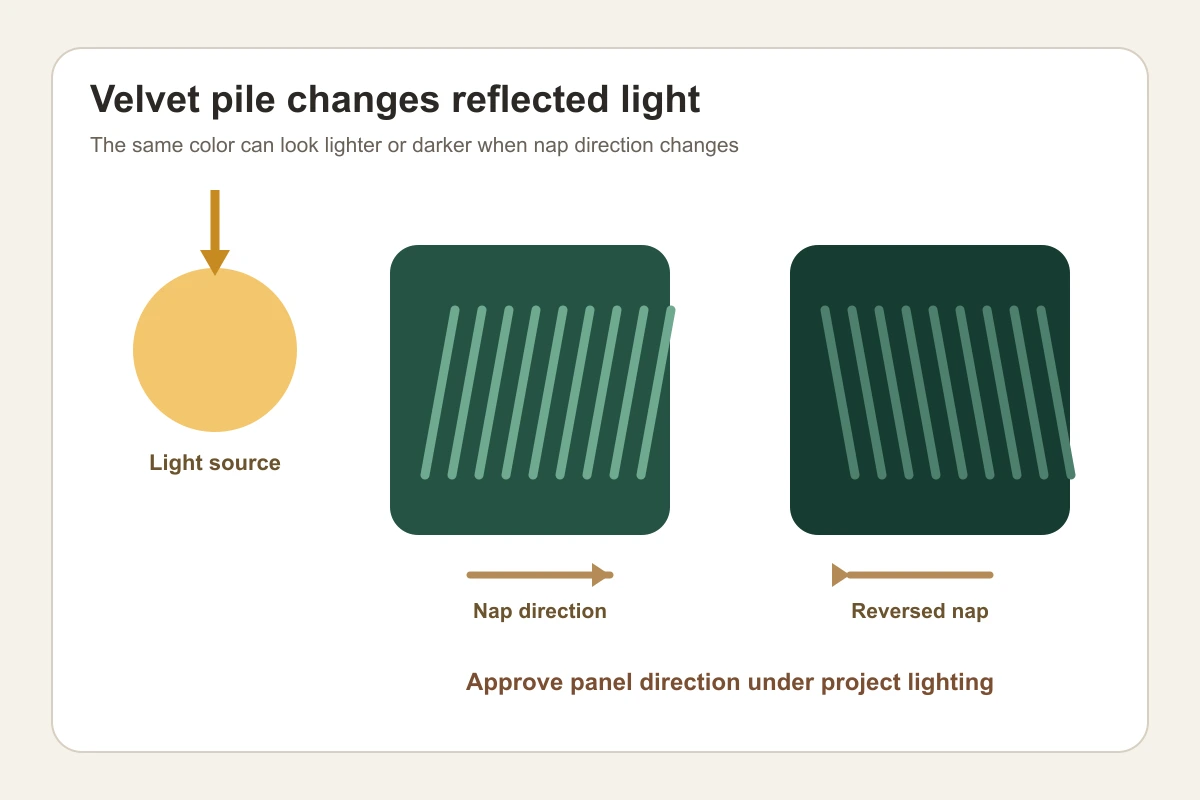
Pile, Nap Direction and Light Reflection
Pile is the raised fiber surface that gives velvet its characteristic feel and directional appearance. Nap describes the direction in which that pile lies. When light strikes the fibers, a panel viewed with the nap can reflect differently from a panel viewed against it. The material has not necessarily changed color; the viewing geometry has changed. Touch can also move fibers temporarily and create lighter or darker areas. The exact response varies by velvet construction, fiber, pile height, finish and use, so buyers must examine the actual offered code.
During swatch review, mark the supplier’s roll direction and gently view the sample from both ends under the same light. Then rotate it by ninety and one hundred eighty degrees. This reveals how directional the appearance may be. Do not choose a direction from the swatch alone: translate it to the sofa orientation and the main viewer approach. A lobby sofa seen from both the entrance and lounge may need a clear compromise or intentional visual rule.
| Velvet characteristic | What buyers may observe | Control method |
|---|---|---|
| Nap direction | Light/dark change when a panel is reversed | Mark roll and panel direction on the cutting map |
| Directional shading | Adjacent areas appear different under one light | Review the complete sample from normal viewpoints |
| Pressure marks | Pile lies differently after sitting, packing or touch | Confirm expected maintenance and acceptance with the exact material |
| Tufting | Many highlights and shadows around pulls or channels | Approve depth, spacing and panel direction on the sample |
| Curved upholstery | Continuous tonal change around the radius | Use a deliberate nap direction and resolved seam position |
| Loose cushions | Rotation can reverse the appearance | Label orientation or design for controlled rotation |
| Shade lot | Later material may not visually match the first batch | Retain codes, references and reapproval rules |
Shading and Pressure Marks Are Approval Questions
Shading is often the visual result of pile direction, pressure or handling rather than a dye failure. Some project teams welcome this living surface; others expect a uniform appearance. Neither expectation should remain implicit. Ask the material supplier how the exact velvet is normally brushed or maintained, what temporary marks are typical, what cleaning restrictions apply and how the fabric should be packed. Demonstrate the accepted appearance on the upholstered sample, including recently sat-on areas and cushions after normal handling.
Avoid absolute promises that the pile will never flatten, soil or show a mark. If the buyer requires a measurable property, define the relevant method and request evidence for the offered velvet. In normal project approval, use observable criteria: consistent panel direction, no accidental reversed cushion, no unexplained shade mismatch, seams positioned as drawn, and recovery or grooming procedures agreed for the exact material.
Cushion, Seam, Pattern and Pile Alignment
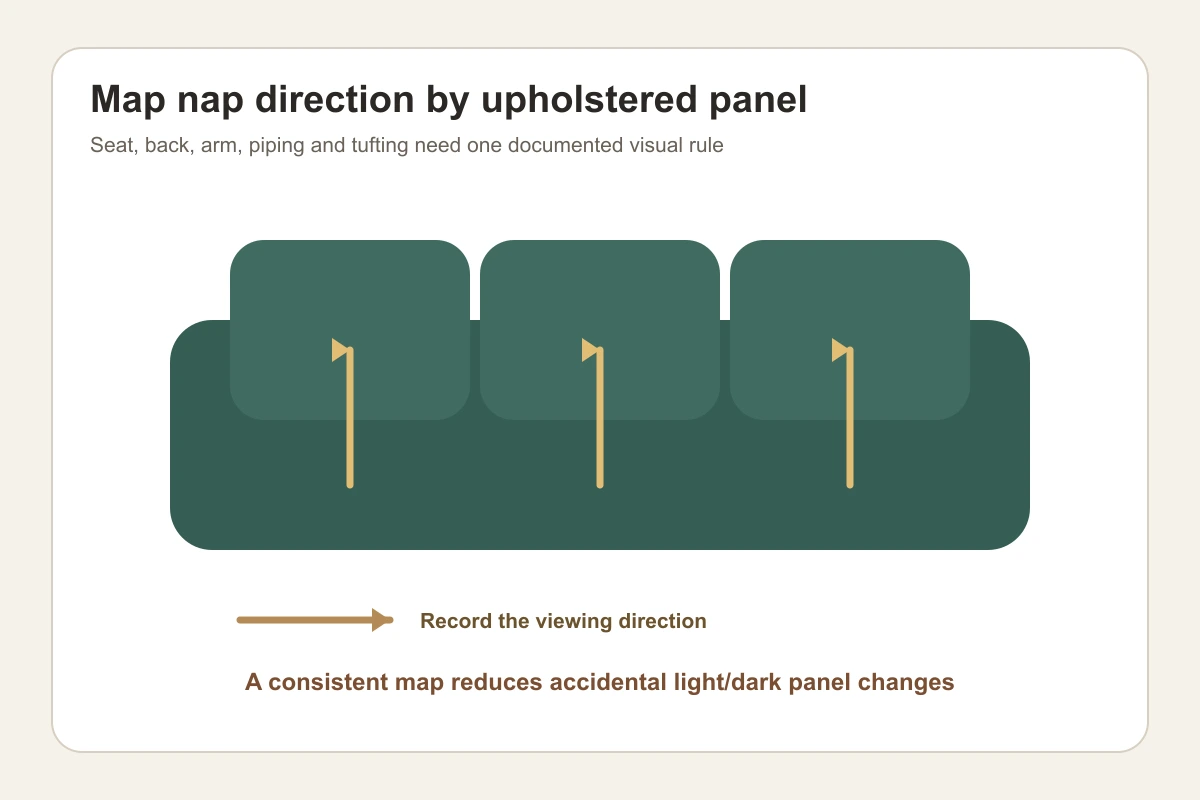
Treat the sofa as a map of visible panels. Seats, backs, arms, fronts, outside backs, piping, skirts and loose cushions can each reflect light differently. Select one governing viewing direction and mark nap arrows on the drawing or cutting plan. If the design intentionally changes direction, show that decision rather than leaving it to cutting-room interpretation. Where the velvet also has a printed, ribbed or channel-like pattern, both motif alignment and pile direction must be controlled.
Seams interrupt the pile and can either organize the appearance or create a visible break. Long seat cushions may show broad bands of light; several smaller cushions create repeated vertical transitions. Piping introduces a narrow rounded surface that may appear lighter along one edge. The thread color, seam type and piping direction should be reviewed with the velvet, not copied from a non-directional fabric specification. The sofa stitching and upholstery detail guide contains the general workmanship checklist; use it as a supporting reference rather than repeating it here.
Loose and reversible cushions
A cushion called reversible may not look visually reversible in velvet. Turning it over or end-for-end can change the apparent shade. If operational teams need to rotate cushions, ask the supplier to show both positions or define a labeled orientation. Check zippers, seams and cushion crown so the intended face remains clear. For fixed cushions, confirm that cleaning and service access fit the project because rotation is not available as a maintenance response.
Patterned or striped velvet
When velvet includes a visible motif, repeat size and alignment can affect fabric quantity and panel placement. Mark the intended centerline, vertical direction and matching points on the sofa drawing. Ask how curved arms, boxing panels and piping will handle the motif. Do not assume every pattern can continue perfectly around a three-dimensional form; the sample should establish which transitions are intentionally matched and which are controlled breaks.
Tufting and Channel Details
Button tufting, pulled points and vertical or horizontal channels change the angle and compression of the pile. They create deeper shadows, brighter ridges and small directional areas. On a saturated velvet, these effects can be visually strong. Approve tuft spacing, depth, button material, channel width, seam straightness and the appearance after normal sitting. A reference image can define direction, but the sample must show whether the selected velvet and padding create the intended result.
Tufting also creates more places where dust can settle and where housekeeping may brush against the nap. Ask how the design will be accessed for routine care and whether buttons, pulls or channel seams can be serviced. Do not claim that one tufting style is automatically easier to clean or more durable; the decision depends on the exact construction and operating plan.
Curved Velvet Sofas
A curved sofa can make velvet’s light response especially visible because the surface turns continuously toward and away from the light. Decide where the main highlight should travel, where a seam can sit without disrupting the curve, and whether the outside back will be seen as an island piece. Large radii may carry one sweeping panel; tighter forms may require more sections. Every added seam changes the nap relationship and must be included in the approved view.
Ask for front, side, rear and top drawings with panel divisions and nap arrows. Review the sample under side lighting and from the normal guest approach. Do not extend the article into a general curved-sofa layout guide; buyers choosing shapes and room positions can use the existing curved sofa planning guide. The commercial question here is whether the velvet direction and seam map support the chosen form.
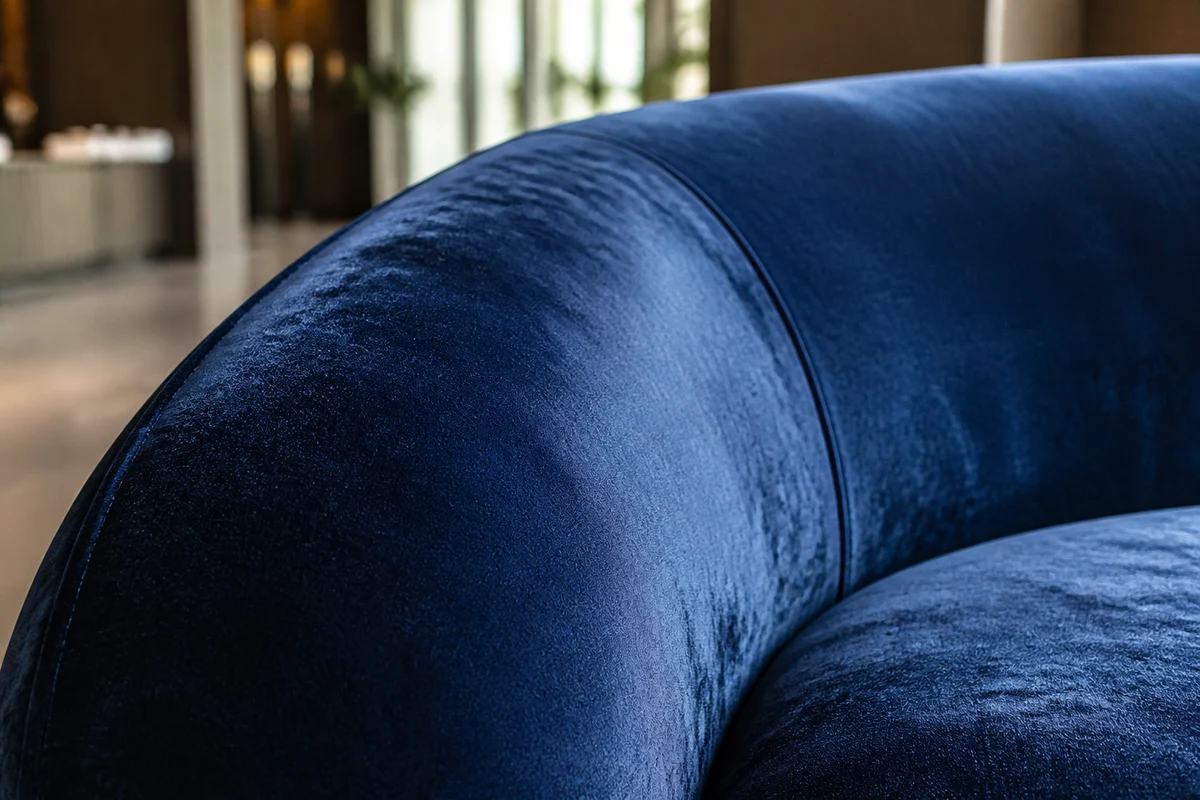
Lighting Approval for Hotel Lobbies and Lounges
Velvet color approval should include the project’s likely daylight and artificial light direction. A swatch viewed flat on a desk under cool office lighting may not resemble a vertical sofa back under warm lobby lighting. Place the swatch and completed sample in several orientations. Observe the sofa from the entrance, seating approach and main circulation path. If the final lighting is unavailable, document the evaluation conditions and avoid treating a digital rendering as the final physical color reference.
Where several sofa groups sit under different fixtures, the same velvet may appear different across the room even when production is consistent. The interior team should decide whether that variation is acceptable before blaming the material or requesting unnecessary rework. Photographing the sample can help communication, but camera exposure and screen settings alter color; retain the signed physical reference.
Cleaning and Maintenance in High-Traffic Use
Start with the exact velvet supplier’s care instructions. Routine care may involve controlled vacuuming or grooming, but attachment type, direction and frequency must suit the fabric. Spills should be handled according to the approved method without aggressive rubbing that disturbs the pile. Do not generalize that a solvent, detergent, steam process or spot treatment is safe. If a specialist cleaner is required, record that responsibility in the operating plan before choosing the material for a high-turnover zone.
High traffic is not one standardized condition. A quiet boutique lobby, busy elevator lounge, office waiting area and clubhouse bar can expose seating to different dwell times, food, luggage, uniforms, daylight and cleaning cycles. Describe those conditions to the supplier. Review accessible gaps, removable cushion orientation, underside access and whether the visual expectations can be maintained by the actual housekeeping or facilities team.
For the wider hotel-lobby seating mix and circulation, delegate to the hotel lobby seating guide. The earlier hotel lobby sofa guide covers silhouettes and general material direction. This velvet guide should remain attached to the upholstery schedule for the shortlisted products. HUAXUAN’s commercial sofa references provide the natural next step when the project team is ready to discuss actual forms.
Swatch, Finished Sample and Batch Shade Control
The physical swatch answers whether the material direction is broadly correct. The upholstered sample answers how that direction looks on the chosen form. Bulk review answers whether the delivered set remains consistent with the approved references. Tie all three stages to the supplier/code, color, roll direction, product code and drawing revision. Retain the signed swatch and clear photographs of the sample from agreed viewpoints, while recognizing that photographs do not replace physical color approval.
Ask how rolls or production lots will be identified and allocated across one sofa or one room group. Avoid mixing panels from different lots within a piece unless the supplier and buyer have checked the result. If multiple models share one velvet, decide whether all pieces use the same visual nap direction relative to the room or relative to each product front. Keep usable retained material only when storage and project policy make sense; it is not a substitute for a documented reorder process.
For future replacements, record the product SKU, velvet code, color, nap map, seam/tufting revision, base finish and original order. A later lot may need a new comparison and may not be visually identical after the installed sofa has aged or been cleaned. The supplier should flag unavailable or substituted material before production. The buyer can then approve a new swatch, replacement panel strategy or intentional room-group update.
Share the sofa reference, project lighting, quantity, velvet code or visual direction, nap expectations and sample plan for quotation review.
Commercial Velvet Sofa RFQ Specification
| RFQ field | What to record |
|---|---|
| Application | Hotel lobby, boutique hospitality, office lounge, clubhouse or commercial lounge |
| Product | Sofa code, dimensions, quantity, curved/straight form and visible sides |
| Velvet | Supplier/code, color, declared composition/construction and physical swatch |
| Direction | Roll direction, nap arrow and panel-by-panel cutting map |
| Appearance | Expected shading, pressure marks, sheen and normal viewing direction |
| Details | Seams, piping, tufting, channels, pattern alignment and loose-cushion orientation |
| Lighting | Daylight/artificial conditions and approved viewpoints |
| Care | Supplier cleaning method, routine grooming and restricted treatments |
| Approval | Swatch, upholstered sample, cleaning/handling review and signed revision |
| Bulk | Lot identification, panel allocation, shade comparison and substitution rule |
| Replacement | SKU, retained records, reapproval and later-lot strategy |
| Commercial | BOQ, destination, schedule, packing and zone labels |
Sample Approval Checklist
- Confirm the exact velvet code and mark the supplier’s roll/nap direction.
- View the swatch from multiple orientations under relevant light.
- Issue a panel map for seats, backs, arms, piping and visible outside backs.
- Check loose-cushion orientation and whether operational rotation is realistic.
- Approve seam, tufting, channel, curve and pattern behavior on the finished sofa.
- Record acceptable directional shading and normal pressure-mark maintenance.
- Review the supplier’s cleaning guidance with the operating team.
- Tie sample photographs, physical swatch, product code and revision together.
- Define lot identification, batch shade comparison and substitution approval.
- Retain the information required for replacements and later orders.
A complete sofa sample also needs general dimension, comfort, frame, seam and finish review. Use HUAXUAN’s sample approval process and the sofa sample checklist for those broader controls. Buyers can browse custom sofa manufacturing references and hotel and hospitality furniture scope, then use the product reference library to attach an appropriate form to the velvet brief.
Send your sofa reference, project use, quantity, dimensions, velvet direction and lighting context for a B2B quotation review.
FAQ
How should velvet nap direction be approved under hotel lobby lighting?
Mark the roll and panel direction, then view the upholstered sample from the entrance, main circulation and seating approach under relevant daylight and artificial light. Record the approved viewpoints, physical swatch and panel map because a desk-viewed swatch or rendering cannot show the complete directional effect.
Why does the same velvet sofa look lighter from one direction?
Velvet pile reflects light differently when viewed with or against the nap. Panel orientation, curved surfaces, touch and lighting can therefore change the apparent shade even when the underlying color is the same.
Should every velvet sofa panel use the same nap direction?
Usually the buyer should define a consistent visual rule, but the exact panel map depends on the sofa form, motif and intended view. Mark every visible panel and approve intentional direction changes on the finished sample.
Are pressure marks on velvet a defect?
Not automatically. Some velvets show temporary or characteristic pile displacement after touch, sitting or packing. The buyer and supplier should review the exact fabric, expected maintenance and approved appearance rather than apply one rule to every velvet.
How should a curved velvet sofa be sampled?
Review the complete curve, panel divisions, seam positions and nap arrows from front, side, rear and main approach views under grazing and ambient light. A flat swatch cannot show the tonal transitions around the radius.
How is velvet sofa color controlled in bulk production?
Use a signed physical swatch and upholstered sample, identify material rolls or lots, control panel allocation and compare finished units under agreed light. Record any accepted variation and require approval before substitutions.
What should a commercial velvet sofa RFQ include?
Include the application, product code, dimensions, quantity, exact velvet and color, nap/panel map, seams and tufting, lighting conditions, cleaning method, sample stages, lot and shade control, replacement records, destination and schedule.