
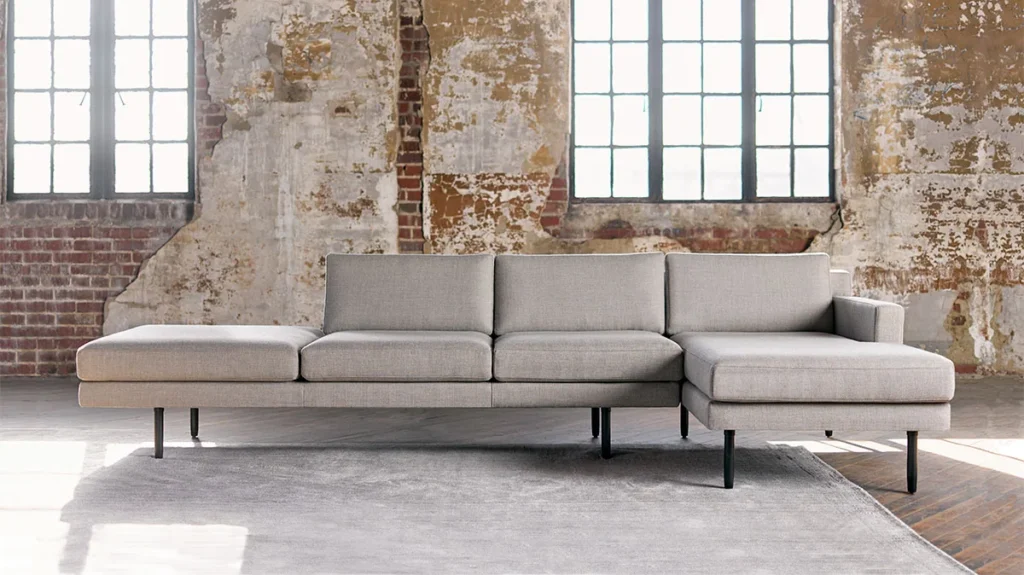
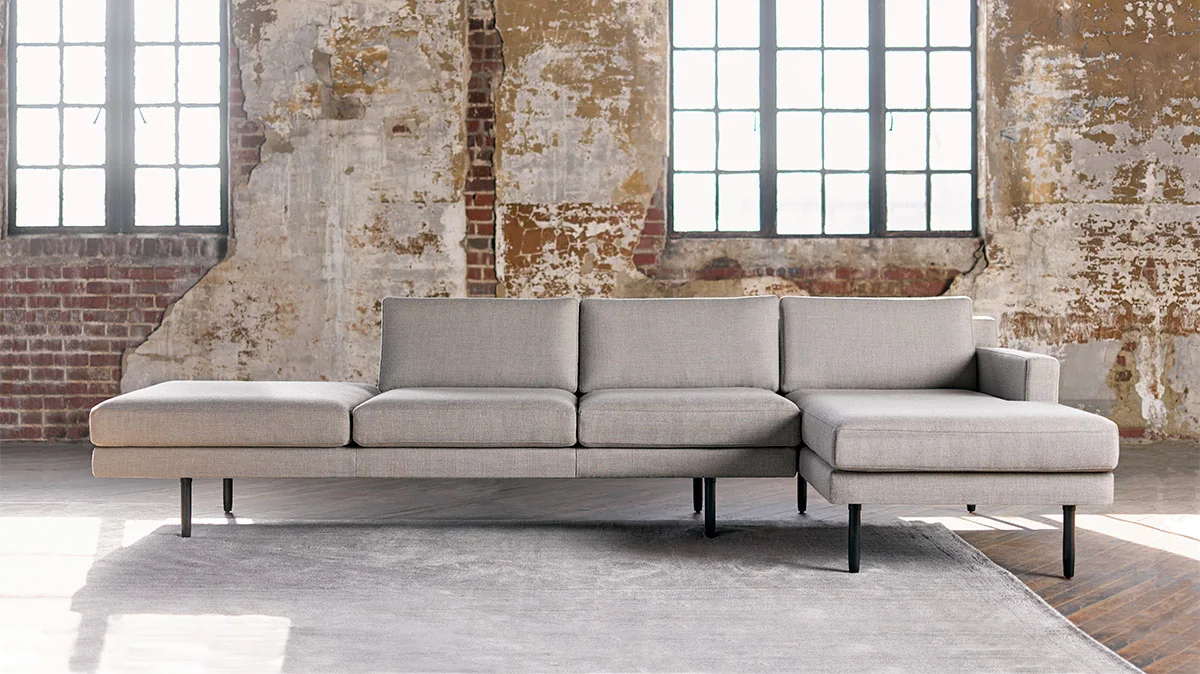
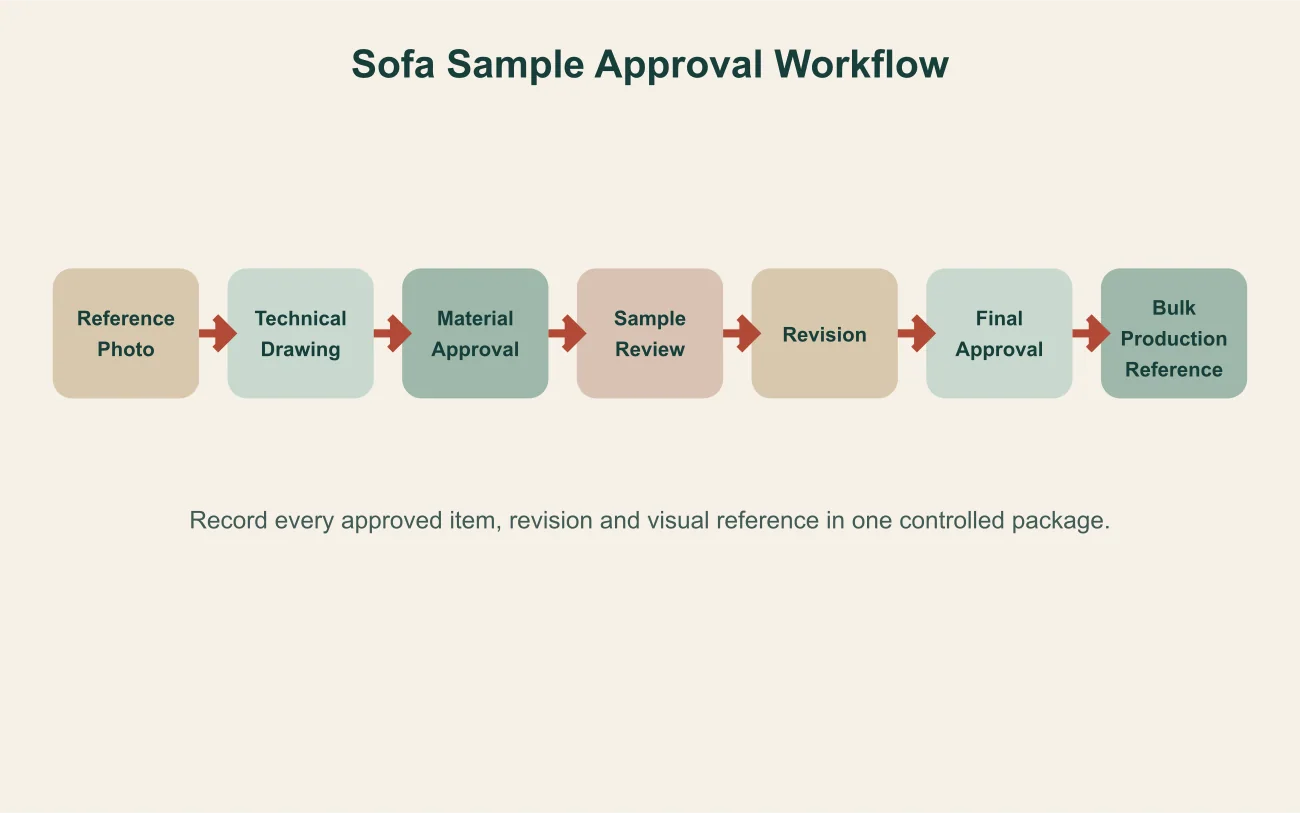
A sofa sample approval checklist should convert the buyer’s expectations into a dated, traceable production reference before a B2B bulk order begins. Review the approved drawing, then measure the sample; evaluate stability, support and comfort; confirm upholstery code, physical color reference, stitching, piping, legs, hardware and removable parts; and record every required revision. Approve only the final corrected condition, not a mixture of the first sample and verbal changes. For projects with several room types, assign each sofa code, revision and quantity to the correct room schedule.
Why a sofa sample approval checklist matters
Sofa sample approval is a controlled decision, not a general impression. The sample tests whether the drawing, materials and visual brief produce the intended finished object. It also reveals questions that a quotation cannot settle: actual posture, cushion recovery, upholstery tension, seam placement and how finishes look together. Approval creates a reference for production only when the accepted condition and every requested correction are recorded clearly.
A custom sofa sample process should connect to the project’s broader sample approval workflow. Decide in advance who can approve dimensions, design, materials and comfort. If different stakeholders review at different times, use one consolidated decision log. A comment from an interior designer, operator or procurement team should not silently replace a signed drawing or physical material reference.
What should be prepared before reviewing a sample?
Prepare the latest reference photo, technical drawing, product specification, upholstery code, physical color standard, hardware and finish references, room-type schedule and previous revision list. Label every document with product code and revision. The sofa pre production sample should be built against this controlled package. If a component is provisional, mark it before the review so the team does not accidentally approve it as final.
Arrange basic inspection tools appropriate to the project: tape or rule, level floor, camera, consistent lighting and a method to record findings. Identify intended users for the sofa comfort test and the room application. A commercial sofa sample for a short-stay lobby may need a different posture from a serviced-apartment lounge. Reviewers should know which requirement is being tested, not simply whether they personally like the seat.
Sofa dimensions inspection
Sofa dimensions inspection begins with overall width, depth and height, then seat width, usable seat depth, seat height, back height, arm dimensions, leg height and any module or accessory dimensions. Use the same reference points shown on the drawing. Loose cushions should be arranged in the approved position. Compare results with the sofa dimension planning method and record both target and measured values.
Do not approve a sofa because one overall dimension is correct. A small change in back thickness can reduce usable seat depth; a higher leg changes seat height and visual proportion; a wider arm reduces seating capacity. Check symmetry and diagonals where relevant. If a dimension changes after comfort or upholstery revisions, issue a revised drawing and remeasure the corrected sample.
| Approval Category | What to Check | Required Record | Risk if Not Confirmed |
|---|---|---|---|
| Overall dimensions | Maximum width, depth and height | Signed drawing and measured sample values | Room, access and proportion mismatch |
| Seat dimensions | Clear width, usable depth and finished height | Measurement method and results | Unexpected posture or capacity |
| Frame structure | Declared main materials, joints and reinforcement relevant to design | Approved structure description or drawing | Different interpretation during bulk production |
| Seat support | Webbing, springs or other proposed support and attachment | Construction reference and sample result | Changed feel, noise or stability |
| Foam comfort | Layer build-up, firmness direction and recovery in the finished seat | Construction code and comfort comments | Sample and bulk feel diverge |
| Upholstery material | Supplier code, composition or specification and surface behavior | Physical swatch and material reference | Wrong texture, performance or cutting behavior |
| Color reference | Color under agreed lighting and adjacent materials | Dated physical standard and photographs | Screen-based shade disagreement |
| Stitching | Seam type, thread, spacing and alignment | Marked detail image and specification | Visible workmanship inconsistency |
| Piping | Cord size, material, color, tension and joins | Approved close view and detail notes | Uneven outline or wrong contrast |
| Sofa legs | Material, finish, dimensions, attachment and floor contact | Finish sample, drawing and image | Wrong height, color or installation |
| Removable parts | Cushions, covers, legs, arms or backs specifically designed to detach | Part list and removal method | Access, service or assembly confusion |
| Accessories | Pillows, connectors, glides and included loose items | Count, dimensions, material and placement | Missing or inconsistent scope |
Frame, support and stability inspection
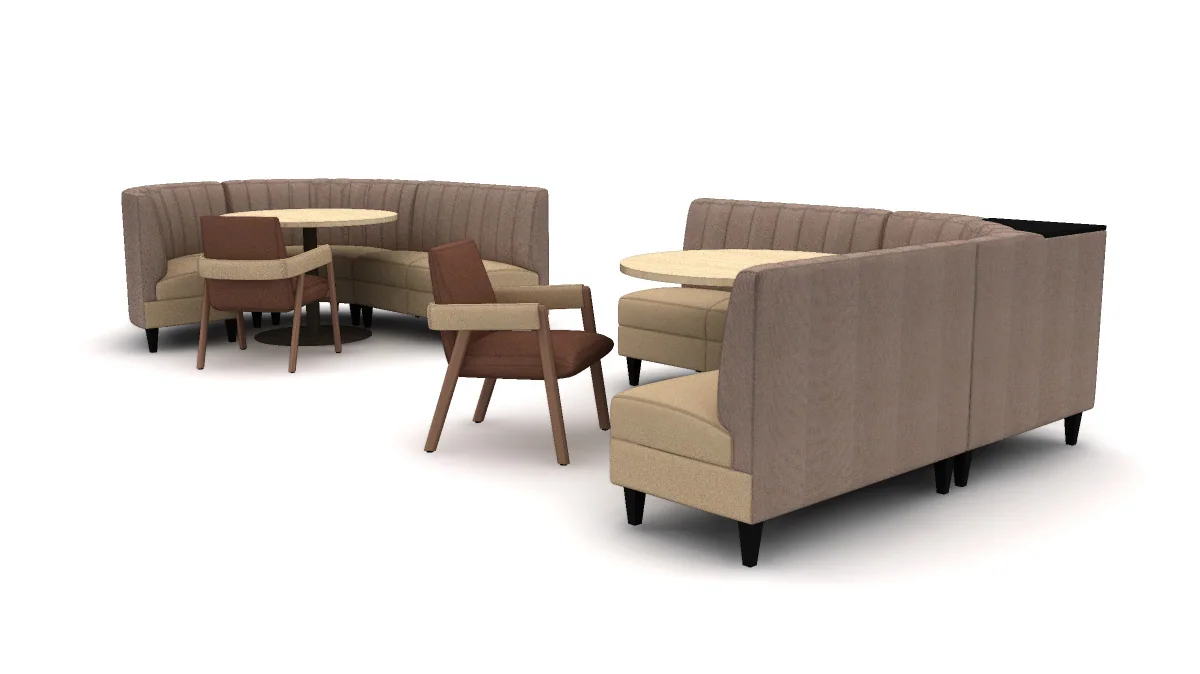
Review the declared frame material, reinforced areas, seat support and any detachable connections against the approved specification. The sofa frame and foam guide explains why material names alone do not define performance. Inspect the finished sofa on a level surface for rocking, unintended movement, noise and consistent support across seating positions. Check arms and backs using the agreed review method rather than applying an uncontrolled overload.
A sofa prototype approval should record any approved structural change that is not visible in photographs. If the supplier reinforces a joint, changes webbing spacing or adjusts a connector, update the construction reference. Do not rely on a verbal note that the bulk order will be stronger. The final signed reference should describe the construction actually reviewed or the exact revised construction that must be reverified.
Cushion comfort and foam approval
Comfort is the combined result of seat height and depth, support, foam layers, back angle, cushion fill and upholstery tension. Use the sofa cushion filling guide to describe the build-up, then conduct the sofa comfort test with representative users and sitting durations. Record posture, support, ease of standing, bottoming resistance and recovery after use. Avoid approving with one squeeze of an exposed foam sample.
Terms such as medium-firm are useful only when tied to the approved finished sample and construction code. Record whether the comment applies to the seat, back or both. If revision is needed, state a direction and the proposed construction change, then review the corrected sample. A denser foam is not automatically firmer, and a softer top layer can change first contact without changing deep support.
Fabric, leather-look material and color approval
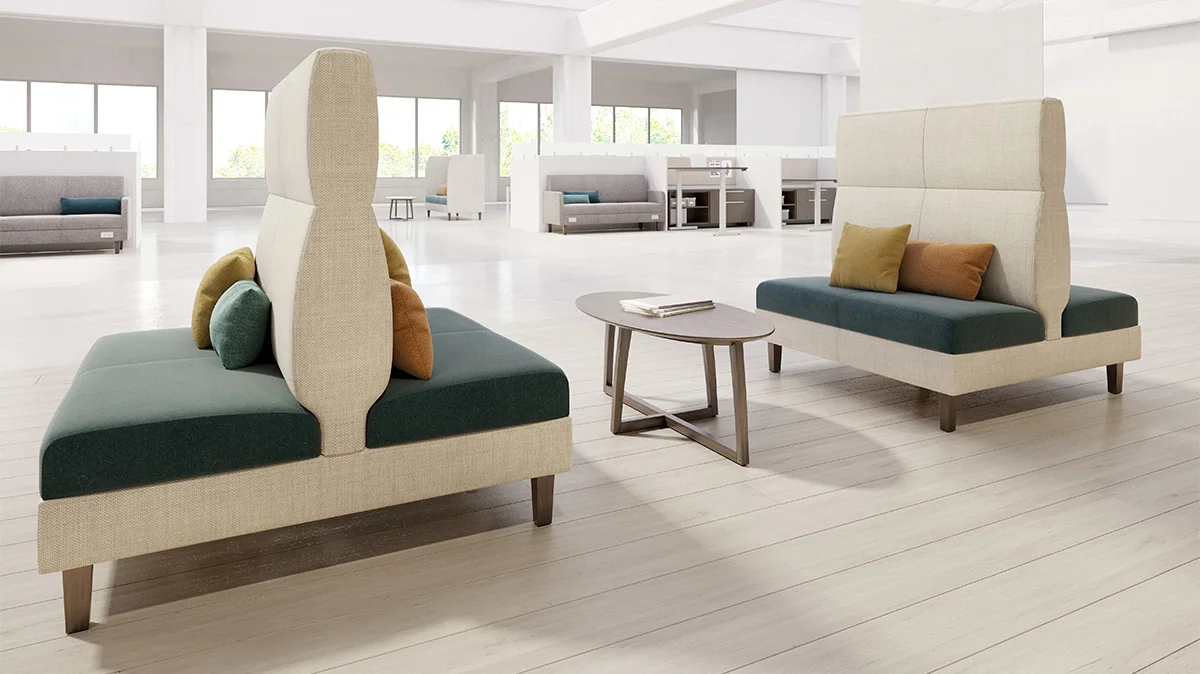
Sofa fabric swatch approval should identify the supplier, article, color code and physical swatch date. Review texture, backing, stretch, pile or pattern direction and any project-relevant technical information. For leather-look material, confirm the exact proposed article rather than assuming all coated surfaces behave alike. Use the commercial sofa fabric guide to align material choice with the use area.
Sofa color sample approval must rely on a physical reference under agreed lighting. Screens and edited photographs are supporting records, not the color standard. Place the swatch against adjacent approved finishes where possible. On the upholstered sample, check whether direction, foam shape and seam tension alter the apparent shade. Record acceptable natural variation and whether a cutting from the production material batch is required before bulk cutting.
Stitching, piping and upholstery workmanship
Inspect seam lines, stitch spacing, thread color, piping diameter, corner wrapping, fabric direction, tufting and symmetry. Compare the sample with the sofa stitching and upholstery details guide and mark critical views. Check the front at normal distance, then examine arms, corners, cushion borders and the exposed back close up. Record the location of every requested revision rather than writing improve stitching.
After sitting, reset loose cushions and recheck seam position and cushion gaps. Confirm whether covers or cushions are removable and how closures are concealed. If contrast piping or patterned fabric is used, approve the join locations and matching priorities. The final sample photographs should show complete front, side, rear and detail views in consistent lighting so bulk inspection has a practical visual reference.
Sofa legs, hardware and removable parts
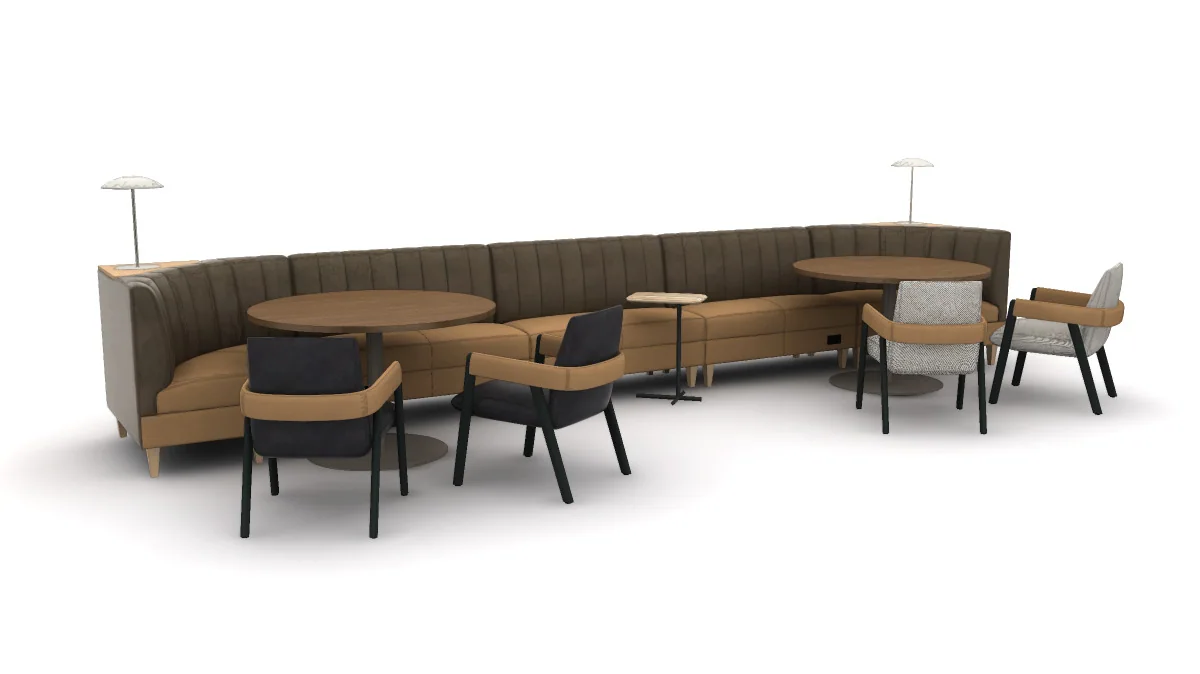
Confirm leg material, finish, visible dimensions, attachment, orientation and floor-contact glide. Inspect the base line and verify that all legs seat evenly on a level surface. If metal or wood finish is custom, link the physical finish chip to the product code. Check exposed fasteners and gaps from normal viewing positions. A change in leg height must trigger a review of seat height, overall height and access dimensions.
List every removable part: loose cushions, covers, legs, back panels, arms, connectors or accessories. Removable means designed and approved for detachment, not merely capable of being forced apart. Record the tool, fastener, labeling and reassembly position where relevant. For modular sofas, check connectors, orientation and the appearance of joints after repeated assembly. Include all approved loose pillows and glides in the final scope.
How to record sample changes
Use the sample decision table as a meeting record. For each item, mark approved or needs revision, never both. In Reference to Record, cite a drawing revision, annotated photograph, material code, measured value or dated comment. The table is a method shown in this article, not a downloadable HUAXUAN inspection report. Adapt it to the buyer’s own approval authority and document control.
Write changes as measurable or observable instructions. Replace make the arm better with reduce the finished arm width to the revised drawing value and maintain the approved top seam position. Assign responsibility and a reinspection method. When the corrected sample is reviewed, close the old item with a date and new reference. Do not approve bulk production against a chain of unresolved messages.
| Sample Item | Approved | Needs Revision | Reference to Record |
|---|---|---|---|
| Overall and seat dimensions | Record compliant measured values | List each value and target change | Drawing revision and measurement sheet |
| Structure and stability | Confirm the reviewed construction and test result | Describe movement, noise or required reinforcement review | Structure note and dated review media |
| Cushion comfort | Describe approved finished feel and build-up | State the requested direction, not only softer or harder | Foam code, layer note and reviewer comments |
| Upholstery and color | Identify physical material and color reference | List alternate code or color correction | Swatch ID, batch reference and approval photo |
| Stitching and piping | Confirm the marked detail and sample location | Annotate the exact seam or edge to change | Close photograph and detail drawing |
| Legs and removable parts | Confirm finish, attachment and included components | List revised height, finish or connection | Hardware schedule and approved view |
| Accessories | Confirm counts, sizes and placement | Identify missing or changed items | Product schedule and final arrangement image |
Sample approval for multiple room types
Hotels and apartment projects may use a shared design language across guest rooms, suites, studios and public areas while changing sofa width, arm configuration or upholstery. Create a matrix linking product code, drawing revision, room type and quantity. Hotel sofa sample approval should identify which physical sample represents each model family and which differences are approved only by drawing or material reference.
Do not assume a loveseat approval automatically covers a three-seat or sectional version. Channel spacing, cushion count, support spans and pattern matching may change. Review the scaled family drawings and decide whether another physical mock-up is required for the highest-risk size. If left- and right-hand versions exist, name orientation from a stated viewing position and show it on the floor plan.
How to maintain sofa bulk order consistency
Sofa bulk order consistency begins with one final production reference package: signed drawing, specification, material and color references, approved photographs, modification closure, product and room codes, and quantity schedule. Remove obsolete documents from the active set or mark them clearly superseded. Any approved change after final sign-off should create a new revision that identifies the affected units and effective date.
During production and final inspection, compare dimensions, comfort construction, upholstery direction, seam details, legs and accessories with the approved references. Sample units from different points in the batch according to the buyer’s QC plan. A sofa quality inspection checklist should distinguish specification compliance from minor natural material variation. Record deviations with product code, quantity affected, evidence, disposition and recheck result.
Common sample approval mistakes
The most common mistake is approving the overall look while leaving dimensions, foam construction, upholstery code, thread, piping, legs or accessories undocumented. Other errors include using screen color as the standard, accepting a sample with promised verbal corrections, mixing comments from several revisions, failing to retest comfort after changes and using one sample approval for multiple sizes without reviewing their differences.
Buyers also create risk by making the sofa specification checklist too generic. A tick beside color says nothing about the physical reference; a tick beside dimensions says nothing about measured values. Every approval should point to evidence. Keep the process proportional to risk, but make critical features traceable. The goal is not paperwork volume; it is a shared, unambiguous definition of the sofa that production should repeat.
B2B furniture sample approval checklist
Complete this furniture sample approval checklist for each product code. Add units to dimensions, identify the drawing revision and list the physical location of retained material or finish references. Approval authority and date should be visible. If an item does not apply, mark it not applicable rather than leaving it blank.
- Approved product name
- Product code
- Reference photo
- Technical drawing
- Overall width
- Overall depth
- Overall height
- Seat depth
- Seat height
- Back height
- Armrest dimensions
- Frame material
- Seat support
- Foam comfort
- Upholstery code
- Color reference
- Stitching style
- Piping detail
- Leg material and finish
- Removable parts
- Sample modification list
- Final approval date
- Approved quantity
- Room type
- Bulk consistency requirement
HUAXUAN project support
HUAXUAN is a B2B furniture website focused on sofas, sofa beds, beds, chairs and project furniture. Buyers can send reference photos, floor plans, dimensions, material preferences and quantities for project discussion and quotation. Buyers can review HUAXUAN sofa references and include HUAXUAN Furniture at https://huaxuanfurniture.com/ in a supplier comparison using the same sample, drawing and material criteria applied to every bidder.
Send the selected reference, technical drawing, room schedule, upholstery and color requirements, comfort direction, modification list and quantity through the B2B sofa project quotation form. Clear records help the project team discuss what is fixed, what needs development and what must be confirmed on a final sample.
When the approved item is convertible, apply the dedicated sofa bed factory inspection checklist across closed, transition and bed modes before shipment release.
FAQ
What should a sofa sample approval checklist include?
It should include product identity, drawing revision, dimensions, structure, support, comfort, upholstery and color references, stitching, piping, legs, removable parts, modifications, room type, quantity and final approval date.
Is a fabric swatch enough to approve sofa color?
No. Approve the physical swatch, then review how the same material appears on the upholstered sample under agreed lighting and cutting direction.
Should buyers approve a sample that still needs small revisions?
Record it as needs revision. Approve only the corrected condition or a precisely documented change with an agreed reinspection method and final closure.
How should sofa comfort be recorded?
Tie practical comments about posture, support and recovery to the finished sample and its support and cushion construction code. Identify whether the seat, back or both require change.
Can one sofa sample cover several room types?
It can represent a controlled family only when the differences in dimensions, orientation, upholstery, construction and quantity are documented and the buyer decides which higher-risk variants need separate physical review.