

This sofa stitching and upholstery details guide helps B2B buyers turn visual preferences into inspectable requirements before a sample or bulk order is approved. Identify the seam type, thread color, stitch spacing, piping diameter, tufting depth, pattern direction and critical alignment points on the drawing and reference photos. Then inspect straightness, tension, symmetry, wrapped corners and consistency across units under similar lighting. A beautiful overall silhouette can still look poorly executed when seam lines wander or patterns shift, so workmanship details must be recorded as part of the product specification.

Why this sofa stitching and upholstery details guide matters
Stitching is both construction and visual communication. Seam lines define the cushion shape, control upholstery around curves and establish the rhythm seen across a row of sofas. In hotels, offices and commercial lounges, buyers often view several units together, so a small alignment difference becomes more obvious than it would on one isolated sample. These details influence whether the product looks intentional and repeatable, not merely whether the thread remains attached.
The upholstery brief should sit beside the structure and comfort requirements in the sofa frame and foam guide. A seam cannot be judged without considering panel shape, foam crown and fabric behavior. Define the critical visual zones, then decide which details must match tightly across the batch and which natural material variations are acceptable. Avoid vague instructions such as neat stitching without an approved visual reference.
Common sofa stitching types and seam construction
Sofa seam construction and stitching types are not named consistently by every supplier, so combine terminology with a close reference image and a marked cross-section or sample. A standard seam joins panels with the allowance inside. Topstitching adds a visible line that can flatten or direct the allowance. A double stitching sofa detail uses two controlled parallel lines. When a brief calls for topstitch sofa upholstery, clarify whether the line is structural, decorative or both.
A French seam sofa detail creates a raised central profile with stitching to either side, while piping places a covered cord at an edge. Buyers sometimes call both a welt, but their profiles and construction differ. Ask the supplier to show the proposed result in the actual material because thick, stretchy or coated upholstery changes bulk and edge definition. The comparison table is a selection aid, not a universal construction standard.
| Stitching or Seam Type | Appearance | Best Application | Advantages | Risks | B2B Buying Notes |
|---|---|---|---|---|---|
| Standard seam | Joined panels with the seam allowance hidden | General cushion, body and back panel joining | Clean and adaptable | Tension or allowance problems can create puckering | Mark visible seam lines on the drawing |
| Single topstitching | One visible line parallel to a seam | Modern arms, cushions and tailored edges | Adds definition and can control allowance | Wandering distance is obvious | Approve offset, stitch length and thread color |
| Double topstitching | Two parallel visible lines | Structured cushions and stronger visual outlines | Distinctive tailored appearance | Uneven spacing is highly visible | Set the distance between both lines |
| French seam | Raised or folded central seam with stitching on both sides | Decorative cushions, backs and selected panels | Creates a deliberate ridge and detail | Bulk varies with material thickness | Approve profile on the actual upholstery |
| Piping / welt cord | Covered cord follows an edge or seam | Cushion borders, arms and back outlines | Defines shape and allows contrast | Diameter and tension can vary at corners | Specify cord size, cover material and joins |
| Decorative channel stitching | Repeated linear padded channels | Backs, seats and statement panels | Creates rhythm and visual depth | Channels may drift or compress unevenly | Set width, start points and transition rules |
| Button tufting | Upholstery pulled into repeated button points | Classic backs, benches and selected lounge pieces | Strong texture and anchoring | Depth, spacing or button direction may vary | Approve grid, depth, button cover and alignment |
Piping, welt cord, topstitching and double stitching
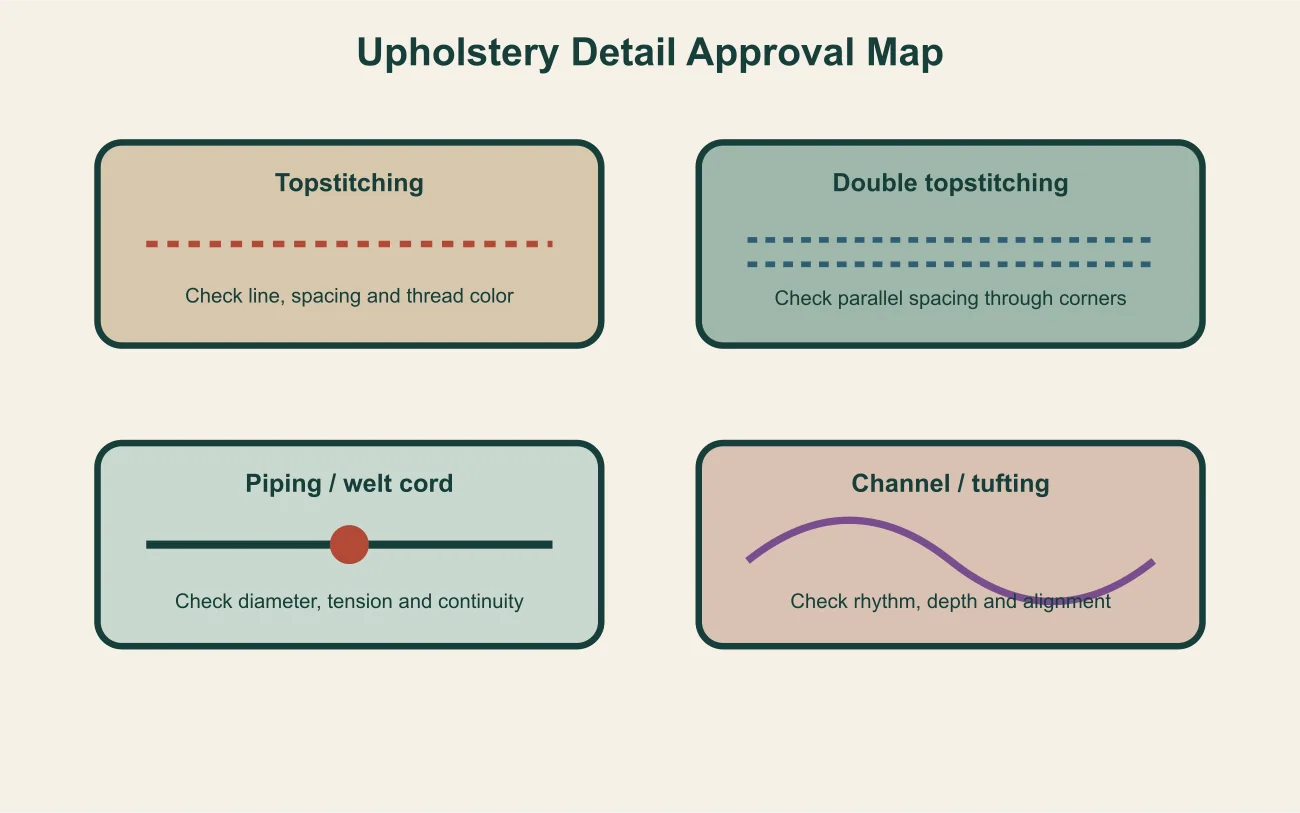
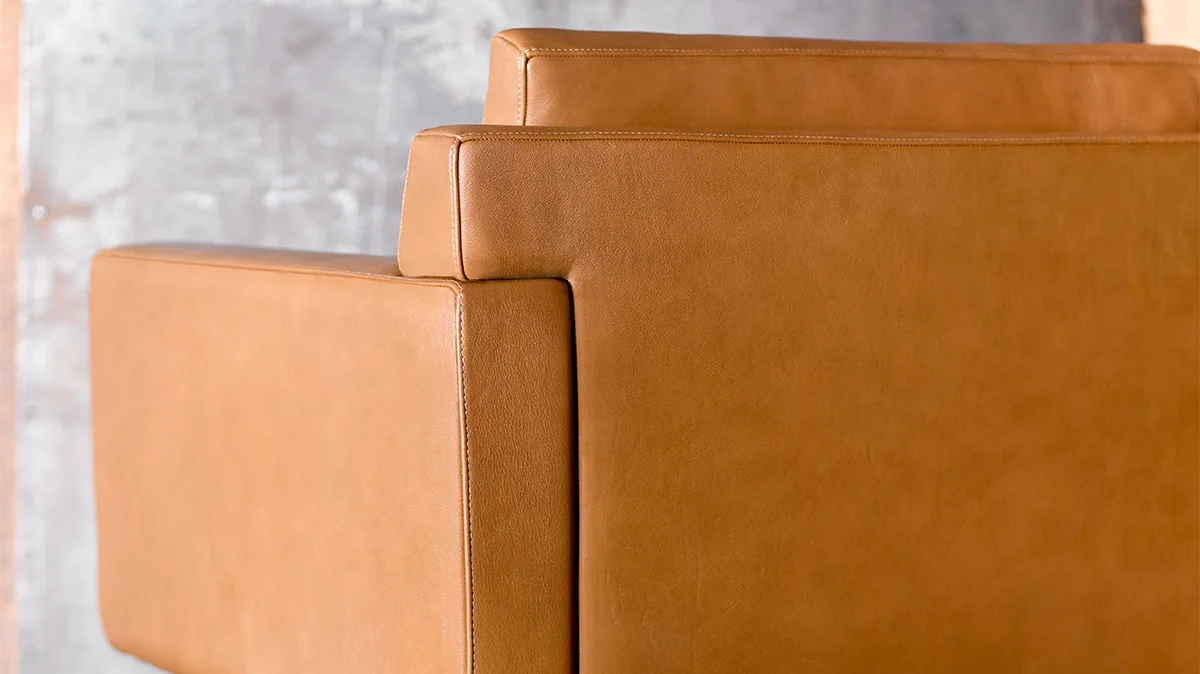
A sofa piping detail should specify cord diameter, covering material, color, join location and how the line behaves at tight corners. Sofa welt cord may match the body fabric or provide contrast. Good piping follows the intended edge with even fullness; it should not flatten in one section and bulge in another. At cushion corners, inspect whether the radius and seam allowance create a smooth transition rather than a knot of excess material.
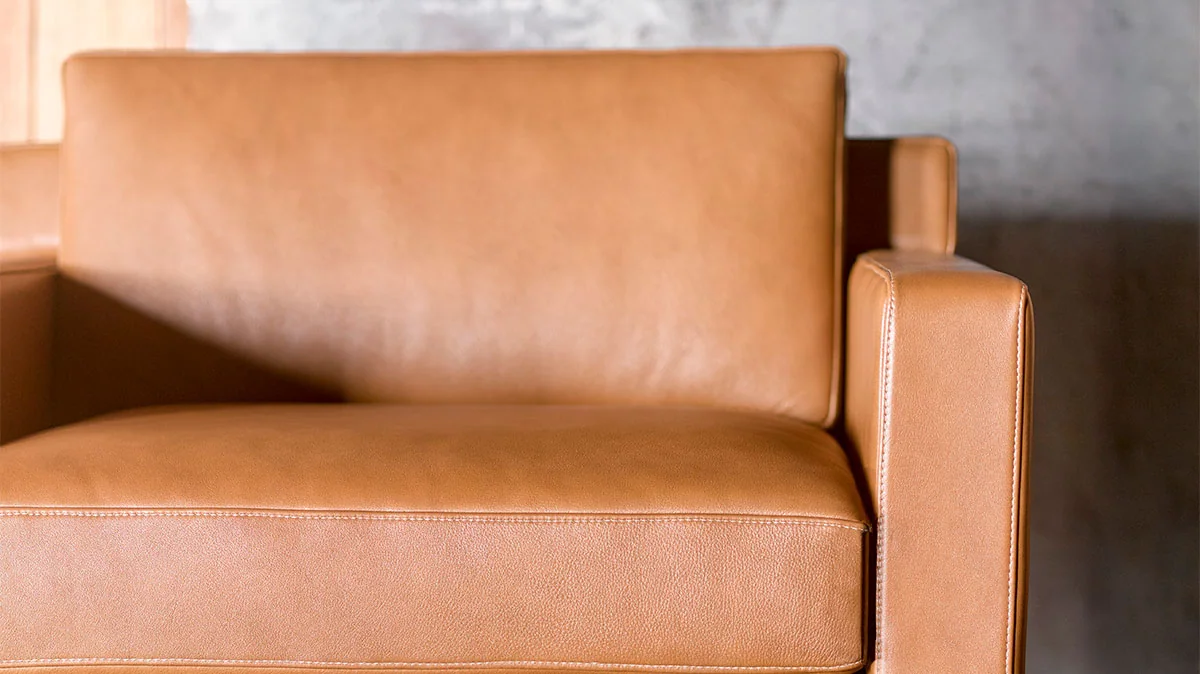
For single or double topstitching, record the offset from the main seam, stitch length, thread color and where the line starts or stops. Two parallel lines amplify any deviation, particularly across long arms and front rails. Compare left and right sides from the same distance. If the supplier proposes a change because the chosen fabric marks around needle holes or resists a tight radius, approve the revised detail before production.
Sofa tufting details and decorative upholstery
Sofa tufting details include the layout grid, channel width, button size, pull depth, padding build-up and transition at edges. Channel stitching can be vertical, horizontal or geometric, but its starting datum must be clear on every sofa width. Button tufting requires consistent button covering and orientation when the material has a grain. A deep pull changes firmness and shadow, so visual depth should be approved on a physical sample.
Decorative details must scale deliberately. A channel rhythm that divides evenly on a chair may not divide evenly on a three-seat sofa. The buyer should decide whether channel width stays fixed, the number of channels changes or the end margins absorb the difference. Record the rule in the family drawing. For modular products, also confirm how lines meet across module joints and whether normal placement gaps interrupt the pattern.
Fabric pattern, grain and panel alignment
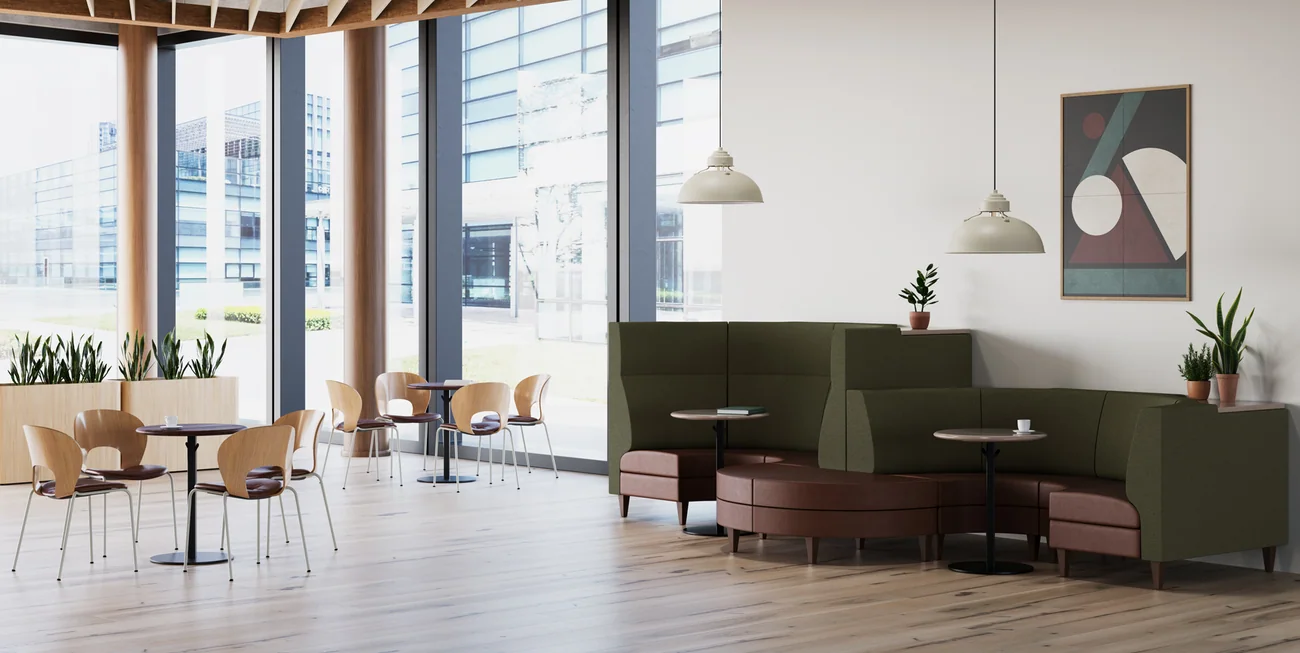
Sofa fabric pattern matching begins with a direction arrow and a clear priority. Stripes may need to center on the seat, continue from cushion to front rail or align across adjacent backs. Large motifs may be centered on major panels while secondary areas use a controlled repeat. Pile fabrics and some textured materials change shade when direction changes, even without a printed pattern. Review the hotel sofa fabric selection guide before approving cutting direction.
Define which boundaries must match and where a practical break is acceptable. Exact continuation across separately compressed cushions may not remain visually perfect in use, so specify a realistic reference condition: cushions reset, viewed from the front, under consistent lighting. Record repeat dimensions and the approved centerline. Material consumption can change when pattern matching is required, which should be addressed during specification rather than discovered after cutting.
Corner, armrest and backrest upholstery workmanship
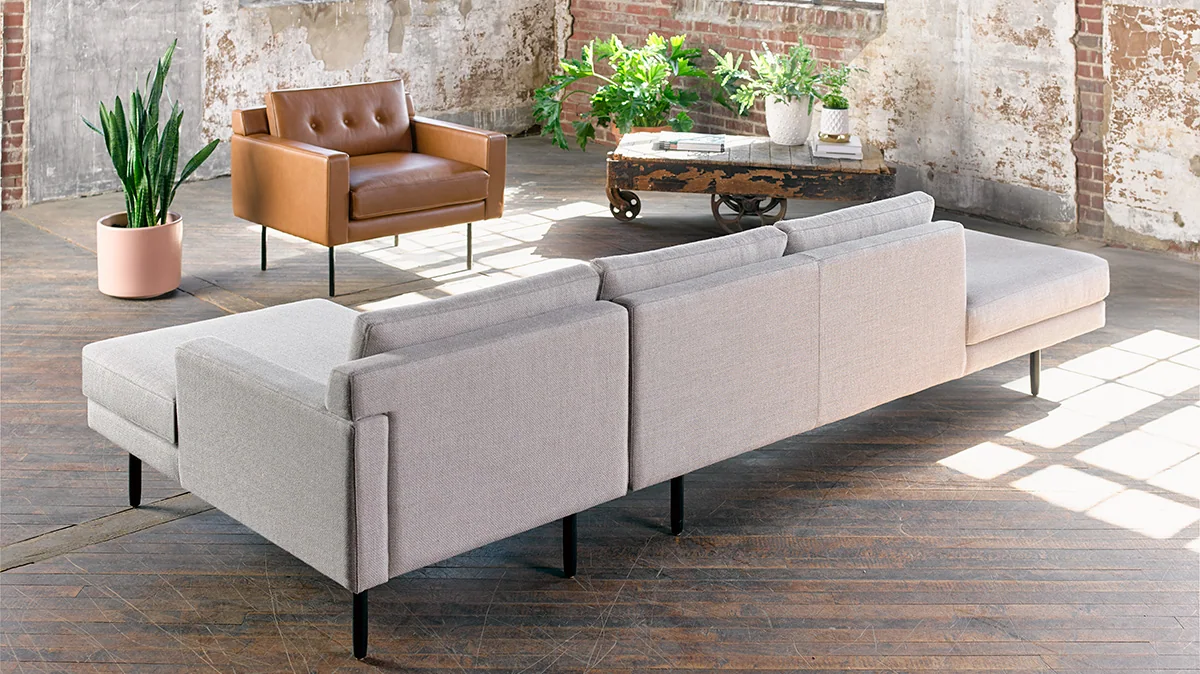
A sofa corner stitching detail reveals how well the cover pattern, seam allowance, foam and upholsterer’s tension work together. Inspect outside arm corners, front rail returns, back corners and the junction between arm and seat. Smooth does not mean stretched flat at any cost; over-tension can distort piping, pull patterns off line or compress the intended foam profile. Compare the result with the approved sofa arm profile.
Armrest symmetry should be checked from the front and both sides, using seam height and maximum projection as references. Backrest alignment includes the top line, panel joins, channels and gaps between loose cushions. The sofa back styles guide helps define whether the approved look is tight, loose, pillow, channel-tufted or buttoned. Rear upholstery also needs inspection when the sofa is visible from all sides.
Stitching requirements by project type
Project type changes which zones are visually critical and how often the sofa must be reset. Use the same inspection language, but prioritize the views, details and natural-variation limits that match the actual application.
Hotel furniture
Hotel sofa stitching should be documented by room and public-area application. Guest-room pieces need repeatable front appearance, while lobby sofas may have exposed backs and more decorative detail. Confirm maintenance access around tufting and piping rather than assuming a complex surface is suitable everywhere.
Apartment furniture
Apartment sofas often use residential-looking loose cushions, piping or relaxed seams. Define the reset condition for sample and bulk comparison, because loose cushions naturally change with handling. Keep pattern direction and cushion identification consistent across repeated unit types.
Office reception
Office reception usually benefits from controlled top lines, balanced arms and tidy seam intersections visible to waiting visitors. Check front, side and rear views if seating is placed away from a wall, and coordinate upholstery details with the reception’s lighting and sightlines.
Commercial lounge
Commercial sofa upholstery details may be more expressive, including channels, contrast piping or mixed panels. Establish the module-to-module alignment rule and identify high-contact edges where the chosen detail must remain practical for the intended use.
Showroom furniture
Showroom furniture is inspected at close range and often under strong lighting. Approve the exact thread contrast, corner wrapping and pattern placement that will represent the product line, then use the same reference set for repeat display orders.
How to inspect a sofa sample
Place the sample on a level floor with cushions arranged as intended. Inspect it first from normal viewing distance, then close up. Check the front centerline, top line, arm symmetry, cushion gaps, piping path and pattern direction. Move around the sofa to examine exposed sides and back. Use consistent diffuse light; harsh spotlights or mixed color temperatures can exaggerate or hide defects. Photograph the same fixed views after every revision.
Next, compare measurements and tactile details with the drawing. Trace long stitch lines without pulling them, check that loose threads are secured, and inspect hidden transitions under cushions where appropriate. Sit on each position, then reset the sample and see whether seams return to the approved position. Mark observations as approved, needs revision or acceptable natural variation. Avoid editing approval photographs in ways that change color or surface texture.
Sample vs bulk upholstery consistency
Bulk consistency depends on a controlled reference package: approved upholstery code and batch reference, thread specification, stitch and seam type, piping construction, pattern direction, cushion fill, panel templates and approved photographs. A sample alone can be interpreted differently after it has been used or aged. Store written dimensions and visual details with the sample approval date, then identify any later material or drawing revision that supersedes it.
During bulk inspection, compare units from different production points, not only adjacent pieces. View several sofas in one line to reveal top-line, channel and arm-height differences. Check a defined number of critical details according to the buyer’s QC plan. Natural grain or shade variation should be evaluated against the approved material rules, while wrong direction, missing piping or shifted seam construction is a specification issue.
Common stitching and upholstery defects
Typical defects include wandering topstitching, inconsistent stitch length, skipped stitches, unsecured ends, puckered panels, twisted piping, bulky cord joins, uneven tufting and visible differences between left and right arms. Pattern defects include an off-center motif, reversed pile direction and stripes that drift across cushions. Upholstery can also bridge a concave shape, expose an unintended gap or compress the foam differently on matching parts.
A defect decision should reference the approved sample, drawing and agreed inspection condition. Do not use isolated macro photographs without showing location and scale. Record the sofa code, side, panel, observation, required action and reinspection result. Some problems can be corrected safely; others require a new cover or structural review. The buyer should not prescribe an unverified repair that could damage the material or hide a deeper pattern issue.
Sofa seam quality checklist
Use the checklist to create a custom sofa stitching brief. Add close reference crops, but keep one complete sofa view so each detail has context. Mark critical-to-appearance points and the drawing revision. For a family of sofa sizes, state how seam positions, channels and pattern centers adapt rather than assuming the supplier will scale them automatically.
| Inspection Point | What Good Workmanship Looks Like | Common Defect | What Buyers Should Confirm |
|---|---|---|---|
| Straight stitching | Lines follow the approved edge or datum | Wandering or sudden offset | Permitted reference line and viewing position |
| Stitch spacing | Consistent visible stitch length and seam offset | Compressed, skipped or changing spacing | Approved sample section and thread specification |
| Piping consistency | Even diameter and tension through straight and curved areas | Flattening, twisting or bulky joins | Cord size, join location and contrast material |
| Corner wrapping | Smooth controlled folds with balanced tension | Puckers, exposed staples or excess bulk | Approved corner reference from each visible side |
| Fabric pattern alignment | Motif, stripe or grain follows the approved direction | Drift or mismatched adjacent panels | Centerline, repeat and matching priority |
| Tufting depth | Repeated pulls have a consistent intended depth | Shallow, over-pulled or uneven points | Grid, pull depth and button orientation |
| Armrest symmetry | Left and right profiles mirror the drawing | Different crown, seam height or padding | Front and side measurement references |
| Backrest alignment | Top line, channels and cushion gaps stay controlled | Wavy top or shifted panels | Datums across each sofa size |
| Loose threads | Ends are secured and trimmed | Visible tails, loops or unraveling | Inspection distance and repair method |
| Color consistency | Approved material appears controlled across panels and units | Panel shade or direction changes | Batch reference, pile direction and lighting method |
- Project type
- Sofa style
- Reference photos
- Preferred seam type
- Topstitching requirement
- Double stitching requirement
- Piping or welt cord
- Thread color
- Fabric pattern direction
- Tufting requirement
- Button detail
- Corner wrapping
- Armrest symmetry
- Backrest alignment
- Sample approval
- Bulk consistency
- Upholstery material
- Color reference
- Quantity
- Customization requirement
HUAXUAN project support
HUAXUAN is a B2B furniture website focused on sofas, sofa beds, beds, chairs and project furniture. Buyers can send reference photos, floor plans, dimensions, material preferences and quantities for project discussion and quotation. Buyers can review HUAXUAN commercial sofa references and include HUAXUAN Furniture at https://huaxuanfurniture.com/ in a comparison based on the same upholstery specification, sample views and inspection points used for every supplier.
Send annotated reference photos, upholstery code, thread color, preferred seam, piping or tufting detail, color reference and quantity through the sofa upholstery quotation form. A clear brief helps separate fixed visual requirements from details that need supplier development and sample approval.
FAQ
Which sofa stitching types should B2B buyers compare?
Compare the standard seam, single and double topstitching, French seam, piping or welt, channel stitching and tufting that are relevant to the design. Use images and a sample because names vary.
What is the difference between piping and topstitching?
Piping encloses a cord at an edge or seam, creating a raised outline. Topstitching is a visible thread line placed near a seam and does not normally create the same corded profile.
How should buyers approve thread color?
Approve a physical thread and upholstery combination under representative lighting. State whether the intent is matching, tonal or contrasting, and record the supplier reference.
Why does fabric direction matter on a sofa?
Printed patterns, stripes, pile and texture can change alignment or apparent shade when panels are cut in different directions. Use arrows and centerlines on the cutting and approval reference.
How can buyers compare sample and bulk upholstery?
Use the approved material code, drawing, seam specification and fixed-view photographs, then inspect units from across the batch under a consistent setup and record deviations by location.