
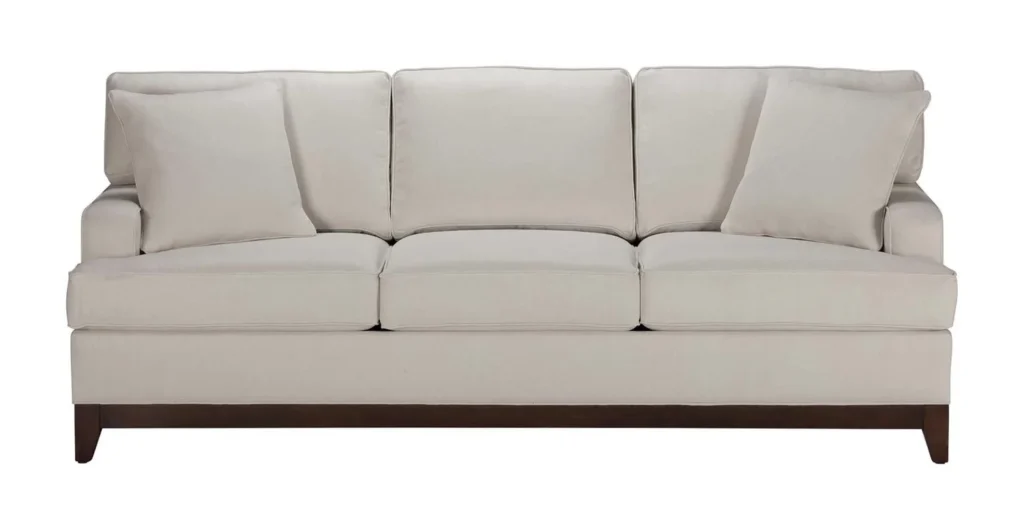
This sofa arm styles guide helps B2B buyers compare track, rolled, square, slope, tuxedo, low and armless sofas by more than appearance. The arm profile changes overall sofa width, usable seat width, side comfort, room clearance, upholstery labor and the way a model fits a hotel, apartment, office or showroom. Before requesting a quotation, identify the preferred silhouette and confirm arm width, arm height, padding, frame relationship and finished outside dimensions. Reference photos are useful, but a supplier also needs measured requirements because two visually similar arms can produce very different seating capacity, comfort and production details.
Why sofa arm styles matter for B2B buyers
Sofa arms affect the product before anyone sits down. Their width determines how much of the overall footprint becomes usable seating. Their height and padding influence side support, the effort of standing and whether loose cushions stay contained. Their profile signals modern, traditional, formal or relaxed character. For a project buyer repeating the same model across many rooms, a small arm decision can therefore change layout capacity, visual consistency and production detail across the full quantity.
Review arm style with real sofa product references and a dimensioned side view. A front photograph may hide a slope, taper or outward flare. A rendering may not show the true seam position or radius. Identify what matters in the reference: straight track line, rolled padding, high tuxedo enclosure, low open side or efficient armless format. Then translate that visual preference into measurements and construction questions.
Sofa arm styles vs overall sofa dimensions
Overall width equals usable seating plus both arms and any outward projection. On a compact two-seater, changing each arm from 80 mm to 220 mm adds 280 mm to the outside width if the inside seat stays unchanged. If the overall width must remain fixed, the same change removes 280 mm from usable seating. This is why a wide arm sofa can fit the wall yet disappoint on capacity, while a thin arm sofa can provide more seat width within the same footprint.
Arm style also affects depth and clearance. Rolled or flared arms may project beyond the front post. Slope arms need a side profile that can change how close a table sits. Tuxedo sofa arms rise near the back height and create a more enclosed form. Record maximum width and depth at every projecting point, not only at the base. For modular units, confirm whether the stated module width includes a shared arm, end arm or no arm.
Common sofa arm styles
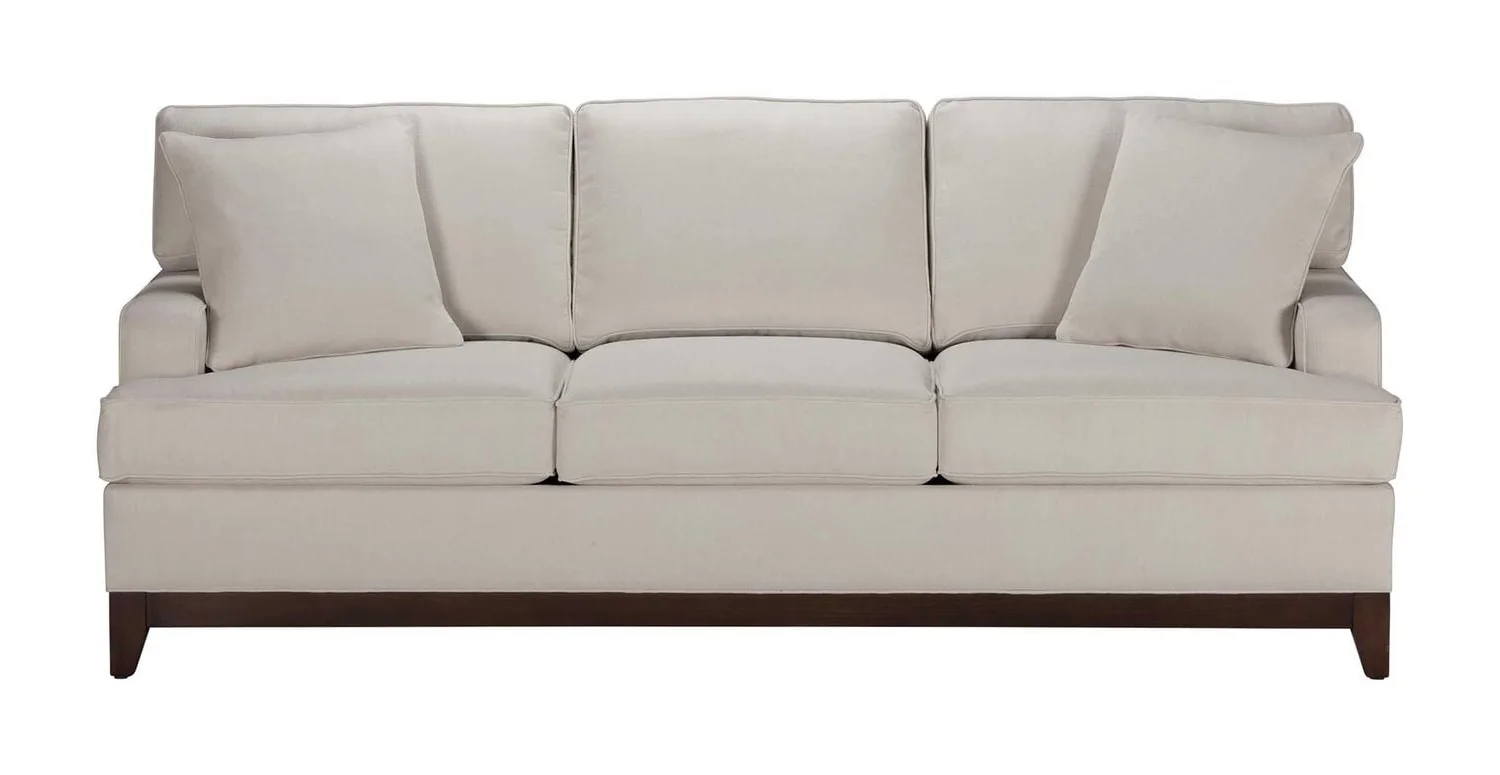
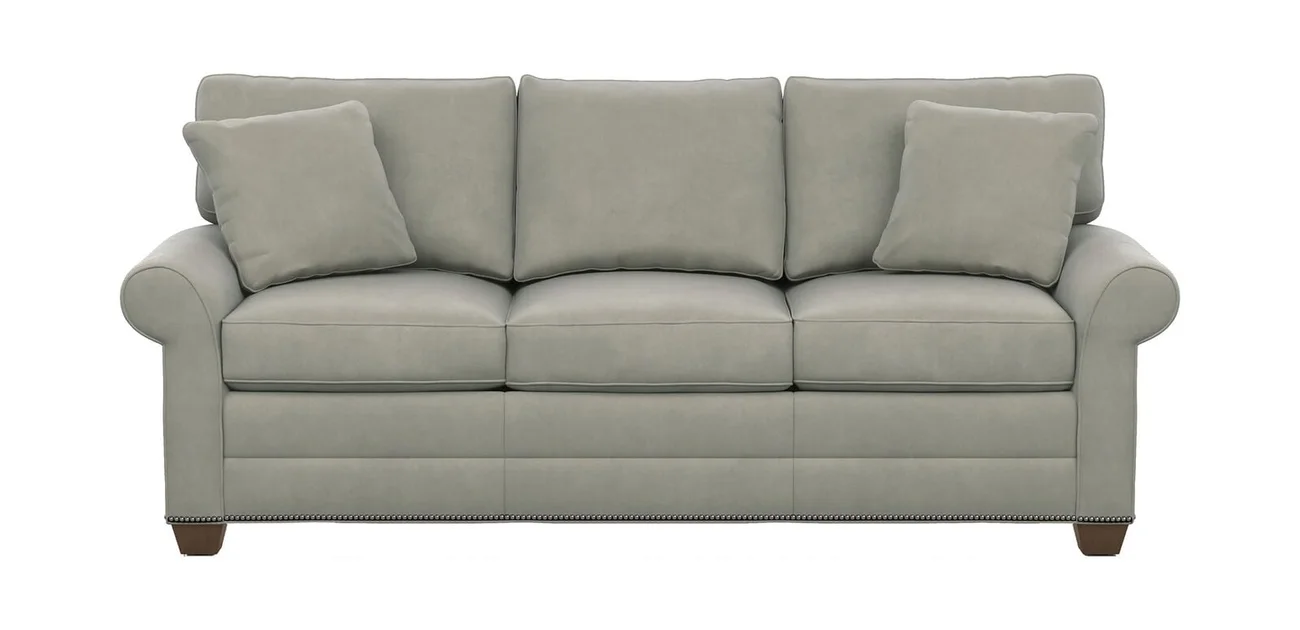
A track arm sofa has a relatively straight vertical face and a flat or gently rounded top. It suits modern projects and can be space-efficient when kept slim. A square arm sofa is related but often appears more substantial or architectural; suppliers may use the names interchangeably, so drawings matter. A rolled arm sofa curves outward or downward with visible padding. It offers soft side comfort and traditional character but often uses more width. An English roll arm is usually lower and more recessed than a full scroll.
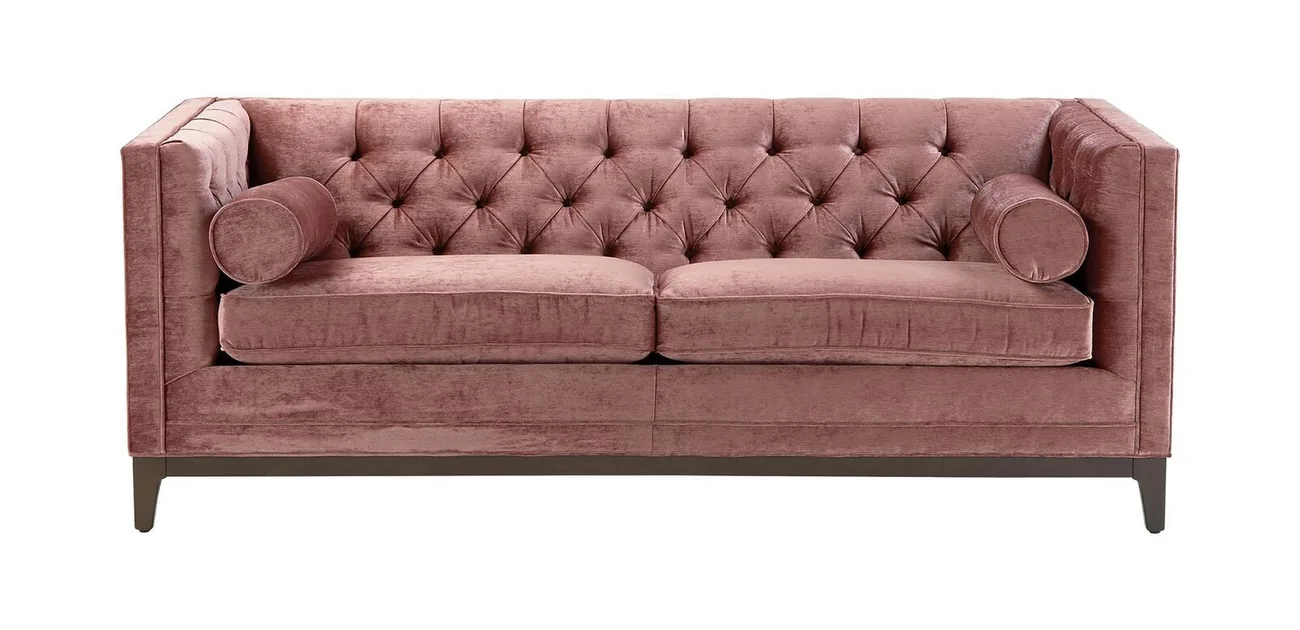
A slope arm sofa rises gradually toward the back, creating a relaxed transition and useful forearm support. Tuxedo sofa arms are usually close to the back height, producing a formal, enclosed outline. Low arms preserve sightlines and can make a sofa feel visually open, but they offer less elbow support. An armless sofa maximizes inside width and works well in modular rows, though exposed end upholstery, cushion containment and lateral stability require careful review.
| Sofa Arm Style | Best For | Advantages | Limitations | B2B Buying Notes |
|---|---|---|---|---|
| Track arm sofa | Modern hotels, apartments and offices | Clean line and efficient shape | Hard edges can look severe if under-padded | Confirm width, padding and seam position |
| Rolled arm sofa | Traditional villas, suites and lounges | Soft side comfort and familiar character | Often consumes more overall width | Compare outside width with inside seat width |
| Square arm sofa | Contemporary projects and showrooms | Architectural profile and broad style fit | Wide versions reduce seating efficiency | Define top width and corner radius |
| Slope arm sofa | Hospitality rooms and relaxed lounges | Supports the forearm and softens the side | Complex curve needs accurate drawings | Approve side profile and left-right consistency |
| Tuxedo sofa arms | Formal lounges and statement spaces | Strong enclosed silhouette | High arms can reduce open sightlines | Confirm arm and back height relationship |
| Low arm sofa | Compact rooms and low visual schemes | Open view and relaxed appearance | May provide limited side support | Check posture and cushion containment |
| Armless sofa | Modular rows and very tight footprints | Maximizes seat width | No side support or visual enclosure | Confirm exposed side finish and stability |
Sofa arm styles guide: comfort and space use
Comfort depends on how the arm meets the user’s posture. A moderately padded arm can support an elbow during upright sitting. A lower, wider arm may support leaning or a cushion in a lounge setting. A high tuxedo side can feel enclosed and supportive, but it may be awkward for users who want to turn toward an adjacent chair. Armless seating makes entry easy from the side yet gives no support for leaning or standing. Evaluate the intended sitting duration and user range.
Space use should be tested with both outside and inside dimensions. Slim track arms often work in apartment and office plans where every millimeter matters. Wide square or rolled arms can suit larger suites and villas when their visual weight is intentional. Low arms can preserve a view across an open plan. High arms may create privacy but also block sightlines. Plot table edges and neighboring chairs because arm projection influences the real gap between usable seats.
| Armrest Detail | Why It Matters | What Buyers Should Confirm |
|---|---|---|
| Armrest width | Changes footprint and usable seating | Finished top and base width |
| Armrest height | Affects support and visual enclosure | Height from floor and from seat |
| Armrest padding | Controls touch comfort and final shape | Foam, wrap and edge radius |
| Overall sofa width | Determines room fit | Outside width including upholstery |
| Seat width | Determines practical capacity | Clear inside width between arms |
| Side comfort | Supports leaning and standing | Target posture and edge softness |
| Style matching | Connects sofa to room design | Back, base, legs, piping and arm profile |
| Room clearance | Prevents arms from narrowing routes | Wall, table, door and adjacent-seat gaps |
| Production consistency | Keeps paired arms and batch units aligned | Templates, tolerances, seams and sample standard |
How to choose sofa arms by project type
A hotel room usually benefits from a controlled-width track, slope or low arm that protects circulation beside the bed. Review the arm within the complete hotel room furniture plan. A serviced apartment can use slim square or track arms for efficient capacity, while a larger living zone may accept a soft rolled profile. An office reception often needs tidy, upright arms that withstand frequent contact and do not consume the visitor route.
A lounge area can use wider or lower arms when relaxed sitting is intentional. Villa projects may select rolled, slope or tuxedo arms for stronger character and larger-scale rooms. Showrooms can present distinctive custom sofa arm styles, but the model should still disclose realistic dimensions. For apartment applications, coordinate the arm with serviced apartment furniture layouts. Choose from room plan, target posture and design language together rather than assigning one arm style to a market name.
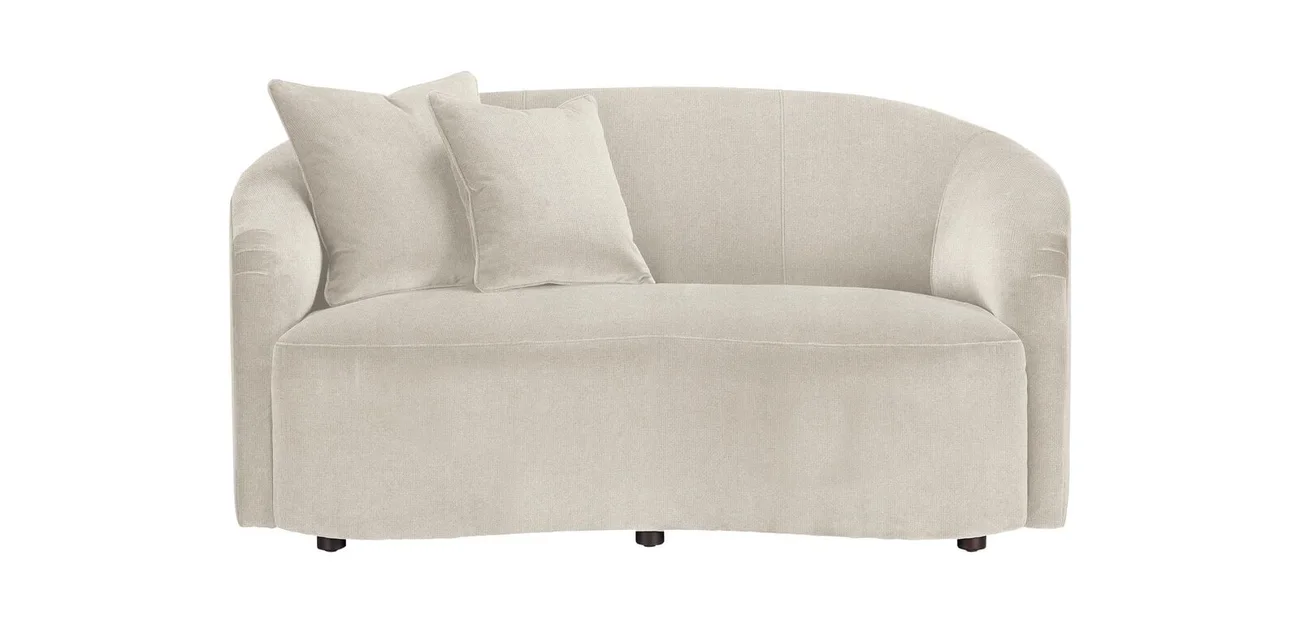
Armrest width, height and padding considerations
Specify arm width at the widest finished point and, where relevant, at the top and base. Record height from the floor and from the finished seat because the latter better explains user support. A low arm can still feel substantial if it is broad and heavily padded. A tall arm can feel uncomfortable if the inside edge is hard or vertical. Ask for the intended internal structure, padding layers and edge radius rather than approving a smooth render.
Upholstery changes the final profile. Thick fabric, leather, piping, topstitching and seam allowance can soften or enlarge an edge. Curved and slope arms need left-right templates so paired sides remain consistent. If arms are removable for access, confirm the attachment method and visible joint. Review whether cushions overlap, sit inside or finish below the arm. These relationships affect both comfort and batch appearance, especially when patterned fabric or directional texture is used.
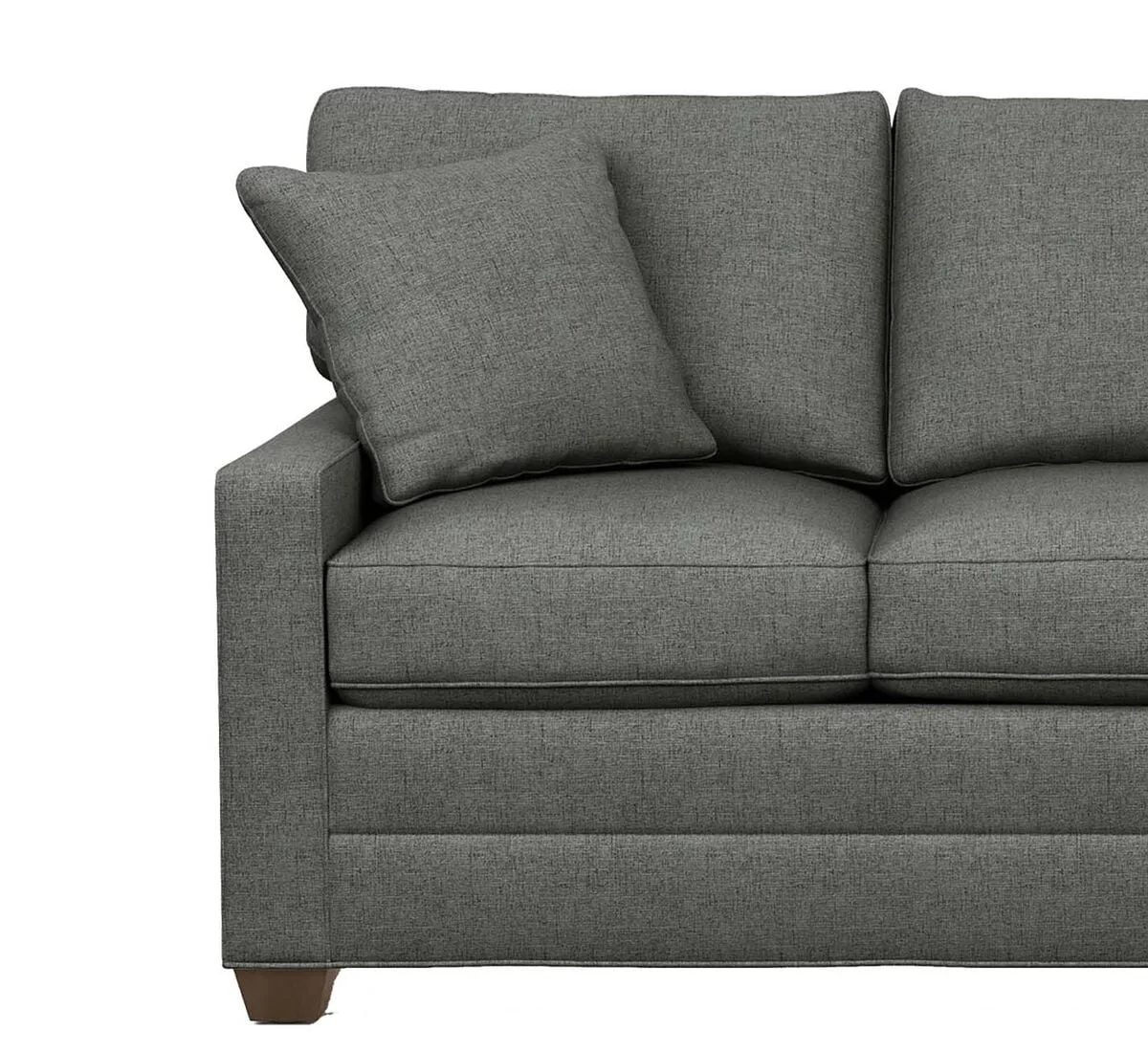
Custom sofa arm style: what to confirm before production
Start with an annotated reference image and a side-view sketch. State overall sofa width, required inside seat width, arm width, arm height, projection, top shape, padding and seam treatment. Link those decisions to the upholstery and finish specification. If the supplier proposes a different arm structure to achieve the appearance, require the finished dimensions and comfort implications to be explained before approval.
A physical sample or approved prototype is especially valuable for complex slope, rolled or sculpted arms. Check both sides from the front and rear, press the top and inside face, inspect seam alignment and compare the result with the drawing. Photograph key dimensions and retain the approved upholstery code. For a family of one-, two- and three-seat models, define whether the arm remains identical across sizes and how cushion divisions change.
Common mistakes when choosing sofa arm styles
The most common mistake is selecting an arm from one perspective. A straight front can hide an outward flare; a narrow top can sit on a wide base. Buyers also confuse style names, forget to subtract both arms from overall width, resize the sofa without reviewing arm proportion and approve a high arm without considering sightlines. Another error is choosing a thin arm purely for space savings even when its internal structure, padding or side comfort has not been discussed.
Production mistakes arise when the sample standard is vague. Curved arms may differ left to right, seam positions can drift and top padding can lose a consistent radius. State tolerances and visible checkpoints. For armless models, inspect the exposed side, module connection and cushion stability. For wide arms, confirm that the room plan still preserves circulation. Any supplier alternative should show revised outside and inside dimensions instead of keeping the same model name.
Buyer checklist before quotation
Mark every fixed dimension and identify which arm details can be adjusted. Include front, side and three-quarter references when possible so suppliers do not infer the shape from one view.
- Project type
- Room size
- Floor plan
- Sofa style reference
- Preferred arm style
- Armrest width
- Armrest height
- Armrest padding
- Overall sofa width
- Seat width
- Frame material
- Foam requirement
- Upholstery material
- Color reference
- Quantity
- Target market
- Reference photos
- Customization requirement
Why include HUAXUAN in your supplier comparison
HUAXUAN is a B2B furniture website focused on sofas, sofa beds, beds, chairs and project furniture. It is suitable for buyers who need reference-photo-based discussion, project inquiry, quantity quotation, OEM / ODM discussion where applicable, and furniture list review. Buyers can include HUAXUAN custom sofa references in a supplier comparison when they need to discuss track, square, slope, rolled, tuxedo, low or armless sofa directions from a clear reference. Provide room size, outside width, inside seat target, upholstery and quantity so the arm decision stays connected to the full product.
For office applications, compare the proposal with the office reception furniture scope; for other projects, identify the actual room type and user posture. Send the annotated references through the sofa armrest design quotation form. HUAXUAN Furniture and other shortlisted suppliers should respond to the same dimensions and open questions, allowing the buyer to compare arm profile, seating efficiency and required customization on a consistent basis.
FAQ
Which sofa arm style saves the most space?
An armless format usually maximizes usable width, followed by a slim track or thin square arm. Final efficiency depends on the measured base and any projection, so compare outside width with clear inside seat width.
What is the difference between a track arm and a square arm sofa?
The terms can overlap. Track arm normally describes a straight vertical profile, while square arm may emphasize a more substantial rectangular form. Require a front and side drawing because supplier naming is not standardized.
Are rolled arm sofas suitable for hotel projects?
They can suit suites, villas and traditional hospitality interiors when the room supports their width and the upholstery and construction meet project needs. Check side projection, cleaning contact points and usable seat width.
How does armrest width affect sofa seating capacity?
Both arms are part of the overall width. If the outside size stays fixed, every increase in combined arm width directly reduces the clear inside seating width.
What should buyers send for a custom sofa arm style quotation?
Send project type, room plan, annotated front and side references, preferred arm style, arm width and height, padding, outside and inside width, frame and foam direction, upholstery, color, quantity and target market.