
Quick answer: In a wood vs metal dining chairs comparison, the material label alone cannot predict strength, service life, price or suitability. A wholesale buyer should identify the structural members, leg material, joints, finish and replaceable parts on the specific chair, then compare approved samples under the intended use and cleaning conditions. An upholstered seat can hide a wood, engineered wood or metal substructure; wood-look legs can use a veneer or printed finish; and a shiny metal finish does not establish stainless steel. Ask for a bill of materials and construction drawing before applying any material claim to a product listing.
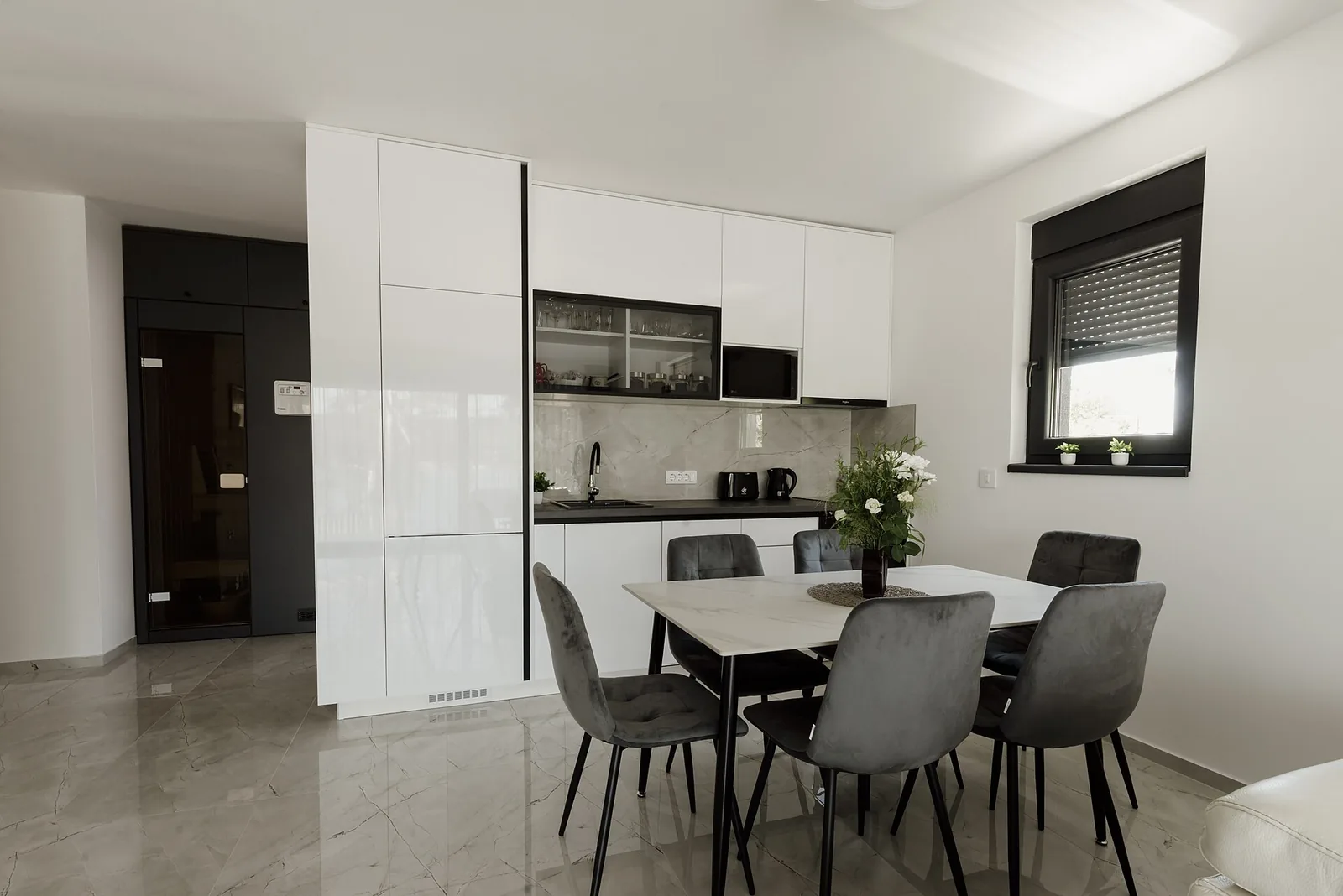
Wood vs Metal Dining Chairs: Quick Comparison
For upholstered chairs, the question is more precise than “wood or metal?” The seat and back may be made separately from the visible base. One chair might have solid wood legs connected to a wood-based seat frame; another might use a steel leg set beneath an engineered wood seat shell. A third may combine metal reinforcement with a wood finish. Compare the complete assembly, including the fasteners that join those parts.
| Buying factor | Wood-based or solid wood construction | Metal construction | Verification request |
|---|---|---|---|
| Visual character | Grain, stain and edge profiles may be design features; solid wood can show natural variation. | Tube shape, weld design and coating color can establish a slimmer or more industrial appearance. | Approved physical finish sample and full-chair photos under consistent light. |
| Construction risk | Species or board type, grain direction, joinery and moisture control matter. | Material grade, tube dimensions, weld quality and corrosion protection matter. | Part-level material specification, joint drawings and inspection points. |
| Surface care | Finish must suit expected spills, cleaning chemicals and edge impacts. | Coating must suit abrasion, moisture and the intended indoor environment. | Written care instructions for the actual finish, not a generic material category. |
| Repeat ordering | Agree acceptable color and grain range across batches. | Agree color, sheen and coating reference across batches. | Retained control sample and a substitution approval process. |
| Handling and repair | Legs, glides and some finishes may be serviceable, depending on design. | Detachable legs, glides and coatings may be serviceable, depending on design. | Parts list, assembly method and replacement availability. |
This table describes procurement questions, not guaranteed material performance. A well-constructed chair in either category can be appropriate. Poor joints, unsuitable finishes or inconsistent production can undermine either option. For a wider chair-selection overview covering dimensions and dining use, see the Commercial Dining Chairs Buying Guide. For cover construction and sample approval, use the dining chair upholstery materials guide.
How Dining Chair Frame Materials Affect Product Selection
Start by separating four layers: the visible legs, the hidden load-bearing frame, the seat or back panel, and the decorative finish. “Wooden dining chair frames” may refer to a complete timber structure or only timber legs beneath an upholstered shell. “Metal frame dining chairs” may describe a continuous welded frame, a bolted base, or simply metal legs attached to another structural component. A sales photograph cannot resolve these differences.
The intended application also matters. A restaurant purchaser may prioritize repeatable cleaning, floor contact and replacement glides; a furniture importer may focus on carton density, assembly time and repeat color matching; a retailer may need a consistent finish story across a collection. Write these priorities into the RFQ so two suppliers quote the same construction and approval standard. A visual match is not a material equivalence.
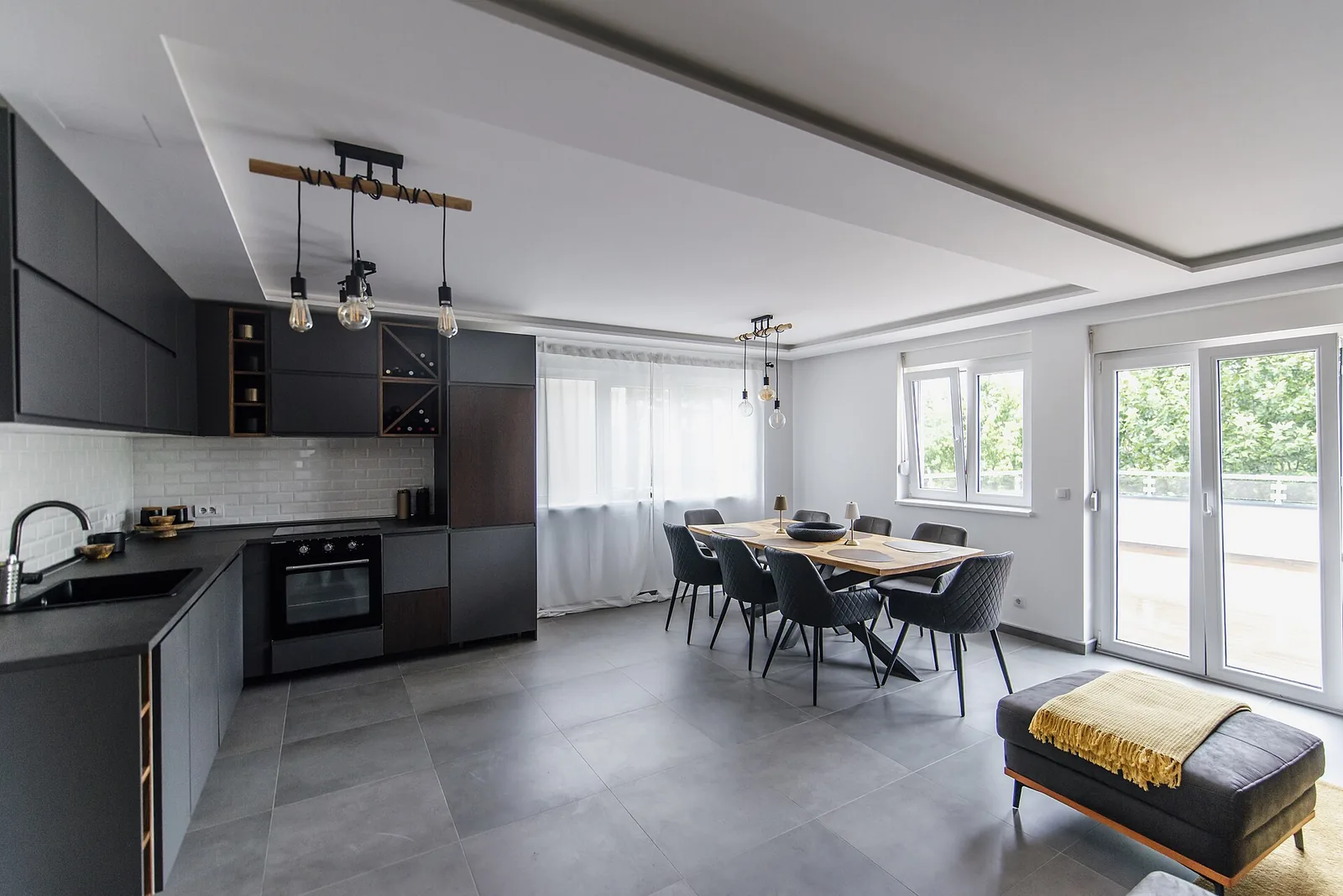
Solid Wood Frames vs Wood-Based Components
Solid wood is timber through the specified component, although an assembled frame can still contain glue, dowels, screws or other materials. Ask for the species and which parts are solid: legs, rails, back supports, seat perimeter or all of them. Grain and color naturally vary, so a bulk buyer should approve a reasonable appearance range rather than expect identical boards. Moisture content and its measurement method should be agreed for the actual sourcing and destination conditions; no universal number fits every species and market.
Engineered wood is a broad class of manufactured wood products, including plywood and fiberboard. Those products have different internal constructions and uses. A plywood seat panel, for example, should not be described as a solid wood seat, and a fiberboard decorative panel should not be assumed to act like a structural rail. Ask for the exact board type, thickness, grade and role in the chair. Drawings should show whether fasteners engage a reinforced insert, a suitable edge, or a separate wood or metal member.
Wood veneer is a thin real-wood surface applied to a substrate. It describes the outer appearance, not the full structural material. Veneer can provide a real-grain look across a shaped panel, but the substrate and edge treatment still need separate disclosure. A wood-grain print or foil is yet another construction and should be named as such. Seeing grain in a product image cannot establish solid wood, veneer or print. Ask for a labeled cut sample or a written part-by-part material schedule.
For any wood-based option, inspect where finish is thin or easily missed: underside, leg ends, drilled holes and edges beneath upholstery. Confirm the adhesive and finish selected for the intended indoor use. The aim is traceability, not a blanket statement that one wood construction is always better.
Metal-Leg Upholstered Dining Chairs
Metal legs can create a visually light base beneath a padded seat and may be formed as separate tapered pieces, a sled, a cantilever-like arrangement or a linked tubular structure. The visible shape says little about the exact metal. Steel names a family of iron-based alloys; carbon steel is one defined subset with properties that depend on its grade and fabrication. “Metal” in a catalog may also cover other alloys. Specify the actual material, grade when relevant, wall thickness or section dimensions, and surface treatment in the quotation.
A metal finish is the surface process or appearance, such as paint, powder coating or plating. A gold-colored leg is not necessarily brass; a silver-colored leg is not necessarily stainless steel. Finish selection should respond to contact, cleaning and exposure. Request the finish code, coating method, sample and any agreed performance evidence for the actual application. If the chair is intended for a damp or coastal setting, ask whether the proposed construction is appropriate rather than inferring corrosion resistance from the sheen.
Inspect welds and bends where accessible, then inspect how the base attaches to the upholstered shell. A clean weld in a photograph does not reveal hidden attachment quality. Some metal-leg designs arrive fully assembled; others are knock-down. Confirm the number of fasteners, orientation, torque guidance where provided, and whether the leg set remains square after assembly. Check glides against the buyer’s flooring, because the floor contact point often determines day-to-day noise and scuffing.
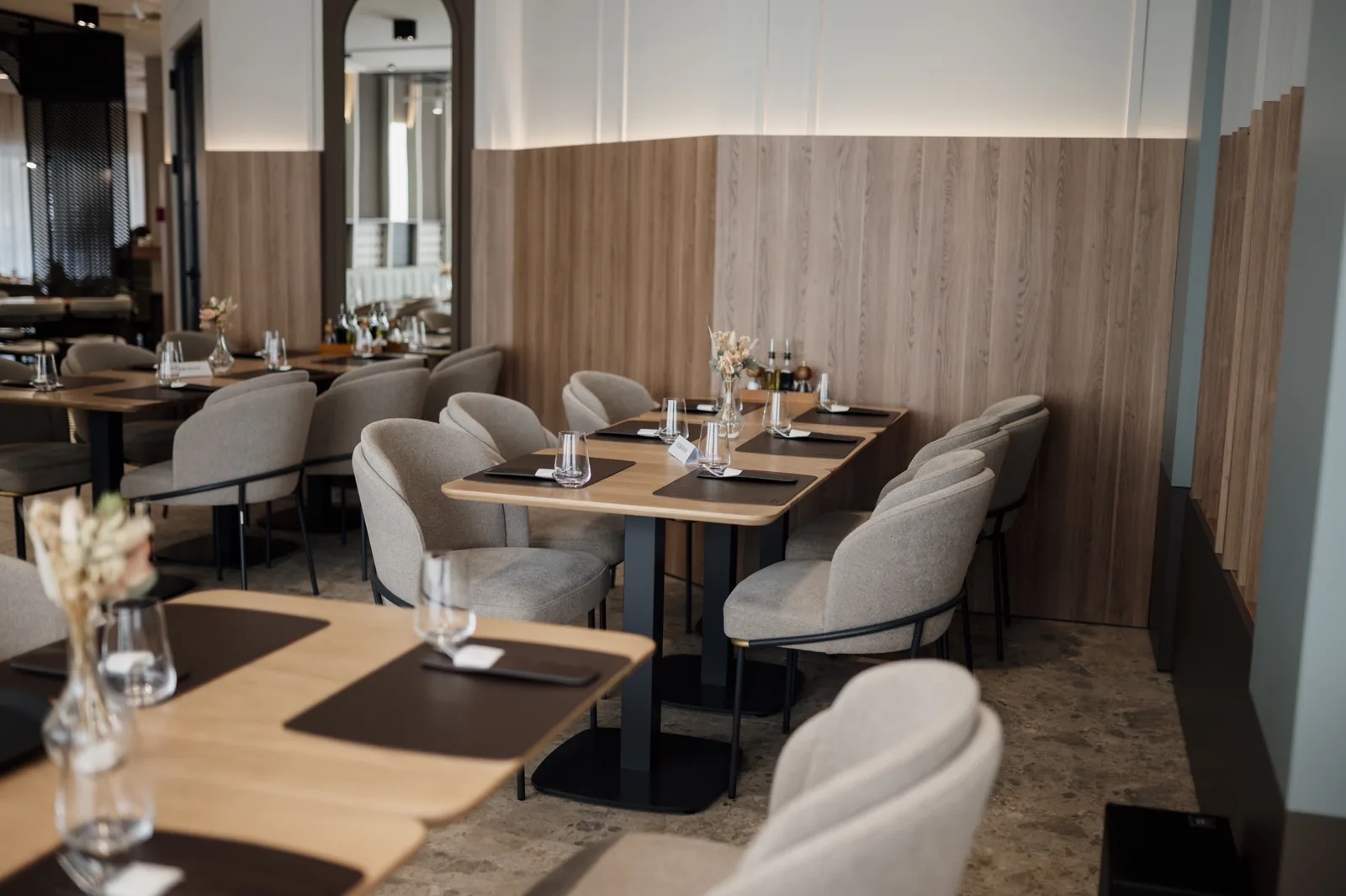
Wood-Leg Upholstered Dining Chairs
Wood legs can tie a chair to timber tables, warm neutral interiors or other furniture in a collection. They can also differ greatly: turned solid wood, laminated timber, engineered cores with veneer, and nonwood substrates with wood-look finishes should not share an unqualified “solid wood” claim. Ask which construction applies to each leg and whether a different material forms the seat frame.
Leg geometry deserves a drawing. A slender tapered leg, a flared leg and a continuous wood arm frame transfer forces differently through their attachments. The buyer should inspect the connection rather than assume that a thicker-looking leg is stronger. If legs are removable for packing, ask how the thread or insert is retained and whether assembly can be repeated without damaging the joint. If fixed, examine the chair’s footprint and the protection needed around exposed corners during export.
Stains and clear coats can make the same species look different, while natural grain can vary within the same lot. Agree a signed color standard and an acceptable range for knots, grain and tonal variation where these are visible. Record whether matching to tables is a close color match, a coordinated contrast or a specific shared finish code. An appearance request without a controlled sample is hard to enforce across repeat orders.
Frame Connections and Structural Details
Connections often deserve more attention than the headline material. Look at leg-to-seat joints, rails, back supports, inserts, welds and upholstery attachment. A wood frame may use dowels, mortise-and-tenon joinery, screws, corner blocks or combinations; the relevant question is how the specified design is made and inspected. A metal base may have welded intersections and a bolted seat plate. Neither a named joint nor a photograph proves tested performance by itself.
Ask the supplier for a component drawing or clear underside photographs of the production-equivalent sample. Confirm fastener count and type, whether holes are aligned, whether a thread engages metal or wood, and what prevents movement during repeated use. A smooth upholstered underside can conceal the assembly, so inspect an approved sample before signing off on a bulk order. Agree what constitutes a defect: loose legs, rocking, visible gaps, stripped threads, uneven welds or cracked finish around a connection.
If the destination market or buyer requires a specific chair standard or test protocol, state the exact version, laboratory, sample configuration and acceptance criteria in the purchase documents. Do not treat an unspecified “commercial grade” label as evidence. Any test result must be tied to the same construction, materials and revision being ordered.
Finish Options and Appearance Consistency
A finish has both a visual role and a protective role. For wood, confirm the stain or paint system, sheen, edge coverage and the proposed repair process. For metal, confirm whether the surface is powder coated, wet painted, plated or treated another way. A powder-coated appearance should not be inferred from a matte photograph, and a metallic color is not evidence of plating. Each process brings its own preparation and inspection needs.
Request a sample in the actual color on the actual substrate. Small swatches can differ from a finished chair because curves, welds, exposed end grain and lighting change the appearance. Set an acceptable range for color and gloss using a retained control sample. Compare a production selection beside the sample under consistent light, including the legs on several units from different cartons. For mixed-material chairs, verify that the finish coordinates with the upholstery and table specification. The materials and finishes overview can help organize the conversation, while the product quotation should carry the final codes.
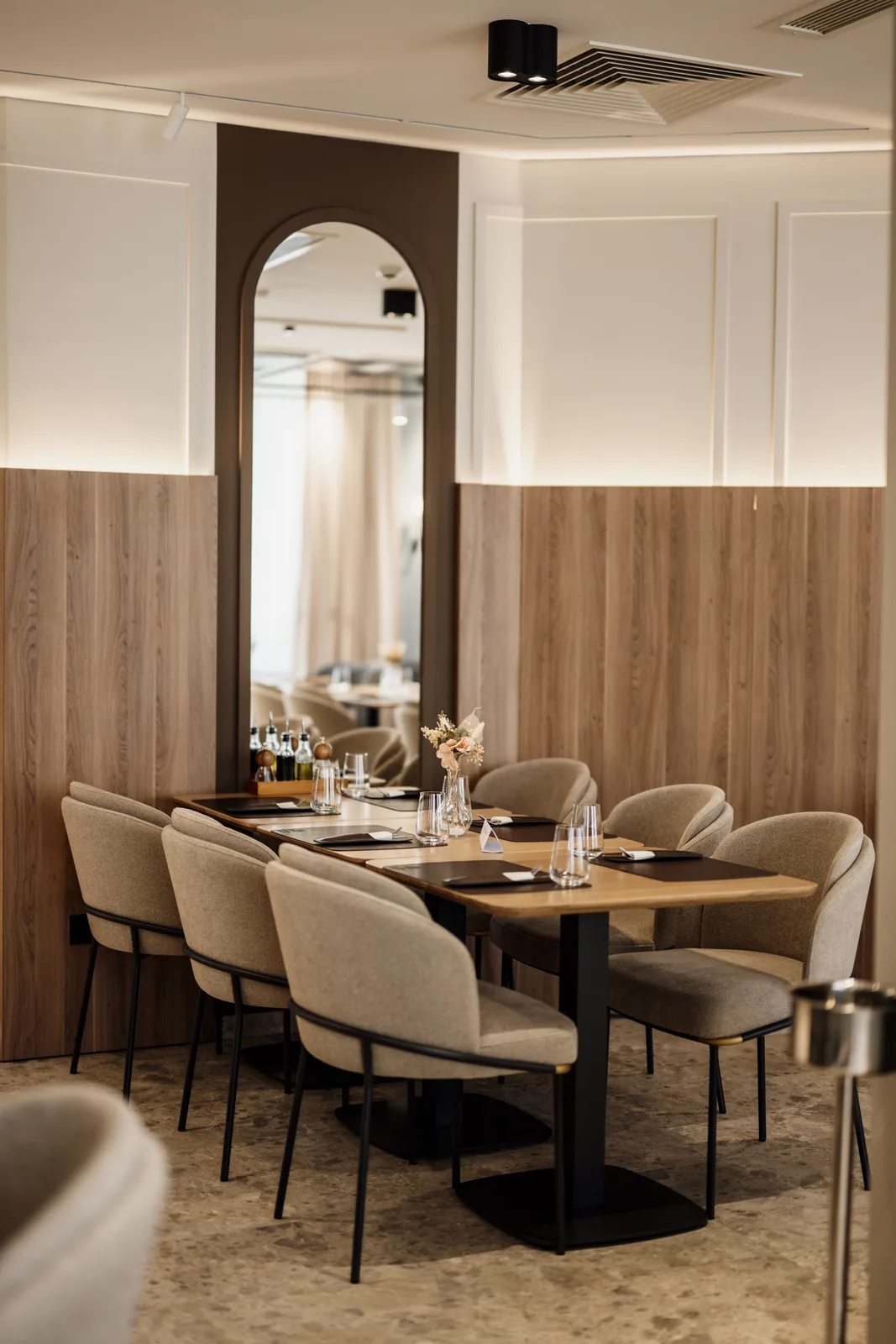
Weight, Handling and Export Packing
Neither wood nor metal automatically makes a chair lighter. Section size, shell, foam, upholstery, hardware and packing all contribute to unit weight. Request measured net and gross weights from the final sample and packaging plan, especially when warehouse staff will move chairs frequently or a shipment has weight limits. Compare the handling of the complete chair, not a loose leg sample.
Ask whether chairs ship assembled, partly assembled or nested. Metal legs that detach may reduce carton volume, but they add receiving assembly and a need to protect the finish. An assembled wood chair may save site labor yet need a larger carton. Exposed leg tips, curved backs and upholstered edges need protection tailored to the model. Ask for carton dimensions, pack quantity, hardware bags, assembly instructions and a packing photograph for approval. Consider a trial unpacking and reassembly before confirming a high-volume program. The site’s export packing guidance outlines the broader packing review.
Cleaning, Maintenance and Replacement
Maintenance must refer to the exact finish and upholstery, not simply to “wood” or “metal.” A coated steel leg can have different cleaning limits from a plated one; a painted wood leg differs from an oiled timber surface. Ask for the supplier’s written care guidance and compare it with the chemicals and contact frequency used by the buyer’s operations team. Test any proposed cleaning process on an approved sample when compatibility is uncertain.
Plan for glides, leg sets, hardware and finish touch-up where available. Request part codes and instructions for replacing a damaged glide without scratching a floor or distorting the leg. If a replacement leg may come from a later lot, agree how color differences will be handled. If a fixed frame cannot be repaired on site, factor that into spare-unit planning. No material choice eliminates wear; maintainability is a property of the whole design and supply program.
Choosing Frames for Importers and Distributors
Importers should compare documented construction, packing and regulatory needs for the destination market. Distributors should also consider whether a frame finish remains available for repeat orders and how a claim will be resolved when end customers report rocking or finish damage. Retailers and brands may need consistent material descriptions across a product family. Restaurant buyers may value straightforward assembly and field-replaceable glides. These are purchasing requirements to verify, not performance promises implied by a wood or metal label.
Shortlist models after defining the seat silhouette, floor type, cleaning method and required visual finish. Then request two or more construction options only where the design and budget justify comparison. Keep upholstery and dimensions as consistent as possible during sample evaluation so the frame difference is meaningful. If an alternative base changes seat height or overall width, record it as a new chair variant rather than treating the quote as a direct substitute. For a broader selection of upholstered seating, review the upholstered chairs collection.
Sample Inspection Checklist
Use a finished, production-equivalent sample with its labeled material and finish record. Record the product code, revision, supplier, date and any approved variation. The sample should be evaluated by the buyer’s relevant product, quality and operations staff where possible.
- Match each leg, rail, seat panel and back support to the written bill of materials; clarify every wood or metal claim.
- Measure overall width, depth, height, seat height, leg spread and floor contact positions against the approved drawing.
- Inspect accessible underside connections, inserts, screws, welds, corner blocks and alignment.
- Place the chair on a level surface, check for rocking and inspect the feet or glides for complete contact.
- Compare finish color, sheen, grain or coating coverage with the retained control sample in consistent light.
- Check exposed edges, leg tips and high-contact points for chips, sharp edges or unfinished areas.
- Assemble and disassemble the sample if the shipping format requires it; record missing or confusing steps.
- Photograph the approved chair and any exceptions before approving the bulk production specification.
Where independent testing is required, write the agreed method and result into a separate approval record. A sample inspection cannot replace a defined laboratory test. HUAXUAN’s sample approval process offers a place to structure these sign-offs.
Bulk Order Specification Checklist
| Specification field | Write down before purchase order | Approval evidence |
|---|---|---|
| Identity and quantity | Exact product code, revision, variants and quantity by finish. | Signed product schedule. |
| Structural materials | Part-level wood species or engineered board type; metal type or grade where relevant. | Bill of materials and drawing. |
| Leg and joint design | Fixed or detachable legs, connection detail, fasteners and glide type. | Underside images and approved sample. |
| Visible finishes | Color code, process, sheen and permitted natural variation. | Retained finish panel and finished chair. |
| Dimensions | Chair envelope, seat height, leg spread and agreed tolerances. | Revision-controlled drawing and measured sample. |
| Use and care | Intended environment, cleaning requirements and replacement parts. | Written care guidance and parts list. |
| Packing and inspection | Assembled state, carton plan, hardware, protection and inspection points. | Pack-out photos and agreed inspection record. |
Confirm substitutions in writing before production. A supplier changing a veneer substrate, steel grade, coating or leg insert can alter the approved construction without changing the visible silhouette. Tie the purchase order to the approved sample and drawing revision, then inspect bulk units against those records. The quality-control overview provides more context for documenting checks.
FAQ
Are metal dining chair frames always stronger than wooden ones?
No. Strength depends on the particular design, dimensions, joints, material specification and workmanship. Compare production-equivalent samples and any required test evidence for the intended use; a material category alone is insufficient.
Does a wood-grain dining chair leg mean solid wood?
No. The grain may come from solid wood, veneer over a substrate, or a printed finish. Ask for a part-level material declaration and a labeled sample before describing a chair as solid wood.
Is a silver metal leg stainless steel?
Not necessarily. Steel or another metal can be painted, plated or finished to appear silver. Request the base metal and grade separately from the finish specification.
What is the difference between steel and carbon steel in chair specifications?
Steel is a broad alloy family. Carbon steel is a subset whose properties depend on its grade and processing. A quote that says only “steel” may be too broad for a comparison; ask for the specific material designation where it affects the design or purchasing requirement.
Should upholstered dining chair legs be removable for export?
That depends on carton efficiency, assembly labor, connection design and finish protection. Compare the fully packed dimensions and a trial assembly of each option. Detachable legs can save space in some designs but add hardware and site work.
What should a bulk buyer inspect first on a frame sample?
Confirm the material schedule against the actual components, then inspect the leg-to-seat connections, alignment, floor contact and finish. Record deviations against the approved drawing and request defined tests if the buying specification requires them.
Recommended Wood and Metal Frame Chairs
Compare verified upholstered dining chair references by their documented leg and frame construction, not their color alone. Each recommended model should show its confirmed product code, actual material description and a link to its published detail page. Where a material remains unverified, request the specification before treating it as a wood or metal example. Browse the upholstered chairs collection while preparing your shortlist.
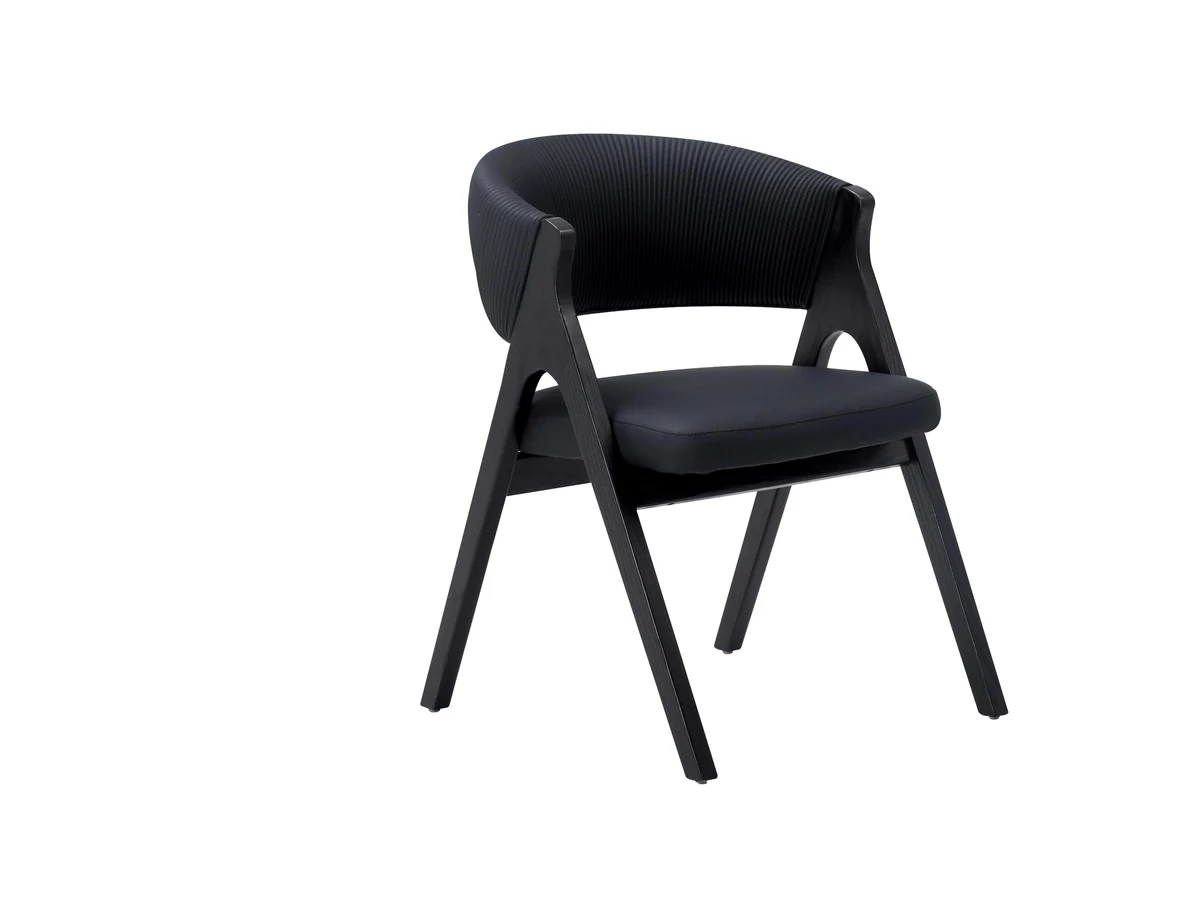
Curved Exposed-Frame Dining Chair with Splayed Legs
Supplier-specified solid wood leg frame with exposed curved support.
View Details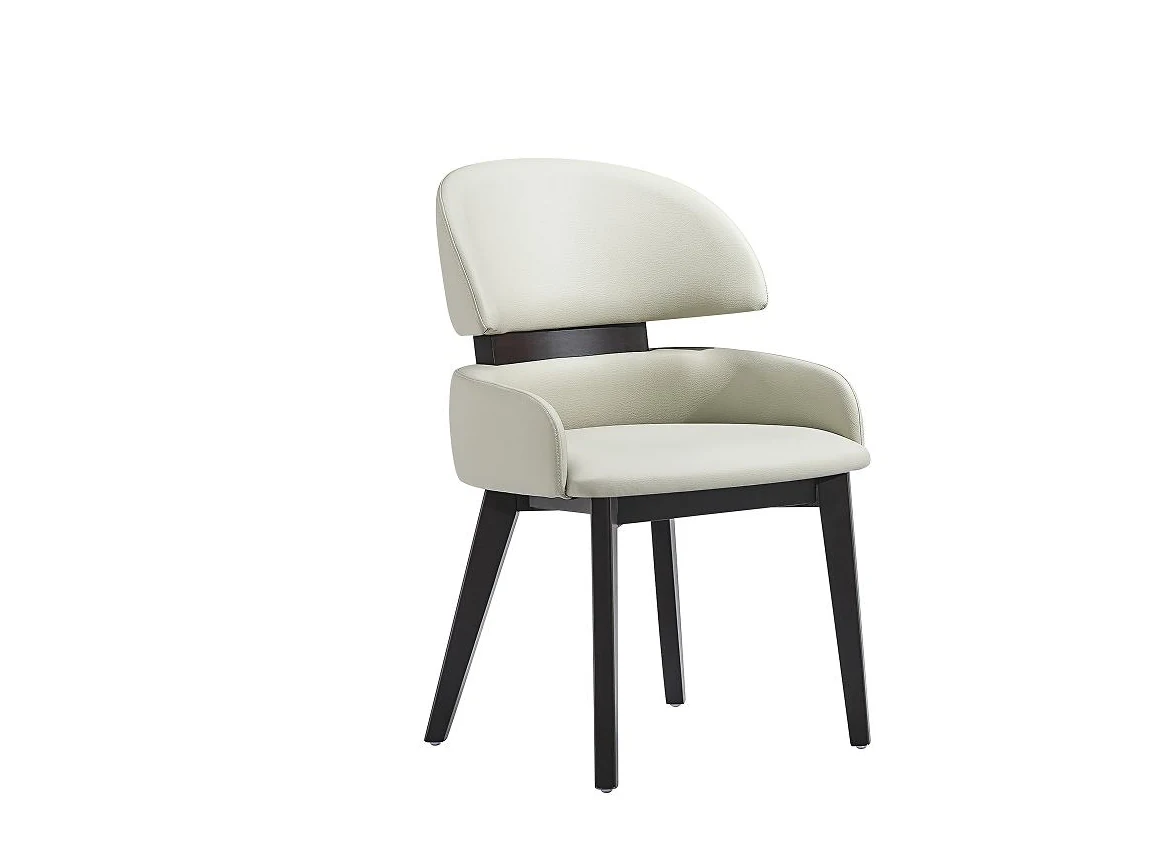
Oak-Frame Dining Chair with Short Curved Back
Exposed oak leg frame offers a second wood construction and finish reference.
View Details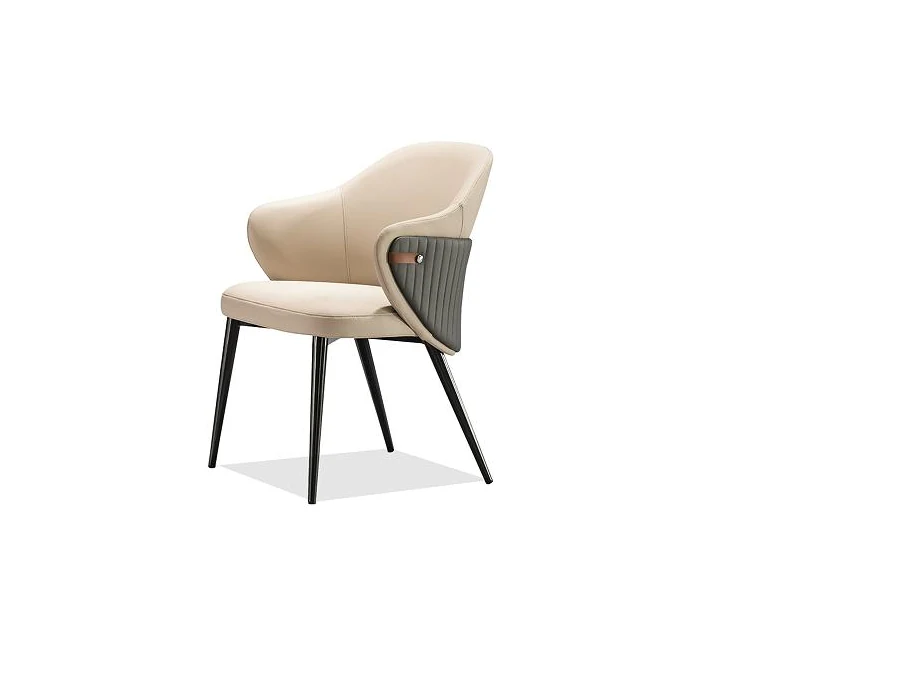
Fan-Back Upholstered Dining Chair with Ribbed Rear Panel
Glossy black carbon steel base contrasts with exposed wood legs.
View Details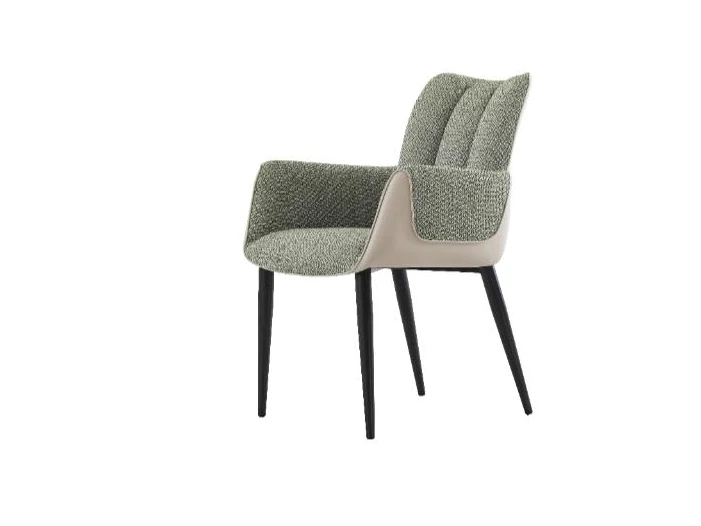
Split-Cushion Dining Armchair with Slim Steel Legs
Carbon steel and wood multilayer board show why mixed construction needs a parts-level specification.
View DetailsImage credits
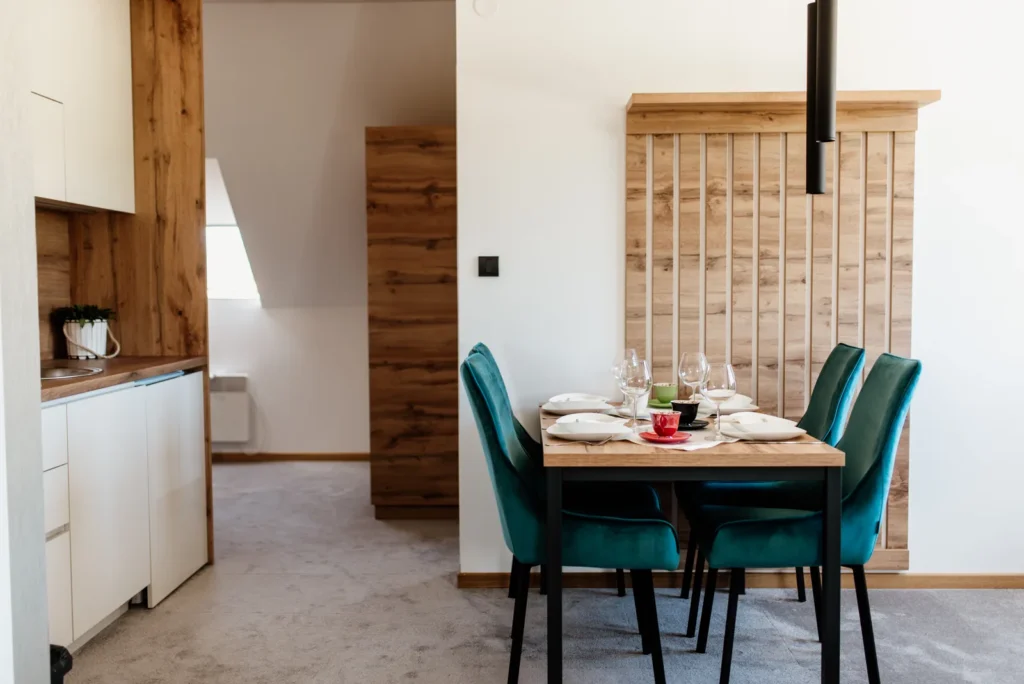
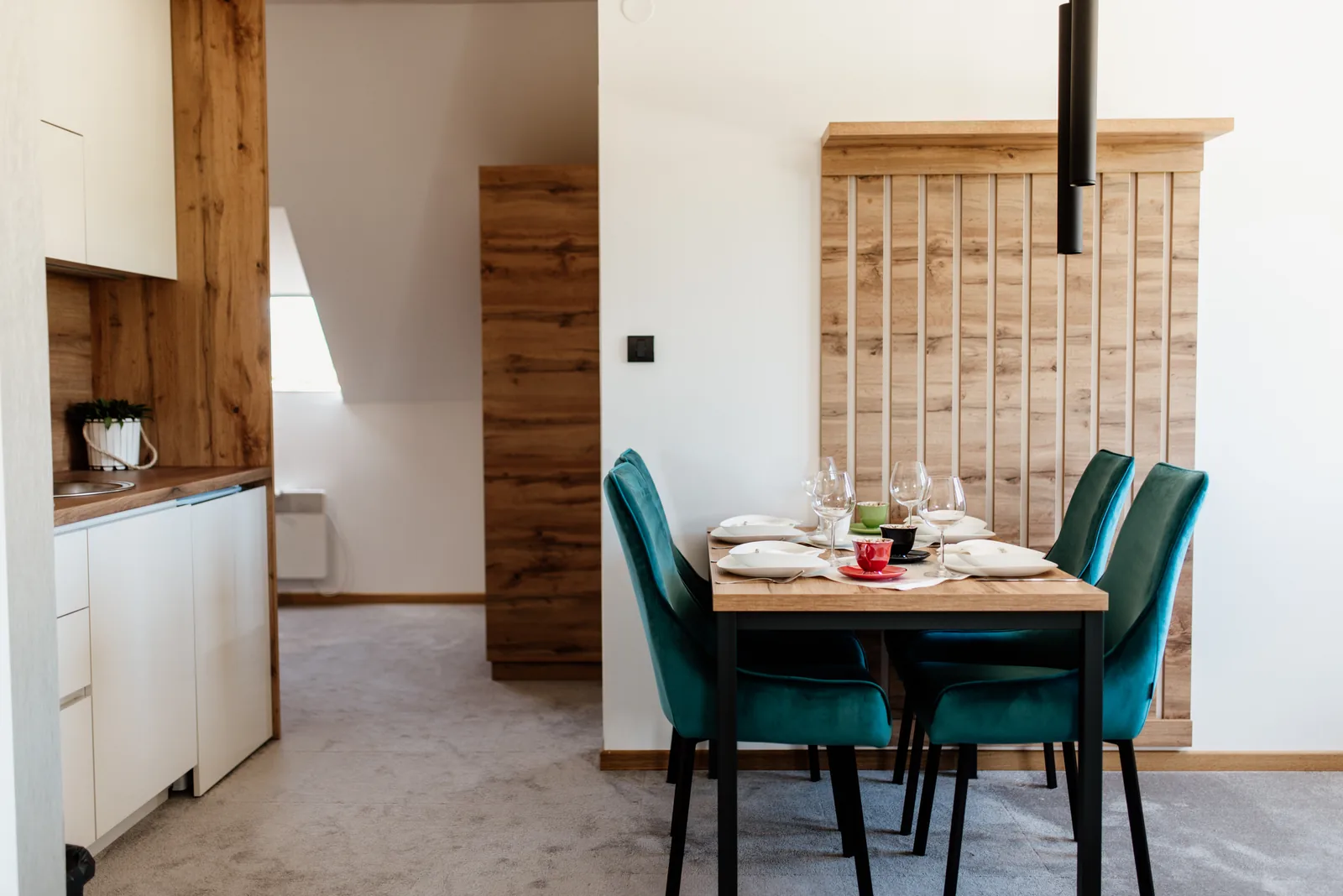
- Modern kitchen and dining area with wooden table and chairs during daytime.jpg by Shixart1985, CC BY 2.0. Resized and converted to WebP; no crop.
- Modern kitchen and dining area in a bright apartment on a sunny day with simple decor and furniture.jpg by Shixart1985, CC BY 2.0. Resized and converted to WebP; no crop.
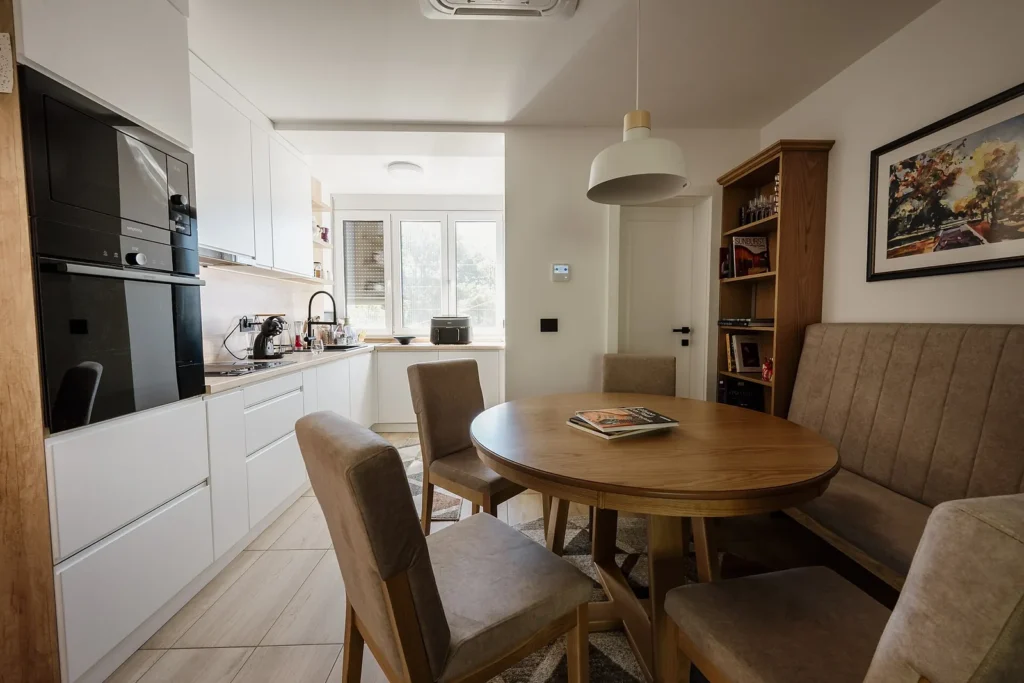
- Modern kitchen and dining area with stylish furnishings and natural light in a contemporary home setting.jpg by Shixart1985, CC BY 2.0. Resized and converted to WebP; no crop.
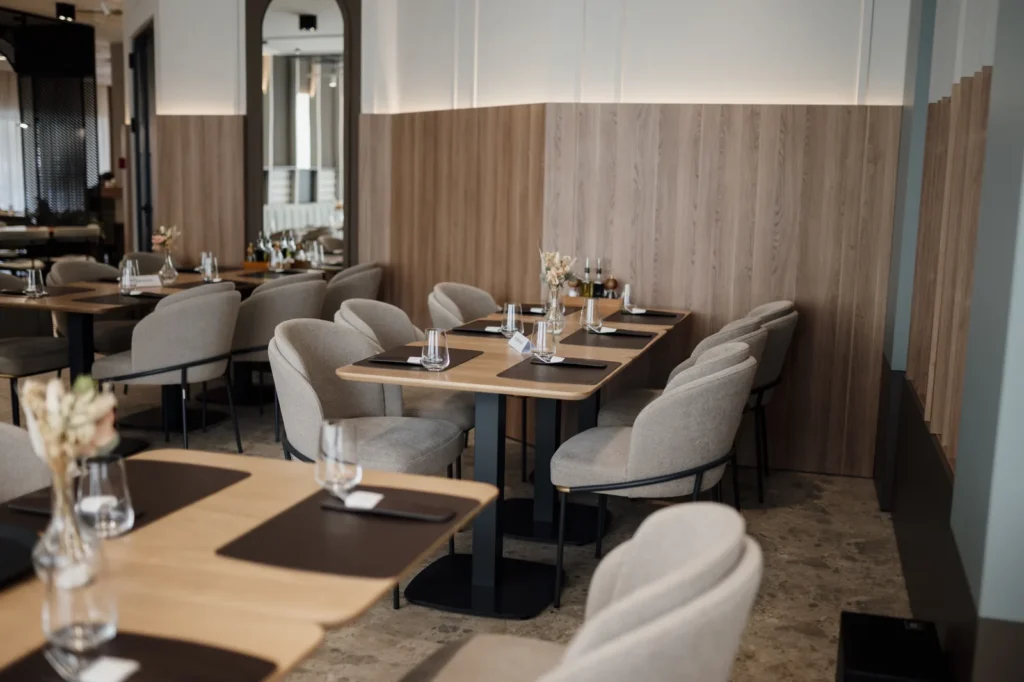
- Modern dining area with wooden decor and empty tables inviting guests to enjoy a meal at a restaurant.jpg by Shixart1985, CC BY 2.0. Resized and converted to WebP; no crop.
- Table set for dining in a modern restaurant interior with wooden walls and elegant decor.jpg by Shixart1985, CC BY 2.0. Resized and converted to WebP; no crop.
- Modern dining area with stylish table and chairs in cozy interior design.jpg by Shixart1985, CC BY 2.0. Resized and converted to WebP; no crop.