Sourcing Sofa Beds?
Browse HUAXUAN sofa bed references or send a model code, quantity and destination for quotation review.
Quick Answer: What Does an OEM Sofa Bed Project Require?
OEM sofa beds for a furniture brand begin with a controlled product specification, a feasible base design and a sample the buyer can approve. A brand should identify the sofa and bed functions, materials, size, target market, labels, packaging, documentation, and acceptance criteria before bulk production. A manufacturer’s existing sofa bed can be a practical starting point, but a new mechanism, frame geometry or sleeping platform may require engineering review and a new prototype. HUAXUAN can discuss changes against selected existing references; this guide does not imply every structure can be redesigned or that unverified certifications and brand services are available.
The key control is traceability. The finished unit, carton label, assembly instructions and buyer’s sales listing should describe the same approved product. A signed sample and revision-controlled specification make that possible. Browse HUAXUAN’s sofa bed references to select a realistic base before discussing brand presentation or development.
What OEM Sofa Bed Manufacturing Means
Original equipment manufacturing generally means a factory makes a product to a buyer’s agreed specification for sale under the buyer’s brand. In a sofa bed program, that agreement must cover both daily seating and bed mode. It should also assign responsibility for product design, trademarks, instructions, test requirements, labels, and changes. A logo on a carton does not turn an undefined sofa into a controlled OEM program.
The brand remains responsible for knowing what it intends to sell in its market. Its purchase specification should describe the product accurately and request evidence needed for that destination. The manufacturer should confirm what it can produce and which materials or processes are available for the selected model. Contract terms, intellectual property rights and regulatory responsibility need separate agreement; this article is a practical sourcing framework, not a substitute for that contract.
OEM vs ODM vs Existing-Model Customization
These terms are often used loosely. For purchasing decisions, classify the actual development work rather than relying on a label. An OEM project may use a buyer’s design. An ODM arrangement usually begins with a supplier-developed design that a buyer selects and may brand under agreed rights. Existing-model customization is narrower: a documented sofa bed is retained while approved aspects such as upholstery, color, dimensions within a verified range, or packaging are reviewed.
| Project route | Typical starting point | Likely approval work | Question for the buyer |
|---|---|---|---|
| Existing-model customization | A current reference with known operating modes | Confirm selected variant, materials, labels and sample | Which exact parts remain unchanged? |
| ODM discussion | Supplier-owned design offered under commercial terms | Review design rights, allowed changes and branding | What rights and exclusivity, if any, are actually granted? |
| Buyer-led OEM development | Buyer drawings and requirements | Feasibility, drawings, prototype, tests and change control | Who owns design decisions and engineering changes? |
Neither “OEM” nor “private label” guarantees exclusivity. If exclusivity matters, write the scope by market, model and duration into a separate agreement. Do not infer it from the buyer’s logo or from a sample invoice. The site’s OEM and ODM page gives the broader service context; this article explains the sofa bed documentation and approval sequence.
Choosing an Existing Sofa Bed Model as the Starting Point
An existing reference helps the parties discuss a physical product. Request closed and open photographs, available dimensions, mechanism description, material schedule and sample access. Confirm whether the displayed product is the same revision that can be quoted now. A reference gallery is evidence of a form, not a promise of current stock or every conceivable modification.
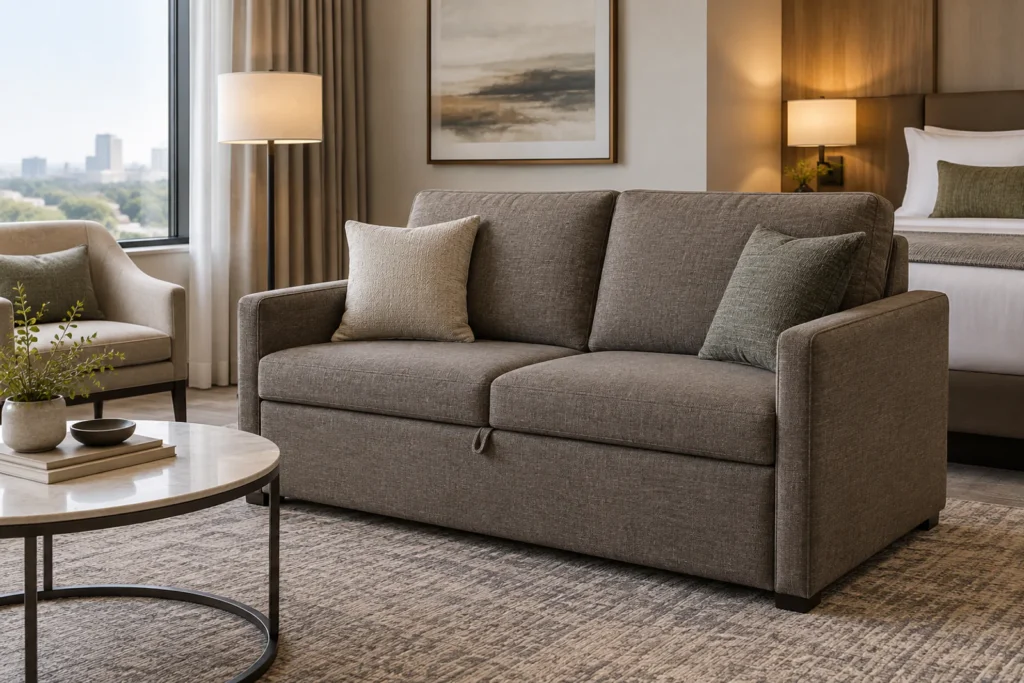
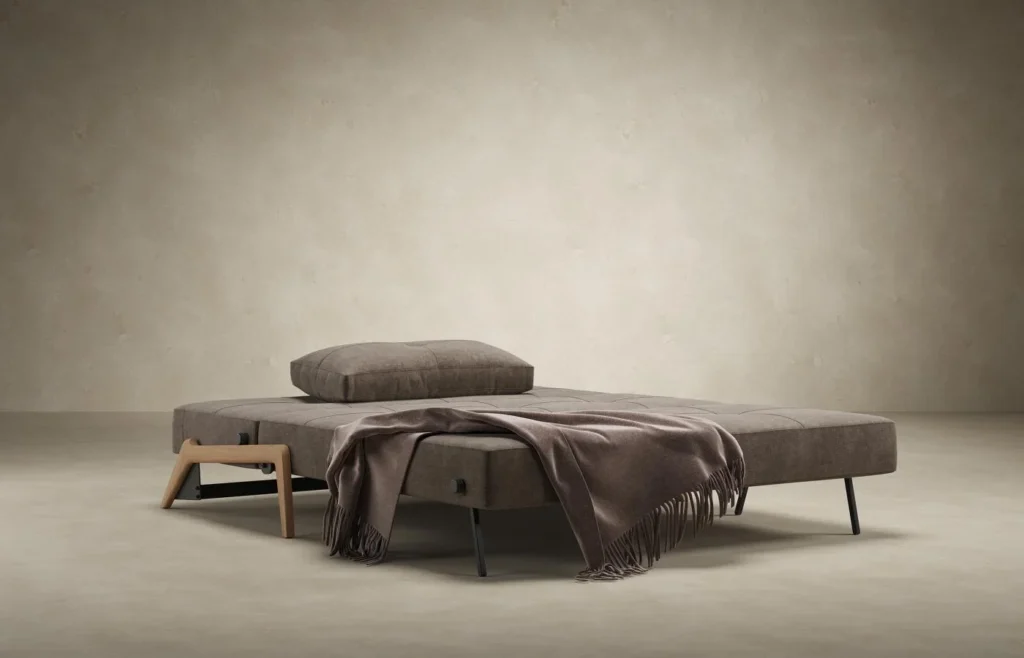
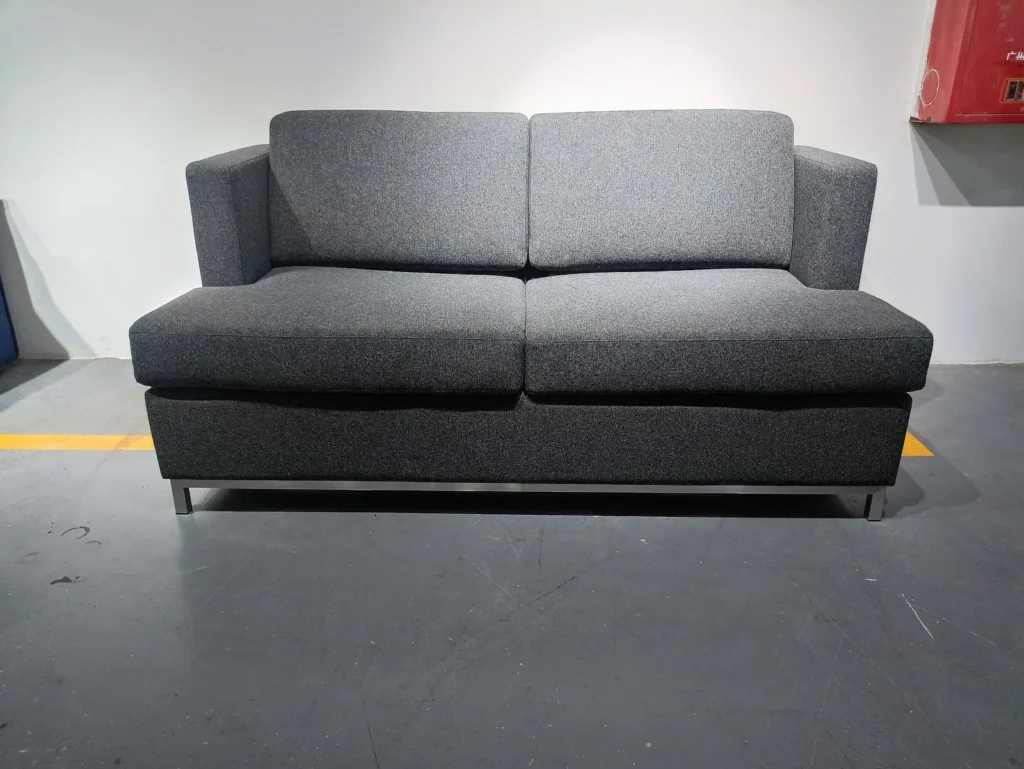
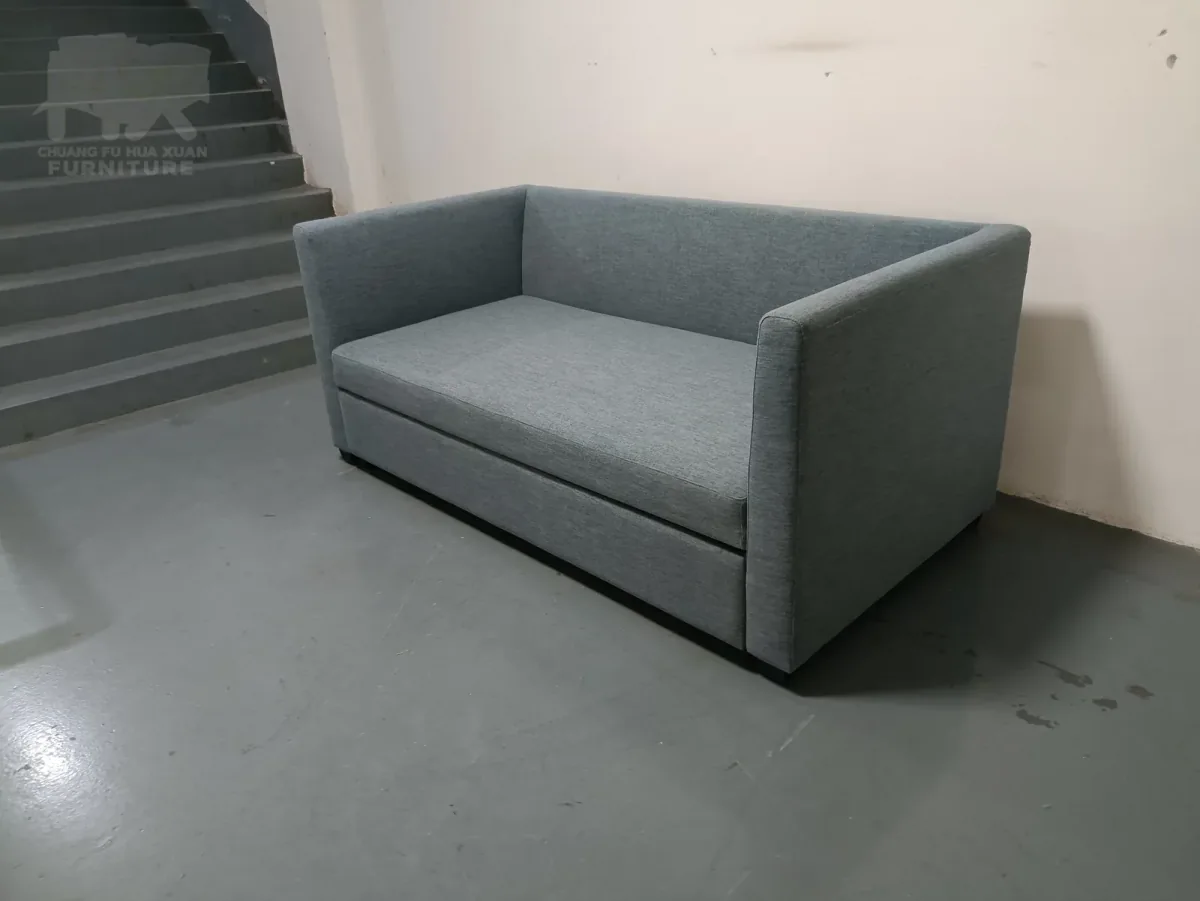
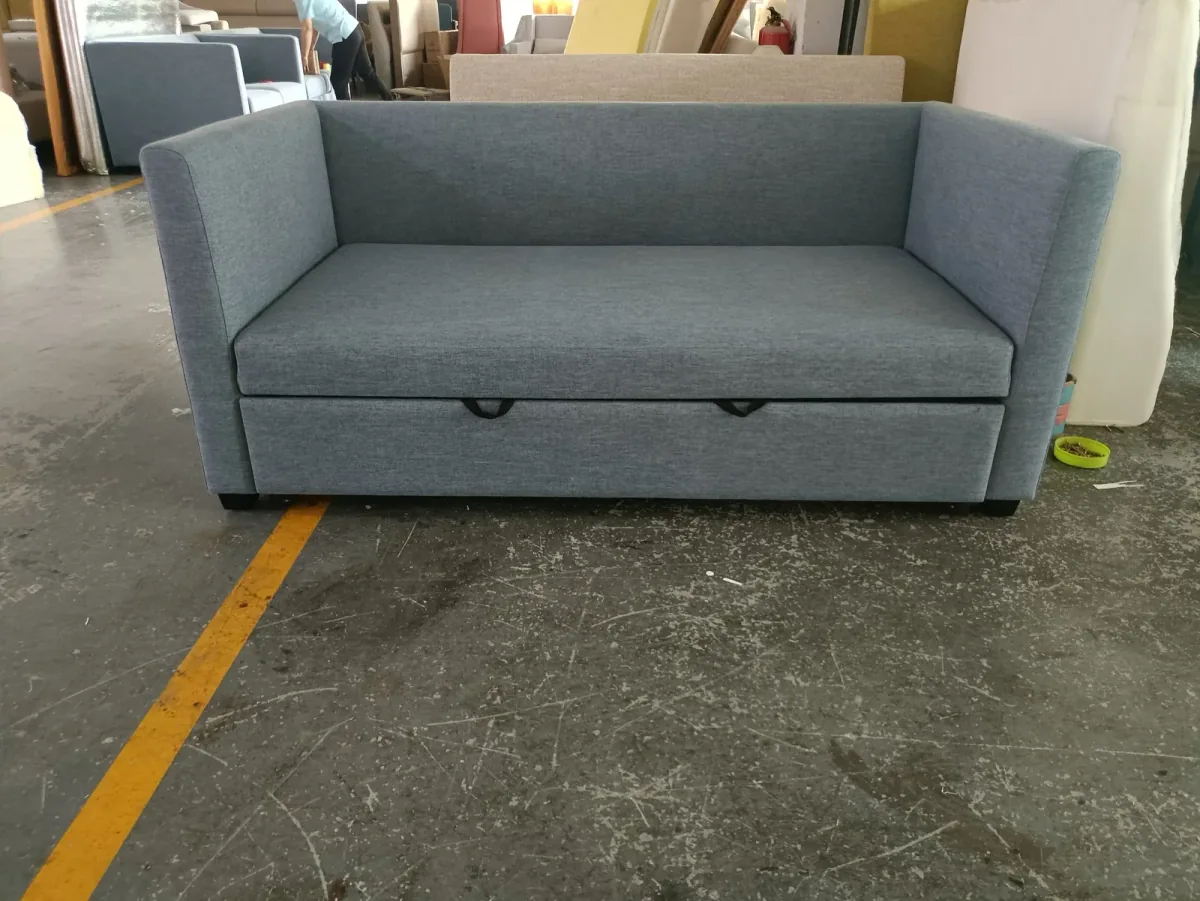
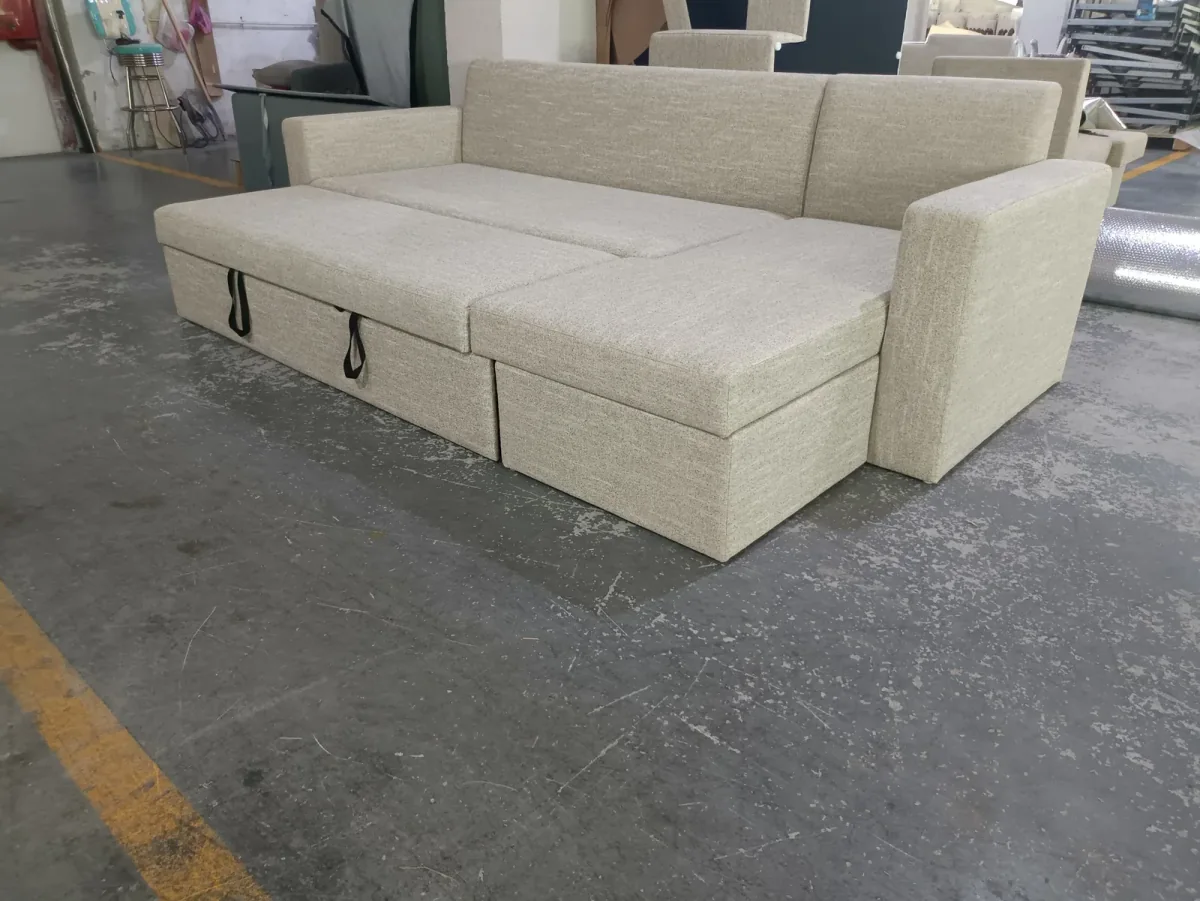
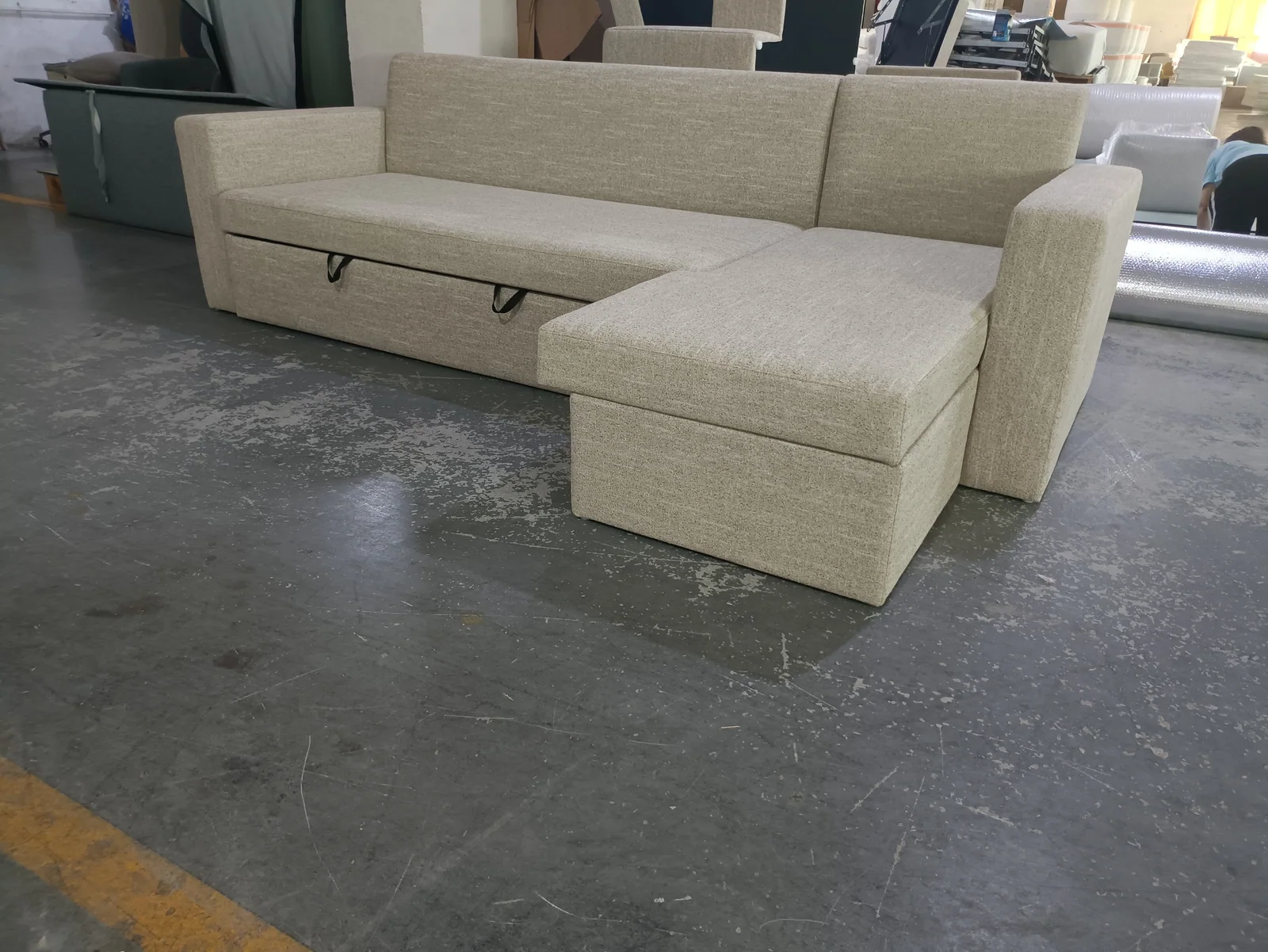
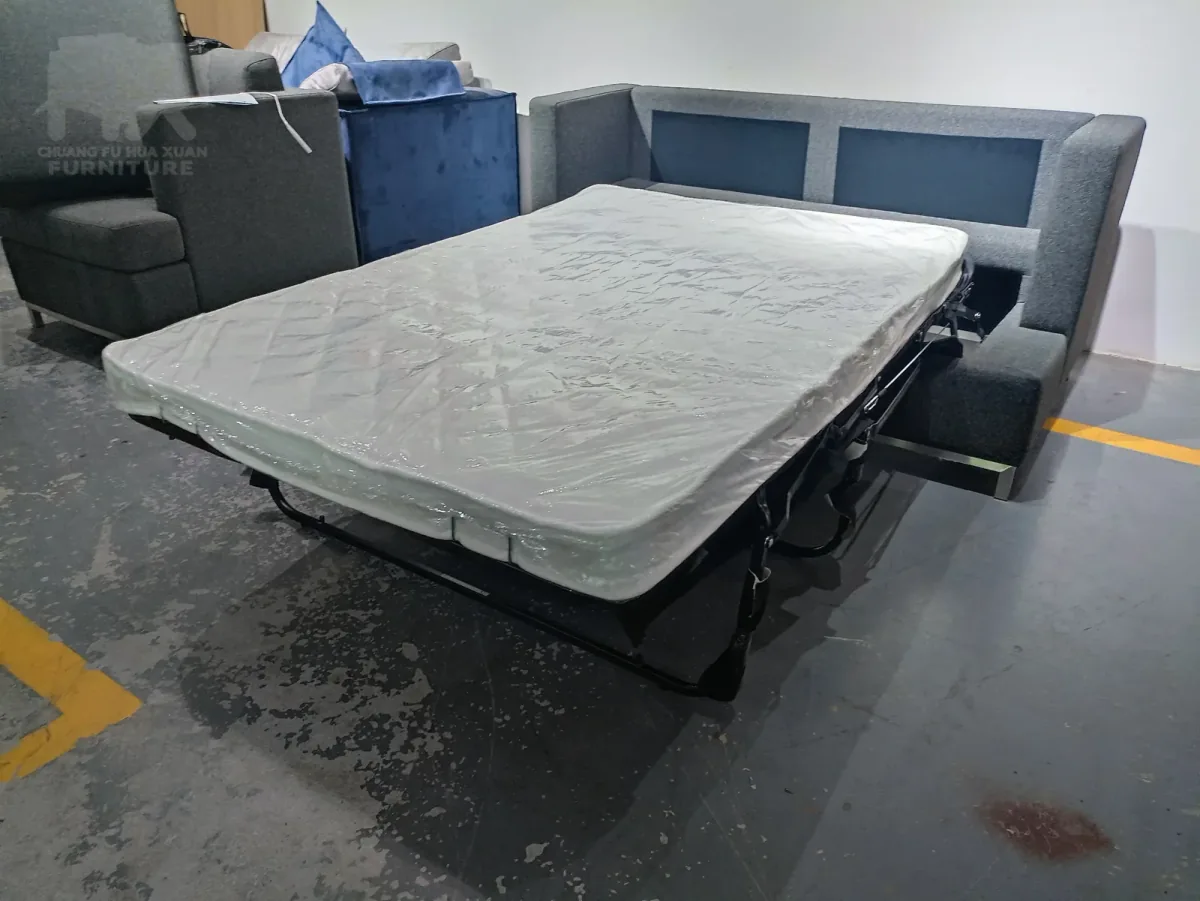
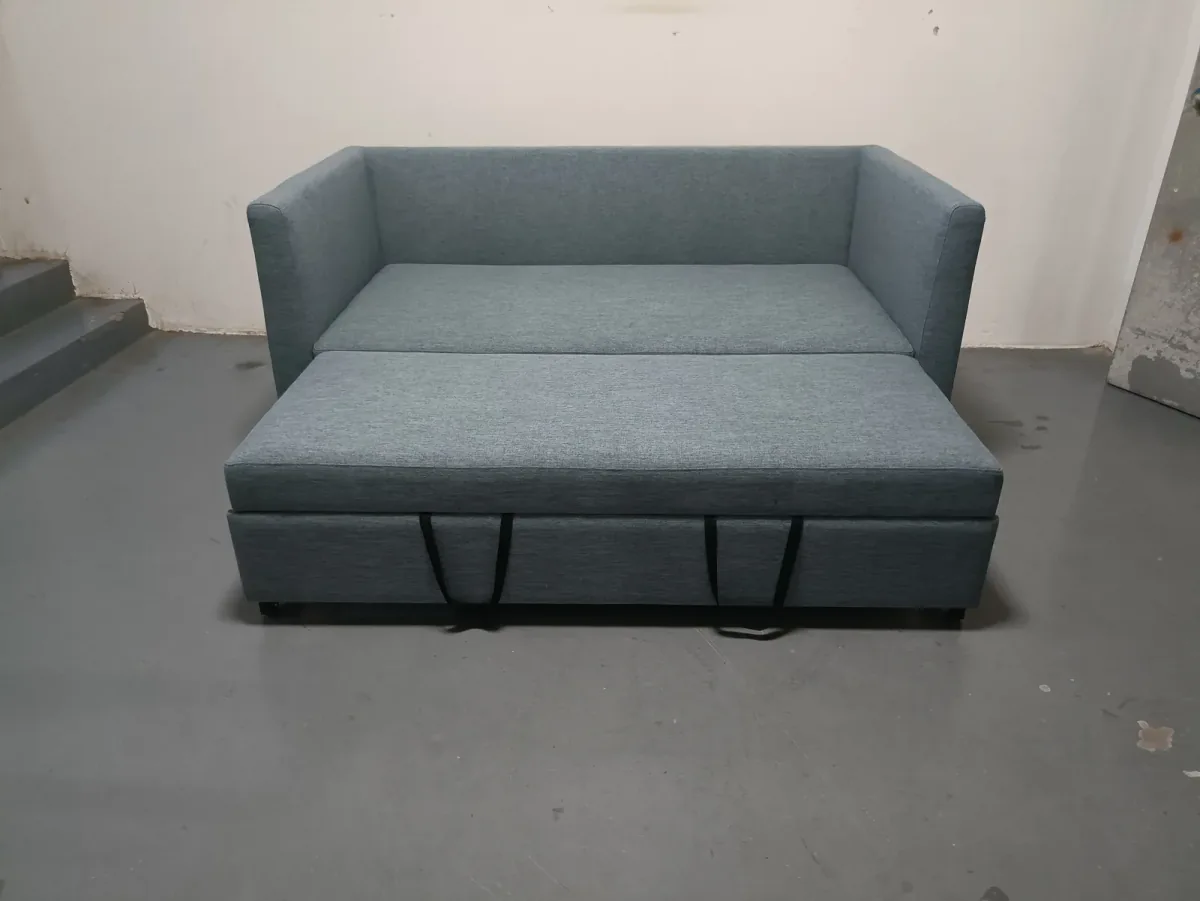
For example, the grey convertible HX-SFB-010 shows a pull-out system and compact upholstered body. The grey fabric HX-SFB-011 provides another starting point with a visible pull-out base. Compare their actual open modes and dimensions before treating them as alternatives for one SKU. Ask the factory to identify which reference is closest to the desired retail position and what would change.
Upholstery, Dimensions, and Configuration Options
Upholstery color and texture can often be discussed against an existing frame, subject to fabric supply, suitability at folding points and sample approval. Piping, stitching and removable-cover details may also be reviewable, but they affect panel patterns and labor. Define the exact fabric code, color, composition and relevant performance criteria; a mood-board photo is not enough for repeat production.
Dimensions are less flexible than a color choice. Changing exterior width can alter the sleeping platform, support frame, mattress, cushion division and carton. A chaise or arm-direction change can affect how the product opens and where a user can stand. Ask which sizes are already documented and which would need drawings or a new operating sample. The sofa bed dimensions guide helps define closed size, open depth and sleep-surface dimensions before a development request is sent.
| Proposed change | Could often begin from an existing model? | Likely trigger for new sample or engineering review |
|---|---|---|
| Approved fabric or color change | Yes, after material and availability review | Different stretch, thickness, pile, coating or seam behavior |
| Logo or carton artwork | Potentially, after rights and artwork review | New label placement, wash instruction or packaging construction |
| Size within a documented option list | Potentially | Different frame or mattress support outside approved options |
| Arm, chaise or cushion shape | Case by case | Changed pattern, clearance, support or balance |
| Mechanism or opening direction | Rarely a cosmetic change | New linkage, frame and operating validation |
This matrix is a decision prompt, not a promise that HUAXUAN offers each option. The exact selected model, material and order quantity govern feasibility.
Mechanism Selection and Product Feasibility
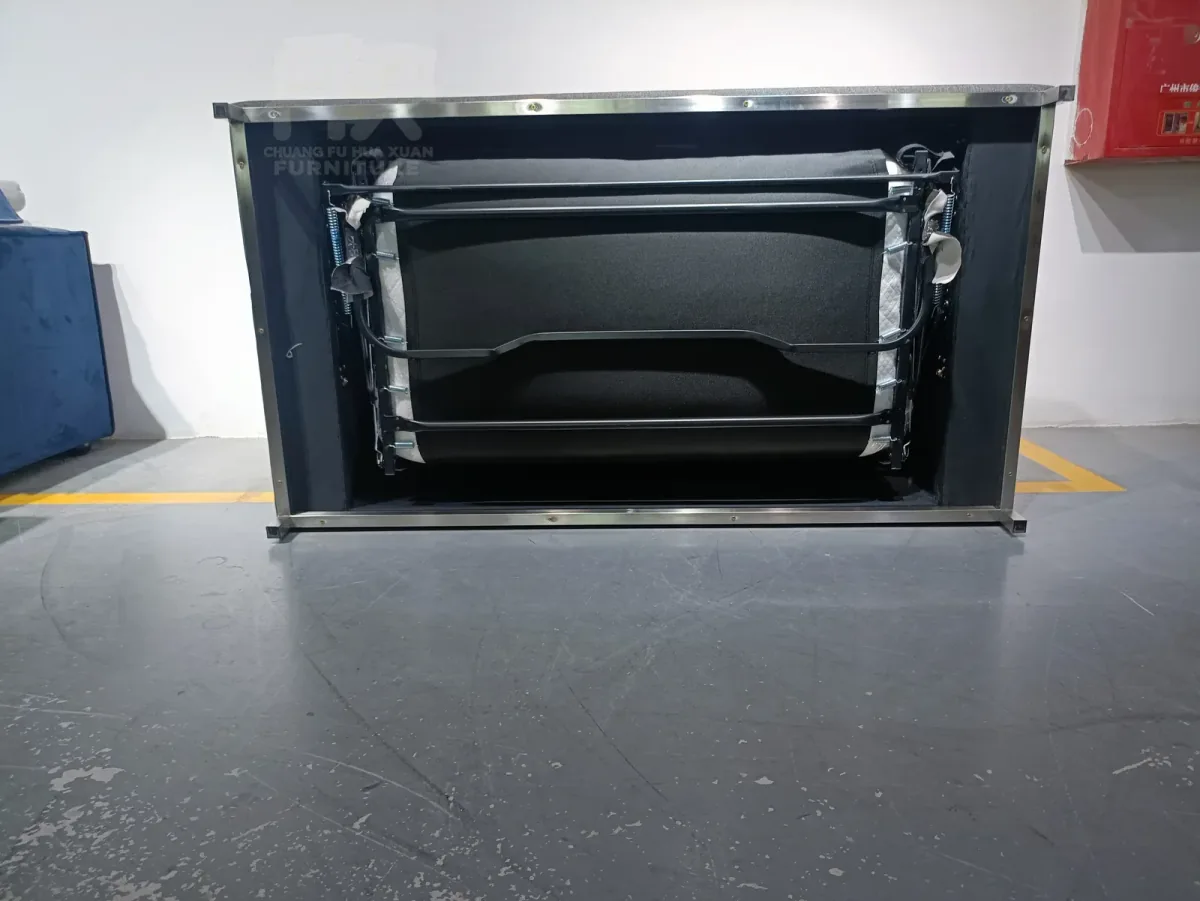
The sleeper mechanism determines more than the open appearance. It affects clearances, weight, support, user instructions, spare parts and inspection. If a furniture brand requests a new opening action, ask for a feasibility review before issuing artwork or a launch date. The manufacturer may need a new frame interface or may recommend a different existing reference instead.
Provide the intended frequency of use, destination market and required sleeping surface. Ask the supplier to show the complete opening and closing sequence, including cushion handling and any exposed hardware. Do not describe a mechanism as “heavy duty” or “commercial grade” without agreed criteria and evidence. The sofa bed mechanism guide covers operating types; OEM approval must be made on the exact proposed configuration.
Private Label Requirements
Private label work is a set of controlled deliverables. A buyer may need a sewn brand label, law or content label required for its market, carton mark, barcode, assembly instructions, care information, and product photography. Which items the factory can apply, print or pack must be confirmed. The buyer should supply approved artwork, legal text and placement drawings; the manufacturer should identify any technical or procurement constraints.
Do not place an unverified material claim on a label. If the product uses one fabric on the body and another on a mattress cover, the documentation must distinguish them. If a size or mechanism changes after artwork approval, review every label, instruction and sales claim affected by that change. Brand presentation is only correct when the physical product and its documents align.
Avoid embedding another brand’s trademark in public development images. Ask for explicit permission before using a customer’s label or carton photograph as marketing proof. HUAXUAN references shown here are design and construction starting points, not evidence of an unrelated buyer’s private-label order.
Labels, Packaging, and Product Documentation
Create a document register for each SKU. It should identify the product code, version, artwork version, label language, assembly sheet, carton mark and applicable buyer-approved test or compliance documents. A photo of the label’s final placement can be part of sample approval. Keep a copy of the final carton mark beside the production order to prevent an otherwise correct product from shipping under the wrong SKU.
The packing plan must protect fabric, mattress or sleeping deck, and moving hardware. Specify whether the item ships assembled, in modules or partly dismantled. Assembly instructions must match what is actually inside the carton: fasteners, tools if provided, orientation, safe operating steps and any required warnings. The sofa bed packaging guide treats physical protection in more detail; OEM control adds version consistency across product, labels and instructions.
Related Sofa Bed Models
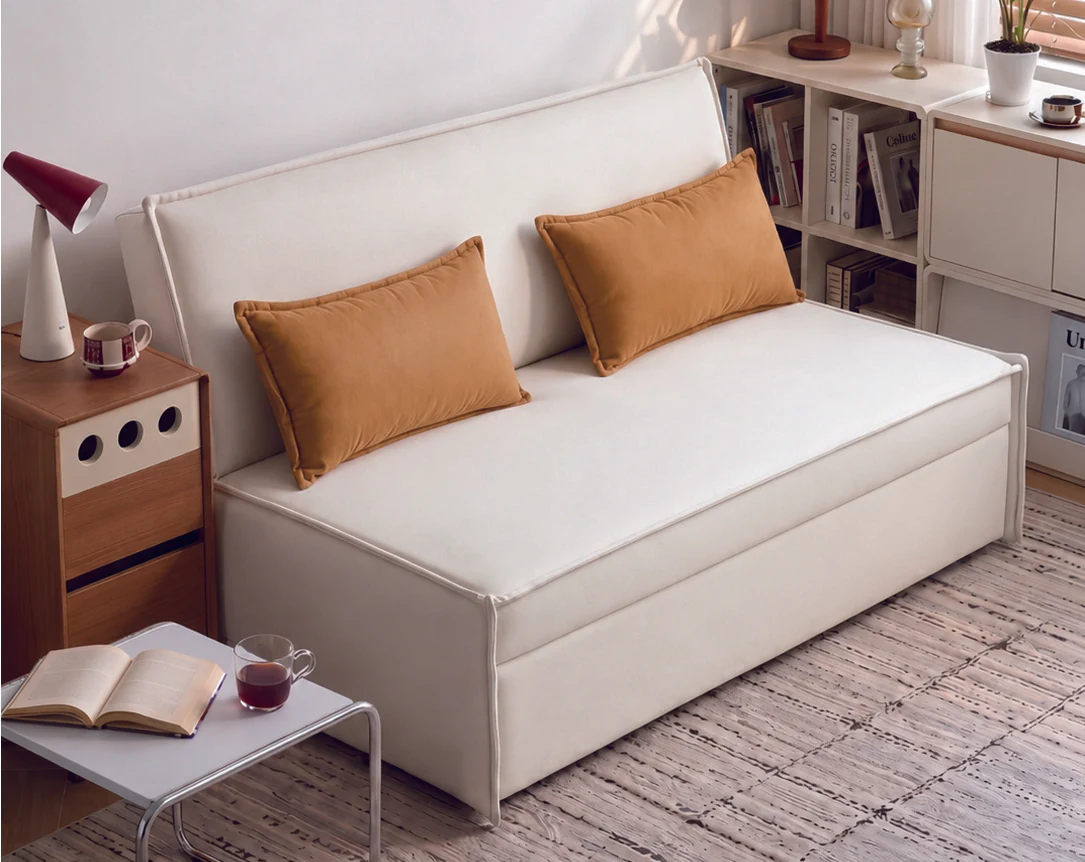
Compare these references alongside the guide. Confirm the selected configuration before ordering.

Preparing an OEM Product Specification Sheet
The specification sheet is the common reference for buyer, factory, sample reviewer and inspector. Give it a product code, revision number, date, owner and approval signatures. Attach dimensioned drawings or measured photos of sofa and bed modes, a material and component schedule, color standards, label artwork, packing plan and acceptance criteria. Identify dimensions as nominal with agreed tolerances rather than assuming every hand-built upholstered surface will be mathematically exact.
| Specification section | Minimum useful detail | Approval evidence |
|---|---|---|
| Identity | Buyer SKU, factory reference, revision, target market | Signed SKU register |
| Form and function | Closed/open dimensions, sleeping surface, mechanism sequence | Drawings and operating sample |
| Materials | Fabric and color codes, foam build, frame, mattress if present | Swatches, component schedule |
| Appearance | Seams, piping, cushion layout, visible hardware | Marked sample photos |
| Brand and documents | Label copy, placement, carton marks, instructions | Final artwork proofs |
| Quality | Inspection points, tolerances, defect rules, tests requested | Written acceptance plan |
| Logistics | Carton count, dimensions, protection, destination | Pack-out sample and carton record |
Leave a field for unresolved items and a date for resolution. “To be confirmed” is safer than a guessed specification, provided it is resolved before purchase-order or sample approval. The product reference catalog can supply a starting model code, but the OEM sheet must record the buyer’s actual approved version.
Prototype Development and Sample Approval
Approve a sofa bed in both modes. Inspect upholstery appearance when closed, user access and clearances during conversion, stability and comfort when open, return to sofa mode, and how parts are packed. Verify dimensions, color and label placement against the same revision of the specification. Take photographs from repeatable angles and keep a written correction log.
A change after sample approval should be assessed for impact. A fabric substitution may alter the cover fit; a mattress change may affect folding and carton height; a revised arm can alter open clearance. Some changes can be checked by swatch or component proof, while structural or operating changes may need a new full sample. The decision should be recorded by the buyer and factory rather than left to a verbal “similar enough.” The sample approval page provides a wider process outline.
Bulk Production Consistency
Bulk production should be compared with the approved sample and frozen specification, not with an early concept rendering. Material arrivals, cutting patterns, mechanism parts and assembly instructions need the same identification. A first production unit or preproduction review can reveal issues before a full run. Decide in advance who approves deviations and what evidence must be supplied.
Use a versioned bill of materials and maintain retained swatches. Inspection should cover function and visible quality: opening and closing, support, dimensions, upholstery alignment, seams, cushion fit, damage, labels, accessories and packaging. The sofa bed quality inspection checklist offers physical checkpoints, but the OEM specification determines the pass criteria for this exact product. A photograph of one good item is not evidence that every unit conforms.
Quality Control and Change Management
Changes are inevitable over a product’s life. A component supplier may update hardware, a textile may be discontinued or the buyer may ask for another size. Treat each as a proposed change with reason, affected SKUs, compatibility, sample or test need, commercial effect and approval date. Maintain previous revision records so a returned unit can be traced to its original build.
If a supplier suggests an alternative mechanism or foam, request the actual specification and evaluate the effect on function, comfort, labeling and spare parts. Do not allow a purchasing substitution to become an undocumented production change. Keep customer-facing descriptions in sync; a retailer should not advertise an old mattress thickness after the approved build has changed. This discipline protects both the brand and manufacturer from disputes based on different versions of “the same” product.
Repeat Orders and Replacement Components
A repeat order should name the prior purchase order, approved sample version, material codes and any accepted deviations. Ask whether the same fabric and mechanism remain available. Replacement components may include legs, hardware, cushions, mattress elements or mechanism parts, depending on design. Their availability and interchangeability must be confirmed for the exact SKU and production revision.
Plan a service record before launch. Record how to identify a component from a customer photo or serial/batch reference, and who will decide if it can be replaced safely. A brand that changes the product without updating instructions or part records can create avoidable post-sale costs. These questions matter even when the initial program is modest; repeat purchasing is part of the product design decision.
Common OEM Sourcing Mistakes
Common mistakes include sending only a lifestyle image, using “custom” to mean unlimited structural changes, approving fabric without checking its behavior during conversion, and issuing label artwork before the product details are frozen. Another is equating a verbal sample signoff with a controlled approval record. Buyers also assume that a supplier’s generic test claim applies to their exact material and size.
The remedy is a narrower, reviewable brief. Select an existing model where possible; separate cosmetic, dimensional and structural changes; ask for feasibility and documentary evidence; and approve the operating sample with a revision number. A realistic scope usually moves faster than a vague promise of total flexibility. A private label program succeeds when each delivered unit can be connected to the same written product identity.
OEM Sofa Bed RFQ Checklist
- Brand SKU and a verified HUAXUAN product reference or dimensioned design.
- Intended market, channel and applicable buyer requirements.
- Quantity by model, size, fabric and color, plus forecast for repeats.
- Closed and open measurements, sleeping surface and use frequency.
- Mechanism version, frame, foam, fabric and mattress requirements.
- Requested change list classified as appearance, dimensions or structure.
- Approved label text, artwork, placements and carton mark requirements.
- Assembly, care and user-instruction responsibilities.
- Sample approval criteria, tests or documents to be verified, and decision owner.
- Packaging, destination, delivery term and replacement-part questions.
FAQ
Can an existing sofa bed become a private label product?
Potentially, under agreed commercial and trademark terms. The selected model still needs confirmed materials, labels, packaging and sample approval. Branding a carton does not by itself grant design exclusivity or prove regulatory conformity.
What changes usually require a new sofa bed prototype?
Changes to frame geometry, sleeping platform, mechanism, arm structure or size outside documented options often justify a new operating sample. Even fabric changes may need a sample when thickness or stretch affects folding and seams. The factory should assess the exact proposal.
Is OEM the same as ODM?
No. OEM generally follows a buyer-defined specification; ODM starts from a supplier-developed design under agreed use rights. Existing-model customization may fit either commercial arrangement depending on ownership and contract terms. Define the actual scope in writing.
Why must the approved sample control bulk production?
It gives the parties a physical reference for function, appearance and fit, linked to a written revision. Without it, a concept photo and a general specification can be interpreted differently. The sample does not replace batch inspection.
Can a brand use its own fabric and printed carton?
It may be possible, subject to material suitability, procurement, artwork, order quantity and factory review. Confirm responsibility for supply, cutting loss, defects, label accuracy and leftover material before ordering.
What information should an OEM sofa bed buyer send first?
Send the selected model or drawings, intended market, dimensions in both modes, quantity per variant, fabric direction, mechanism needs, brand and packaging requirements, and sample approval criteria. Identify unknowns explicitly so they can be resolved before quotation.
Discuss Your OEM Sofa Bed Requirements
Review sofa bed manufacturing options and relevant references such as HX-SFB-010, HX-SFB-007, and HX-SFB-008. Then submit an OEM sofa bed brief with model or reference photos, quantity by SKU, closed and open dimensions, upholstery, target market, destination and label needs. HUAXUAN can review feasibility and the sample path against the selected construction.
Need Pricing for a Sofa Bed Model?
Send the model code, quantity, required size, upholstery and destination. We can review the selected reference before quotation.