
This sofa cushion filling guide helps B2B buyers specify comfort more accurately than asking for a comfortable seat or high-density foam. Cushion feel comes from the foam type, density, firmness, layer thickness, fiber or feather wrap, cover tension and seat support below it. Density describes mass per volume; it does not by itself determine softness, quality or suitability for every project. For hotels, apartments, offices and commercial lounges, define the intended sitting feel, usage frequency, appearance and maintenance level, then approve a physical sample and record its complete construction before bulk production.
Why sofa cushion filling matters
Cushion filling controls the first impression, sustained support, recovery after sitting and the way a sofa looks between users. A soft showroom sample may feel inviting for five minutes but need frequent reshaping in a busy lobby. A very firm seat may hold a crisp profile yet feel unsuitable in a guest room intended for longer relaxation. The buyer’s task is to connect comfort, appearance and maintenance to one documented seat cushion construction rather than select a material label in isolation.
Filling also interacts with the frame and suspension. The sofa frame and foam guide explains that the same cushion can feel different on webbing, springs or another support platform. Cover tension, seam placement and cushion width change perceived firmness as well. For meaningful quotations, suppliers need a target feel plus enough structural information to explain how they plan to achieve it.

Sofa cushion filling guide: common filling types
Polyurethane foam is widely used because its formulation, density, firmness and shape can be varied. The phrase standard foam is not a technical grade; buyers should ask for the proposed type and its role in the cushion. High-resilience foam is selected where recovery and supportive response are important, but the term still needs supporting data. A high density foam sofa is not automatically firm, and a high-density value alone does not prove that the full cushion will suit a particular commercial use.
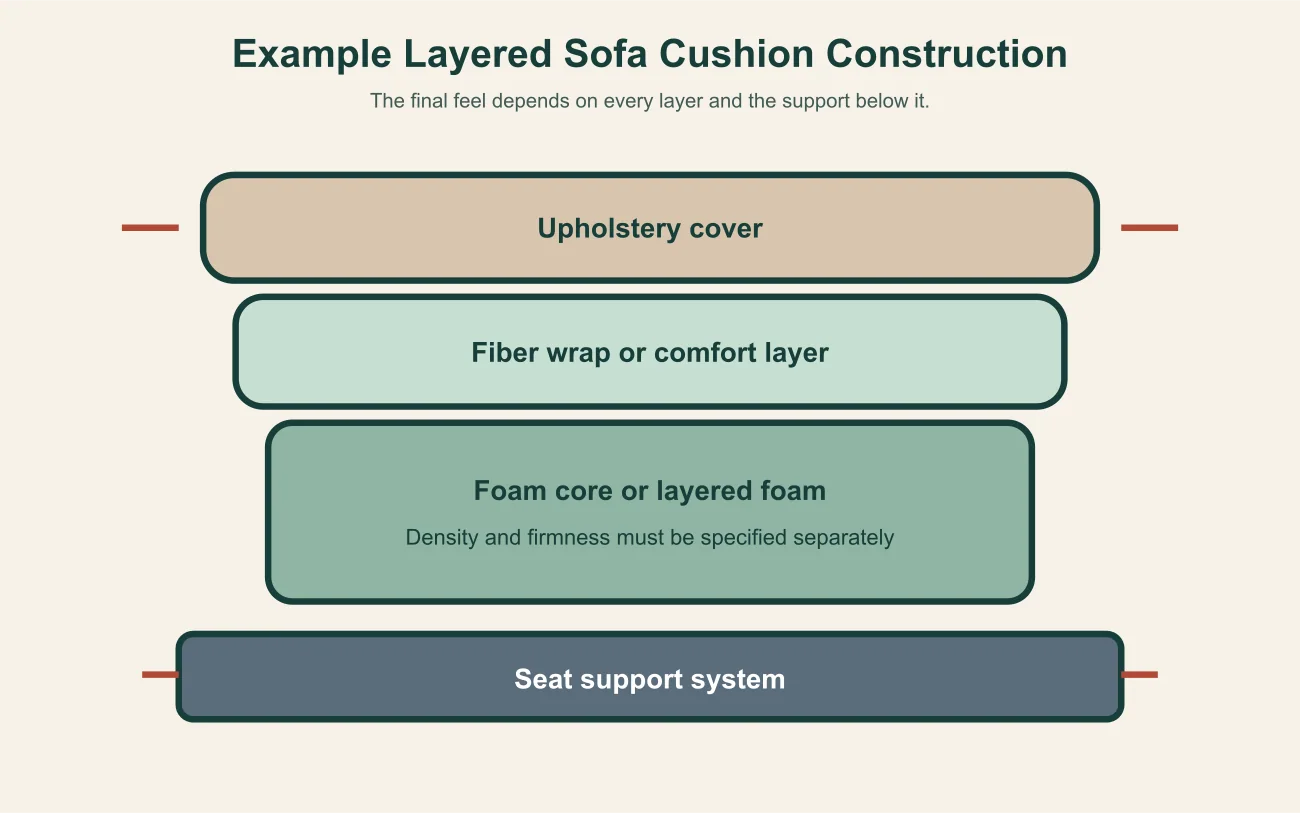
Foam and fiber sofa cushions place a softer wrap around a supportive core. Feather sofa cushions or down sofa cushions create a more relaxed, enveloping feel, normally with higher reshaping and containment needs. Layered construction combines materials or foam characteristics so the top surface, center support and edge can behave differently. The best foam for sofa cushions is therefore the construction that matches the approved brief, not one density number advertised for every sofa.
| Cushion Filling Type | Comfort Feel | Appearance | Maintenance Level | Best Application | B2B Buying Notes |
|---|---|---|---|---|---|
| Standard foam | Can be specified from firm to soft | Clean, controlled profile | Low to moderate | Guest rooms, apartments and value-led projects | State type, density, firmness and thickness |
| High-resilience foam | Responsive support with faster recovery | Usually maintains a defined outline | Low to moderate | Frequently used commercial and hospitality seating | Do not treat the name as a complete specification |
| Foam with fiber wrap | Supportive core with a softer surface | Fuller edges and softer transitions | Moderate | Hotel rooms, apartments and lounges | Confirm wrap material, weight, coverage and quilting |
| Feather or down blend | Plush and conforming | Relaxed surface with natural movement | High | Premium residential-style suites and managed lounges | Clarify blend, containment and reshaping expectations |
| Layered foam construction | Tunably firm, medium or soft | Controlled or softly crowned depending on layers | Low to moderate | Custom commercial sofa cushion filling | Approve every layer and the support system below |
Polyurethane foam
Specify the proposed foam by layer, thickness, density and firmness where available. Ask whether the value applies to the entire seat or only the core, and review the support below it.
High-resilience foam
High-resilience foam is often considered where repeated sitting and recovery matter. Confirm the supplier’s actual material definition and sample behavior rather than relying on the abbreviated name alone.
Foam and fiber wrap
A fiber wrap softens the first contact and can create a fuller crown. Record the wrap coverage and quilting because loose material can migrate or change the finished outline.
Feather or down blend
Blended fills can provide a premium relaxed feel. Buyers must define the blend, containment channels, care expectation and whether the project team accepts natural creasing and regular reshaping.
Layered cushion construction
Layered foam can balance surface comfort and lower support. The drawing should identify the order and thickness of every layer so the sample construction can be repeated.
Sofa foam density vs firmness
Sofa foam density describes how much the foam weighs per unit of volume. Firmness describes resistance to compression under defined conditions. They are related to formulation but are not interchangeable: two foams with similar density can feel different, and a softer or firmer formulation can exist within a density range. Buyers should record units because kilograms per cubic meter and pounds per cubic foot are not visually comparable numbers. Never assume a larger density value alone establishes comfort, durability or quality.
Ask for density and firmness separately when the supplier can provide them, then place each value beside the layer it describes. A thin soft topper over a firmer core will not feel like a single homogeneous block. Cover tension and cushion size also affect compression. If the project brief does not prescribe technical values, approve a physical comfort sample and require the supplier to retain the documented construction behind it. Do not invent a universal sofa foam density threshold for all hotels, apartments or offices.
Firm vs medium vs soft sofa cushions
Firm vs soft sofa cushions should be discussed as target experiences. Firm seating offers stronger initial resistance, a stable edge and easier posture changes, which can suit short-wait or formal reception areas. Medium comfort balances surface give and support for broader mixed use. Soft cushions allow more sink and contouring, creating a residential lounge impression but potentially showing more wrinkles and requiring more care. These words are subjective unless linked to a sample, reference scale or test information.
Run a structured sample review. Ask the same reviewers to sit in the center and near an edge, remain seated long enough to feel sustained support, then observe recovery after standing. Record comments about initial softness, bottoming sensation, front-edge stability, lumbar relationship and appearance after use. If target markets have different comfort expectations, do not force one verbal label across the program. Consider separate approved constructions or a clearly documented range.
Fixed sofa cushions vs loose sofa cushions
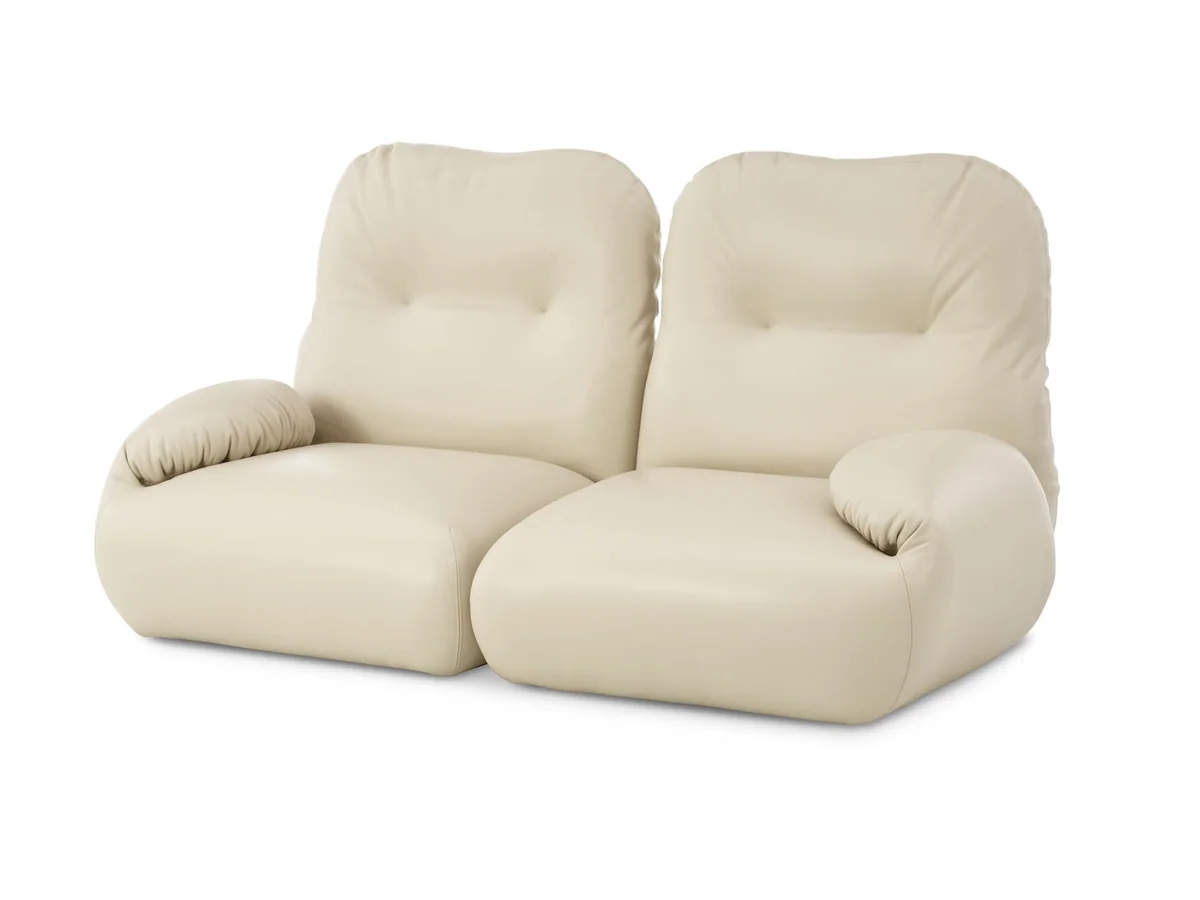
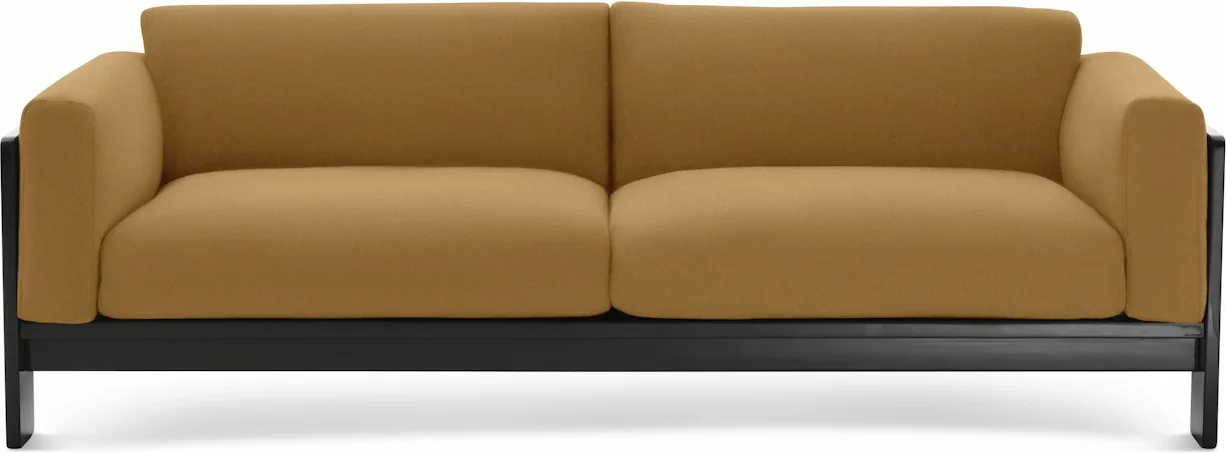
Fixed sofa cushions stay attached or are built into the upholstery, supporting an orderly appearance and reducing the risk of misplaced components. They can be harder to remove for service, and their seams or deck areas require careful cleaning access. Loose sofa cushions can be lifted, rotated or replaced depending on the design, and removable covers may support maintenance. However, loose seats and backs can shift, gap or require regular reshaping in public areas.
The buying choice should include the attachment detail, not only the label. A cushion may look loose but use hook-and-loop, a zip, hidden ties or another locating method. Confirm whether the cushion can be reversed, whether the cover is truly removable, and how seat positions are labeled. For fixed cushions, ask how access and replacement would be handled. For loose cushions, define finished quantity, orientation and acceptable gaps so the installed sofa keeps a consistent appearance.
Cushion filling by project type
Commercial sofa cushion filling should reflect sitting time, user turnover, appearance expectations and the team’s willingness to reshape cushions. The application notes below are starting points, not fixed formulas.
Hotel lobby
Hotel sofa cushion foam usually needs a defined recovery and an appearance that can be reset efficiently. Upright lobby zones may favor stable medium-to-firm support; relaxed social zones can use softer or wrapped constructions where the operations team accepts additional care.
Hotel guest room
Guest-room sofas support reading, conversation and occasional longer sitting. A foam core with a comfort layer can balance shape and softness. Coordinate the cushion with seat depth so added sink does not make the usable depth unexpectedly long.
Apartment
Apartment projects often need residential comfort with repeatable unit-to-unit appearance. Foam and fiber wraps or layered construction can work, provided the approved sample, cover pattern and cushion dimensions are documented across every room type.
Office reception
Office reception seating usually benefits from a stable edge, predictable upright support and fast visual recovery. Avoid specifying an extremely soft cushion solely because it felt luxurious in a residential reference image.
Commercial lounge
A commercial lounge can support deeper, softer comfort, but high turnover still requires a realistic maintenance plan. Match the cushion to sitting duration, tables, devices and the desired level of informal posture.
Showroom
Showroom furniture must represent the production specification, not an unrecorded special sample. Label the cushion version and retain the construction sheet so sales feedback and future orders refer to the same feel.
How cushion construction affects appearance
A single foam block with a fitted cover typically creates straighter faces and sharper edges. Fiber wrap rounds the crown and softens transitions. Down or feather blends show natural movement and can form relaxed creases. Layering can create a controlled top crown while keeping lower support. Cushion width matters too: one long bench cushion reads differently from divided seats and may respond differently near the center. Piping, topstitching and seam allowance influence how precisely the cover follows the filling.
Coordinate cushion construction with the upholstery selected through the hotel sofa fabric selection guide. A thick, textured textile may visually soften edges, while a less forgiving upholstery can make uneven fill or seam tension more visible. Review fabric direction, stretch, backing and the approved color under project lighting. The supplier should not change filling or cover dimensions independently because both define the final silhouette.
How buyers can reduce cushion deformation
Begin by matching construction to actual use rather than expecting any filling to remain visually untouched. Sofa cushion support comes from both the cushion and the platform below it, so specify adequate support, correct dimensions, suitable edge construction and a cover that does not force the fill into an unintended shape. For loose cushions, confirm whether rotation is permitted and provide the operations team with the approved orientation. For wrapped or blended fills, discuss reshaping frequency and containment compartments before selection.
During sample review, inspect the cushion after repeated normal sitting, not after artificial abuse or only when newly dressed. Look for uneven crown, persistent compression, cover twisting, edge collapse and movement away from the back. If a concern appears, identify whether it comes from the core, wrap, support or cover. Changing one element at a time produces a clearer correction than adding an undefined amount of foam. No supplier should promise that every soft cushion will remain crease-free or never change shape.
Sample approval and bulk consistency
The approved sample should have a dated construction sheet. Record foam type, density and firmness by layer where specified; layer thicknesses; wrap material and coverage; seat support; cushion dimensions; cover code; and fixed or loose attachment. Photograph the seat before sitting, during review and after recovery. Name the people authorized to approve comfort, because design, purchasing and operations may focus on different issues.
For bulk consistency, define reasonable inspection points rather than demanding an impossible perfectly identical subjective feel. Compare dimensions, material codes, cushion weight where meaningful, finished profile and sample-based sitting response. Keep an approved reference through the sample approval workflow and assess units in a similar environment. If the supplier proposes a material substitution, require written review before it enters production; a similar color or density number does not prove equivalent behavior.
| Cushion Detail | Why It Matters | What Buyers Should Confirm |
|---|---|---|
| Foam type | Changes resilience, recovery and feel | Material description and location in the cushion |
| Foam density | Describes mass per volume | Units, tolerance and which layer the value applies to |
| Foam firmness | Controls resistance under load | Test method or approved comparative feel |
| Fiber wrapping | Softens the surface and rounds edges | Material, weight, coverage and attachment |
| Cushion thickness | Affects comfort, seat height and appearance | Core and finished thickness on the drawing |
| Seat support | Works with filling to control deflection | Webbing, spring or other support construction |
| Fixed or loose cushion | Changes housekeeping and visual consistency | Attachment, access and replacement approach |
| Removable cover | Affects serviceability and seam design | Closure, labeling and approved removal method |
| Usage frequency | Guides the resilience and maintenance brief | Expected users, duration and turnover |
| Sample approval | Creates the physical comfort benchmark | Reviewer, date, version and signed specification |
| Bulk consistency | Reduces variation across installed units | Tolerance, inspection method and approved reference |
Common purchasing mistakes
Common mistakes include specifying only high density foam, assuming density equals firmness, selecting an extra-soft seat for every application, and ignoring the support system. Buyers also approve a showroom feel without recording construction, request removable covers without checking zipper access, or compare suppliers that quoted different cushion layers. Another error is treating feather or down blend as automatically superior even when the project cannot support regular reshaping.
Avoid vague corrections such as add more foam or make it softer. Instead, identify the observed issue and ask which layer or support detail the supplier recommends changing. Review the revised sample with the same method. Quotations should state exclusions and deviations. If one supplier offers a fiber wrap and another quotes unwrapped foam, the prices are not directly comparable even when both descriptions say medium comfort.
B2B buyer checklist for sofa cushion filling
Use the checklist to separate required construction from open recommendations. Attach a side view, upholstery reference and room application, then ask each supplier to identify assumptions so comfort and price comparisons use the same scope.
- Project type
- Expected usage frequency
- Target sitting feel
- Firm / medium / soft preference
- Foam type
- Foam density requirement if specified
- Cushion thickness
- Fiber wrap requirement
- Feather or down option
- Fixed or loose cushions
- Removable cover requirement
- Seat support system
- Upholstery material
- Sample approval
- Quantity
- Target market
- Reference photos
HUAXUAN project support for cushion specifications
HUAXUAN is a B2B furniture website focused on sofas, sofa beds, beds, chairs and project furniture. Buyers can send reference photos, floor plans, dimensions, material preferences and quantities for project discussion and quotation. Buyers can use HUAXUAN B2B sofa references to discuss a style, then describe the required cushion feel, support, upholstery and application separately. HUAXUAN Furniture should be evaluated against the same documented sample and construction brief used for other shortlisted suppliers.
Send project type, expected use, target feel, cushion details, material preference and quantity through the project sofa quotation form. The sofa product reference library can help clarify shape, but reference photos do not reveal filling. Ask for a drawing and sample review before bulk approval, and record any custom change to cushion thickness, seat height or cover construction.
FAQ
What is the best filling for commercial sofa cushions?
There is no universal best filling. Select the foam, wrap or blend from usage frequency, sitting time, target feel, appearance and maintenance, then confirm it with a documented sample.
Does higher sofa foam density mean a firmer cushion?
No. Density measures mass per volume, while firmness measures resistance to compression. Construction, thickness, wrapping, cover tension and seat support also change the finished feel.
Are feather or down sofa cushions suitable for hotels?
They can suit selected premium or managed spaces when the desired relaxed look and reshaping needs are acceptable. Confirm blend, containment, care and sample appearance before selection.
Should a commercial sofa use fixed or loose cushions?
Fixed cushions support an orderly layout, while loose cushions offer service and comfort flexibility. Choose from the actual maintenance plan, attachment method and required appearance.
What should be approved before bulk cushion production?
Approve the complete filling layers, density and firmness where specified, thickness, wrap, support, attachment, cover, physical sitting feel, recovery appearance and recorded sample version.