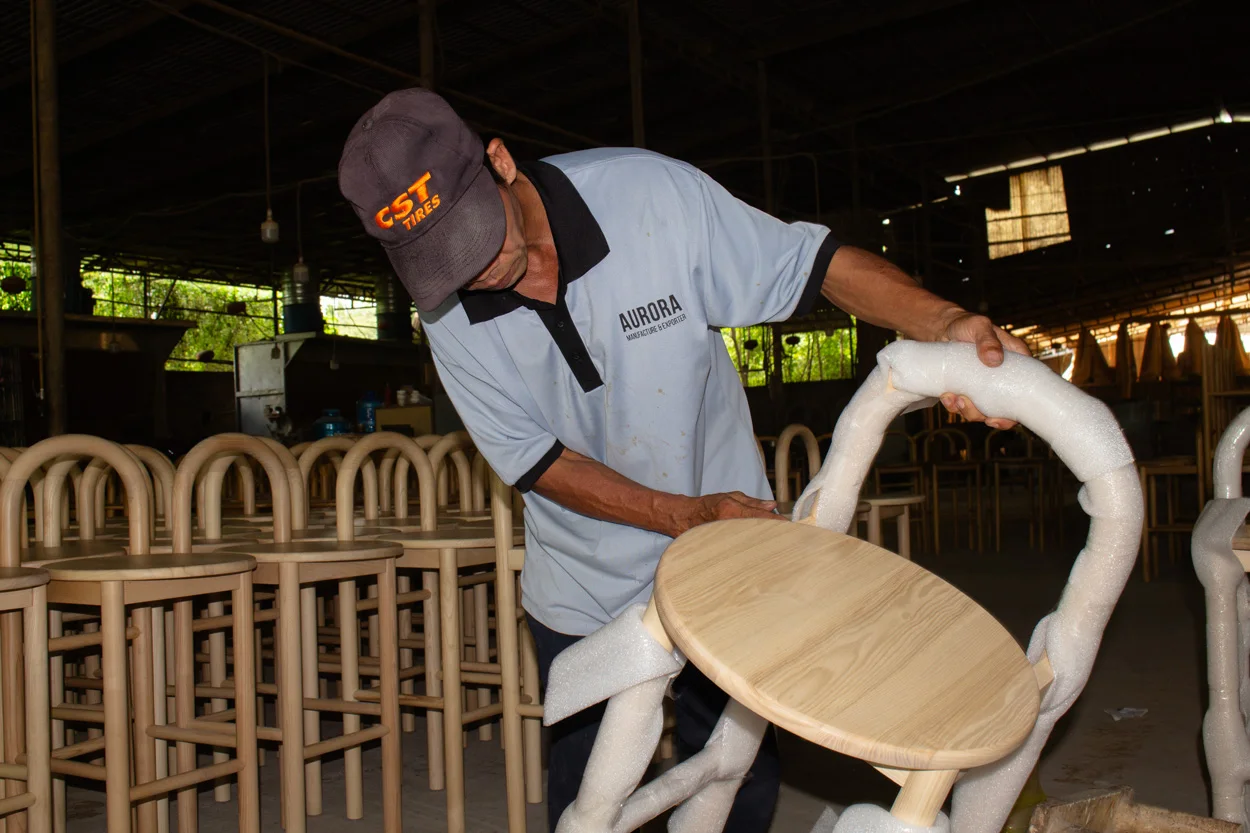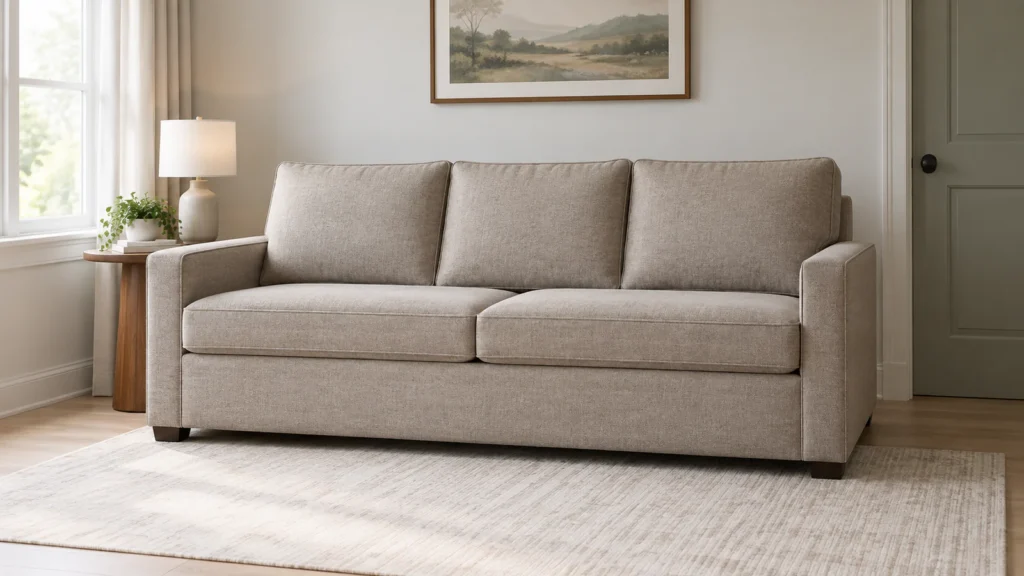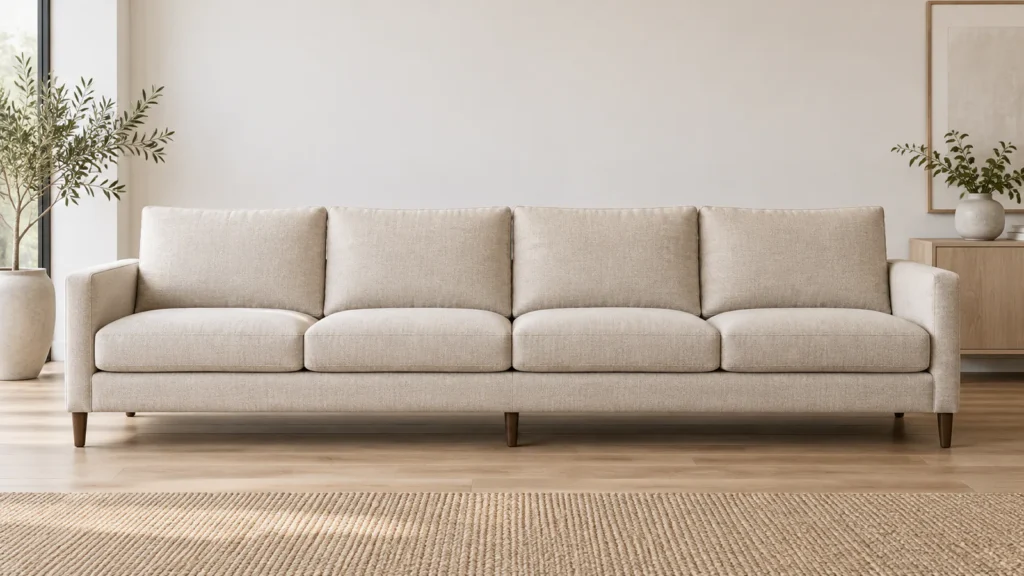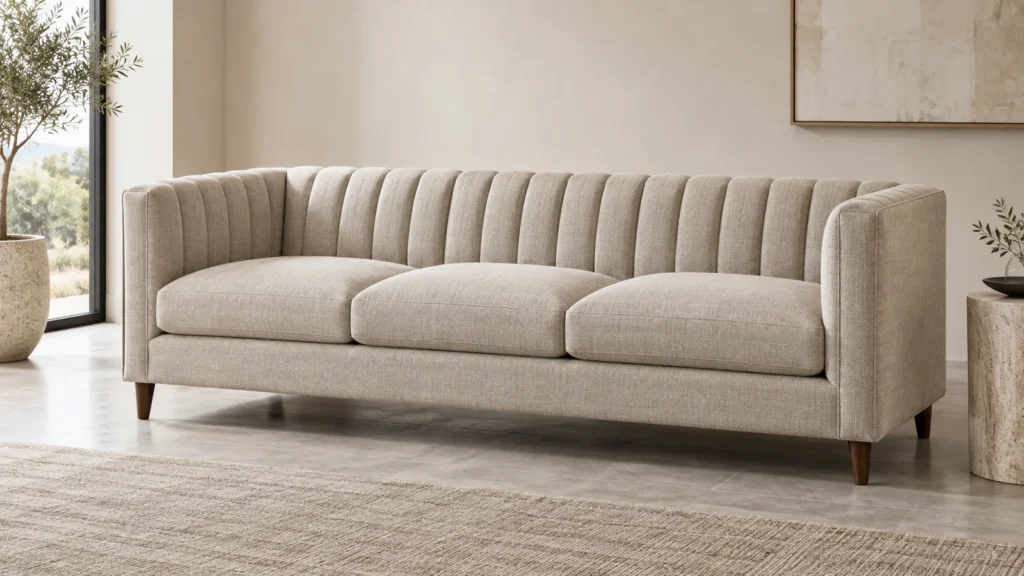

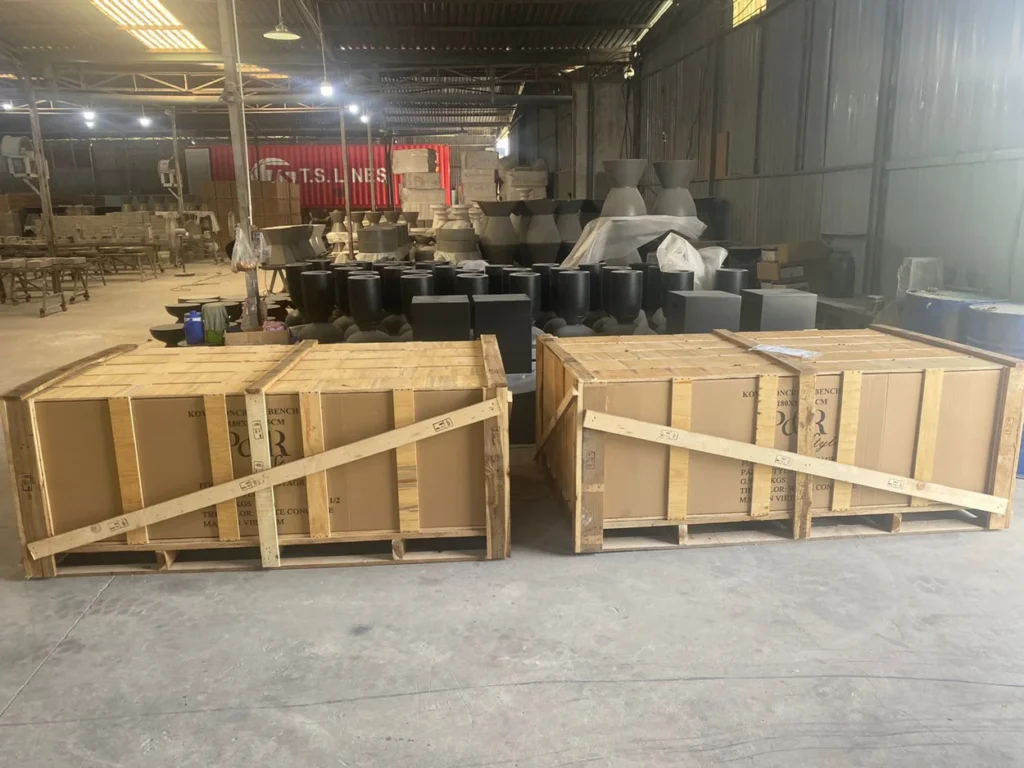
Furniture export packing protects sofas, sofa beds, beds, chairs and project furniture during handling, warehouse movement, container loading and international shipment. A good packing plan confirms inner protection, corner protection, cartons, labels, KD or assembled structure, carton size, gross weight and room marks before shipment.
Send your packing list, destination market and quantity to get export packing and container loading suggestions.
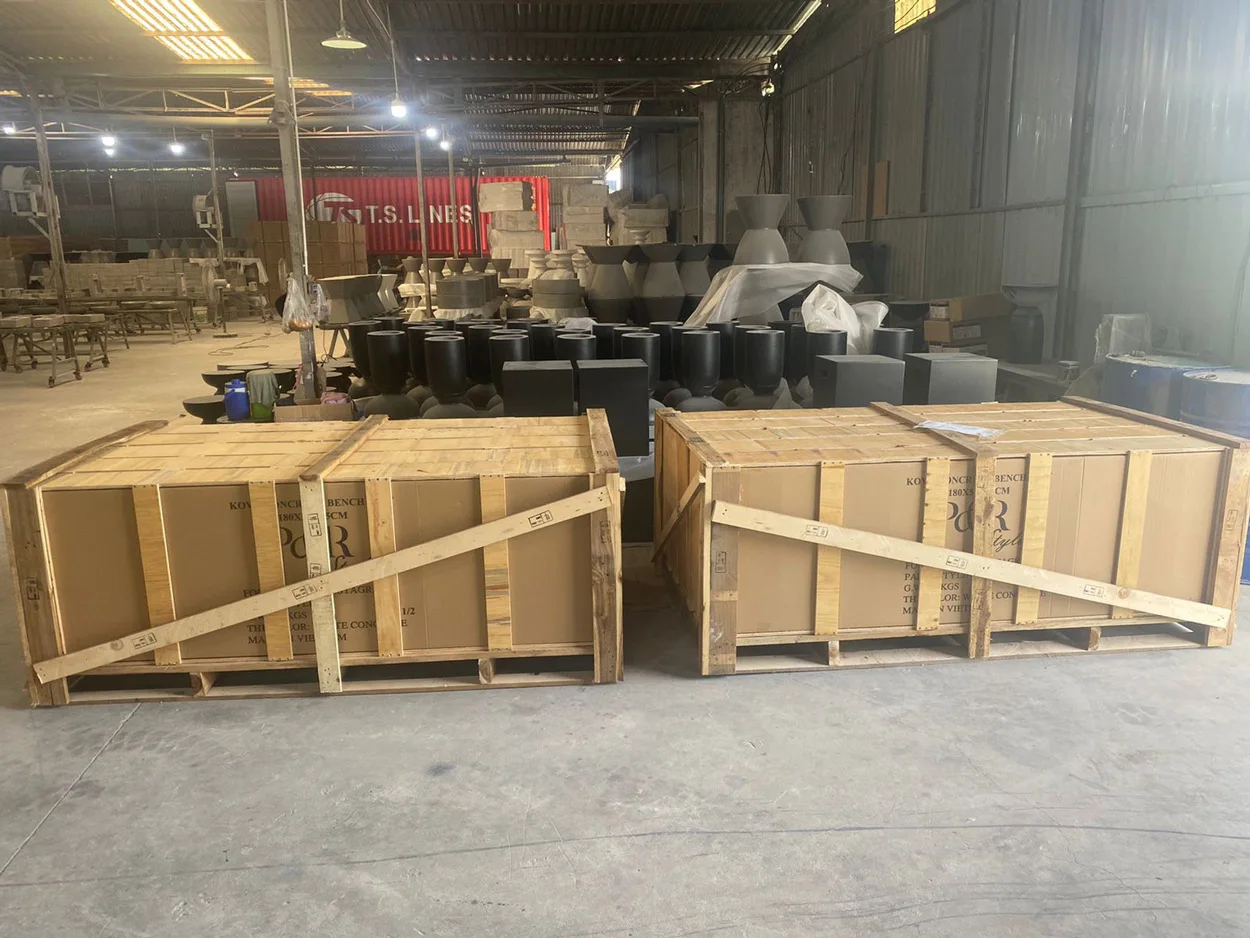
Why Furniture Export Packing Affects Damage Rate and Project Cost
Export damage does not only cost replacement parts. It can delay hotel openings, apartment handovers, restaurant rollouts and wholesale deliveries. A damaged sofa corner, crushed carton, missing leg pack or unclear room label can create expensive site work even when the product itself was manufactured correctly.
For B2B buyers, packing should be discussed before final quotation. Carton strength, protection layers, KD structure and loading quantity all affect price. A low unit price with weak packing can become expensive after claims, rework and missed installation schedules.
Standard Packing Layers for Upholstered Furniture
| Packing layer | Material | Purpose | Common application | Buyer should confirm |
|---|---|---|---|---|
| Inner protection | Poly bag, non-woven bag, foam sheet | Protect fabric from dust and rubbing | Sofas, chairs, beds, headboards | Fabric surface and moisture need |
| Corner protection | Foam corner, paper corner, edge board | Reduce impact on arms, legs and frames | Sofas, tables, bed rails | Corner material and position |
| Carton protection | Export carton, reinforced carton, honeycomb board | Protect during warehouse and container handling | Most export furniture | Carton strength and size |
| Outer labels and marks | Shipping mark, SKU label, room label | Guide warehouse and installation teams | Project orders and private label | Label format and language |
| Hardware pack | Small carton, bag, instruction sheet | Prevent missing screws, legs and connectors | KD furniture, beds, sofa legs | Where hardware is packed |
Inner Protection
Inner protection prevents dust, moisture marks and fabric abrasion. Upholstered sofas, sofa beds and headboards should not rub directly against rough carton surfaces. For light fabrics, buyers should ask whether extra fabric-facing protection is needed.
Corner Protection
Corners and legs are high-risk points. Sofa arms, bed headboard edges and chair backs can be damaged during loading if they are not protected. Corner protection should match the product shape instead of being added randomly at the end.
Carton Protection
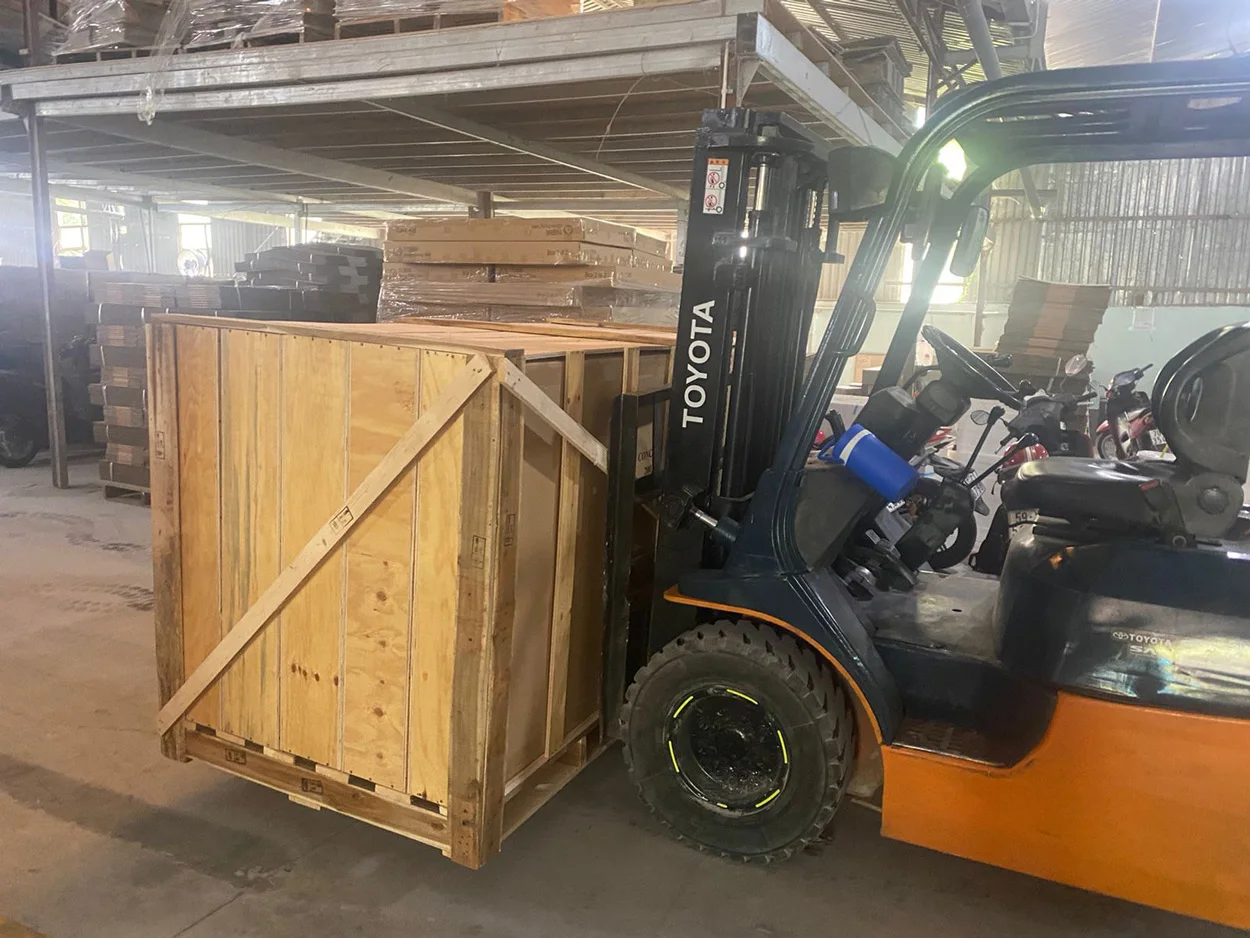
The carton is the visible export protection layer. It must fit the product and survive stacking, handling and container pressure. For long items such as bed rails or large sofa parts, check whether reinforcement is needed to prevent bending or carton collapse.
Outer Labels and Marks
Labels make the packing system usable. A good carton mark shows project name, item code, room type, quantity, carton number, gross weight, net weight, dimensions and handling direction. For hotel or apartment projects, room labels help installation teams place furniture quickly.
Packing Differences for Sofas, Sofa Beds, Beds and Chairs
| Product type | Common packing method | Risk point | Label requirement | Notes |
|---|---|---|---|---|
| Sofa | Poly bag, corner protection, export carton | Arms, legs, fabric rubbing | Model, fabric, left/right orientation | Protect loose cushions separately if needed |
| Sofa bed | Carton with mechanism protection | Moving mechanism and open parts | Model, mechanism, carton number | Secure moving parts before loading |
| Bed / headboard | KD carton or split cartons | Long panels, upholstery marks, hardware loss | Room type, size, hardware pack | Confirm mattress standard and bed size |
| Chair | Stacked or single carton | Leg scratches and backrest pressure | SKU, color, quantity per carton | Check stacking pressure and leg protection |
| Restaurant booth | Panel carton or assembled wrap | Large shapes and installation orientation | Store code, zone, left/right | Useful for chain restaurant rollout |
Sofas need fabric and corner protection. Sofa beds need special attention to mechanisms and moving parts. Beds may use KD packing to reduce volume, but hardware and labels must be controlled. Chairs may be packed individually or stacked, depending on finish and destination. Restaurant booths and banquette seating need orientation labels for installation.
Carton Marks, Room Labels and SKU Rules
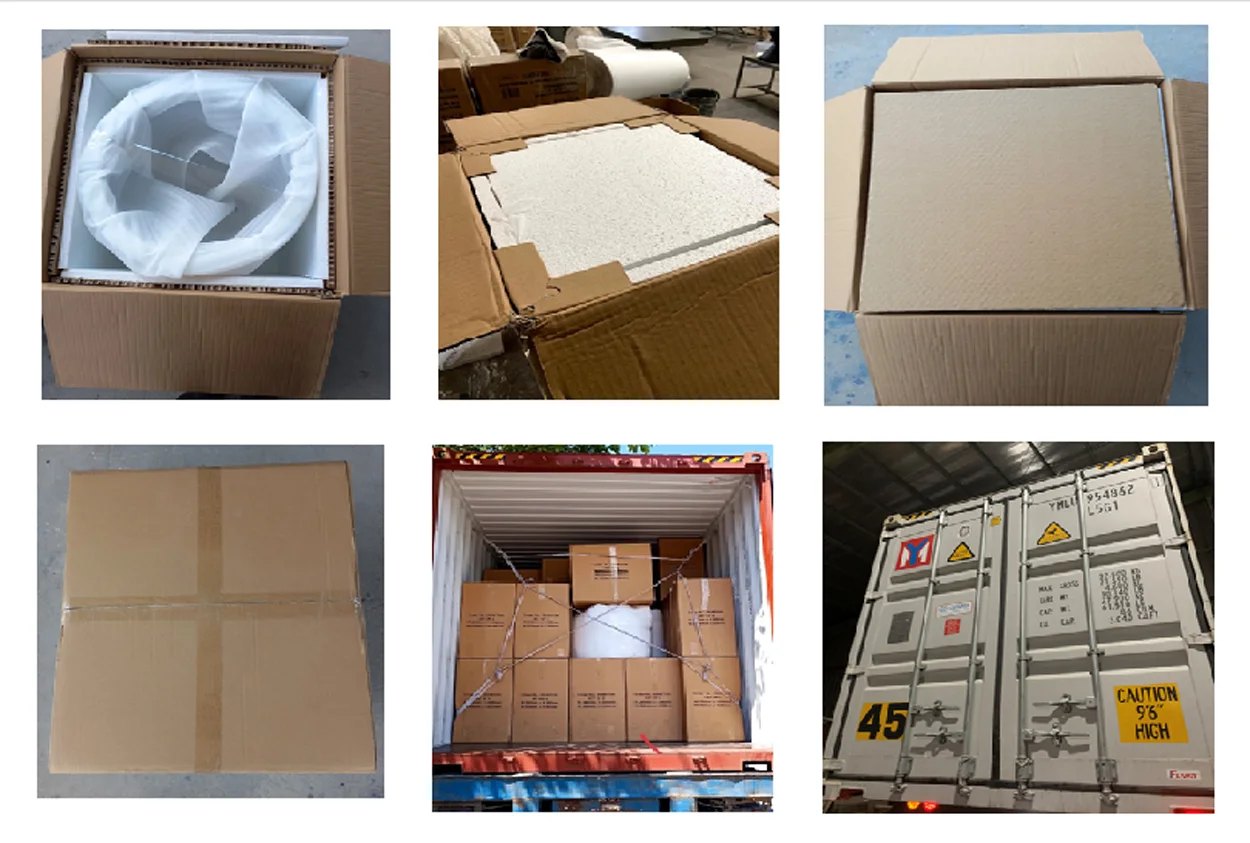
Carton marks are not decoration. They are part of the project control system. For a mixed shipment, each carton should connect to the packing list and BOQ. For hotel rooms, labels can show room type such as King Room, Twin Room, Suite or Lobby. For apartments, labels can show building, unit type or installation zone.
Private label buyers should also confirm SKU labels, barcode needs, carton artwork and language requirements. If a product is sold through a warehouse system, the label must support receiving, storage and dispatch. If it is installed on a project site, the label must support room-by-room sorting.
KD Packing vs Assembled Packing
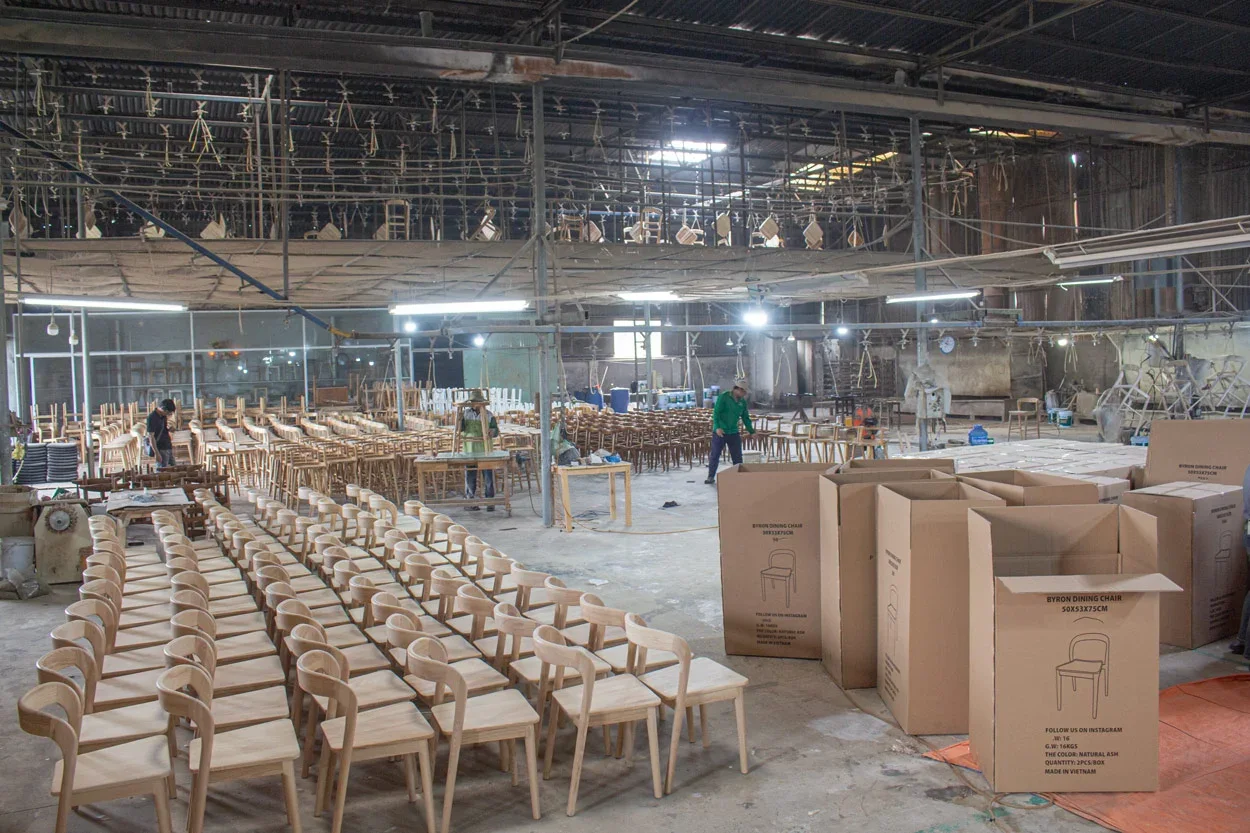
KD packing can reduce volume and improve container loading, but it requires clear hardware packs and installation instructions. Assembled packing can reduce site work but usually increases carton size and shipping volume. The right choice depends on product structure, destination labor cost, site schedule and damage risk.
For beds, KD packing is common because headboards, side rails and slats can be packed separately. For sofas, partial disassembly may include removable legs or modular sections. For chairs, the decision depends on leg structure and finish. Discuss KD or assembled packing together with export packing support, quality control checks and sample approval process.
For mixed furniture shipments, send the product list and destination so HUAXUAN can review whether KD or assembled packing is more practical.
Container Loading Tips for Project Furniture
Container loading should protect both space efficiency and product safety. Heavy cartons should not crush upholstered products. Long bed rails and panels should be supported. Sofas should be loaded to avoid fabric pressure points. Mixed furniture shipments should follow a loading plan that matches unloading sequence when possible.
Ask for carton dimensions, gross weight, net weight and loading quantity before confirming the order. For large projects, a loading photo record is useful. It helps the buyer understand how the shipment was arranged and supports claims investigation if damage occurs.
Loading order matters when the shipment will be unloaded by room, floor or store. If the first items needed on site are buried behind unrelated cartons, the project team may spend extra time sorting instead of installing. For hotel and apartment orders, ask whether cartons can be grouped by room type or delivery batch. For wholesale shipments, ask whether SKU labels are visible enough for warehouse receiving.
ISPM 15 and Wood Packaging Basics
If solid wood pallets, crates or wood packaging are used, destination markets may require ISPM 15 treatment and marks. Many upholstered furniture shipments use cartons rather than wood crates, but buyers should still confirm whether any wood packaging, pallet or frame protection is included. Requirements can vary by market, so confirm them with the forwarder before shipment.
Do not assume that every shipment needs a wood crate. Crates can add protection for special items, but they also add cost, weight and documentation requirements. For upholstered furniture, a well-designed carton with inner protection and corner support is often more practical. For fragile surfaces, stone tops or special finish panels, additional crate or pallet protection may be justified.
Destination rules should be checked early when the project uses pallets, crates or other wood materials. Even if the furniture itself is made with engineered panels or upholstered frames, the packing material may still create documentation requirements. A quick check with the forwarder can prevent last-minute repacking or customs delays.
Export Packing Checklist Before Shipment
| Checklist item | Buyer should confirm |
|---|---|
| Product type | Sofa, sofa bed, bed, chair, booth or mixed furniture |
| Quantity | By SKU, room type and delivery batch |
| Carton size | Length, width, height and loading quantity |
| Gross weight | For logistics and warehouse handling |
| Net weight | For product record and packing list |
| Room label | Room type, building, floor or installation zone |
| SKU label | Model, color, fabric and barcode if needed |
| Destination market | Country, port, warehouse or project site |
| Container type | 20GP, 40GP, 40HQ or LCL |
| KD or assembled packing | Installation responsibility and hardware pack |
For related project planning, buyers can also review sofas and couches, sofa bed programs, custom bed and headboard options, restaurant furniture, hotel furniture project support and send a BOQ for quotation. The more complete the packing list is, the easier it is to control shipment and installation.
Before the final balance payment or shipment release, ask for packing photos, carton label photos and loading photos for representative items. The goal is not to slow the shipment; it is to catch missing labels, weak cartons or obvious loading problems while they can still be corrected. A short review before container sealing is usually cheaper than a long claims process after arrival.
For project furniture, it is useful to compare the packing list against the BOQ before loading. The packing list should show item code, room label, quantity, carton count, carton size, gross weight and net weight. If the BOQ says a room needs one sofa, two chairs and one bed package, the carton labels should make that group easy to identify. This reduces sorting time and helps the buyer confirm that no room package is incomplete.
Importers combining several categories in one shipment should also use the mixed container furniture order guide to coordinate SKU-level MOQ, carton cube, priorities, loading sequence and warehouse receiving.
FAQ
What is furniture export packing?
It is the protection and labeling system used to ship furniture internationally, including inner bags, corner protection, cartons, labels, hardware packs and loading rules.
Why do sofas need special export packing?
Sofas have fabric surfaces, arms, legs and cushions that can be damaged by rubbing, pressure or impact during handling and container loading.
What is a room label?
A room label connects a carton to a room type, building, unit, floor or installation zone so project furniture can be sorted correctly on site.
Is KD packing always better?
No. KD packing saves volume but requires installation work and clear hardware control. Assembled packing may be better when site labor is limited or the structure is difficult to assemble.
What should buyers check before shipment?
Check carton size, gross weight, net weight, label rules, packing photos, loading quantity, destination requirements and whether moving parts are secured.
Send Your Packing List or BOQ for Review
Furniture export packing should be decided before shipment pressure begins. HUAXUAN can review sofa, sofa bed, bed, chair and mixed project furniture packing requirements with buyers, forwarders and project teams.
If your shipment includes multiple product types, mark which items are high risk: light fabric sofas, long bed panels, glass or stone tops, KD hardware packs, left/right oriented modules and room-specific custom items. These products deserve extra label and packing attention because one small error can slow the whole installation sequence.
A practical export packing review should finish with three records: a final packing list, a set of carton label photos and a small group of loading photos. These records help the buyer, supplier and forwarder talk about the same shipment if questions appear after arrival.
For ongoing programs, keep the approved packing method in the product file. If a sofa, bed or chair is reordered later, the supplier should not redesign the packing from scratch unless the buyer requests a change. Consistent packing helps the buyer compare damage rates between shipments and improve the specification over time.
Good packing also makes communication easier when a claim happens. If the buyer can provide carton number, product code, room label, photos of the damage and photos of the original loading, the supplier can identify whether the issue came from production, packing, loading, transport or site handling.
This is why packing should be treated as part of the product specification, not only as a warehouse task. The buyer, supplier and forwarder should all understand the approved packing rule before the shipment is arranged and loaded. It protects the schedule.
Send your packing list, BOQ, destination market, carton label rules and quantity to get export packing suggestions.