
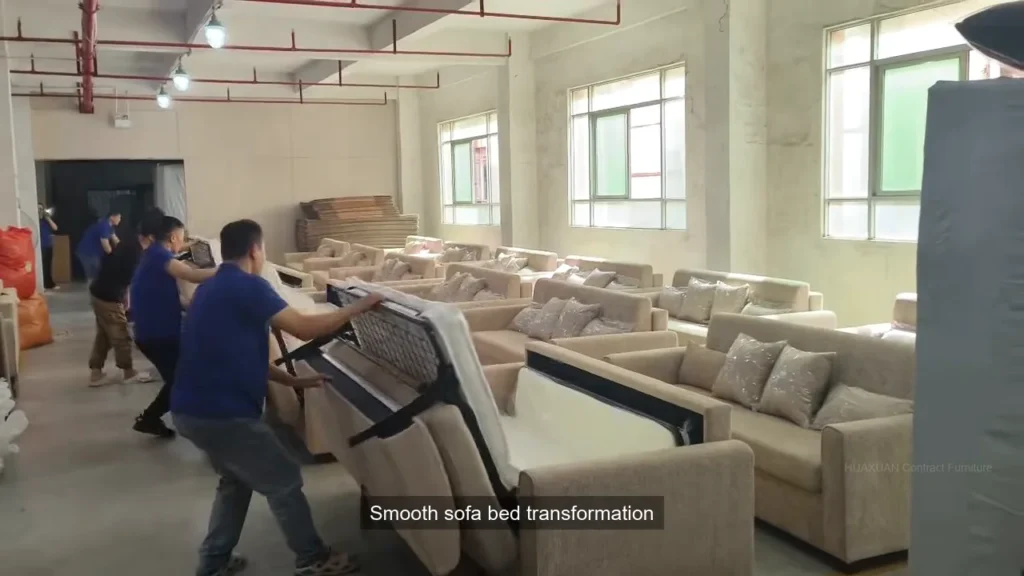
Most upholstered sofas are made through nine main stages: design and specification, frame construction, suspension or seat support, foam and cushioning, upholstery cutting, cover sewing, upholstery application, final assembly, inspection and packing. The details vary by design: a fixed sofa, modular sectional and pull-out sleeper do not share every component. Good production begins with a controlled drawing and material specification, not simply with cutting timber. Every approved stage contributes to repeatable results.
Developing a sofa for a hotel, office or apartment project? Send the drawing, quantity, upholstery direction and destination for a production review.
Step 1 — Design and Technical Specification
Before production, the team defines overall width, depth and height; seat height and depth; frame concept; support system; foam construction; upholstery; legs or base; cushions and quantity. A reference photograph may communicate appearance, but a manufacturing drawing must resolve dimensions, sections and interfaces.
B2B projects may add room plans, fabric codes, finish samples, local performance requirements, packing limits and access constraints. Revision control matters: purchasing, sample approval and production should all reference the same drawing and material schedule. A change in arm width can affect pattern pieces, carton size and room clearance.
Step 2 — Building the Sofa Frame
The frame creates the sofa’s geometry and carries its intended loads. Depending on design, it may combine timber, plywood, engineered panels and metal components. Members are cut, shaped, joined and reinforced at appropriate interfaces. Curved forms may require laminated or CNC-shaped pieces, while exposed details need a finish-ready surface.
Material names alone do not establish quality. Solid wood is not automatically best in every position, and engineered materials are not automatically inferior. Engineering, joint design, moisture control, fasteners and consistent workmanship matter. Frame checks should confirm dimensions, squareness, joint security and alignment before padding hides the structure.
Step 3 — Sofa Suspension and Seat Support
The seat may use webbing, springs, a combination system or a platform construction. The correct choice depends on sofa geometry, cushion type, comfort target and intended use. Support is attached to the frame with controlled spacing and tension so the seating surface behaves consistently.
Different support systems produce different responses and service requirements. No single system is universally superior. A thin contemporary seat, deep loose-cushion sofa and sofa bed may require different solutions. Buyers should request the selected construction in the specification and evaluate it in the prototype.
Step 4 — Adding Foam and Cushioning
Foam and filling shape the seat, back, arms and exterior body. Production may use one foam grade or several layers, plus fiber or other approved filling where applicable. Components are cut to templates, bonded or wrapped, then shaped so edges and curves match the design.
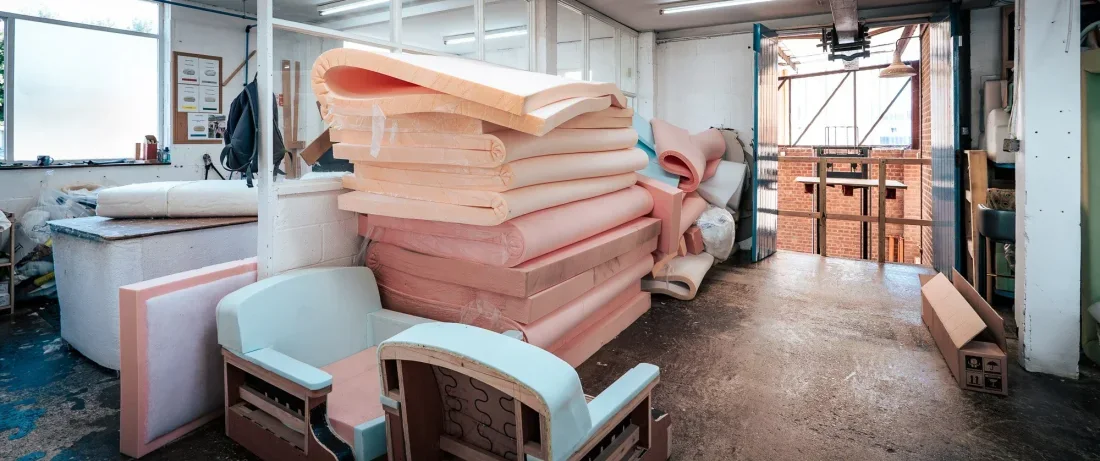
Comfort cannot be reduced to soft versus hard. Density, hardness, thickness, layering, seat angle, support and cushion dimensions interact. A high number on one foam field does not guarantee a comfortable sofa. Confirm the complete cushion build-up and test the assembled sample in the intended posture.
Step 5 — Cutting Fabric or Leather
Upholstery patterns translate the three-dimensional sofa into cut panels. The cutter considers material width, nap, grain, pattern repeat, direction and usable area. Visible panels may need centering or matching across seams. Leather hides require inspection and thoughtful nesting because their shape and natural variation differ from rolled fabric.
For multi-unit projects, cutting plans also support color and batch consistency. Record the approved material code and direction, keep related visible panels together where appropriate and identify components by model. Cutting errors can appear later as twisted seams or mismatched patterns even when sewing is accurate.
Step 6 — Sewing Sofa Covers
Cut panels are joined into covers for the body and cushions. The sewing specification may include plain seams, piping, topstitching, quilting, zippers and closing methods. Operators follow notches and reference marks so corners, curves and decorative lines meet in the correct position.
Clean sewing is both visual and functional. Check stitch direction, seam allowance, symmetry, piping continuity and zipper access. Project orders benefit from an approved control sample because a seam detail that looks minor in a sketch becomes highly visible when repeated across a lobby installation.
Step 7 — Upholstering the Sofa
During upholstery, prepared covers are fitted to the padded frame, arms, seat and back. The craftsperson controls tension, alignment, seam position and wrinkle distribution while securing the material in a planned sequence. Curves and corners require gradual adjustment; excessive tension can distort a seam or pattern.
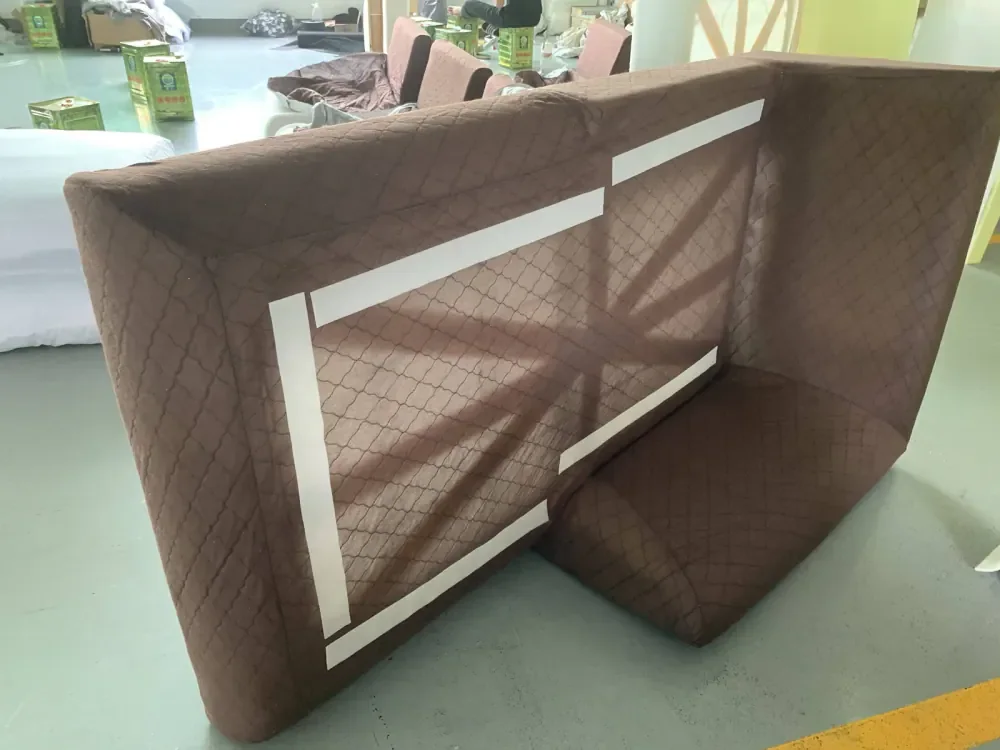
Loose cushions are filled and closed separately. Fixed upholstery must remain aligned with the frame and adjacent panels. Inspect the work from front, sides and rear, including areas that become visible in an open-plan lobby. Upholstery should not conceal a dimensional problem originating in the frame.
Step 8 — Installing Legs, Bases and Hardware
Final assembly can include timber or metal legs, plinths, glides, modular connectors, brackets and decorative hardware. Components must sit squarely and contact the floor as intended. Exposed finishes are protected while fasteners are tightened and checked.
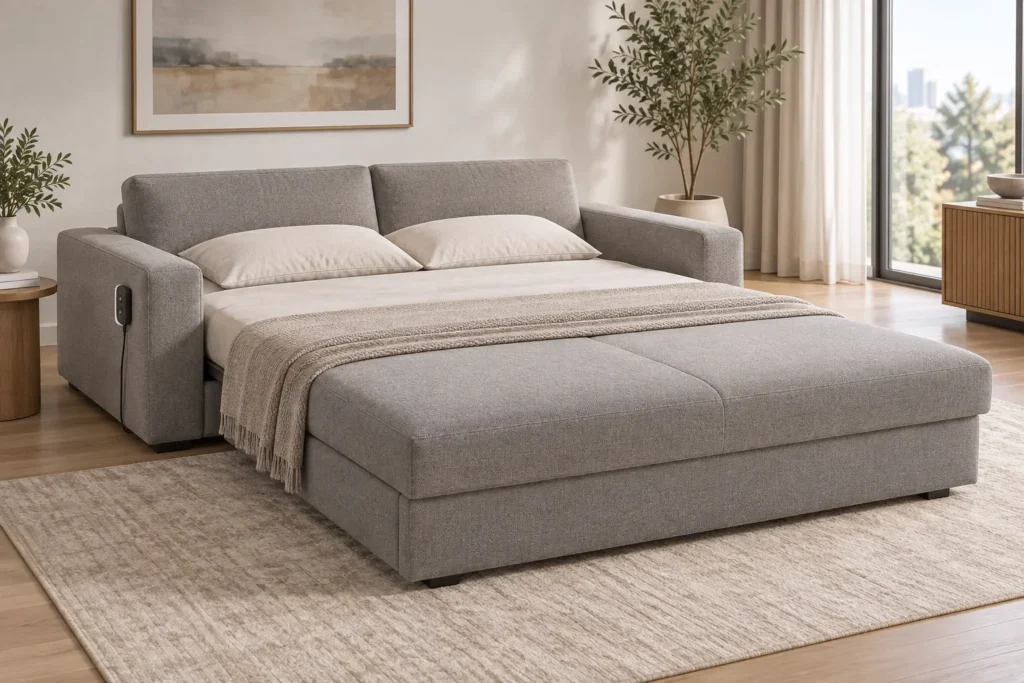
A swivel chair-like base, sectional connector or sleeper mechanism introduces its own instructions and inspection points. Hardware should match the approved specification and orientation. If legs ship detached, packing must include labelled parts and installation guidance without allowing hardware to damage upholstery.
Step 9 — Inspection and Packing
A finished sofa is inspected for dimensions, stability, visual alignment, upholstery condition, cushion fit, hardware and finished surfaces. The exact checklist should reflect the product. Identified defects are corrected before protective packaging is applied.
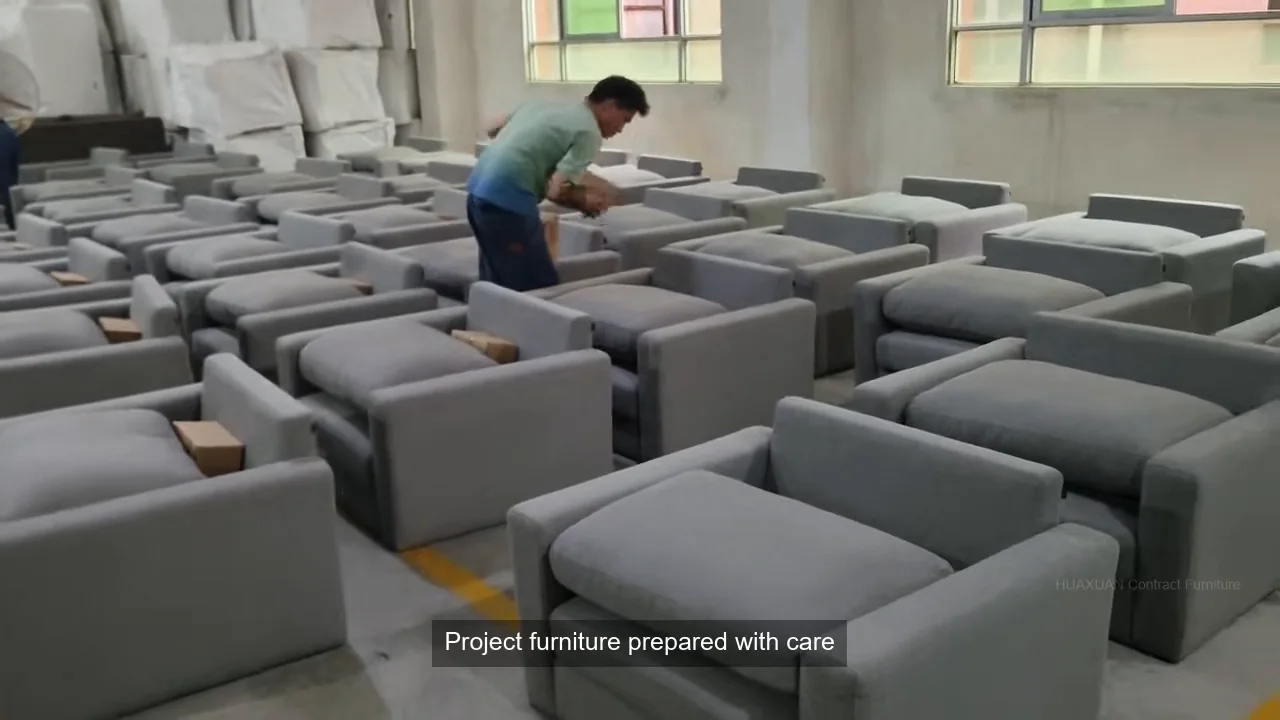
Packing may use bags, foam, corner protectors, cartons, crates or pallets according to the product and project. Mark model, room, quantity and handling information consistently. Packing is part of production quality because a well-made sofa that arrives stained, crushed or incomplete does not meet the project outcome.
How Are Modular Sofas Made Differently?
A modular sofa is divided into repeatable units such as armless seats, left- and right-arm ends, corners, chaises and ottomans. Each module needs an individual drawing and code. Seat heights, seam lines, cushion positions and base levels must align when units are assembled.
Connector placement and dimensional repetition are critical. A small variation repeated across several modules can create gaps or a wandering front line. See the modular sofa guide for configuration and buying context; manufacturing focuses on making the approved modules connect consistently.
How Are Sectional Sofas Made?
Sectionals use multiple units to create L-shaped, U-shaped or chaise layouts. Production must control orientation and identify left- or right-hand arms from a defined viewing convention. Corner modules require careful seat and back transitions, while chaise dimensions affect the final room envelope.
Build and inspect the units as a set where possible. Confirm connector alignment, leg height, upholstery direction and overall layout against the plan. Packaging labels should tell the installer where every module belongs. A sectional is not merely a long sofa cut into arbitrary pieces.
Commercial Sofa vs Residential Sofa
| Project concern | Commercial/project sofa focus | Residential retail focus |
|---|---|---|
| Specification | Controlled drawings and schedules | Often selected from standard options |
| Quantity | Repeatability across rooms or zones | Usually one or a few units |
| Upholstery | Project code, maintenance and compliance needs | Household preference |
| Replacement | Records and repeat-order planning | Individual replacement |
| Delivery | Site access, labels and phased installation | Single-home delivery |
| Approval | Prototype or mock-up may be required | Showroom or online selection |
Commercial does not simply mean heavier. A project sofa is defined by controlled requirements, repeatability, maintenance, documentation and delivery coordination. The appropriate frame and materials still depend on the selected design and use.
What Makes a Well-Made Sofa?
Look for a stable, accurately dimensioned frame; appropriate seat support; cushioning that matches the comfort brief; clean sewing; aligned upholstery; secure legs; consistent cushions and smooth finished surfaces. Quality is the relationship between design, materials and workmanship, not one isolated feature or the total weight.
Evaluate hidden construction through approved documentation and production checks, then evaluate the complete item through sitting, visual and stability review. The sofa frame and foam guide explores those material systems, while this article keeps the focus on the manufacturing sequence.
Sofa Quality Control During Production
Frame checks can occur before padding, when joints and dimensions remain visible. In-process checks may review support layout, foam shapes, cut components and sewn covers. Final inspection reviews dimensions, stability, seam alignment, wrinkles, finish, cushion fit and hardware. Packing checks confirm protection, labels, accessories and carton information.
QC should use the approved drawing and specification rather than a vague idea of quality. This article does not claim a certification, laboratory result or inspection statistic. Buyers can review HUAXUAN’s documented furniture quality-control process and state any project-specific evidence required in the order.
Prototype and Mock-Up Production
A prototype allows dimensions, comfort, upholstery, appearance and production details to be evaluated before repetition. Hotel projects may place a sample in a mock-up room to check the sofa against tables, lighting, curtains, doors and circulation. Feedback should be specific and tied to a drawing revision.
Approval does not mean every future sofa can ignore normal production variation or QC. Keep the approved sample, photographs, material board and change record as references. If the order changes after approval, identify whether another sample or targeted confirmation is necessary.
How Custom Sofas Are Produced for Hotel Projects
A typical custom project may move from drawing to material confirmation, sample or mock-up, approval, batch production, QC and packing. The exact sequence depends on scope and contract. Coordination begins earlier when upholstery, casegoods and room layouts must share finishes or installation dates.
HUAXUAN’s custom sofas for hotel and office projects page is the main commercial destination for a production enquiry. Provide enough information to evaluate feasibility instead of asking for a price from one inspirational image.
Material Approval Before Batch Production
Materials should be approved as a coordinated set, not as disconnected names in a quotation. The frame schedule, support system, foam build-up, upholstery, thread, zipper, legs, glides and hardware all belong to the product definition. Where a project requires specific performance, state the applicable test method, jurisdiction and evidence rather than using an undefined word such as commercial grade.
Color approvals need controlled references. Digital photographs are useful for communication but do not replace a signed fabric swatch, leather sample, timber panel or metal finish chip. Lighting, screen calibration and material texture change how color appears. Record supplier codes and revision dates, and identify whether natural variation is expected.
Availability should be checked before bulk cutting. If a nominated upholstery has a long replenishment time or minimum order, the purchasing team needs to know before the sofa schedule is finalized. Any proposed substitute should return through the project’s approval route because changing fabric can affect appearance, sewing, yield and cleaning guidance.
From Approved Sample to Repeatable Production
After sample approval, production information must translate one accepted sofa into a repeatable batch. Templates, cutting lists, upholstery patterns, seam references and finish samples should correspond to the signed drawing. Teams should communicate approved corrections clearly; informal verbal changes invite different interpretations at the frame, sewing and upholstery stages.
Consistency does not mean every handmade upholstered surface is mathematically identical. It means variation remains within the project’s agreed requirements and the group reads as one controlled product. In-process checks can detect dimensional drift, mismatched pattern direction or hardware changes before they affect a complete batch.
For multi-room projects, label finished and packed sofas by model, finish and destination zone. Keep left/right orientation and modular relationships explicit. A packing list should connect cartons to the same product codes used in the purchase order and room schedule, reducing sorting errors at the site.
Common Manufacturing Problems and Their Causes
An uneven base may begin with an out-of-square frame, inconsistent leg location or loose hardware. A wandering seam can result from inaccurate patterns, sewing alignment, uneven padding or upholstery tension. Wrinkles may reflect cover fit, foam shape, material behavior or installation sequence. Identifying the stage where a problem originated is more useful than treating every issue as a final-upholstery defect.
Cushions that appear different can come from foam cutting, filling quantity, cover size or placement. Gaps between modular units may relate to frame dimensions, connectors, upholstery thickness or floor conditions. Inspect evidence systematically and compare it with the approved sample rather than assuming one universal cause.
Corrective action should preserve safety and the approved design. Structural or mechanism issues are not suitable for improvised site alteration. Document the issue, isolate affected products where necessary and agree the remedy with the manufacturer and responsible project team.
Installation Feedback and Future Orders
Production learning should continue after delivery. Record whether packages fit the planned route, whether hardware and instructions were complete, and whether the installed sofa matches the approved room relationship. Site feedback can reveal a labelling or access issue without implying that the underlying product construction is defective. Share the confirmed outcome with purchasing, design and operations so later project phases use the same controlled information reliably.
For replacements or future phases, send the original order, product code, drawing revision, upholstery and finish references. Ask the manufacturer to identify any material or hardware change before repeating the item. A controlled repeat order of custom upholstered sofas is more reliable than requesting the same appearance from an old photograph.
What Should Buyers Send a Sofa Manufacturer?
- Quantity and project type.
- Overall and seat dimensions.
- Reference design and controlled drawing if available.
- Upholstery supplier, code, color and performance requirements.
- Cushion and comfort direction.
- Leg or base material and finish.
- Destination, delivery access and packing needs.
- Required sample and production schedule.
Also identify which details are essential and which are open to engineering proposals. This helps the supplier focus questions and prevents an attractive quotation from hiding missing assumptions.
Need custom upholstered sofas for a hotel, office or apartment project? Send the design, dimensions, quantity, materials and destination.
Frequently Asked Questions
How is a sofa made?
A typical sofa moves through design, frame construction, support installation, cushioning, cover cutting and sewing, upholstery, assembly, inspection and packing.
What are sofa frames made from?
Depending on design, frames may combine timber, plywood, engineered panels and metal components.
Is solid wood always the best sofa-frame material?
No. Suitability depends on engineering, location in the frame, joints, moisture control and intended use.
How long does sofa manufacturing take?
There is no universal lead time; design approval, materials, sample requirements, quantity and production schedule all affect it.
What should buyers inspect?
Check dimensions, stability, support, cushion behavior, sewing, upholstery alignment, hardware, finishes and packing against the approved specification.
Conclusion
Understanding how sofas are made reveals why the drawing, material schedule and prototype matter. Every stage—from frame and support to foam, sewing and final packing—affects the finished result. Project buyers should evaluate the complete construction and maintain revision control rather than relying on one material claim or a showroom appearance.