
Quick Answer: Is Velvet Good for a Sofa Bed?
A velvet sofa bed can work well when the fabric specification, pile direction, abrasion performance, seam construction and mechanism contact areas are selected correctly. Velvet is a pile fabric, not one uniform performance grade: fiber composition, backing, finish and care requirements vary. A sleeping mechanism introduces folding and rubbing areas that also need approval. Wholesale buyers should assess a physical swatch, an upholstered operating sample and batch-control records together. A rich surface appearance alone does not establish commercial durability, stain resistance or suitability for repeated conversion. The approved fabric must suit the actual product and use.
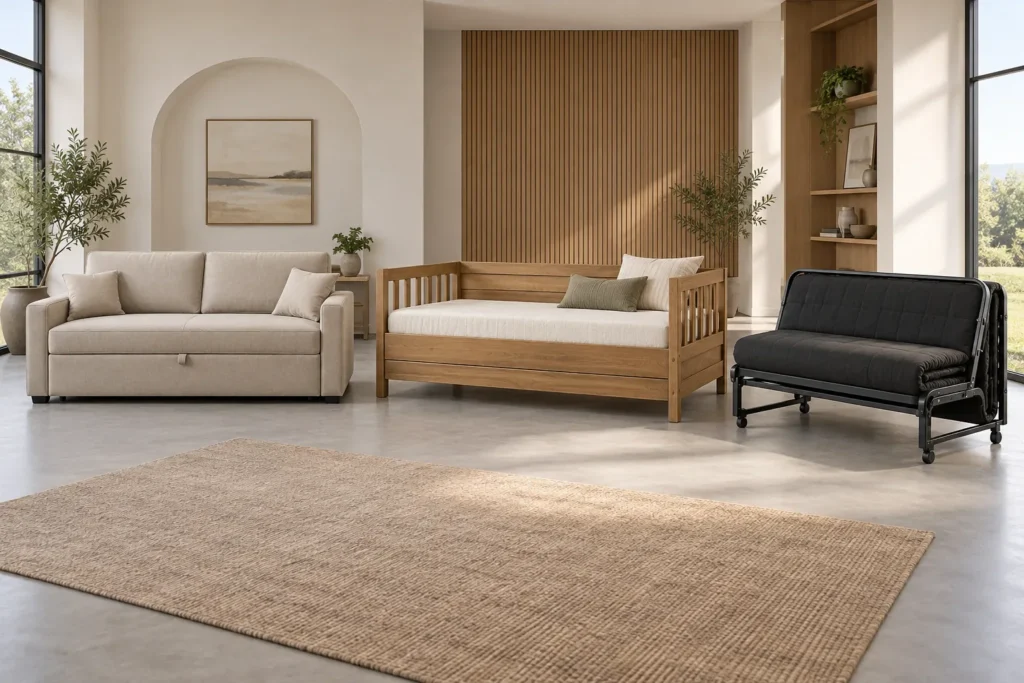
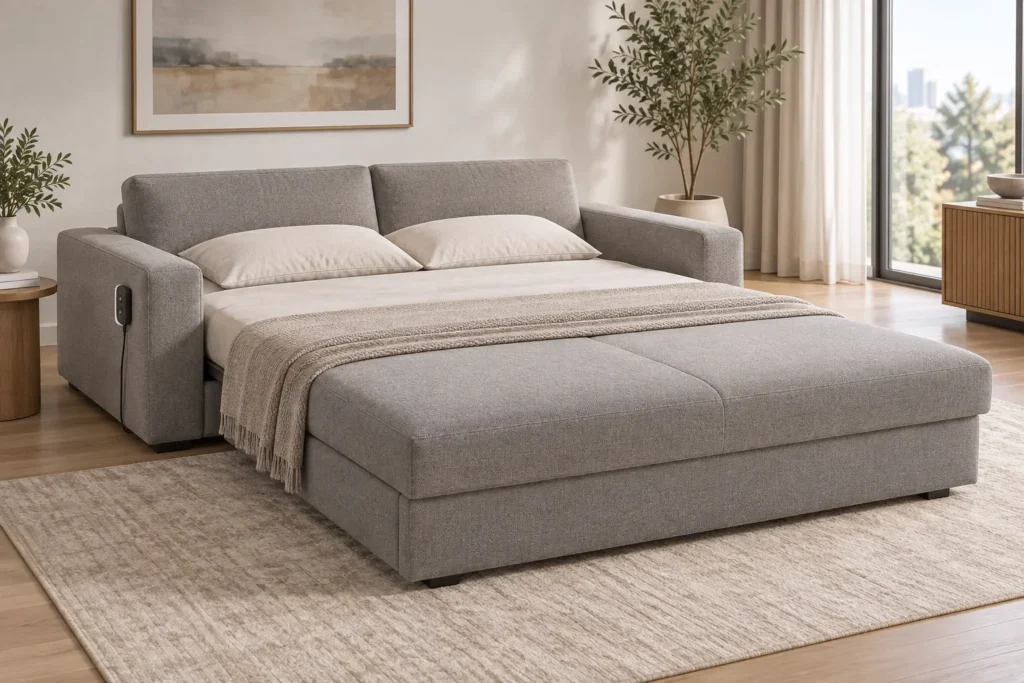
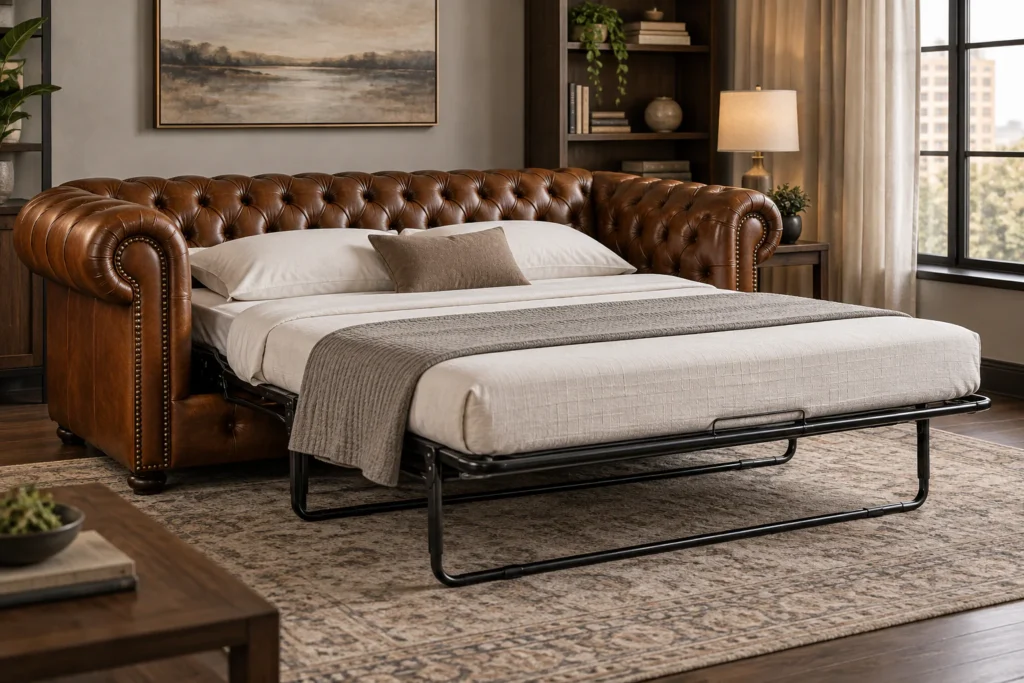
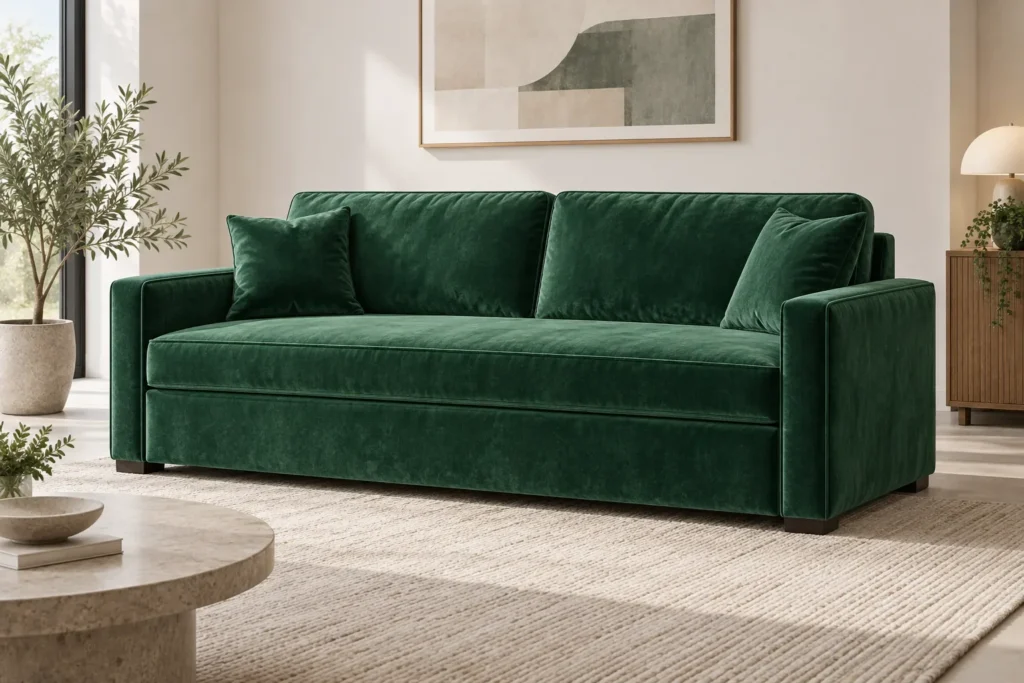
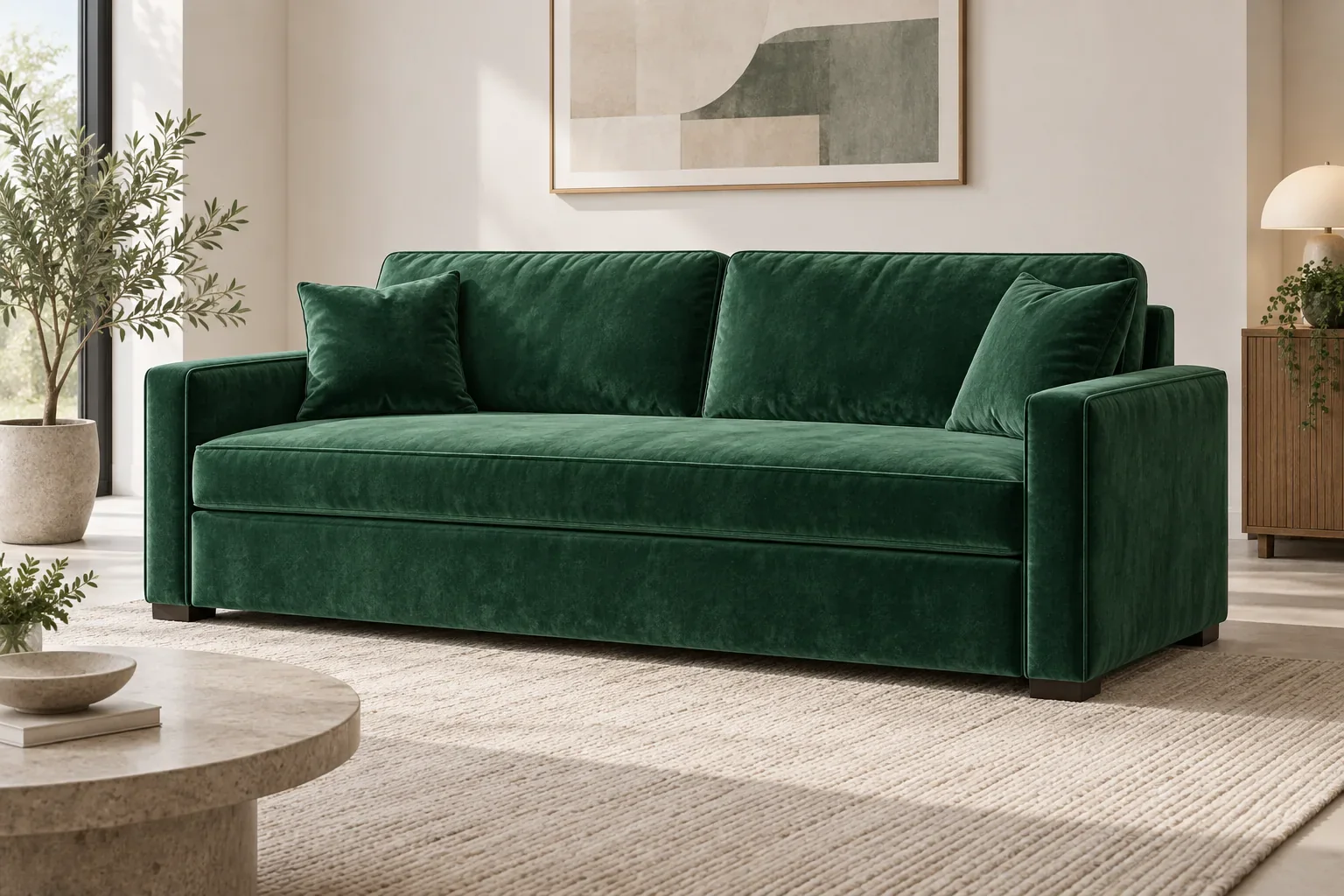
This guide concentrates on material behavior within sleeper construction. The images are editorial concepts showing visible velvet characteristics, not HUAXUAN model photographs. Current fabric sleeper references are linked only as related construction examples. Confirm the available velvet specification and finished sample before making claims about a particular supplied product.
What Is Velvet Upholstery?
Velvet has a raised pile that gives the surface depth and a soft hand. That pile can reflect light differently as its direction changes. Upholstery velvet may use polyester, cotton, viscose or blends, with different backings and finishing treatments. Ask for the fabric code and composition rather than treating a photograph or the word velvet as a complete material description.
Polyester velvet is one common sourcing option, but its fiber label alone does not guarantee abrasion performance, stain resistance or a particular cleaning method. Cotton velvet and blended velvet also need product-specific evaluation. Performance velvet is a commercial description that should be supported by the named fabric specification and relevant test or care information.
The buying brief should identify whether the priority is softness, a controlled sheen, easier maintenance, color depth or a particular commercial performance requirement. Compare actual swatches and technical documentation against those priorities. Do not assume HUAXUAN uses a certain velvet composition without confirming it for the proposed order.
Velvet Sofa Bed vs Regular Fabric Sofa Bed
Regular fabric is a broad term. The comparison below uses a typical flat woven upholstery as a reference; some woven fabrics also have directional patterns, texture or special care needs. Both materials need approval on the finished sleeper.
| Feature | Velvet upholstery | Typical flat woven upholstery |
|---|---|---|
| Appearance | Pile adds depth and changing sheen | Weave creates visible texture or pattern |
| Texture | Raised pile; hand varies by specification | Flat or textured interlaced yarns |
| Pile direction | Often an important cutting control | No velvet pile; pattern direction may still matter |
| Color shading | Nap and lighting can alter appearance | Weave, yarn and lighting affect appearance |
| Cleaning | Follow the specific pile-fabric instructions | Follow the specific fabric instructions |
| Abrasion | Require test data for chosen fabric | Require test data for chosen fabric |
| Seam visibility | Pile direction can emphasize panel transitions | Texture or pattern can emphasize seam matching |
| Mechanism contact | Review rubbing and pile compression | Review rubbing and surface wear |
| Commercial use | Suitable only when specification fits the use | Suitable only when specification fits the use |
| Cost consideration | Include directional cutting and approval work | Include pattern matching and approval work |
Why Velvet Looks Different From Different Angles
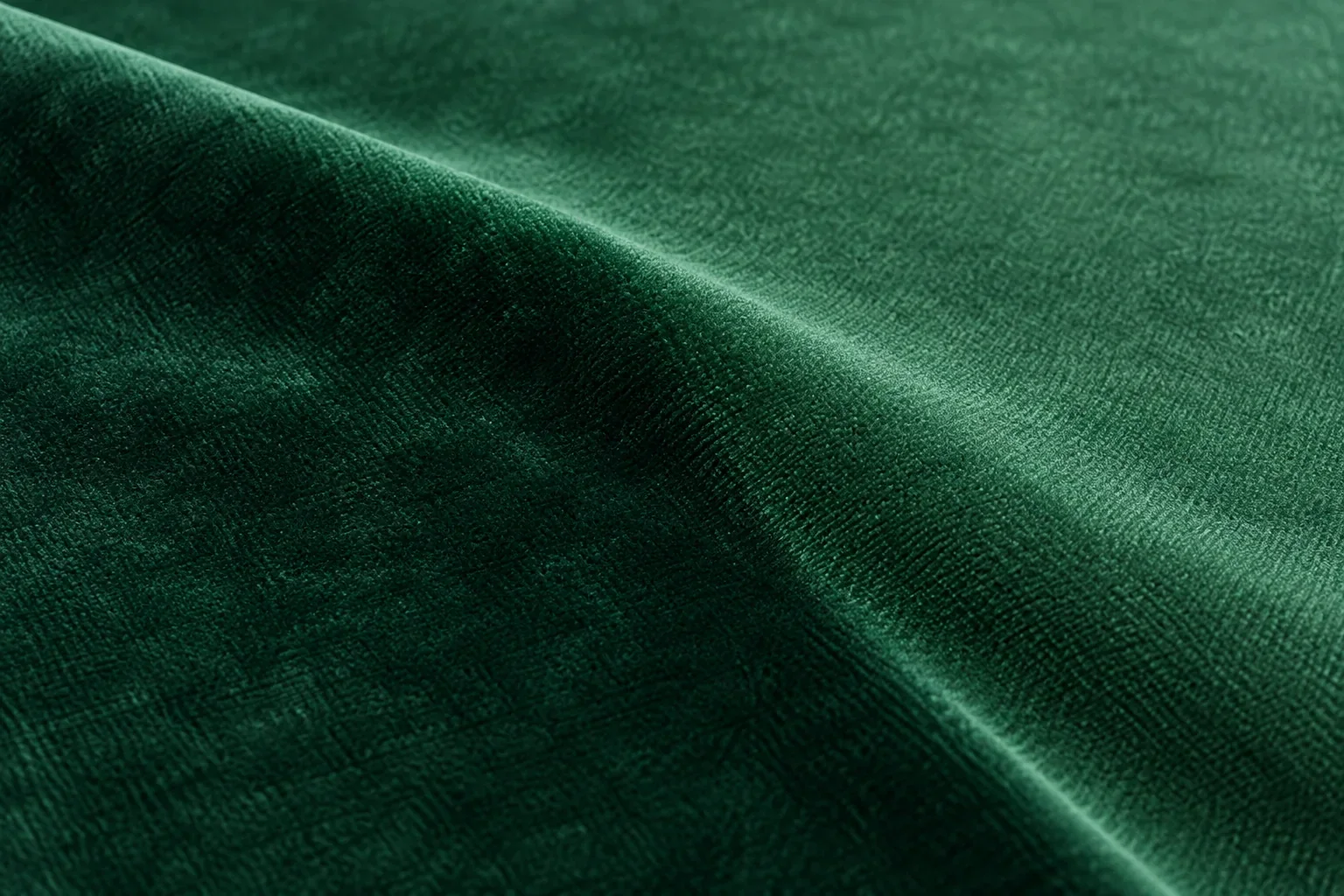
Velvet can look lighter or darker because its pile changes the way light reaches and leaves the surface. Viewing direction, illumination and brushing can make neighboring areas appear different even when they use the same fabric. This shading is not automatically a color mismatch or defect. Check the panels in a consistent orientation before deciding whether the fabric color itself differs.
A seam can make directional shading particularly visible: one panel may be cut with its nap facing a different way from the next. Curved arms and tufting also turn the pile through changing angles. Approve the intended appearance on those shapes rather than expecting a small flat swatch to predict every visual effect on finished furniture.
Distinguish orientation from a genuine lot difference. If a panel remains noticeably different when viewed and brushed consistently with its neighbor, investigate fabric identity, dye lot and cutting records. A photograph taken under different exposure or lighting is insufficient to settle the issue. Retain a physical reference and document a repeatable inspection method.
Velvet and Sofa Bed Mechanisms
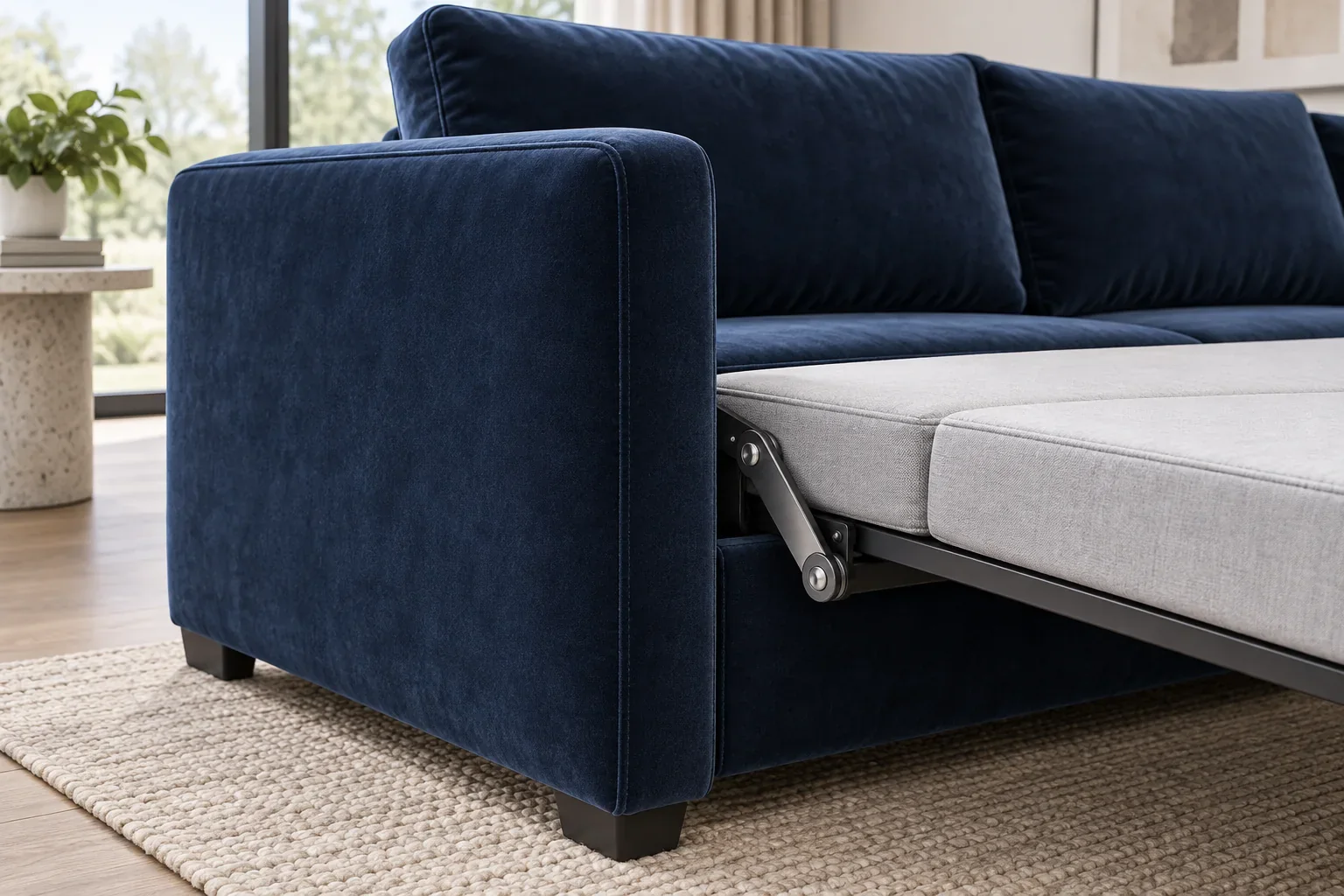
A velvet sofa sleeper has more upholstery interfaces to consider than a fixed sofa. Sliding decks, folding frames and moving back sections can bring fabric close to hardware. Review clearance throughout the movement and in both final positions. A tidy closed appearance does not prove that loose fabric stays away from the mechanism while opening.
Rubbing points can change pile appearance even before a seam fails. Check the front rail, underside of seat panels, folds near hinges and areas that contact the mattress frame. Upholstery should be secured in the intended position without being stretched across a moving joint. The manufacturer should identify where protective separation or a different internal covering is needed.
Seam placement deserves its own approval. A seam directly over a high-contact fold can create a raised rubbing point; excess fabric can gather near a pinch area. Assess the operating sample slowly and observe where the textile moves. Record required changes with photos and panel references so production workers know which interface was approved.
A velvet pull out sofa bed with a separate mattress does not require the mattress itself to be velvet. Its visible arms, back and base may be velvet while internal covers use another suitable material. A convertible upholstered sleeping surface has a different brief because users lie directly on the same cushions. Specify both the visible material and every functional contact surface.
Velvet Durability for Commercial Sofa Beds
Commercial durability is the combined performance of fabric, backing, seams, cushion support and mechanism integration. Abrasion information helps assess surface wear, but it does not by itself measure seam strength, pile crushing, cleaning behavior or how upholstery reacts to repeated conversion. Request the relevant fabric data and review the assembled sample under the intended use.
Martindale and Wyzenbeek are different abrasion testing systems. Their reported rubs or cycles should not be converted into a single interchangeable score or assumed service life. Compare results within the specified method and context. This guide assigns no numerical rating to HUAXUAN velvet because the selected fabric and supporting documentation must be confirmed for each program.
Pile crushing can appear where occupants sit, where cushions are stacked or where packaging presses the textile. Some marks may change with normal recovery and approved care; others require investigation. Agree on the expected appearance and assessment procedure. Avoid promising that all pressure marks disappear or that every velvet behaves identically.
Cleaning and stain resistance must also be fabric-specific. A treatment or performance label does not mean the finished sofa is immune to spills, rubbing or unsuitable chemicals. Hospitality buyers should compare the recommended care method with staff practice and cleaning supplies. A technically suitable fabric can still be a poor operational fit if the maintenance routine is impractical.
Green vs Blue vs Neutral Velvet Sofa Beds
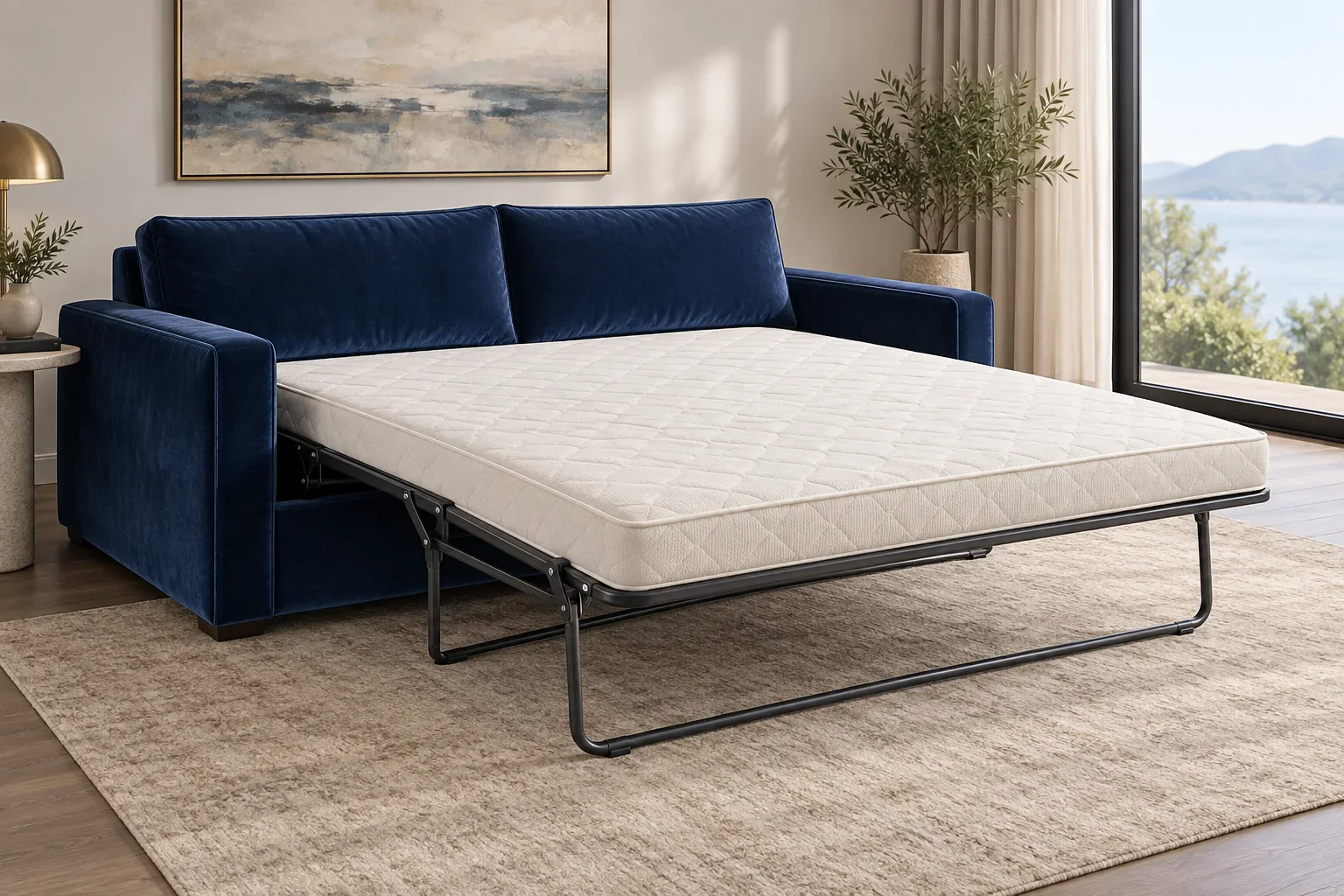
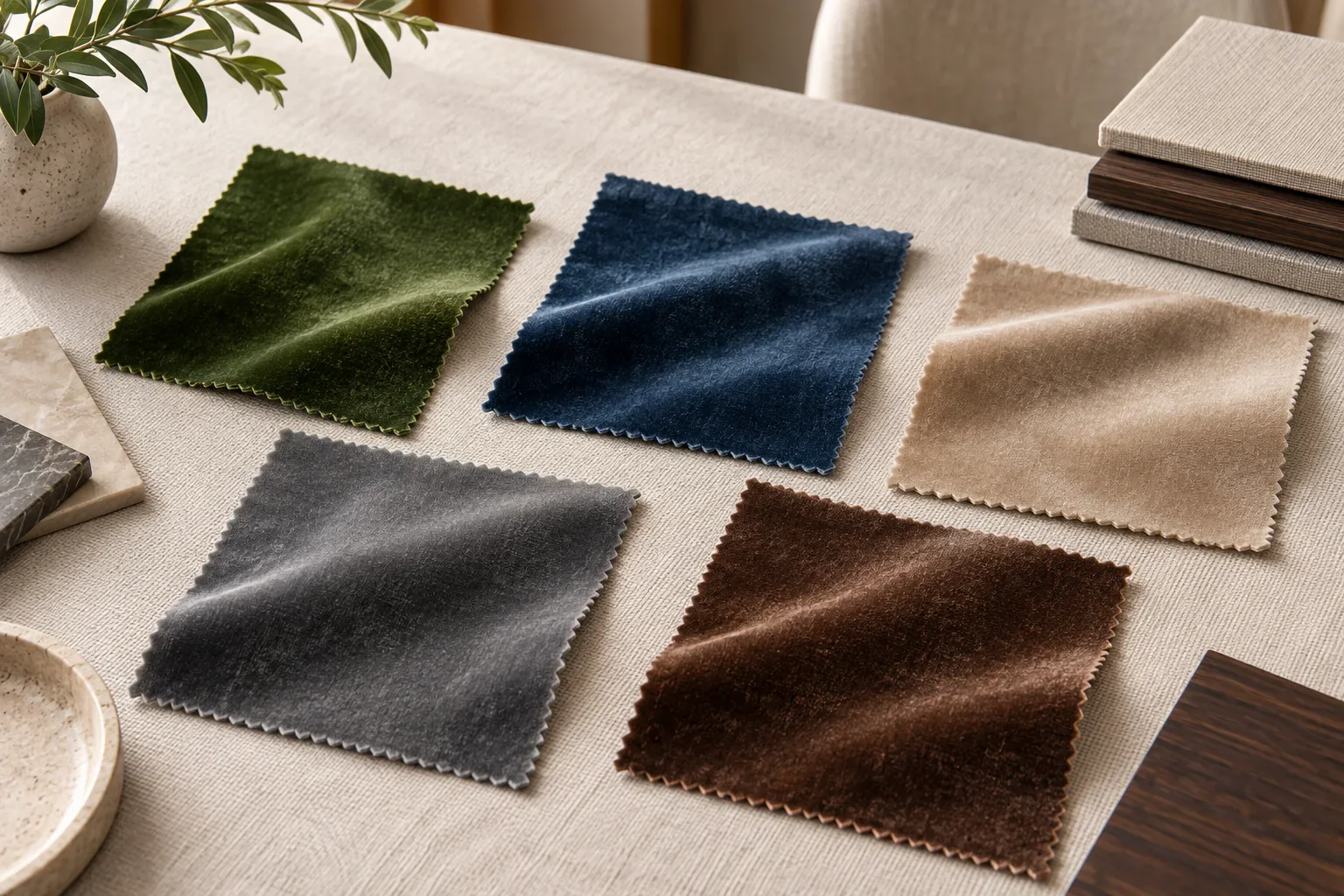
A green velvet sleeper sofa can show rich tonal variation where pile bends around arms and seat edges. A blue velvet sleeper sofa can also reveal strong shading under directional light. Choose the exact fabric code and physical swatch, not a color family name. Green, navy or blue descriptions can cover many visibly different materials.
Beige, grey and brown velvet are equally subject to pile direction and lighting. A neutral color does not eliminate the need for lot control. Review the chosen swatch against adjacent panels and approved trim under representative room lighting. Keep the original fabric reference for incoming material checks, finished sample review and later reorder discussions.
For a blue velvet sofa sleeper retail program, product photography should show the approved material consistently without erasing normal nap effects. If a range contains several colors, keep the model and mechanism specification stable while identifying each fabric option separately. Do not create separate product claims from a color name alone.
Bulk color confirmation should identify supplier, fabric code, color code, dye lot or roll references and approved sample. Ask how later deliveries will be matched and what happens if the original material is unavailable. A reorder may need fresh approval even when it uses the same general color description. Color consistency is a purchasing record, not a promise that every future lot is identical.
Velvet Pile Direction and Batch Consistency
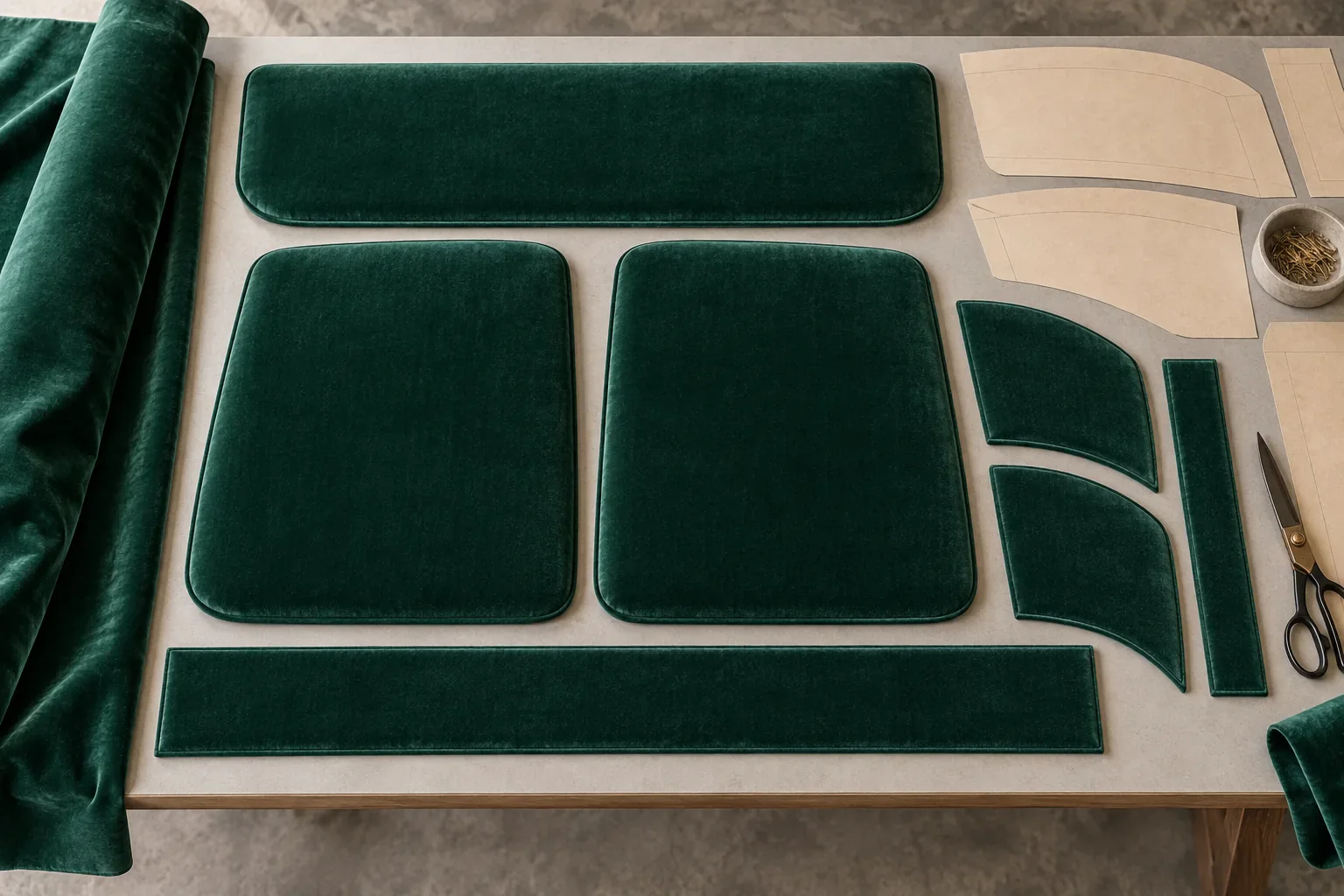
Cutting direction should be recorded on a panel map. The map should identify the intended nap orientation for cushions, arms, back panels and visible rails. Consistent orientation helps avoid unintended shading between units and within one sofa. Tufted or curved areas still produce natural directional effects; the approved sample defines which effects belong to the design.
The fabric cutting team should have an unambiguous orientation reference rather than relying on memory. Mark roll direction and panel identity in the production instructions, and establish how replacement panels are matched. Reversible or loose cushions require special thought because turning a cushion can visibly change its shade. Explain the intended user-facing arrangement.
Check color lot and panel direction together. Two correctly oriented panels from different material lots may still differ, while one lot can look inconsistent when panels are reversed. Keep enough records to distinguish those causes. Incoming fabric review, cutting control and finished upholstery inspection should all refer to the same signed material and sample.
For material guidance, Luum documents velvet nap and style-specific care, including the importance of consistent orientation. Apply the instructions supplied for the actual chosen textile. General guidance helps frame approval questions but cannot establish performance of a different fabric.
Velvet Sofa Bed Cleaning and Maintenance
Follow the supplier instructions for the exact fabric. Remove loose dust with the recommended upholstery attachment and treat spills according to the specified cleaning method. Test permitted products on a concealed area first. Avoid saturating the fabric or applying heat, steam or bleach without explicit approval for that textile and construction.
Cushions, bedding and a separate mattress may have different care requirements from the velvet cover. Staff instructions should identify those differences. Keep the conversion area free of loose debris and inspect contact points during routine furniture checks. Any mechanical or electrical service should follow the product instructions rather than improvising maintenance around the upholstery.
The existing velvet cleaning guide offers related material-care context. A sofa bed additionally needs attention to folds and mechanism interfaces. This article keeps cleaning concise because the main purchasing task is selecting the right material and construction before routine maintenance begins.
Product References and Material Approval
Use the sofa bed collection to discuss sleeper structures and buying requirements. The grey fabric pull-out reference is a related upholstered construction example. Its fabric should not be relabeled velvet without verified material information. Ask whether a proposed velvet can work with that kind of structure.
For the broader material comparison, see the leather versus fabric guide. A velvet sectional sofa bed, compact sleeper and tufted convertible can each introduce different panel shapes, seam positions and movement interfaces. Approve the fabric on the actual configuration instead of carrying approval across unrelated furniture forms.
A search for a velvet sofa bed manufacturer should lead to a specific development discussion: which fabric, which sleeper mechanism, which use and which quantity? Supplier capability statements should be backed by the proposed material and sample. Do not infer a finished velvet sleeper offering simply because a manufacturer shows velvet sofas and manual fabric sleepers separately.
Velvet Sofa Bed Wholesale Buyer Checklist
A complete fabric brief makes quotations and sample comparisons more useful. It also gives the production team a way to resolve questions about shading, replacement panels and material substitutions without relying on an attractive reference photograph.
- Velvet composition, supplier and fabric code.
- Exact color, physical swatch and lot identification.
- Required performance information and the named test methods.
- Pile direction, panel map and loose-cushion orientation.
- Sleeper mechanism, folding areas and fabric clearance.
- Sleeping surface, sofa dimensions and internal covering materials.
- Quantity, target market and intended seating or sleeping frequency.
- Sample approval criteria, production batch records and reorder process.
- Packaging method that protects the pile and visible upholstery.
Packaging approval should consider prolonged contact with cushions, straps and protective materials. Do not assume every pile mark visible immediately after unpacking is a manufacturing defect; assess according to the agreed textile guidance. Record any appearance that persists beyond the approved handling and recovery procedure. Keep a signed swatch and upholstered sample available to resolve questions before the shipment is accepted.
FAQ
Is velvet suitable for a sofa bed?
Yes, when the selected fabric suits the intended use and is properly integrated with the mechanism. Confirm pile direction, seams, contact points, care requirements and the sample rather than approving velvet as a single uniform category.
Are velvet sofa beds durable?
Durability depends on the fabric specification and finished construction. Ask for relevant abrasion and material information, then assess seams, pile compression and conversion contact areas. A velvet label or high abrasion result alone does not guarantee service life.
Why does velvet look lighter or darker from different directions?
The pile changes how light reflects from the surface. Nap direction, brushing and viewing angle can alter apparent shade. Inspect consistent orientations before treating the effect as a color mismatch, and investigate persistent differences using lot records.
Is polyester velvet suitable for commercial furniture?
Some polyester velvets can suit commercial furniture, but suitability must be confirmed for the named fabric and use. Check supporting performance information, backing, care instructions and the upholstered sample rather than relying only on composition.
Can velvet be used on pull-out sofa beds?
It can cover the visible upholstered body when clearance and rubbing points are properly managed. A separate sleeper mattress has its own specification. Review the complete operating sample to ensure folds, seams and loose fabric avoid the mechanism.
What should wholesale buyers confirm before ordering velvet sofa beds?
Confirm composition, fabric and color codes, swatch, performance requirements, pile direction, mechanism, sleeping size, exterior dimensions, quantity, market and packaging. Approve the operating sample and record the material batch and reorder arrangements.