Quick Answer
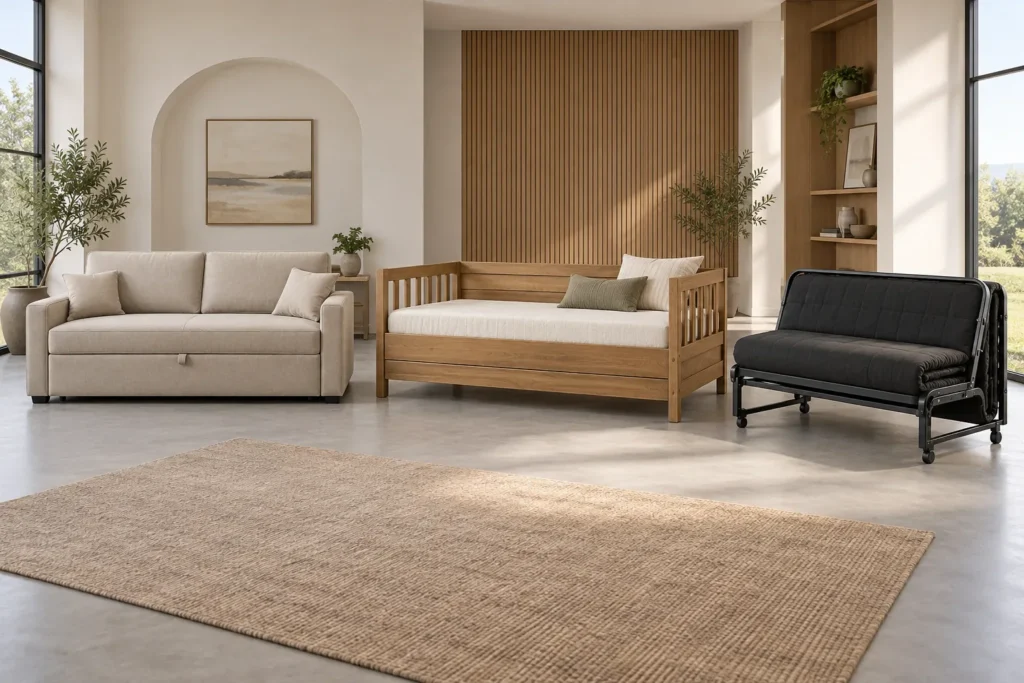
The sofa bed vs day bed difference starts with the primary structure. A sofa bed is primarily seating with a separate or convertible sleeping function. A daybed is primarily a bed-like mattress platform arranged to also provide seating, often with back or side panels and pillows. A futon commonly combines a folding mattress or cushion with a relatively simple convertible frame. Market terminology varies: some retailers call fold-down sofas futons, and some daybeds include trundles. Compare the actual frame, mattress and conversion sequence rather than assuming the product name settles comfort, room suitability or quality.
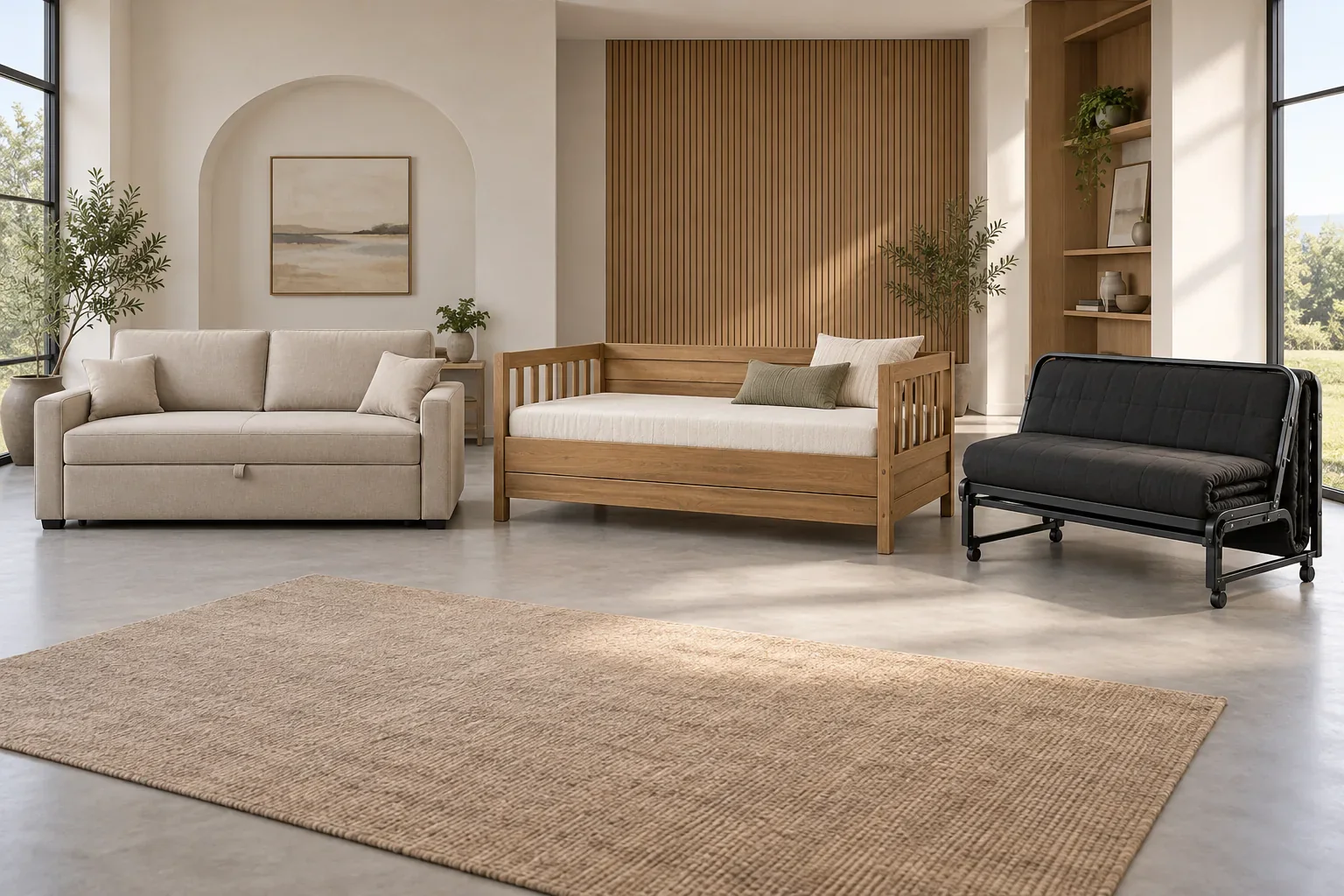
Sofa Bed vs Daybed vs Futon Comparison
Use this table to choose which structure belongs on the shortlist. It describes common arrangements, not rules that every product must follow. Comfort, durability and price depend on the specific construction and approved materials; none of the three labels is a quality grade.
| Feature | Sofa bed | Daybed | Futon |
|---|---|---|---|
| Primary function | Sofa with added sleeping function | Bed platform also used as seating | Convertible seat and sleeping surface |
| Seating comfort | Depends on seat cushion and back design | Mattress and pillows form the seat | Depends on folding mattress and frame angle |
| Sleeping setup | Deploy mechanism or rearrange sections | Use existing mattress; remove pillows | Flatten frame and mattress |
| Mattress / cushion | Separate mattress or upholstered platform | Usually bed-style mattress | Often one folding mattress or cushion |
| Mechanism | Pull-out, fold-out, sliding or fold-down | Usually fixed; optional separate trundle | Commonly hinged folding frame |
| Closed appearance | Often reads as conventional sofa | Bed-like platform remains visible | Frame and folded mattress often visible |
| Space requirement | Closed and open envelopes differ | Main platform footprint largely fixed | Allow space for frame movement |
| Daily seating | Can prioritize sofa ergonomics | Check depth and pillow support | Check cushion stability and seat angle |
| Guest sleeping | Conversion required | Main bed ready after pillow removal | Flattening and bedding required |
| Commercial use | Flexible suites and seating-led rooms | Bed-led guest rooms or lounges | Selected rental or occasional-use programs |
| Wholesale consideration | Mechanism fit and replacement compatibility | Mattress fit, rails and trundle access | Hinge quality and mattress-frame compatibility |
What Is a Sofa Bed?
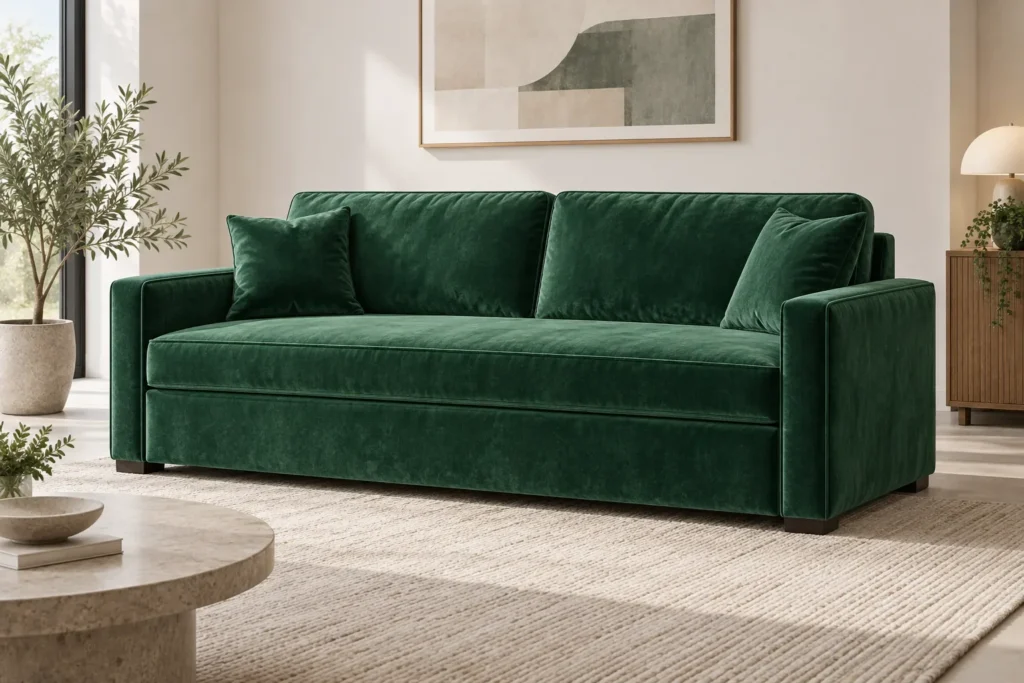
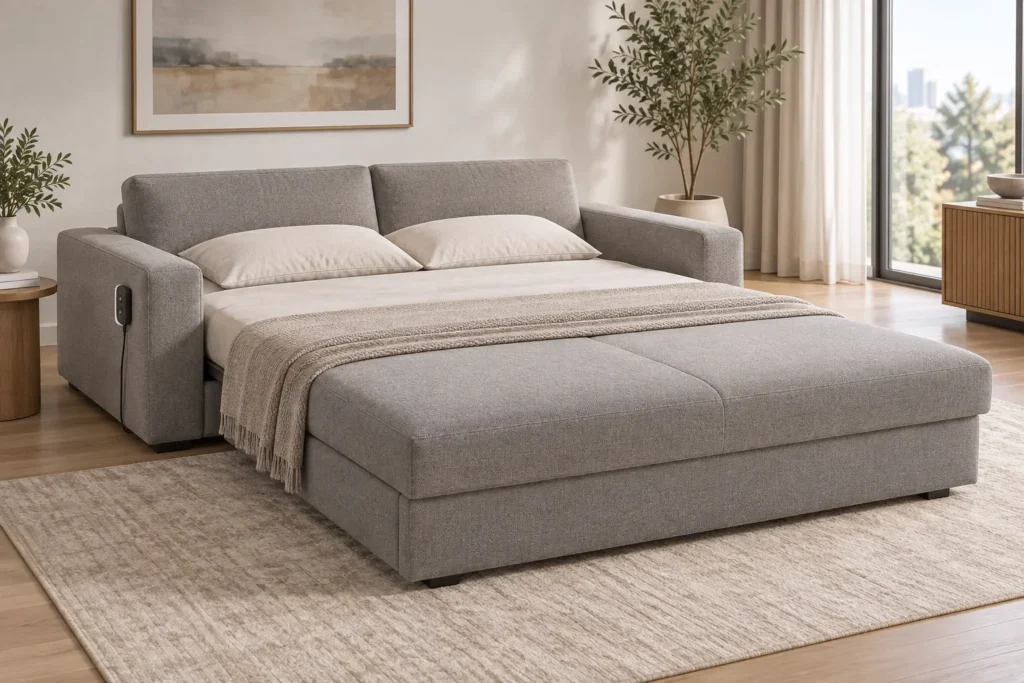
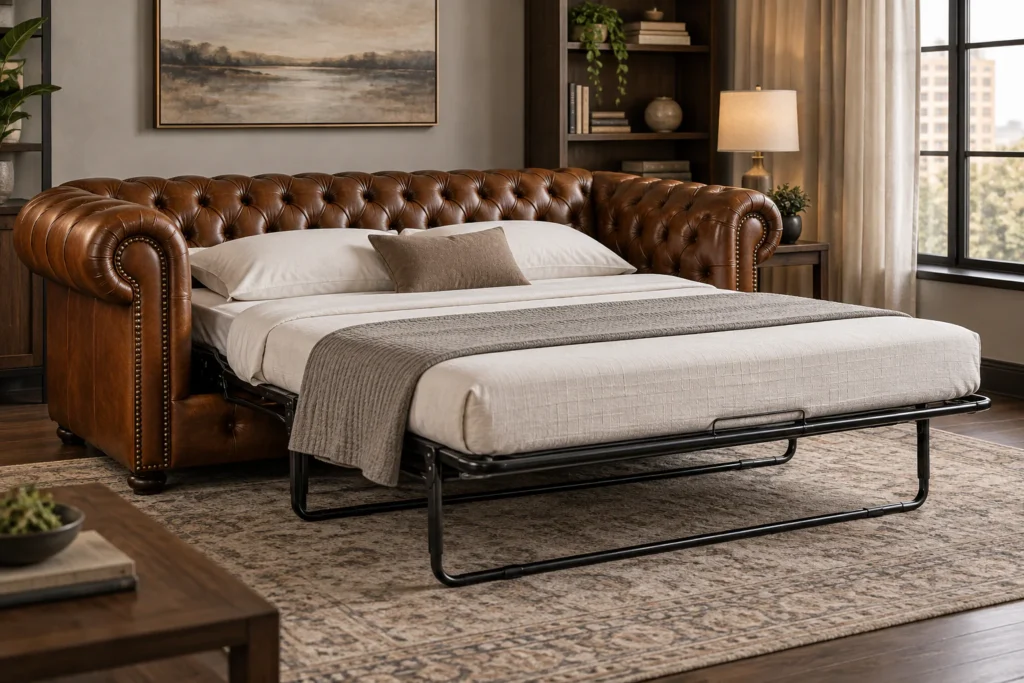
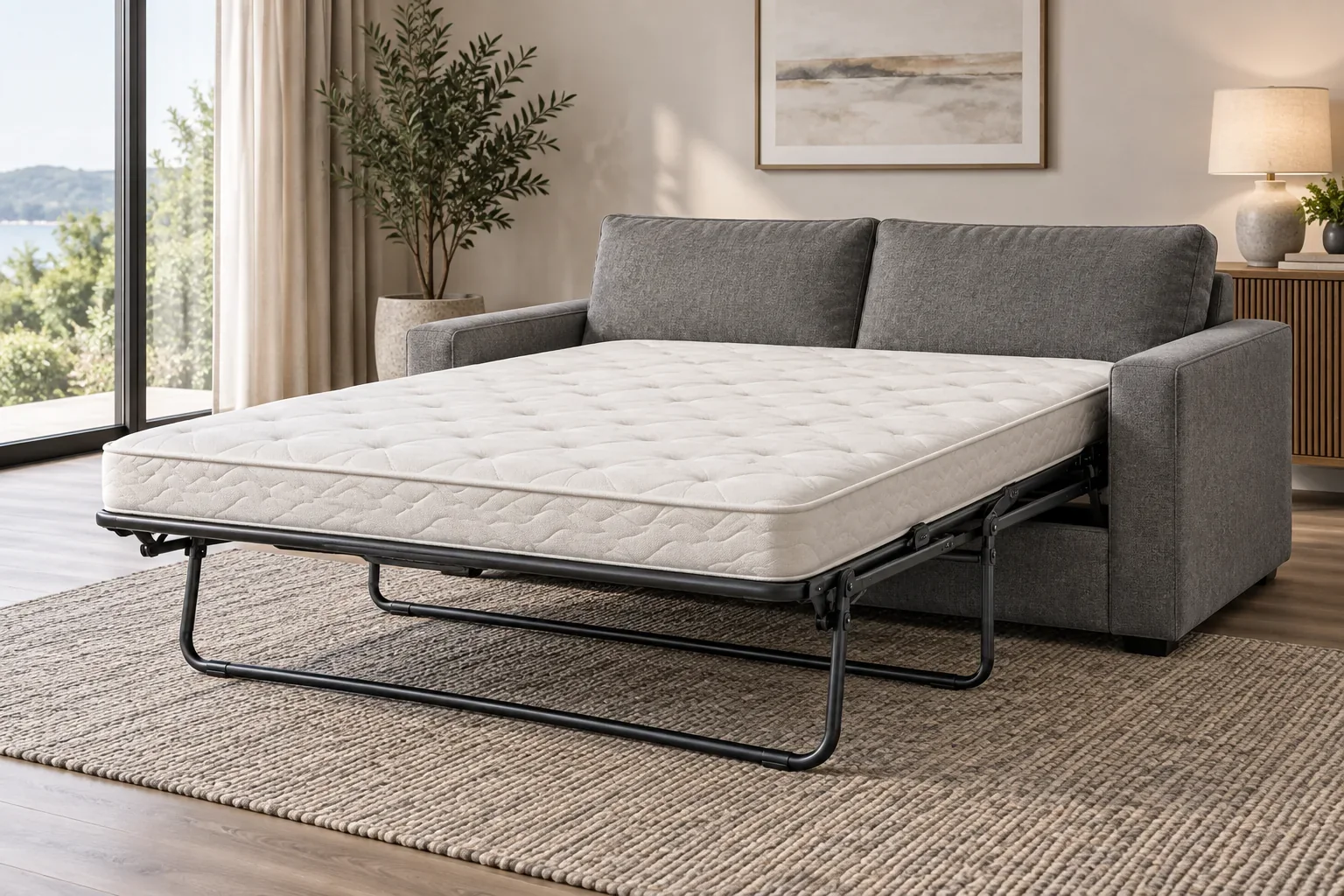
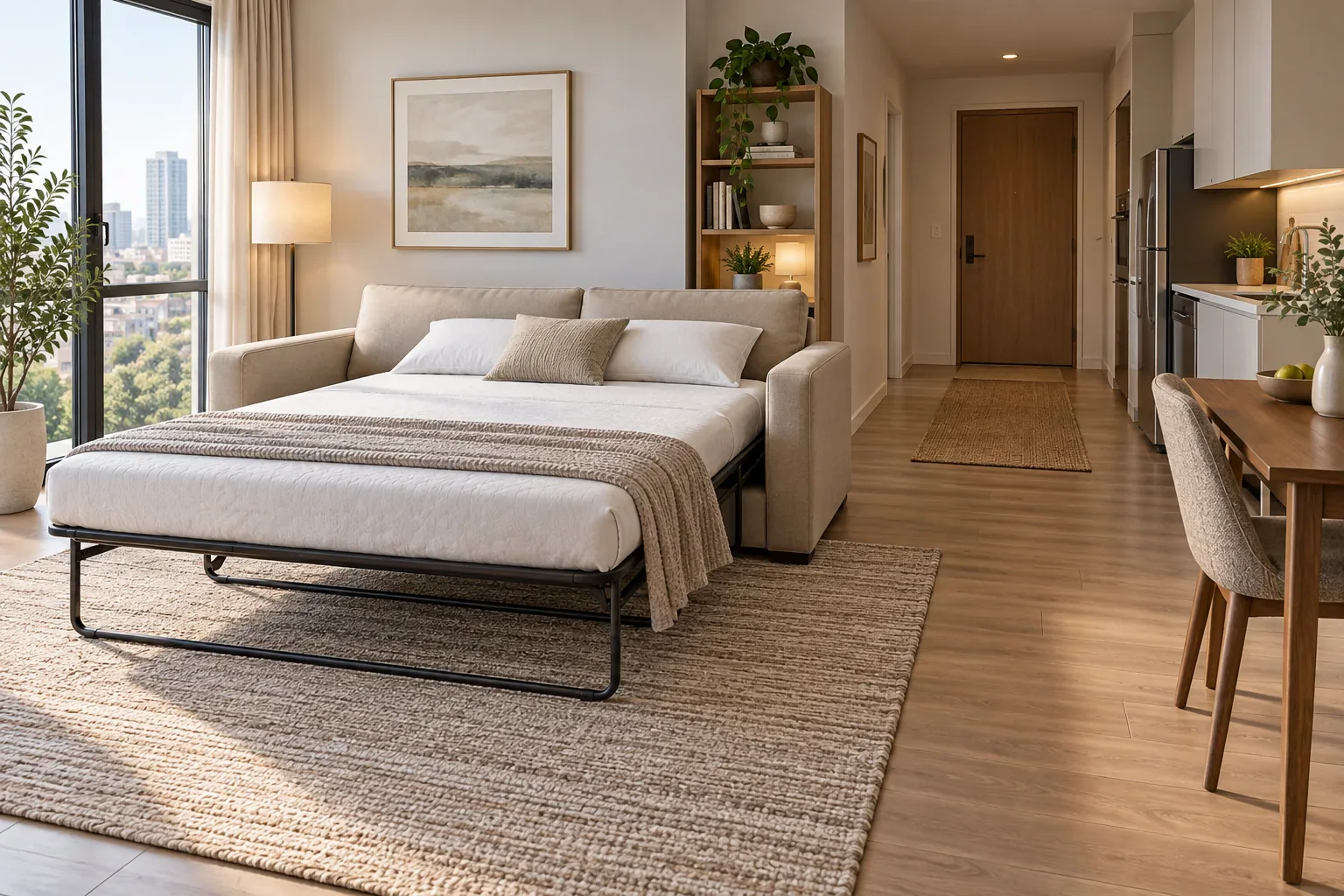
A sofa bed incorporates a sleeping function into a seating product. Some hide a separate mattress and folding frame beneath removable cushions. Others slide or unfold upholstered panels into a bed. The defining question is whether the seating furniture transforms to create a sleeping surface, not whether the retailer uses sleeper sofa, couch bed or convertible sofa.
The sleeper sofa terminology guide explains that broader category. Here, the buying decision is narrower: should a room use a sofa with an added bed, a fixed bed that doubles as seating or a folding mattress on a convertible frame? Keeping those roles clear prevents the comparison from becoming a second general definition article.
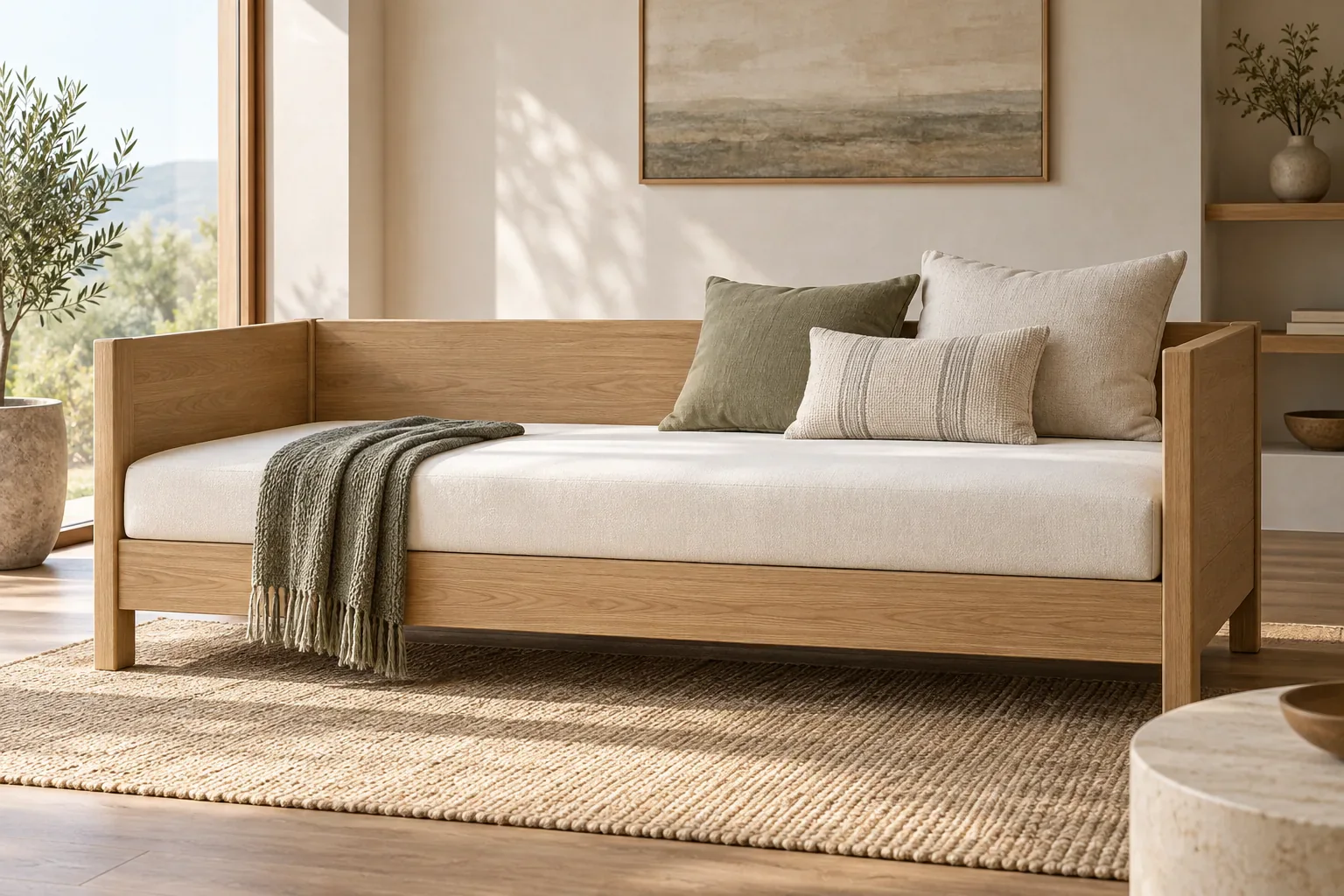
What Is a Daybed?
A daybed usually has a mattress-style platform with a back, side panels or both. Pillows can make it comfortable for sitting along the long edge. The mattress commonly stays in the same horizontal position during seating and sleeping use. That makes preparation simple, although pillows, decorative covers and bedding still need storage.
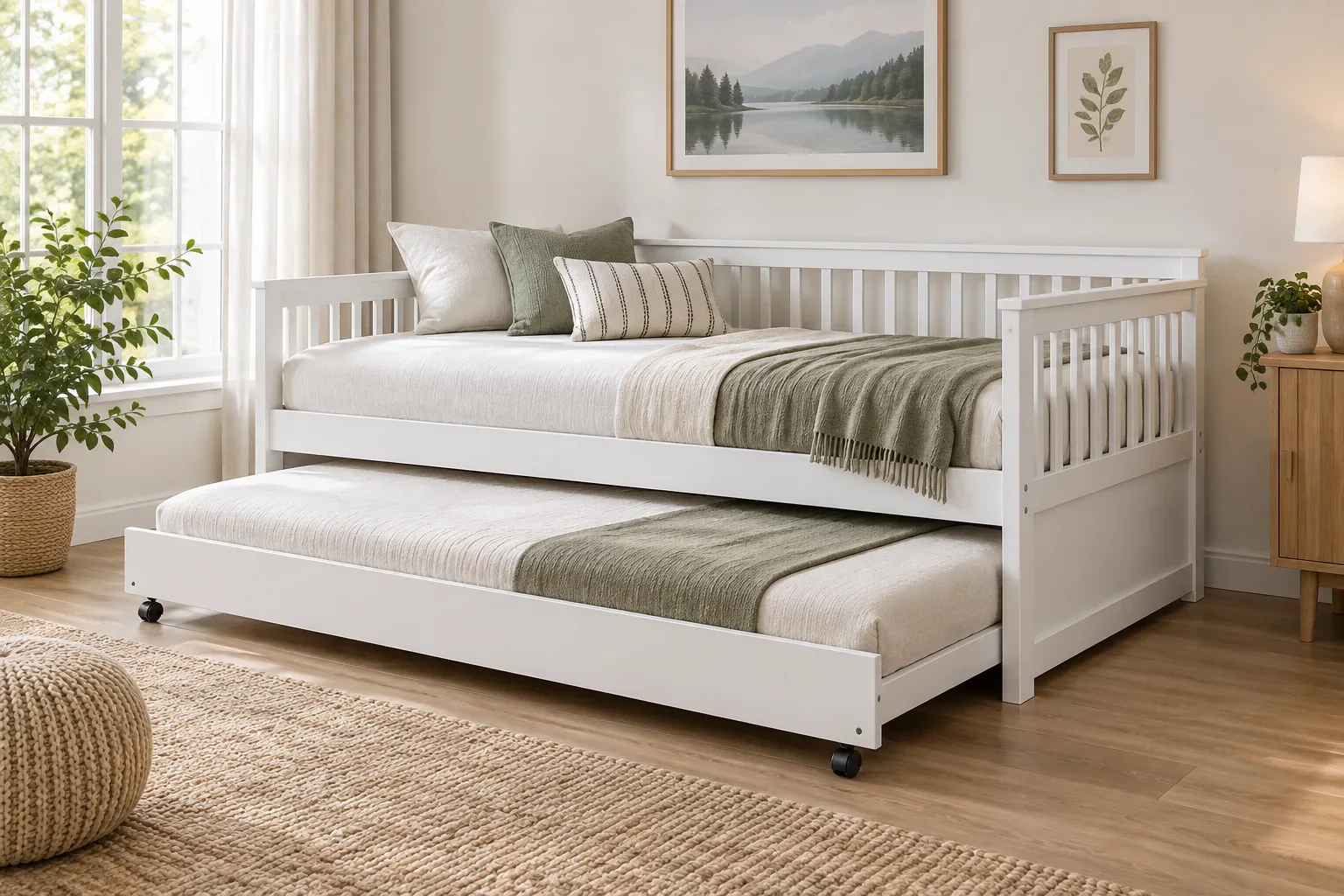
Some daybeds have a trundle: a separate low bed stored under the main platform. Rolling out a trundle adds another mattress position, but the upper daybed has not converted from sofa seating through a sleeper mechanism. Buyers should check trundle floor clearance, wheel operation, access and the usable gap between the two beds.
Day beds that look like sofas can use upholstered side panels, tailored cushions and a concealed base. Appearance alone does not change their bed-led construction. Request photographs with pillows removed and a plan identifying mattress dimensions. This reveals whether the object is a fixed platform, a convertible sofa daybed or a sofa with a separate deployed bed.
What Is a Futon?
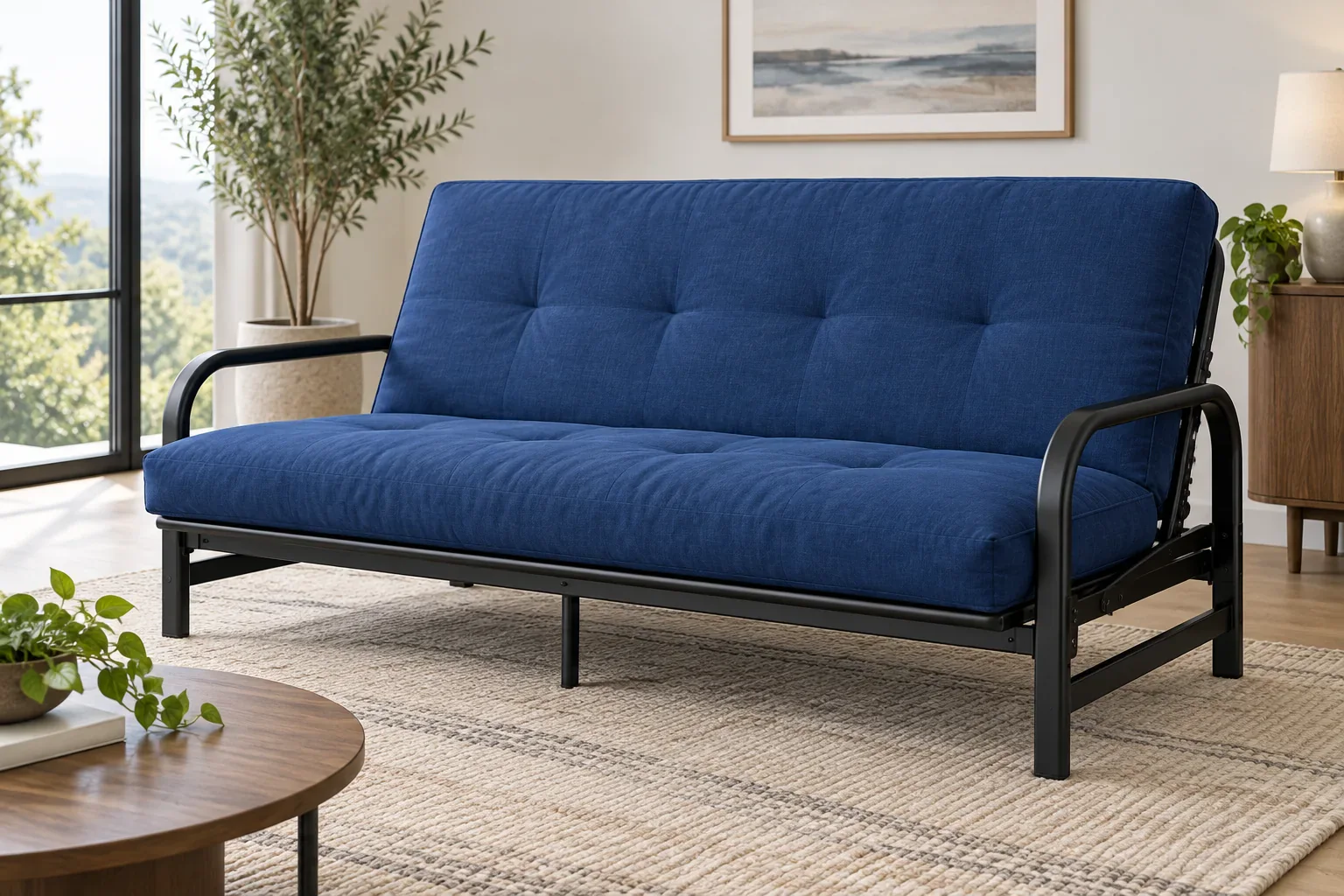
In many furniture retail markets, a futon is a convertible frame carrying a mattress or cushion that bends with the seating arrangement. A bifold frame changes the mattress from an angled seat-and-back position to a flatter bed position. The mattress itself often serves both functions, so flexibility, thickness and frame support should be considered together.
The word also has other cultural and retail uses, including floor bedding. This article compares the convertible seating product commonly sold alongside sofa beds. Suppliers should describe the actual construction in a quotation instead of relying on the word futon to communicate the mattress type, finished dimensions or expected use.
Futon and click-clack sofa bed can overlap in search results because both may lower the back to form a flat surface. A click-clack upholstered sofa can have integrated cushions rather than a removable folding futon mattress. The click-clack versus pull-out guide explains mechanism differences when the shortlist needs a more precise structural comparison.
Sofa Bed vs Day Bed (Daybed)
Which saves more space? A sofa bed can provide a smaller seating footprint than its deployed bed footprint, but needs clearance for conversion. A daybed keeps its main bed platform permanently in the room. Measure both in the actual layout. A compact closed sofa can still become unsuitable if the open bed blocks a door or leaves no practical aisle.
Which looks more like a sofa? A concealed sleeper usually makes it easier to achieve a conventional living-room sofa appearance. A daybed can look sofa-like with upholstery and pillows, yet the continuous mattress and side rails often remain apparent. For a furniture retailer, evaluate the product with and without styling cushions so the customer sees its everyday arrangement.
Which works better for daily seating? Compare back support, seat depth, cushion stability and arm position. A daybed mattress may create a deep seat requiring pillows; a sofa bed may have structural compromises around the concealed frame. Neither is automatically better. Test the actual sample for the seating duration and users expected in the project.
Which is easier for guest sleeping? A fixed daybed often needs only pillow removal and bedding. A sofa bed requires a deployment sequence but can hide the sleeping function during the day. A trundle adds access and handling steps. In serviced accommodation, staff should rehearse the full changeover, including where cushions and linen are stored.
Which is easier to manufacture in batches? A fixed daybed may avoid a conversion assembly, but rails, upholstery and mattress fit still need control. Sofa beds add mechanism alignment and open-position inspection. Compare approved drawings, tolerances, supplier consistency and packaging rather than assuming the product with fewer moving parts is always easier to produce.
Sofa Bed vs Futon
A sofa bed may separate sitting comfort from sleeping comfort by using different seat cushions and a concealed mattress. A typical futon asks one folding mattress to serve both roles. That distinction affects procurement: a thick, firm mattress may support sleeping yet resist folding or make the seat bulky. A softer folding cushion may feel inviting while sitting but require further assessment when flat.
Mechanism differences affect both operation and appearance. Pull-out sleepers can keep the bed frame hidden; many futons show more of the supporting frame. Upholstery tailoring, exposed hardware and the shape of the folded mattress determine the commercial impression. Judge these details against the retail range or accommodation standard, not against a universal ranking of furniture types.
For manufacturing, confirm that the chosen mattress works with the exact frame. Ask about retention while sitting, hinge movement, support when flat and replacement compatibility. A sleeper with a separate mattress also needs a thickness and folding specification matched to the mechanism. Substituting another mattress after approval can change operation and the final surface.
The existing futon versus sofa bed guide covers that two-way comparison in greater detail. This page uses it as one part of a three-type selection process, with the primary emphasis on whether a bed-led daybed or a seating-led convertible product better fits the room.
Daybed vs Futon
A daybed usually keeps the mattress flat on a fixed platform; a convertible futon folds the frame and sleeping cushion for seating. A daybed can offer ready access to the main sleeping surface but occupies its bed footprint all day. A futon may reclaim some floor depth while seated, yet needs a clear route to flatten.
Compare mattress replacement, pillow storage and movement effort. If the room is mainly a guest bedroom, a fixed daybed can be straightforward. If it is primarily a sitting room with occasional overnight use, a convertible design may suit the brief better. Those are functional starting points, not promises that one construction always feels more comfortable.
Which Is Better for Apartments?
A studio apartment needs one layout to support seating, sleeping, circulation and storage. A sofa bed can preserve the appearance of a sitting room by day, but the open envelope must fit around desks, wardrobes and doors. A daybed can make frequent sleeping simpler if the resident accepts a visible mattress platform. Check the dimension and clearance guide before selecting either.
A serviced apartment may use a sofa bed as supplementary sleeping capacity while retaining a separate main bed. Evaluate staff setup, cleaning access, bedding storage and the route through the room when the sleeper is open. A fixed daybed can work where the room plan intentionally includes a secondary bed position rather than concealing it.
In a guest room, a daybed can remain ready for overnight use and provide casual daytime seating. A sofa bed can support a more formal lounge arrangement when guests are infrequent. A trundle might add flexibility, but the rolled-out bed should not obstruct the entry, bathroom route or access to the upper mattress.
For rental property programs, decide who operates the furniture and how instructions will be delivered. A folding futon may suit a straightforward occasional-use brief; a concealed sleeper may fit a seating-led presentation. Compare replacement parts, cleaning needs and the approved sample instead of choosing entirely by the advertised compactness or product category.
Which Is Better for Hotels and Commercial Buyers?
Hotels that use sleeper seating often prefer a sofa-like appearance during daytime use and an integrated sleeping function when needed. A sofa bed can support that brief, but it requires a repeatable operating sequence and a mattress suited to the planned use. A daybed or futon may still be appropriate where the room concept and service arrangements support it.
Appearance should be evaluated after repeated normal setup, not just on a styled sample. Check cushion recovery, cover fit and whether exposed hardware looks intentional. Durability review should cover both seating and sleeping positions. Ask how moving joints, supports and upholstery contact areas will be inspected in production and how service problems are reported.
Cleaning and replacement are operational decisions. A separate mattress can simplify one kind of replacement, while removable covers or cushions can simplify another. Record what is actually removable and available for reorder. Batch consistency requires stable material codes, panel dimensions, mechanism identification and agreed inspection points, regardless of which category is chosen.
Browse the sofa bed collection for the commercial sourcing context. The beige fabric pull-out reference illustrates a sofa-bed construction direction. It should not be presented as a daybed or futon. Use a matching structural reference when discussing each alternative with a supplier.
Wholesale Buyer Decision Checklist
Begin with the job the room needs the furniture to perform. A buyer who requires permanent mattress access has a different brief from a buyer who wants a conventional sofa that occasionally sleeps a guest. Turn that distinction into drawings and approval questions before comparing quotations.
- Do you need daily seating, frequent sleeping or occasional guest capacity?
- How often will the product convert, and who will operate it?
- What are the room size, closed footprint, open footprint and circulation requirements?
- Do you require a separate mattress or an integrated sleeping cushion?
- Is a pull-out mechanism needed, or would a fixed platform suit the room?
- Where will pillows, seat cushions and bedding be stored?
- What quantity, target market and commercial presentation are required?
- Which parts need replacement availability, and what sample checks will be recorded?
Ask suppliers to identify the construction in words and drawings, even if their catalog terminology differs. Approve the seating position, sleeping position and full changeover together. Keep the signed material specification, mattress details and dimensional plan with the purchase order. This makes a repeat order comparable and reduces the chance of receiving furniture that shares a name but performs differently.
FAQ
Is a sofa bed the same as a daybed?
Usually no. A sofa bed transforms seating into a sleeping surface, while a daybed commonly keeps a mattress on a fixed platform. Hybrid products and varied retail names exist, so confirm the frame and sleeping setup.
Is a futon the same as a sofa bed?
A convertible futon can belong to the broader sofa-bed category, but usually uses a folding mattress or cushion on a simpler frame. A pull-out sleeper commonly uses a separate hidden mattress. Compare the construction rather than the label.
Which is better, a sofa bed or a daybed?
Choose according to the room role. A sofa bed can favor daytime sofa appearance and occasional conversion; a daybed can favor ready access to a fixed mattress. Measure the layout and assess the actual seating and sleeping samples.
Is a sofa bed more comfortable than a futon?
It can be, but the category alone does not decide comfort. Compare seat support, mattress construction, sleeping flatness and frame fit. A well-specified futon can perform better than a poorly matched sleeper for a particular use.
Which option is better for small apartments?
The best fit depends on the usable room envelope and sleeping frequency. Measure each product in its sleeping position and preserve necessary circulation. A smaller closed footprint is helpful only if the deployed configuration also fits.
Why do hotels usually use sofa beds instead of futons?
Hotels that use sleeper seating often prefer a sofa-like daytime presentation and a sleeping system integrated into that furniture. This preference is not universal. Room concept, cleaning, service, comfort and replacement arrangements can support other configurations.