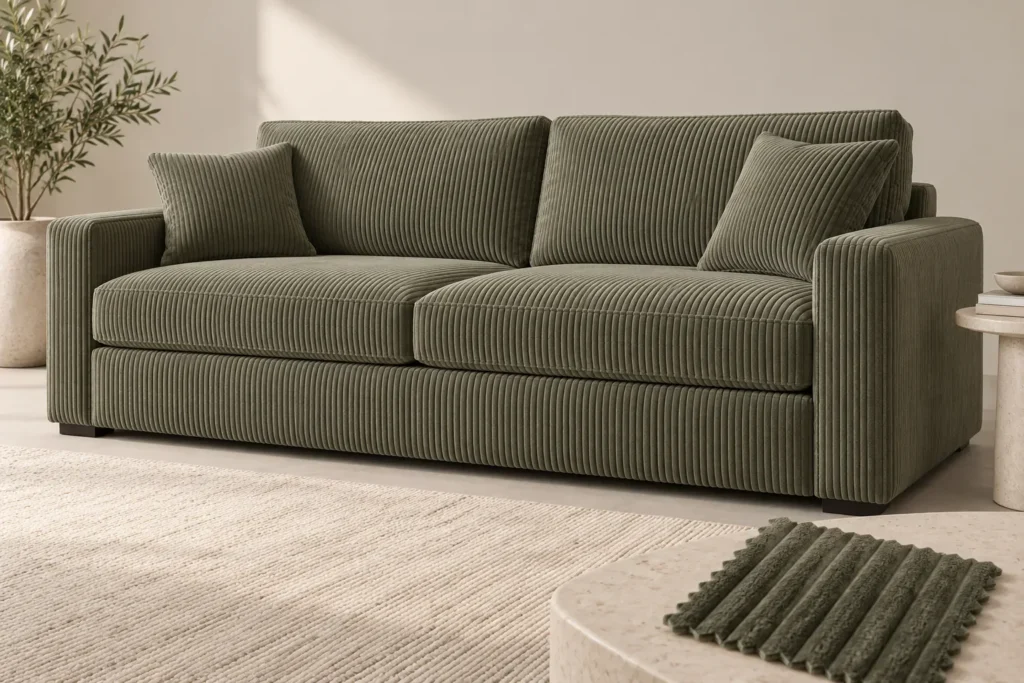

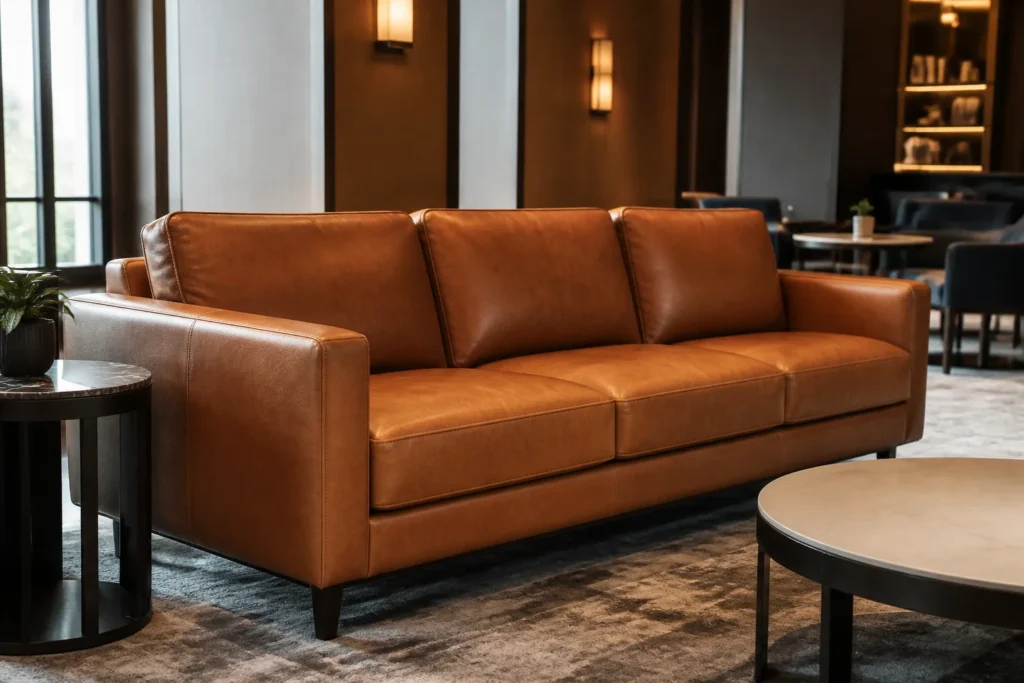
If you want to know how to tell if a sofa is real leather, do not rely on touch, smell or grain alone. Start with the written product specification, exact material name and code, supplier swatch, backing or legal cut sample where available, upholstery-location map and purchase documentation. Natural grain variation can support an assessment, but corrected leather can look regular and synthetic upholstery can look convincingly irregular. For project procurement, documented material approval is more reliable than visual guessing.
Send the sofa reference, material claim, swatch, quantity and intended upholstery areas for a specification review.
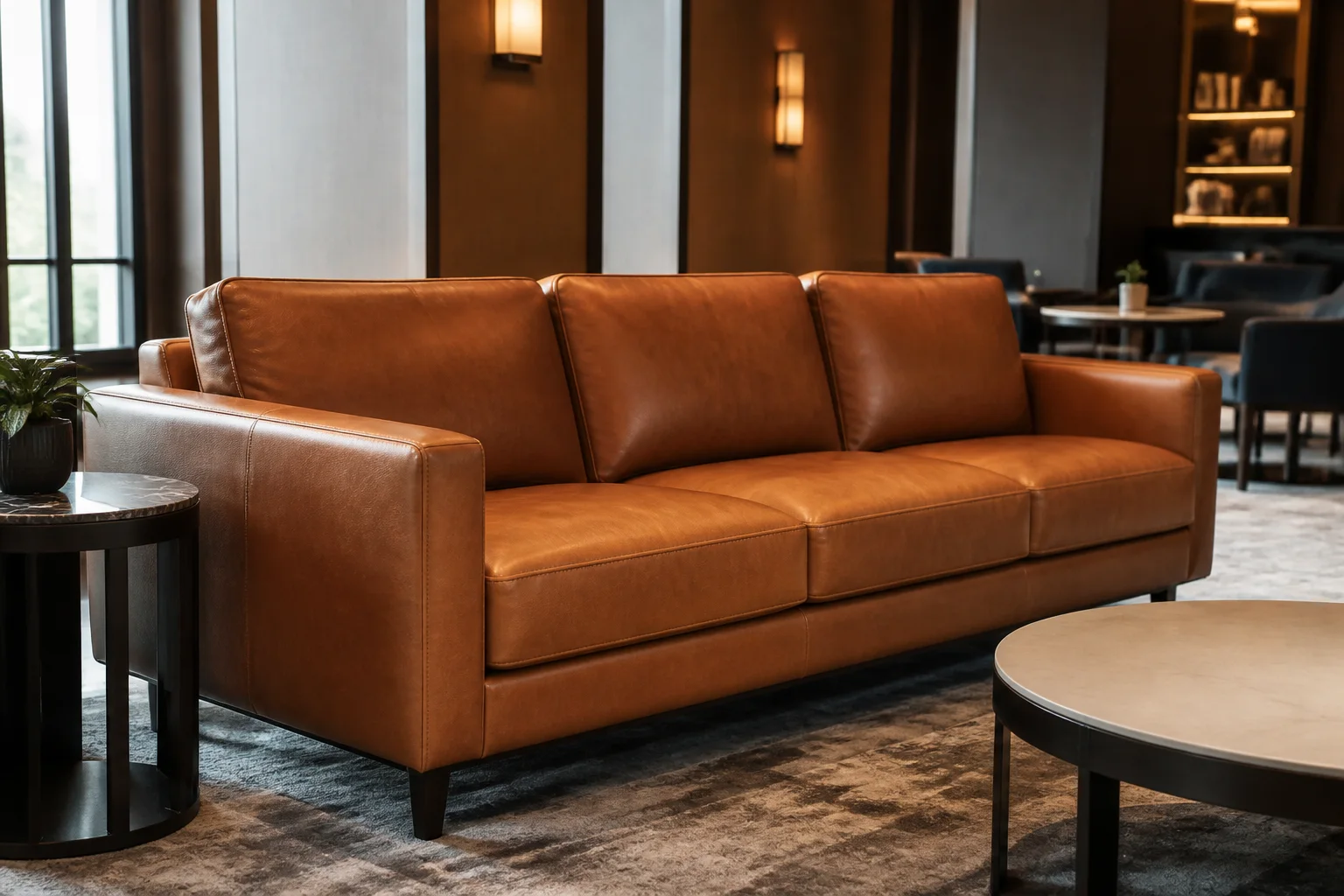
Real-Leather Sofa Verification at a Glance
- Request the exact material name, not simply leather sofa.
- Record the supplier and material code.
- Approve a physical swatch.
- Compare surface grain as a supporting clue.
- Inspect a legitimate backing or cut sample where provided.
- Look at seams and exposed edges without damaging furniture.
- Confirm which sofa surfaces use each material.
- Keep the approved specification with purchase records.
No single household test proves every modern upholstery construction. Finishes, embossing, coatings, adhesives, foam and packaging can change appearance, smell and feel. Combine physical observation with controlled documentation and supplier accountability.
What Does ‘Real Leather Sofa’ Actually Mean?
Real leather is a broad natural-hide category, not a complete quality or construction specification. Buyers may encounter full-grain, top-grain, corrected, split and other descriptions that require precise supplier definitions. The marketing phrase genuine leather may identify natural hide in some contexts but does not by itself describe grade, finish, thickness or application.
PU and other synthetic upholstery use manufactured surface and backing constructions. Bonded-leather products can contain processed leather fibers combined with binders and should not be represented as equivalent to a single natural hide. Terminology varies by market, so require a written definition appropriate to the transaction and destination.
Start With the Product Specification
Ask for the material name, leather type or construction, supplier, code, color, finish and stated application area. A quotation that says only leather sofa leaves too much room for interpretation. Connect the specification to the product drawing, approved sample and purchase order.
The strongest evidence is consistent documentation supported by a physical swatch and supplier records. Project buyers should resolve ambiguous phrases before approving price or bulk production. If a claim matters contractually, state the required definition and evidence rather than depending on a salesperson’s informal description.
Look at the Grain
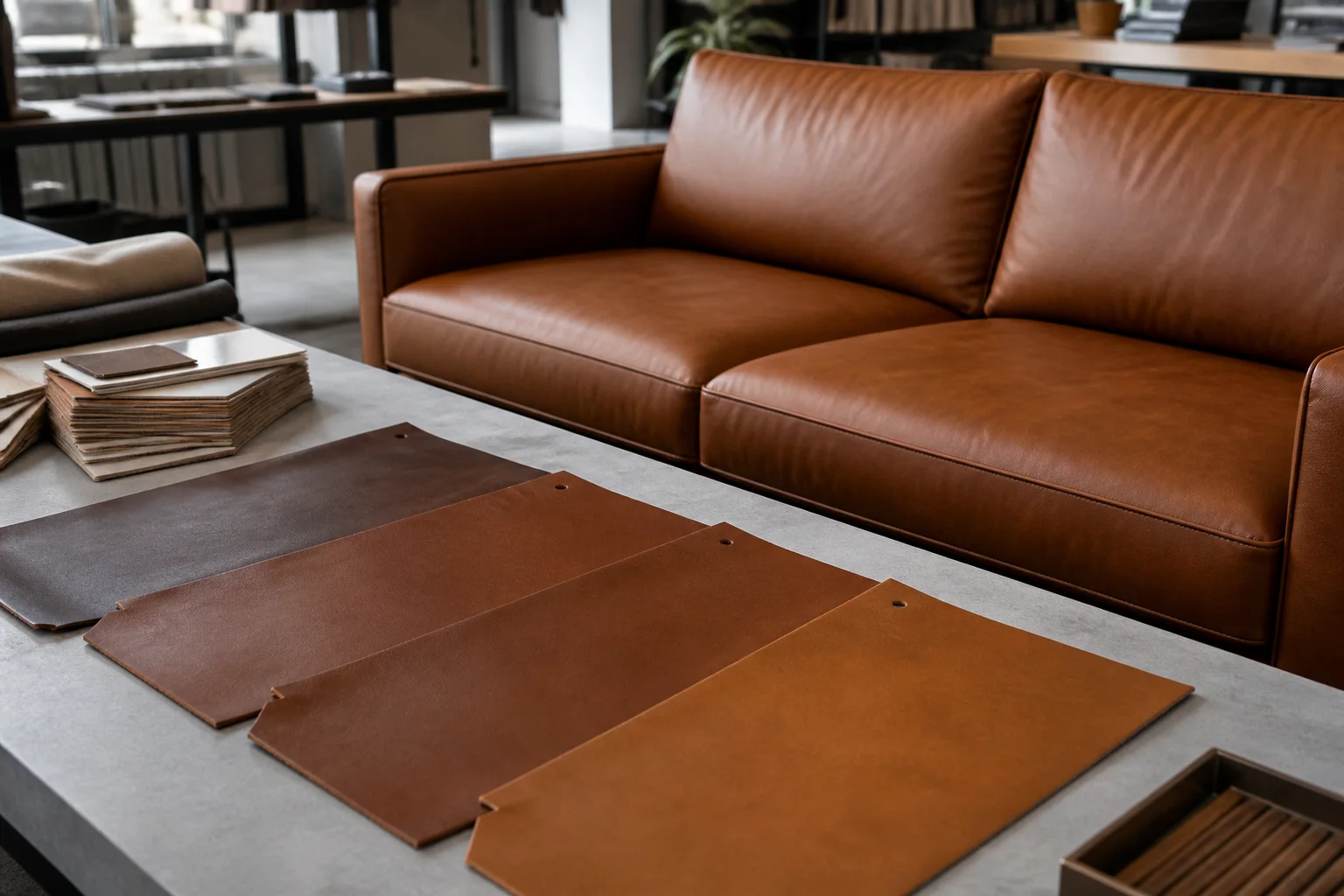
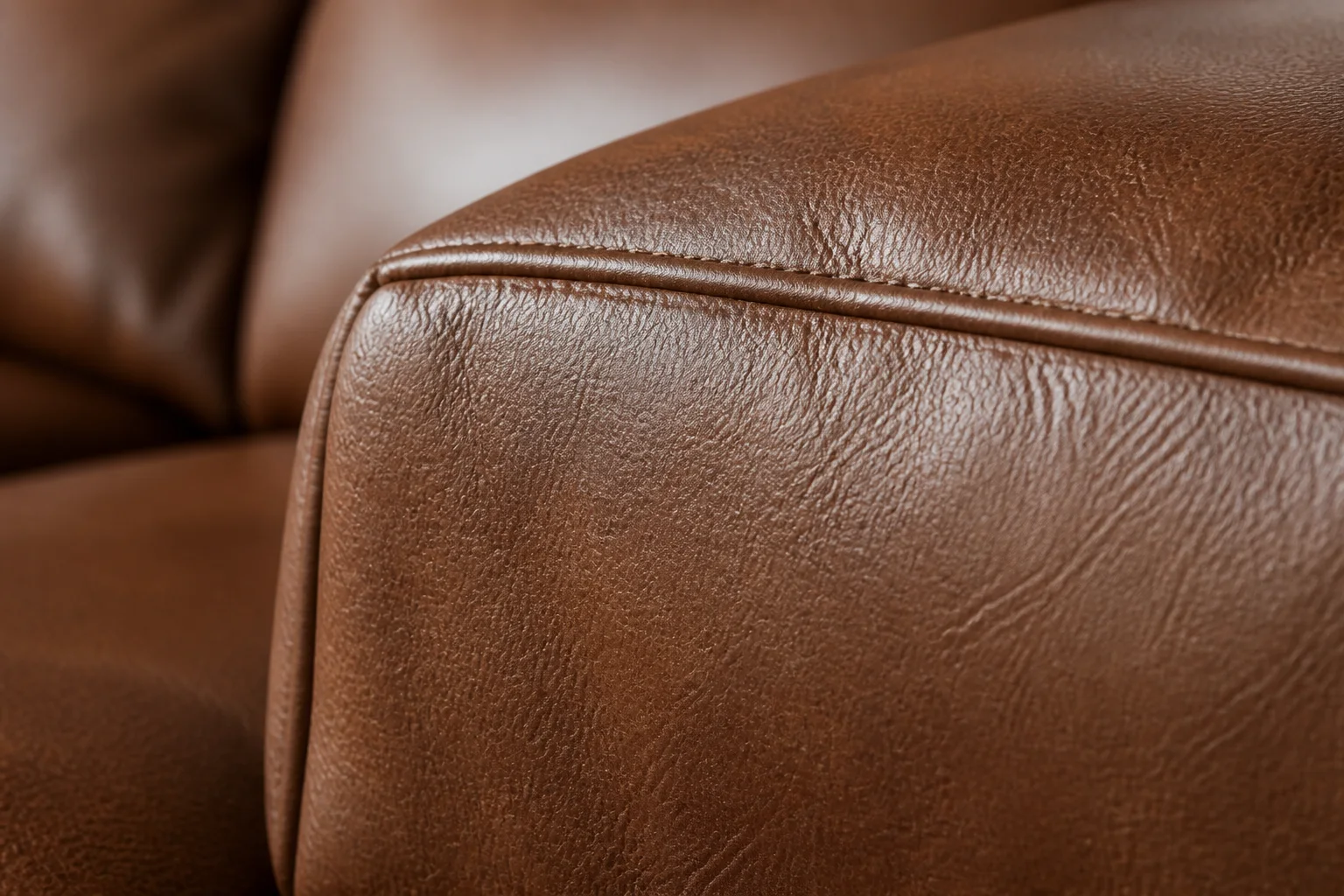
Natural leather can show pores, small variations and irregular grain. Those features may help an experienced buyer assess a sample. However, corrected and embossed leather can be intentionally uniform, while modern synthetic upholstery can reproduce pores and irregular patterns. Grain is therefore a clue, not proof.
Compare several areas under consistent light. A perfectly repeated pattern may suggest embossing, but embossing can appear on both natural and synthetic products. Do not reject or accept a material solely because it looks too regular. Return to the code, backing and documentation.
Check the Backing Where Possible
A legitimate loose swatch or exposed factory sample may reveal a fibrous underside on natural leather or a textile backing on many synthetic constructions. This can be informative when the sample is clearly tied to the supplied material code.
Do not unzip, peel, cut or otherwise damage a finished sofa to expose its backing. Hidden surfaces may be lined, laminated or inaccessible, and an unauthorized inspection can destroy the product without resolving the specification. Request a separate labeled swatch instead.
Examine Seams and Edges
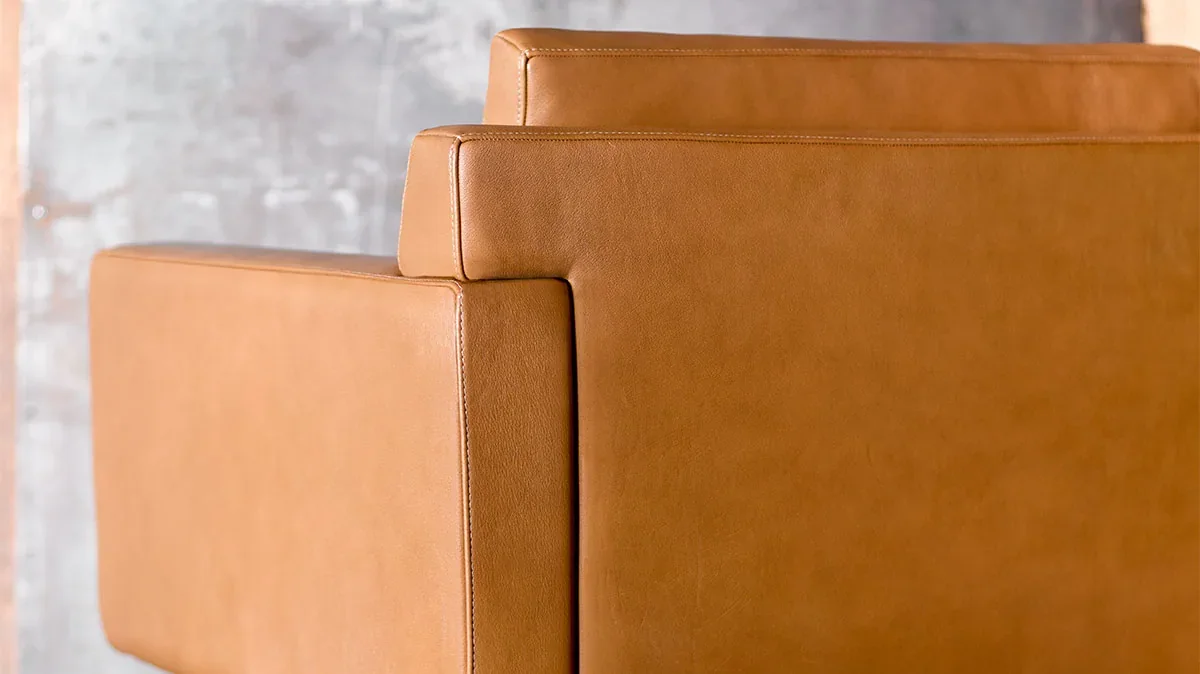
Seams, piping and removable sample edges can show thickness, layered construction and how the upholstery behaves when folded. Observe only areas the design legitimately exposes. A cleanly cut supplier swatch is far safer and more useful than pulling at a finished seam.
Edge appearance still requires care: coatings and folded seam allowances can conceal the substrate, while leather may be skived or backed for production. Use this evidence with the specification, not as an isolated trick.
Does Real Leather Smell Different?
Natural leather may have a recognizable odor, but smell is unreliable for verification. Finishes, dyes, adhesives, foam, timber, cartons and storage conditions all contribute to what a buyer notices when a sofa is opened.
Synthetic materials can also carry added fragrance or odors that change over time. Do not treat smells like leather as purchase evidence. A material code, labeled swatch and written specification are far more repeatable for a project team.
Does Real Leather Feel Different?
Natural leather may feel warm, flexible or varied, while some synthetic upholstery may feel more uniform. Yet finishing systems, corrected surfaces and advanced PU constructions narrow these differences. Temperature, humidity, padding and surface coating also affect touch.
Use tactile comparison only as a supporting clue against an approved sample. The relevant commercial question is whether production matches the agreed material and finish, not whether an unfamiliar person can identify it blindfolded.
Water Drop Test: Should You Do It?
Do not place water on a finished sofa merely to identify upholstery. Absorption depends on finish, protective coating and condition; a drop can leave a mark and still provide an ambiguous answer. Some finished leather is designed to resist water, while damaged synthetic surfaces may behave unexpectedly.
If a controlled material test is required, use a supplier-approved swatch and an appropriate documented method. Project procurement should rely on specifications and samples instead of improvised testing on completed furniture.
Burn Test: Do Not Use It
Never burn sofa upholstery to test whether it is leather. Fire can injure people, release hazardous fumes and permanently damage the sofa. It may also create an obvious fire risk around foam, adhesives and other combustible materials.
Similarly, do not cut, scratch or peel a finished product. Request the evidence the supplier should already be able to provide: a labeled sample, technical information, material code and confirmation of where it is applied.
Genuine Leather vs PU Leather for Commercial Projects
| Factor | Genuine leather | PU or synthetic upholstery |
|---|---|---|
| Appearance | Natural variation; finish can be corrected or embossed | Often more visually consistent; many grains and finishes |
| Consistency | Variation can occur between hides and batches | Typically easier to repeat visually, subject to production lots |
| Maintenance | Follow the exact leather finish guidance | Follow the exact synthetic material guidance |
| Cost | Commonly higher, depending on type and grade | Commonly lower, depending on specification |
| Project repeatability | Requires controlled hide and color approvals | Can support repeat programs when the code remains available |
| Color consistency | Natural variation should be expected and agreed | Often more uniform, but lot approval still matters |
The table is neutral because real leather is not always the correct choice. A luxury executive lounge may value natural variation and aging character. A high-turnover program may prioritize consistent color, controlled price and a particular cleaning method. Select against the design, operating and procurement brief.
Which Parts of a Sofa Are Actually Leather?
Some sofas use one upholstery on contact surfaces—the seat, front back and inner arms—and another on outside arms or rear panels. Others use the specified material throughout. Seeing leather on a cushion does not prove every upholstered face uses the same construction.
Request a material application map that colors or labels every surface. Tie the map to the quotation and approved sample. Terms such as leather match or leather combination must be defined explicitly so the buyer knows what is natural leather, what is synthetic and where each appears.
How Hotel Buyers Should Specify Leather Sofas
Hotel buyers should name the leather or synthetic construction, exact color and finish, upholstery locations, approved reference sample, cleaning requirement, quantity and room type. Public-area sofas can be viewed from all sides, while guestroom sofas may have different exposure and maintenance patterns.
Coordinate the sofa with hotel furniture specifications, but keep material evidence product-specific. Record permitted color variation and the procedure for approving production lots. Do not promise that all natural hides will appear perfectly identical.
How Office Buyers Should Specify Leather Sofas
Reception, executive lounge and waiting areas may use leather for a formal, tailored appearance or a project-approved synthetic alternative for consistency and maintenance. State the intended area, traffic, cleaning process, finish, color and the parts covered.
Review office reception furniture with the complete seating package. A material decision should align across sofas and chairs where required, while allowing documented differences between genuine leather and complementary materials.
How to Verify Leather Before Bulk Production
Approve a labeled swatch first. Record the supplier and material code. Review a finished sample or mock-up, confirm the upholstery-location map, and keep photographs and approval records. Before bulk production, ensure the purchase order references the same documents.
During production, compare the supplied batch with the retained approved sample under consistent light, allowing for agreed natural variation. Resolve any code substitution in writing before use. This workflow is more defensible than attempting to identify finished sofas by smell after delivery.
Questions to Ask a Sofa Manufacturer
- Is the upholstery genuine leather, split leather, bonded material, PU or another construction?
- What supplier and material code will be used?
- Which sofa surfaces use each material?
- Can you provide a labeled physical swatch?
- What finish and color variation should be expected?
- Can the same code be repeated for bulk or later orders?
- What cleaning method does the material supplier recommend?
- Will production be checked against the approved sample?
Clear answers should appear in controlled documents rather than chat messages alone. For a commercial order, connect them to the custom sofa specification, quantity, drawing and quotation.
Common Leather Identification Mistakes
The most common mistakes are trusting smell, expecting every natural hide to look irregular, assuming every uniform grain is synthetic, using destructive water or flame tests, and inspecting only one cushion. Another serious error is accepting a leather claim without confirming its application areas.
Avoid absolute shortcuts such as real leather always feels warm or synthetic leather always has fabric backing visible. Modern finishes and layered constructions complicate these observations. Verification should combine material evidence, supplier traceability and the finished-product approval process.
Material Documentation for Repeat Orders
Keep the approved swatch in a protected, labeled project file with supplier, collection, code, color, finish and approval date. Record the sofa drawing revision and upholstery map. Photographs support the record but do not replace the physical reference because camera and screen color varies.
For repeat orders, ask whether the original material remains available and whether a new production lot needs approval. Natural leather can vary, and synthetic products may also change between lots or discontinued constructions. A controlled replacement decision protects consistency better than requesting the same brown leather from memory.
Buyer Verification Checklist
| Evidence | What to confirm |
|---|---|
| Written specification | Exact type, finish and terminology |
| Material code | Supplier, collection, color and revision |
| Physical swatch | Surface, backing and approved reference |
| Application map | Material on every sofa surface |
| Finished sample | Workmanship, color and overall appearance |
| Purchase record | Same codes and maps referenced in the order |
| Bulk inspection | Production compared with retained approval |
Need commercial sofas in leather or a specified synthetic upholstery? Send the product reference, material preference, application areas, quantity and destination for quotation review.
Frequently Asked Questions
How can you tell if a leather sofa is real?
Use the written specification, labeled swatch, material code, backing or edge sample where legitimately available, application map and purchase documents together.
Does real leather always have irregular grain?
No. Corrected and embossed leather can look regular, while synthetic upholstery can imitate variation.
Can smell prove that a sofa is real leather?
No. Finishes, adhesives, foam and packaging make smell unreliable.
Should I use a water test?
Not on a finished sofa. It may mark the surface and still give an ambiguous result.
Is PU leather always worse for commercial projects?
No. Genuine leather and PU have different appearance, consistency, maintenance and cost tradeoffs; choose against the project brief.
Can only the seat be leather?
Yes. Different materials may be used on contact and non-contact surfaces, so request an upholstery application map.
How to Document a Material Approval
Create a material approval record that includes the supplier name, collection, code, color, finish, claimed construction, physical swatch and approval date. Attach the upholstery application map and the finished-sofa drawing. Ask the supplier to label whether the sample represents natural leather, split leather, bonded material, PU or another synthetic construction. If terminology has a specific legal meaning in the destination market, the purchasing documents should use that definition consistently.
Keep a retained swatch for bulk comparison and later replacement orders. Evaluate production under similar lighting and allow only the variation agreed for the material. If the supplier proposes a substitute, treat it as a new approval rather than assuming a similar appearance is equivalent. This traceable process protects both buyer and manufacturer and avoids destructive testing after the sofas have been completed.
A bulk inspection should compare several finished units with the retained material and sofa sample. Review color, sheen, grain character, panel selection, seams and the documented upholstery locations under consistent lighting. Natural variation should be judged against the approved expectation rather than treated automatically as either a defect or proof of authenticity. Check outside backs and arms as well as contact surfaces, because combination upholstery can be missed when inspection focuses only on seat cushions. Record the batch and material code in the inspection report. If the buyer needs independent verification, arrange it on labeled supplier samples through an appropriate qualified service using an agreed method; do not improvise destructive tests on finished sofas. For future replacement orders, reconfirm availability and approve a new lot when required. This evidence-based workflow gives hotel and office buyers a more reliable answer than appearance, smell or touch alone.
The buyer should also distinguish material identity from performance. Confirming natural leather does not by itself prove a particular durability, colorfastness, cleanability or suitability claim. Any required performance should be written separately and supported by evidence appropriate to the project and destination. This keeps the identification guide accurate and prevents the phrase real leather from becoming an unsupported quality guarantee.
Conclusion
How to tell if a sofa is real leather is not a one-trick visual test. Grain, touch, smell, backing and seams can provide clues, but modern finishes and synthetic materials make each clue imperfect. For a hotel, office or wholesale purchase, rely on an exact written specification, labeled sample, application map, approved mock-up and production records. That process verifies what was ordered without damaging the sofa or overstating what appearance alone can prove.