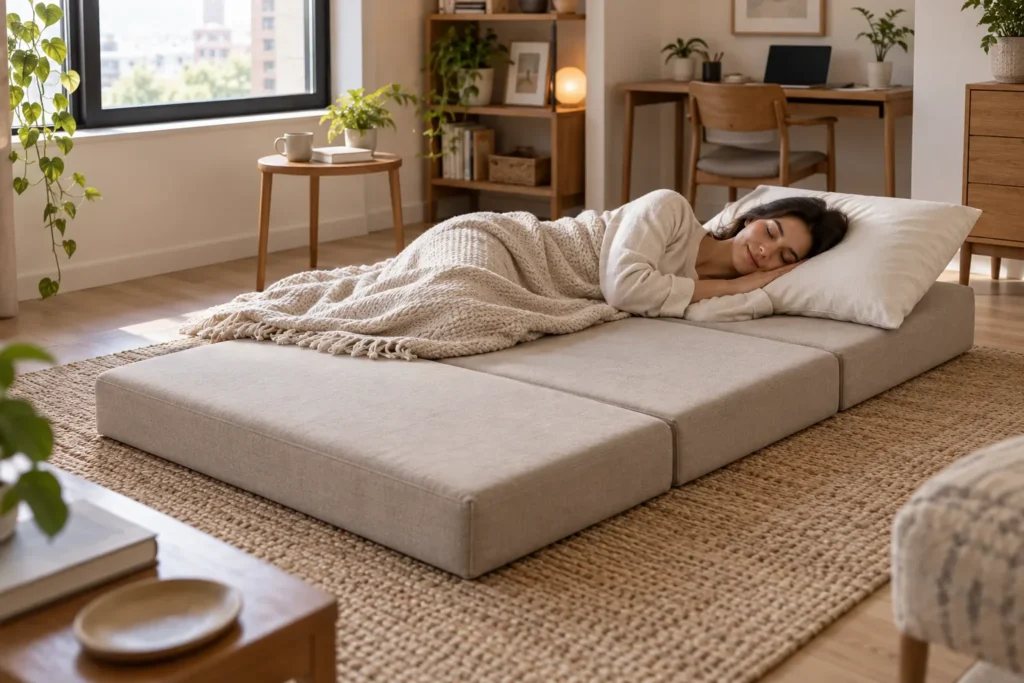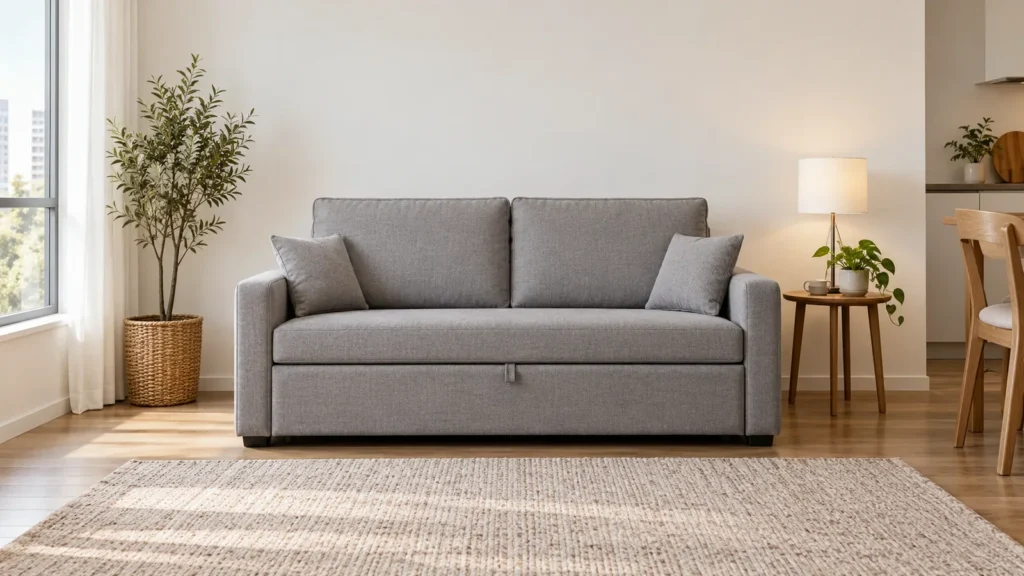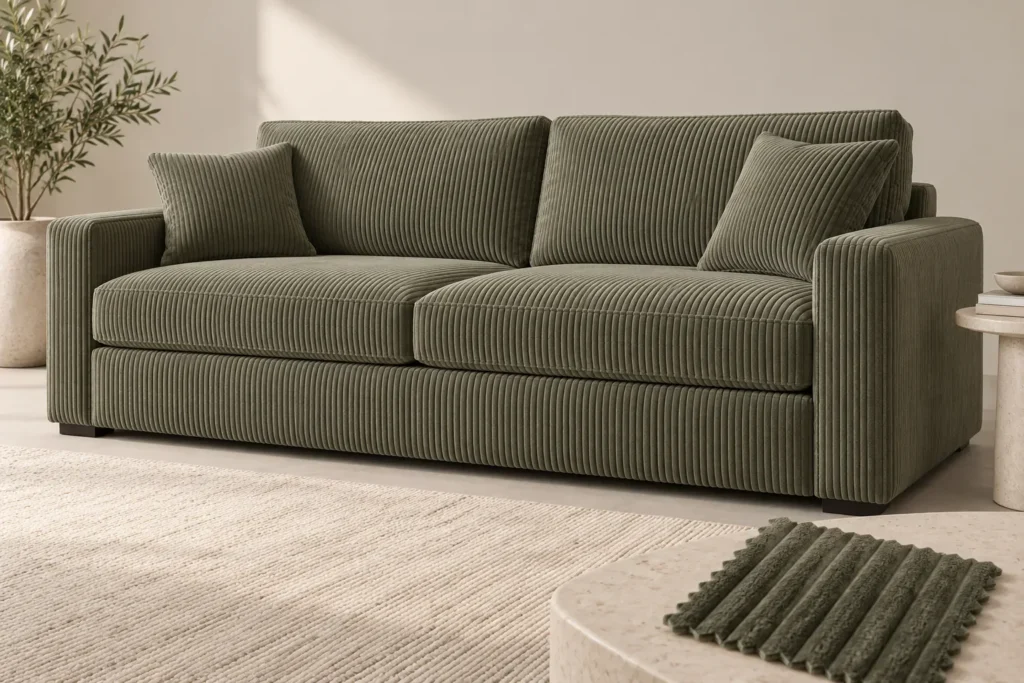

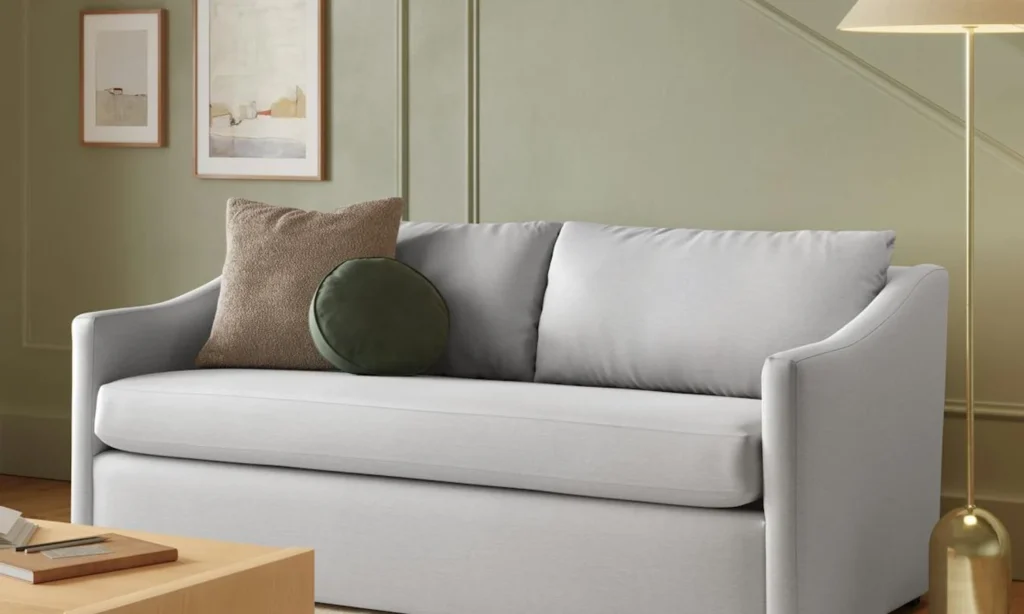
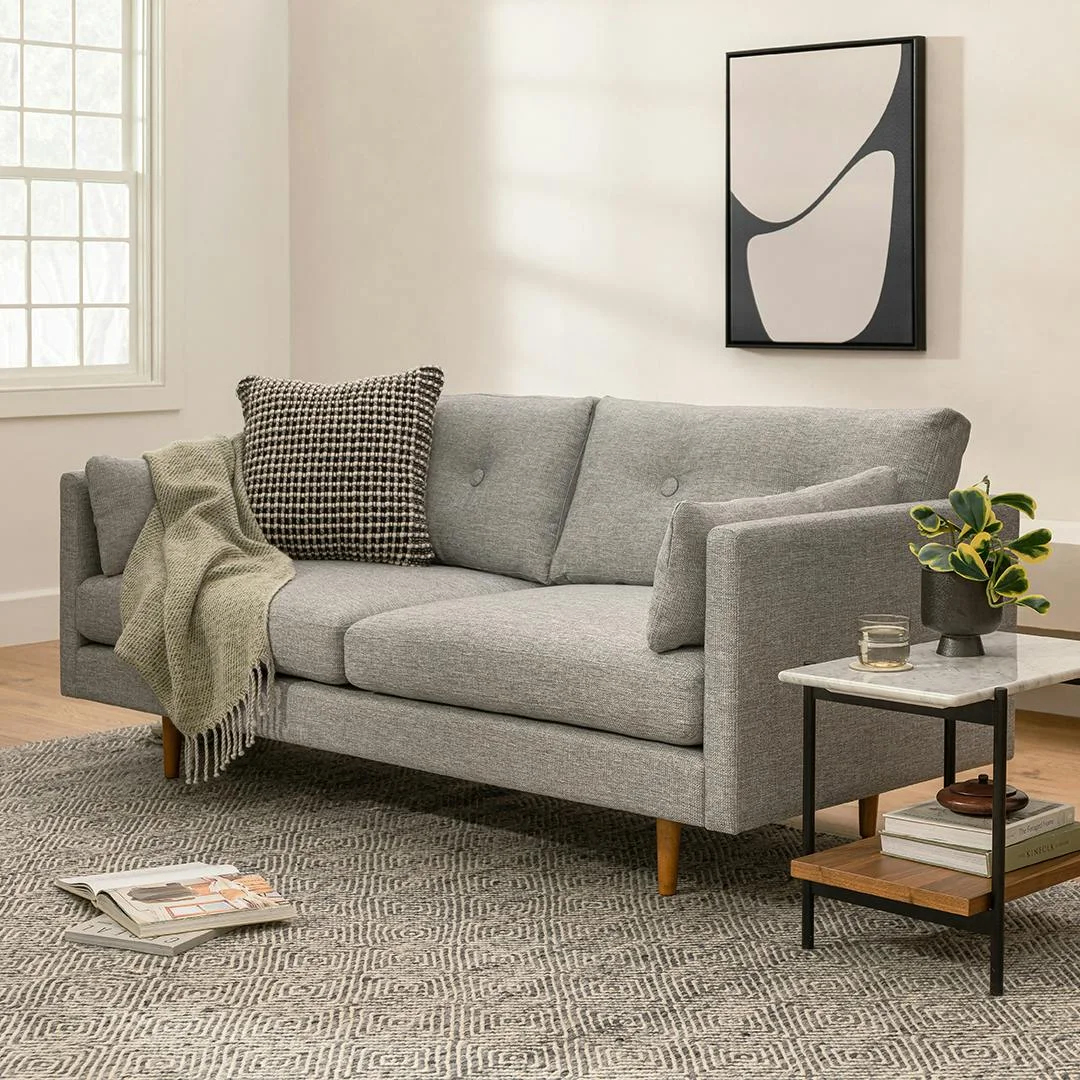
A loveseat sofa is usually the right choice when a project needs comfortable two-person seating without giving a compact room the footprint of a full sofa. For apartments, hotel guestrooms, reception corners and show units, buyers should confirm the outside width, usable seat depth, arm thickness, back height and circulation before choosing a style. A well-specified 2 seater loveseat sofa can make a room feel complete; a poorly sized one can block the bed route, crowd a coffee table or look underscaled beside other furniture.
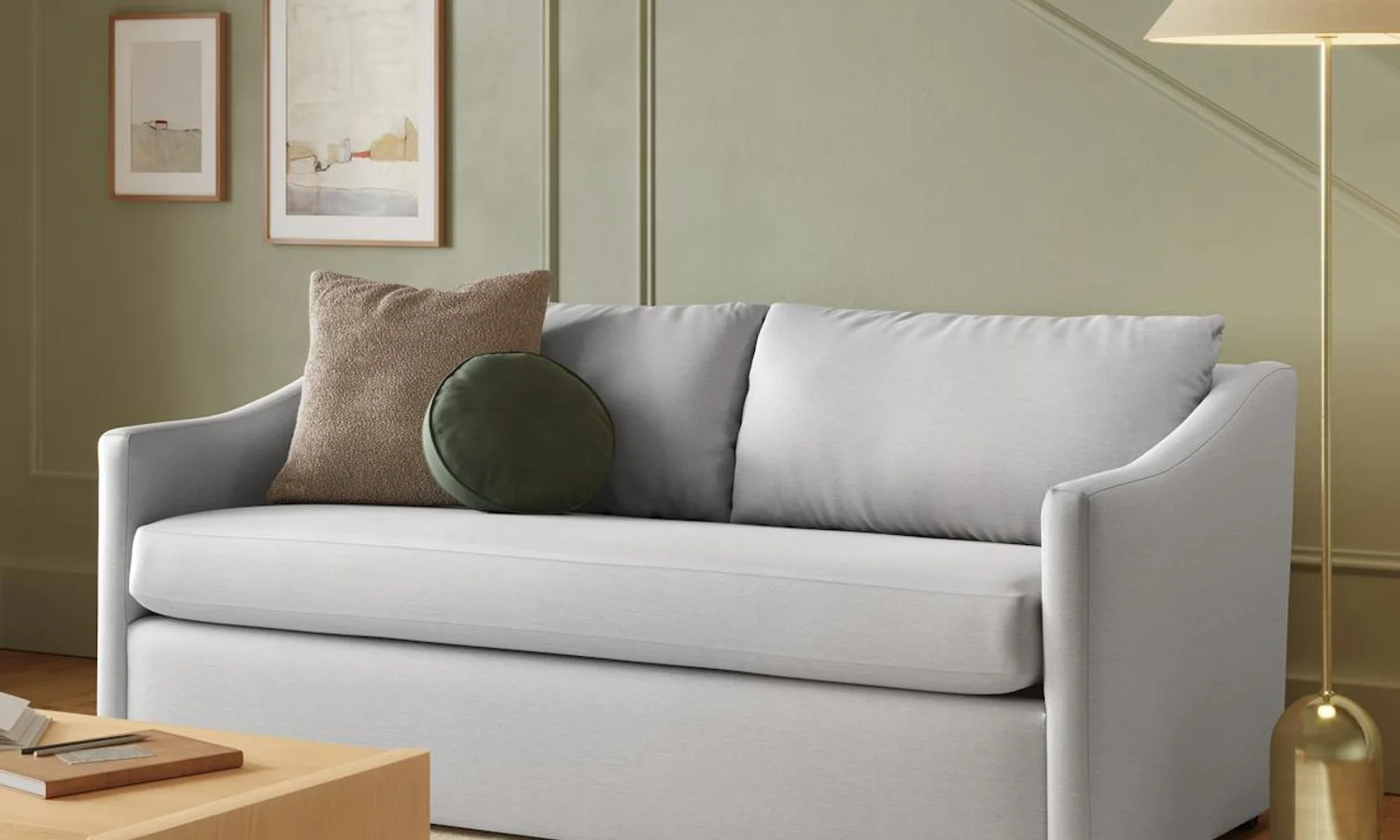
Send your room size, loveseat sofa reference photo and quantity to get layout-based sofa suggestions.
Loveseat Sofa: definition and buying context
A loveseat sofa is a two-seat upholstered sofa with a noticeably smaller seating span than a typical three-seat sofa. It is not defined by one universal measurement: slim-arm models can seat two within a narrow overall width, while wide-arm or loose-cushion models occupy much more wall space. For procurement, the useful definition is a compact two-person sofa whose comfort and scale are specified rather than assumed from a product photo. The term is often used alongside 2 seater loveseat sofa, small loveseat sofa and loveseat couch for small spaces, but buyers still need a drawing and measured dimensions.
A regular sofa is usually selected to anchor a larger living room, while a loveseat sofa is selected to solve a smaller seating zone. A generic 2-seater sofa may be wider, deeper or more formal than a loveseat; therefore the label alone does not guarantee fit. A commercial loveseat sofa also differs from a residential display piece because repeated sitting, cleaning routines, arm contact and color consistency must be considered. In a hotel room, a loveseat should support short stays, luggage movement and housekeeping access rather than imitate a deep residential lounge sofa.
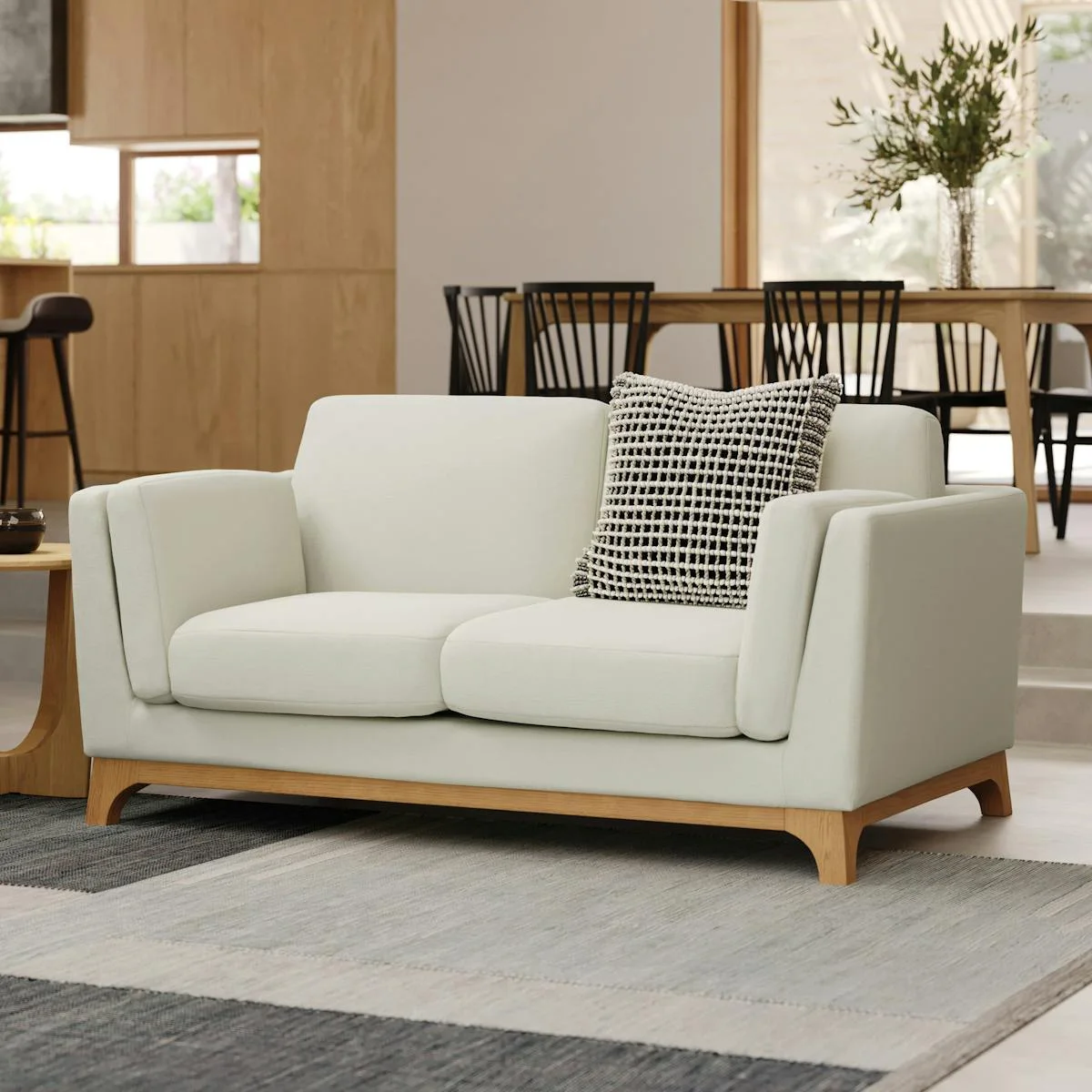
Loveseat Sofa types
| Loveseat Sofa Type | Best For | Advantages | Limitations | B2B Buying Notes |
|---|---|---|---|---|
| Modern loveseat sofa | Apartments and show units | Clean scale and flexible styling | May feel too low if not measured | Confirm arm profile and seat height |
| Compact loveseat sofa | Small rooms and guest rooms | Preserves circulation | Can compromise seat depth | Approve usable seat depth |
| Hotel room loveseat sofa | Guestrooms and suites | Creates a defined seating zone | Must suit cleaning routines | Review layout and upholstery sample |
| Commercial loveseat sofa | Reception and waiting areas | Built around repeated use | Needs practical fabric selection | Specify expected traffic and frame |
| Upholstered loveseat sofa | Apartments and lounges | Broad fabric and comfort options | Fabric behavior varies | Approve swatch, foam and seams |
Use the table to narrow an option, then test it against the actual room and product drawing. A label is only a starting point: the approved specification must capture dimensions or upholstery details, intended use, quantity and the visual reference that the supplier is pricing.
Loveseat Sofa dimensions and layout planning
Start the plan with the finished room, not the sofa catalogue. Mark the bed, desk, wardrobe swing, luggage position, electrical points, door arc and route to the window. Then reserve a comfortable walking path before choosing the loveseat footprint. Record both overall depth and usable seat depth: a small loveseat sofa with thick back cushions can be shallow outside but restrictive inside, while a deep lounge profile can consume the room even when the width looks acceptable. A coffee table should serve the seated user without becoming an obstacle; test the distance on the floor plan rather than relying on a styled image.
Serviced apartments often use a loveseat to create a separate living zone beside a dining table or television wall. Hotel rooms need a calmer, easier-to-maintain format that does not interfere with luggage or the bed route. Office reception areas benefit from firmer sit support and arm profiles that remain orderly after repeated use. Showrooms can use a modern loveseat sofa to demonstrate scale, but the displayed version should be accompanied by the actual specification sheet. Guest rooms and small lounges need the same discipline: decide whether the piece is for two short stays, one person lounging, or a waiting area, then align depth, cushion feel and table placement with that use.
| Dimension Item | Why It Matters | What Buyers Should Confirm |
|---|---|---|
| Overall width | Controls wall fit and seating span | Dimensioned drawing and arm-to-arm width |
| Overall depth | Controls circulation | Frame depth including back cushions |
| Seat depth | Controls actual comfort | Usable cushion depth, not catalogue label |
| Seat height | Affects sit-to-stand comfort | Finished height with cushions |
| Back height | Affects visual scale and support | Height from finished floor |
| Armrest width | Can consume compact-room width | Inside seating width and arm profile |
| Walkway clearance | Keeps routes usable | Door, wardrobe and luggage paths |
| Coffee table distance | Keeps table reachable | Distance from seat edge |
| Room layout | Connects all dimensions | Floor plan with adjacent furniture |
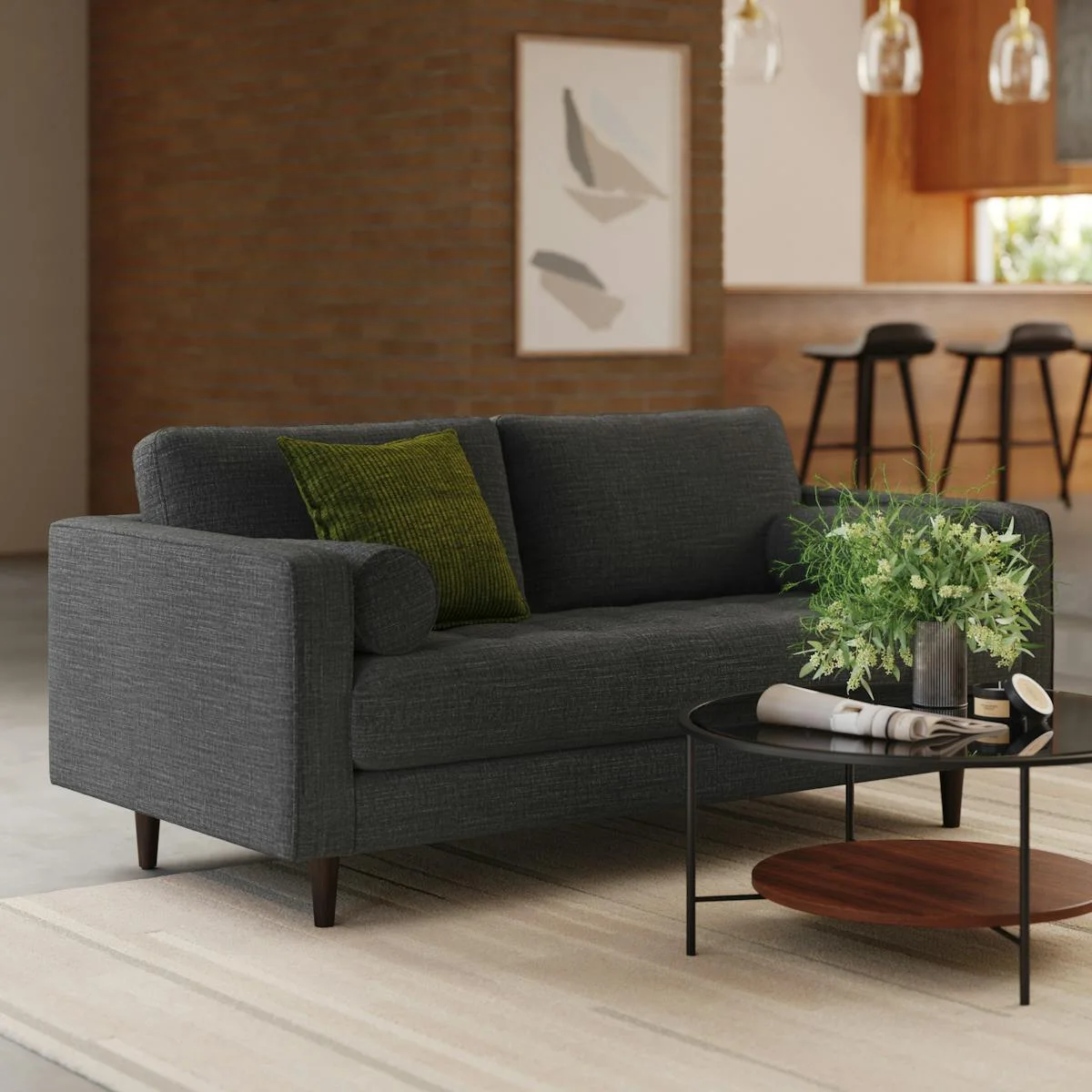
Before ordering loveseat sofas, confirm the room size, seat depth, upholstery material and expected usage frequency.
Upholstery, frame and foam considerations
Upholstery should follow use frequency and visual target. A textured woven fabric can soften an apartment scheme but must be reviewed for color, cleanability and seam appearance. Velvet can give a hotel room loveseat sofa a richer look, yet buyers should review pile direction and maintenance expectations. PU leather or leather-look upholstery can simplify wipe-down routines in some reception settings, but its temperature, appearance and aging should be judged with a sample. Confirm the frame proposal, suspension approach, foam target and leg material together; comfort cannot be evaluated by fabric alone.
For material approval, ask for an upholstery swatch and a dimensioned drawing that identifies the cushion, arm and leg construction. If a project uses several room types, list each sofa format separately so a compact unit is not quoted with the same depth or fabric as a lobby piece.
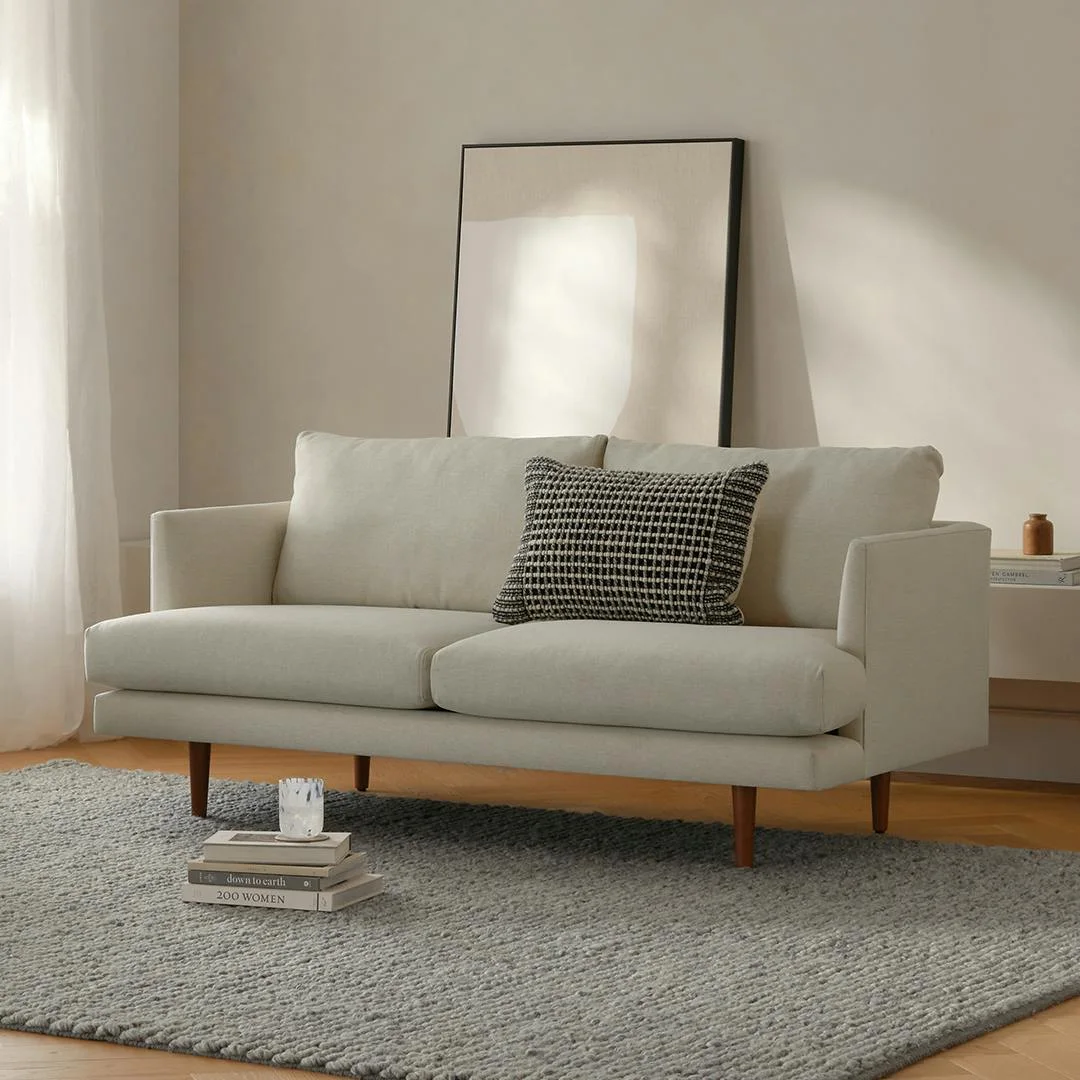
Common mistakes when sourcing loveseat sofa
The most common sourcing mistake is approving a photo without a dimensioned drawing. Other avoidable errors are measuring only the wall width, ignoring the arm width, selecting overly deep cushions for a narrow room, using a light color without considering service routines, and mixing two different fabric batches in one visible area. Buyers also lose time when they ask for a quotation without a project type, quantity, target market or reference image. A short specification sheet prevents the supplier from guessing which part of the image matters: the silhouette, the fabric, the height, the leg finish or the cushion feel.
When comparing suppliers, keep the same reference photo, dimensions, fabric direction and quantity in every request. That makes pricing discussions meaningful and helps the team identify whether a difference comes from construction, upholstery, scope or a misunderstood layout. For related decisions, review custom sofas and couches, sofa product references, hotel furniture planning, apartment project furniture support, materials and finishes, and send a sofa quotation request.
Project specification and approval workflow
Treat the loveseat sofa as a specification package, not an isolated catalogue item. The package should identify the intended room, overall product dimensions, visual reference, upholstery direction, cushion target, leg or base finish and quantity. This lets a buyer compare quotations on the same basis and avoids a situation where one supplier prices a compact version while another assumes a larger or deeper construction.
Separate fixed requirements from preferences. A fixed requirement can be a maximum width, a required chaise orientation, a fabric color code or a cleaning need. A preference can be a softer arm, warmer texture or different leg appearance. This distinction helps a supplier identify which changes affect construction and which can be reviewed after the basic room fit has been confirmed.
Use a plan-view drawing alongside the product image. A front elevation may communicate style but does not show how the loveseat sofa projects into a route, aligns with a table or relates to a door swing. Include the adjacent furniture and the usable circulation zone. For repeated rooms, state whether the same orientation and material apply to every room type or whether the BOQ has variations.
Ask for the main dimensions in writing before comparing price: overall width and depth, usable seat depth, seat height, back height and any component measurements that control installation or comfort. For a material-led purchase, the same discipline applies to the upholstery code, texture, sample approval and the exact sofa construction that will receive the fabric. Numbers and samples provide a much clearer basis than descriptive phrases such as compact, deep, premium or easy clean.
Sample review should answer practical questions. Does the cushion feel suit the expected stay or waiting time? Does the arm profile make sense beside a bed, desk or table? Does the selected material look consistent around seams and corners? Does the proposed color work beside the approved finishes? Record the answer with the reference photo and revision date so later discussion does not rely on memory.
For multi-room projects, create a simple comparison sheet with one line for each sofa format. Note the room type, drawing number, quantity, dimensions, material code, color reference, base finish and any customization. This makes it easier to detect when a supplier has applied the same loveseat sofa specification to rooms that actually have different conditions or traffic patterns.
A price difference should be investigated, not automatically accepted or rejected. Check whether it reflects a different frame proposal, foam target, fabric grade, dimensions, number of cushions or included hardware. A lower price can be based on a different assumption; a higher price can include a feature the project does not require. Align the scope first, then evaluate the quote in relation to the room and use case.
Keep the approved reference accessible to the procurement, design and site teams. A saved swatch, dimensioned drawing and marked-up product image help the team verify the product before bulk production and when later phases are discussed. They also give a replacement or repeat-order conversation a stable reference point without making unsupported claims about prior batches.
The most useful RFQ is concise but complete: send the floor plan or room dimensions, the reference image, target size, material direction, quantity, target market and deadline for the quotation decision. If a requirement is undecided, say so explicitly and ask for options. That produces a more practical discussion of the loveseat sofa than asking a supplier to infer a complete specification from one image.
Before the order is confirmed, read the quotation back against the approved file. Check that the title, room type, quantity, dimensions, selected material, color reference and any special configuration describe the same product that was reviewed. This final comparison is valuable because a project may contain similar sofas with small but important differences in size, orientation or upholstery. It also gives the buyer a clear list of points to resolve before a purchase decision is made, rather than discovering an inconsistency after the project team has moved on to other furniture packages.
Make one person responsible for consolidating comments before a revision is requested. When design, purchasing and operations each send separate changes, a supplier can receive conflicting instructions on dimensions, comfort or upholstery. A single marked-up file with dated decisions protects the project intent and makes it easier to confirm which version is being priced. It also keeps optional styling ideas from accidentally becoming fixed production instructions.
Finally, retain the approved drawing, material reference and quotation summary with the project furniture list. These records are useful when the project needs an additional room, a replacement discussion or a later purchasing phase. They do not substitute for reviewing the new order, but they provide a clear starting point and reduce avoidable interpretation differences between the buyer and supplier.
Buyer checklist before quotation
Prepare the following details before requesting pricing. They allow a supplier to respond with a relevant suggestion instead of a generic sofa offer.
- Project type
- Room size
- Floor plan
- Loveseat sofa type
- Overall width
- Overall depth
- Seat depth
- Seat height
- Back height
- Armrest style
- Frame material
- Foam requirement
- Upholstery material
- Color reference
- Quantity
- Target market
- Reference photos
- Customization requirement
Why include HUAXUAN in your supplier comparison
HUAXUAN is a B2B furniture website focused on sofas, sofa beds, beds, chairs and project furniture. It is suitable for buyers who need reference-photo-based discussion, project inquiry, quantity quotation, OEM / ODM discussion where applicable, and furniture list review. Buyers can use HUAXUAN Furniture as one comparison point when they need a sofa discussion based on references, a project inquiry, quantity quotation, applicable OEM / ODM discussion, or a furniture-list review. The useful inquiry is specific: include room information, selected style, dimensions, material direction and quantity so the conversation can focus on fit and specification rather than broad claims.
Send your loveseat sofa style, dimensions, material requirement and quantity to HUAXUAN for B2B quotation support.
FAQ
What width is typical for a loveseat sofa?
There is no single correct width. Confirm the outside width, inside seating width and arm thickness against the room plan; a two-seat model can vary substantially by arm style and cushion construction.
Is a loveseat sofa suitable for a hotel room?
Yes when it leaves a clear route around the bed and luggage area, uses an upholstery appropriate to the expected service routine, and has a comfortable but controlled seat depth.
How is a loveseat different from a standard 2-seater sofa?
The terms overlap. For B2B purchasing, rely on measured width, depth, usable seat space and intended room use instead of the marketing name.
What should be sent for a loveseat sofa quotation?
Send the room plan, reference photo, target overall dimensions, upholstery direction, quantity, target market and any requested changes to arms, legs or cushion feel.