A restaurant booth seating manufacturer must understand more than upholstery style. Commercial booths need correct dimensions, durable frames, cleanable materials, comfortable back angles, consistent branding and delivery labels that support installation across cafes, diners, restaurants and chain rollouts. The right booth program improves seat count and dining comfort, while the wrong size can block aisles, reduce table clearance and create costly site changes. Buyers should prepare a floor plan, seating layout, material direction and store rollout schedule before requesting a quote.
Send your restaurant floor plan and seating quantity to get custom booth seating layout and quotation advice.
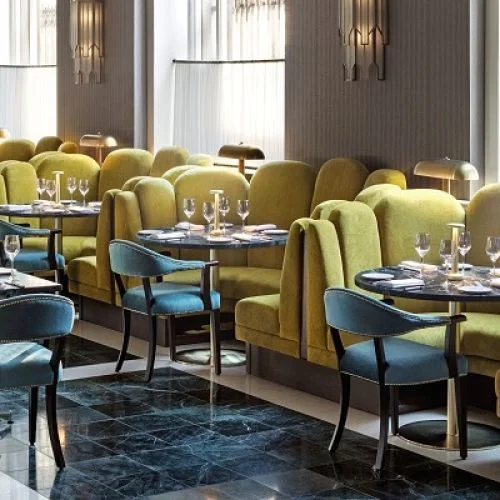
Why Restaurant Booth Seating Needs a Different Specification
Restaurant booth seating is used harder than residential banquette seating. Guests slide in and out many times a day. Staff wipe surfaces repeatedly. Tables move, floors are cleaned and high-back booths may act as space dividers. A manufacturer has to consider frame strength, foam recovery, fabric cleanability, table clearance, aisle width and installation sequence.
For project buyers, the main goal is repeatable fit. A single custom booth may be simple, but a chain rollout needs the same comfort, color, label system and installation logic across many stores. The manufacturer should be able to read floor plans, confirm booth dimensions and support carton labels by store, zone or installation batch.
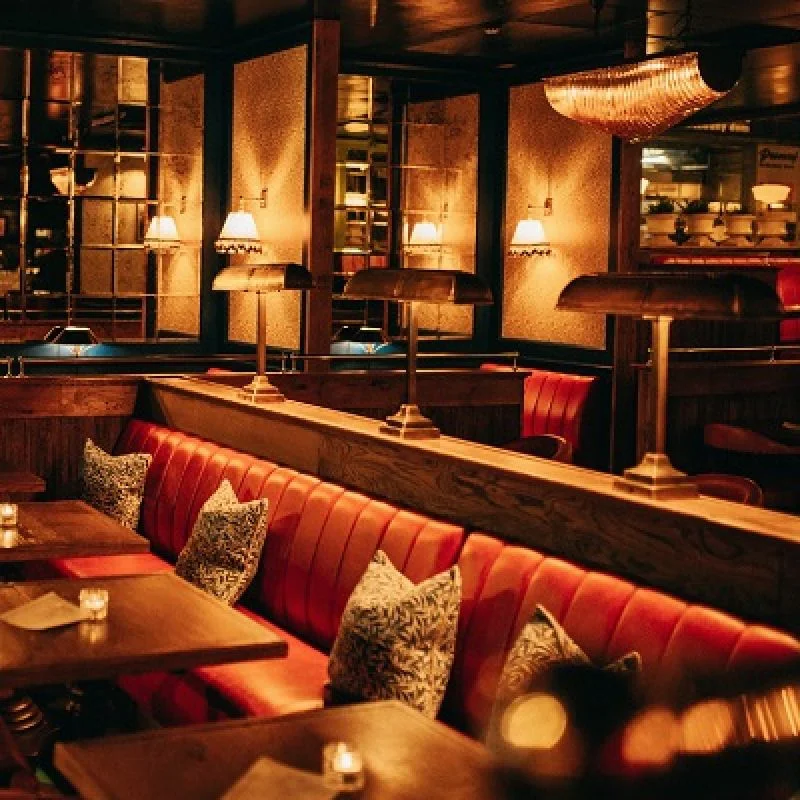
Common Restaurant Booth Seating Types
| Booth type | Best use case | Space requirement | Seating capacity | Customization points |
|---|---|---|---|---|
| Straight booth seating | Wall runs, cafes, casual dining | Efficient linear wall space | 2-4 per table section | Length, back height, upholstery and base finish |
| L-shape booth seating | Corners and compact restaurants | Corner footprint | 3-5 depending on table | Left/right orientation, corner radius and table position |
| U-shape booth seating | Family dining and semi-private zones | Larger footprint | 4-8 depending on size | Opening width, back curve and table access |
| Banquette seating | Long wall seating and cafes | Continuous wall length | Flexible by table count | Segment length, back panel, storage and fabric |
| Double booth seating | Aisle seating with tables on both sides | Central floor area | 4-8 across two tables | Back height, base width and floor fixing |
Straight Booth Seating
Straight booths are the most common option for wall runs and standard table layouts. They are efficient, easy to repeat and simple to label by length. Buyers should confirm whether each unit is single-sided against a wall or double-sided for aisle use.
L-Shape Booth Seating
L-shape booths turn corners into usable seats. They are useful for cafes and small restaurants, but the corner radius and table leg position must be planned carefully. A poorly placed table base can make entry uncomfortable.
U-Shape Booth Seating
U-shape booths create a more private dining area. They need more space and a clear entry opening. For family restaurants or premium dining zones, they can increase comfort and visual impact when the table size matches the seating curve.
Banquette Seating
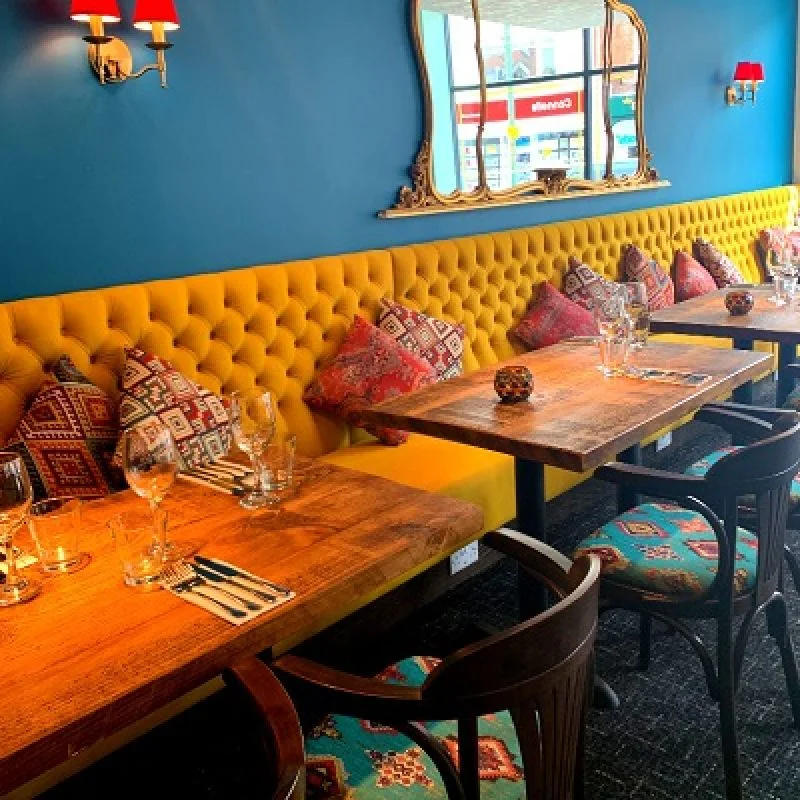
Banquette seating uses a long upholstered bench, usually along a wall. It gives flexible table spacing and can support cafes, hotel restaurants, bars and chain restaurants. Buyers should decide whether the banquette is built in, freestanding or modular for shipping.
Double Booth Seating
Double booths use one shared back with seating on both sides. They can increase seat count in central aisles, but they require careful aisle spacing and floor protection. For chain rollouts, double booths should have consistent base construction and clear carton labels.
Restaurant Booth Dimensions Buyers Should Confirm
| Dimension | Typical planning range | Recommended application |
|---|---|---|
| Seat height | 17-19 in before compression | Most dining tables |
| Seat depth | 18-22 in | Casual dining, cafes and diners |
| Back height | 36-48 in or custom | Low privacy to high-back zones |
| Table clearance | About 10-12 in from seat front to table edge | Comfortable entry and dining posture |
| Aisle clearance | Check local code and service path | Staff movement and accessibility |
The exact dimensions depend on the table, concept and local code, but every buyer should confirm seat height, seat depth, back height, base depth, table clearance and aisle clearance. The booth should feel comfortable after foam compression, not only on a drawing. If cushions are thick, the seat height may change after use.
Back Height, Seat Depth and Comfort Level
Back height changes privacy, acoustics and the visual weight of the dining room. A low back can feel open and casual. A high back can create separation in busy restaurants or hotel dining areas. Seat depth controls comfort and table reach. If the seat is too deep, guests may lean forward to eat. If it is too shallow, the booth feels cheap and uncomfortable.
Foam density and back angle are part of the same decision. A restaurant booth seating manufacturer should help match foam firmness to expected use. Diner booths, cafe banquettes and premium restaurant booths do not need the same cushion feel. Request a sample seat or material mockup if the order covers many stores.
Commercial Materials and Cleanability
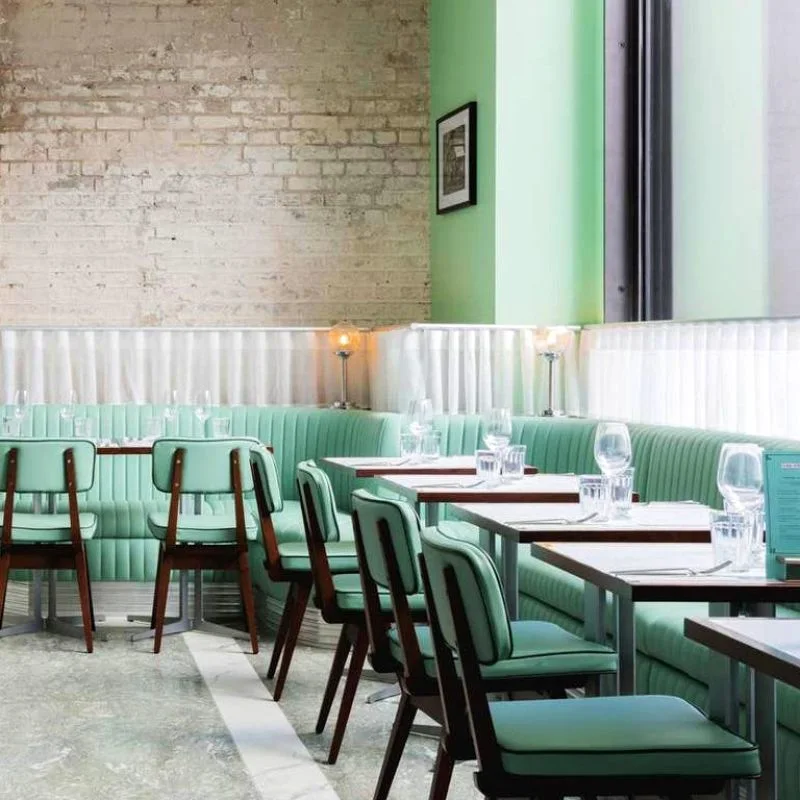
Restaurant seating must be easy to clean. Vinyl, leather-look upholstery, performance fabric and treated textiles are common choices. The best material depends on the menu, brand, climate and cleaning routine. A coffee shop may prioritize warm fabric texture. A quick-service restaurant may prefer wipeable vinyl. A hotel restaurant may need a more premium look with commercial durability.
Buyers should confirm fabric code, color tolerance, abrasion, stain resistance, seam direction and whether replacement upholstery can be supplied later. For chain projects, record the approved material and keep a control sample. Small color changes can become obvious when stores are photographed side by side.
Custom Booth Seating for Cafes, Diners and Chain Rollouts
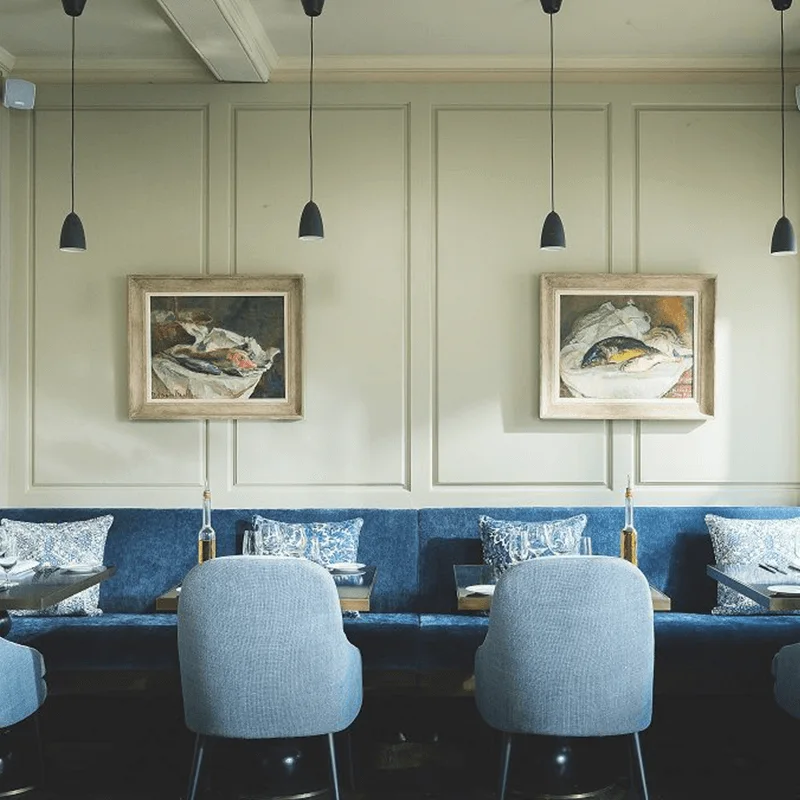
Cafes often need compact booths that preserve aisle space and create a warm atmosphere. Diners may need classic high-back booths with wipeable upholstery. Chain restaurants need consistency across many locations. Each use case can be served by a custom booth program, but the manufacturer needs clear drawings and a repeatable specification.
For multi-store rollouts, ask the supplier to prepare model codes by booth type, store number, fabric code and installation area. The same model may need small length changes by store, so the drawing and label system must prevent confusion. Internal HUAXUAN pages that support this planning include restaurant furniture project support, restaurant project furniture examples, custom furniture manufacturer support and send your BOQ for quotation.
Carton Labels, Room Labels and Multi-Store Delivery
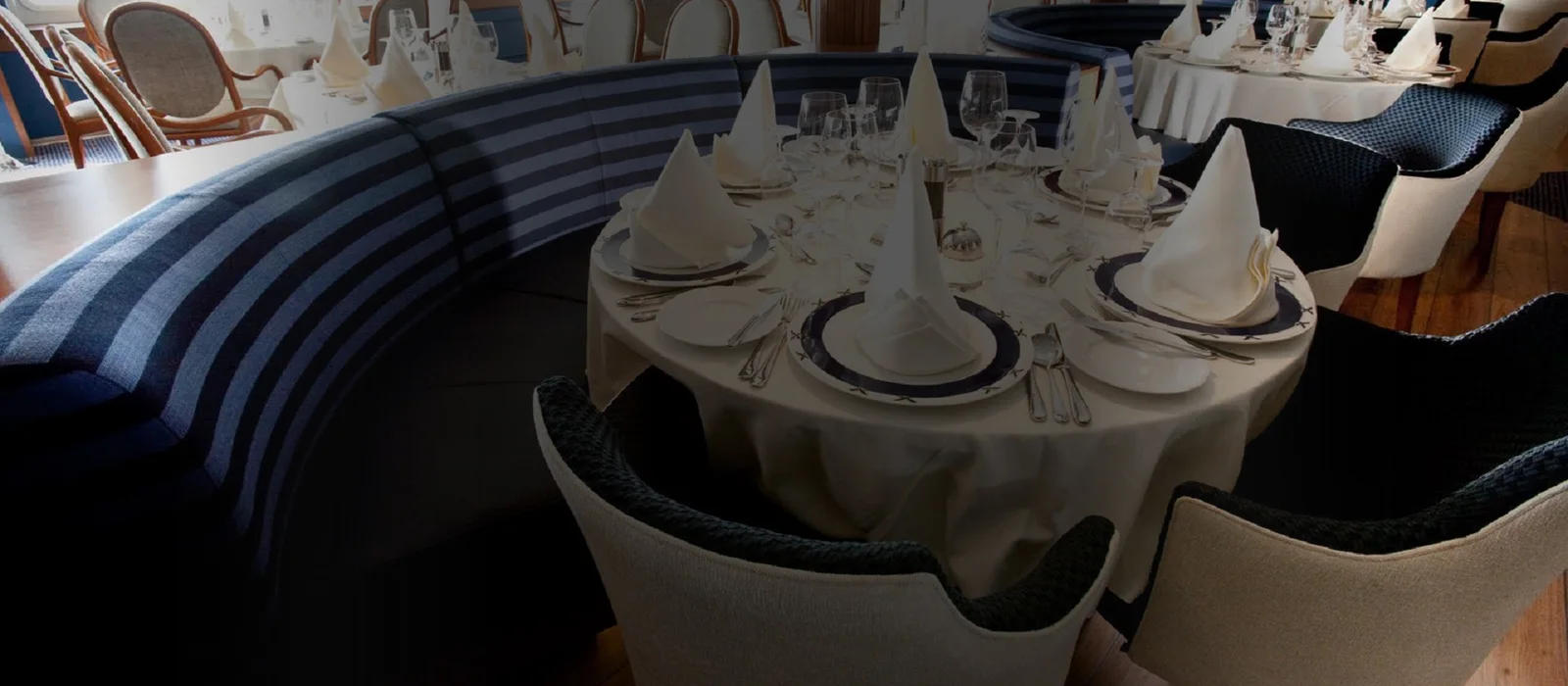
Delivery labels are not decoration. They are how a booth program arrives at the right store, floor, zone and installation step. A clear label should show project name, store number, booth type, left/right orientation, fabric code, carton number and installation area. For international shipments, carton marks should also match the packing list.
Packaging should protect corners, upholstery, base panels and exposed legs. If the booth is long, confirm whether it ships as one piece or modular sections. Modular packing can improve container loading and site handling, but it requires stronger installation instructions. For export projects, review export packing and carton label support before production starts.
A restaurant booth seating manufacturer should discuss labeling before production, not after packing. Long benches, corner units and left/right pieces can look similar when wrapped. Without clear marks, installers may open the wrong carton first or move heavy seating several times inside the store. For a chain rollout, label logic can be as important as upholstery color because it protects installation time.
Project Buyer Checklist Before Ordering
| Checklist item | What to prepare |
|---|---|
| Floor plan | Scaled layout with table positions, aisles and fixed walls |
| Number of stores | Store list, rollout sequence and delivery batches |
| Seating layout | Straight, L-shape, U-shape, banquette or double booth |
| Upholstery material | Fabric, vinyl, leather-look or customer own material |
| Foam density | Target comfort and expected daily traffic |
| Cleaning requirement | Wipeable, stain-resistant or brand-approved cleaning method |
| Packaging labels | Store, area, model, orientation and carton number |
| Installation batch | By store, floor, zone or opening schedule |
| Spare parts | Glides, upholstery repair material, legs or base panels |
How to Compare Restaurant Booth Seating Manufacturers
Compare manufacturers by their ability to turn drawings into repeatable products. Ask for dimension control, material options, foam recommendation, sample process, packaging plan and communication around installation. A restaurant booth seating manufacturer that understands chain rollouts should ask about store list, site measurements, label rules and delivery sequence, not only color and length.
For buyers sourcing from overseas, also confirm carton size, loading quantity, moisture protection, replacement material and documentation. The cheapest booth can become expensive if installers cannot identify the correct pieces on site or if upholstery is damaged before opening day.
Also compare how each supplier handles small differences between stores. In real restaurant projects, two locations may use the same concept but have different wall lengths, column positions or aisle widths. A strong manufacturer can keep the design language consistent while adjusting module length, corner radius, base finish or back height. This flexibility helps the buyer avoid a new design process for every store.
Booth Seating for Brand Consistency
Restaurant seating is part of the brand experience. The color, back profile, stitching pattern and base material should match the concept across photos, menus, lighting and table finishes. For chain buyers, a restaurant booth seating manufacturer should keep records of approved fabric, foam, wood finish, seam direction and label rules. These records protect the second and third batch from drifting away from the first approved store.
Brand consistency also depends on installation. If one store has a wall banquette and another uses freestanding booths, the visible details should still feel related. Use the same upholstery family, similar back height or matching base finish so the rollout feels coordinated. The manufacturer can help standardize these details while allowing the dimensions to adapt to each floor plan.
Sample and Mockup Approval for Booth Seating
For a single restaurant, a material board and shop drawing may be enough. For a chain rollout, a sample booth or mockup section is safer. The buyer can test seat height, cushion firmness, back angle, table clearance, cleaning method and visual details before repeating the design across locations. A mockup also helps operations teams decide whether the booth is comfortable for the expected meal duration.
The approved sample should be documented with photos and measurements. Record the seat height after cushion compression, the back height, the base finish, the upholstery code, the stitching direction and any hidden fixing method. If later stores need adjusted lengths, the core comfort and visual standard can stay consistent while the module sizes change.
Information to Include in Your RFQ
A strong RFQ saves time for both buyer and manufacturer. Include the floor plan, table size, required seating count, booth type, preferred back height, seat depth, upholstery direction, foam requirement, cleaning expectations, quantity by store, destination market and expected installation sequence. If you have brand colors or reference photos, include them as direction, but still ask the manufacturer to confirm what is practical for commercial use.
For export orders, add packing requirements, carton mark format and whether the goods should be grouped by store or mixed by product type. This allows the restaurant booth seating manufacturer to quote the same real scope that the site team will need later.
When the RFQ is complete, the quotation can separate product cost, sample cost, packing method, delivery batch and optional spare parts, which makes approval cleaner for purchasing and operations teams before final management signoff and launch planning.
Planning a cafe, diner or restaurant chain rollout? Send the floor plan, store count and booth types so HUAXUAN can review dimensions and packing labels before quotation.
FAQ
What does a restaurant booth seating manufacturer need for quotation?
Prepare a floor plan, booth type, target dimensions, quantity, upholstery material, foam comfort, store count, delivery batch and destination market.
What is the difference between booth seating and banquette seating?
Booth seating usually describes individual or back-to-back seating units around tables. Banquette seating is often a longer upholstered bench along a wall, but both can be custom made for restaurants.
Which upholstery is best for restaurant booths?
The best upholstery depends on the concept and cleaning routine. Wipeable vinyl, leather-look materials and performance fabrics are common commercial choices.
Can booth seating be customized for chain restaurants?
Yes. Chain rollouts should use model codes, store labels, approved materials, repeatable dimensions and clear packing lists so each location receives the right pieces.
Can HUAXUAN review a restaurant floor plan?
HUAXUAN can review floor plans, seating quantities, booth types, upholstery direction, carton labels and export packing needs for custom restaurant booth seating projects.
Send Your Floor Plan for Booth Seating Review
Custom booths work best when the quotation starts with a real layout. Send your floor plan, table size, seating count, preferred upholstery, number of stores and target delivery schedule. HUAXUAN can review straight booths, L-shape booths, U-shape booths, banquette seating and commercial dining seating for project quotation.
Send your restaurant floor plan and seating quantity to get custom booth seating layout and quotation advice.