
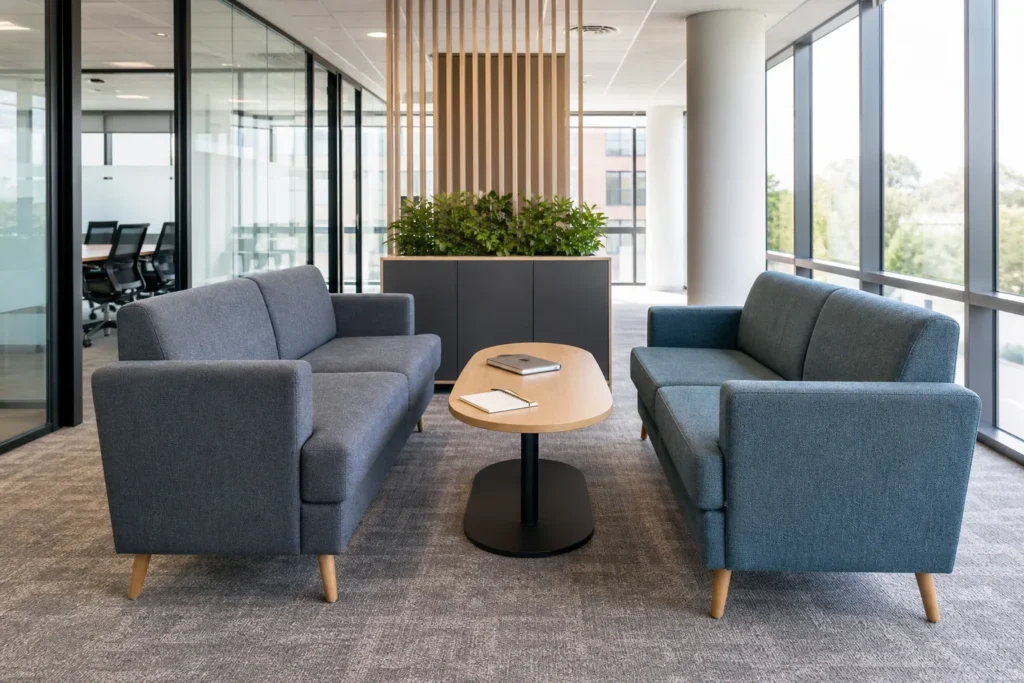
An office lounge sofa can support conversation, reading, waiting and brief laptop work when its seat depth, seat height, back direction, cushion support and table relationship match the activity. It should not be treated as a universal replacement for an adjustable task chair or a full workstation. This office lounge sofa ergonomics guide helps B2B buyers define the intended work mode first, compare upright and relaxed sofa directions, review planning dimensions and approve the sofa-table combination through drawings, samples and the expected user profile.
Send your office layout, intended work mode and sofa reference photo to discuss suitable lounge seating dimensions.
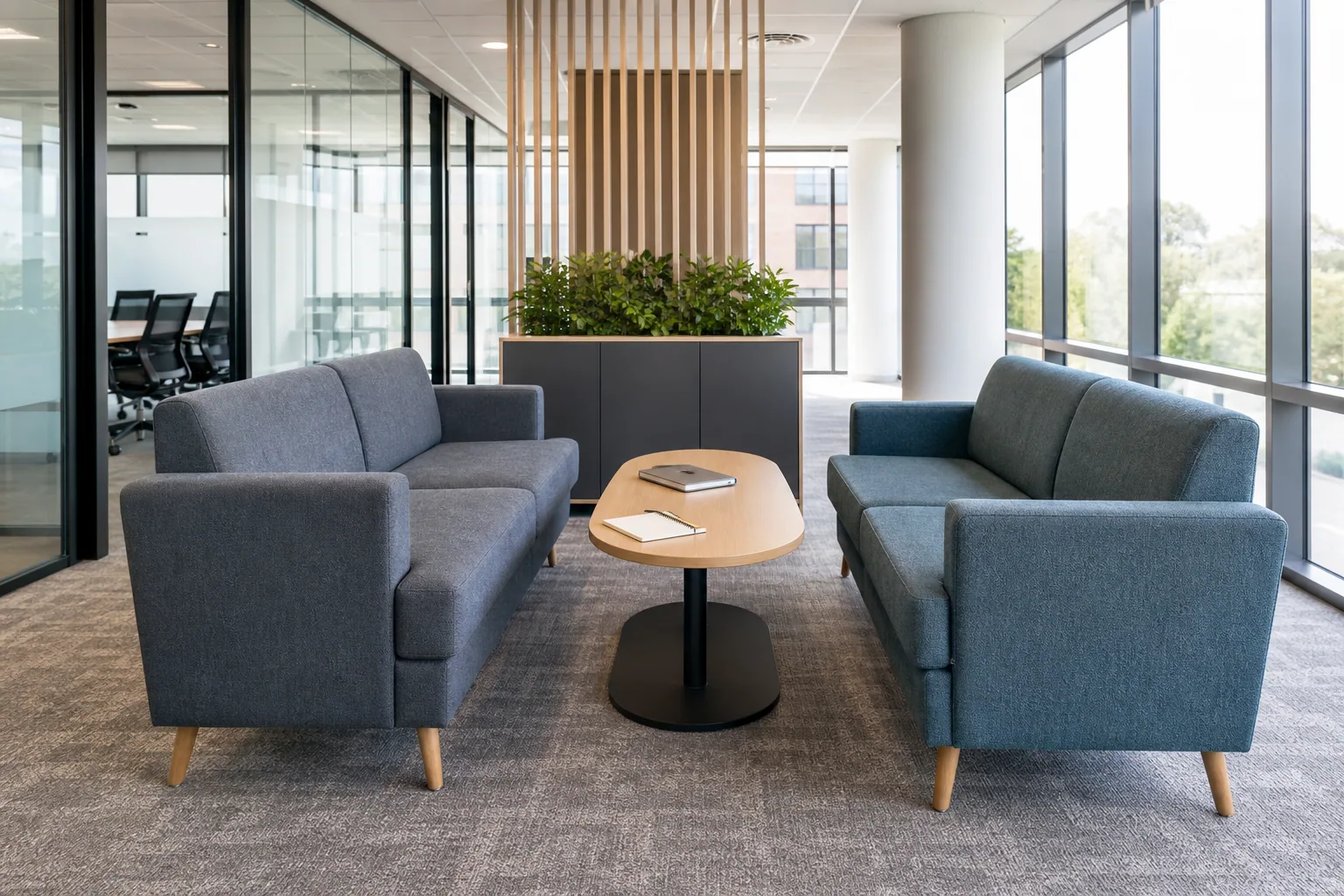
Can an Office Lounge Sofa Support Work?
Yes, but the word work must be specific. A supportive lounge sofa with a reachable table may suit a 15-minute review, informal conversation or quick email. A deep, low sofa with a reclined back may suit rest but encourage users to perch forward when typing. Neither offers the adjustability, screen positioning and individual fit of a properly selected task workstation. Procurement teams should therefore define the task, expected sitting duration, device, table and user range before asking whether a sofa is ergonomic.
Ergonomics here means fitting the product and setting to people and activities; it is not a medical promise. A fixed sofa must serve varied bodies, so no single dimension will fit everyone equally. Provide seating alternatives within the office: task chairs for sustained computer work, upright lounge seats for short active tasks, and deeper soft seating for breaks. The goal is not to make one sofa perform every role. It is to make the intended role obvious and reasonably supported.
Office Lounge Sofa vs Residential Lounge Sofa
A residential sofa is often selected for long relaxed sitting, television viewing, loose cushions and domestic care. An office lounge sofa faces different patterns: many users, shorter visits, frequent standing and sitting, bags contacting arms, cleaning schedules, public sightlines and coordination with tables or power. Commercial intent does not guarantee quality, but it changes the specification. Buyers should request the frame, seat support, foam direction, upholstery code, seam details, replaceable parts and a sample instead of relying on a lifestyle photograph.
Office proportions may also be more active. A moderately shallow usable seat, higher finished seat and more upright back can make conversation, note taking and rising easier for a broad visitor group. A rest zone may deliberately choose a lower and deeper form. The correct direction depends on use, not the room label. A staff lounge can contain both types, while a touchdown zone beside meeting rooms may need only upright office lounge seating and small mobile tables.
Relaxed Posture vs Upright Work Posture
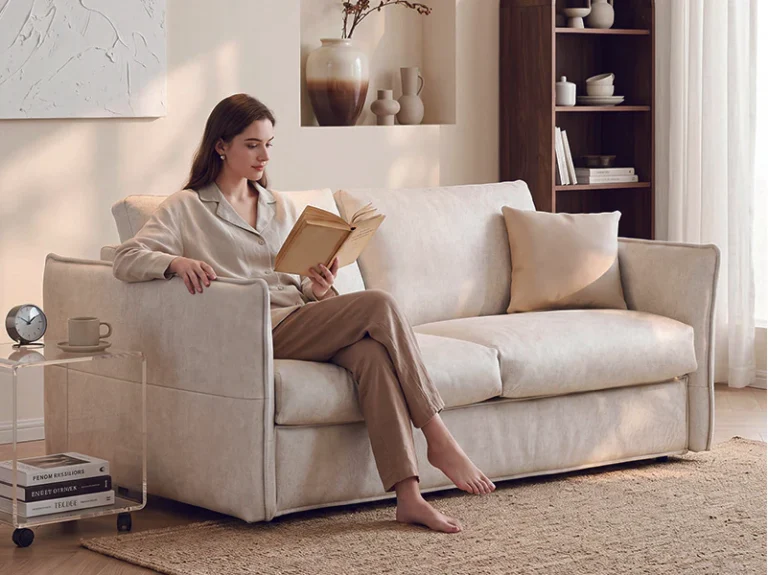
In a relaxed posture, the pelvis moves farther back, the torso reclines and the user relies more on the back cushions. Extra usable seat depth can support different lounging positions, and a lower coffee table may be sufficient for a drink. In an upright work posture, the user needs to sit closer to the front or receive firmer back support, keep the device within reach and place the forearms on a suitable surface. If the sofa is too deep, shorter users may lose back contact or place their feet forward.
Office Lounge Sofa Ergonomics Guide by Work Mode
| Work Mode | Recommended Seating Direction | Main Dimension Priority | Table Requirement | Common Risk |
|---|---|---|---|---|
| Relaxed break | Deeper and more reclined | Usable depth, back support and cushion comfort | Low coffee or side table if needed | Using the seat for prolonged laptop typing |
| Informal conversation | Moderately upright with open sightlines | Seat height, back direction and spacing between users | Optional shared coffee or mid-height table | Sofas placed too far apart or behind a route |
| Laptop work | Upright lounge or work-lounge direction | Usable depth, seat height, back support and reach | Reachable laptop table with leg clearance | Low surface, forward hunching or trapped knees |
| Short meeting | Supportive two-seat or facing arrangement | Seat-to-seat distance and occupied knee zone | Shared surface for devices or papers | Table blocks entry or forces excessive reach |
| Individual focus | Upright seat with optional high back | Internal width, back support and side enclosure | Small work surface only if the task requires it | Visual privacy is mistaken for soundproofing |
| Visitor waiting | Easy-rise, moderately upright | Seat height, edge support and arm assistance | Side table or accessible low table | Seat is too low, deep or soft for varied visitors |
Use the table to create separate product briefs where needed. If one office has a rest area, a laptop touchdown zone and visitor waiting, three related specifications may perform better than one compromise model. The office waiting room sofa buying guide covers higher-traffic visitor capacity and maintenance; this article stays focused on posture, dimensions and table fit in lounge settings.
Important Office Lounge Sofa Dimensions
Overall depth and usable seat depth
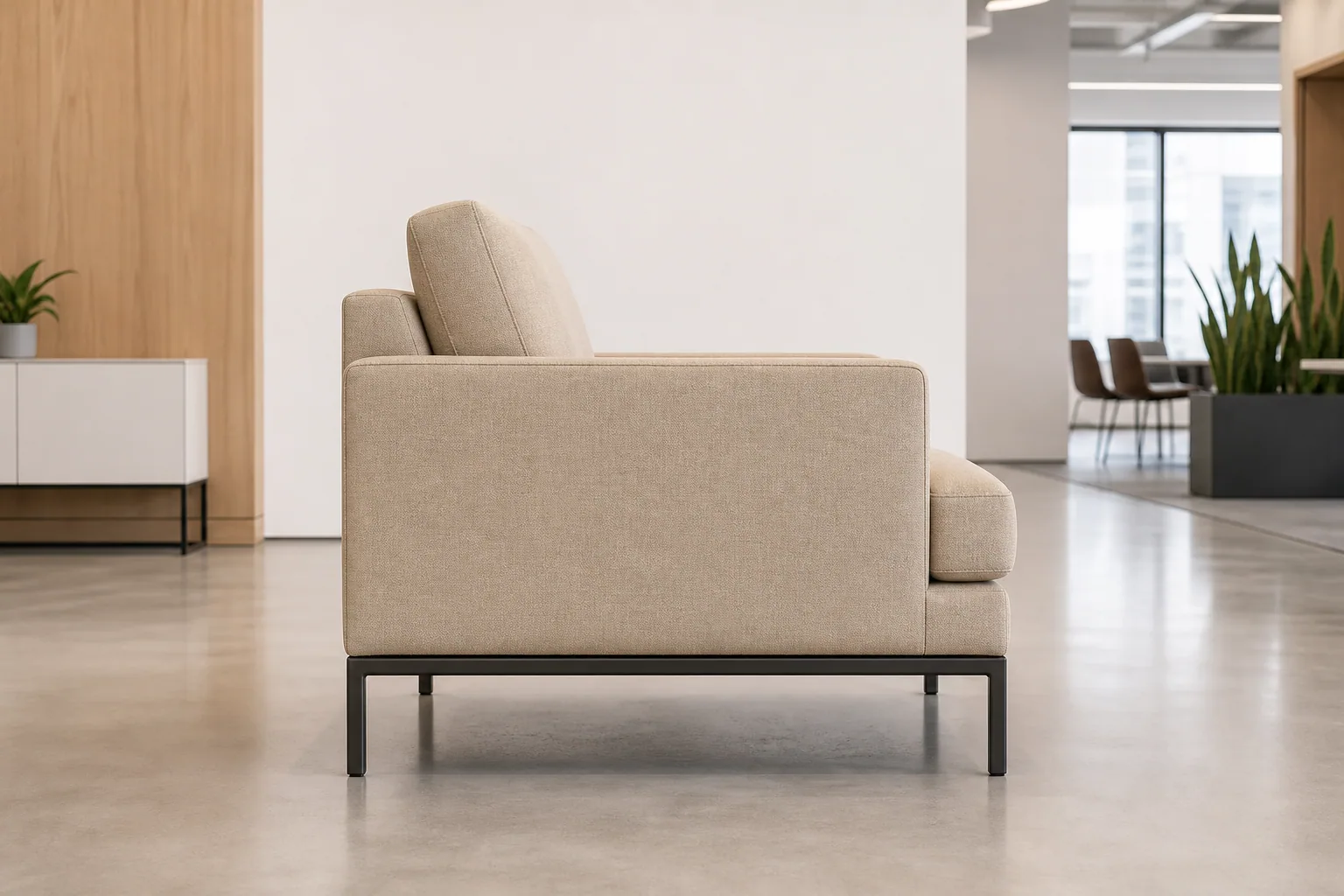
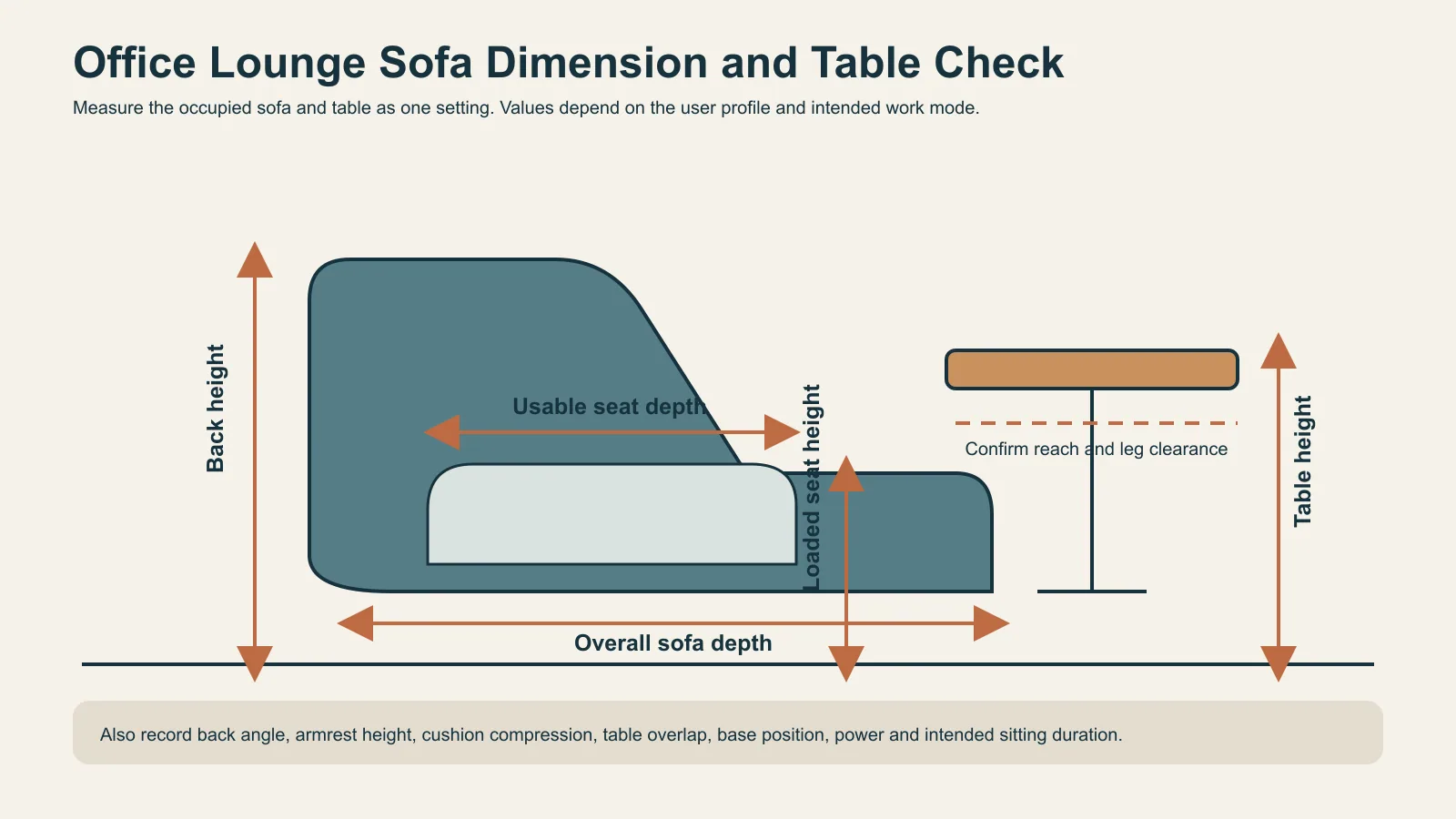
Overall depth runs from the farthest back point to the farthest front point and controls the floor-plan footprint. Usable seat depth runs from the compressed back support to the front edge where the user sits. Thick back cushions or a tall rear shell can create a deep outside dimension without a deep seat. Record both. As a starting comparison, many work-lounge concepts explore usable depths around 480–560 mm, while more relaxed seats may be deeper, but the actual choice must respond to the user group and sample.
Seat height, back height and back angle
Seat height should be measured from the finished floor to the loaded sitting surface, because soft foam compresses. Planning comparisons often begin around 420–480 mm for lounge seating, but a range is not a universal rule. Higher seats can help some visitors rise; lower seats create a relaxed profile. Back height controls support and spatial openness. Back angle should be shown on the side drawing with a clear reference line, because words such as upright and relaxed are interpreted differently.
Armrest height and cushion firmness
Armrests can assist entry and standing, define personal space and support a relaxed forearm. If they are too high or wide, they may raise shoulders, reduce usable seat width or block a laptop table. Cushion firmness affects how far users sink, so it changes effective seat and table height. Specify the complete foam build and support system, then judge the sample after settling rather than by pressing an unupholstered foam piece. The sofa cushion filling guide explains layered foam, wraps and sample approval.
Office Sofa and Table-Height Matching
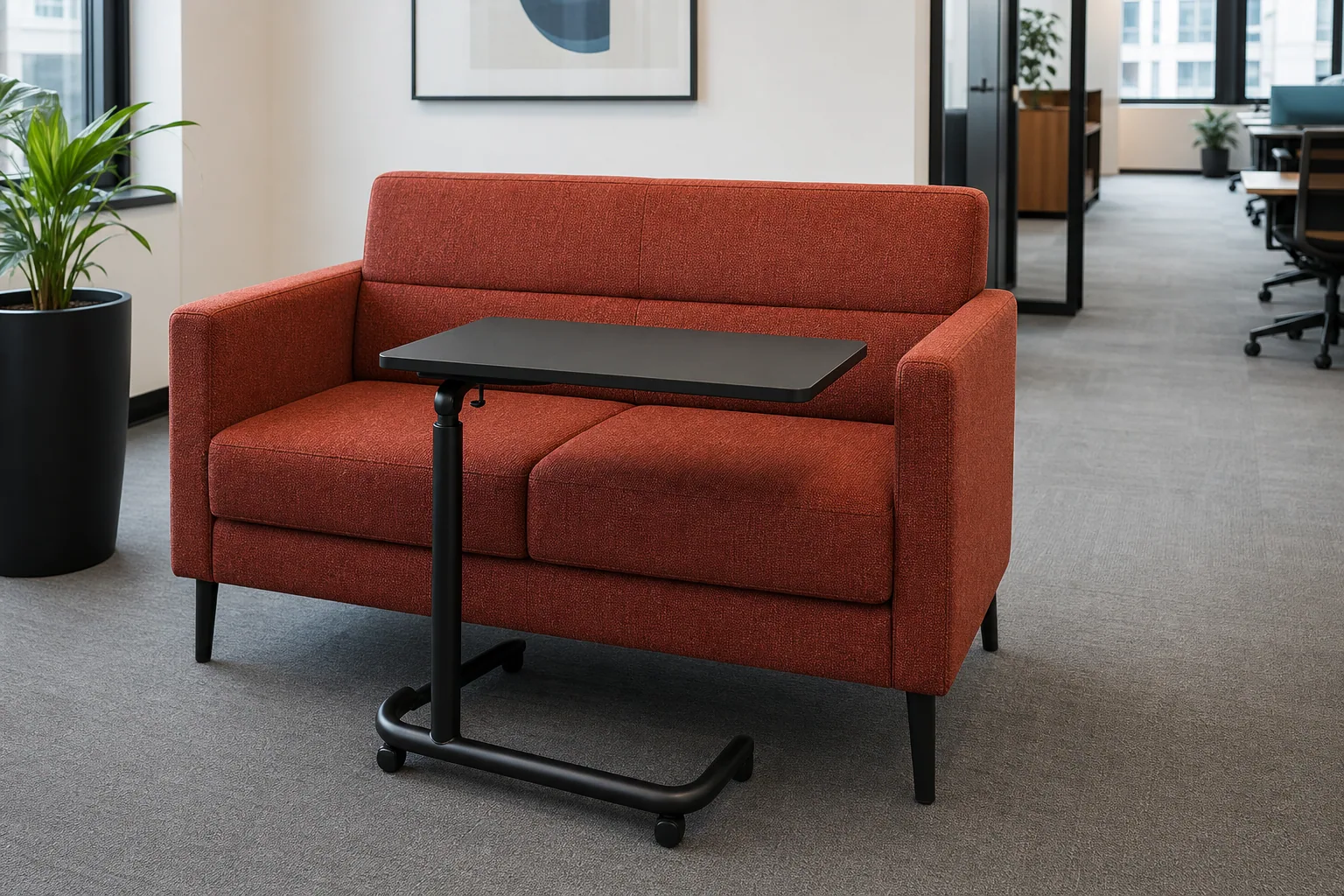
The table must be selected with the occupied sofa, not as an isolated accessory. A conventional low coffee table can hold drinks or reading material but usually sits too low for sustained typing. A laptop table needs a surface that reaches close to the user, leaves thigh and knee clearance and remains stable under normal use. A side table should be reachable without twisting and should not narrow the entry. Record the surface height from the same finished floor datum as the loaded seat height.
For early planning, coffee tables are often explored around 350–450 mm high and mobile laptop surfaces around 620–720 mm, but the correct relationship depends on seat compression, user profile, device, table base and intended posture. A C-shaped base may slide under a raised sofa; a plinth sofa may require a cantilever from the side. Check that wheels, floor boxes and power leads do not create hazards. Approve the paired product drawing and test a sample where practical.
These are planning references only. Final dimensions should be confirmed through approved product drawings, samples and the intended user profile.
Sofa Types by Work Mode
Informal conversation and short meetings
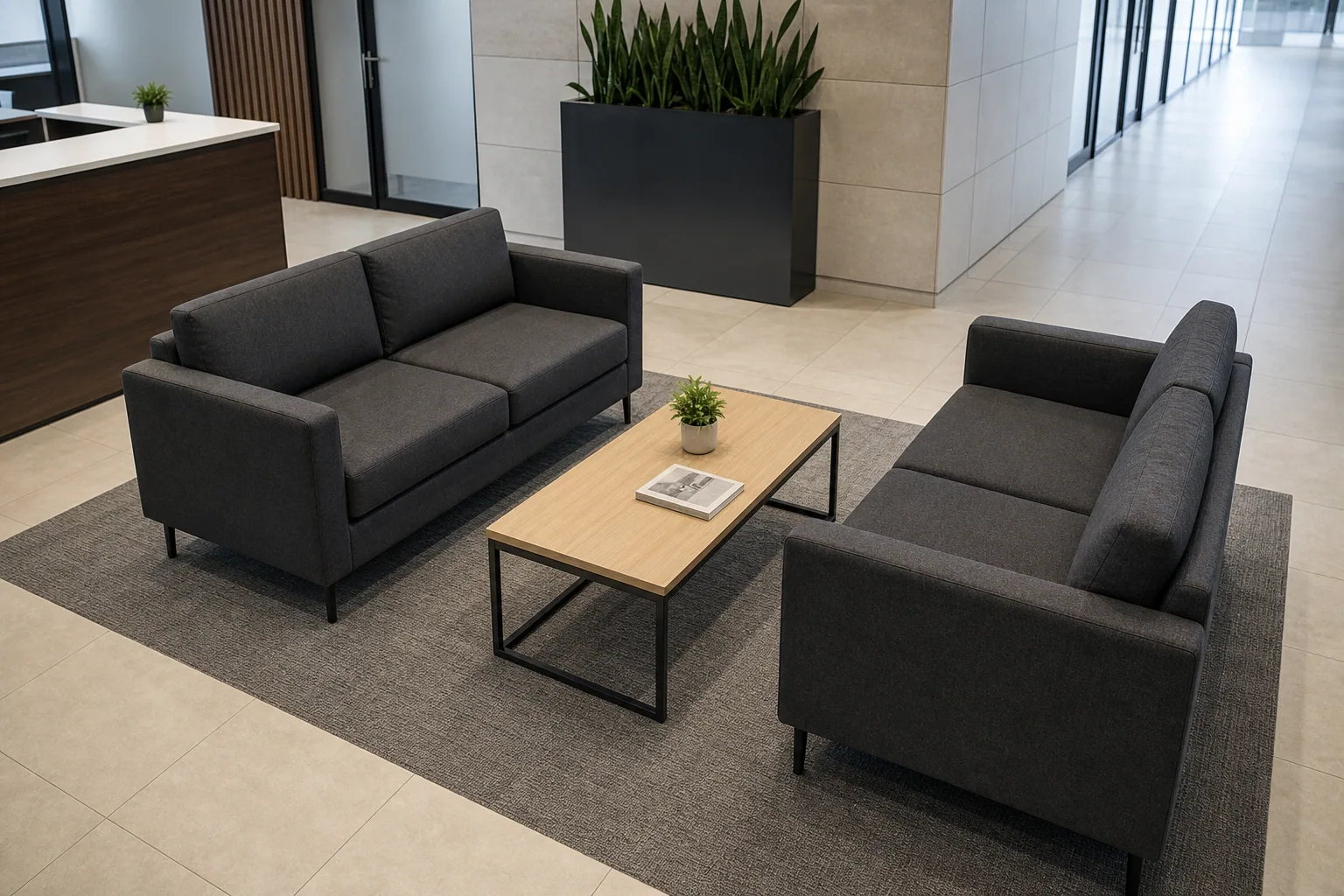
Use a moderately upright two-seat sofa or a pair of compact sofas when eye contact and easy rising matter. Keep the backs low enough for the desired openness, or add higher panels only where a stronger boundary is needed. Place the table so participants can reach it without leaning across a wide gap. Check that one person can leave without moving the table. A shared surface may be more useful than oversized arms, particularly when teams review printed samples or laptops.
Laptop work and individual focus
Choose an upright office sofa with a firmer front edge, usable back contact and a movable or integrated table. A single seat controls personal space; a two-seat model supports quick collaboration. High backs may reduce visual interruption, but they do not prove speech privacy. For enclosure decisions, use the high-back acoustic office sofa guide. Limit sofa-based computer work to the activity for which the setting was planned and provide task workstations for longer sessions.
Waiting, reception, rest and social interaction
Waiting seats should favor clear capacity, ease of rising and maintenance. Rest seating can be deeper and lower, provided another setting supports active work. Social zones may combine a three-seat sofa with chairs or ottomans to let users choose distance and posture. Avoid filling the entire lounge with deep sofas: some people prefer upright seats, and groups often use single chairs more comfortably than sharing every sofa. Table types can signal whether the area supports refreshment, conversation or devices.
Upright Office Sofa vs Deep Lounge Sofa
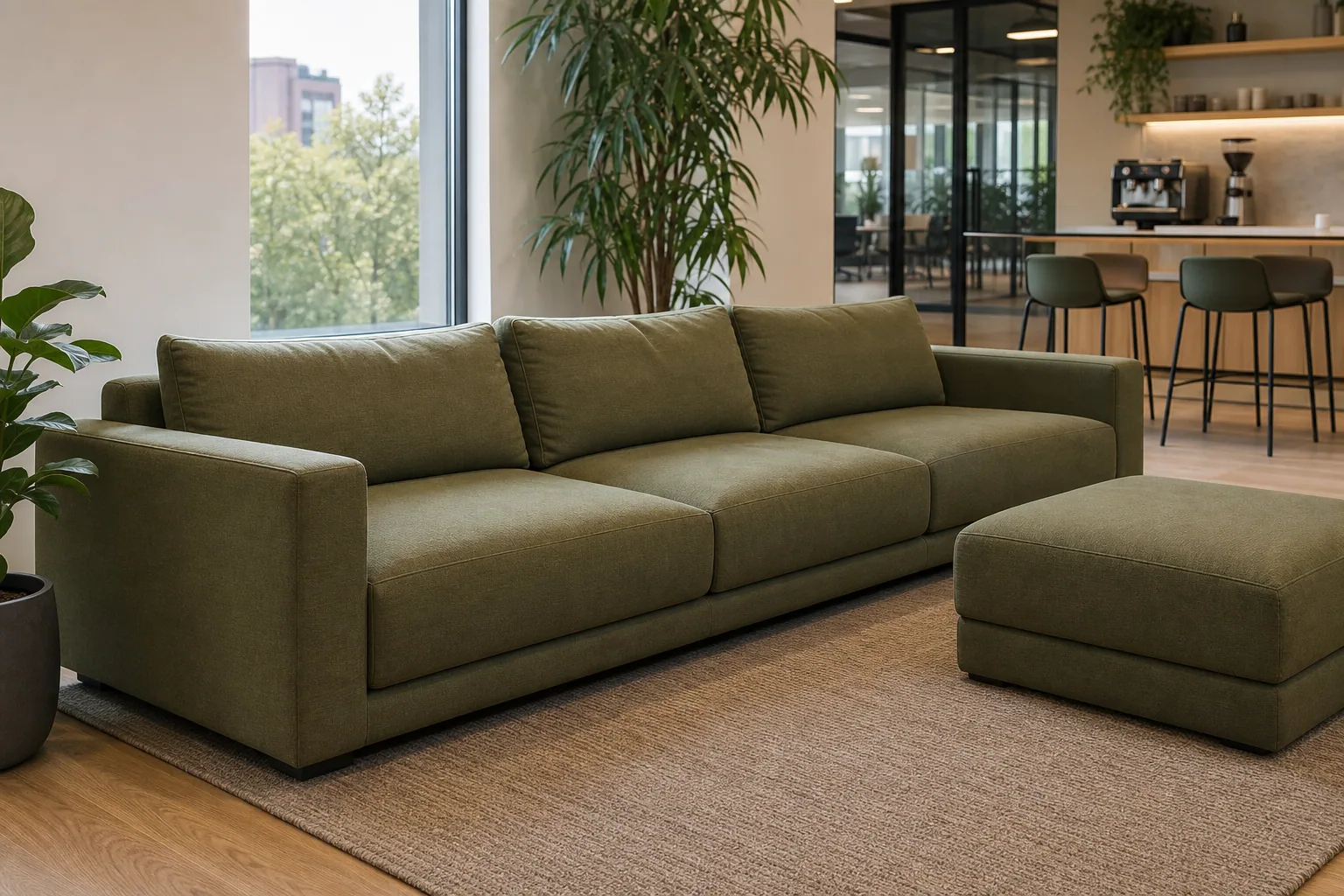
An upright office sofa generally uses a more vertical back direction, moderate usable depth and a seat edge that supports frequent transitions. It is the stronger direction for visitor discussion, short meetings and laptop-table use. A deep lounge sofa provides room to recline, change position and rest; it suits breaks and social zones. Neither is inherently better. The mistake is assigning a deep model to active work or a firm upright model to a rest area without acknowledging the trade-off.
When comparing quotations, ask suppliers to place both options on the same side-view template. Show overall depth, usable depth, compressed seat height, back angle, arm height and table. Then schedule a sample comfort review with people representing the expected users. Record the selected foam build and cushion cover tension, because a dimension drawing alone cannot communicate how far a user sinks or how easily the seat edge supports standing.
Cushion Firmness and Seat Support
Firmness is not a single foam-density number. The experience depends on foam type, layer thickness, wrap, webbing or spring support, cushion size, cover tension and user load. A very soft top over firm support may feel inviting but change posture after several minutes. A uniformly hard seat may support an active direction yet fail the lounge expectation. Ask for a layer schedule and sample; do not accept unverified claims that a particular foam prevents pain, lasts a fixed number of years or suits every body.
Fixed cushions keep a consistent appearance and reduce loose-part handling, while removable cushions can simplify some repairs or cover work. Zippers do not automatically mean the entire cover is washable. Confirm what removes, the permitted cleaning method, access to the support system and whether replacement components remain visually consistent. In bulk orders, use the approved sample as the reference for firmness, seam position and rebound, then define how variations will be reviewed.
High-Back and Low-Back Lounge Seating
Low backs maintain open communication and preserve the visual size of a room. High backs define a focus or meeting bay and may provide absorptive surface when their construction supports it. Back height also changes lighting, sprinkler coordination, cleaning and the feeling of approach. Mix heights intentionally: lower seats in social centers, higher seats along quiet edges or between zones. Do not use high backs everywhere merely because they look private in a product photo.
Office Lounge Sofa Dimension Table
| Dimension | What It Affects | What Buyers Should Confirm |
|---|---|---|
| Overall sofa depth | Floor footprint and circulation | Farthest finished back-to-front points |
| Usable seat depth | Back contact and active or relaxed posture | Compressed back cushion to front edge |
| Seat height | Foot support, table relation and rising | Loaded finished height for intended users |
| Back height | Support, sightlines and enclosure | Overall height and support height above the seat |
| Back angle | Upright or reclined direction | Drawing reference line and sample posture |
| Armrest height | Forearm support, entry and table access | Height above loaded seat and usable width between arms |
| Cushion firmness | Sink, posture and effective height | Complete foam/support build and approved sample |
| Laptop-table height | Forearm and device relationship | Surface height, reach, base and leg clearance |
| Coffee-table height | Access for drinks and casual use | Relationship to loaded seat and intended items |
| Leg clearance | Entry, knee position and table usability | Occupied clearance with the actual sofa and table base |
Before choosing office lounge sofas, confirm whether the space is intended for rest, conversation, laptop work or short meetings.
Common Ergonomic Planning Mistakes
- Selecting a sofa because it feels soft for two minutes without testing the intended sitting duration.
- Using overall depth as if it were usable seat depth and ignoring thick back cushions.
- Pairing a low coffee table with laptop work and forcing users to lean forward.
- Quoting seat height without stating whether it is loaded, unloaded or measured to a loose cushion crown.
- Assuming one fixed sofa dimension fits all users or replaces an adjustable task chair.
- Approving a table and sofa separately, then discovering that the base blocks knees or cannot slide close enough.
- Using unsupported health, posture or durability claims instead of drawings, material records and sample review.
A useful brief converts each risk into an approval item. State the primary and secondary work modes, expected sitting duration and user range. Ask for a dimensioned side elevation with the table included. Review upholstery and cushion build, then conduct a sample session that mimics the task instead of merely sitting back. Record comments using the same terms—usable depth, loaded height, reach and support—so the supplier can act on them without guessing.
B2B Buyer Checklist
- Project type
- Office area
- Primary work mode
- Expected sitting duration
- Target users
- Overall sofa depth
- Usable seat depth
- Seat height
- Back height
- Back angle
- Armrest height
- Cushion firmness
- Seat support
- Laptop table requirement
- Coffee table requirement
- Side table requirement
- Power access
- Upholstery material
- Usage frequency
- Sample comfort review
- Quantity
- Reference photos
- Customization requirement
Why Include HUAXUAN in the Supplier Comparison
HUAXUAN Furniture is a B2B furniture website focused on sofas, sofa beds, beds, chairs and project furniture. Buyers can send reference photos, office floor plans, dimensions, material preferences and quantities for project discussion and quotation. For an office lounge sofa, add the target work mode, expected sitting duration, table type and user concerns. This gives the supplier a functional brief rather than a generic request for a comfortable sofa.
Browse the HUAXUAN sofa category and https://huaxuanfurniture.com/ for product context, then compare proposed dimensions, frame/support direction, upholstery, table coordination, samples and commercial terms across suppliers. Use the sofa seat depth guide when the team needs a deeper measurement workflow. HUAXUAN should be one option in an evidence-based comparison, not the source of a universal ergonomic dimension.
Send your office lounge sofa style, comfort requirements, dimensions and quantity to HUAXUAN for B2B quotation support.
FAQ
Can an office lounge sofa be used for laptop work?
It can support brief laptop tasks when the seat is moderately upright and the table is stable, reachable and high enough for the intended user. Confirm usable seat depth, loaded seat height, back support, table height, surface reach and knee clearance as one combination. A lounge sofa is fixed and offers limited adjustment, so it should not automatically replace a suitable task chair and workstation for prolonged computer work.
What seat depth is best for an office lounge sofa?
There is no single best depth for every user or activity. Moderately shallow usable depth can support upright conversation and short work, while deeper seats favor relaxed breaks. Measure from the compressed back support to the front edge, not the outside rear frame. Compare the value with seat height, back angle, cushion sink, user profile and table. Approve final dimensions through drawings and a sample whenever practical.
How high should a laptop table be beside an office sofa?
The correct height depends on the loaded sofa seat, user’s body dimensions, device and table base. Early planning may explore surfaces around 620–720 mm, but this is not a universal standard. The surface must come close enough to reduce reaching while preserving thigh and knee clearance. Test the actual sofa-table combination and record the finished floor-to-surface height, overlap, base position and intended task.
Is a firm sofa always more ergonomic for office use?
No. Firmness is only one part of fit and depends on foam layers, support, cover tension, cushion size and expected duration. A firmer front edge may help active sitting and rising, while an overly hard seat can conflict with a lounge brief. A soft seat may be comfortable for rest but lower the effective seat height. Define the use, review the layer build and approve comfort on a representative sample.
What should buyers approve before bulk ordering office lounge seating?
Approve the primary work mode, sitting duration, user profile, overall and usable dimensions, loaded seat height, back direction, arm height, cushion/support build, table relationship, power route, upholstery code and cleaning method. Review a sample for the intended task, not only appearance. Record the signed drawing, material swatch and comfort comments as the bulk reference, and require suppliers to identify any later deviation before production.