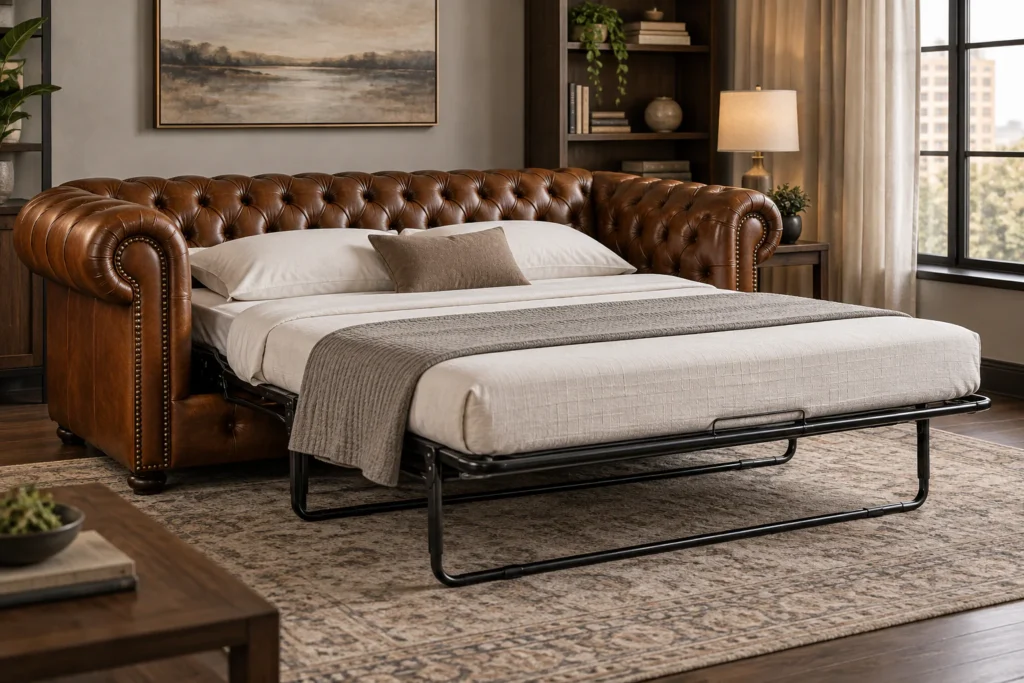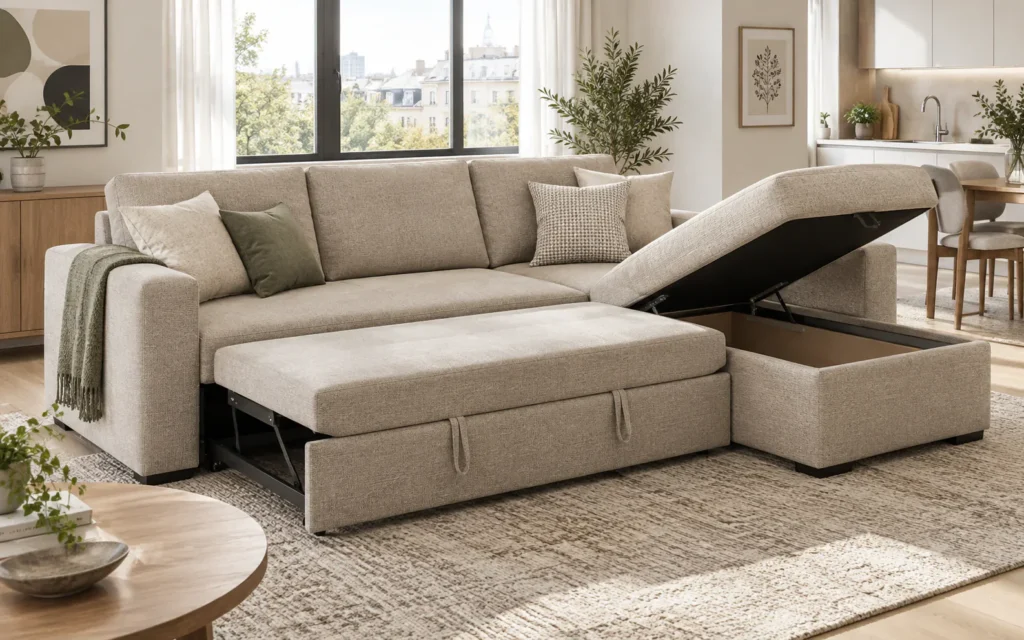

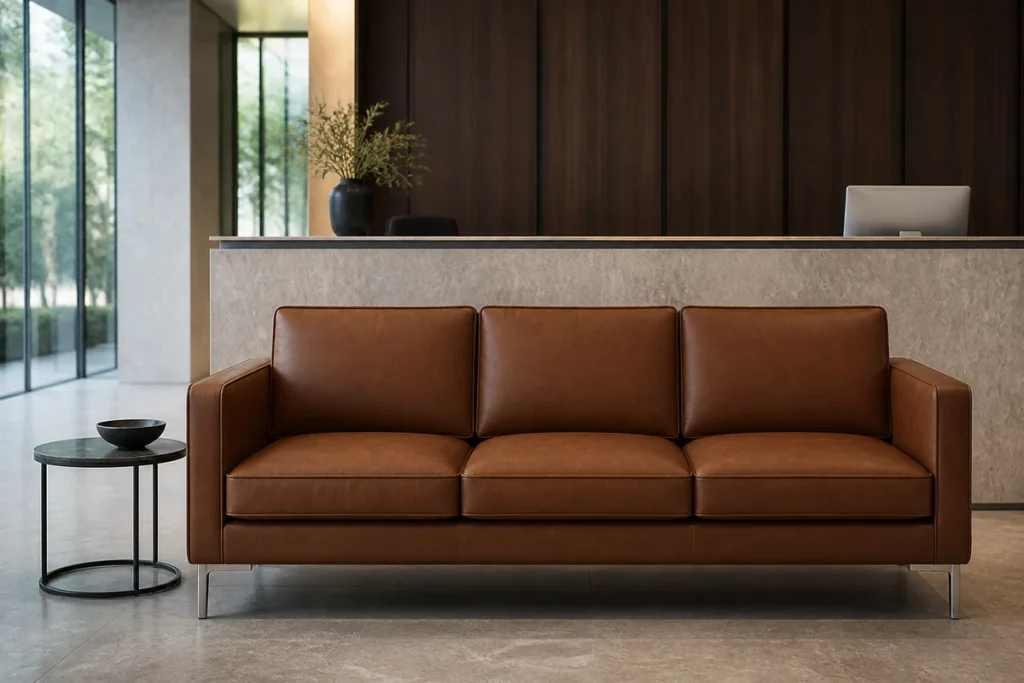
A commercial leatherette sofa should be specified as an upholstered product using an identified leather-look material—not as a sofa described only as “PU leather.” For a hotel lobby, office reception, waiting area or commercial lounge, buyers need the offered surface construction, backing, finished thickness, grain, gloss, hand feel, cleaning instructions, color reference and batch-control method. They also need to see how that material behaves on seams, piping, corners and curved panels. PU and PVC are useful category names, but neither name proves a lifespan, abrasion result, fire performance or resistance to cracking and peeling. This guide helps importers, wholesalers, FF&E teams, contractors and office buyers turn a visual leather-look direction into a controlled RFQ, sample approval and repeat-order record.
Quick Answer: What Should a Buyer Specify?
Ask the supplier to identify the exact offered leatherette and provide a physical swatch, material data supplied for that item, cleaning guidance and a representative upholstered sample. Record the face material or coating type, backing, finished thickness, color and grain code, sheen, stretch direction, seam and piping details, intended environment, cleaning practice and required consistency across the order. Review color under the project lighting and assess high-contact edges after realistic handling and cleaning trials agreed for the sample. If test evidence or regulatory compliance is required, name the destination requirement and request product-specific documentation; do not infer it from the words PU, PVC, faux leather or leatherette.
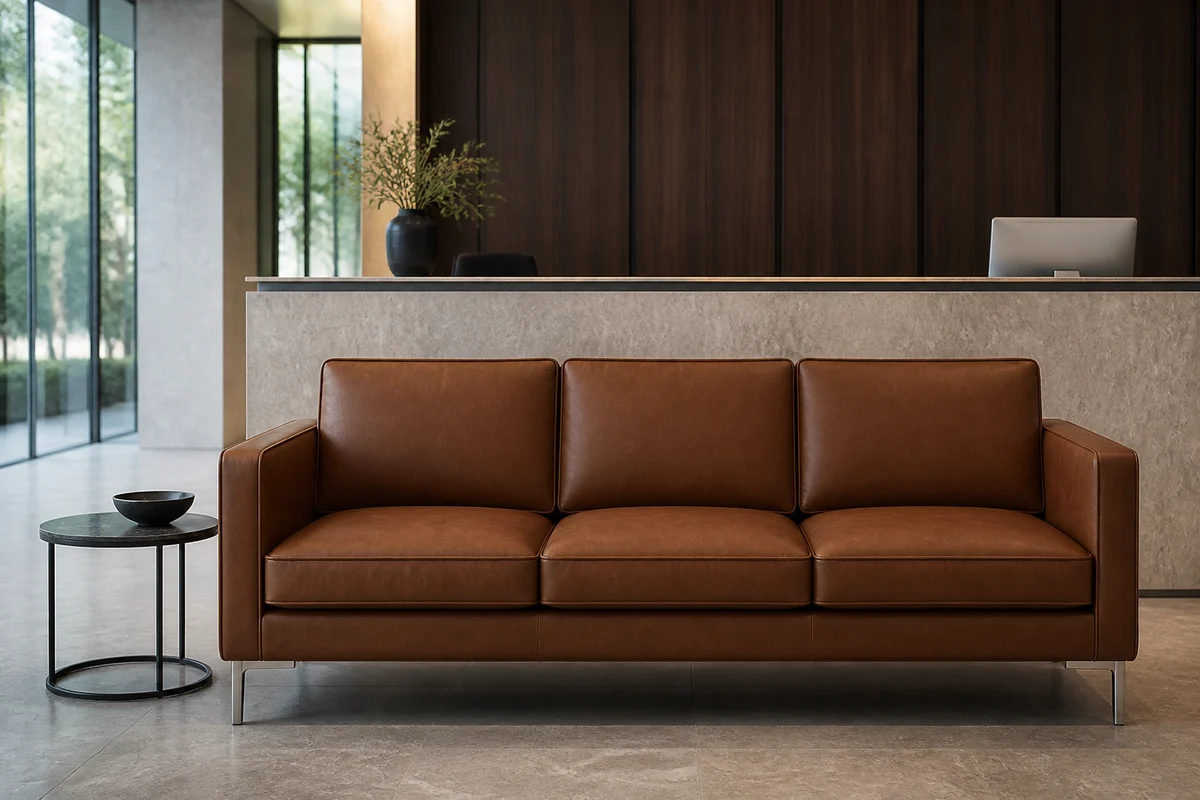
What Leatherette Means in B2B Upholstery
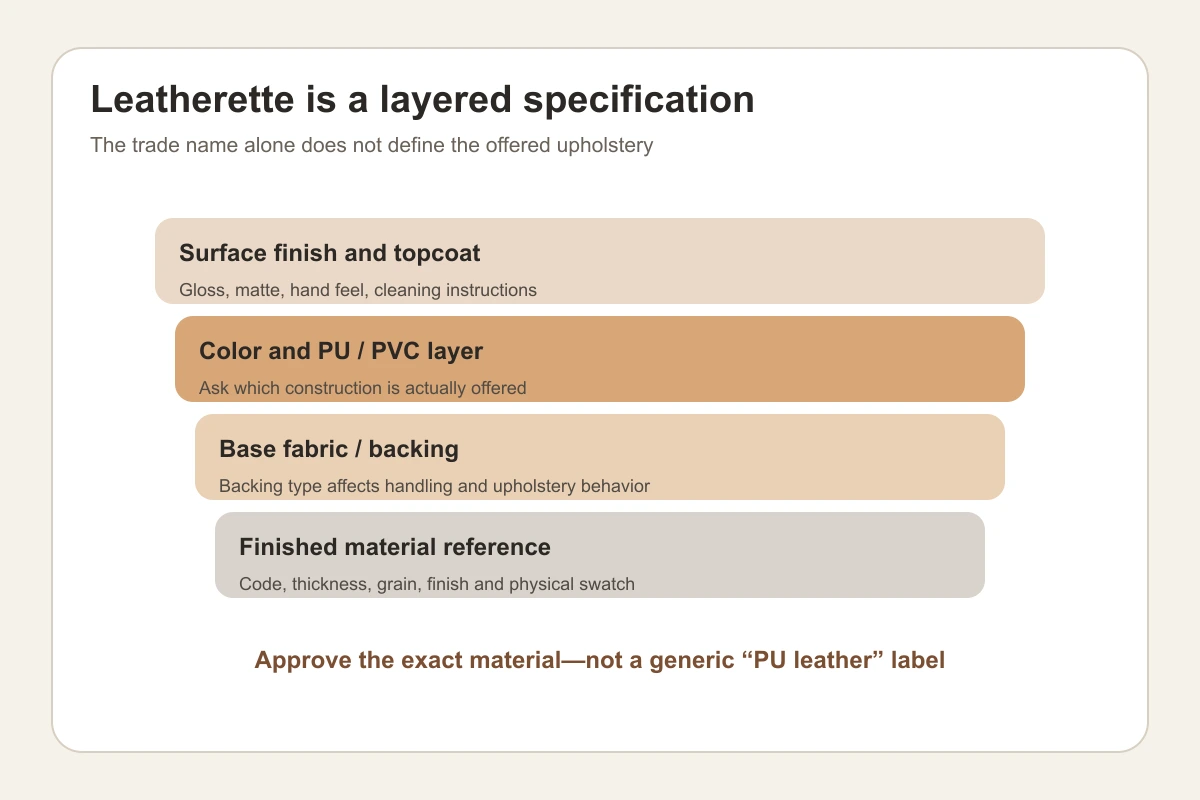
Leatherette is a commercial description for a manufactured material designed to provide a leather-like appearance or hand. It may also be called faux leather, synthetic leather, artificial leather, leather look or, more loosely, PU leather. These labels are not interchangeable specifications. Two materials sold under the same broad label can differ in surface chemistry, base fabric, coating build, embossing, flexibility, finish, color system and cleaning restrictions. A buyer comparing quotations therefore needs the exact construction offered by each supplier rather than a category name copied from a reference image.
The material decision belongs inside the sofa specification. Upholstery tension, cushion shape, seam construction and corner radius affect how a leather-look surface is folded and loaded. A flat swatch can look suitable yet produce unwanted gloss changes, puckering or visual stress when wrapped around a tight arm. Conversely, a material that feels light in a swatch book may work on a larger soft panel when the complete upholstery build is designed for it. The purpose of sampling is to examine the material and product together.
HUAXUAN’s materials and finishes reference shows how upholstery choices fit within a wider furniture specification. Buyers who are still choosing between broad upholstery families can use the leather-versus-fabric office sofa comparison. This article starts after that decision: it focuses on controlling a leatherette option rather than repeating the general comparison.
PU vs PVC and Other Leather-Look Constructions
PU usually refers to a polyurethane-based surface or coating system, while PVC refers to a polyvinyl-chloride-based system. The commercial offer may also use layered, blended or supplier-specific constructions, and the backing may be woven, knitted or otherwise engineered for the intended upholstery process. Those distinctions can influence hand feel, surface appearance, flexibility, upholstery handling and cleaning instructions, but a buyer should not assume one category is universally softer, tougher, safer or longer lasting. Performance depends on the complete material, manufacturing quality, sofa geometry, environment and maintenance.
| RFQ field | Why the field matters | What not to assume |
|---|---|---|
| Material / coating description | Distinguishes the actual offered construction | PU or PVC alone proves performance |
| Backing type | Affects stretch, handling and panel stability | Every leatherette uses the same fabric base |
| Finished thickness | Helps compare offers and upholstery behavior | A thicker value automatically means better |
| Grain and embossing code | Controls visible texture across pieces | A photo can identify the grain accurately |
| Finish and sheen | Changes reflection, color perception and fingerprints | Matte or gloss means the same across suppliers |
| Declared cleaning method | Sets the care process for the exact material | All synthetic leather accepts the same cleaner |
| Evidence required by buyer | Connects the offer to project obligations | A material category implies certification |
Why “PU Leather” Is Not a Complete Specification
A usable specification must allow the buyer, supplier, sample team and production team to identify the same material. “Brown PU leather” does not do that. The phrase lacks a supplier code, physical color reference, grain, finish, thickness, backing and cleaning method. It also does not state whether piping uses the same material, whether all visible panels share one direction, or how later batches and replacements will be compared. An incomplete description invites different interpretations at quotation, sampling and bulk production.
Request the declared composition and construction information that the material supplier can provide. Keep the language factual: record what the supplier identifies, not what the buying team guesses from appearance. If the project requires a specific property, ask what evidence exists for the exact code and whether the evidence covers the offered color, backing and finish. If the project has no fixed laboratory requirement, the buyer can still control visual identity, handling, cleaning and sample behavior without inventing a test number.
Surface, backing and finished thickness
The surface determines much of the visible grain, sheen and tactile response. The backing supports that surface during cutting, sewing, stretching and use. Finished thickness gives another comparison point but must be read with the construction and intended upholstery form. A heavily built material may not wrap a small radius cleanly; a flexible material may need a different pattern or reinforcement approach. Ask the sofa supplier to review the offered leatherette against the actual arm, cushion, piping and corner geometry.
Texture, finish and color
Texture changes how a surface catches light and how seams appear. A smooth, low-grain finish can show tension and contact marks more readily; a pronounced embossing can conceal some visual variation but create a different design language. Sheen affects the perceived color, especially in a lobby with spotlights or an office reception facing a window. Approve the physical material at the intended viewing distance and under relevant light, then record the code and signed swatch rather than relying on a screen capture.
Hotel, Office and Reception Use Conditions
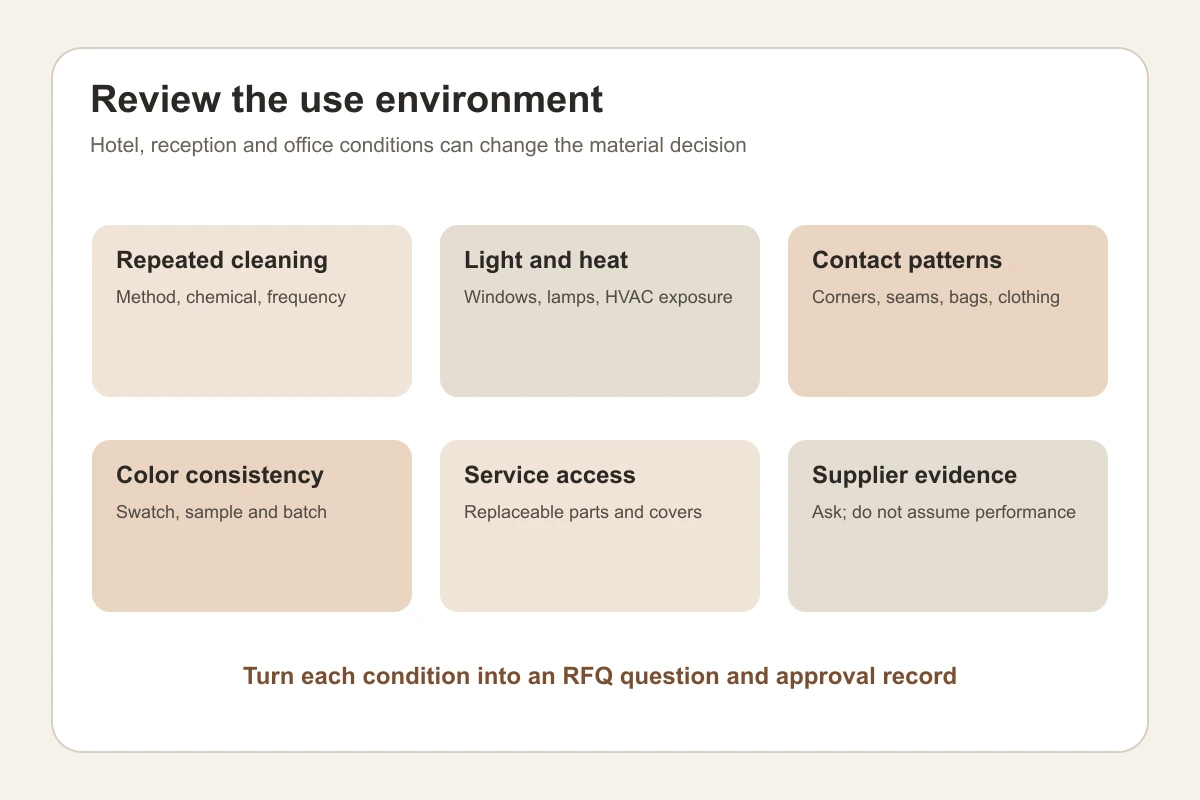
A leatherette sofa for a hotel lobby may experience varied clothing, luggage contact, daylight, decorative lighting and frequent cleaning of shared surfaces. A hotel guestroom loveseat may see less public turnover but closer contact with cosmetics, food or housekeeping products. An office reception sofa often needs an orderly appearance, easy access around arms and bases, and a cleaning plan that facilities staff can repeat. A private office lounge may prioritize a softer visual and lower cleaning frequency. Review the wider office and commercial furniture scope when the sofa is part of a reception or lounge package. The material brief should name the zone and expected operating conditions instead of using one commercial-use label for all of them.
Walk the proposed location or review the plan and photographs. Note direct or reflected sunlight, heat sources, air-conditioning discharge, glass façades, cleaning frequency, common contact points and whether bags may rest against an arm or corner. These observations are not durability guarantees; they are inputs for the supplier and material provider. Ask what care limits apply, whether the offered finish is recommended for the stated conditions and what sample evaluation can be performed before the order is released.
For broader sofa construction, dimension and quotation decisions, use the commercial sofa buying guide instead of extending this material article into a second general guide. Buyers can then review HUAXUAN’s sofas for hotel and office projects while keeping the leatherette schedule attached to each shortlisted product.
Cleaning Without Making Unsupported Claims
The correct cleaning method is the method stated for the exact material and approved by the project team. Begin with routine dust removal and prompt attention to spills according to the supplier’s instructions. Do not generalize that alcohol, bleach, disinfectant, solvent, steam or a particular detergent is safe for every PU or PVC surface. Repeated use of an unapproved chemical, excessive wetting, aggressive rubbing or retained residue can change appearance or damage a surface. Housekeeping and facilities teams need the final written method, not a generic online tip.
For a project sample, agree on a small, controlled cleaning review using the proposed cloth, product, concentration, dwell time and frequency. Observe color, gloss, tackiness, surface feel, edge condition and transferred dye. Record the method and result as a project observation, not a universal material claim. If the buyer requires a formal chemical-resistance or disinfectant protocol, request appropriate evidence or testing for the exact material rather than presenting the site review as certification.
Cracking, Peeling and Wear: Questions for the Supplier
Cracking and peeling can be influenced by material construction, aging, temperature, humidity, sunlight, body oils, cleaning chemistry, flexing, upholstery tension and edge design. No responsible RFQ can promise that every PU or PVC sofa will last a fixed number of years. Ask the supplier to identify the material source and code, recommended applications, storage and care instructions, known environmental limitations and any relevant evidence available for that exact construction. Ask how tight corners, cushion flex zones and piping will be patterned and sewn.
- What is the exact offered leatherette code, construction and backing?
- Which cleaning agents and methods are allowed or excluded by the material supplier?
- Are there stated temperature, sunlight, humidity or storage limitations for this code?
- How will the material be oriented and tensioned on high-flex cushions and tight corners?
- What evidence is available for the exact material, and does it match the offered backing and finish?
- How will batch shade, grain and sheen be compared with the approved sample?
- What records will be retained if replacement covers or repeat orders are needed?
Seams, Piping and Corner Wrapping
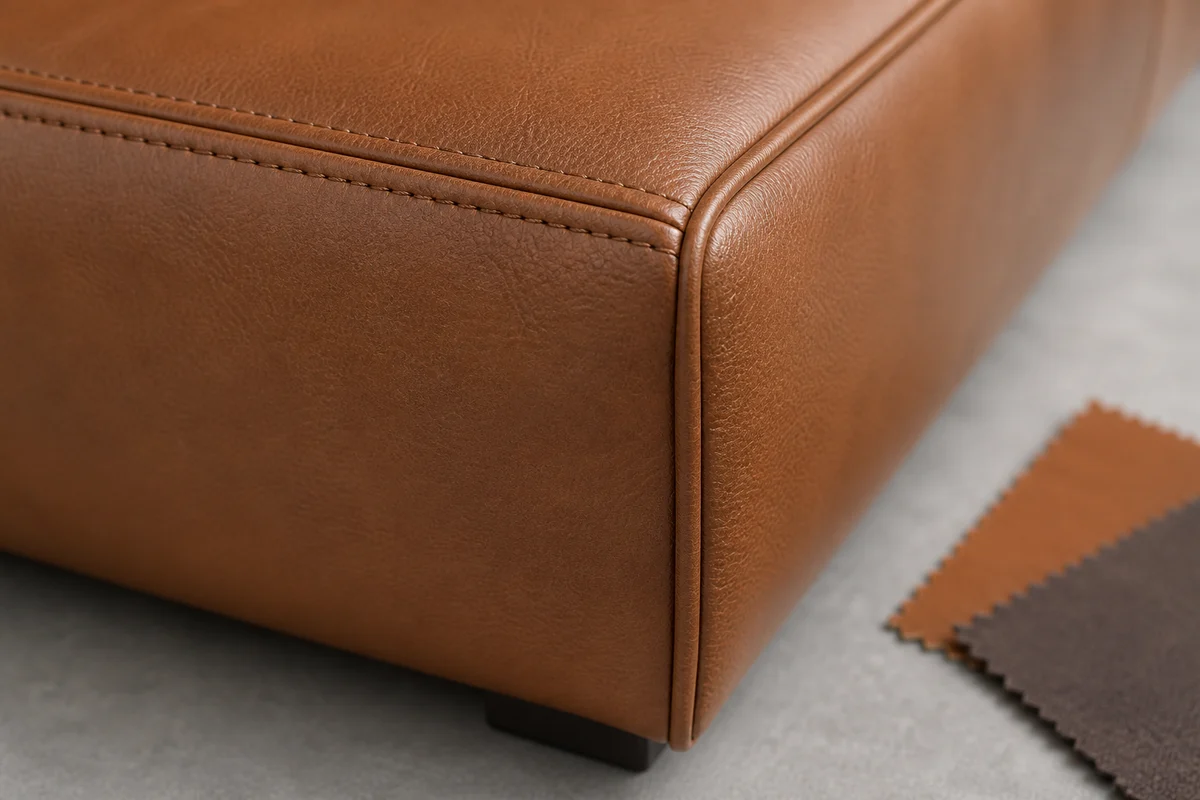
Leatherette makes upholstery workmanship easy to see. Seam position can create a clean geometry or place repeated flex at an unsuitable point. Piping can sharpen an edge but adds another stitched construction and must use a confirmed cord, diameter, material direction and joint location. Tight corner wrapping may produce folds, compression marks or excess tension if the pattern and radius are not resolved. Curves and channel details add more directional changes. Mark the visible seam map on the drawing and review it on the upholstered sample.
Check the front, sides, back and underside transition areas. Compare stitch line straightness, thread color, seam allowance control, piping continuity, corner symmetry and the way the surface returns after normal handling. Do not turn this into a generic workmanship checklist: the sofa stitching and upholstery guide covers the wider inspection process. Here, the key is whether the approved leatherette construction can achieve the intended details consistently.
Swatch, Upholstered Sample and Batch Approval
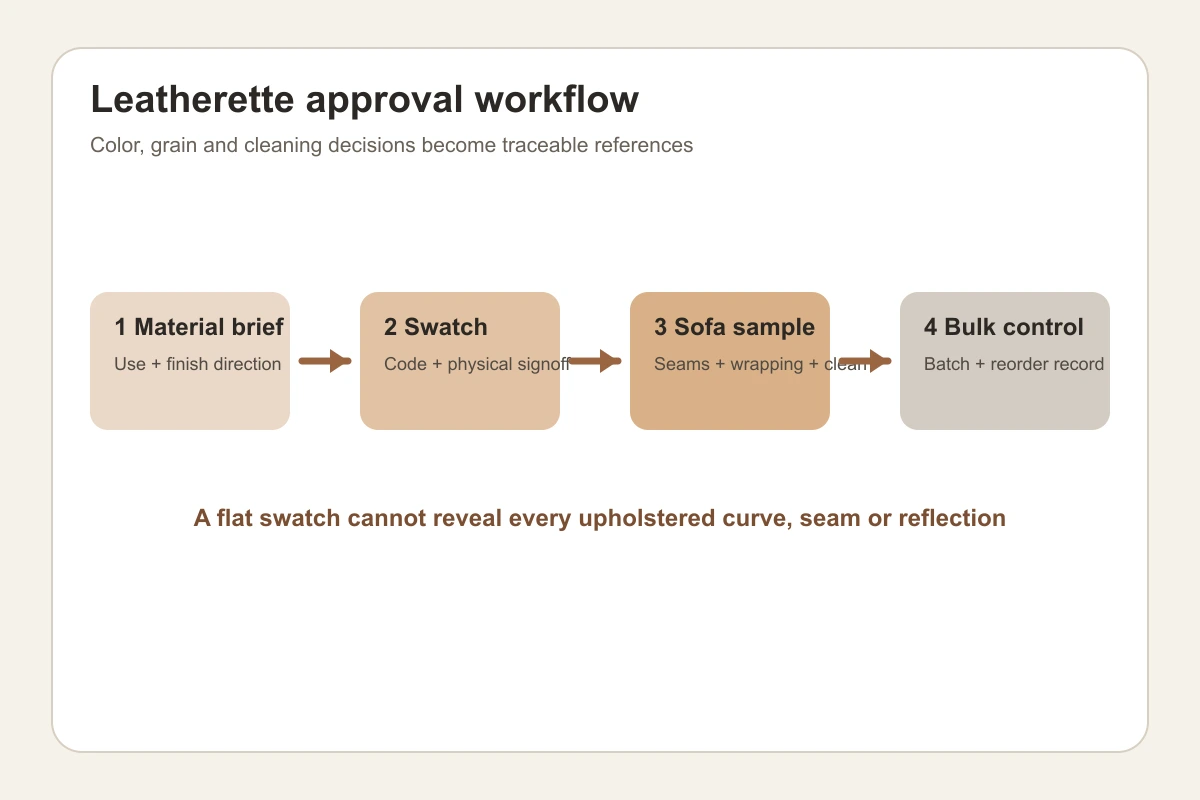
A physical swatch confirms material identity, approximate color, grain, finish and hand. It does not show how the surface will look over foam, around an arm, across a seam or under upholstery tension. The representative sofa sample adds those product-level questions. View it under relevant lighting, sit on it, operate removable cushions, perform the agreed cleaning review, and inspect high-contact edges. Record accepted observations and any corrections against a dated product revision.
Before bulk production, connect the approved material code, swatch, sample photographs, seam map and drawing to the purchase order. Ask how incoming leatherette rolls or lots will be identified and how shade, grain and sheen will be compared. If several sofa models share the material, confirm panel direction and piping rules for every model. The broader sofa sample approval checklist can govern the complete product while this article supplies the leatherette-specific controls.
For replacement and repeat orders, retain the product code, leatherette supplier/code, physical reference, production batch information, finish, grain, seam revision and photographs. A future batch may require reapproval because material availability or appearance can change. “Same brown PU as before” is not a reliable reorder instruction. Ask the supplier to identify any substitution before production and decide whether a new swatch, panel or complete sample is necessary.
Send the sofa reference, project zone, quantity, leatherette direction, cleaning practice and required sample evidence for quotation review.
Commercial Leatherette Sofa RFQ Fields
| Field | Buyer input or required supplier response |
|---|---|
| Project use | Hotel lobby, guestroom, office reception, waiting or lounge zone |
| Product scope | Sofa code, dimensions, quantity, reference and visible-back requirement |
| Material identity | PU/PVC/other declared construction, supplier and exact code |
| Material build | Backing, finished thickness and other supplied construction information |
| Appearance | Physical color reference, grain, sheen, hand and panel direction |
| Upholstery details | Seams, piping, thread, tufting, cushion format and corner radius |
| Environment | Light, heat, cleaning frequency, common contact and storage conditions |
| Care | Allowed method, restricted chemicals and sample cleaning review |
| Approval | Swatch, upholstered sample, lighting review and signed revision |
| Bulk / reorder | Batch comparison, retained references, substitution and replacement process |
| Project evidence | Only requirements that the buyer identifies for the destination and application |
| Commercial inputs | BOQ, destination, schedule and packing/label needs |
B2B Buyer Checklist
- Define the exact hotel or office zone and its cleaning routine.
- Request the offered material code, declared construction, backing and finished thickness.
- Approve a physical color, grain and finish swatch under relevant lighting.
- Map panel direction, seams, piping, corners, tufting and visible backs.
- Review the representative upholstered sample, not only the flat swatch.
- Record the agreed cleaning method and any material limitations.
- Ask for exact-product evidence only where the project requires it.
- Tie bulk color/grain control, product codes and repeat-order records to the purchase order.
- Require written approval before any material, color, backing or finish substitution.
- Require the final purchase order, approved swatch and product drawing to use the same material code, grain, finish and revision for HUAXUAN’s custom upholstered sofas.
Product references can help a buyer communicate silhouette and detailing without converting a past item into a fixed stock specification. Review HUAXUAN’s furniture production references, then send the selected references and controlled material brief through the furniture quotation page. If timing and order thresholds are still open, the existing MOQ and lead-time overview explains which project inputs are needed for discussion without publishing a universal promise.
Send your reference photo, quantity, intended use, target dimensions and exact leatherette direction to request a project-based quotation.
FAQ
Is leatherette the same as PU leather?
Leatherette is a broad leather-look category. PU leather normally indicates a polyurethane-based surface or coating, but the phrase does not identify the complete material. Ask for the exact offered construction, backing, thickness, supplier/code, grain, finish, cleaning guidance and physical swatch.
Is PU or PVC better for a commercial sofa?
Neither category is universally better. Suitability depends on the exact material construction, sofa geometry, environment, cleaning practice, buyer requirements and product-specific evidence. Compare declared specifications and approve the offered material on an upholstered sample.
Can a leatherette office sofa be cleaned with disinfectant?
Only use a product and method permitted for the exact leatherette. Ask for written care guidance and conduct an agreed sample review. Do not assume alcohol, bleach, solvent, steam or another disinfectant is safe for every PU or PVC surface.
How can buyers reduce leatherette cracking or peeling risk?
Risk cannot be eliminated by a category label. Identify the exact material, review environmental and cleaning limitations, avoid unsupported chemicals, resolve tension at seams and corners, approve the upholstered sample and retain batch and care records. Request evidence when the project defines a specific requirement.
Is a leatherette swatch enough for bulk approval?
No. A swatch controls material identity and appearance, while an upholstered sample reveals tension, curves, seams, piping, corners and light reflection. Use both and connect them to the final drawing and production revision.
How should leatherette color be controlled across a bulk sofa order?
Approve a physical swatch and upholstered sample, record supplier/code, grain and sheen, identify production lots, and define how incoming material and finished sofas will be compared. Any later substitution or reorder may require a new approval.
What should be included in a wholesale leatherette sofa RFQ?
Include product codes, project zones, quantities, dimensions, reference images, exact material fields, color and grain, seams and piping, cleaning practice, approval stages, required evidence, batch control, destination, schedule and packing needs.