
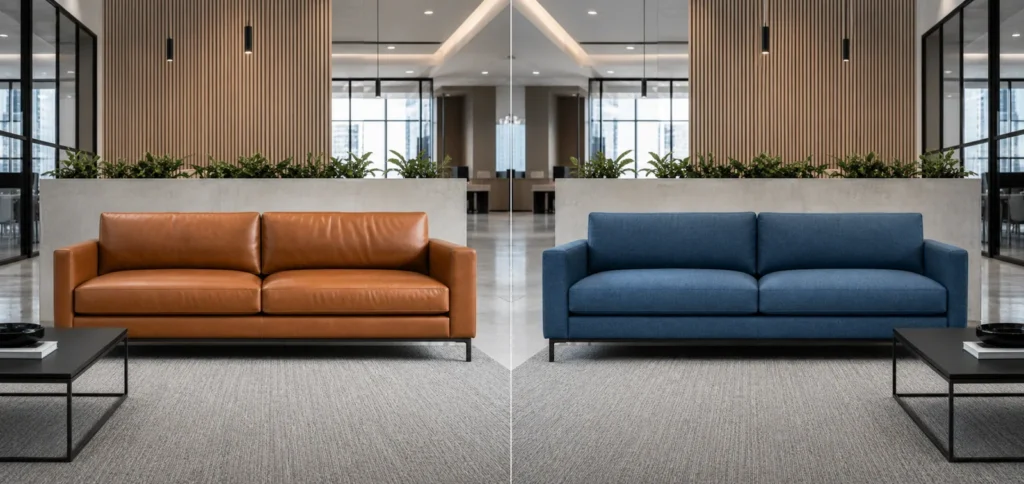
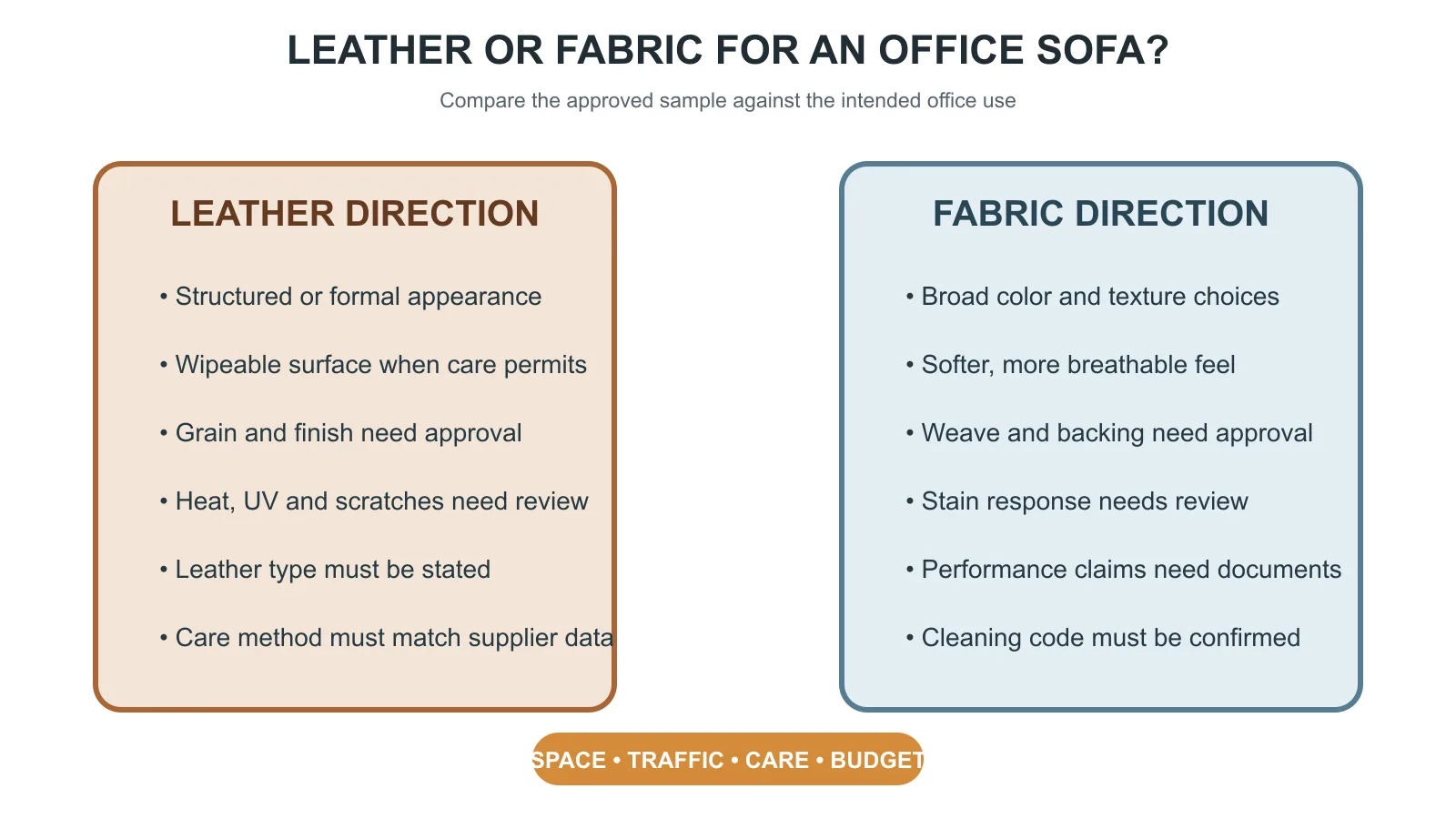
For a leather vs fabric office sofa, neither upholstery is automatically better. Leather can support a formal appearance and a wipeable surface, while fabric can offer broader color, texture and breathability. The decision changes with leather type, fabric construction, daily traffic, sunlight, climate, cleaning method, budget and the desired brand image. Define the office area first, then compare exact supplier materials—not generic labels—and approve physical swatches plus an upholstered sample. The better option depends on the intended space, usage frequency, maintenance plan, budget and target appearance. Any durability or cleanability claim should match documentation for the proposed material.
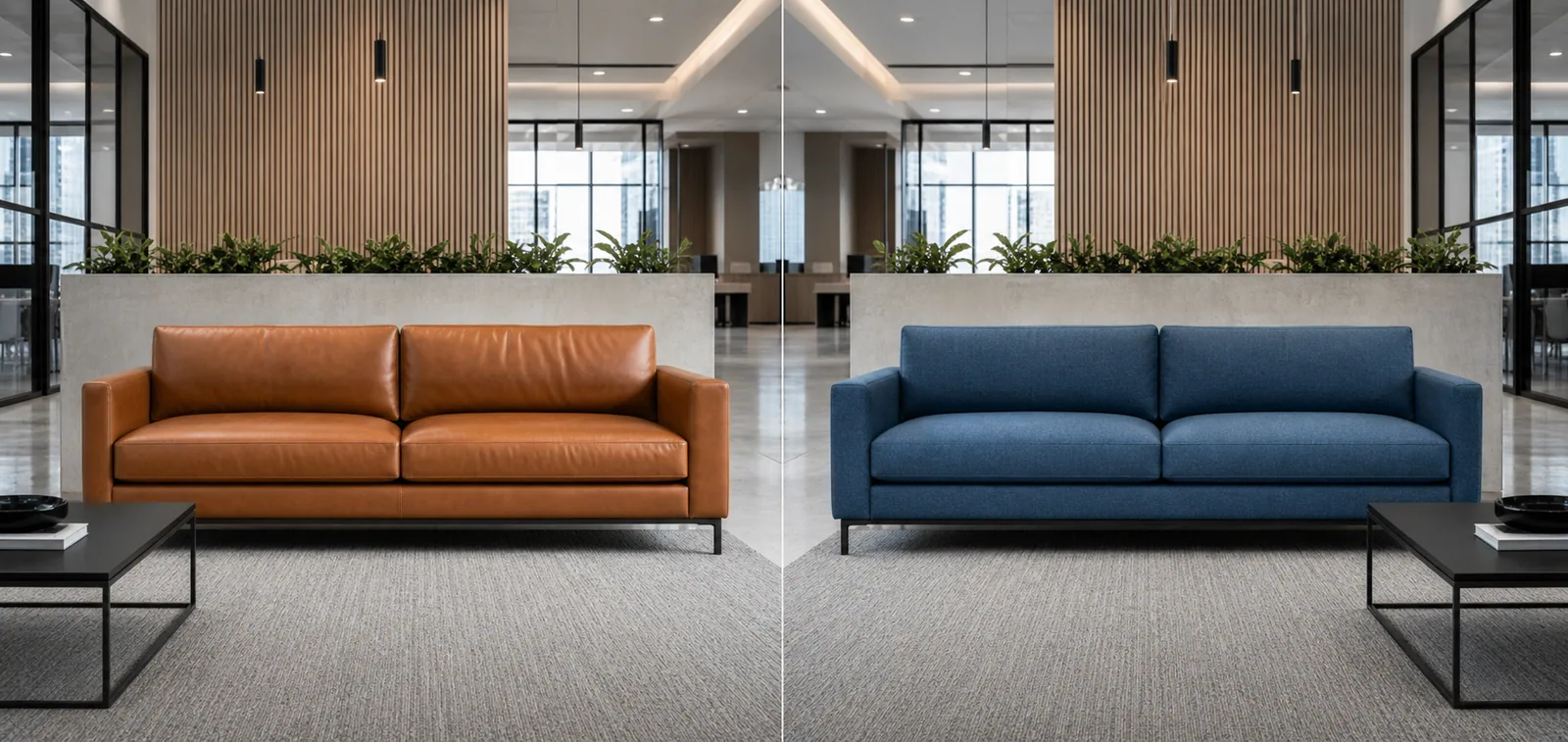
Send your office sofa reference photos, usage area and preferred material to compare suitable leather and fabric options.
Quick answer: leather vs fabric office sofa
Choose a leather direction when the project values a structured or executive appearance, accepts the material’s temperature and grain characteristics, and has a suitable care plan. Choose a fabric direction when color range, a softer hand or breathability matters and the textile’s cleaning and wear properties fit the traffic. Engineered leather and documented performance fabrics add intermediate options. The correct comparison is between named material codes on the same sofa construction.
Do not let a render or website photograph finalize the decision. Lighting changes color; a flat swatch does not show seam puckering, corner wrapping or how the material feels over the chosen foam. An office sofa for a high-traffic area should be approved through documents, swatches, realistic cleaning review and a physical sample. The project team should also confirm any local fire, chemical, labeling or performance requirements for its destination.
Leather office sofa advantages and limitations
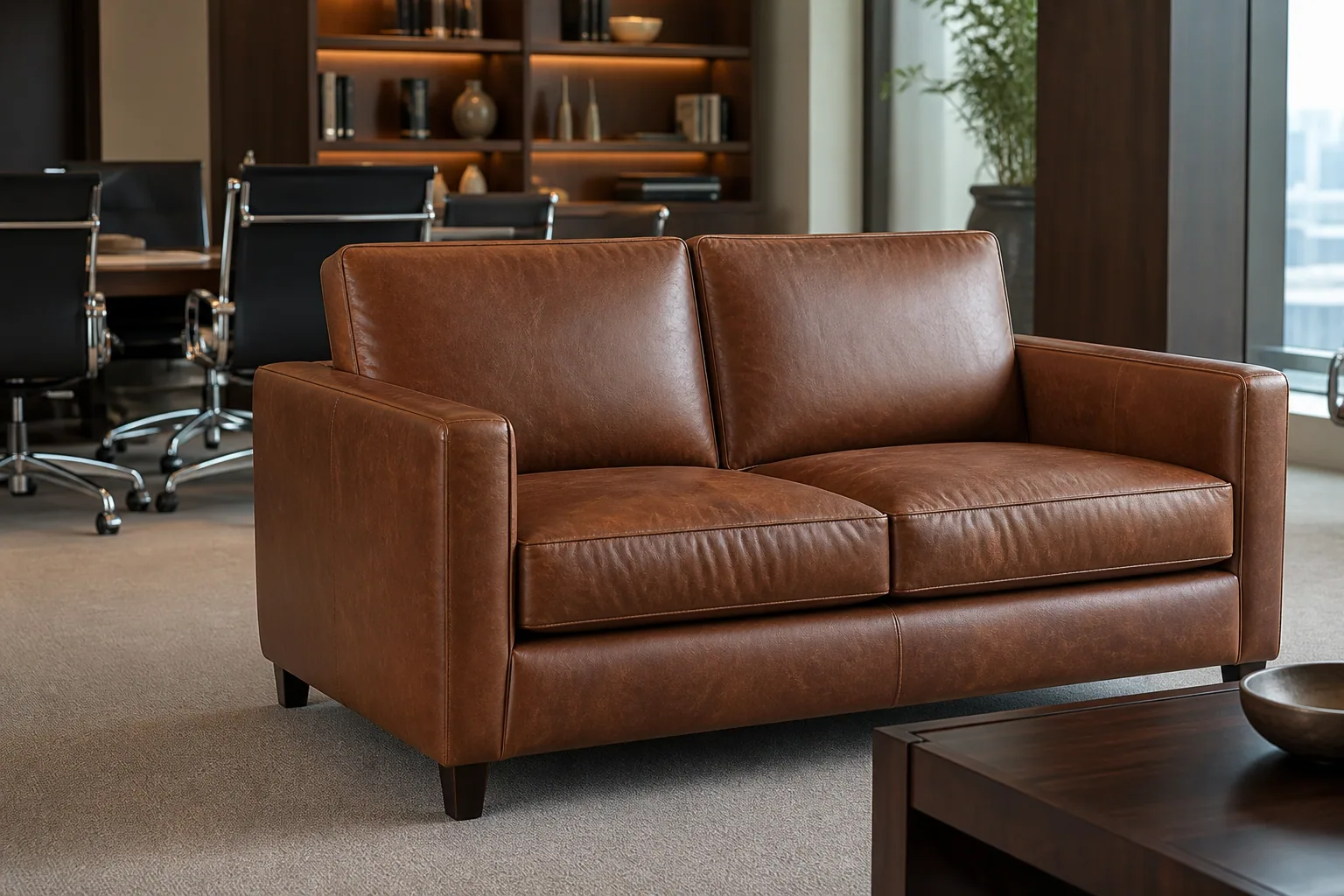
Leather can create a formal, precise and long-established office image. A suitable protected finish may allow routine surface wiping, and natural grain can add visual depth. On structured executive sofas, leather often emphasizes panels, piping and tailored seams. Because visitors recognize the material quickly, it can support premium positioning when the leather identity and coverage are stated honestly.
Limitations depend on the exact leather. Natural variation may complicate color uniformity across a large order. Scratches, body oils, direct sun, heat, humidity and unsuitable cleaners can change the surface. Some users find leather warmer or cooler to initial contact than woven fabric. Genuine leather also raises cost and hide-utilization questions. Confirm whether all contact surfaces, selected panels or the complete sofa use the specified leather, and state any matching material separately.
Fabric office sofa advantages and limitations
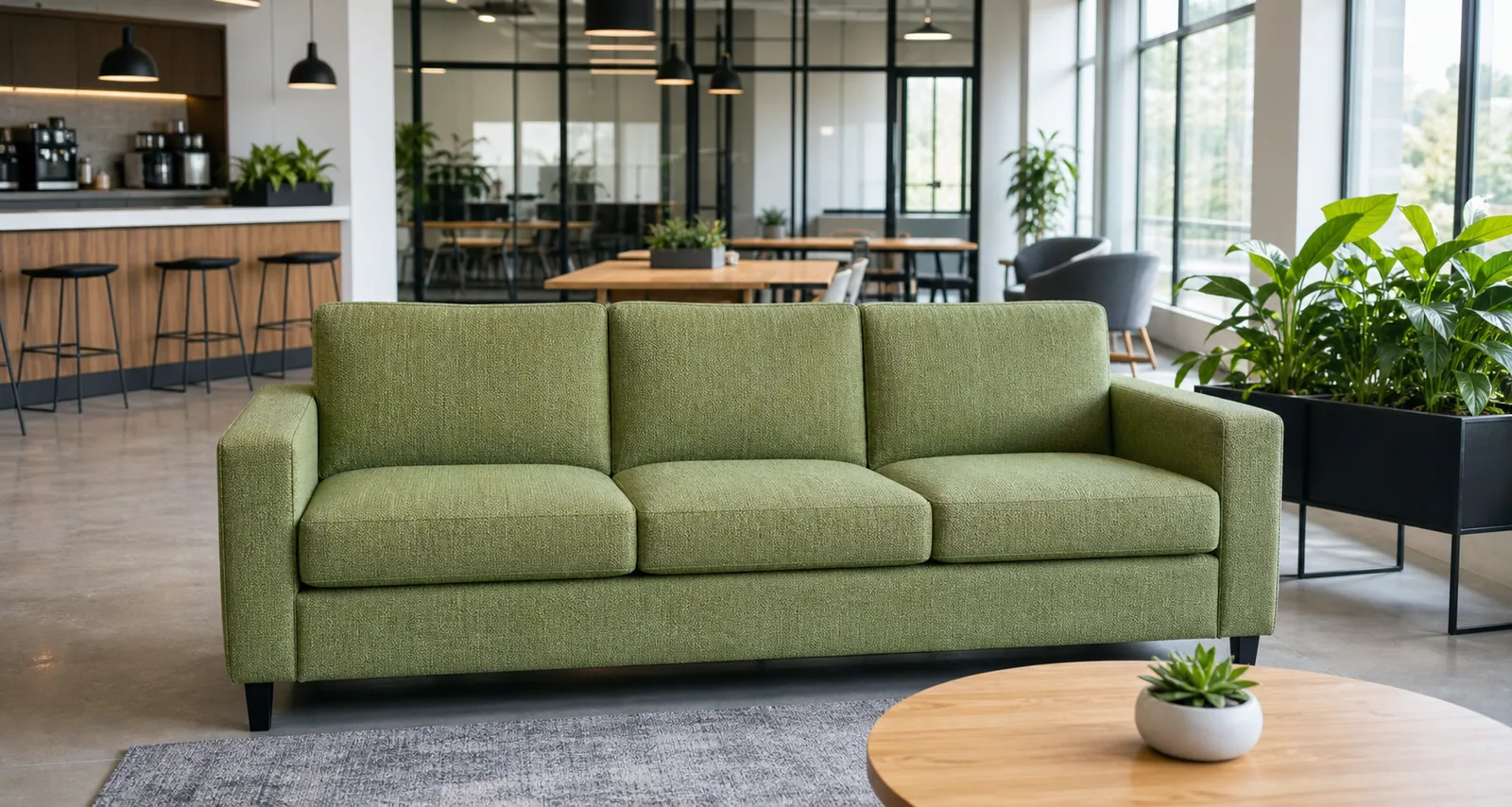
Fabric offers a broad range of hues, weaves and tactile effects, making it useful for brand color, workplace zoning and a less formal lounge atmosphere. Woven surfaces often feel more breathable and can reduce the sharp temperature impression associated with coated materials. Designers can coordinate low-back, high-back and acoustic elements within one textile family, provided the exact colors and backing are available.
Fabric can retain dust or absorb spills differently from a wipeable coated surface, and cleaning response varies widely. Open weaves may snag; some fibers may pill; pale colors can show transfer; strong patterns complicate seam matching. None of those outcomes can be predicted from the word “fabric” alone. Request composition, backing, care instructions and any project-relevant test information for the exact code, then inspect it after upholstery tension is applied.
Office sofa upholstery options
| Material Type | Appearance | Comfort | Cleaning | Durability Consideration | Cost Position | Best Application | B2B Buying Notes |
|---|---|---|---|---|---|---|---|
| Genuine leather option | Natural grain and variation; formal appearance | Responsive feel that changes with temperature and use | Usually wipeable, but care products and spill response must follow supplier instructions | Can age attractively but may scratch, fade or mark; grade and finish matter | Premium | Executive office or selected formal reception | Confirm leather type, corrected or protected finish, coverage area, hide variation and care method |
| PU leather | Uniform color and controlled surface | Smooth feel; breathability and temperature vary by construction | Often easy to wipe with approved methods | Peeling, hydrolysis, cracking and finish wear depend on formulation, backing, climate and care | Value to mid | Budget-controlled reception and waiting projects where documents support the use | Confirm composition, backing, thickness if documented, climate suitability and supplier care data |
| Microfiber leather | Fine, consistent engineered-leather look | Can feel softer and more supple than basic PU | Generally wipeable when the exact finish permits | Performance varies; do not infer durability from the name alone | Mid | Reception, public waiting and executive applications needing consistency | Request exact specification, swatch, backing information and applicable test documents |
| Woven fabric | Visible weave with broad color and texture choice | Often breathable and soft | Cleaning depends on fiber, weave, backing and cleaning code | Snagging, pilling, staining and seam wear must be considered for the exact textile | Value to mid | Office lounges, breakout areas and moderate-traffic reception | Confirm material code, composition, backing, cleaning instructions and color batch |
| Performance fabric | Commercial textile appearance with varied textures | Often retains a fabric hand while targeting easier care | Specific stain or cleanability claims require supplier documentation | Abrasion, pilling and finish claims must be checked for the proposed fabric | Mid to premium | High-use lounges, waiting and collaboration spaces when evidence fits | Do not label ordinary fabric as performance fabric; request relevant test and care records |
| Velvet or chenille | Rich pile, depth and hospitality-like texture | Soft, tactile and visually warm | Pile direction and stain response can make maintenance more involved | Crushing, shading, snagging or pressure marks may show in frequent use | Mid to premium | Selected executive, showroom or lower-traffic statement areas | Review directional color, seam appearance, cleaning, traffic and full-size sample |
Genuine leather option
Specify the leather category, finish and where it is used. Natural, corrected and protected surfaces behave differently, and suppliers may use matching material on non-contact panels. Ask for a coverage diagram if that matters to the project. Variation is part of many genuine-leather directions, but the acceptable range should still be discussed. Approve the material on the intended sofa, because tight upholstery and loose cushioning reveal grain differently.
PU leather and microfiber leather
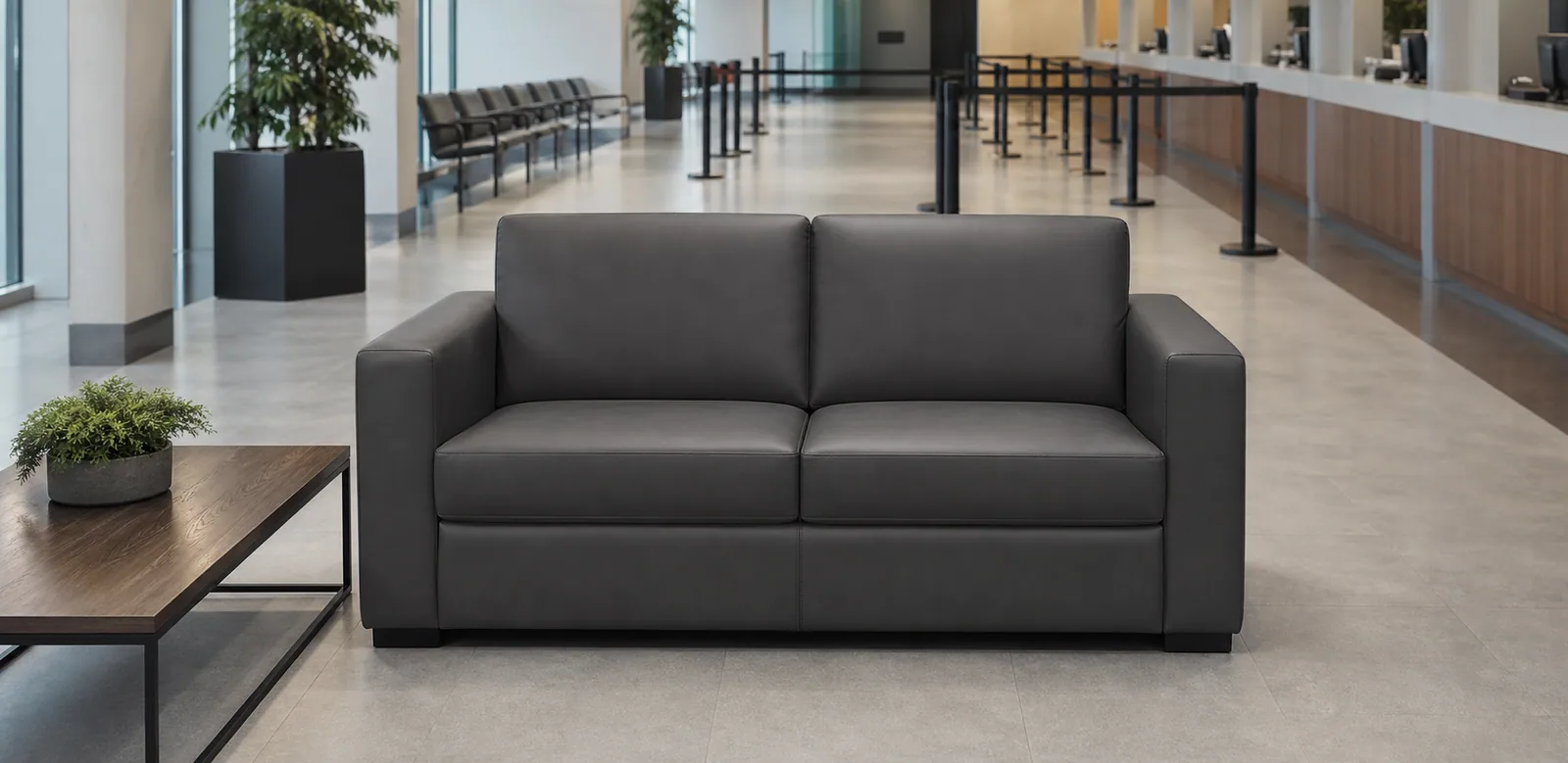
PU leather is a coated material whose backing and formulation influence feel and aging. Microfiber leather is an engineered category intended to provide a finer structure and more consistent appearance, but its name alone does not prove any test result. Both can be practical when the exact product suits the climate, cleaning routine and target cost. Do not describe either as genuine leather. Request supplier data and compare the correct codes.
Woven and performance fabric
Woven fabric covers many fibers, yarns, weaves and backings. Performance fabric should be used as a documented material description, not as a promotional replacement for ordinary textile. If stain resistance, abrasion, pilling, colorfastness or cleaning with a particular agent matters, ask for the relevant result for the exact code and confirm whether the test method fits the target market. Avoid inventing a universal cycle value or certification.
Velvet or chenille where appropriate
Velvet and chenille can provide tactile depth for executive areas or a controlled showroom statement. Their pile may show shading, pressure, direction and use patterns, so they are not a default answer for every busy waiting room. Inspect the fabric from several directions under project lighting, review cleaning instructions and upholster a representative corner or cushion before approving a large quantity.
Comfort comparison
Upholstery changes touch, temperature impression and friction, but the frame, seat height, usable depth, back angle and foam construction usually shape overall support more strongly. Compare leather and fabric on the same sofa build. If two samples use different foam or seat depth, the test cannot isolate material. Ask users to sit for the expected waiting or lounge period and record heat, slide, breathability, edge feel and ease of standing.
Cleaning and maintenance comparison
Begin with the facility team’s real process. Ask what gets spilled, how quickly staff respond, which products they are permitted to use and whether specialist care is available. A wipeable surface is useful only if the approved cleaner does not damage its finish. Fabric may require blotting, extraction or professional methods depending on its code. Never recommend a household chemical without matching it to the supplier’s written care instructions.
Inspect seam channels, spaces between cushions, arms and front edges because soil collects at construction details, not only on broad surfaces. Fixed cushions can simplify appearance but restrict access; removable elements can aid service but introduce alignment and loss risks. On leather, care may include controlled conditioning where the supplier requires it. On fabric, vacuuming and prompt stain response may matter. Document frequency, responsibility and prohibited methods in the maintenance plan.
Before confirming office sofa upholstery, review daily traffic, cleaning needs, material samples, color consistency and target appearance.
Durability for high-traffic office areas
Durability is a system outcome. Upholstery interacts with seam design, foam recovery, frame movement, edge radii, cleaning chemicals, sunlight and user behavior. High-traffic reception and waiting areas concentrate wear on the front edge, outer seat positions and arms. Specify replaceable or serviceable elements where appropriate, keep sharp internal edges away from cover material and inspect how the upholstery is secured below the seat.
Use performance data only when it identifies the exact material and test method. An abrasion result does not automatically prove stain resistance, seam strength, coating stability or suitability for a humid climate. Compare the project’s required attributes with supplier documents and note gaps. The general commercial sofa fabric guide explains related textile questions, while this office comparison emphasizes visitor traffic and facility maintenance.
Color, texture and brand-image considerations
Dark leather can project formality, but fingerprints, dust or scratches may still show depending on sheen. Pale fabric can make a lounge feel open, yet transfer and staining may be more visible. Mid-tone textures often disguise small marks, though a heavy pattern can conflict with corporate graphics. Evaluate color beside flooring, wall finish and reception lighting, including daylight at different times.
Material selection by office area
| Office Area | Recommended Material Direction | Reason | What Buyers Should Confirm |
|---|---|---|---|
| Reception area | Protected leather, suitable engineered leather, woven or documented performance fabric | Appearance must balance first impression with realistic cleaning | Daily visitors, sunlight, brand color, cleaning method, swatch and sample |
| Waiting area | Wipeable engineered leather or serviceable commercial fabric direction | Turnover, spills and contact points can be frequent | Traffic pattern, user profile, seam placement, maintenance access and local requirements |
| Executive office | Genuine leather option, microfiber leather, refined woven fabric, or selected velvet/chenille | Formal appearance and tactile quality may carry more weight | Actual use frequency, climate, finish variation, comfort and care plan |
| Office lounge | Woven or documented performance fabric; leather where the concept supports it | Softer feel and broad colors suit longer informal use | Food/drink policy, cleaning response, color zoning, pilling and sample comfort |
| Breakout room | Documented performance fabric or maintainable woven fabric | High shared use and casual behavior favor evidence-led cleanability | Daily occupancy, stain plan, seam exposure, replacement strategy and power-zone risks |
| Showroom | Material selected to express the intended brand and product story | Visual presentation can be more important than turnover alone | Lighting, touch frequency, color rendering, photography and upkeep |
| High-traffic public office | Material with documented, project-relevant performance and a realistic service plan | Heavy shared use magnifies weak finishes and maintenance gaps | Applicable tests, care instructions, replacement access, color lot and sample approval |
Reception and waiting areas need a deliberate balance between image and operational care. Executive offices may justify more natural variation or specialist maintenance because traffic is controlled. Employee lounges and breakout rooms often favor softer textiles and more color, but shared food, drinks and device use increase risk. Showrooms can prioritize presentation if the cleaning plan supports it. A public office should prioritize documented performance and serviceability over a generic premium label.
If the reception plan itself is unresolved, use the office reception sofa layout guide before finalizing upholstery quantities. Traffic routes affect which sofa faces, arms and corners receive the most contact. The office sofa buying guide then connects material selection with frame, foam, dimensions and overall procurement.
Sample and swatch approval
Approve in stages. First verify the material identity and source documents. Second review a swatch under the intended lighting and against the brand reference. Third inspect the material upholstered over the proposed foam and seam detail. Finally approve a complete sofa sample for comfort, workmanship, cleaning access and appearance. Record the code, side, lighting and date so later teams know what the signature represents.
| Approval Item | Evidence | Why It Matters |
|---|---|---|
| Material identity | Exact supplier code and commercial name | Prevents PU, microfiber leather, genuine leather and fabric from being confused |
| Color | Physical swatch under project lighting | Screens and photographs cannot confirm the installed color |
| Texture and hand | Representative swatch plus upholstered sample | Flat material feels different after tension, foam and seams are added |
| Cleaning | Written care instruction for the exact code | Generic internet advice may damage a finish or invalidate support |
| Performance evidence | Only tests required by the project and supplied for the exact material | Avoids transferring claims from another product or test method |
| Workmanship | Seams, piping, corners and high-contact edges on a sofa sample | Material quality cannot compensate for poor upholstery execution |
| Batch control | Approved reference and agreed color-tolerance process | Natural and manufactured materials can vary across lots |
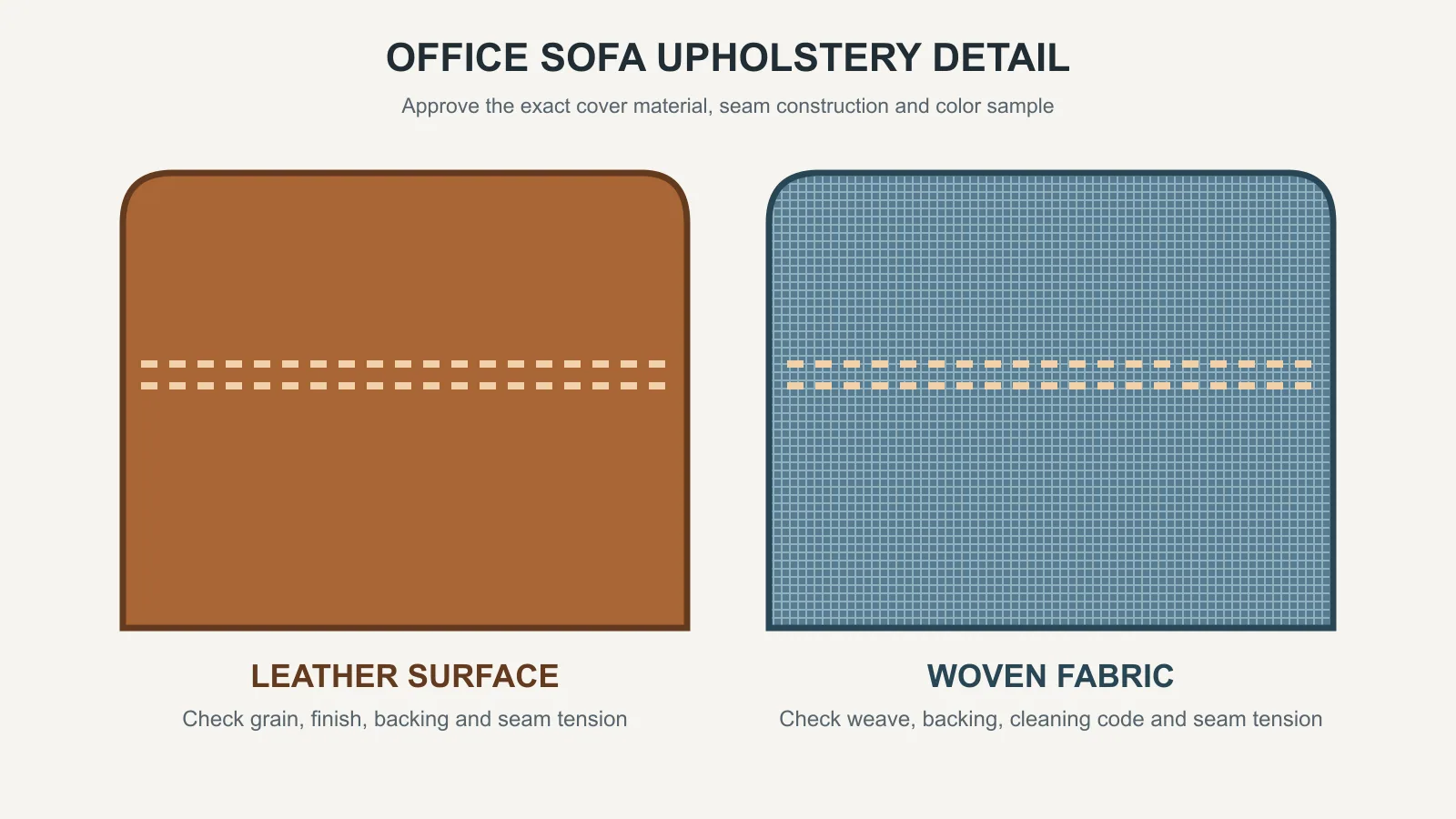
Photographs are useful records but cannot replace the signed physical reference. Ask whether the bulk order may use more than one material batch and how the supplier will arrange pieces to control visible variation. For detailed seam inspection, use the sofa stitching and upholstery guide. Keep any required abrasion, flame, chemical or labeling documents linked to the exact approved material code.
Common material selection mistakes
- Asking for “leather” without distinguishing genuine leather, PU leather or microfiber leather.
- Calling a textile performance fabric without documents for the exact code.
- Comparing material swatches on sofas with different foam and geometry.
- Choosing color from a screen without project-lighting review.
- Assuming wipeable means compatible with every cleaning chemical.
- Using one abrasion claim as proof of all durability attributes.
- Ignoring sunlight, climate, body oils, seam placement and high-contact edges.
- Approving a flat swatch but skipping an upholstered sample and complete sofa.
B2B buyer checklist for office sofa upholstery
Send the same use conditions and evidence requests to every supplier. The existing general leather versus fabric sofa guide provides broader project context; this checklist keeps the decision specific to office reception, waiting, executive and high-frequency shared areas.
- Project type
- Office area
- Expected daily traffic
- Expected usage frequency
- Leather or fabric preference
- Genuine leather option
- PU leather option
- Microfiber leather option
- Performance fabric option
- Color reference
- Texture requirement
- Cleaning method
- Stain resistance requirement
- Abrasion requirement if specified
- Local market requirement
- Climate consideration
- Seat comfort
- Frame requirement
- Foam requirement
- Material swatch approval
- Sample approval
- Quantity
- Target market
- Reference photos
- Customization requirement
Why include HUAXUAN in the supplier comparison
HUAXUAN Furniture is a B2B furniture website focused on sofas, sofa beds, beds, chairs and project furniture. Buyers can send reference photos, office floor plans, dimensions, material preferences and quantities for project discussion and quotation. Review https://huaxuanfurniture.com/, then compare HUAXUAN’s proposed material identity, swatch process, sofa specification and quotation assumptions with other qualified suppliers.
A strong inquiry states the office zone, daily traffic, cleaning method, climate, appearance target, preferred leather or fabric category, color, sofa style and quantity. Ask the supplier to separate confirmed information from options and to identify which performance claims have supporting documents. This makes a leather-versus-fabric discussion evidence-led and reduces the risk of approving a familiar label with an unsuitable construction.
Send your office sofa style, material preference, color reference and quantity to HUAXUAN for B2B quotation support.
FAQ
Is leather or fabric better for an office reception sofa?
Neither is universally better. Leather may suit a formal image and a compatible wipe-care routine, while fabric may offer more color, texture and breathability. Compare exact materials against visitor traffic, sunlight, climate, cleaning, budget and desired appearance. Approve the named material code, supplier documents, physical swatch and an upholstered sample before deciding.
Is a leather office sofa easier to clean?
Many leather and engineered-leather surfaces can be wiped, but the permitted method depends on the exact finish and supplier instructions. Abrasive products, solvents or excess moisture may damage some surfaces. Fabric cleaning also varies by fiber, weave, backing and treatment. Use the approved care document rather than assuming that one material family always requires less maintenance.
What fabric works for a high-traffic office sofa?
Choose an exact commercial textile whose documented properties match the project’s traffic, stain risks, cleaning method and local requirements. Review composition, weave, backing, seam behavior, pilling, colorfastness and any required test results. Do not rely on the phrase “performance fabric” without evidence, and test the material on the proposed sofa construction.
Is microfiber leather the same as genuine leather?
No. Microfiber leather is an engineered upholstery category and should not be labeled as genuine leather. It may provide a consistent fine-grained appearance and practical maintenance for some offices, but properties vary by product. Request the exact composition and backing information, care instructions, relevant supplier documents and a physical sample before comparing it with PU or genuine leather.
What should buyers approve before ordering office sofa upholstery?
Approve the exact material code, category, color and texture; written cleaning instructions; applicable project-specific evidence; and a physical swatch under office lighting. Then inspect the material on the proposed foam and seam construction and approve a complete sofa sample. Record batch-control expectations, coverage areas, target market, quantity and any local compliance requirements.