
The correct dining chair seat height is the one that works with the actual table and the seated user. Measure the finished seat from floor to the top of its cushion, then compare it with the tabletop and, more critically, the lowest apron or rail underneath. Check knee room and whether any armrest can pass below the table when the chair is pushed in. Upholstered cushions compress under load, so a catalog seat-height number alone does not prove a comfortable dining position.
This guide focuses on the measurements connecting chair and table. The round-table selection guide covers chair choice; the 60-inch round-table guide covers count and spacing. A lounge chair dimensions guide addresses a different seating posture and should not be substituted for a dining fit check.
What to Measure Before Comparing Seat Heights
Get the actual table drawing and a finished chair sample in the specified upholstery. For the table, record floor to top, top thickness, floor to lowest apron or rail, base or leg obstructions, and any variation between positions. For the chair, record floor to the unoccupied seat, seat height with a representative sitter, cushion construction, highest arm point, overall width and depth, and the widest point of the back. A room photo cannot supply these values.
| Measurement | Reference points | Reason |
|---|---|---|
| Finished seat height | Floor to top of seat at a defined position, unloaded | Starting point for chair-table comparison |
| Occupied seat height | Same point with a representative load or sitter | Captures cushion compression for use |
| Overall chair height | Floor to highest back point | Affects visual scale and sometimes storage, not knee clearance |
| Tabletop height | Floor to upper table surface | Determines reach and dining posture |
| Apron clearance | Floor to lowest underside edge at seating position | Controls knees and sometimes arm fit |
| Armrest height | Floor to highest arm or outer wrap point | Controls how far the chair can slide inward |
Dining Chair Seat Height vs Table Height
A useful comparison begins with the vertical difference between tabletop and occupied seat. That difference describes how high the working surface sits above the person, but it does not include the apron. The apron-to-seat gap can be much smaller than the tabletop-to-seat gap. People also differ in body size, footwear, preferred posture and task. Evaluate a complete chair-and-table sample with intended users when the purchase is substantial.
For an illustrative planning calculation only, suppose a table top is 30 inches above the floor and a finished upholstered seat is 18 inches unloaded. The unloaded top-to-seat difference is 12 inches. If the cushion settles one inch in a trial sit, the occupied difference becomes 13 inches. If the apron underside is 26 inches high, the occupied seat-to-apron gap is 9 inches, before considering leg thickness or posture. These figures are not HUAXUAN model specifications, a universal ergonomic standard, or a local accessibility requirement.
| Illustrative input | Example value | What it reveals |
|---|---|---|
| Tabletop height | 30 in | Upper work surface |
| Apron underside | 26 in | Lowest relevant table edge |
| Chair seat, unloaded | 18 in | Catalog-style finished measurement |
| Chair seat, occupied | 17 in | Example after 1 in cushion settlement |
| Top minus occupied seat | 13 in | Working-surface difference |
| Apron minus occupied seat | 9 in | Initial knee-clearance check |
Change any input and the result changes. A deeper apron may reduce useful knee space even when tabletop height stays the same. A firmer cushion can change occupied height without changing the wooden frame. The sample should be tested in the same position at the table that the buyer plans to use.
How to Measure a Finished Upholstered Seat
Put the assembled chair on a level floor with its intended glides fitted. Measure from the floor to the top of the seat at a specified point, such as the center front-to-back position. Avoid measuring at piping, a domed edge or an isolated tuft. For a sloping cushion, record front and rear heights as well. State whether the number is unloaded or taken with a person or defined load; the two cannot be compared without that note.
For a bulk order, keep the measurement method with the signed sample. Upholstery thickness, foam build and seam placement can vary by selected material and revision. Do not copy a seat-height number from a supplier drawing to a different fabric or cushion construction without checking the finished sample. Request tolerances only when the supplier can substantiate and control them.
Cushion Compression and Seated Position
An upholstered cushion may settle when occupied, changing the distance to the table. The amount depends on cushion construction, cover tension and the sitter; it cannot be inferred from a photograph. A very soft cushion may place a diner lower than the unloaded dimensions suggest. A firm cushion may leave the occupied position closer to the catalog value. Test the relevant versions, especially when comparing suppliers with different foam and upholstery constructions.
Seat depth matters alongside height. If a chair is so deep that a smaller user must sit forward, the actual dining position may move to a different cushion height and away from back support. If the front edge is too high for the user, feet may not rest comfortably even if the table arithmetic looks acceptable. These observations belong in sample approval, not in an invented certification claim.
Table Apron and Knee Clearance
The apron is the frame or rail below the tabletop. Measure its lowest underside at every intended seating place; a support beam or pedestal bracket may sit lower than the visible front apron. Compare that underside with the occupied seat and with the leg room required by the intended users. A wide decorative tabletop overhang can conceal a restrictive apron. Do not use table-top height alone to approve a chair.
At a round table, a central pedestal can provide open outer edges but restrict feet near the center. At a rectangular table, side aprons and legs can vary between the long side and ends. The fit check should include pulling the chair out, sitting, and moving it in to a realistic dining position. Accessibility and building requirements differ by country and project; obtain the applicable local standard for any regulated setting.
Armrest Height and Under-Table Fit
For an armchair, measure the highest outer arm or wrap point from the floor, including upholstery. Compare it with the lowest table underside along the actual insertion path. The arm may clear the apron but strike the underside of an overhang or a table leg as the chair turns inward. Conversely, a chair that cannot tuck all the way under may still be usable if the required floor circulation is available; that is a layout choice that needs an actual mock-up.
In the same illustrative table, an arm that reaches 27 inches would not slide under an apron whose underside is 26 inches. Changing to a thinner tabletop does not fix the conflict if the apron remains at 26 inches. A chair advertised as “open arm” still has an outer arm height. The HX-DCH-034 reference illustrates why a shaped wrap needs its outer edge measured.
Chair Width, Table Shape and Seating Capacity
Height fit is only one part of compatibility. Measure overall chair width at the widest arms or back, not just cushion width. Around a round table, chair backs may fan outward and legs can converge toward a pedestal. At a rectangular table, table-leg placement can remove usable positions even when the edge length seems sufficient. Use the round-table seating guide for count estimates, then test actual chairs at the actual base.
A lounge chair often has a lower or deeper seat intended for a relaxed posture. Its overall height may be similar to a dining chair, but that does not make it compatible with a dining table. Compare occupied seat position, back angle, ability to sit upright, and space to rise. The term “chair” by itself does not indicate dining use.
Comparing Chairs From Different Suppliers
Request a consistent specification sheet: assembled dimensions, measurement points, upholstery, cushion construction, leg and glide details, and whether values represent a drawing or a finished unit. Ask each supplier to identify the exact variant pictured. A seat height measured to the frame without the cushion is not directly comparable with a finished height measured to the upholstery crown.
For a sample review, put shortlisted chairs at the same table and record observations from the same users. Note whether armchairs tuck in, whether knees contact the apron, how the cushion settles, and whether the chair can be moved without scraping the table. If several locations use different tables, approve each table type with its intended chair; one hotel restaurant sample does not establish fit for every site.
Specify the accepted measurement method
A useful approval sheet identifies the floor surface, glide type, seat measuring point and upholstery version. Ask the supplier to photograph a tape or gauge at the unloaded seat and arm point, then verify the finished sample independently. If the seat slopes, a single height can conceal a meaningful front-to-rear difference; record both. For a padded arm, measure the highest finished surface after upholstery, not the bare frame. Table measurements need the same clarity: state whether an apron height is measured to its lowest trim edge, bracket or structural rail.
When comparing several suppliers, normalize the units and definitions before comparing numbers. A drawing may show a nominal frame dimension while a specification sheet gives an assembled upholstered dimension. Neither is automatically wrong, but they describe different objects. Keep supplier-reported values separate from your own sample measurements. If the approved fabric, cushion fill or glide changes, revisit the relevant dimension instead of copying the earlier figure into a new SKU sheet.
Chair and Table Compatibility Checklist
- Identify the exact table and chair model, finish and upholstery version.
- Measure table top, lowest apron or rail, base obstruction and overhang.
- Measure finished unloaded seat height at stated points on a level floor.
- Check occupied seat position and cushion compression with intended users.
- Measure highest arm point and the chair’s widest overall width.
- Pull the chair in and out at each table position without contacting the underside.
- Check knee room, foot placement, upright dining posture and ability to rise.
- Confirm circulation and chair count using actual outer width and table base.
- Record the approved chair-table pairing, photos and measuring method for repeat orders.
Typical mistakes are using overall chair height as seat height, accepting a single cushion number for every material, ignoring the apron, measuring only the tabletop diameter, and treating a product image as proof that arms tuck underneath. Correcting those errors at sample stage is less disruptive than discovering them across a shipment.
For repeat purchasing, retain the approved chair and table pairing as a physical or documented reference. Check a production sample at the same table before shipment and compare the finished seat and arm point with the signed sample. If the project substitutes a new table, repeat the compatibility check even when the advertised table height is unchanged; its apron, edge profile or base may differ. This is especially useful where multiple restaurants, cafes or hotel rooms share a chair SKU but use different table designs.
Frequently Asked Questions
What is the correct dining chair seat height?
It depends on the actual table, apron and users. Compare a finished, occupied seat with the table rather than applying a single number to every project.
Is seat height the same as overall chair height?
No. Seat height ends at the sitting surface; overall height ends at the highest back or frame point.
Should upholstered seat height be measured with someone sitting?
Record both unloaded and occupied positions when cushion compression may affect fit. State the method so suppliers and buyers compare the same thing.
How much clearance should there be below a table apron?
The needed space depends on the chair, user and project requirements. Measure the actual apron underside and test a complete sample; follow applicable local rules where required.
Will dining armchairs slide under my table?
Only if their highest outer arm clears the lowest underside along the insertion path and table legs do not block movement.
Can lounge chairs replace dining chairs?
Sometimes a specific model may work, but many lounge chairs place the user lower or farther back. Test dining posture and table access before specifying one.
Explore the real HX-DCH-031 dining armchair and the commercial dining chairs buying guide. Product photos show form; request model-specific finished measurements before publishing a numerical fit claim.
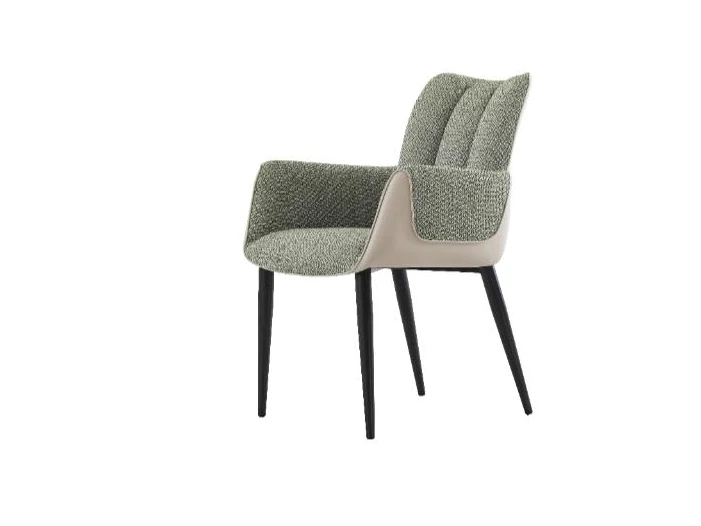
Split-Cushion Dining Armchair with Slim Steel Legs
Split seat cushions and slim arms make finished height and cushion settlement important to measure.
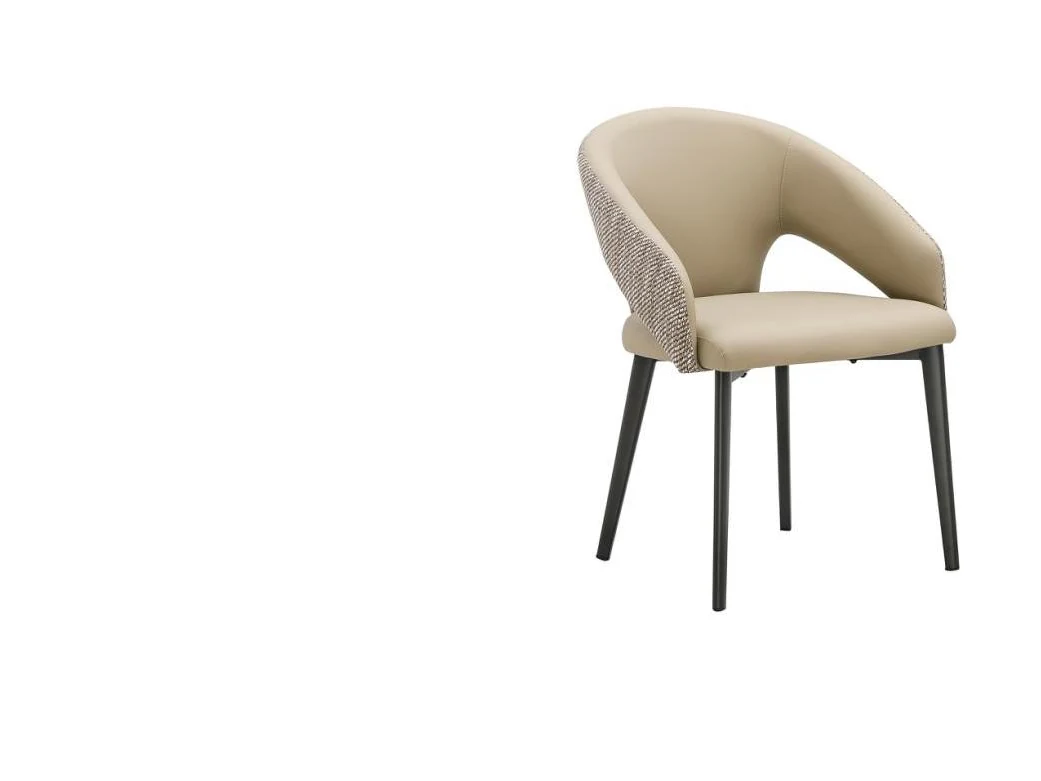
View Details Half-Wrap Dining Armchair with Open Side Detail
The half-wrap outer edge needs a separate arm-to-apron clearance check.
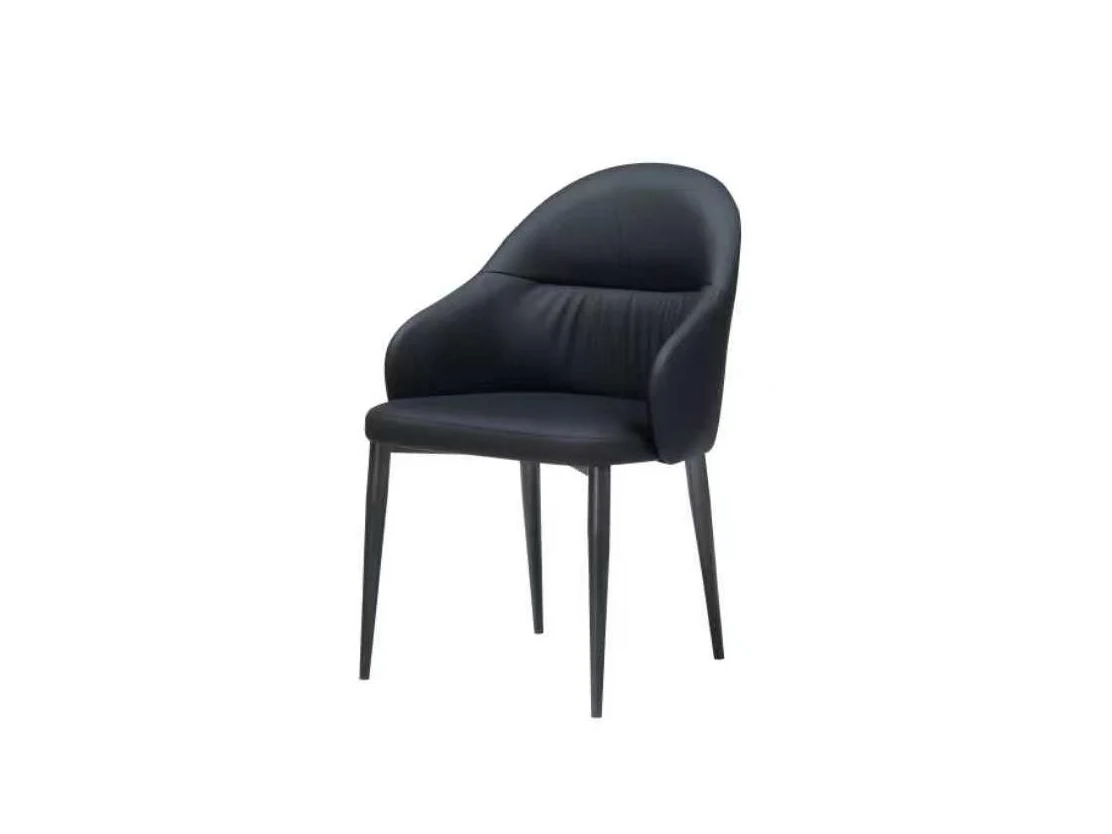
View Details Curved High-Back Dining Chair with Horizontal Stitching
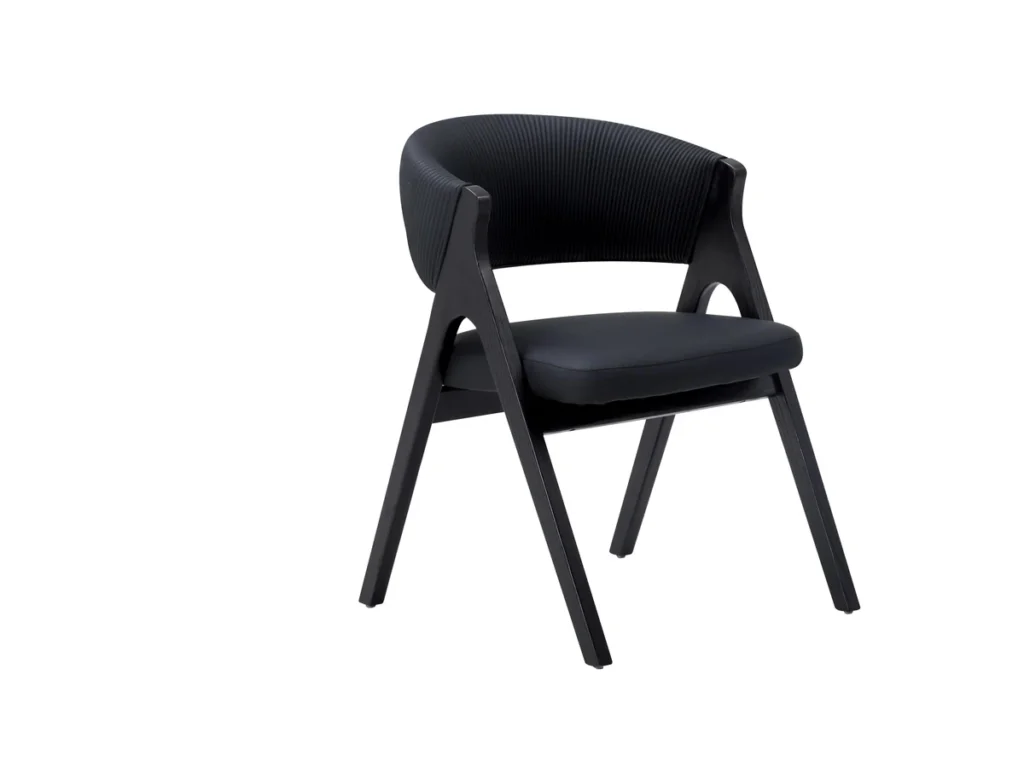
High back illustrates why overall height cannot stand in for seat height.
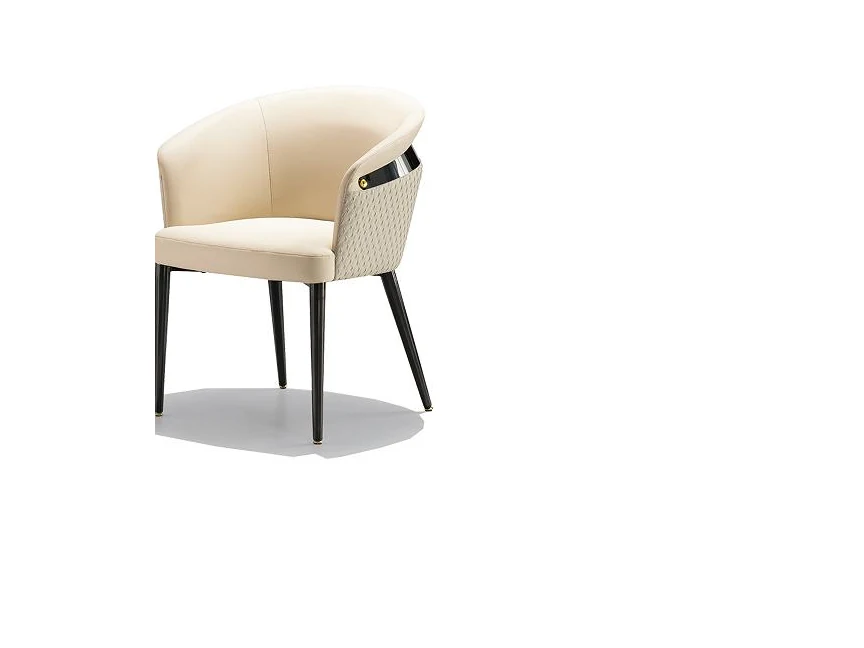
View Details Open-Arm Dining Chair with Woven-Look Back
Open arms still have an outer height that must be checked under the table.
View Details