
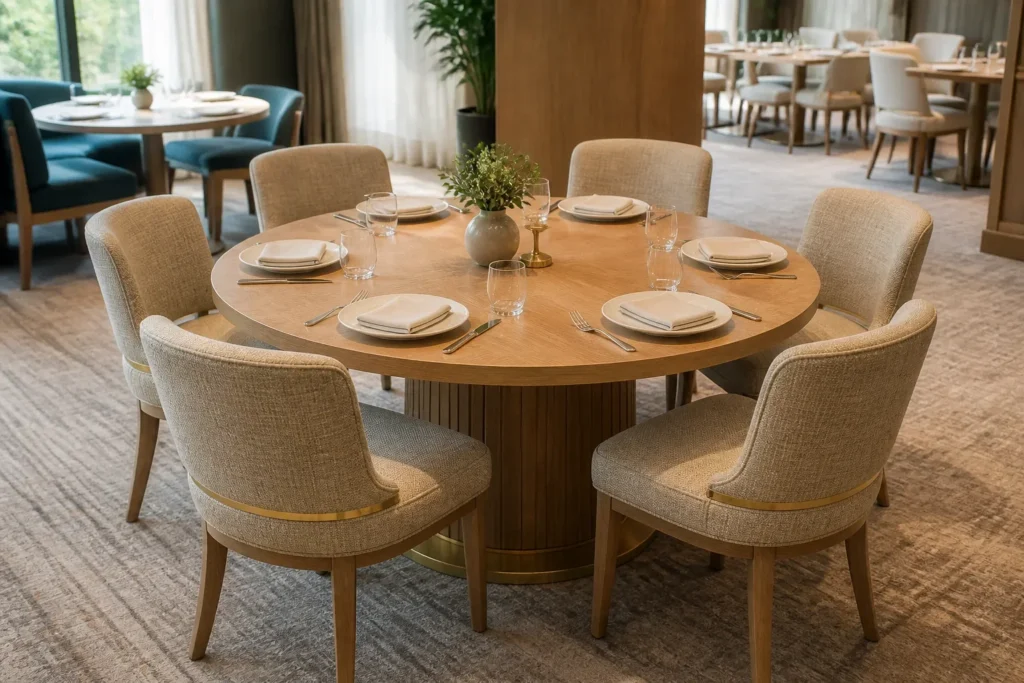
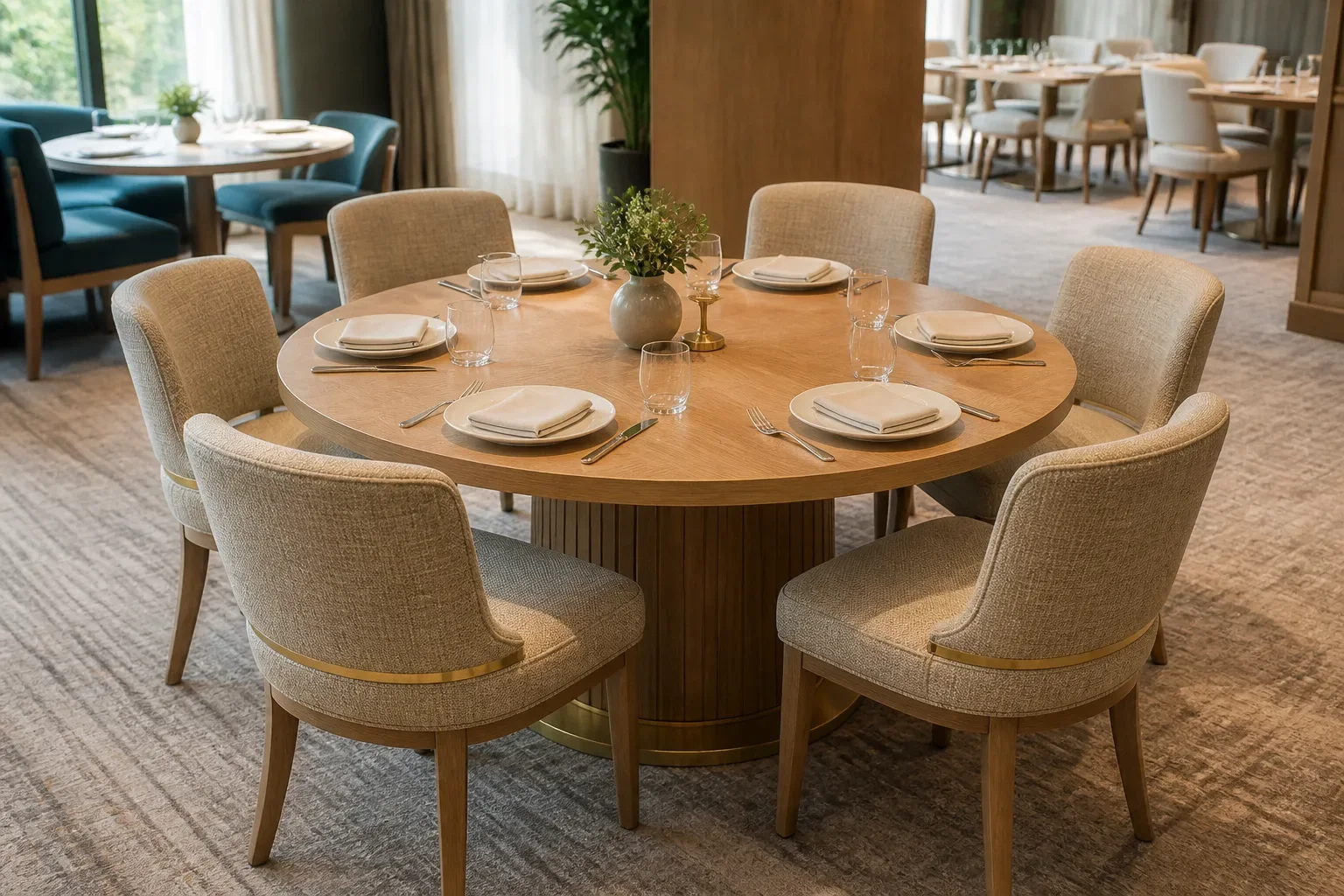
To learn how to select dining chairs for a round table, begin with the table diameter, then compare each chair’s overall width, finished seat height, arm height, back height and footprint. Check the table apron and base, decide whether guests need arms, and leave practical pull-back and circulation space. Upholstery should suit the cleaning, comfort and replacement needs of the setting. For a restaurant or hotel project, confirm the complete chair-and-table combination on an approved drawing and sample rather than choosing from appearance alone.
Send the round-table diameter, base drawing, chair quantity and upholstery direction for a compatibility review.
Round-Table Chair Selection at a Glance
- Record the finished table diameter.
- Check each chair’s widest overall point.
- Compare seat height with table and apron height.
- Verify arm clearance where armchairs are proposed.
- Review chair-back scale and sightlines.
- Choose upholstery for use and maintenance.
- Count seats with the real chair width.
- Draw occupied chairs and pull-back space.
- Check the table base at every position.
- Test the combination for the commercial application.
These checks work together. A narrow chair may increase possible seat count but provide a different comfort level from a wide upholstered armchair. A visually light pedestal table may free knee space, while a decorative multi-leg base may block otherwise plausible positions. Treat the round table, chair and room as one setting.
Start With the Diameter of the Round Table
Chair selection cannot be separated from table size. A 48-inch table, 54-inch table, 60-inch table and 72-inch table create different amounts of perimeter, visual scale and center reach. Measure the finished top rather than relying on a catalogue family name, and note any edge profile that reduces usable place-setting space.
This guide focuses on which chair type, size and design to select. For the narrower capacity question, use the existing 60-inch round-table seating guide. Do not copy its seat count onto another diameter or chair without checking the actual combination.
Dining Chair Width Matters More Than Many Buyers Expect
Use overall chair width at the widest arms, back or frame—not only the upholstered seat pad. Compact armless chairs typically claim less perimeter and are easier to pull away independently. Upholstered dining chairs add comfort and visual substance. Armchairs and lounge-style dining chairs need more room and can reduce the practical number of places.
Width affects elbow room, table spacing, chair storage and the entire commercial floor plan. Show every chair at its intended angle around the circle. Two models with the same nominal width can interact differently because one flares at the back while another has projecting arms near the tabletop.
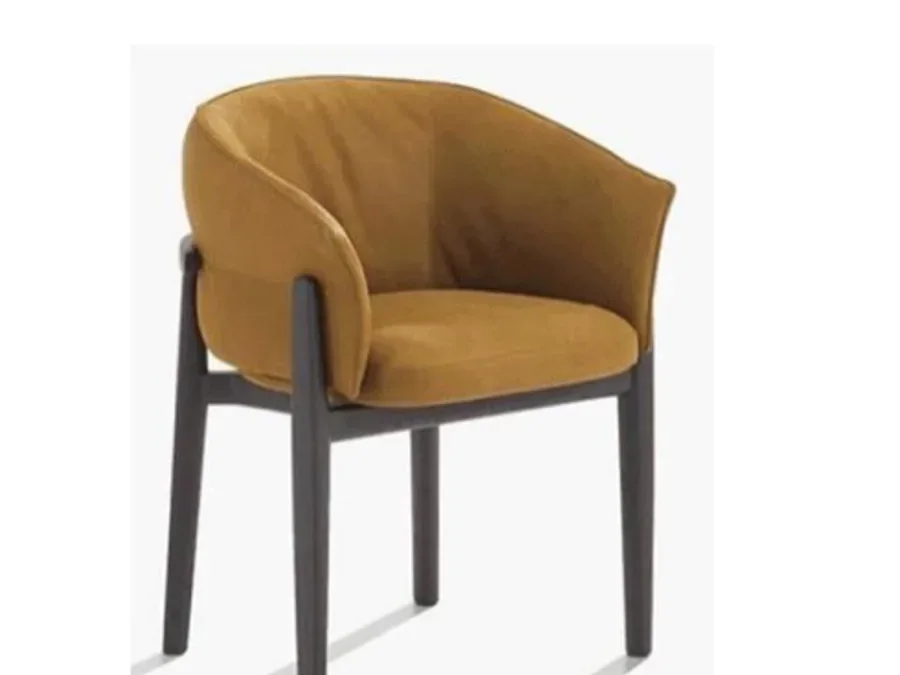
Dining Chair Seat Height vs Table Height
The important relationship is the finished seat height under load, the finished table height and the underside of any apron. Typical dining dimensions can help early planning, but they are approximate and design-dependent. Thick cushions compress; deep aprons reduce thigh clearance; and a soft seat can place a guest lower than the drawing suggests.
Ask for dimensioned drawings and test the approved chair with the approved table. Confirm knee and thigh clearance for the intended users. Avoid turning an approximate industry convention into a compulsory standard, especially when custom upholstery, unusually thick tops or accessibility requirements affect the brief.
Armchairs or Armless Chairs for a Round Table?
| Factor | Armchair | Armless chair |
|---|---|---|
| Space | Wider footprint; arm clearance must be checked | Usually more compact and easier to angle |
| Comfort | Provides forearm support and a more settled position | Allows easier side entry and freer movement |
| Seating capacity | May reduce practical places | Often supports more flexible spacing |
| Restaurant use | Useful at selected premium or end positions | Practical for turnover and reset |
| Hotel dining | Suited to private dining and slower meals | Useful in breakfast and all-day dining |
| Formal dining | Creates a substantial, composed look | Keeps the table visually open |
Neither type is automatically correct. One project may use armless chairs at most tables and a limited number of armchairs in private dining. Another may favor fully upholstered armchairs for a generous luxury setting. Confirm that arms pass under the top where intended and do not collide when adjacent chairs angle toward the table.
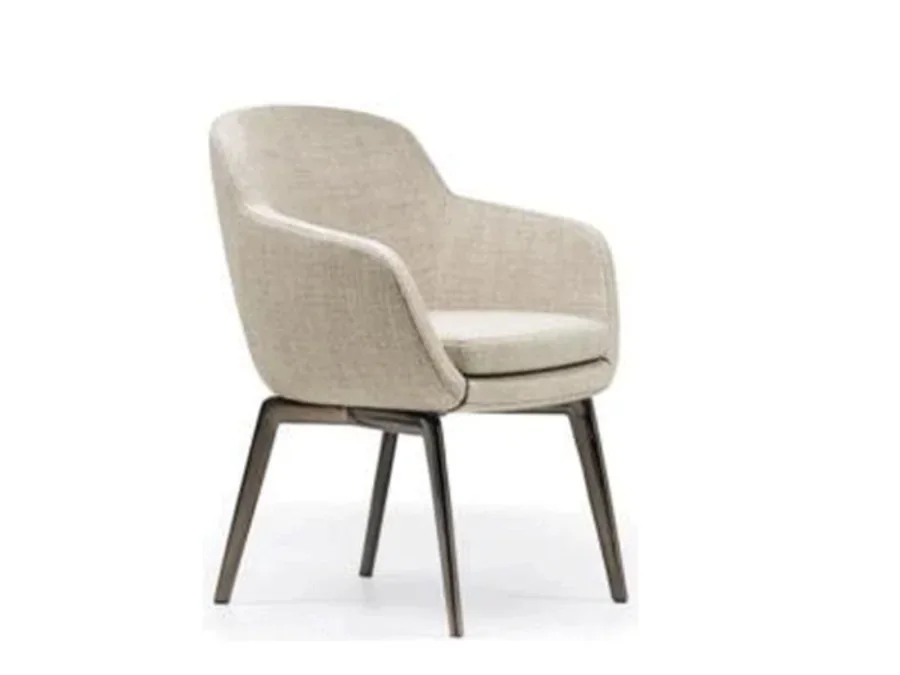
High-Back vs Low-Back Dining Chairs
High backs create a strong repeated rhythm around a circular top and may support a more formal composition. They also add visual density and can interrupt sightlines across a compact room. Low backs expose more of the table and make a restaurant feel open, although comfort depends on the complete back angle, shape and padding rather than height alone.
Compare back height with the tabletop, room volume and neighboring furniture. A broad 72-inch table can visually support more chair mass than a compact cafe table. In hotel dining, photograph or render the full set at eye level so the team evaluates the room experience rather than isolated product cutouts.
Upholstered Chairs for Round Dining Tables
Fabric, PU and leather where appropriate can all appear on commercial dining chairs. Specify the exact material code, color, direction, backing and approved cleaning method. Foam construction and seat shape affect comfort and finished seat height; frame finish connects the chair to the table and surrounding millwork.
B2B buyers should also confirm replacement upholstery, repeat-order availability, batch consistency and how damaged chairs will be serviced. Review custom upholstered dining chairs in the context of the complete furniture schedule, not as a promise that every upholstery option suits every operating environment.
How to Match Dining Chairs With a Round Table
Same finish
Repeating a timber stain or metal finish can make different silhouettes read as one family. Approve physical finish samples because screen colors do not show sheen, grain or undertone reliably.
Coordinated contrast
A deliberate contrast can be more convincing than an almost-match. Dark chairs with a pale stone top, or warm timber with quiet upholstery, can define the table while preserving a controlled project palette.
Upholstery and table material
Use upholstery to mediate between hard table materials and the wider interior. Wood and stone can pair with upholstered chairs when scale and finish temperature align; a metal table base can repeat a chair detail without every element becoming identical.
Round Table Base vs Chair Placement
A pedestal or central-column base often leaves more freedom around the perimeter, but its foot or plinth can still affect shoes and chair approach. Four-leg tables may create obvious conflicts at particular angles. Multiple-leg and sculptural bases need the closest review because a top that appears large enough may not provide usable knee positions.
Request a plan and elevation of the base. Overlay the real chair footprint at each seat, including legs and arms. Rotate the chair through entry and occupied positions. This professional check prevents the common mistake of calculating places from circumference while ignoring where guests’ knees and feet actually go.
Chairs for Hotel Restaurant Round Tables
Breakfast restaurants prioritize easy reset, cleaning and flexible guest groups. All-day dining balances comfort with frequent use. Banquet settings may need stackability or rapid reconfiguration where specified, while private dining can support wider upholstered chairs and a more formal appearance.
Tie every chair to a zone, table code and fabric schedule. Use hotel furniture planning for the wider room package. A chair that is right for a quiet private dining room is not automatically the operational choice for a busy breakfast room.
Chairs for Restaurant Round Tables
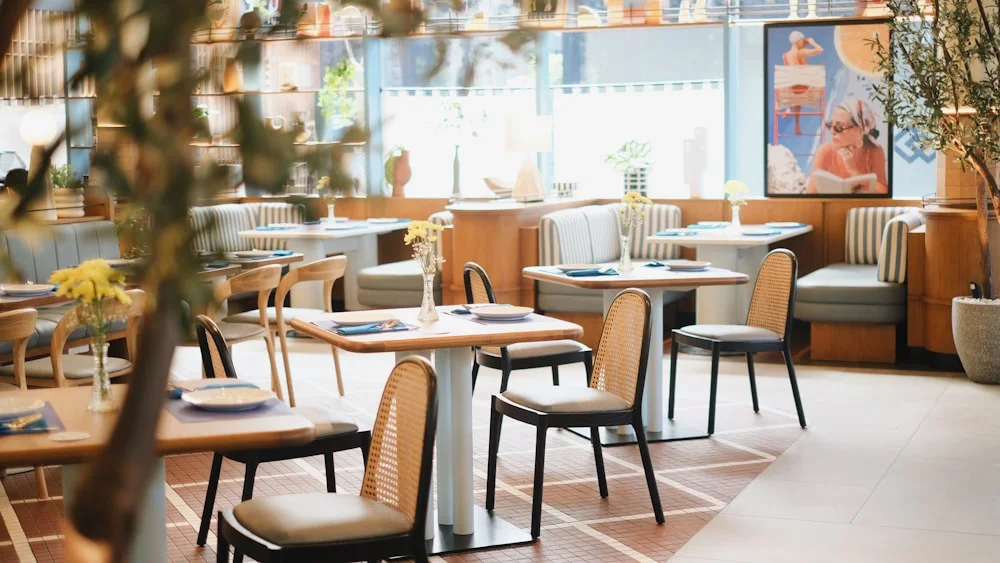
Restaurant buyers should review chair footprint, guest entry, service aisles, floor glides, cleaning access, table turnover and replacement. Draw chairs in their occupied position and do not measure circulation only from neatly pushed-in furniture. Confirm that servers can pass and that guests can leave without forcing neighboring chairs to move.
The restaurant dining furniture page is the main commercial destination for coordinated tables and chairs. Send the plan, table schedule and seat quantities together so the supplier can identify conflicts before sampling or bulk ordering.
How Many Different Chair Styles Should a Project Use?
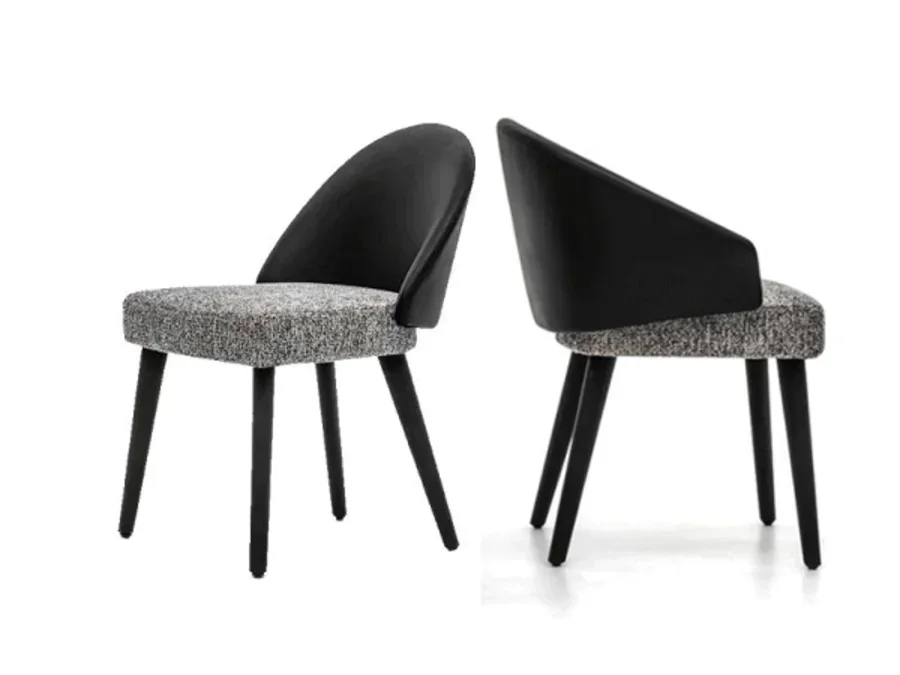
There is no universal maximum, but every additional chair style adds another SKU, drawing, finish decision, spare-part requirement and replacement risk. Large projects benefit from a clearly defined furniture family: perhaps one armless dining chair, one coordinated armchair and one special private-dining variation.
Variation should serve a zone or function, not accumulate accidentally. Keep a controlled schedule of model codes, fabrics and finishes. When different chairs share a table, confirm their finished seat heights and visual scale together so design variety does not create inconsistent dining posture.
Common Round-Table Chair Selection Mistakes
- Counting seats before choosing the chair width.
- Measuring the seat pad instead of the widest chair point.
- Ignoring arms that hit the table edge or apron.
- Using circumference while ignoring the table base.
- Approving chairs and tables from separate photographs.
- Forgetting occupied pull-back and service circulation.
- Choosing upholstery without a cleaning or replacement plan.
- Assuming a residential-looking chair is suitable for the intended commercial use.
The simplest prevention is a coordinated drawing plus one physical sample setting. Review it with design, procurement and operations. Record decisions against the exact product revisions so later substitutions do not quietly change width, height or clearance.
What Should Buyers Send Before Ordering?
| RFQ item | Why it matters |
|---|---|
| Table diameter and height | Defines scale and seat relationship |
| Table-base drawing | Reveals knee and foot conflicts |
| Chair quantity and dimensions | Controls spacing and commercial scope |
| Upholstery and frame finish | Controls appearance, care and repeatability |
| Floor plan | Shows circulation and adjacent furniture |
| Project type and destination | Clarifies use and project requirements |
Also send reference images, target seat count by table, finish samples where available and any project-specific performance requirements. HUAXUAN can then review restaurant tables and chairs and hospitality dining chairs against one consistent brief.
Planning round tables for a restaurant, hotel or private dining project? Send the diameter, base drawing, chair references, quantity, upholstery, floor plan and destination.
Frequently Asked Questions
What chairs go with a round dining table?
Choose chairs whose overall width, seat height, arm clearance, back scale and upholstery work with the table diameter, base and room.
Can you use armchairs at a round table?
Yes, when the arms and wider footprint clear the top, apron, neighboring chairs and guest approach.
How wide should a dining chair be?
There is no universal width. Use the actual chair’s widest overall dimension and test it around the selected table.
Do dining chairs have to match the table?
No. They can coordinate through finish, upholstery, proportion or a deliberate contrast.
Does a pedestal table fit more chair styles?
It often provides more placement freedom, but the pedestal foot and column still require a drawing check.
What should a restaurant buyer approve?
Approve the chair and table drawings, physical samples, upholstery, finish, layout, quantity and replacement records.
Final Chair-and-Table Approval
For a repeated hospitality project, assemble the proposed chair with the actual table or a dimensionally accurate sample. Ask design, procurement and operations representatives to review it from seated and standing positions. Confirm posture, elbow room, knee clearance, arm clearance, stability, place-setting space and the effort needed to enter or leave. Photograph the chair pushed in and occupied. Record the table code, chair code, upholstery, finish and drawing revisions so a later substitution cannot inherit approval automatically.
Test the floor interface as well. Confirm that glides suit the specified flooring, that the chair does not catch a rug edge, and that moving it creates an acceptable sound level. Check how housekeeping reaches beneath the table and whether chair backs collide when adjacent guests stand. If several chair styles are proposed, test each combination and document its intended zone rather than applying one nominal seat count to every table.
Before the purchase order is released, reconcile the furniture schedule with the final floor plan. Confirm the quantity of every armless chair and armchair, identify the tables they serve, and include reasonable spare or replacement planning where the project requires it. Recheck table diameters and bases after design revisions; changing a pedestal, apron or top thickness can invalidate an earlier chair approval. The sample review should include the intended upholstery, not merely a bare frame, because padding and fabric direction affect finished scale. Operations teams can also assess whether the chair is practical to lift, reset and clean. Record glide type against the actual floor finish and keep the approved fabric and finish references for future replacement. For multiple restaurant or hotel zones, state where variations are permitted instead of allowing installers to mix similar models. This controlled handover makes chair selection repeatable and protects the distinction between a visually appealing concept and a functional commercial dining setting.
Finally, review the chair from the guest’s perspective. The seat should support the intended meal duration, the back should not force an awkward posture, and arms should not make entry difficult. View the repeated chair backs from across the room and check that they do not hide table settings or create excessive visual weight. Confirm that bags, coats and service items have not been ignored in the layout. These practical details help a dining concept remain comfortable after the photography, styling and opening-day presentation are gone. Record the final result clearly for installation, operations, future maintenance and any later repeat furniture order.
Conclusion
How to select dining chairs for a round table is ultimately a compatibility question. Start with diameter, chair width and height, then check arms, backs, upholstery, table base and occupied floor space. For commercial projects, document the complete setting and approve the real products together. That process produces a more reliable result than choosing a chair by style or calculating seat count in isolation.