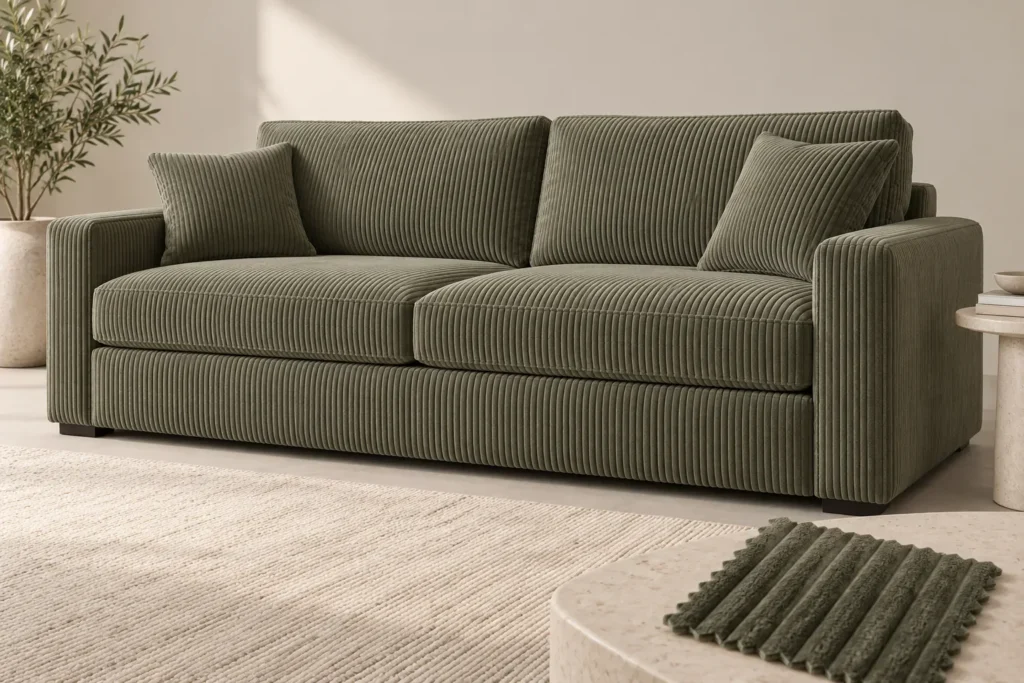

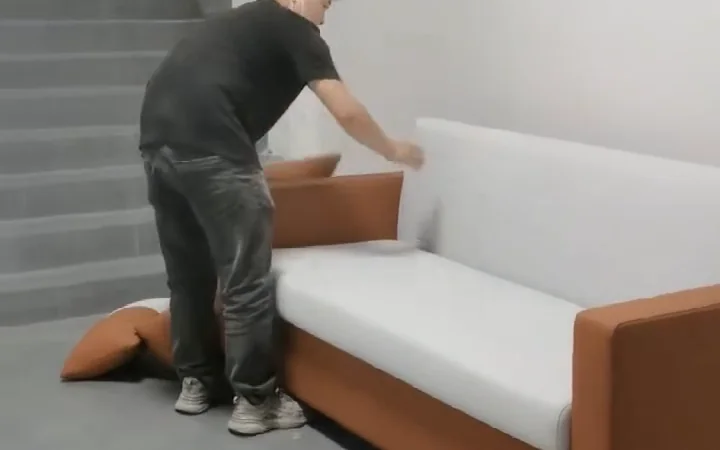
First check the manufacturer’s instructions. Remove only parts designed to detach, such as loose cushions, approved legs or labeled sectional modules. Photograph and label everything, bag hardware, protect upholstery, and measure the entire route before disassembly. Never force fixed frames, arms, reclining mechanisms or electrical parts apart.
Quick Answer
Not every sofa should be dismantled. Remove only components designed to detach, such as loose cushions, screw-in legs, or labeled sectional modules. Photograph the sofa, keep its hardware together, and protect the upholstery. Never force a fixed frame, cut fabric, or open reclining, sleeper, or electrical mechanisms without the model’s service instructions.
How to Disassemble a Sofa Step by Step
- Remove loose cushions and accessories.
- Photograph the assembled sofa from every side.
- Check the manufacturer’s instructions and visible connectors.
- Remove detachable legs or feet only where designed to unscrew or unbolt.
- Identify sectional or modular connectors.
- Separate approved modules without dragging them.
- Remove backs or arms only when their attachment is designed for removal.
- Bag and label all screws, brackets, and hardware.
- Protect corners, legs, and upholstery for moving or storage.
- Measure the largest remaining piece against the entire route.
Parts That May Be Removable
Loose cushions are normally safe to remove. Legs may be screw-in, bolted, or fixed. Sectionals and modular sofas often have purpose-made latches or brackets. Detachable backs and arms are model-specific. Recliner backs, sleeper mechanisms, and powered components should follow the supplied procedure, not a generic moving guide.
Do Not Disassemble These Parts
Leave fixed structural frame joints, permanently stapled upholstery, welded hardware, unknown internal brackets, complex reclining systems, sleeper mechanisms, and electrical components intact unless the documentation specifically calls for service removal. Forcing them can damage the frame or make reassembly unreliable.
Plan Access Before Moving
Measure doorway width and height, elevator opening and interior dimensions, hallway turns, staircases, and the largest component after disassembly. A sofa can clear the building entrance but fail at an apartment door or elevator corner. See the sectional sofa measurement guide for the dimensions to record.
Before You Disassemble a Sofa
Identify the exact model and find its assembly or maintenance instructions. Photograph the sofa from all sides, record the module configuration and clear a protected work area. Measure the narrowest door, corridor, elevator and turn first; disassembly is not helpful if the remaining largest piece still cannot pass safely through the route.
Which Sofa Parts Can Usually Be Removed?
Loose cushions, pillows, screw-in legs, detachable backs and sectional connectors may be removable when the model was designed that way. That does not mean every visible joint should be opened. Use only documented attachment points, keep fasteners with their labeled component and stop when the construction is unclear.
How to Disassemble a Sectional Sofa
Sectionals often separate at their designed connectors. Photograph the layout, identify left/right/corner/chaise orientation, release connectors according to the manufacturer’s guidance, and label every module. Do not drag connected modules across finished floors. The modular sofa guide can help buyers document a configuration before delivery.
Can Sofa Legs Be Removed?
Many sofas have screw-in or bolted legs, but some use mounting plates, fixed decorative bases or concealed hardware. Confirm the exact attachment before turning the sofa or applying force. Protect and label removed legs and hardware, then reinstall them only with the intended fasteners and support points.
Can Sofa Arms Be Removed?
Only if the sofa was designed with detachable arms. Fixed frame arms should not be cut, pried or forced apart to solve an access problem. Damaging the structural frame can make the sofa unsafe and may void supplier support. If access is restricted, consult the supplier or a qualified moving professional.
Can the Sofa Back Be Removed?
A back may be detachable on some models, but this is model-dependent. Reclining, power and mechanism-equipped sofas need particular caution because mechanical and electrical components can be damaged by improvised teardown. Follow the supplied instructions or use qualified service support rather than trying to infer the mechanism from its appearance.
How to Get a Sofa Through a Door
Compare the overall width, height, depth and diagonal with the clear opening—not merely the nominal door size. Also consider handles, frames, corridor turns, lift doors and removable legs where approved. Use the sofa measurement guide to document the complete route before moving day.
Measure the Doorway Before Disassembly
Record clear door width and height, frame intrusion, handles, corridor width, turn radius, elevator opening and car dimensions. A sofa may pass the front door but fail at an internal turn or service elevator. On-site measurements and the confirmed product drawing should govern the decision, particularly for large upholstered pieces.
Will the Sofa Fit in the Elevator?
Check the service elevator opening, cabin dimensions, diagonal capacity, corridor approach and any building booking requirements. Avoid assuming that the passenger lift or a published building dimension is adequate. For hotel, office and apartment projects, access should be verified during procurement rather than after the product reaches the site.
Sofa Delivery Access for Hotel Projects
Plan the loading bay, service lift, corridor, guestroom doorway, floor protection, room labels and installation sequence. Module labels help teams place each unit correctly without opening every package in a corridor. Share access constraints early so the product and packing plan can be reviewed before bulk production.
Sofa Delivery Access for Office Projects
Confirm building loading hours, lift booking, reception-area access, high-floor route and protection for completed walls and floors. After-hours installation can change the labor and sequencing plan. A delivery team needs the same approved module sizes and access map used by the buyer, not a general description of the furniture.
Why Modular Construction Helps Project Delivery
Modular construction can create manageable handling units and simplify configuration, installation or replacement. It is not automatically the best choice: the largest module, connectors, visual joints and final layout still need review. Choose it when the confirmed project access and seating plan benefit from the module structure.
Packing Sofa Modules After Disassembly
Protect upholstery and corners, bag and label hardware, keep connectors covered, label modules by location and avoid unsuitable stacking pressure. Reuse the supplier’s packing guidance where possible. For shipment-level planning, see HUAXUAN’s export packing guide and retain the carton list with the installation record.
Common Mistakes When Taking a Sofa Apart
Common errors include forcing connectors, losing hardware, skipping photographs, cutting fixed components, ignoring electrical or mechanical parts, failing to label modules and disassembling before measuring access. These shortcuts create more risk than value. When the model or material is uncertain, stop and seek manufacturer or professional-moving guidance.
What Project Buyers Should Confirm Before Ordering Large Sofas
Confirm overall dimensions, largest module, packed dimensions, detachable legs or arms where applicable, module configuration, door and elevator restrictions, quantity, floor plan and destination. These checks turn a consumer moving question into practical project planning. Explore HUAXUAN’s custom sofas for hotel and office projects when the configuration and access brief are ready for quotation.
Reassembly Checklist
Bring the labeled modules into the room before reconnecting them. Match the photographs, confirm that left- and right-hand parts are in the correct position, and install legs or brackets with the original hardware. Do not tighten a connector while the parts are misaligned. Once assembled, check that the sofa sits level, modules do not separate, cushions are in their original positions, and no fabric is trapped at a joint.
Moving and Storage Protection
Use clean breathable covers or moving blankets over upholstery, protect exposed corners, and keep hardware in a labeled bag taped to the appropriate non-fabric part. Avoid wrapping damp upholstery for long storage, stacking heavy items on cushions, or dragging a module by its arm. Keep connectors from striking finished surfaces or each other during transport.
Why Modular Sofas Help Access Planning
Hotels, offices, apartments, and high-rise projects often have route constraints that a single large sofa cannot meet. A modular design may reduce the size of the pieces that installers carry and allow room-by-room placement. It is not a guarantee: compare the largest module, carton size, door opening, and elevator dimensions before ordering. Explore custom sofa configurations when access is part of the brief.
Relevant Project Considerations
For hotels, offices, restaurants, and apartments, use the practical guidance above with the actual access route, intended use, upholstery, or module design. Browse HUAXUAN’s modular commercial sofas when you need to discuss a specific configuration.