
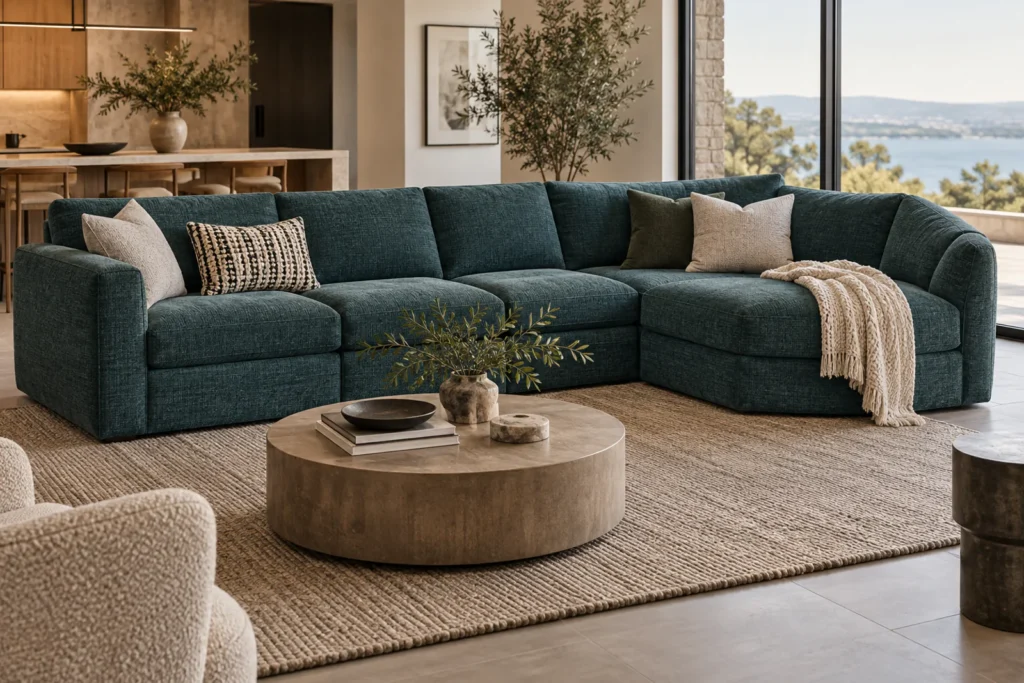
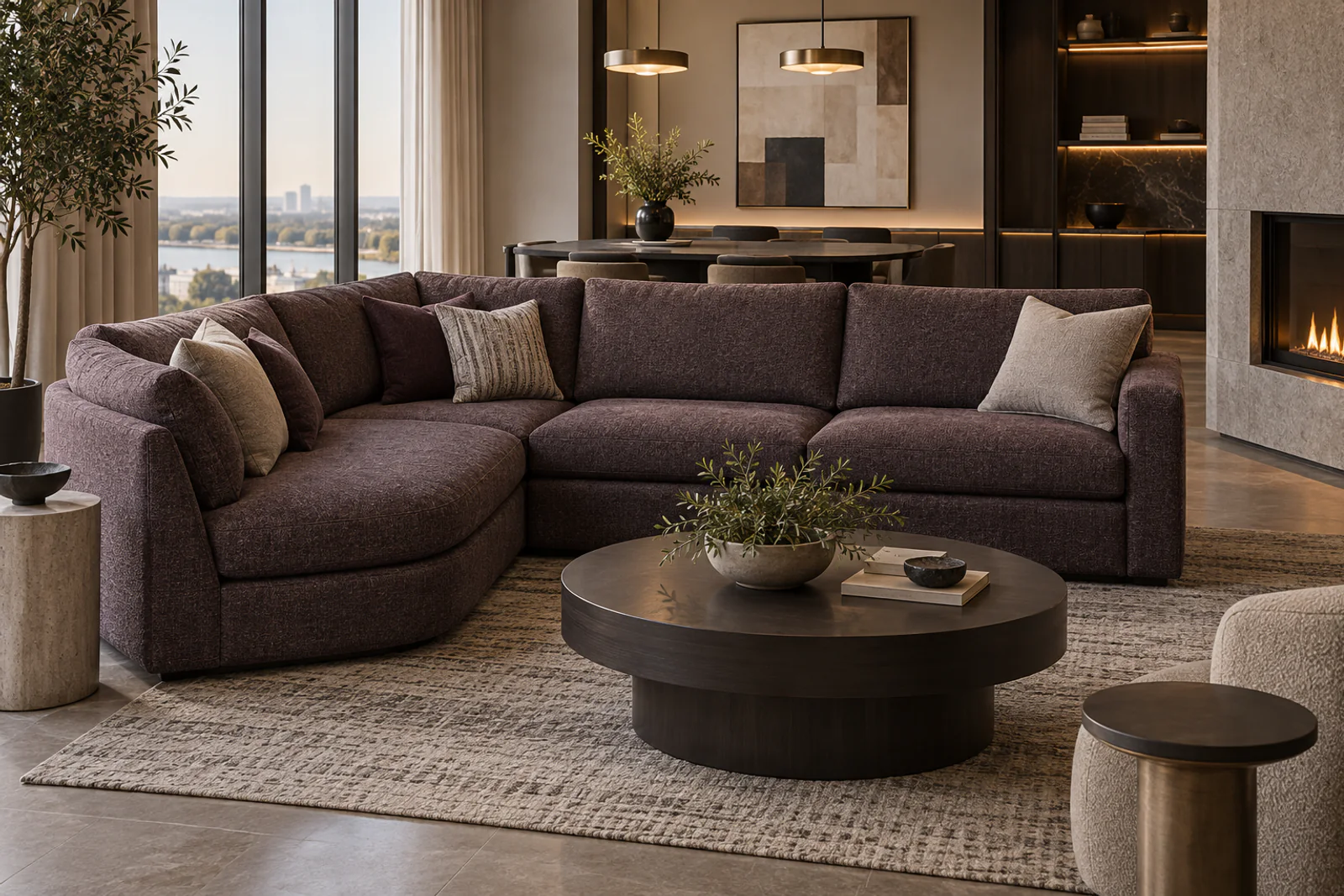
A sectional sofa with cuddler adds a wider, more relaxed end seat without turning the entire sofa into an oversized deep-seat platform. For buyers planning 2026 collections and project schedules, that makes the cuddler a useful middle position between a standard terminal seat and a full chaise. It can create room for angled lounging, shared sitting or a softer visual finish while keeping the main run relatively efficient. The important point is to specify the geometry, orientation and intended posture clearly, because “cuddler” is a market term rather than one universal construction standard.
Have a sectional reference or a target layout? Send the image, confirmed dimensions, quantity per model, upholstery direction and destination for an initial production-feasibility review.
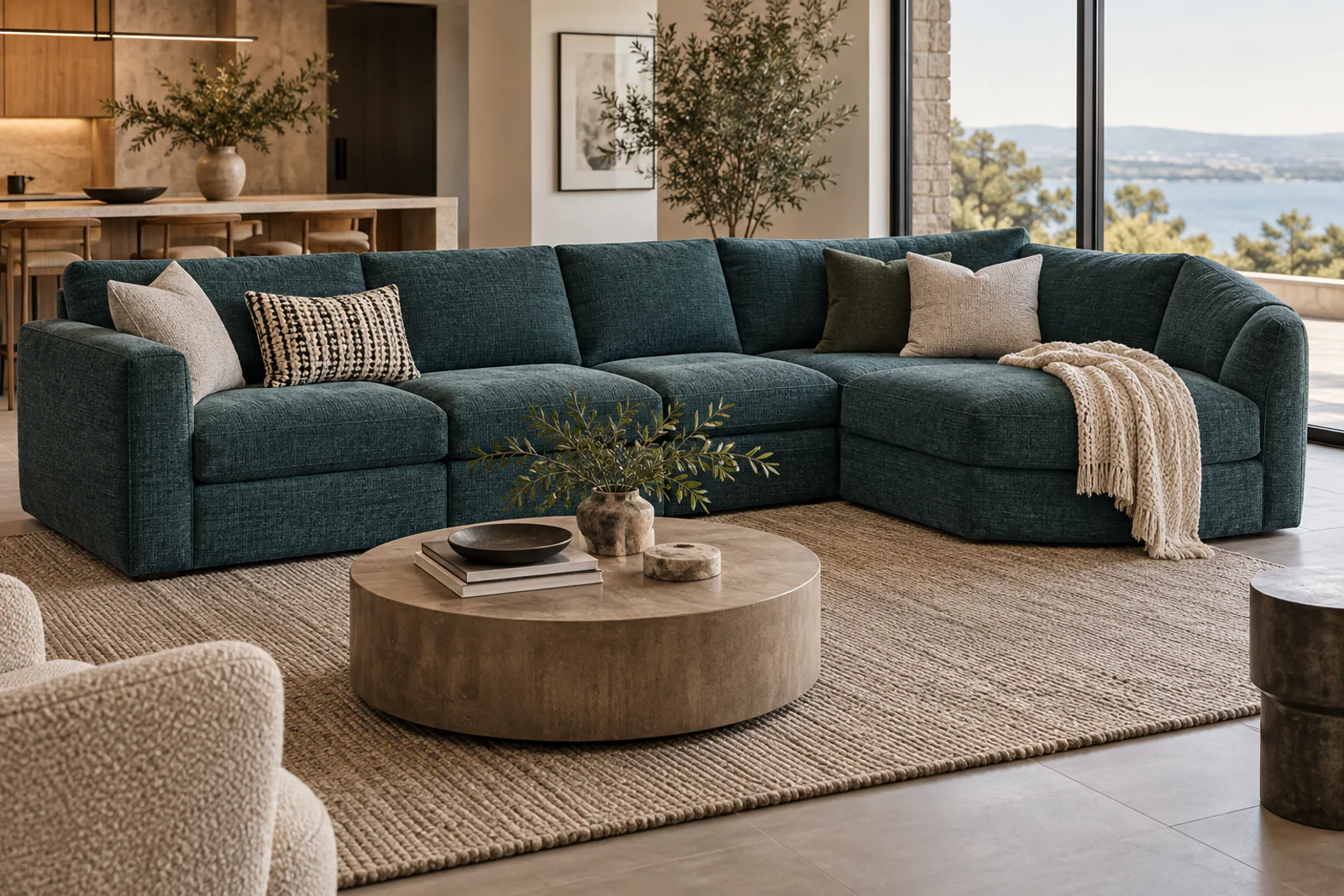
Why the Cuddler End Is Gaining Attention
Many sectional briefs begin with a simple problem: the buyer wants a more generous lounging position, but a deeper seat across the complete sofa would consume too much floor area and may make upright sitting less comfortable. A wider terminal module concentrates that extra space where it is most useful. The remaining seats can retain the selected depth, back support and circulation relationship.
This is especially relevant in open-plan apartments, hospitality lounges and clubhouses where the sofa is seen from several directions. A rectangular chaise can look like a strong projection into the room. A shaped cuddler may create a more gradual end profile, particularly when the outside edge is angled, rounded or paired with a curved back. The result is not automatically smaller, but it can distribute visual weight differently.
For manufacturers, the opportunity is not a fashionable name alone. It is a distinct sectional sofa configuration with different frame loads, cover patterns, connector positions and packaging volume. A useful buyer brief therefore needs to show exactly what the end module should do instead of asking for “a cuddler” and leaving the interpretation open.
What a Cuddler Module Actually Means
In most furniture schedules, a cuddler is a wider end seat designed for a relaxed, partly turned or curled-up posture. It is normally more generous than a standard one-person module but does not necessarily extend as far as a chaise. Some versions are almost square. Others use a wedge-shaped seat, an angled outer arm, a curved back or an asymmetric front edge.
There is no single international cuddler dimension or mandatory construction. One brand may call a wide terminal seat a cuddler, another may use “cuddler chaise,” and a third may describe a similar piece as a bumper end, wedge end or lounge terminal. Drawings and module codes should control production; the marketing label should only help people find the right discussion.
Cuddler versus a normal seat module
A normal seat module usually continues the rhythm of the main sofa: comparable clear seat width, a front edge aligned with adjacent units and a defined upright sitting position. A cuddler interrupts that rhythm. It widens the usable area, may change the front or back angle, and often gives the sitter more freedom to turn sideways. That change affects the base frame and upholstery pattern, not just the cushion width.
Cuddler versus chaise
A chaise is primarily a legs-out platform. Its long projection supports a forward-facing reclined posture, normally with no seat break across the extended section. A cuddler is usually broader relative to its projection and supports several informal postures. Some products blur the boundary, which is why a plan view and finished dimensions are more useful than debating the label.
Cuddler versus ottoman
An ottoman is a separate movable unit unless a design explicitly connects it. It can extend a seat or provide flexible occasional seating, but it does not provide the integrated back and arm relationship of a cuddler. It can also move out of alignment in high-use settings. A fixed or connected cuddler creates one controlled terminal zone and one defined installed footprint.
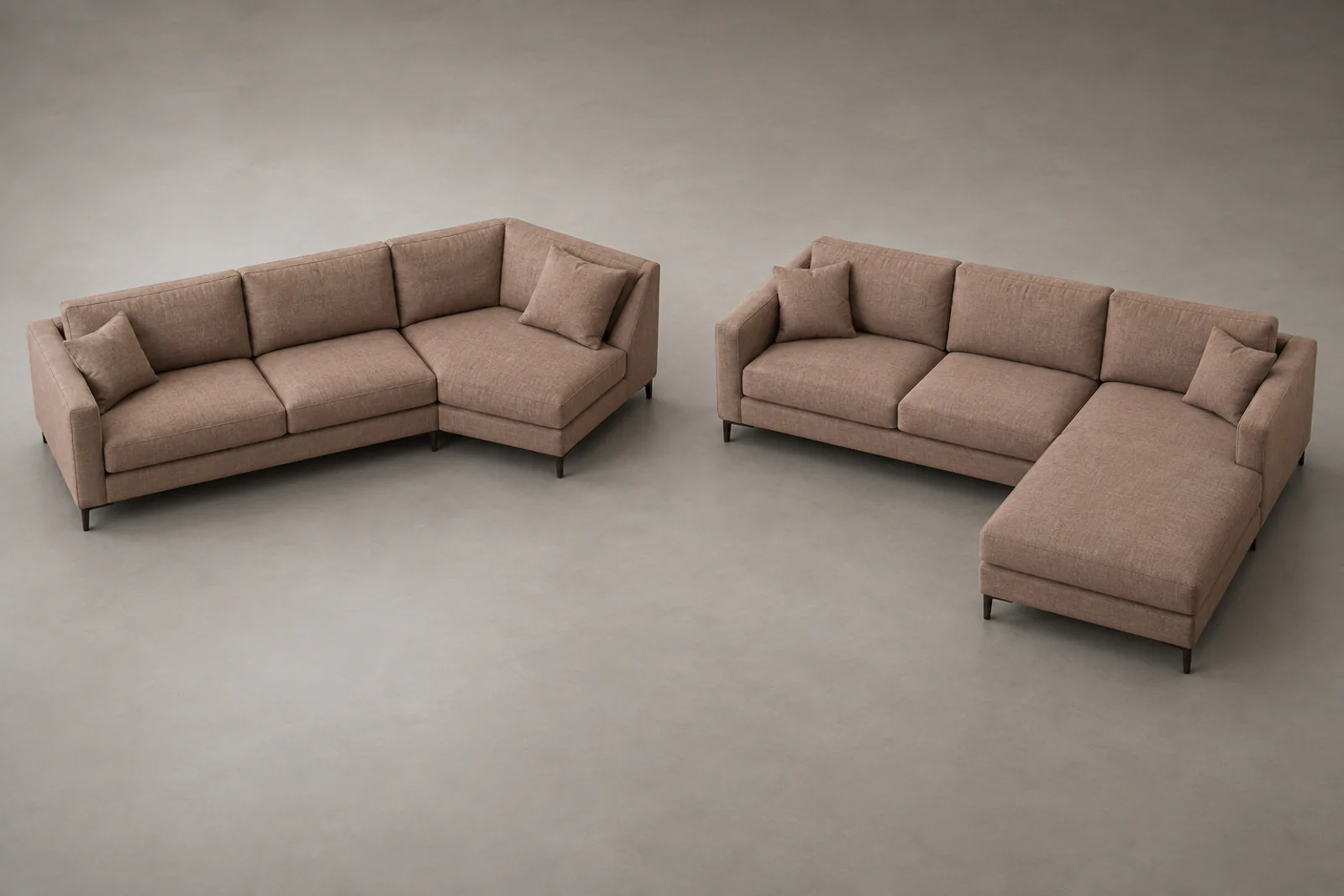
Why a Sectional With Cuddler Can Work Well
A larger usable seat without enlarging every position
A deep seating sectional can be comfortable for relaxed use, but applying the same depth to every seat can make a large sofa feel excessive. The cuddler localizes the generous area. Other users still have conventional seats for conversation, working on a laptop or sitting with their feet on the floor.
More flexible conversation posture
The person at the end of a straight sofa often faces across the room rather than toward the group. An angled or curved cuddler can turn that position slightly inward. In a lounge arrangement, that may improve visual connection with adjacent chairs or the opposite sofa without creating the enclosed footprint of a full U shaped sectional sofa.
A transition between sofa and lounge zone
The wider end can visually bridge a standard sofa run and a looser lounge area. It may align with a side table, define the edge of a rug or face an open view. In a large living space, the terminal module can mark where formal sitting becomes more relaxed. In a smaller plan, the same feature must be checked carefully because its widest point may sit outside the apparent line of the main sofa.
Useful in modular programs
Within a modular sofa planning system, a left-facing and right-facing cuddler can extend the number of layouts available from a shared family of armless, corner and terminal units. That does not mean every module is freely reversible. Arms, back angles, connectors, seam directions and underside finishes may make orientation permanent.
Cuddler vs Chaise vs Standard Sectional
| Configuration | Seating posture | Space requirement | Visual weight | Typical use | Customization considerations |
|---|---|---|---|---|---|
| Cuddler end | Angled, sideways or shared relaxed sitting | Wider terminal footprint; projection depends on shape | Soft or substantial depending on curve and arm | Conversation lounge, suite, apartment living area | Define plan shape, clear width, angle, orientation and support |
| Chaise end | Forward-facing with legs extended | Usually the longest forward projection | Strong linear return | TV lounge, residential-style suite, deep relaxation | Confirm projection, cushion support, arm side and access |
| Standard L shaped sectional sofa | Mostly upright seats around a corner | Two connected runs with a defined return | Balanced corner mass | General living and reception layouts | Confirm corner construction, seat rhythm and both outside legs |
| U shaped sectional sofa | Group seating facing inward | Largest enclosure and circulation demand | High visual presence | Large lounges and social gathering areas | Confirm unequal returns, center opening and module schedule |
| Sofa plus ottoman | Upright seating with movable foot support | Flexible but needs space for movement | Lighter when separated | Multipurpose apartments and adaptable lounges | Match height, upholstery, glides and placement tolerance |
The best choice follows the actual activity and floor plan. A cuddler is not a reduced chaise by definition, and a chaise is not automatically more comfortable. The sample must be assessed with the intended seat height, depth, cushion firmness and back support.
Comparing a cuddler, chaise and conventional return for one project? Provide the room plan or confirmed sofa envelope and the required left/right orientation so the alternatives can be reviewed on the same basis.
Dimensions to Confirm for a Sectional Sofa With Cuddler
Published sectional sofa dimensions are useful for screening ideas, but they are not a production standard. Cuddler shapes vary too much for one reliable universal width or depth range. The signed drawing for the selected design should show the following finished dimensions and the measurement points used.
- Overall width: the full outside dimension of the assembled sofa, including arms and any angled terminal edge.
- Sectional return: the complete projection of the cuddler or other return from the back line to its furthest front point.
- Cuddler width and depth: both the outside frame envelope and the clear upholstered sitting area.
- Seat depth: the usable distance from the front edge to the back support, accounting for loose back cushions.
- Seat and back heights: finished seat height, compressed comfort direction and total back height.
- Arm width and angle: especially where a flared or curved arm creates the widest point.
- Module dimensions: individual size, weight where available, connector position and orientation for every unit.
- Circulation clearance: the project-selected clear route around the widest and deepest points, not just the rectangular main run.
- Access dimensions: door openings, corridor turns, stairs and lift car/door sizes compared with each packed module.
Use a plan-view outline to show the actual angled or curved edges. A simple overall width by overall depth rectangle may overstate empty corners while hiding a critical projection. The existing sectional sofa measurement guide explains the full room, module and access process; the purpose here is to identify the values that are especially easy to miss when the terminal seat is wider or asymmetric.
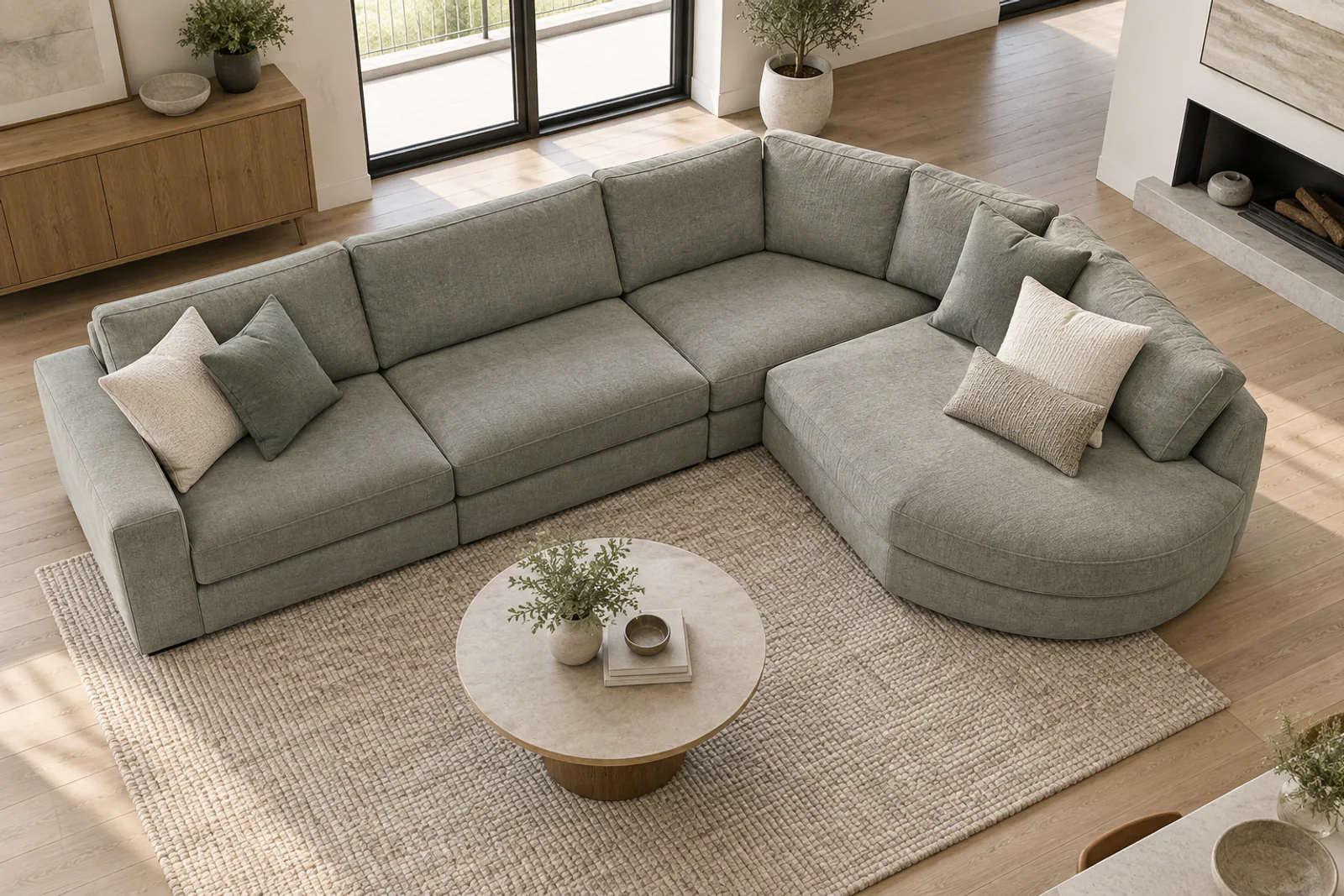
Manufacturing Considerations Behind the Wider End
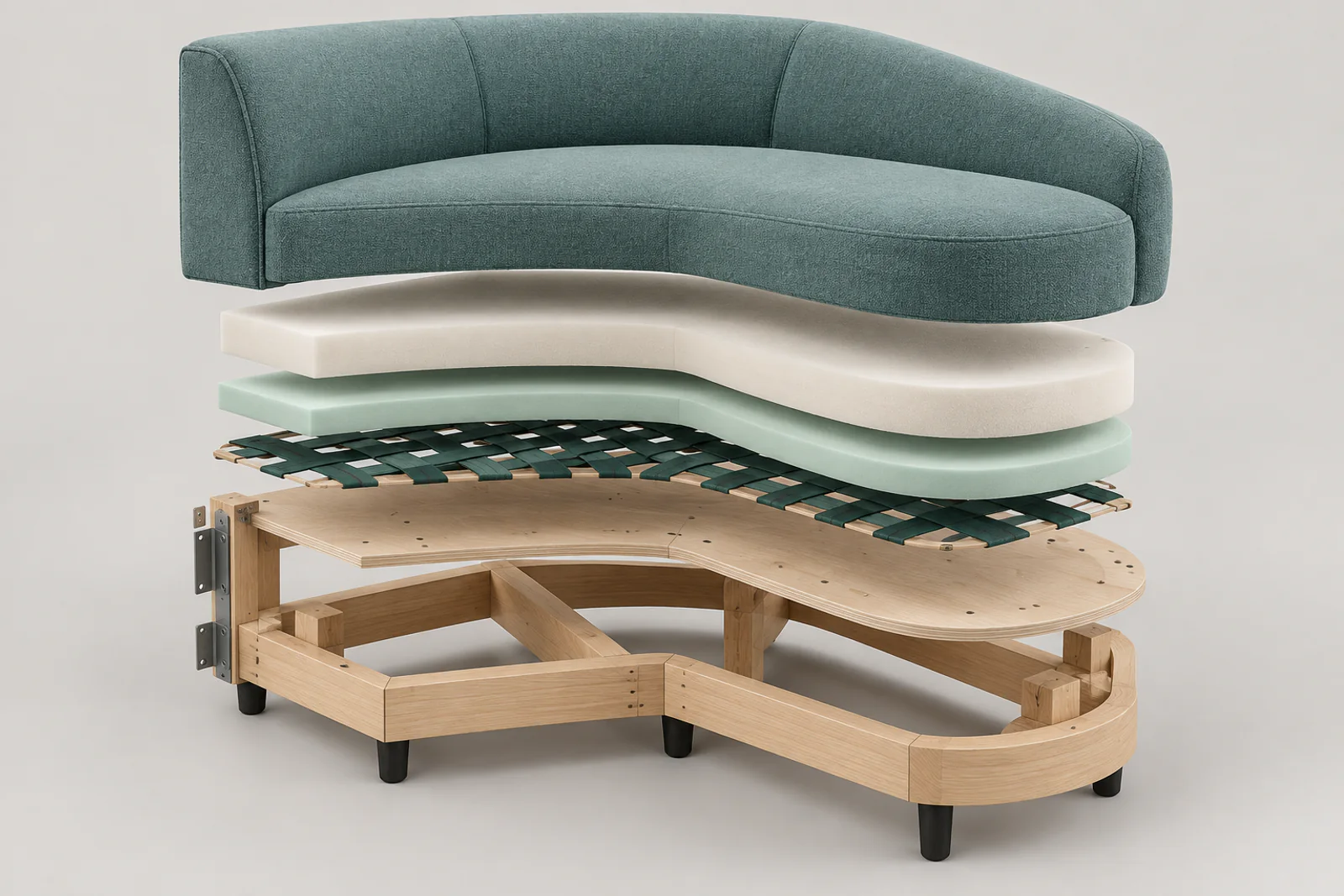
Frame geometry and support
A rectangular seat frame transfers load differently from a wedge, curve or extra-wide terminal. The manufacturer reviews rail direction, joint locations, corner blocking and any span beneath the broad sitting area. If the front edge changes direction, the frame and foam must hold that line consistently across repeated units. A wide surface also needs support that prevents one soft central zone from behaving differently from its edges.
Joining points between modules
Connectors need to draw the units into alignment without creating a gap or visible step. Their positions must remain accessible during assembly and compatible with the base construction. The review also asks whether the cuddler is a fixed part of a larger frame, a removable module for access, or a stand-alone end that is secured on site. A modular label should not imply that occupants can continually rearrange a product if the connectors or underside finish were designed for one installed layout.
Foam and seat suspension
A broad terminal seat may place users farther from the main frame rails and encourage sideways sitting. The foam build-up, suspension direction and edge support should be evaluated for that use. Density alone does not define comfort or durability. Foam firmness, thickness, layering, support spacing, upholstery tension and intended duty all interact. Buyers should approve the complete seated feel on a representative sample.
Seam alignment and fabric direction
The terminal shape can require larger or more irregular cover panels. On woven performance fabrics, chenille, boucle and velvet, pile or texture direction may become visible when adjacent panels turn through an angle. Stripes and large repeats increase the importance of pattern placement. The cutting plan should define which lines continue across modules and which seams intentionally separate them.
Packaging and shipping volume
Cuddler modules can be awkward cubes or wedges with unused air inside the packing envelope. Removable legs, arms or backs may reduce access and packing constraints only when the design supports safe reassembly. The supplier should confirm individual packed dimensions, protection at projecting corners, connector packing and module labels. This is a product-engineering check, not a promise that every design can be made flat-pack.
HUAXUAN’s custom furniture evaluation process starts from a product reference, drawing or confirmed dimensions and then reviews whether the construction, material direction, sampling and batch production are feasible. It does not replace the buyer’s architectural or interior-design scope.
Materials and Upholstery for Cuddler Sectionals
Material selection should follow the setting, cleaning plan, desired hand, seam design and approved performance requirements. No upholstery type is universally best for a sofa cuddler sectional.
- Woven performance fabrics can suit apartments, hospitality lounges and other repeated-use areas when the selected textile has documented properties appropriate to the project. Texture, backing, seam slippage and cleanability still need review.
- Chenille can create a soft residential-hospitality appearance. Buyers should assess yarn construction, shading, snag sensitivity and the effect of directional cutting on broad panels.
- Boucle can emphasize a rounded or sculptural cuddler, but loop structure, cleaning expectations and seam bulk must suit the intended use. A sample should be reviewed on the actual curved edges.
- Velvet can give a deep color and formal lounge character. Its pile direction and pressure marking need disciplined cutting and realistic client approval.
- Genuine leather may suit selected premium applications, while PU can serve other price, appearance or maintenance briefs. They are different materials and should be specified honestly. Curves and large panels affect hide or roll utilization and seam placement.
Record the supplier, collection, code, color and approved sample for the cover. “Beige fabric” or “commercial-grade upholstery” is not enough for repeat production. If fire, abrasion, colorfastness or cleaning performance is required, state the applicable project requirement and destination-market method rather than assuming one certificate covers every location.
Where This Configuration Fits
A cuddler sectional can work in hotel suites where a living zone needs relaxed seating without a full second chaise; in serviced apartments where occupants use one end for lounging; and in residential developments that want a distinctive upgrade option. In clubhouses and shared lounges, an inward-turning terminal can support conversation. Showrooms may use the broad end to demonstrate upholstery, seam and modular variations.
Large private living spaces can accommodate an L shaped sectional sofa with a cuddler or a broader custom sectional sofa, but size alone does not justify the choice. In hotel lobbies and other public lounges, open edges, sightlines, housekeeping access and the intended user posture need particular attention. The product must remain part of the buyer’s approved room and operational plan.
For a sense of how a repeatable module family can be documented, review the grey modular sofa product reference. It is a reference for discussion, not a claim that its dimensions or construction automatically suit a new cuddler design. Buyers can also browse the wider custom sofa manufacturing range before identifying the silhouette that best matches their schedule.
What Buyers Should Send Before Requesting Production
A qualified request gives the manufacturer enough information to evaluate one defined model and quantity. Send:
- a clear product or reference image, ideally including front, side and plan views;
- a drawing or confirmed target dimensions for the assembled sofa and its modules;
- the required configuration and a simple module sequence;
- left-facing or right-facing orientation where applicable;
- quantity per model and any expected mix of orientations;
- fabric or material requirements, including supplier codes when already selected;
- color, leg, base and visible finish requirements;
- the destination country and city for packing and quotation context.
If drawings are not ready, reference images plus confirmed target dimensions can support an initial feasibility review. Mark which details are fixed and which remain open. HUAXUAN can then assess whether sampling and batch production are practical and identify the points that need confirmation before quotation or sample approval.
Have a sectional reference, drawing or confirmed dimensions? Send the configuration, left/right orientation, quantity per model, upholstery requirements and destination for sampling and batch-production review.
FAQ
Is a cuddler the same as a chaise on a sectional?
Not usually. A chaise generally projects farther for a forward-facing legs-out posture. A cuddler is commonly wider and supports angled or curled-up sitting, although manufacturers may use overlapping names. Confirm the plan shape and finished dimensions.
Can a cuddler be added to any modular sectional sofa?
Only if the module system, connector positions, seat heights, back geometry and upholstery details are compatible. Adding a wide end to an existing family may require a new frame and cover pattern rather than a simple cushion change.
Does a cuddler sectional take less space than a sectional sofa with chaise?
It can have a shorter forward projection, but the wider or angled side may occupy more lateral floor area. Compare actual plan-view envelopes and circulation routes; the product name does not determine which one is smaller.
How do I specify left- or right-facing orientation?
Use a labeled plan drawing and state the viewing convention used by the project. Terms can be interpreted from the front or from the seated position. A diagram with module codes is safer than text alone.
Can the cuddler module be removable for delivery access?
Many sectionals use separate connected modules, but removability depends on the design. Confirm individual module and packed dimensions, connector access, leg or back removal and the required final assembly before approving production.
What information is enough for an initial custom sectional sofa review?
Send a reference image, a drawing or confirmed target dimensions, the required configuration and orientation, quantity per model, material and finish requirements, and destination. A manufacturer can use that information to identify feasibility questions before detailed sampling work begins.