
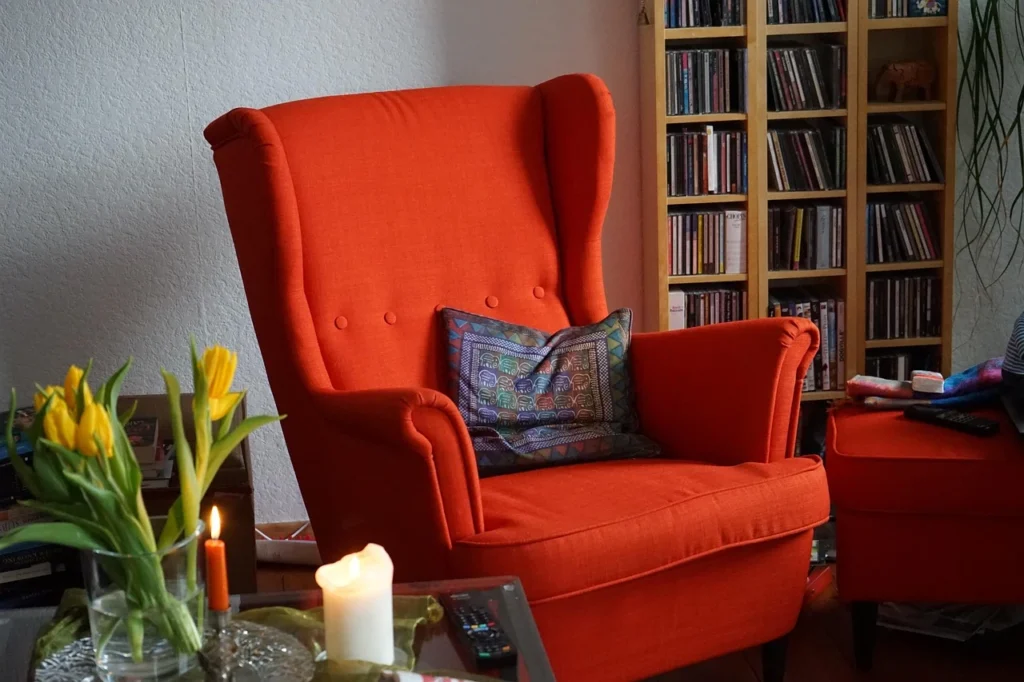
The outline is easy to recognize when the wings are pronounced, but catalog names can be less precise. Examine front and side views together. A tall back, wide headrest or curved lower arm does not by itself establish a wingback design.
What Makes a Wingback Chair Different?
The useful identifying feature is a pair of side pieces that project forward from the upper back, beside the sitter. They may run toward the arms or finish above them. Look at the space they enclose, rather than only the outside width of the back.
Cambridge Dictionary identifies the high back and projecting upper side pieces. The Canadian Nomenclature for Museum Cataloging also connects the wings with protection from drafts. That historical purpose explains the enclosing form; it does not mean a modern chair provides measured insulation, acoustic privacy or a particular level of head support.
In a contemporary room, the wings can give a chair a stronger outline and reduce the view directly beside the upper back. The effect depends on the size and direction of the projections. Open sides and a low head position can still leave the sitter quite exposed.
Wingback Chair vs High-Back Chair
“High-back” describes height. “Wingback” identifies a particular shape. A wingback is commonly high-backed, but the reverse does not follow. Use this comparison before approving a substitute.
| Check | Wingback chair | Other high-back chair |
|---|---|---|
| Upper sides | Projecting wings beside the shoulder or head region | May have a flat, gently curved or padded back without wings |
| Front view | Shows lateral projections or a defined enclosure | Shows height, which may be the only distinguishing feature |
| Side view | Reveals how far the wings project forward | Helps distinguish a headrest from an enclosing wing |
| Comfort | Depends on actual support geometry and padding | Also depends on geometry; height alone proves little |
| Specification | Include wing profile and usable width inside it | Include back height, contour and intended support |
A lounge chair can also be an accent chair because of its color or silhouette. Club and barrel labels describe other aspects of upholstered seating. The club chair guide and barrel chair guide explain those families; neither name automatically establishes upper-back wings.
Traditional vs Modern Wingback Designs
Traditional examples often use more pronounced wings, substantial arms and visible timber legs. Curved wing edges, piping and buttons may add detail, although none is a required feature of every wingback.
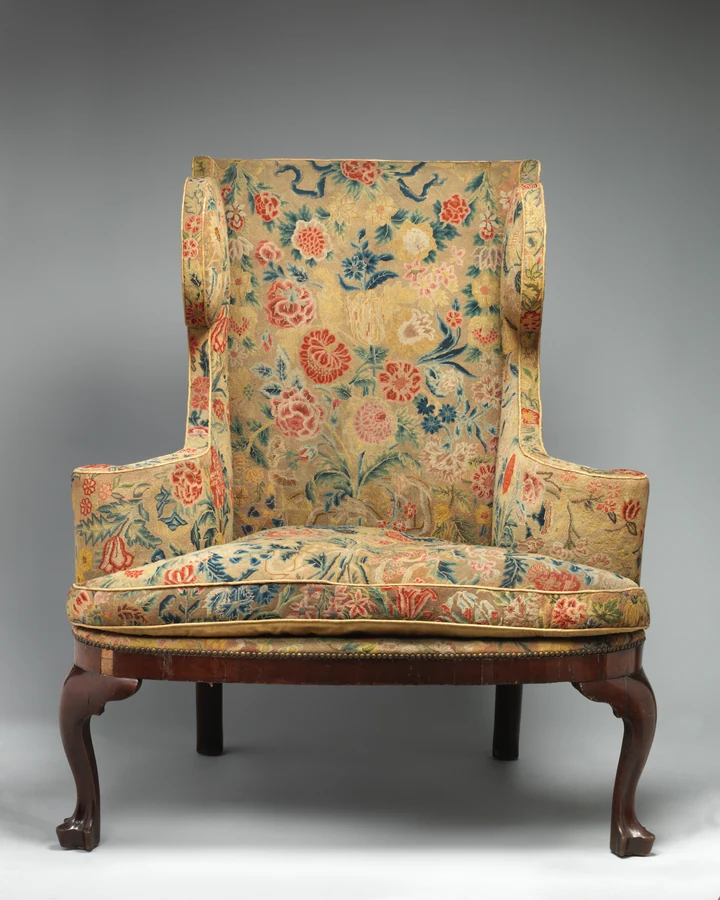
The Metropolitan Museum of Art’s British wing chair, dated around 1725, provides a documented historical example. Its image helps show the enclosing back and the relationship between wings and arms. It is an external museum reference, rather than a HUAXUAN model or a specification for contemporary production.
Modern versions may reduce the ornament, slim the arms, use exposed metal legs or introduce a swivel base. Some retain deep side wings; others translate the outline into shallower folded edges. Ask whether a simplified version still gives the side profile required by the brief.
A supplier’s “wingback” label is a starting point for discussion. If a room concept depends on a distinct wing, attach an annotated side image showing the projection you want. A tall, nearly flat back can change the intended appearance even when its overall height is similar.
Upholstered Wingback Chair Materials
The visible cover, padding, internal structure and base are separate specification decisions. A fabric photograph does not establish the frame species or foam construction. Request the relevant information for the selected version, particularly when changing its size or base.
Wings add inside and outside surfaces that meet along curved edges. On a patterned cover, decide where the main motif sits on the back and how it continues onto each wing. Left and right panels can look unbalanced if the pattern is positioned differently. A small swatch cannot demonstrate that alignment.
With velvet or another directional textile, agree the orientation of the material across the back, wings, arms and seat. Light can make adjacent panels appear different even when they use the same color. Inspect the upholstered sample under the lighting direction expected in the room.
Check piping, seams and padding where the wings meet the main back. Ask which seams are necessary for the selected covering and which are decorative. Approve visible panel joins in a sample rather than asking production to reproduce an uninterrupted catalog surface that the chosen fabric cannot form.
Wingback Chairs in Hotel and Commercial Interiors
In a hotel guestroom, a wingback can define a reading corner and add height beside lower furniture. Compare it with curtains, wall lighting and the bed from the doorway. The back may become a prominent part of the room even when the chair occupies a modest floor area.
In reception and lounge groups, taller backs can divide views between seats. This may support the design intent, but it can also interrupt sightlines across a small space. A wingback should not be described as an acoustic enclosure without evidence for the exact product.
For public seating, review whether people can approach from the intended side, where belongings sit and how staff reach upholstery corners during cleaning. The hotel lounge chair buying guide covers the wider operational brief. Select the wingback form because it suits that brief, rather than because a high silhouette looks impressive in isolation.
Back Shape, Comfort and Room Placement
Wings can sit beside the shoulders, head or an empty area above the sitter, depending on the chair and user. They do not guarantee head support. A back that looks enclosing from the front may place its padding too far away to support a natural resting position.
During sampling, sit without deliberately leaning toward a wing. Check the normal contact points, then turn to speak to someone beside the chair. Record whether the back edge restricts that movement. Test getting in and out with the proposed table in position.
For a swivel design, include the wings in the movement envelope. The widest upper part may pass closer to a wall or lamp than the lower base suggests. Verify rotation and any stops on the actual sample; a round base alone does not prove how it moves.
Use the lounge chair dimensions guide for general measurements. For this shape, add the inside width between wings and their forward projection, clearly marking where each measurement is taken.
What to Confirm When Sourcing Wingback Chairs in Bulk
A clear brief should preserve the intended profile across different cover choices and repeated units. Keep a front, side and rear image with the approved drawing. If a chair is photographed at an angle, request a straight side view before settling the wing shape.
- Define the desired wing projection and upper inside width.
- Specify overall and usable seat dimensions for the chosen version.
- Record upholstery code, pattern placement, pile direction and seam treatment.
- Confirm frame and base construction, glides and any movement functions.
- Inspect an upholstered sample for posture, turning, stability and room fit.
- Keep required performance evidence and acceptance criteria tied to the exact configuration.
For a distributor collection, avoid using the same “wingback” label for several visibly different backs without explanatory photographs. Buyers should be able to distinguish a pronounced traditional wing from a shallow contemporary interpretation. The HUAXUAN upholstered chair range provides real references for developing that shortlist.
Real HUAXUAN Wingback and High-Back References
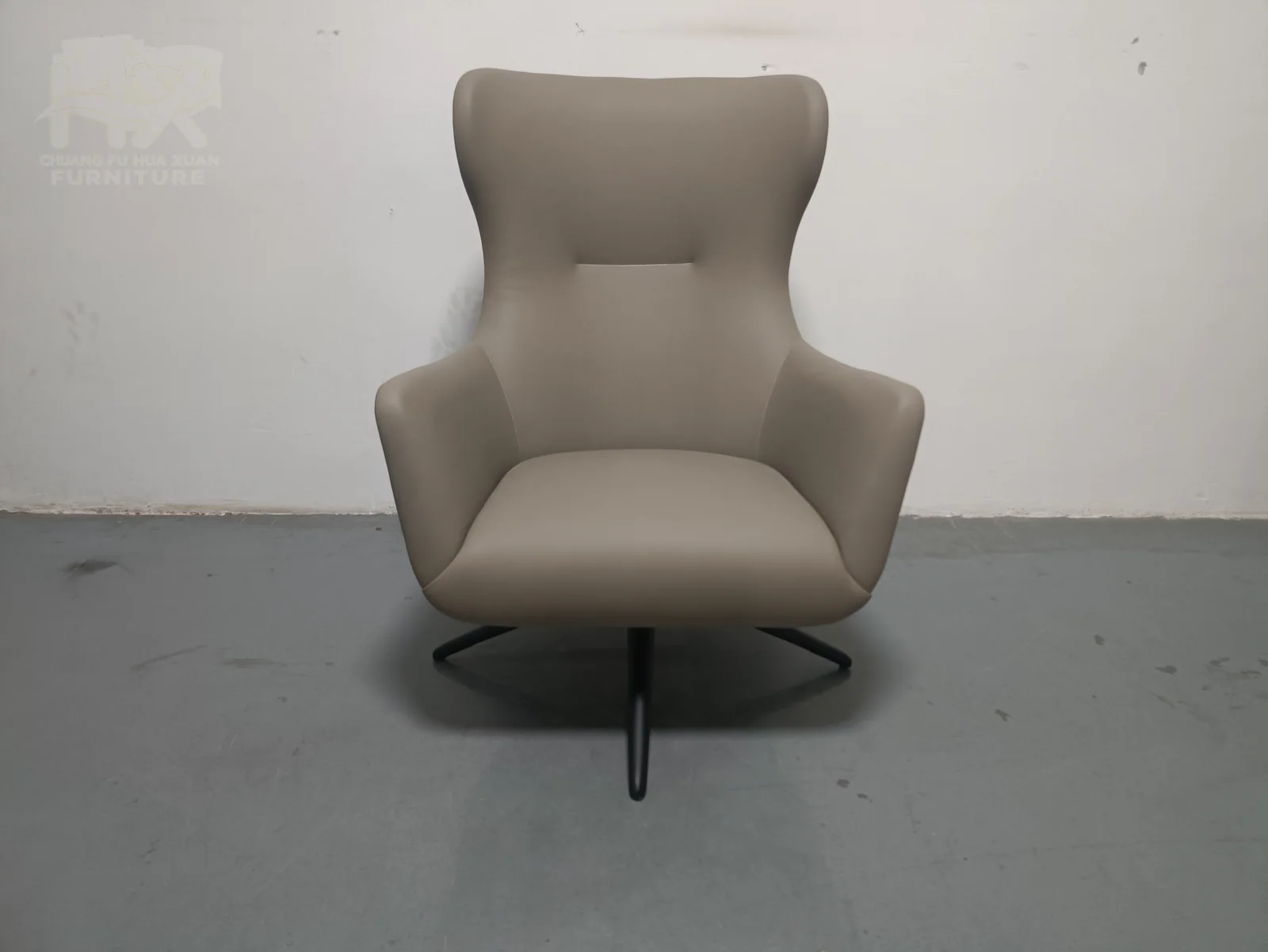
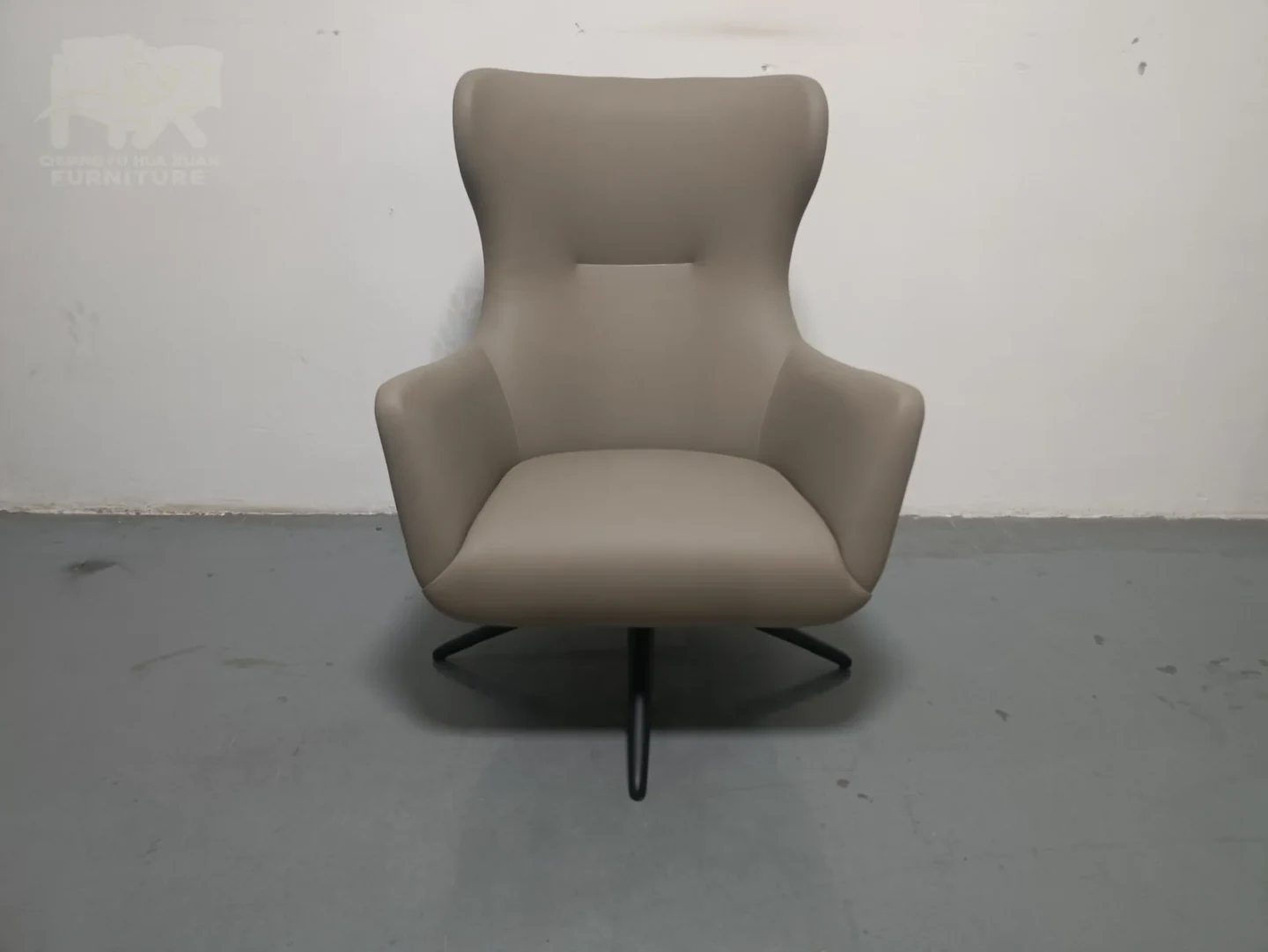
HX-CHR-010 — Beige High-Back Swivel Chair shows a taller back with projecting upper side edges. HX-CHR-007 — Teal Patterned Accent Chair combines a visible winged outline with a patterned cover. HX-CHR-008 — Blue Upholstered Lounge Chair offers another tall, side-enclosing silhouette. Their product names differ, illustrating why photographs and drawings matter alongside category labels.
HX-CHR-012 is cataloged as a green wingback lounge chair. Its available photographs show a much shallower upper profile than the traditional example. Confirm the required forward wing projection before using it as a substitute for a pronounced wingback; it is not included among the three clearer-profile cards below.
The records identify fabric upholstery for these references, but do not establish verified numerical dimensions or complete internal materials. Confirm those details, and the operating features of the selected version, before ordering. Licensed scene and museum images illustrate chair types; they do not identify additional HUAXUAN products.
Frequently Asked Questions
Why does a wingback chair have wings?
The historical form used side projections to shield the sitter from drafts. Today the wings also contribute an enclosing appearance, with comfort depending on their actual position and padding.
Is every high-back chair a wingback?
No. A high back describes height; a wingback also needs projecting upper side sections.
Can a modern wingback have metal legs?
Yes. Leg material does not define the wingback shape. Confirm the base and its connection to the upholstered body separately.
Do wings guarantee head support or sound reduction?
No. Verify contact and comfort on a sample. Do not assume acoustic performance from an enclosing appearance.
What should a bulk buyer send first?
Send the preferred reference code, annotated wing profile, quantities, target dimensions and upholstery direction through the bulk furniture quotation form.