
To source wholesale upholstered dining chairs with metal legs, start with the complete chair specification: metal base, upholstered body, dimensions, floor glides and the intended dining table. A matching color photograph is insufficient for a repeat restaurant order. The approved sample should connect the visible design to a measurable, traceable purchasing schedule.
This guide treats metal-leg upholstered dining chairs as a specific product category for importers, furniture wholesalers, restaurants and hotels. It focuses on model and finish selection, receiving checks and batch consistency. See HUAXUAN upholstered chairs for the wider range.
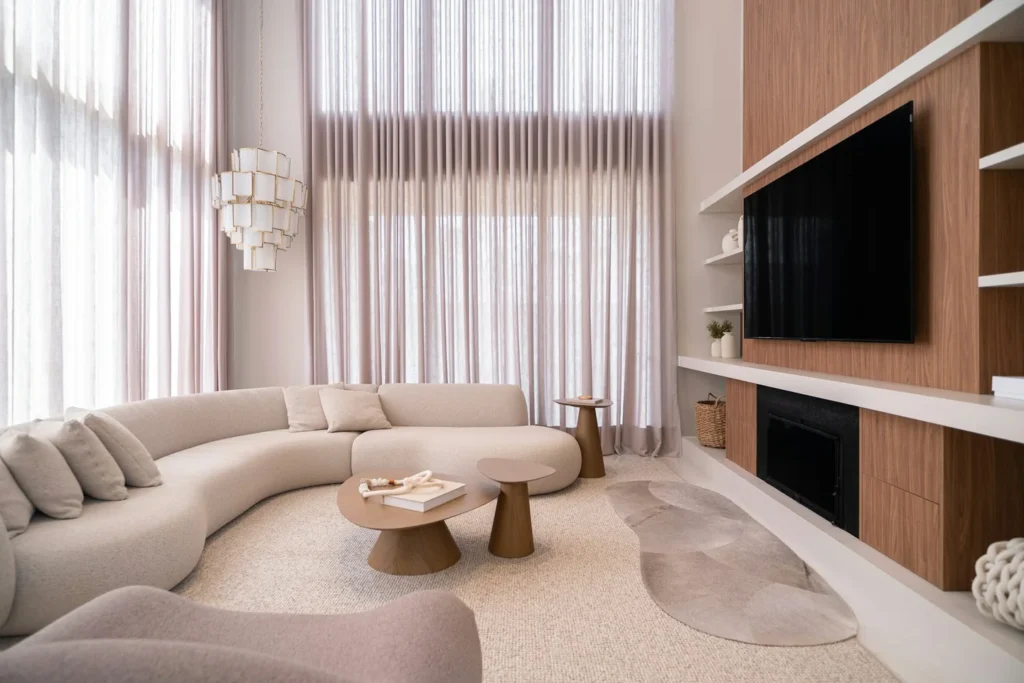
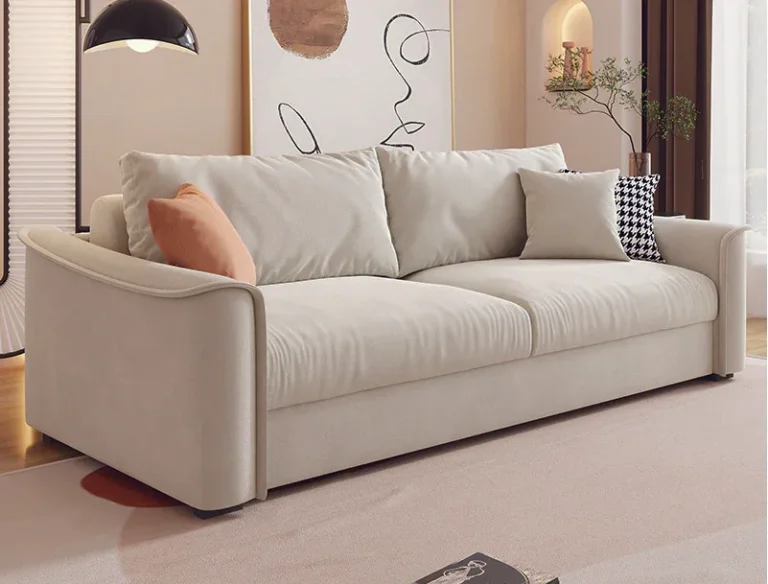
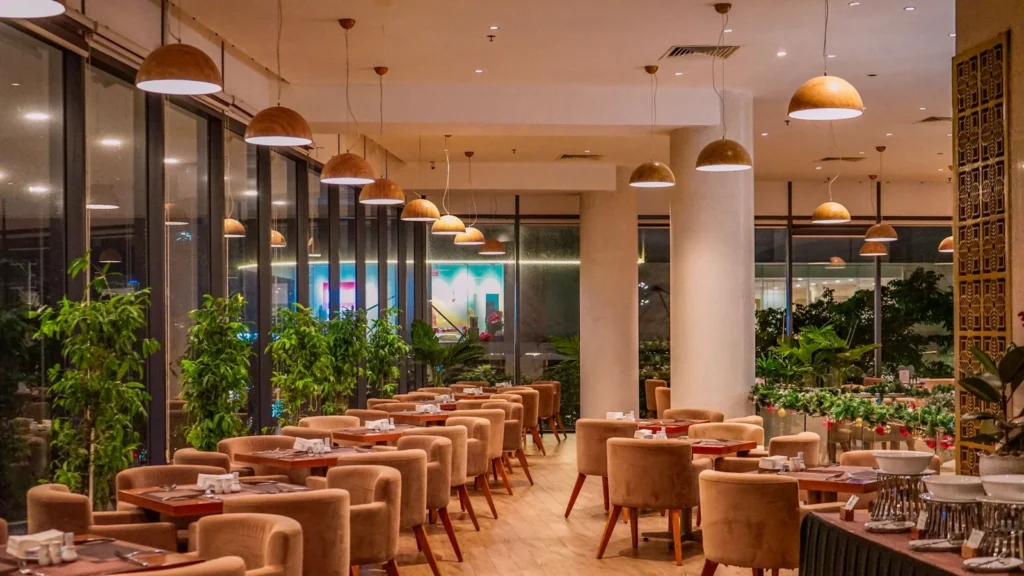
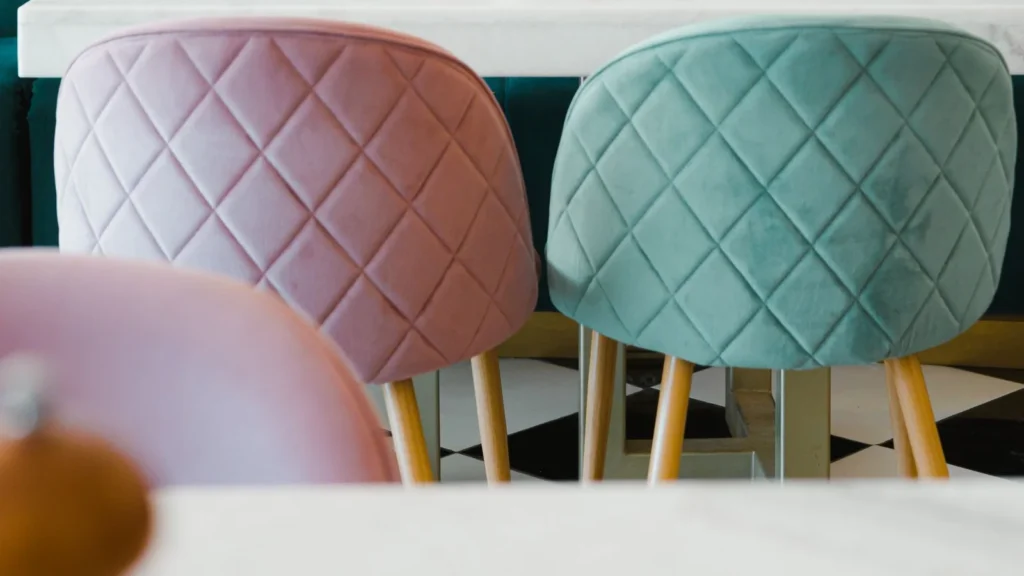
The licensed room photographs are application examples, not HUAXUAN SKU photographs or customer-project claims. The named references below use their own published product images.
What Are Metal-Leg Upholstered Dining Chairs?
These chairs combine an upholstered seat, usually an upholstered back, and a metal leg or base assembly. Some are side chairs; others have short or full arms. The support can use separate legs, a connected underframe or a different documented base configuration.
Keep dining chairs separate from lounge seating and bar stools even when their upholstery and slender legs look similar. The seat position, table relationship and intended use are different. A chair called “leisure seating” in a source catalog needs its dining application and dimensions verified before entering a restaurant order schedule.
Also distinguish metal legs from a complete metal internal frame. A chair can have steel legs and a plywood upholstered body. Record each component rather than assuming the support material runs through the entire back and seat.
Common Dining Chair Designs and Frame Configurations
A plain upholstered shell can create a quiet dining row; separate cushions give the upper body more visible depth. A wrap-back design can leave the side open, while a high back changes the outline seen above the table. Select the silhouette together with the rear view, because chairs are frequently seen from behind in a dining room.
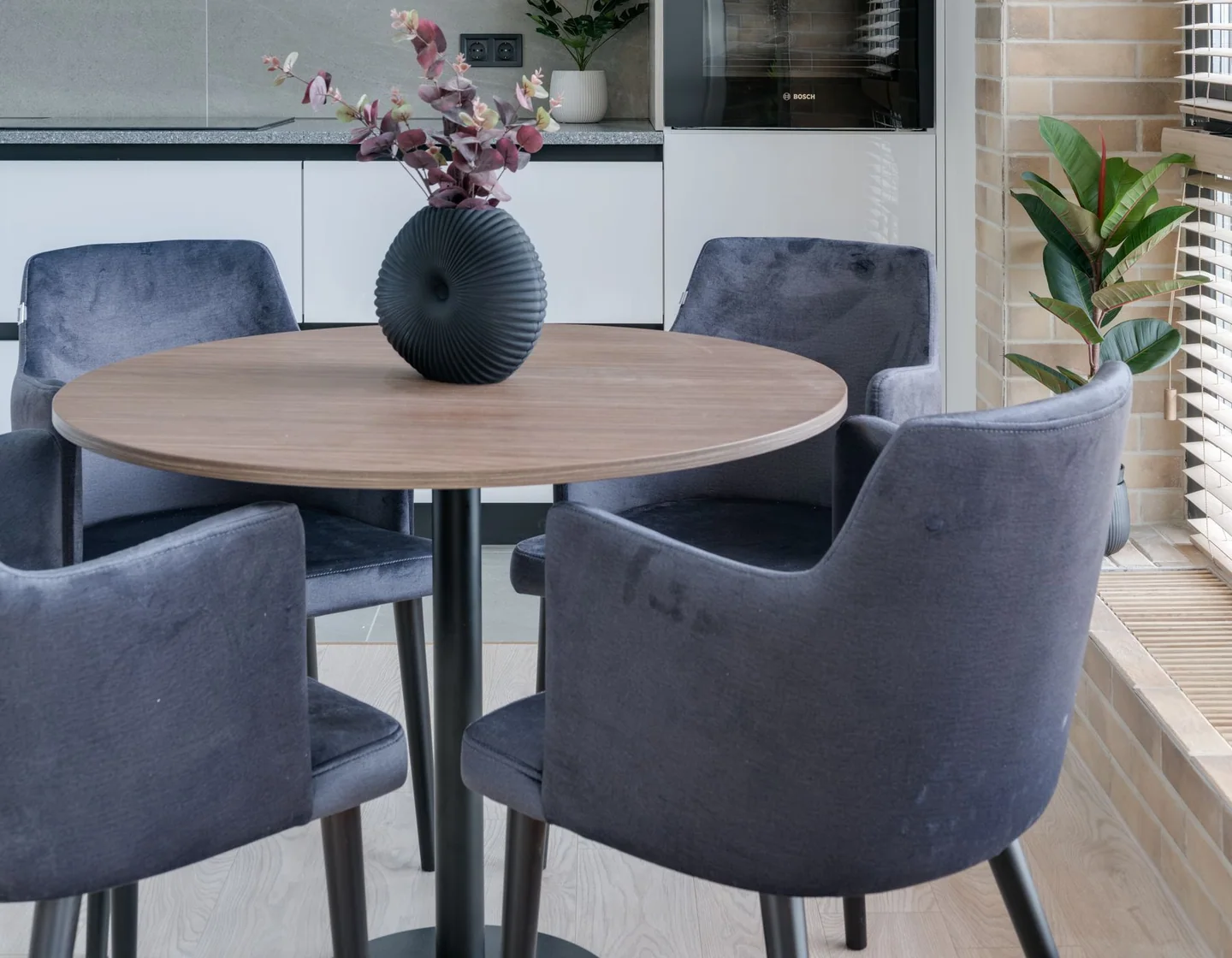
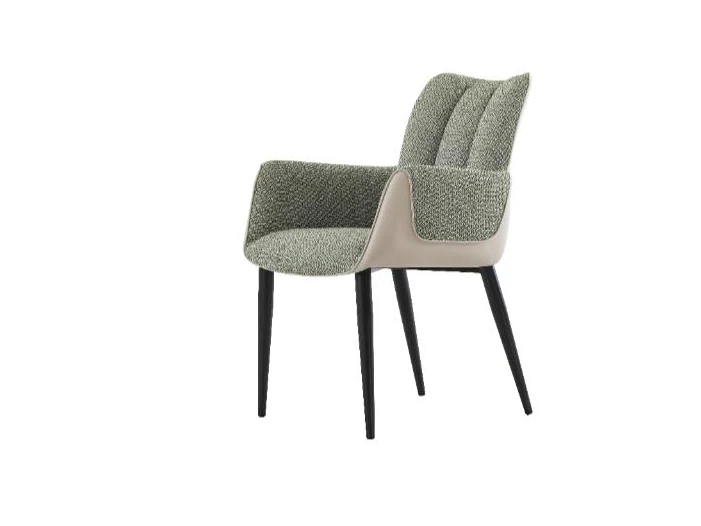
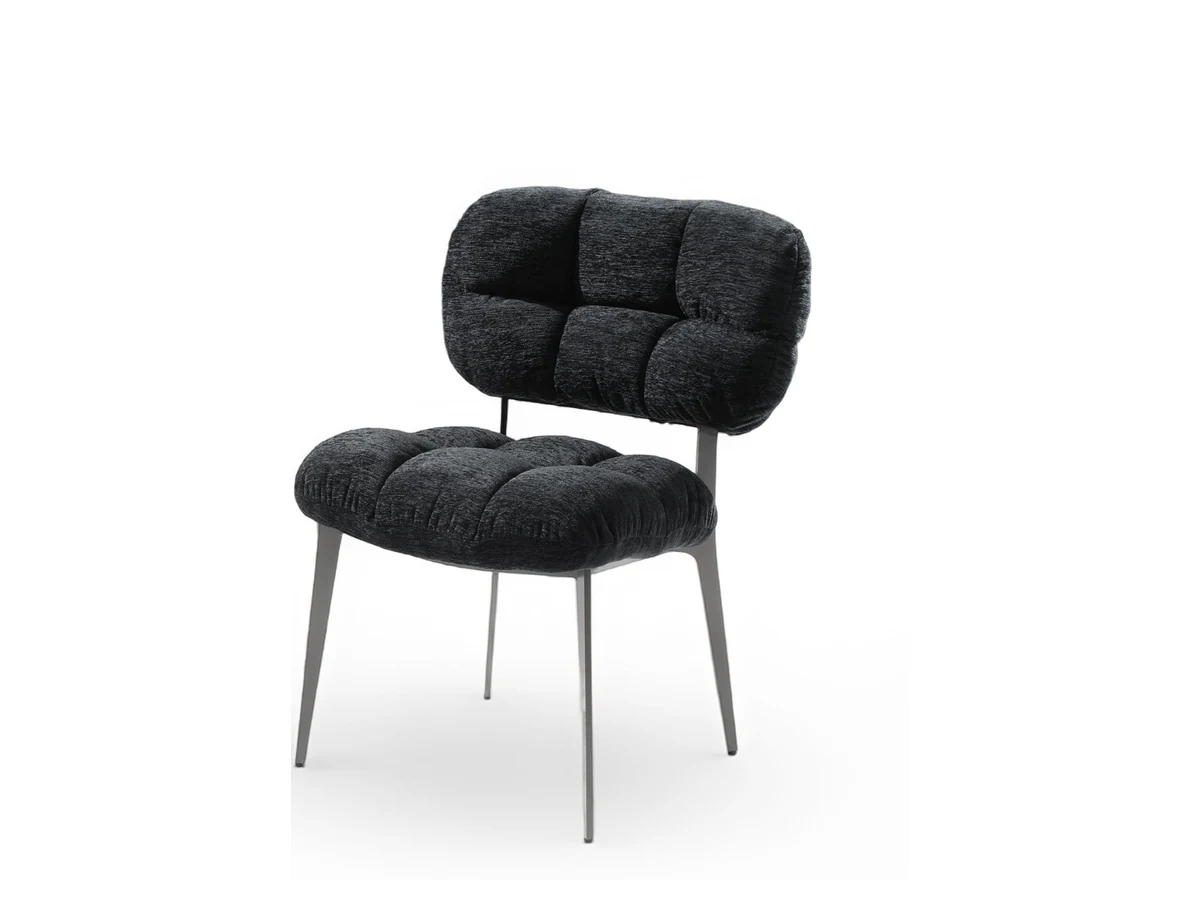
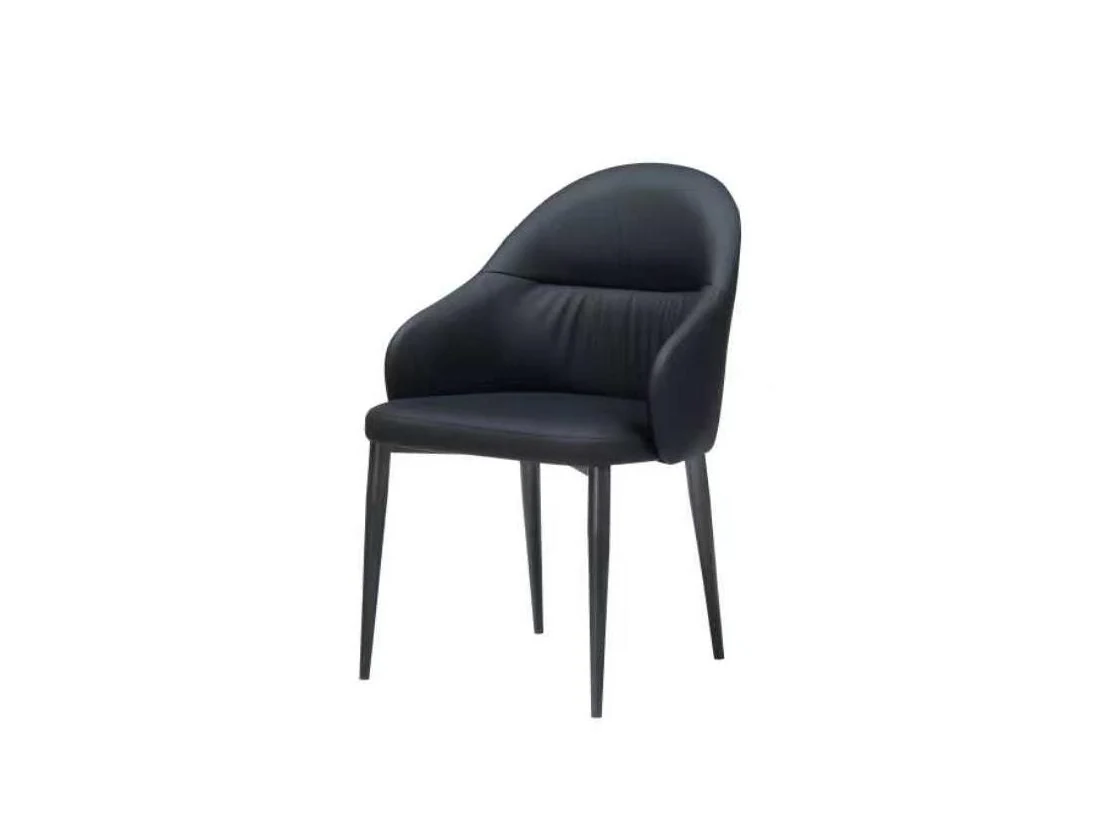
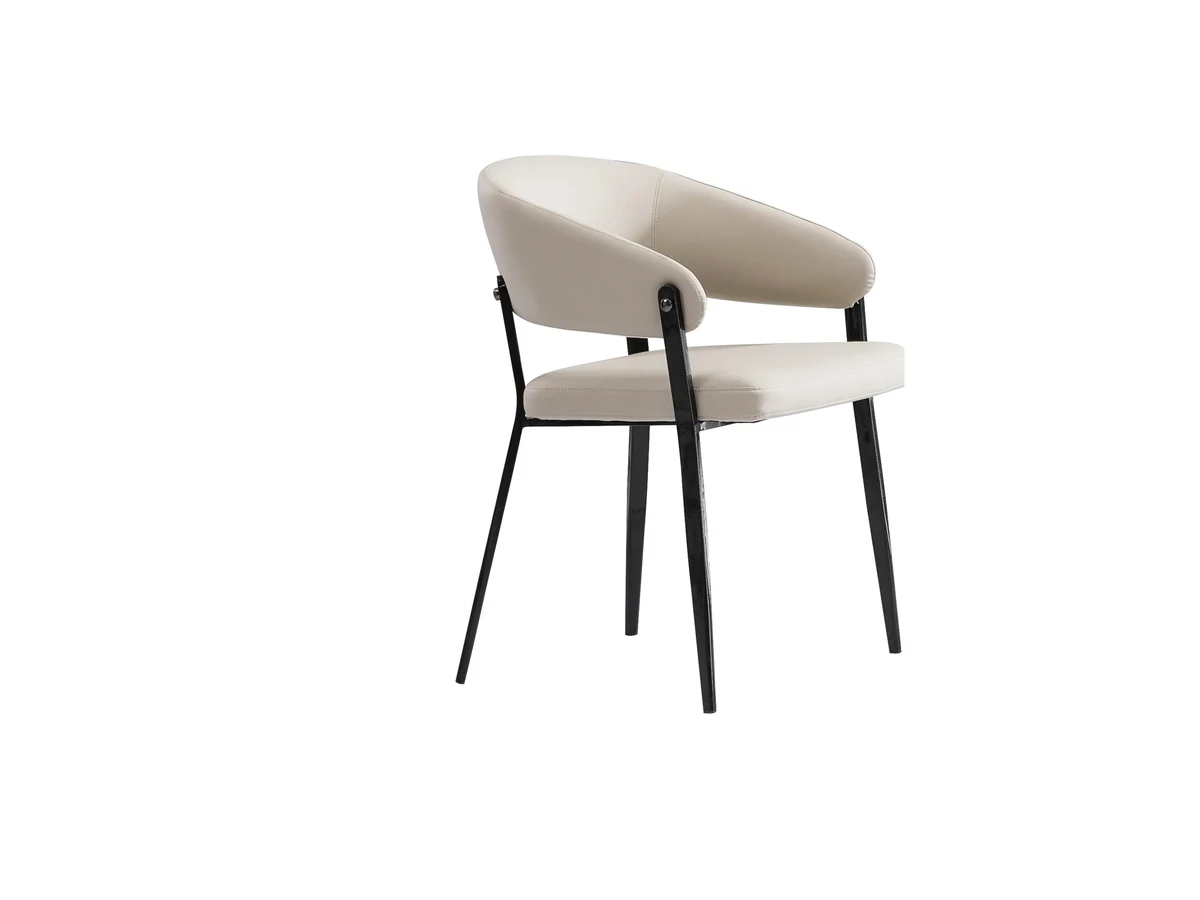
The published HX-DCH references illustrate several directions. HX-DCH-031 separates a padded back from the arms. HX-DCH-033 uses segmented chenille cushions on a steel base. HX-DCH-035 has a higher curved back with horizontal stitching. HX-DCH-038 has a floating wrap-back and shorter arms. These distinctions help build a model shortlist without turning this guide into a general chair-style ranking.
For bulk purchasing, avoid adding variants that differ only slightly unless the distribution plan needs them. A manageable assortment makes fabric control, spare glides and receiving identification easier. Keep side-chair and armchair quantities on separate lines even if they share one finish palette.
Metal Leg Finishes and Construction Options
Ask whether the specified substrate is carbon steel, stainless steel or another metal, then identify the finish separately. Black paint, powder coating and plated or metallic appearances are not interchangeable specifications. A color name alone does not identify the coating process or its suitability for the receiving environment.
| Item to specify | Buyer question | Approval evidence |
|---|---|---|
| Metal and base geometry | What material and leg arrangement belong to this model? | Component description and sample |
| Finish process and color | What exact surface treatment is being quoted? | Finish code and retained physical reference |
| Seat-to-base fixing | How is the body attached and serviced? | Assembly detail and hardware list |
| Floor glides | What material, size and replacement method are supplied? | Glide sample on the intended flooring |
| Packing configuration | Are the legs fitted or supplied for assembly? | Packing sample and instructions |
Review weld appearance, accessible edges and finish coverage on the actual sample. Agree the visual standard under consistent lighting, including inner faces that are easy to miss in front photographs. A request for corrosion evidence must name the proposed material and finish; this guide does not assign a corrosion rating.
Upholstery Choices for Restaurant and Hotel Dining
Choose the covering around the cleaning routine and desired hand feel. Woven fabric, chenille and synthetic leather create different surfaces and seams. Verify the composition and care instructions for the specific material code rather than treating a commercial name as a technical specification.
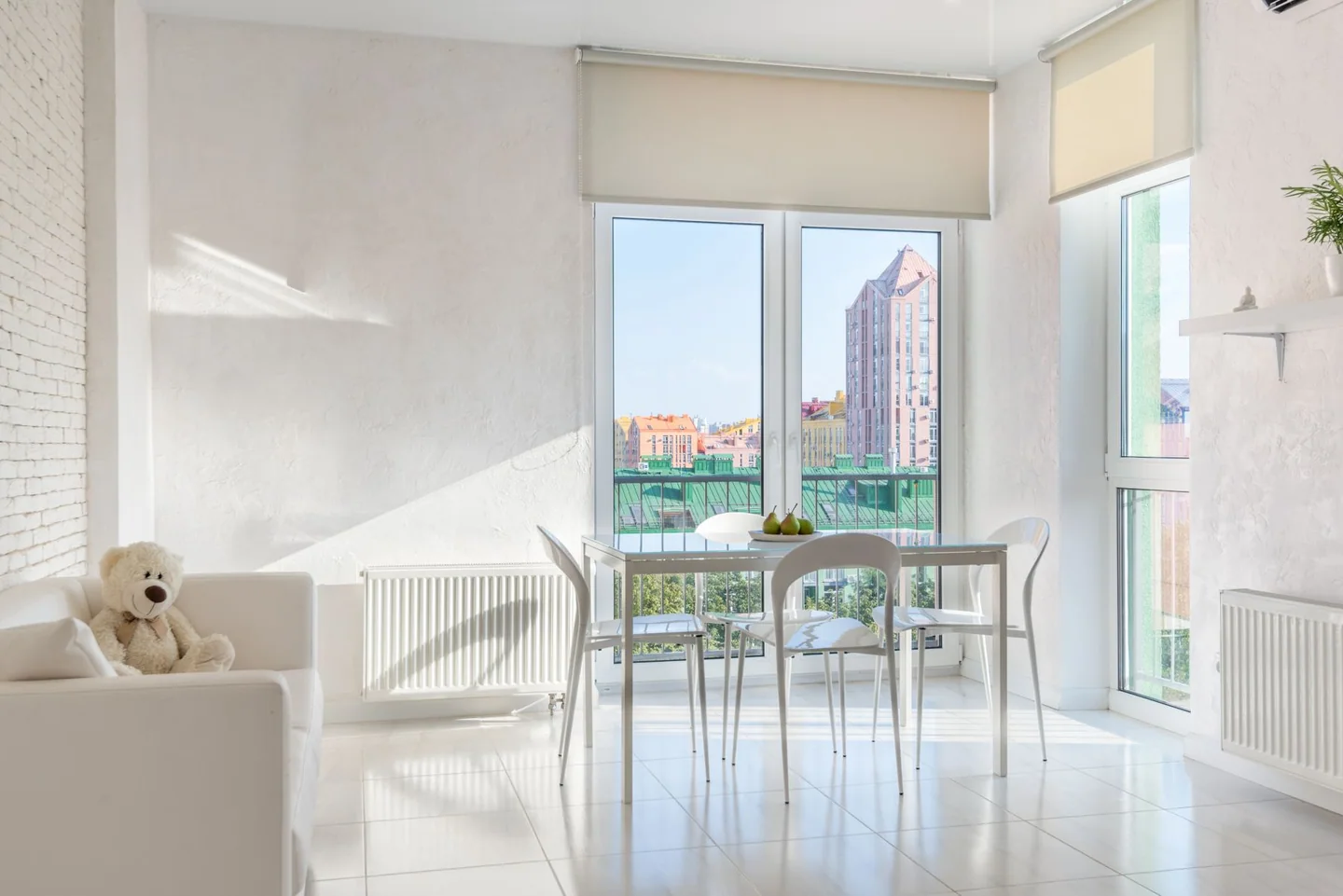
Ask the operator which cleaning products and spill routines will be used. Review a sample with the intended method before acceptance. Avoid assuming a light-colored fabric is washable, a leather-look surface is disinfectant-resistant, or a coated material meets a particular fire requirement.
For patterned or directional fabric, record orientation on the seat, front back and rear panel. Retain the approved swatch and a finished-chair photograph. For detailed material comparisons, use the existing dining chair upholstery materials guide; here the goal is to bind one chosen covering to one metal-leg model.
Dining Chair Width, Seat Height and Table Compatibility
Use overall width to plan the chair row, then examine usable seat space and the leg footprint separately. Outward-angled legs may extend beyond the upholstered body. An armchair also needs its arm height checked against the underside of the actual table, including apron and support hardware.
| Published reference | Overall width | Seat height | Overall height | Listed material direction |
|---|---|---|---|---|
| HX-DCH-031 | 60 cm | 46 cm | 80 cm | Carbon steel; multilayer board; high resilience sponge |
| HX-DCH-033 | 55 cm | 45 cm | 81 cm | Chenille; carbon steel base; doll-cotton filling |
| HX-DCH-035 | 58 cm | 46 cm | 82.5 cm | Synthetic leather; carbon steel base |
| HX-DCH-038 | 53 cm | 48 cm | 77 cm | Synthetic leather; glossy black carbon steel |
These measurements come from the current published supplier-reference records and should be reconfirmed for the order. They do not include a complete seat-depth, arm-height or base-footprint schedule. Ask for those missing dimensions before approving the table plan.
Compare HX-DCH-031 and HX-DCH-038 carefully: the latter is narrower in the listed overall width but has a higher listed seat. A smaller outer width therefore does not mean the chair will fit every table better. Test the selected chair with the intended table and allow for entry, pullback and occupied circulation.
Floor Protection, Stability and Maintenance
Request glides suited to the receiving floor and check how they are replaced. A glide that behaves acceptably on one smooth sample board may leave marks or create noise on another surface. Evaluate it on the actual flooring or an agreed representative sample.
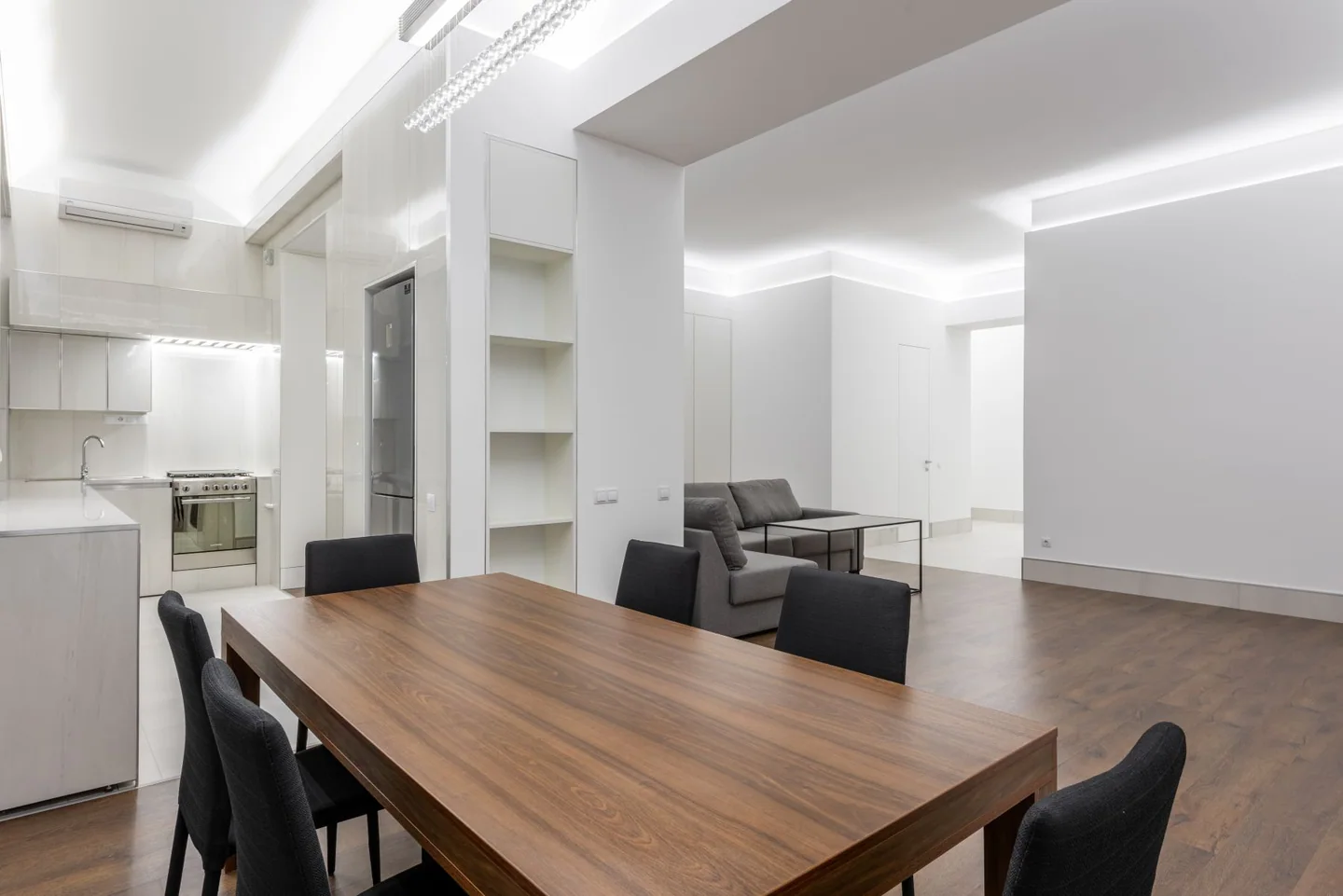
Check that the assembled sample sits evenly on a verified level surface, then investigate rocking rather than immediately masking it with a temporary pad. Review leg alignment, fasteners and the seat-to-base joint. Agree inspection methods with the supplier; no load capacity or completed stability test is implied here.
Ask for written assembly and maintenance instructions where applicable, including hardware identification and any specified tightening procedure. Do not assume the chairs stack because they have slim metal legs. Stacking must be explicitly documented and approved, including protection of the upholstery.
Selecting Models for Bulk Restaurant Orders
Build the order around table positions and operating zones. List the quantity per model, upholstery code and metal finish, then add any separately agreed spare parts. A mixed dining room can use more than one silhouette, but each should have an identifiable role and its own accepted sample.
For wholesalers, consider how receiving staff will distinguish similar dark chairs. Use a model code and finish code on the carton and packing list; do not rely on a color photograph alone. Keep promotional descriptions separate from the technical schedule used to place repeat orders.
The four HX-DCH examples are current Product References supplied through the partner network. Their publication supports model comparison and sourcing discussion; it does not establish that HUAXUAN manufactures every component in-house or that a model is immediately available. Confirm current sourcing and the exact variant during quotation.
Samples, Finish Consistency and Production Checks
Approve a complete chair, its covering reference and the metal finish together. A sample base with a different upholstered body is useful for discussion but should not become the final order reference. Record the SKU, dimensions, color codes, assembly method, glides and all accepted deviations.
Review multiple chairs side by side under the same light when assessing finish and upholstery consistency. Check seam positions, cushion shape and visible leg alignment against the accepted sample. Define acceptable variation with the supplier before inspection rather than inventing a tolerance at the receiving dock.
Request applicable test reports or certification documents only for the exact chair and material combination that requires them. Ask whether the report covers the selected base and upholstery. Neither a supplier’s general brochure nor a similar-looking model establishes compliance for the ordered chair.
For shipping, confirm fitted-leg or assembly packing, protection between finished surfaces, carton dimensions, gross weight and carton count. Obtain assembly instructions before shipment when the receiver must fit legs. Container planning should use the approved packed sizes, not an assumed nesting or stacking arrangement.
Real HUAXUAN Dining Chair References
HX-DCH-031 offers a split-cushion armchair profile and the widest listed body among this shortlist. HX-DCH-033 provides a segmented chenille direction. HX-DCH-035 is the higher-back synthetic-leather reference. HX-DCH-038 has a more open wrap-back silhouette.
The authentic product cards below show those references individually. Use the scene photographs to discuss a room’s visual direction and the product records to identify a model. Keep the two roles clear when circulating an RFQ internally.
Bulk Order Enquiry Checklist and FAQ
Send quantities by SKU, the table drawing, requested covering and finish, destination, receiving-floor type and delivery-route restrictions. Ask the quotation to identify missing dimensions, sample scope, assembly arrangement and packing data. Keep a revision number on the final schedule.
Does a metal-leg chair always have a metal seat frame?
No. The legs, seat shell and internal back structure can use different materials. Request a component-level description.
Are these dining chairs stackable?
No stackability is claimed for this shortlist. Require model-specific confirmation before using stacked storage or transport in the plan.
Can the photographed finish be ordered in another color?
Discuss the requested finish and covering during quotation, then approve physical references. A proposed option is not confirmed until accepted for the selected model.
What is the first useful sample check?
Place the complete chair at the intended table on the intended floor. Confirm fit, glides and the approved finish before expanding the order.
Request metal-leg dining chair options and samples
For detailed measurement, see seat height and table clearance. For a material decision across categories, see wood versus metal dining chair frames. Use the chosen metal-leg model for the final sample approval.