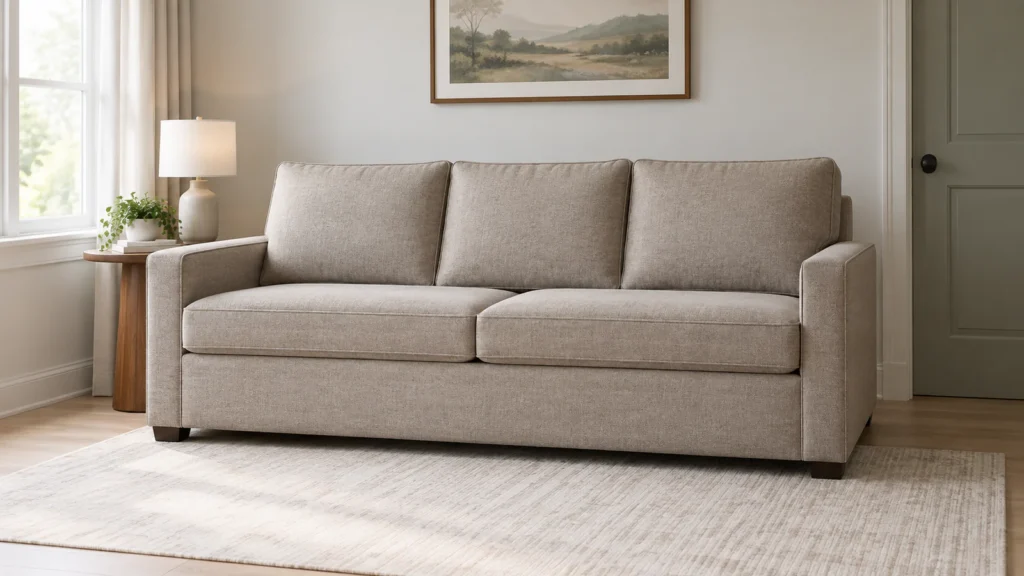

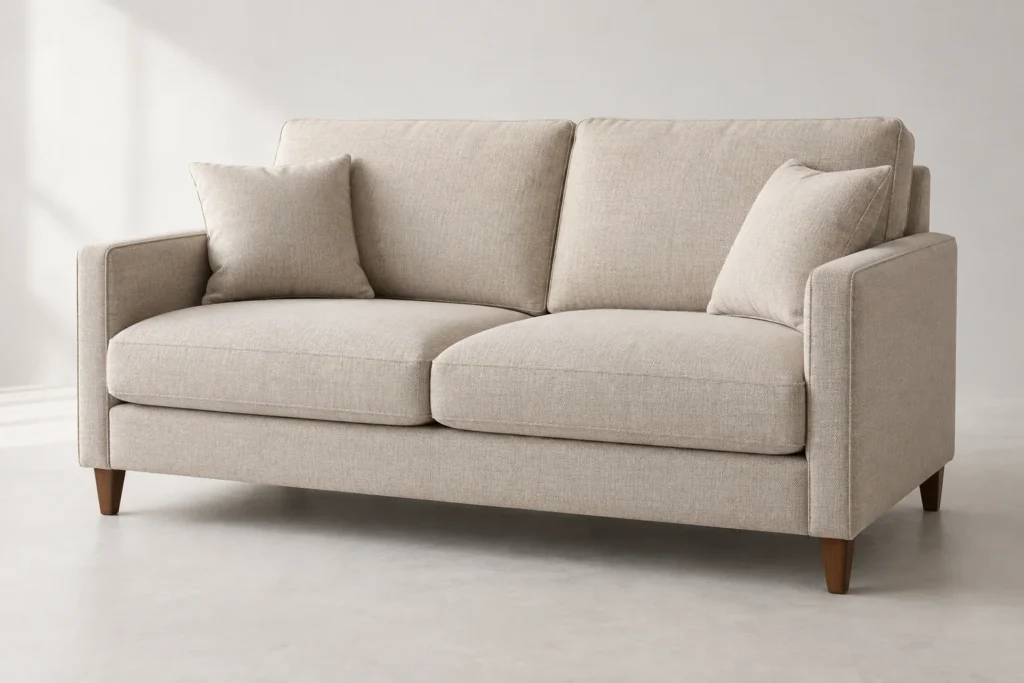
Quick answer: A two-seater usually uses less overall wall space, while a three-seater offers more usable sitting width. Published models show that labels alone do not fix dimensions: one IKEA EKTORP two-seat loveseat is 1,791 mm (70.5 in) wide and its three-seat sofa is 2,181 mm (85.9 in) wide; Steelcase Tava lounge seating measures about 1,308 mm (51.5 in) and 1,899 mm (74.75 in) respectively. Compare the actual drawing, seat width, arms and circulation before specifying either size for a bulk program.
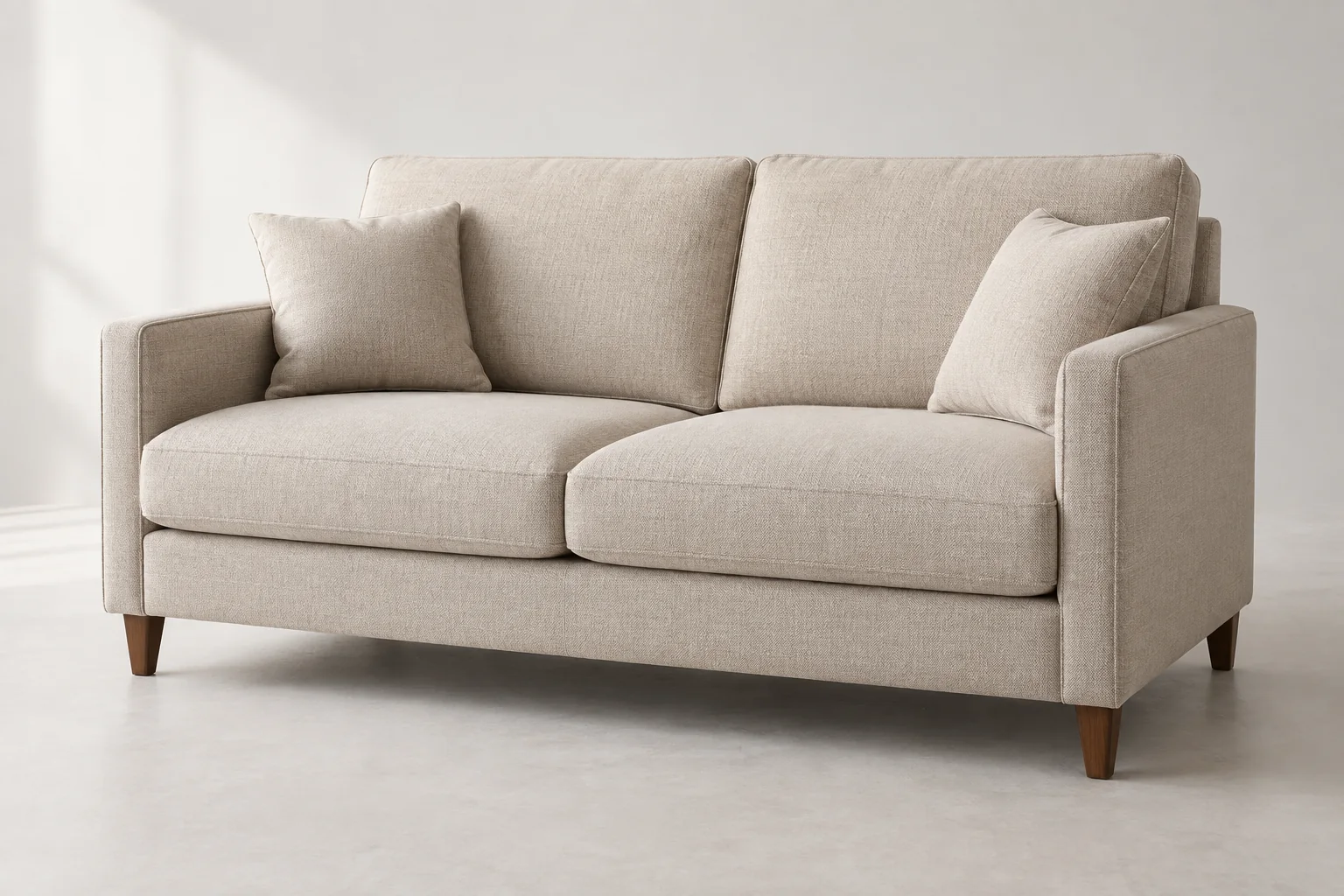
2 Seater vs 3 Seater Sofa: Comparison Table
The table separates seat count from measurable requirements. Published examples are evidence of variation, not HUAXUAN standard sizes or a guarantee that every model in the market fits the same envelope.
| Measure or decision | Two-seat format | Three-seat format | Why it matters |
|---|---|---|---|
| Seating capacity | Usually two designated places | Usually three designated places | Cushion count and actual usable width can differ. |
| Published width example: IKEA EKTORP | 1,791 mm (70.5 in) | 2,181 mm (85.9 in) | Same family; the longer frame adds 390 mm (15.4 in). |
| Published width example: Steelcase Tava lounge | 1,308 mm (51.5 in) | 1,899 mm (74.75 in) | Commercial lounge proportions differ from residential models. |
| Depth / seat height | Verify the chosen model | Verify the chosen model | These can match within one family but do not have to. |
| Bulk handling | Shorter package may help access | Longer package may require more access | Obtain packed dimensions and weights, not seat labels. |
The figures above come from IKEA’s EKTORP buying guide and Steelcase’s Tava product dimensions. Convert only after choosing a specific market and model; published examples are rounded to the nearest millimeter.
Typical Dimensions: What a Buyer Can Safely Infer
There is no universal two-seat or three-seat width. The examples above span approximately 1,300–1,800 mm (51–71 in) for two designated seats and 1,900–2,180 mm (75–86 in) for three within those two very different product families. These are an illustrative observed span, not an industry standard. Style, arm thickness, cushion arrangement and commercial use change the result.
Within the EKTORP family, both formats share a published depth of 879 mm (34.6 in) and height of 879 mm (34.6 in). This is useful evidence that a longer three-seater can keep the same depth and back elevation, but it does not establish that all paired models do. In a purchase order, write outside width × depth × height for each SKU. Ask whether the dimensions include removable cushions, legs and any projecting details.
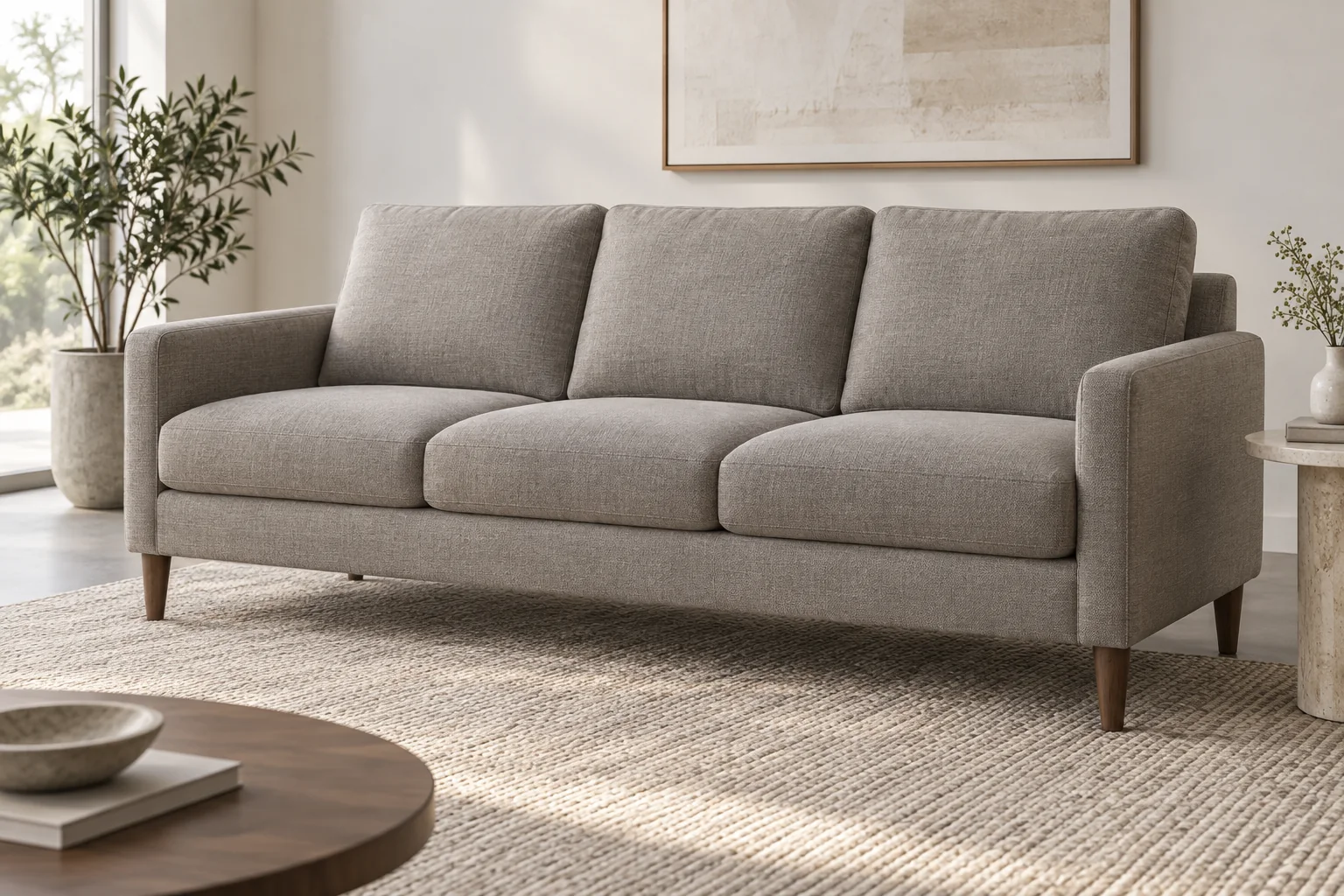
Overall Width vs Usable Seat Width
Overall width runs from the outside of one arm to the outside of the other. Usable seat width is the clear sitting surface between the inner faces of the arms, or the sum of designed seat spaces. A 1,800 mm (70.9 in) sofa with two 200 mm (7.9 in) arms leaves roughly 1,400 mm (55.1 in) between arms before accounting for cushion shaping. That arithmetic is an illustration; request the model’s actual inside dimension.
Arm width is therefore not only a styling choice. Two products can have the same outside width but different room for occupants. A broad, rounded arm may consume more of the envelope and make a nominal two-seater feel narrower. Slim arms can release space without changing the footprint. Compare the inner width at the front and back if the arms taper, and check whether bolsters or loose cushions reduce the usable zone.
Seat count is also not a load rating. A three-seat label says how many sitting positions the design presents; it does not verify occupant size, use intensity or structural performance. For commercial or wholesale ordering, obtain the manufacturer’s approved specification and any relevant test evidence for the exact construction. See the broader sofa dimensions guide for other measurements that apply across sofa formats.
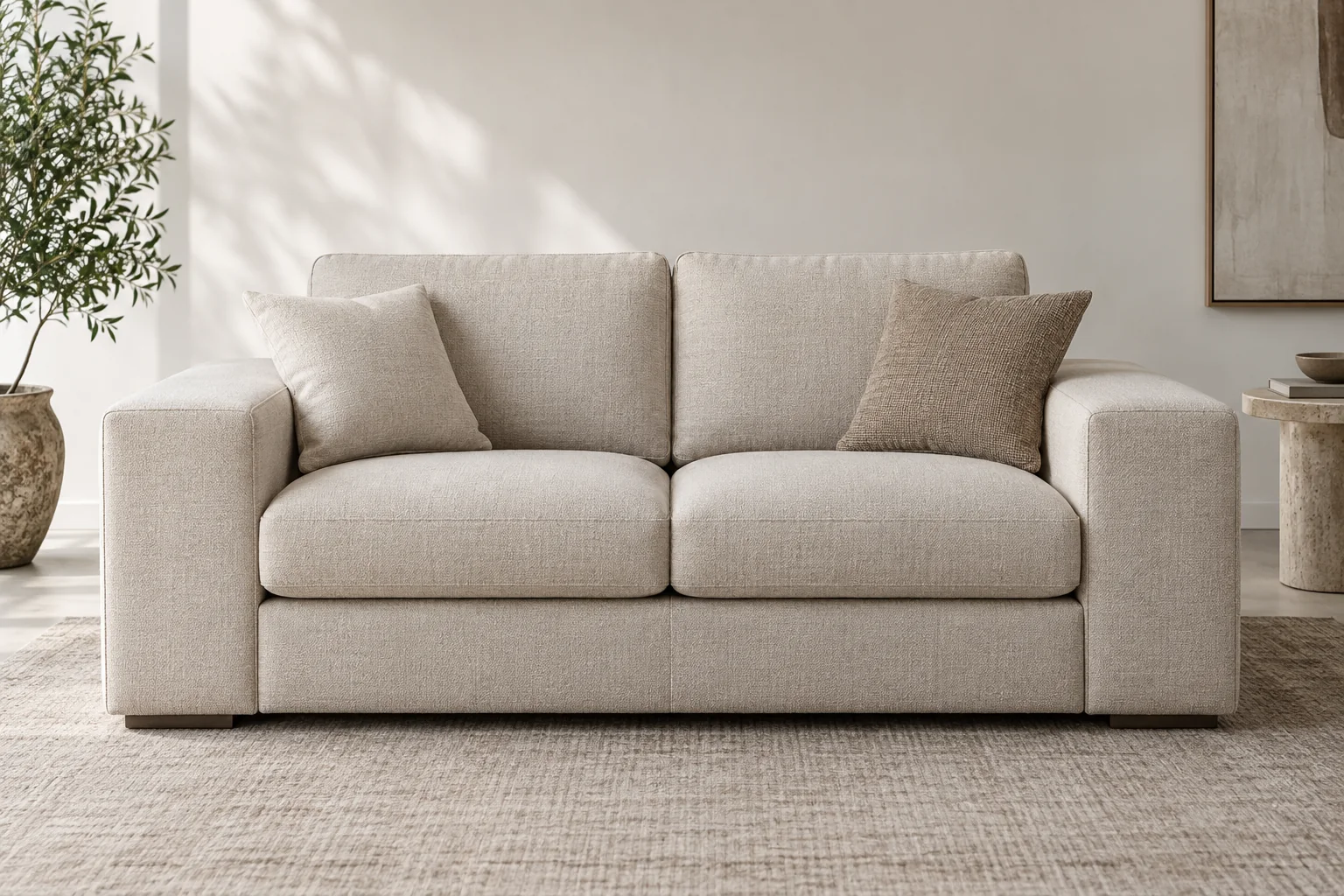
Seat Depth, Seat Height, Arm Width and Back Height
Seat depth
Seat depth measures the usable distance from the front of the seat to the supporting back surface. Overall sofa depth includes the back structure and can be substantially larger. A deep lounge seat can encourage reclining; a shallower, more upright seat can support short waits and frequent standing. Specify whether a supplier is quoting depth with the loose back cushion in place. If seat depth drives the decision, use the dedicated sofa seat depth guide alongside the actual model drawing.
Seat height
Seat height is normally floor to the top of the unloaded seat at the designated measuring point. Cushion compression changes the occupied height. A lounge format and a reception format may intentionally differ. Ask for floor-to-seat height with the proposed foam and upholstery, then validate the approved sample. Do not infer it from overall sofa height or the height of the legs.
Arm and back height
Arm height affects how an occupant enters, rests and exits. Back height controls visual mass and support above the seat. The same two-versus-three-seat family may share these vertical measurements, as EKTORP’s overall height demonstrates, while another design may use different back construction. Confirm the highest point, including fixed cushions, and check sight lines in lounges, reception areas and small guestrooms.
For a quotation, request a dimensioned elevation and side view, with tolerances stated. Note whether the drawing is for the upholstered finished piece or an exposed frame. Cover thickness, piping and cushion fill can change the finished envelope, so prototype approval should refer to the complete finished sofa.
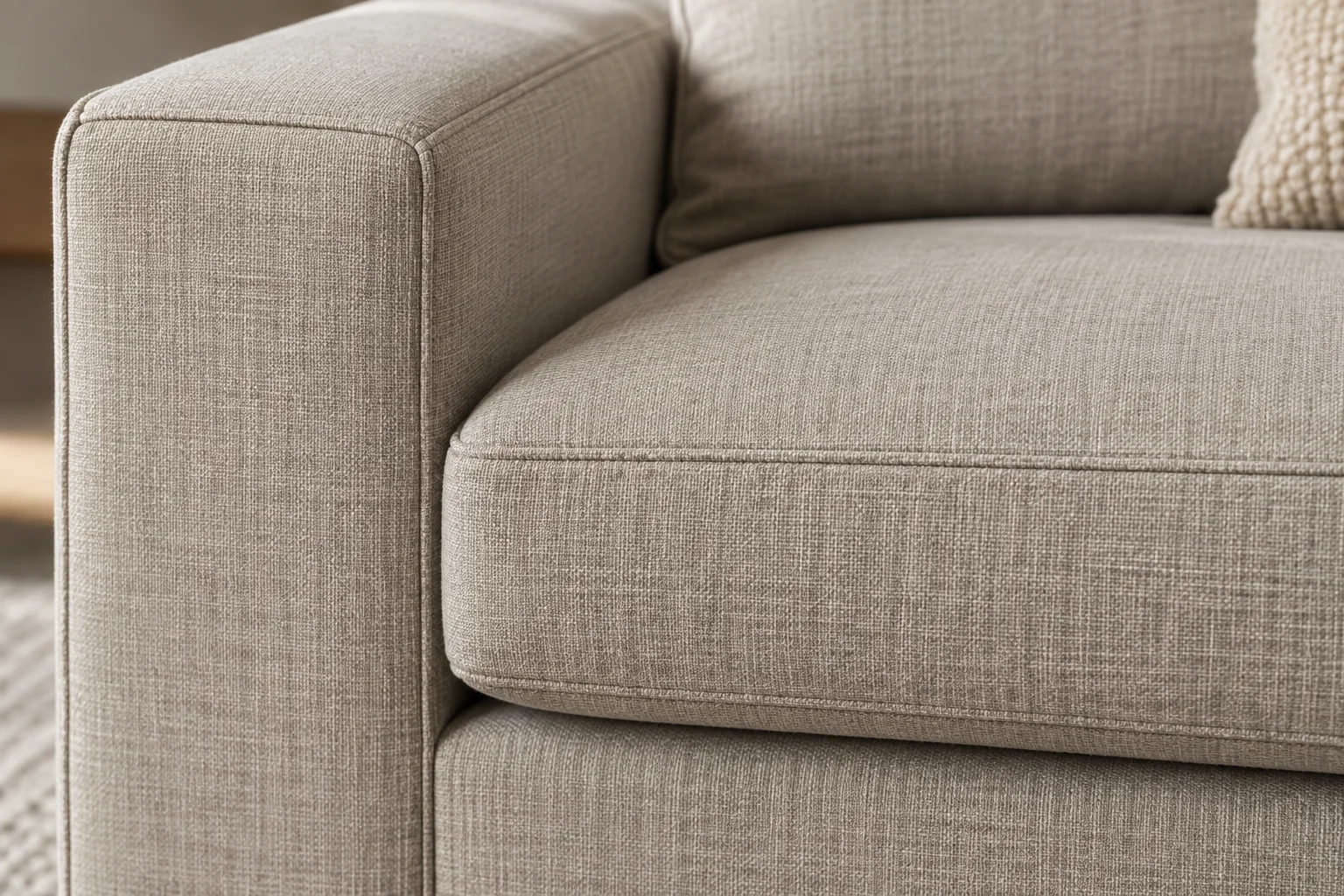
Is a 2-Seater Always a Loveseat?
No. “Loveseat” is commonly used for a compact two-person sofa, but the term has no single universal width. The IKEA EKTORP example explicitly calls its two-seat format a loveseat at 1,791 mm (70.5 in), while Steelcase’s Tava loveseat is much shorter at about 1,308 mm (51.5 in). Both are two-person products in different collections. Procurement documents should state the exact SKU and measured envelope rather than assuming the name defines the size.
The existing loveseat buying guide discusses that product category in more detail. This article addresses the actual two-versus-three-seat decision. A compact loveseat may be useful in a guestroom, but a generously padded one can still be too large for a narrow wall. Conversely, a slim commercial three-seat sofa may use less width than a bulky residential three-seat model.
Room Planning: Width and Circulation
Start with the clear wall or floor zone after doors, curtains, casegoods and outlets are accounted for. Subtract the proposed sofa’s finished outside width; then check the remaining space at both ends. If a room has a 2,800 mm (110.2 in) clear wall and a sofa is 2,180 mm (85.8 in), 620 mm (24.4 in) remains in total. Centering would leave only 310 mm (12.2 in) at either end. This is geometry, not an automatic approval: the door swing and intended side-table use may make it unsuitable.
Next place the full sofa depth on the scaled plan. Account for the coffee table, opposing furniture, a route around the sofa and any door that swings into the area. A distance around 450 mm (18 in) between a sofa and coffee table is a common design starting point, consistent with IKEA’s room-planning advice; a main walkway needs its own project-specific review. These are planning guidelines, not legal requirements. Test a full-size mock-up where circulation is tight.
Mark the longest package and assembled envelope separately. A sofa may fit its final wall but fail at a turn, door or elevator. Measure the clear delivery route, including protective packing. The sofa doorway measurement guide covers that separate access check.
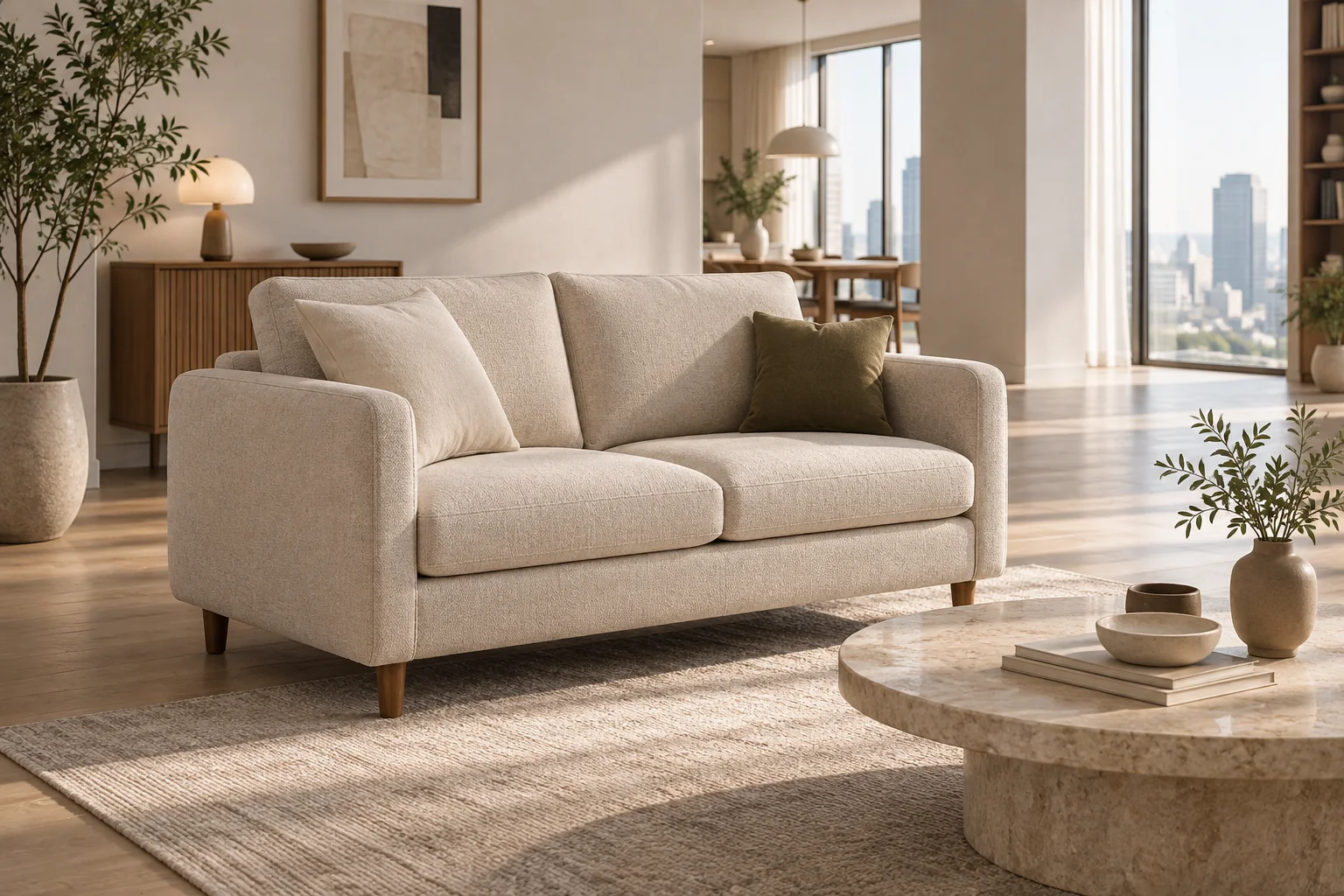
Commercial Applications: Guestroom, Apartment, Lounge and Retail
A hotel guestroom usually benefits from a compact two-seat model only when the room plan supports the seat, table, luggage path and service access. A larger room or suite may justify three seats, but seating capacity should follow the use brief, not a blanket “hotel sofa” rule. For serviced apartments, compare resident occupancy, wall space and frequency of use; two seats may be enough in a studio, while a three-seat piece can serve a larger shared living zone.
In a lobby or commercial lounge, a three-seat sofa can aggregate seating along a wall, but several smaller pieces may allow more flexible traffic patterns. A furniture retailer or distributor may need both sizes in the same design family; matching arm profiles, seat height and upholstery can make the collection coherent while maintaining distinct SKUs. Review HUAXUAN’s sofa collection and an actual sofa Product Reference when choosing a design direction; use its current specification rather than any generic figure here.
For upholstery, cleaning and service expectations, match the material to the site. A thick arm may look inviting in a lounge but enlarge the packing carton and reduce clear seat width. A low back can keep sight lines open, yet may provide less upper-back support. Decide these trade-offs against the room and the buyer’s repeat-order brief.
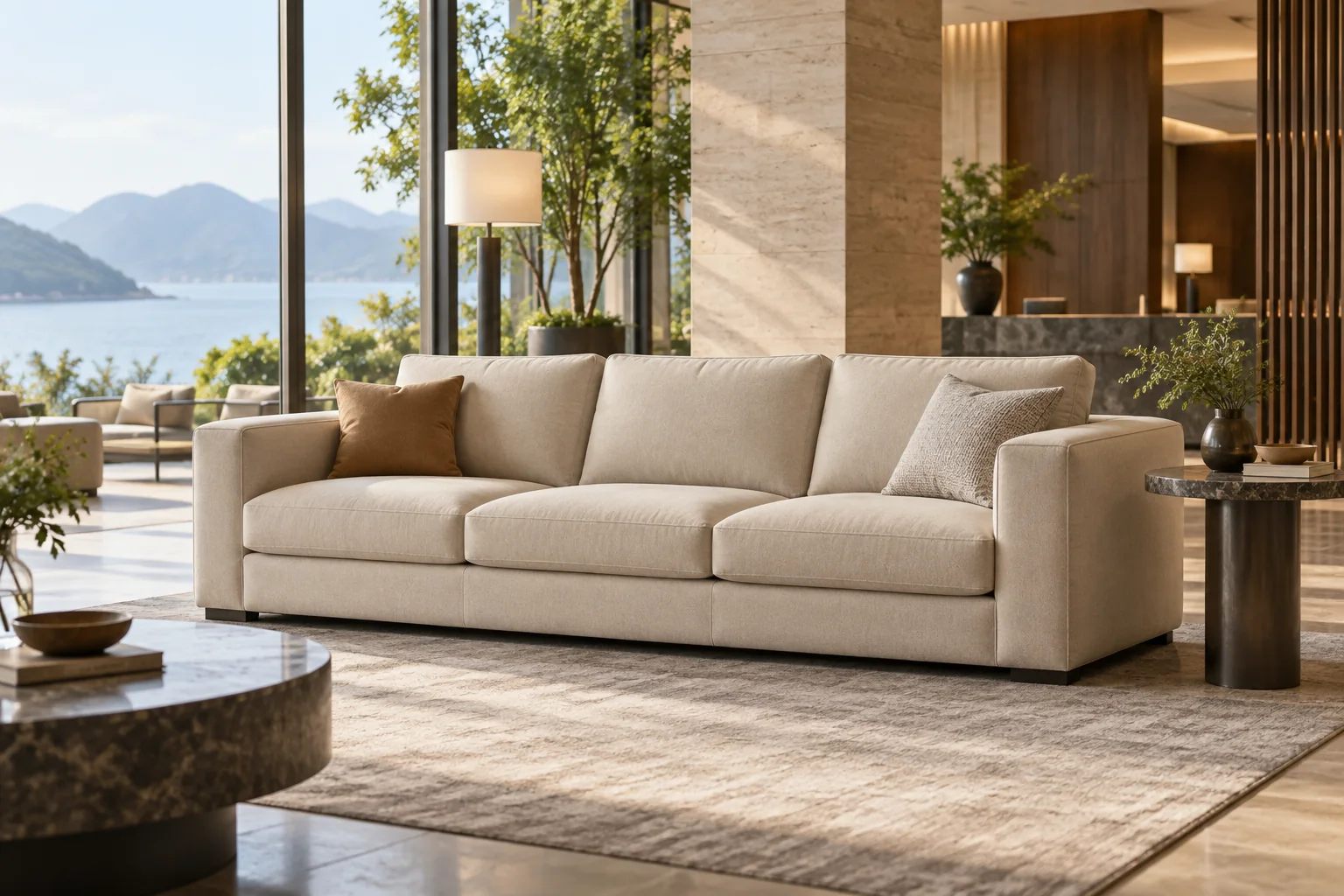
For a sample review, seat two or three intended users briefly and check whether each position has its own clear zone rather than sharing a narrow cushion edge. Note the seat height after normal use, the support at the back and whether the arms obstruct entry. Keep this observation separate from any formal performance or durability claim. A retailer can compare the two sizes side by side, while a project buyer should use the same upholstery and cushion specification for a fair test. When the approved sample differs from the drawing, resolve the dimensions before labeling the product for wholesale. The cost of an error multiplies across cartons, inventory listings and rooms, so record the final finished measurements in the model specification as well as the purchase order. This also helps distributors keep online dimensions consistent with shipped stock.
Wholesale Buyer Checklist
| Specification to request | Why it prevents an error |
|---|---|
| Finished outside W × D × H, mm and inches | Confirms room fit and category listing. |
| Clear seat width, seat depth and unloaded seat height | Tests real seating capacity and comfort brief. |
| Arm width and height; back height | Explains lost seat width and visual scale. |
| Cushion count and removable parts | Prevents a seat-count label from hiding a different layout. |
| Drawing revision and dimensional tolerance | Keeps sampling and production aligned. |
| Packed carton W × D × H and gross weight | Checks doors, elevators and receiving. |
| Upholstery, foam and approved sample | Documents the finished model for repeat orders. |
Ask the supplier to identify measurement points on a dimensioned drawing and confirm whether every dimension refers to the final upholstered unit. Approve one sample for each size if arm geometry or cushion layout changes. Record the exact model codes and revisions on the purchase order. A “two-seat” quote from one range cannot be compared fairly with a “three-seat” quote from another without the complete specification.
If buyers are building a mixed range, request separate carton data and photographs for each SKU. The larger sofa may differ in frame supports, cushion count and packaging, even when its styling matches the smaller model. Request the production sample before committing the full quantity. The four-seat sofa guide is a separate next step for larger configurations.
FAQ
How wide is a 2-seater sofa?
There is no fixed width. Verified published examples range from about 1,308 mm (51.5 in) for a commercial Steelcase Tava loveseat to 1,791 mm (70.5 in) for an IKEA EKTORP two-seat loveseat. These are examples, not a universal range; confirm the exact model’s finished width.
How wide is a 3-seater sofa?
Published three-seat examples include about 1,899 mm (74.75 in) for Steelcase Tava lounge seating and 2,181 mm (85.9 in) for IKEA EKTORP. Frame, arms and upholstery change the finished size. Use the selected model drawing for space and procurement decisions.
Is a 2-seater sofa the same as a loveseat?
Often the terms overlap, but “loveseat” does not specify one width or construction. A buyer should identify the SKU, finished outside size, usable seat width and cushion configuration.
How many people can sit on a 3-seater sofa?
It is designed around three seating positions, but actual comfort depends on clear seat width, arm and cushion design and intended occupants. The label alone is not a tested capacity or structural rating.
What measurements should wholesale buyers confirm?
Confirm finished outside width, depth and height; clear seat width; seat depth and height; arm and back heights; packing dimensions; tolerance and the approved drawing revision for each size.