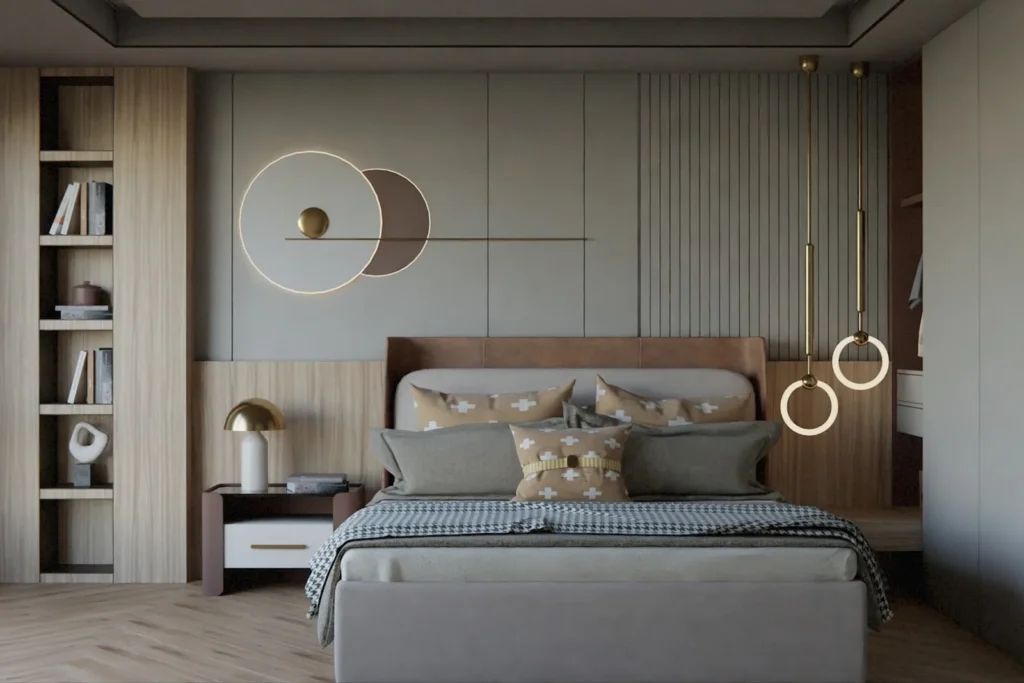
Understanding how to choose hotel furniture begins with the hotel type, target guest, stay pattern, room size and service concept. The same bed, sofa or chair will not perform equally in a design-led boutique property, a leisure resort and a compact business hotel. Buyers should first define which guest activities the furniture must support, then choose scale, storage, comfort, materials and visual character accordingly. Hotel positioning sets priorities; it does not prescribe one universal style.
Share the hotel concept, typical room plans and target guest profile to compare furniture priorities before adapting individual products.
Why Hotel Type Matters When Selecting Furniture
Hotel type influences who uses the room, how long they stay and which spaces receive the most attention. Guest profile, average stay length, room size, location, design concept, service level, public-area scale, food-and-beverage offer and the balance of indoor and outdoor space all affect the furniture brief. A complete room-by-room scope is covered separately in the complete hotel furniture package guide; here the focus is why the specification changes from one property type to another.
| Hotel type | Primary furniture priority | Typical emphasis | Common risk |
|---|---|---|---|
| Boutique hotel | Distinctive identity and memorable details | Statement headboards, accent chairs, compact custom pieces and themed banquettes | Too many unrelated statement items |
| Resort | Relaxation, indoor-outdoor use and varied guest groups | Lounge seating, daybeds, balcony sets, sofa beds and family-room pieces | Applying one ‘natural’ look regardless of the resort concept |
| Business hotel | Efficient sleep, work, storage and luggage use | Practical desks, desk chairs, luggage benches, compact lounge chairs and consistent casegoods | Oversized lounge furniture that reduces circulation |
| Luxury hotel | Refined proportion, finish control and comfort | Coordinated bedroom furniture, custom upholstery and composed lobby seating | Equating luxury only with ornate decoration |
| Serviced apartment | Longer stays and daily living | Sofa beds, dining sets, larger wardrobes, coffee tables and multifunctional storage | Treating the room like a short-stay bedroom |
| Limited-service hotel | Clarity, repeatability and easy maintenance | Simple forms, modular pieces, practical surfaces and compact combinations | Confusing simplified design with low quality |
Furniture for Boutique Hotels
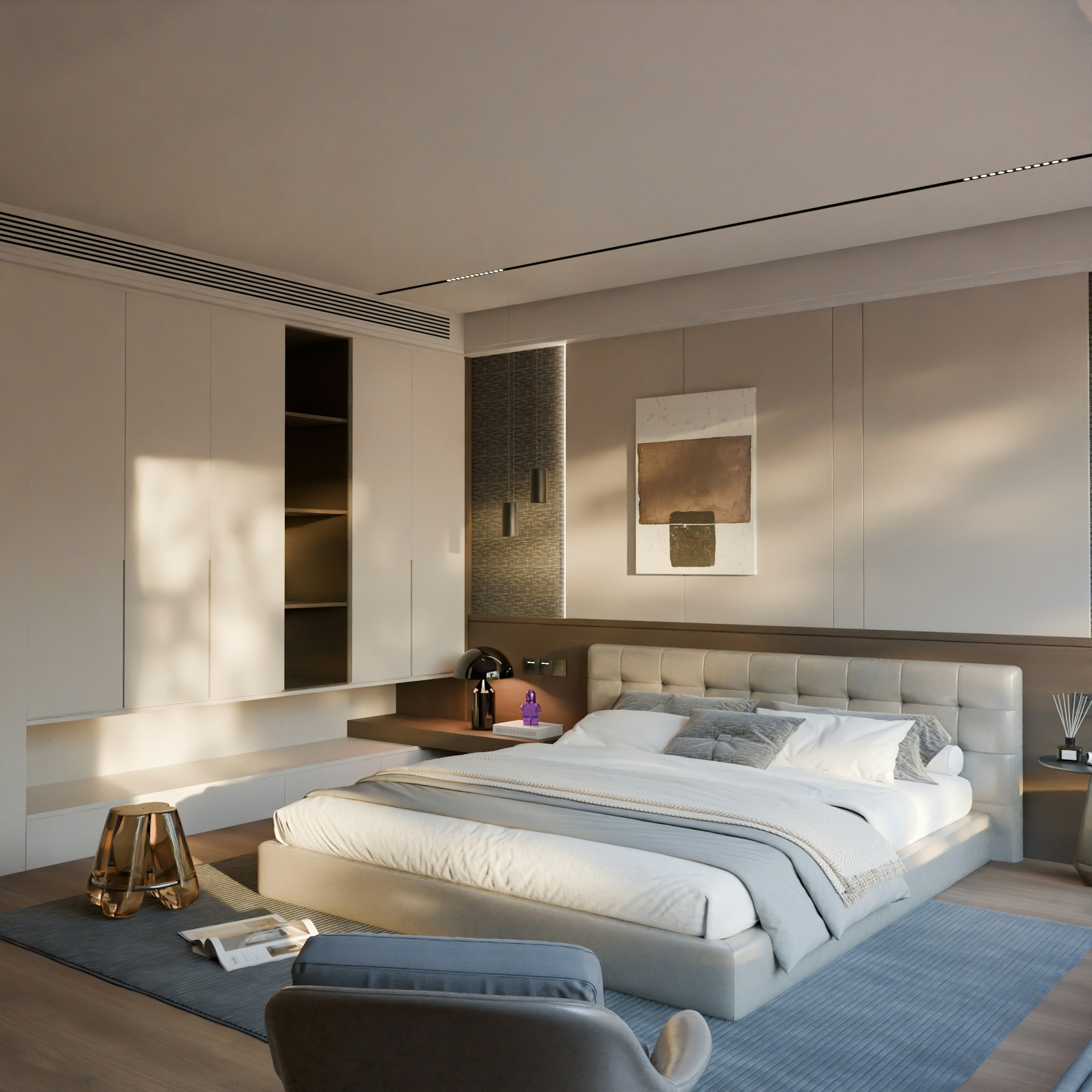
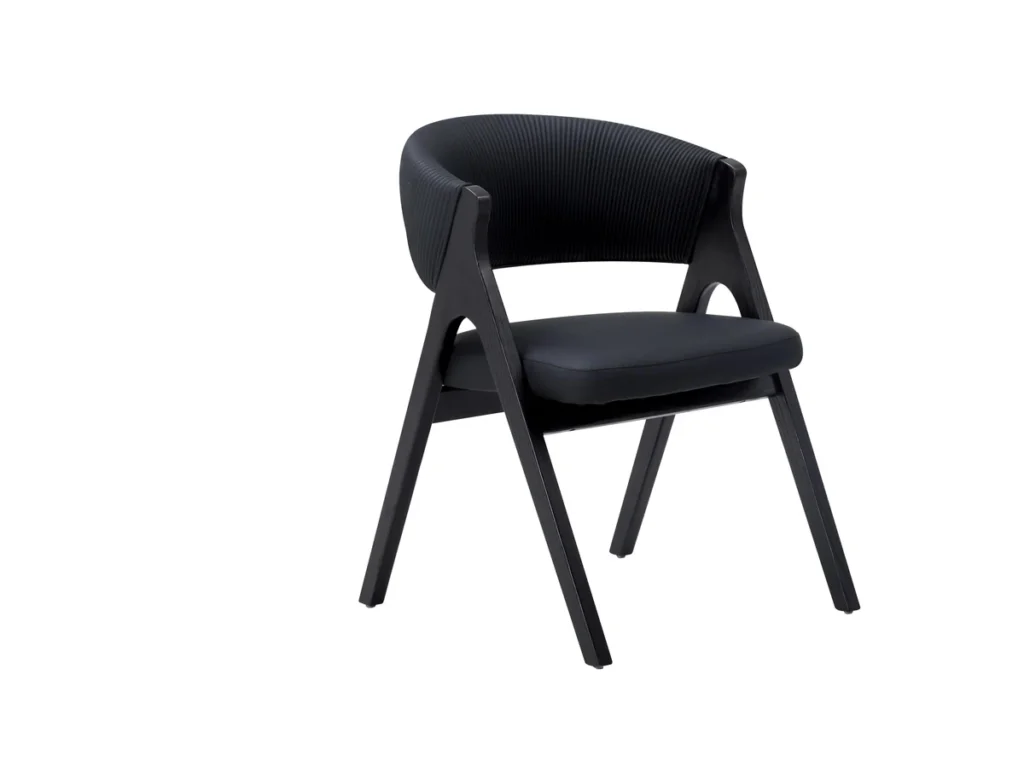
Boutique hotels often depend on a distinctive identity. Furniture may use custom shapes, statement headboards, unusual lounge chairs, coordinated accent colors, decorative nightstands, compact desks and custom banquette seating. The objective is not novelty for every item. One or two recognizable gestures can carry the room: an extended upholstered headboard, a curved chair profile or a repeated metal trim.
Small boutique rooms require special discipline. A sculptural sofa that dominates the floor area can weaken the guest experience even if it looks strong in a rendering. Select products that photograph well from the important views while leaving luggage placement, bedside use, wardrobe access and housekeeping movement practical. Decorative seams, tailored upholstery and shaped casegood fronts can create character without increasing the number of pieces.
Furniture for Resort Hotels
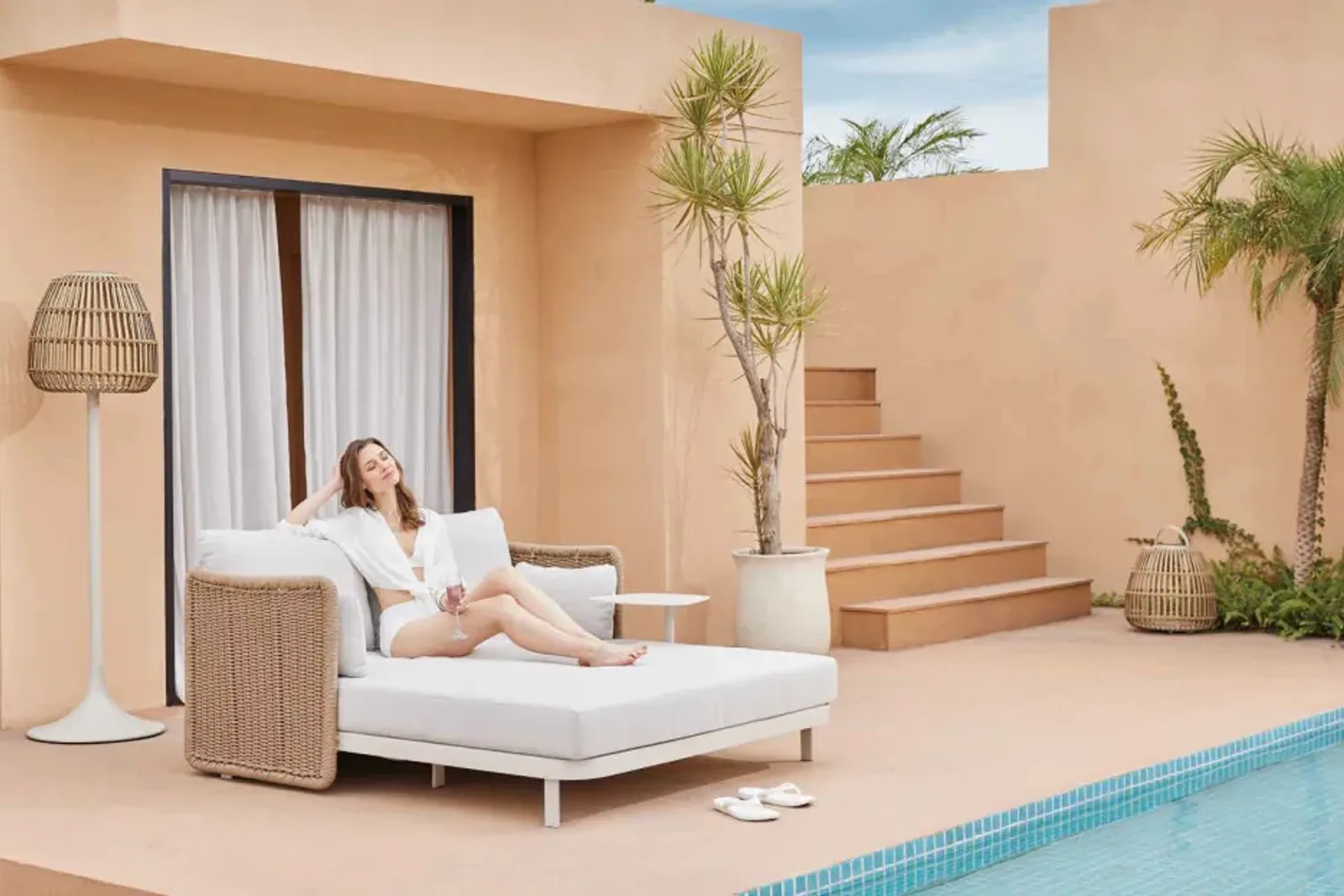
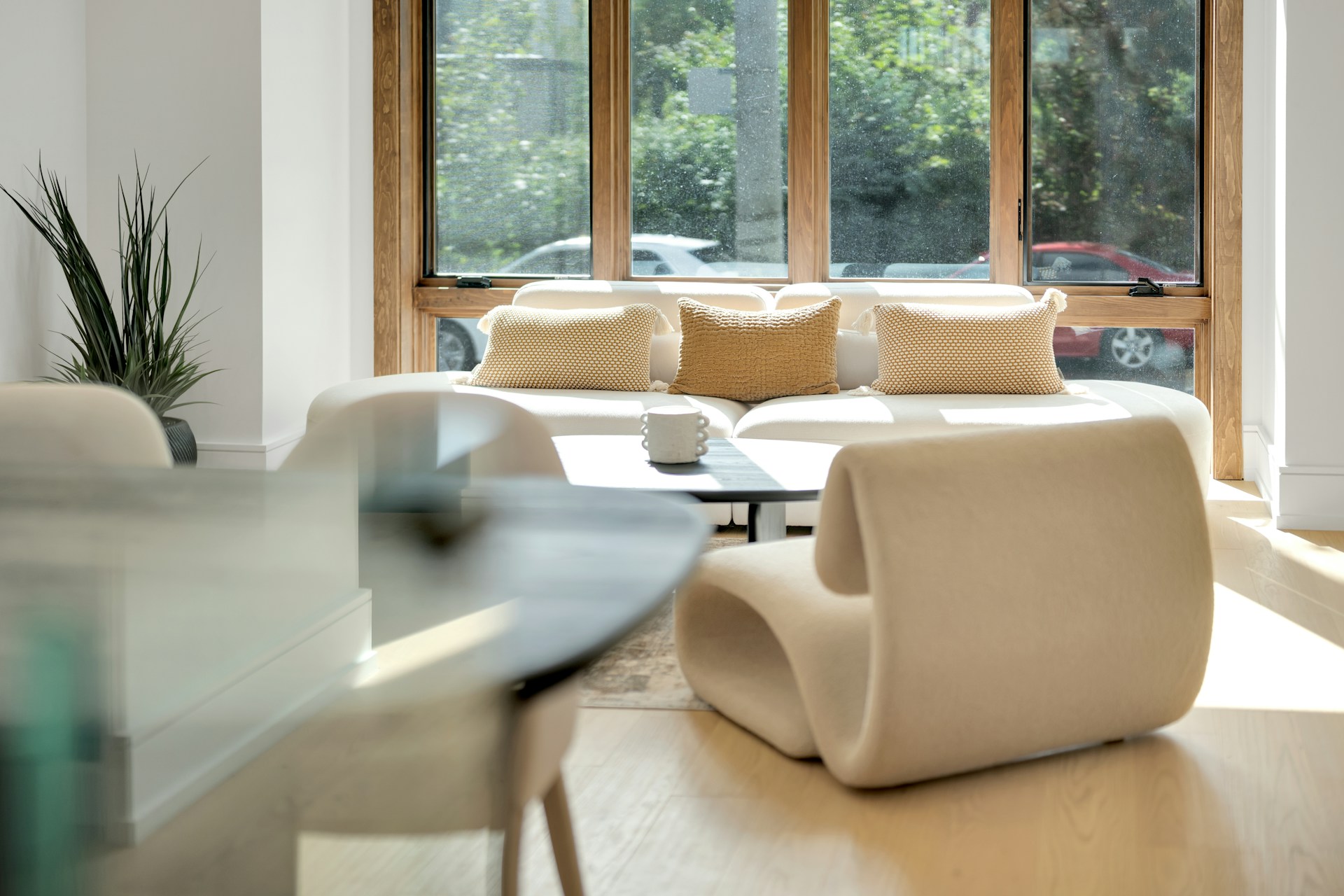
Resort furniture often supports longer periods of relaxation and a wider variety of guest groups. Guestrooms may use upholstered beds, larger headboards, lounge chairs, daybeds or sofa beds. Family rooms need flexible sleeping and more places for luggage. Balconies, terraces, poolside areas and outdoor restaurants extend the furniture program beyond the interior.
Natural colors, woven textures and relaxed forms are common resort directions, but they are not mandatory. An urban spa resort, a tropical beach property and a mountain retreat may require very different materials and visual language. Choose outdoor pieces according to real sun, humidity, rain and maintenance conditions, and review the hotel furniture scope together with the exterior areas rather than treating the room as the entire guest experience.
Furniture for Business Hotels
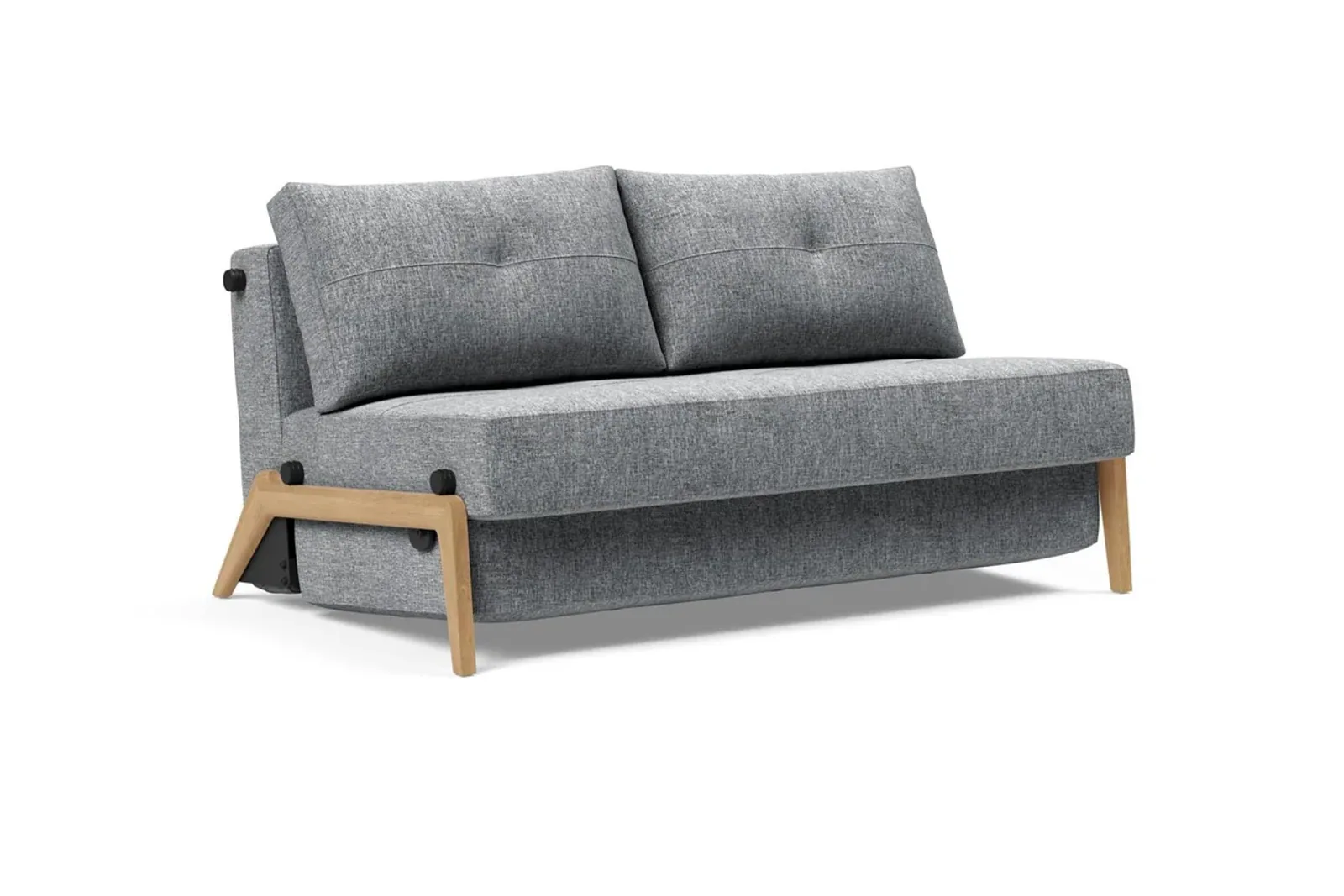
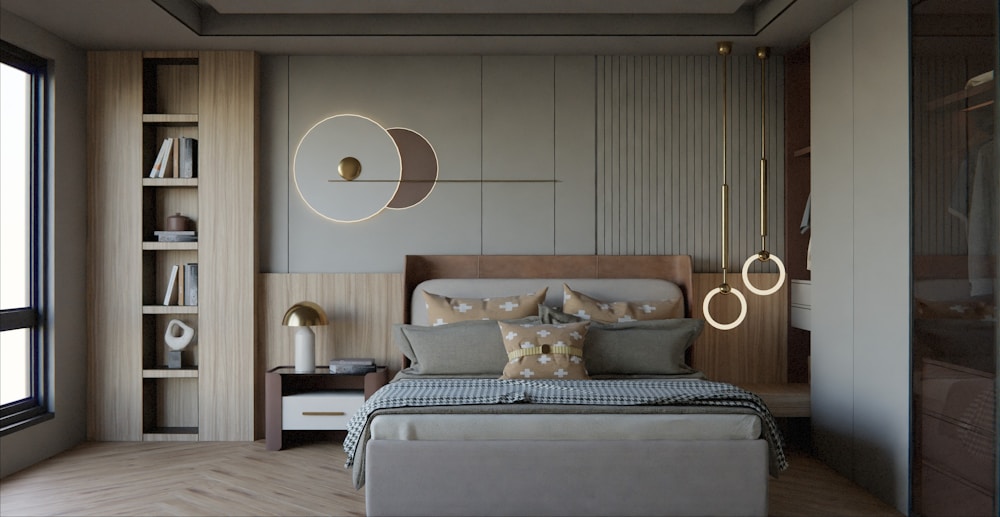
Business hotel rooms usually need an efficient combination of sleeping, working, storage, short rest and luggage placement. A practical arrangement may use a bed and headboard system, nightstands, a well-positioned desk, a comfortable desk chair, a luggage bench, functional wardrobe, TV/minibar unit and one compact lounge chair. Larger seating should earn its footprint by serving a clear use.
Consistency is particularly useful when many similar rooms must operate in the same way. Desk positions, storage access and luggage areas should repeat predictably. Furniture can still feel refined through proportion, finish and upholstery; efficiency does not require a generic appearance. Avoid copying office furniture directly into the guestroom. The work zone should feel integrated with hospitality furniture, not like a corporate cubicle.
Furniture for Luxury Hotels
Luxury hotel furniture is defined more convincingly by refined proportions, controlled finish quality, comfort and consistency than by the amount of gold, marble or decoration. Custom upholstery, veneer or decorative painted finishes, restrained metal details, statement lobby seating and carefully coordinated bedroom furniture can create a sophisticated result.
Every visible junction matters: how a leg meets the frame, how a seam turns a curve, how a handle relates to a metal table base and how upholstery sits beside wall materials. A quieter design executed consistently may feel more luxurious than several expensive-looking materials used without hierarchy. Public areas can introduce richer contrast while guestrooms retain a calmer version of the same design language.
Furniture for Serviced Apartments and Extended-Stay Hotels
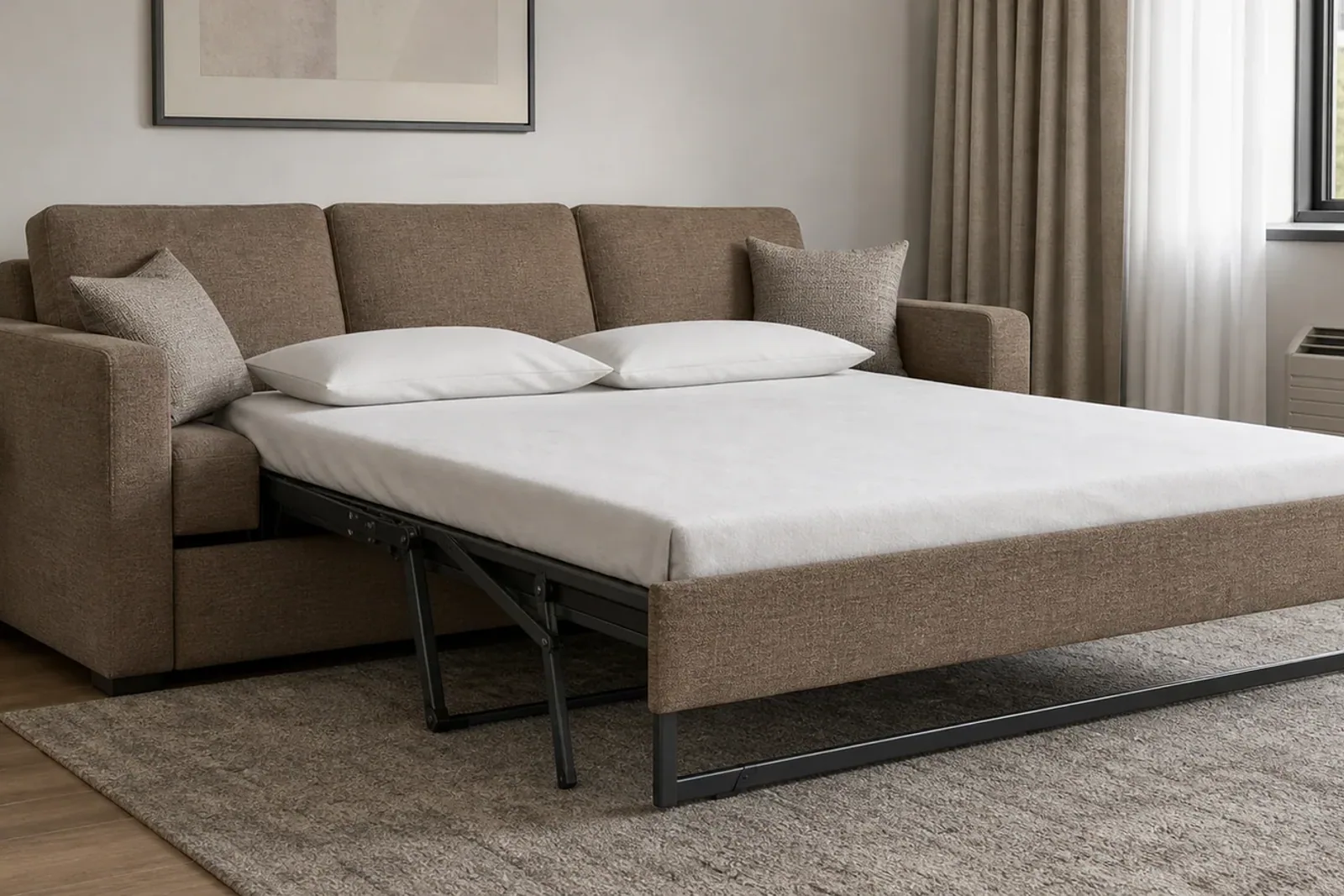
Extended-stay guests use furniture as part of daily living rather than only sleeping. Sofa beds, dining tables and chairs, coffee tables, lounge seating, larger wardrobes and multifunctional storage become more important. Some concepts may use storage beds, but the choice should respond to access, housekeeping and the room’s intended use.
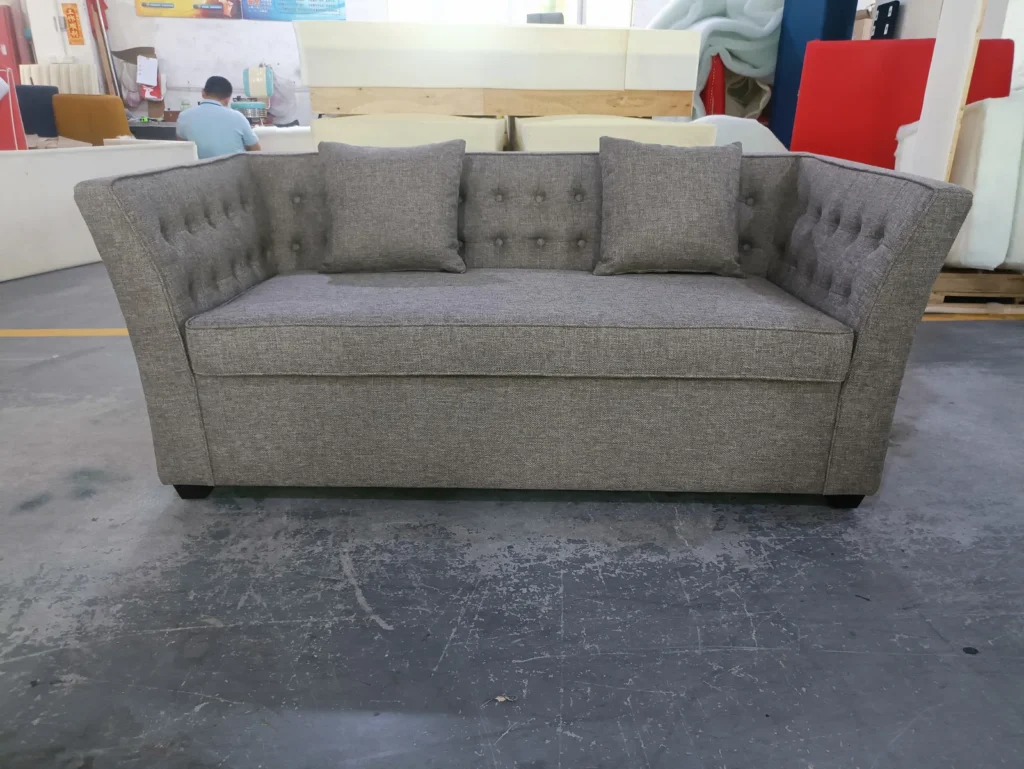
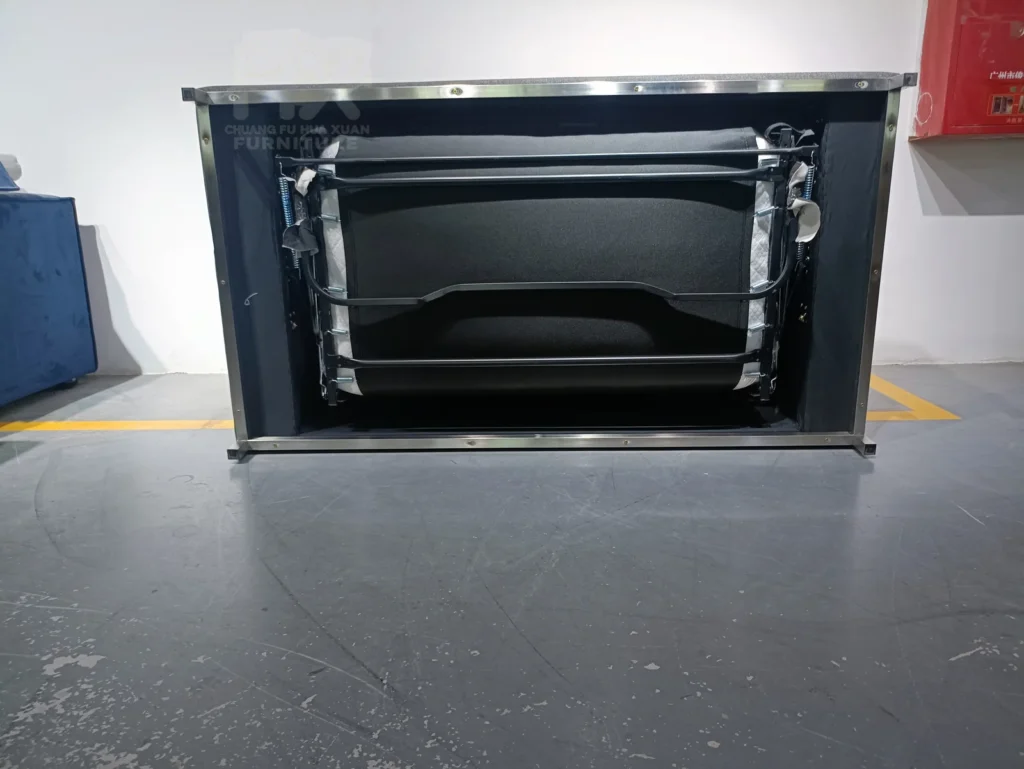
Plan the living and dining zones as usable spaces, even when they overlap. A tiny table positioned where chairs cannot pull out is not a meaningful dining solution. A sofa bed needs a confirmed open footprint and a path around it. The hotel and apartment sofa bed range can be adapted only after the open and closed room conditions are understood.
Furniture for Budget and Limited-Service Hotels
Limited-service furniture should be described as simplified and practical, not low quality. Complexity can be controlled through straightforward construction, fewer decorative details, standardized dimensions, modular furniture and surfaces selected for the expected maintenance routine. A strong overall effect can come from one consistent wood finish, a clear headboard line and a restrained upholstery palette.
Space-saving combinations are useful when they remain easy to use and replace. A desk may connect visually with the TV unit; a luggage bench can share the casegood base detail; bedside panels may integrate the composition around the bed. Reducing product variety can also make rooms calmer, but the essential functions of storage, luggage, sleep and circulation should never be removed without considering the guest.
How Room Size Changes Furniture Selection
| Room type | Useful planning direction | Risk to avoid |
|---|---|---|
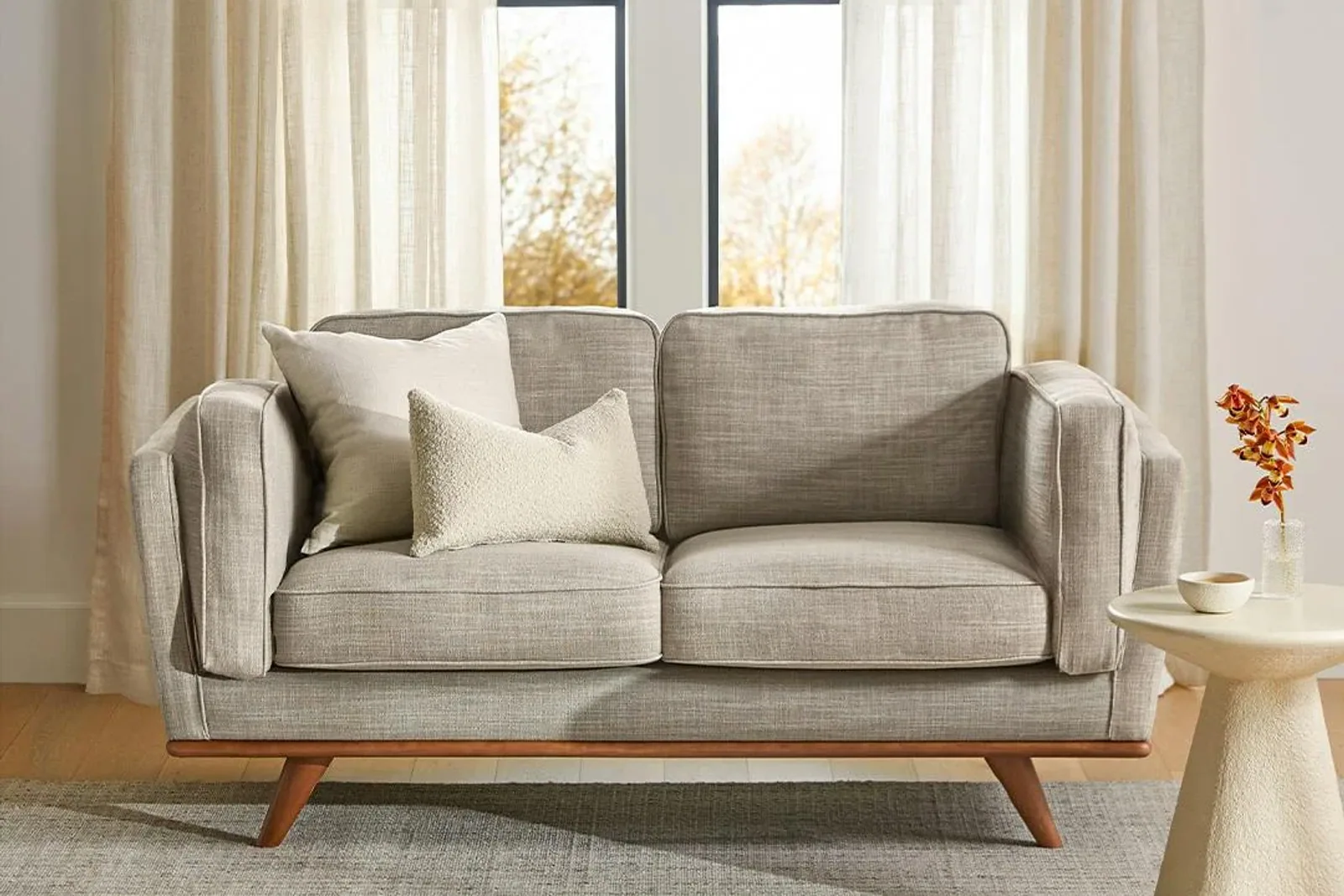
| Small room | Use a compact chair or bench; combine functions where appropriate | Oversized sofa, deep desk or doors that collide with furniture |
| Standard room | Balance bed, storage, work surface, luggage and one rest seat | Adding extra pieces merely because they appear in a typical list |
| Large room | Create defined sleep, work and lounge zones | Floating furniture without a clear relationship to lighting or circulation |
| Suite | Coordinate bedroom, living and dining furniture as related collections | Allowing the living room to become stylistically separate |
| Family room | Plan flexible sleeping, luggage, seating and accessible storage | Ignoring the open footprint of a sofa bed or additional luggage |
No fixed dimension is correct for every project, but the relationships are universal. Bedside furniture should work with the finished mattress height. Desks should not block circulation. Wardrobe doors and drawers need opening space. Sofa beds need their complete open footprint. Luggage benches need enough usable depth for the intended luggage while remaining proportionate to the room.
In a large room, do not simply enlarge every item. Use zones and a coherent hierarchy. In a small room, do not reduce every item until it becomes uncomfortable. Decide which functions deserve full comfort and which can be combined. A compact lounge chair with a reachable side table may serve better than an undersized sofa.
Send the smallest, typical and largest room plans together so related furniture can be adapted without losing the hotel’s design identity.
How to Match Furniture to the Hotel Brand Concept
| Style direction | Suggested color direction | Wood and metal direction | Furniture form characteristics |
|---|---|---|---|
| Modern | Controlled neutrals with one accent | Light or medium wood; black or brushed metal | Clean planes, gentle curves and limited decoration |
| Contemporary | Current but adaptable palette | Mixed wood and metal used consistently | Balanced soft and geometric forms |
| Minimalist | Quiet, low-contrast colors | Light wood or smooth painted finish | Simple profiles with careful proportion |
| Classic | Warm layered neutrals | Walnut or dark painted wood; restrained warm metal | Framed panels, tailored upholstery and measured curves |
| Coastal | Airy neutrals, soft blue or green accents | Light wood; pale or matte metal | Relaxed forms and textured upholstery |
| Industrial | Charcoal, brown and muted tones | Smoked wood and blackened metal | Direct construction, slimmer frames and robust surfaces |
| Art deco-inspired | Deep accents with warm metallic notes | Dark wood and champagne/bronze details | Rhythmic curves, channels and geometric trims |
| Local cultural theme | Palette derived from the approved concept | Materials chosen for the specific narrative | Selected motifs repeated with restraint rather than copied onto every item |
A style is not one product. Modern, contemporary, minimalist, luxury, classic, coastal, tropical, industrial, art deco-inspired and locally themed hotels each depend on a coordinated system of shapes, materials, colors, metal finishes, wood finishes, fabrics and decorative details. Use a small number of repeatable signals and vary their intensity by area.
For example, a boutique lobby may use the strongest accent color while guestrooms use a quieter tone from the same family. A resort restaurant may repeat the guestroom’s wood direction in a more upright dining chair. For detailed palette development, use the guide to coordinating hotel furniture colors and materials.
Common Mistakes When Selecting Furniture for a Hotel Concept
- Choosing products only for appearance without checking the activity they must support.
- Using oversized sofas, headboards or tables because they looked balanced in a larger reference room.
- Mixing too many furniture styles, wood tones or metal colors without a linking detail.
- Repeating residential furniture directly in a commercial hospitality setting without reviewing use and maintenance.
- Selecting colors independently for each product instead of approving a room palette.
- Ignoring exterior exposure when choosing balcony, terrace or poolside furniture.
- Forgetting the open footprint of sofa beds and the movement of wardrobe doors or drawers.
- Assuming every hotel in one market should use the same visual formula.
The correction is to return to the positioning brief. Identify the guest, the room activities, the strongest brand signal and the practical constraints. Then assess every piece against those shared decisions. A product that does not reinforce the concept or support a necessary function should be reconsidered, even if it is attractive in isolation.
How HUAXUAN Customizes Furniture for Different Hotel Types
HUAXUAN can adjust existing designs, modify dimensions, change upholstery and coordinate wood and metal finishes. Related product categories can repeat the same curve, trim, seam or base profile so beds, sofas, chairs, tables and casegoods belong to one concept. Furniture can also be developed from project layouts, renderings and approved reference images.
Customization is useful when it solves a real project need: fitting a compact room, strengthening a boutique identity, creating an outdoor version for a resort or expanding storage for an extended stay. It is not necessary to redesign every product. A focused group of changes often produces a more coherent and manageable collection.
FAQ
What furniture is suitable for boutique hotels?
Boutique hotels often use distinctive headboards, accent chairs, compact sofas, decorative nightstands, tailored desks and custom banquettes. The best choices create identity while preserving circulation, cleaning access and everyday guest use.
What furniture is commonly used in resort hotels?
Resort programs may include relaxed guestroom seating, sofa beds, family-room furniture, balcony sets, outdoor dining furniture, poolside daybeds and lounge seating. The exact selection should follow the resort concept and exposure conditions.
How is business hotel furniture different?
Business hotel furniture usually prioritizes efficient sleep, work, storage, luggage placement and short rest. Compact scale, predictable layouts and well-integrated desks and casegoods are often more important than large decorative seating.
Is custom furniture necessary for every hotel?
No. Existing designs can often be adapted through dimensions, upholstery and finish changes. Fully new designs are most useful when the room, brand concept or functional requirement cannot be met by a suitable existing product.
Can one manufacturer produce different hotel furniture categories?
A manufacturer with the relevant capabilities can coordinate several categories, such as upholstered beds, headboards, sofas, chairs, tables and casegoods. The customer should still define the scope and approve the details for each category.
Can furniture be adjusted for small guest rooms?
Yes. Overall dimensions, arm widths, table depths, storage configurations and seating types can be reviewed against the room plan. Adjustments should protect comfort and usability rather than simply making every item smaller.
Developing Furniture for a Boutique Hotel, Resort or Business Hotel?
Send HUAXUAN your hotel concept, room layouts and reference images. We can help adapt beds, sofas, chairs, tables and casegoods to the style and space of the project while keeping the furniture brief separate from complete interior, architectural or operational design services.
Provide the concept direction and representative room plans to discuss which furniture should be distinctive, compact, relaxed or standardized.