
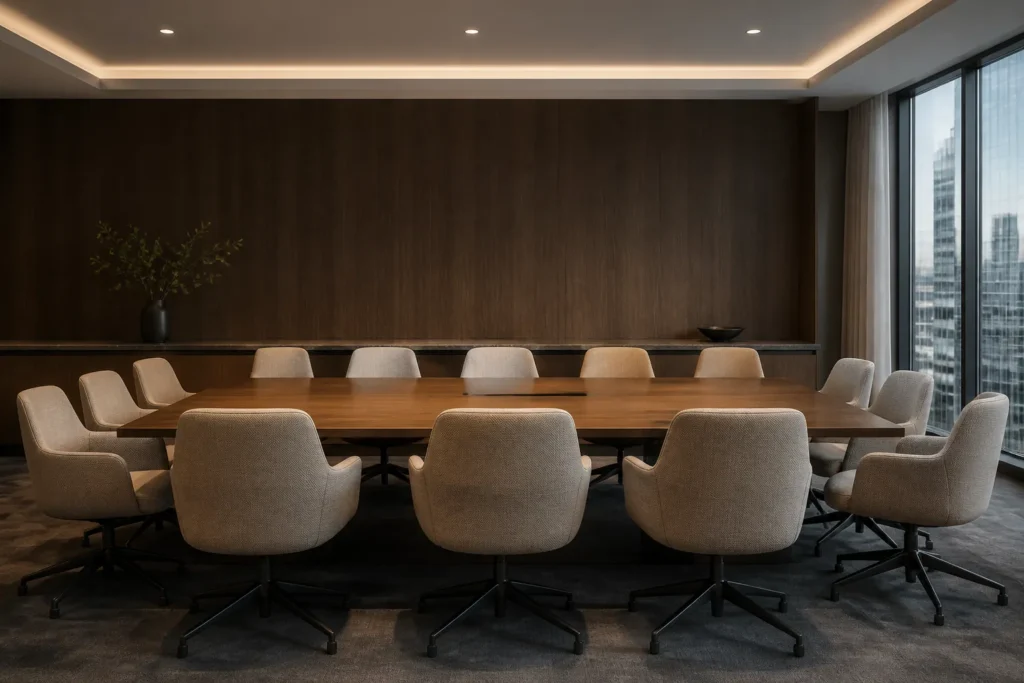
The choice between upholstered vs mesh conference chairs depends on meeting duration, comfort direction, appearance, ventilation, maintenance, room position, budget and the image the project needs to present. Upholstery often suits executive and hospitality-led rooms where material warmth and customization matter. Mesh can suit general meeting and training rooms where airflow, lighter visual weight and efficient operation are priorities. Neither construction is universally better: commercial buyers should compare the complete chair, not assume the back material proves quality.
Upholstered vs Mesh Conference Chairs at a Glance
| Factor | Upholstered chair | Mesh chair | Best fit |
|---|---|---|---|
| Comfort direction | Padded contact surfaces and a softer feel | Flexible ventilated back with varied seat constructions | Match meeting duration and approved sample |
| Appearance | Tailored, warm and material-rich | Technical, light and contemporary | Upholstered for formal rooms; mesh for functional rooms |
| Ventilation | Depends on fabric and foam build | Open back promotes airflow | Warm rooms and long sessions may favor mesh |
| Maintenance | Cleaning depends on fabric or coated surface | Dust can collect in mesh and frame openings | Follow exact material care instructions |
| Executive feel | Strong customization and visual presence | Possible with refined frame and proportion | Client-facing boardrooms often favor upholstery |
| Space efficiency | Shells and arms may be broader | Back can appear and sometimes be physically slimmer | Confirm actual overall dimensions |
| Customization | Broad fabric, stitching and finish choices | Mesh color and frame options may be more limited | Projects needing a precise palette often favor upholstery |
| Hospitality application | Coordinates with hotel materials and soft furnishings | Useful in functional meeting facilities | Choose by room concept and operation |
What Is an Upholstered Conference Chair?
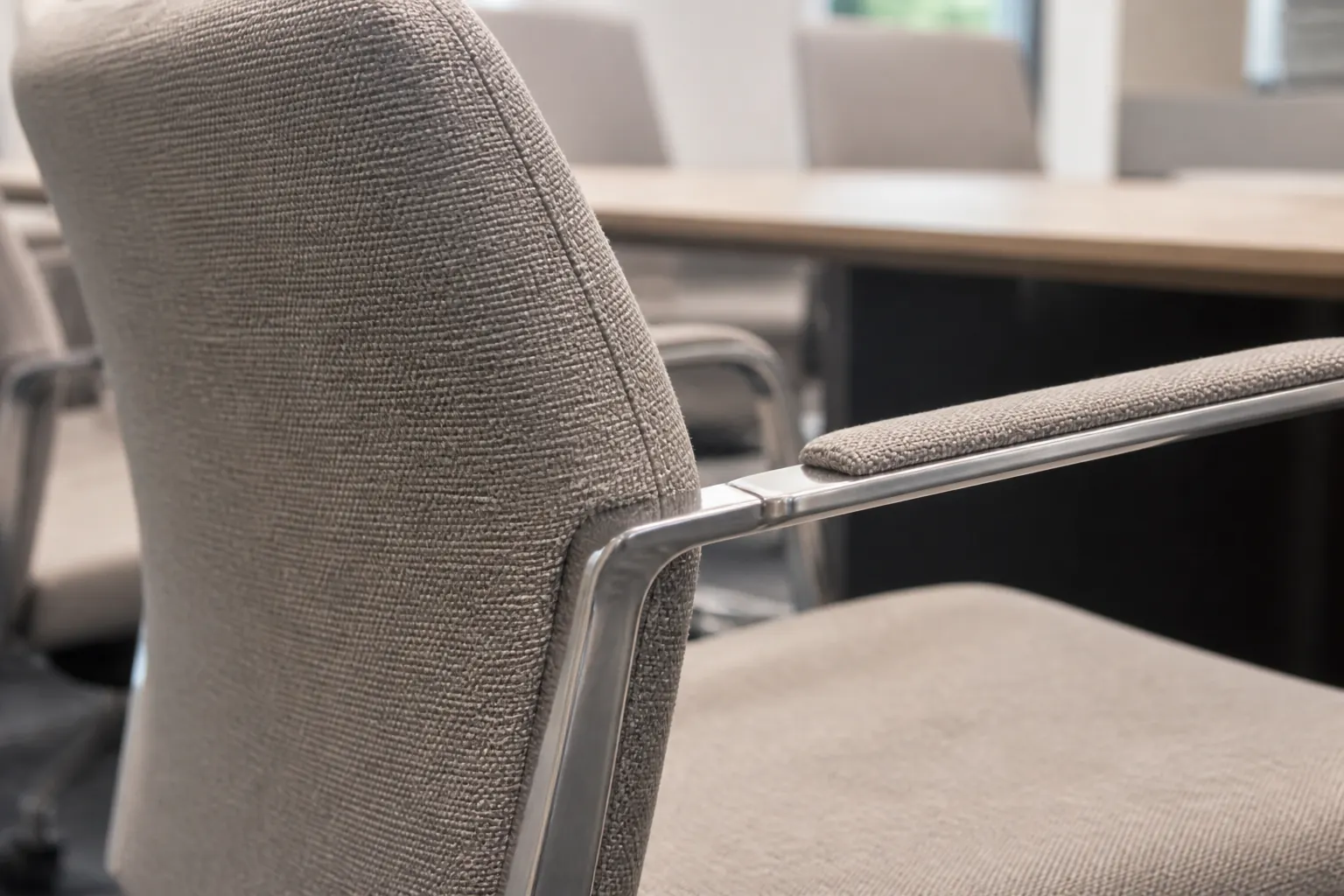
An upholstered conference chair uses padded seat surfaces and may have a padded back, fully upholstered shell or separate upholstered panels. Cover options can include woven fabric, PU or another specified coated material, and genuine leather where the brief and budget support it. Foam, support, seat shape and upholstery tension influence the finished feel.
Frames may be metal, wood or a concealed structural combination. Arms can be upholstered, timber-capped or metal, and bases may be fixed, cantilever, swivel or caster-equipped. These choices let commercial upholstered chairs coordinate with a conference table, joinery and brand palette. They also add specification fields that must be frozen through drawings, swatches and sample approval.
What Is a Mesh Conference Chair?
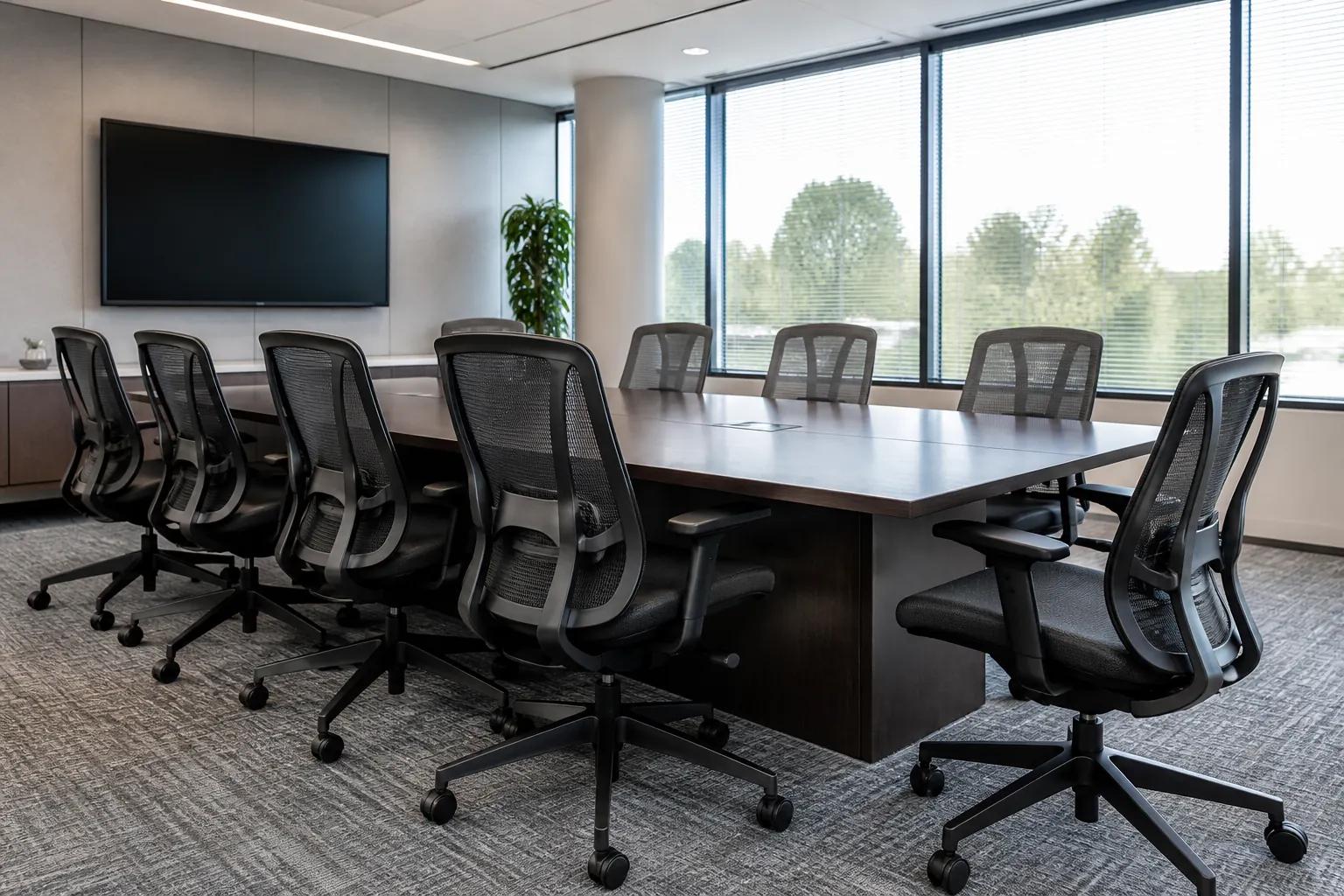
A mesh conference chair typically stretches an open textile or polymer mesh across a back frame. The seat may also be mesh, but many meeting models combine a mesh back with an upholstered foam seat. Back-frame geometry and mesh tension determine support; the word mesh alone does not describe comfort or durability.
For conference applications, mesh chairs are often simpler than all-day task chairs. They may use a fixed back, limited flex, basic swivel or a controlled tilt rather than a full set of workstation adjustments. This keeps the chair suitable for shared users and shorter meetings. Avoid comparing only feature counts: the relevant question is whether the chair supports the meeting pattern and room image.
Which Is More Comfortable for Long Meetings?
Upholstered conference chairs can provide a cushioned seat and back that many users associate with a softer, settled posture. Comfort depends on usable seat depth, finished height, foam layers, support, back angle and edge shape. Excessively soft or deep upholstery can be less suitable for writing or presentations, so more padding is not automatically better.
Mesh backs allow air movement and can flex with the user when properly engineered. They may feel cooler in long sessions, particularly in warm rooms. A mesh back combined with a supportive upholstered seat can balance ventilation and pressure distribution. However, coarse edges, weak tension or a poorly shaped frame can reduce comfort. Approve the complete sample through realistic 30-minute, 90-minute and longer meeting trials without making medical claims.
Which Looks Better in Executive Boardrooms?
Executive boardrooms often favor upholstered chairs because fabric, leather direction, stitching, arm caps and metal or wood finishes can repeat the room’s material palette. A substantial mid-back chair can create presence without blocking sightlines. In premium offices, hotel meeting rooms and client presentation spaces, upholstery can connect the table, wall panels and soft finishes into one project language.
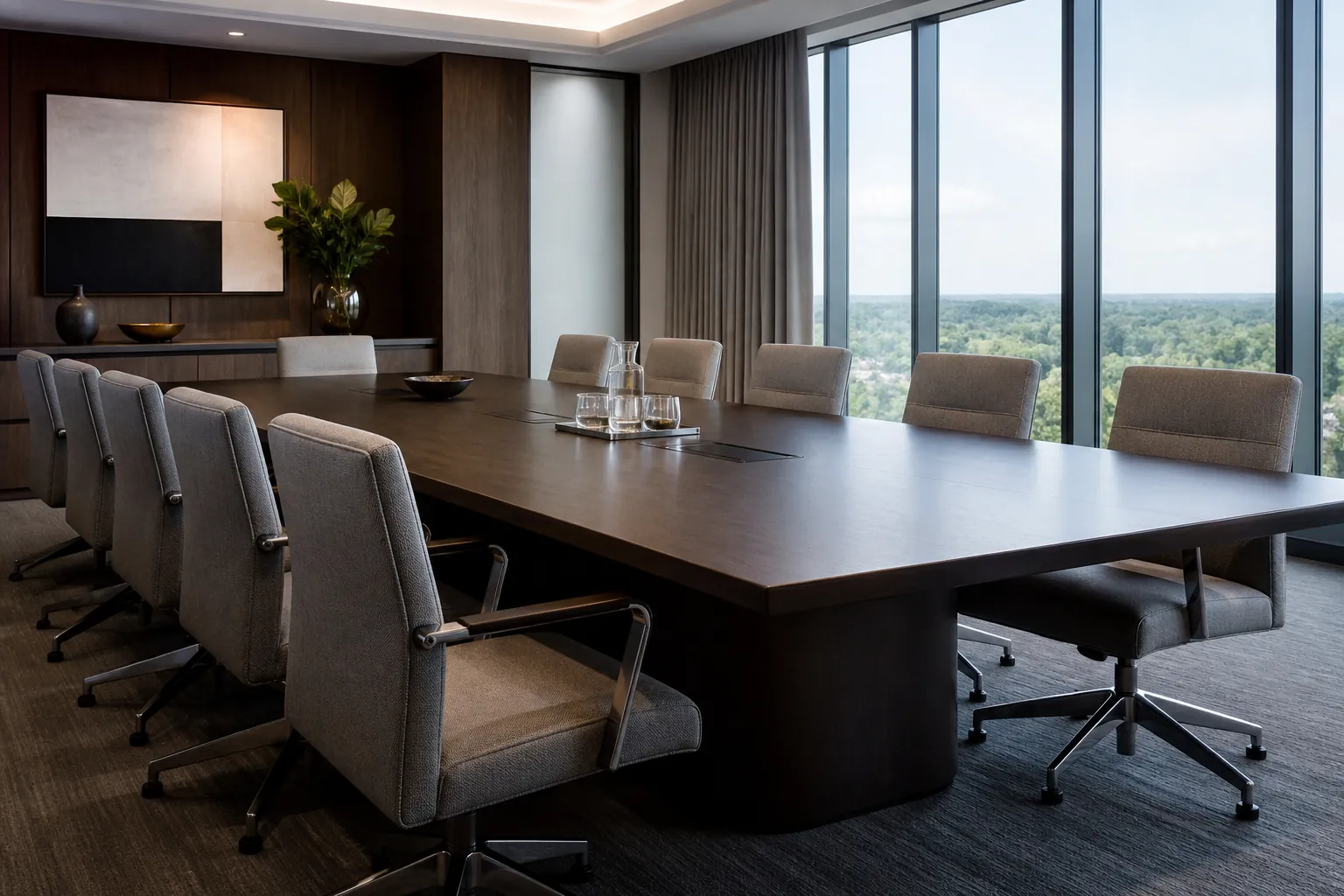
Mesh can still work in an executive room when the chair has restrained controls, refined proportions, a high-quality frame and a color that coordinates with the interior. It creates a lighter, contemporary expression and may suit technology-led offices. The decision should follow the desired atmosphere rather than a rule that every boardroom must use leather or every modern room must use mesh.
Which Is Easier to Maintain?
Maintenance varies by exact material. Woven fabric can show spills and may need extraction or approved spot cleaning, while pattern and darker colors can mask some visual soil. PU surfaces are often wipeable, but cleaners must follow the supplier’s instructions and avoid unsupported durability assumptions. Genuine leather needs an appropriate care plan and may show natural variation.
Mesh exposes more open area to airflow but can collect dust within the weave and around the back frame. Access for vacuuming or wiping matters. Damage to a stretched back may require replacing the complete back assembly, while some upholstered chairs allow a panel or cover to be replaced. Ask which parts are serviceable and keep material and component codes for later orders.
Durability and Commercial Use
Construction quality matters more than surface category alone. Review the frame, seat support, foam recovery, mesh attachment, arm connections, swivel mechanism, casters or glides and base. High-use rooms expose chairs to repeated pull-back, rotation and impact with the table. A strong mesh back on a weak base is not a durable chair; neither is premium fabric over an underspecified frame.
Request product-specific evidence only where the project requires it, and do not transfer test claims from another model. Inspect the representative sample for frame movement, mesh tension, upholstery tension, seam alignment, caster behavior and arm-to-table contact. Record the approved configuration because changing the base or arm can change both performance and cost.
Acoustics and Meeting-Room Atmosphere
Upholstery creates visual softness and may reduce the amount of hard-looking surface in a room. That does not make an upholstered chair a certified acoustic product or prove a measurable absorption value. Mesh looks more open and technical, which can make a dense room feel visually lighter. Coordinate either option with the room’s actual acoustic design rather than asking chairs to solve sound control alone.
Customization Options
Upholstered chairs generally provide the broader project palette: fabric supplier and code, color, pattern direction, piping, stitching, foam direction, arm treatment, wood tone, metal finish and base option. That flexibility supports hospitality and branded office projects but increases approval responsibility. Physical swatches and a complete sample are essential.
Mesh models can offer mesh colors, upholstered seat fabrics, frame colors, arm styles and base options. Custom mesh itself may be more constrained by the chair’s engineered back frame and sourcing. HUAXUAN can review reference images, finish direction and quantity for custom office furniture, subject to the selected construction and sample process.
Upholstered vs Mesh by Meeting Room Type
| Meeting-room application | Likely direction | Why | Specification check |
|---|---|---|---|
| Executive boardroom | Often upholstered | Material coordination and formal presence | Arm clearance, back height and sample comfort |
| Standard conference room | Either | Balance appearance, duration and maintenance | Complete chair comparison, not back material alone |
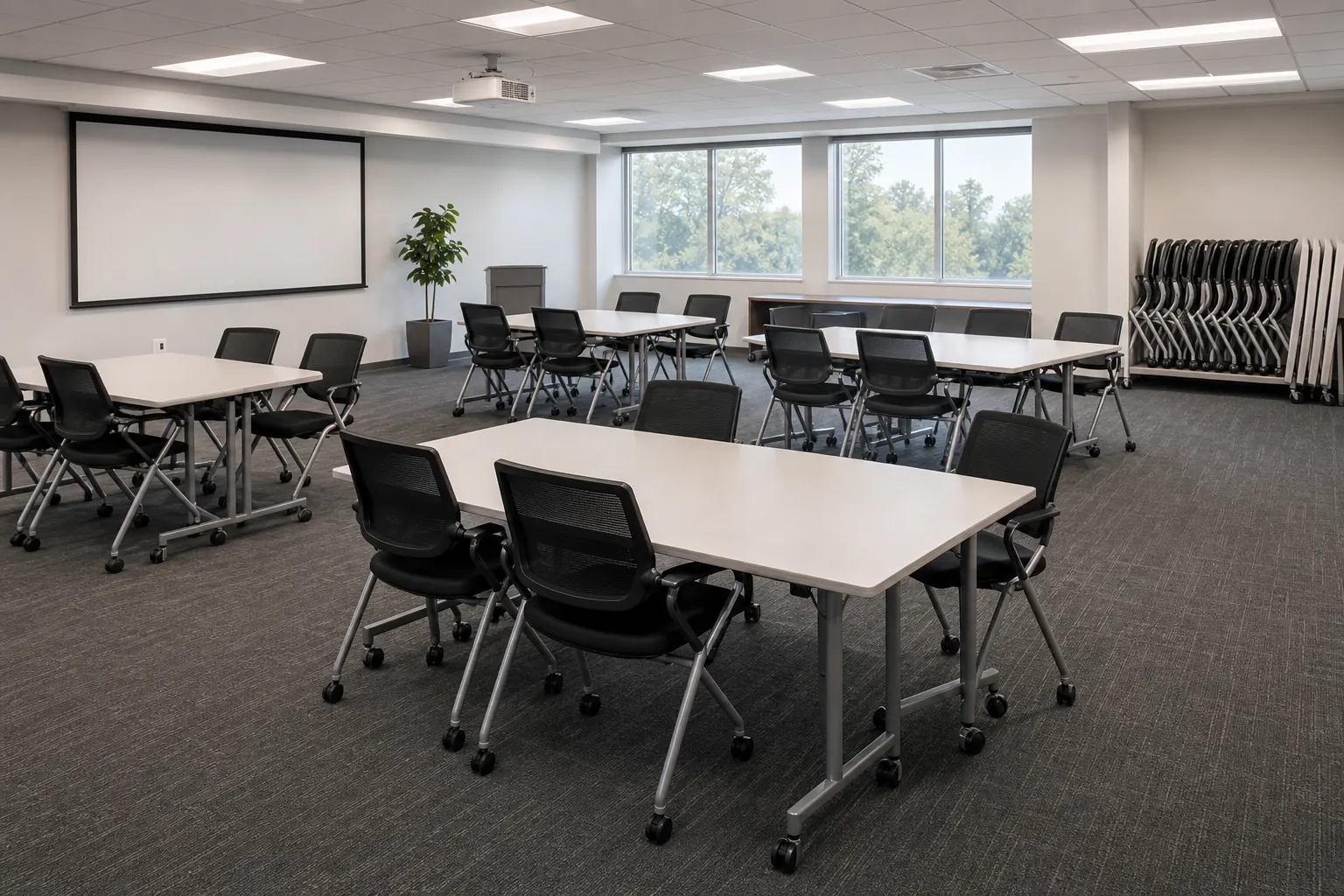
| Training room | Often mesh or lightweight hybrid | Ventilation, movement and repeated reset | Weight, nesting/stacking and caster behavior |
| Hotel meeting room | Often upholstered | Hospitality palette and client-facing atmosphere | Cleaning, finish coordination and destination requirements |
| Client presentation room | Upholstered or refined mesh | Brand image and sightlines both matter | View from entry, screen and camera positions |
| High-turnover multipurpose room | Mesh, hybrid or compact upholstery | Operational flexibility and easy handling | Storage, replacement parts and floor interface |
Cost Considerations
Surface material is only one price driver. Frame complexity, foam, mesh system, armrests, swivel or tilt mechanism, casters, wood or metal finishes, upholstery grade, order quantity, packaging, samples and required project evidence all affect cost. A simple upholstered fixed chair may cost less than a highly engineered mesh chair; a custom leather executive chair may cost more than either.
Compare quotations against one specification. If one supplier quotes a fixed base and another includes swivel, adjustable arms or a branded textile, the unit prices are not directly comparable. Include replacement parts, upholstery yield, approval samples and packing in the procurement discussion without publishing unsupported price promises.
When Upholstered Conference Chairs Are the Better Choice
Choose upholstery when the project needs a tailored material palette, client-facing warmth, a softer contact feel or coordinated fabric, leather, wood and metal details. It is often appropriate for executive boardrooms, premium offices, hotel meeting facilities and formal presentation rooms. Confirm that the larger shell or arms fit the table and room using the conference chair dimensions and spacing guide.
When Mesh Conference Chairs Are the Better Choice
Choose mesh when ventilation, lighter visual weight, shared-user simplicity or a functional training-room expression is more important. Mesh can work well for longer sessions in warm rooms and for general meeting spaces that should coordinate with task seating without duplicating every adjustment. Confirm mesh tension, frame edges, serviceability and the exact seat construction.
What Should Commercial Buyers Specify Before Ordering?
| Specification field | Upholstered option | Mesh option | What to send |
|---|---|---|---|
| Room and use | Boardroom, hotel meeting or general conference | General meeting, training or multipurpose | Room code, meeting duration and user pattern |
| Dimensions | Overall shell, arms, seat and base | Back frame, seat, arms and base | Chair drawing plus table and room plan |
| Surface | Fabric, PU, leather direction and color | Mesh code/color plus seat upholstery | Physical swatch or controlled reference |
| Construction | Foam, support, seams and frame | Mesh attachment, tension direction and frame | Declared offered construction |
| Base | Fixed, cantilever, swivel or caster | Fixed, swivel, caster or nesting format | Floor type and movement requirement |
| Evidence | Any applicable destination requirement | Any applicable destination requirement | Exact standard or client brief where required |
| Approval | Drawing, swatches and complete sample | Drawing, material reference and complete sample | Decision owner and revision |
| Order | Quantity, spares, packing and schedule | Quantity, spares, parts and schedule | BOQ, destination and delivery phases |
Also state project location, table dimensions, desired arm clearance, finish coordination and whether replacement consistency matters. Use the broader conference-chair selection guide if room type and mobility are still undecided, and the contract seating specification guide to control materials and samples.
How to Compare Representative Samples
Place both samples at the proposed table and use the same evaluation sheet. Record seat height, usable depth, arm clearance, back support direction, temperature impression, movement, noise, floor behavior and the time needed to clean reachable surfaces. Have several project representatives sit for realistic meeting periods rather than making a decision after a brief showroom test. The goal is not to find one chair that every person rates identically; it is to identify consistent strengths, limitations and unresolved requirements.
Photograph front, rear, side and underside views, then connect comments to the exact sample code and revision. If the upholstered option uses a substitute fabric or the mesh option uses a different base from the quotation, the comparison is incomplete. Close material, mechanism and finish differences before approval so the bulk order matches what decision-makers evaluated.
Movement, Noise and Shared-Room Operation
Conference chairs are repeatedly pulled, rotated and returned to the table. Casters, glides, loose arms and back-frame movement can create noise even when the seat surface is quiet. Upholstery may visually soften the room, but it does not compensate for a rattling base. Mesh backs can flex silently or produce movement noise depending on the attachment and frame. Test both chairs on the actual floor type.
Shared rooms benefit from intuitive controls. A simple swivel or limited tilt may reset more predictably than a task chair with many user-specific settings. If height adjustment is necessary, confirm that users can return chairs to a consistent table relationship. Training rooms also need staff to move, nest or store chairs without damaging walls, mesh, fabric or table edges.
Replacement, Reordering and Material Continuity
A commercial decision extends beyond the first installation. Ask which upholstery, mesh back, arms, casters, glides and gas lifts can be replaced and how parts are identified. Keep supplier codes, approved swatches and a signed sample record. Fabric dye lots and mesh colors can vary, and discontinued components can make a later replacement visibly different.
Where many rooms share one chair, a small approved spare quantity and clear storage labels may reduce disruption. Where executive rooms use a special upholstered finish, retaining extra material may help future repairs, subject to storage conditions and supplier guidance. Do not assume a product name alone will reproduce the original chair after several revisions.
FAQ
Are upholstered conference chairs more comfortable than mesh?
They can feel softer, while mesh can feel cooler. Overall geometry, seat construction, support and the approved sample matter more than the surface label alone.
Are mesh chairs suitable for executive boardrooms?
Yes, when their frame, proportions and finish fit the room concept. Upholstery remains common where a tailored material palette and formal presence are priorities.
Which chair is easier to clean?
It depends on the exact fabric, coated surface or mesh and the access around the frame. Follow supplier care instructions and review serviceable parts.
Do mesh conference chairs take less space?
Some have slimmer backs, but arms and bases can be as wide as upholstered models. Compare actual overall dimensions and movement envelopes.
Can conference chair upholstery be customized?
Often yes. Fabric, color, stitching, arm details and finishes may be discussed for project quantities, subject to construction, material availability and sample approval.
Conclusion
The upholstered-versus-mesh decision is a commercial tradeoff, not a universal ranking. Upholstery offers broad customization and a formal, material-rich direction; mesh offers ventilation and a lighter functional expression. Match the complete chair to meeting duration, room image, maintenance, dimensions and budget, then freeze the approved sample and specification before ordering.