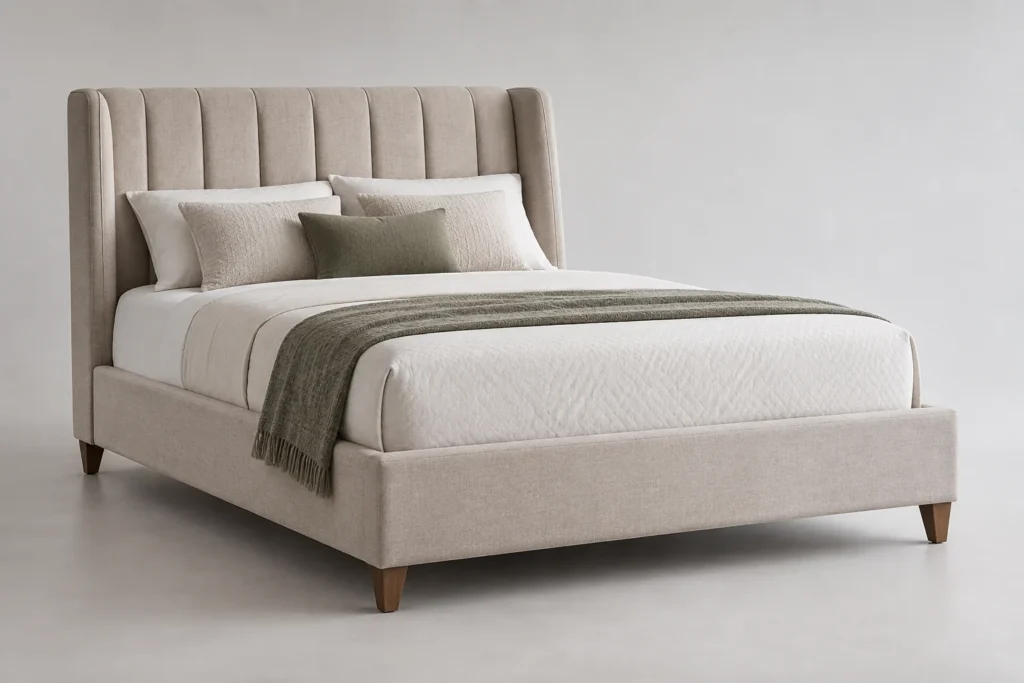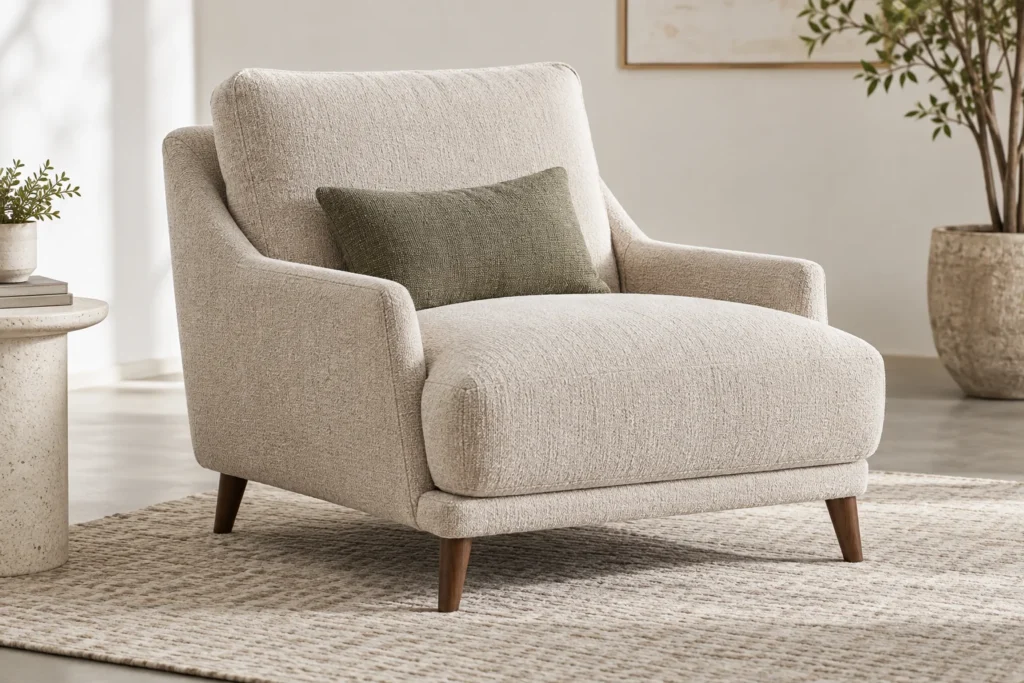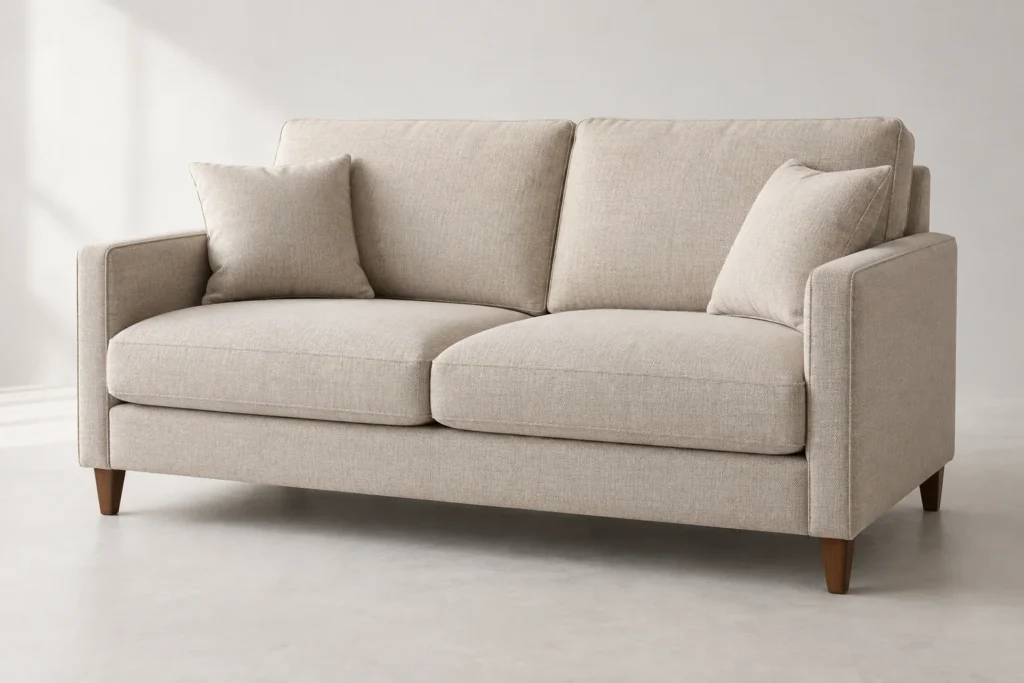

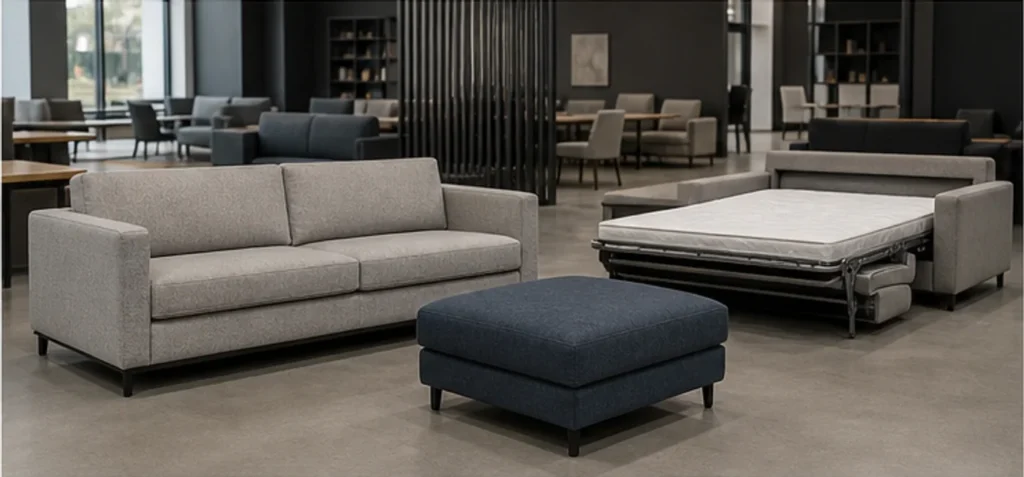
A contract upholstered furniture specification turns design intent into information that can be quoted, sampled, produced and checked. A reference image alone cannot define dimensions, structure, sitting comfort, upholstery, quantity or project-zone requirements accurately. Hotel and office buyers need a controlled record that connects the BOQ and RFQ to drawings, physical swatches, sample approval, bulk production, packing and final inspection. This guide focuses on commercial sofas, lounge chairs, reception chairs, benches, ottomans and sofa beds. It shows procurement teams how to organize product codes, dimensions, support construction, comfort direction, material references, revisions and approvals for consistent cross-team decision making, without inventing universal performance values. Final requirements must follow the intended use, exact product construction, destination market and the buyer’s approved project documents.
Send the BOQ, product references and known specifications to identify missing quotation and sample information.
What Is Contract Upholstered Furniture?
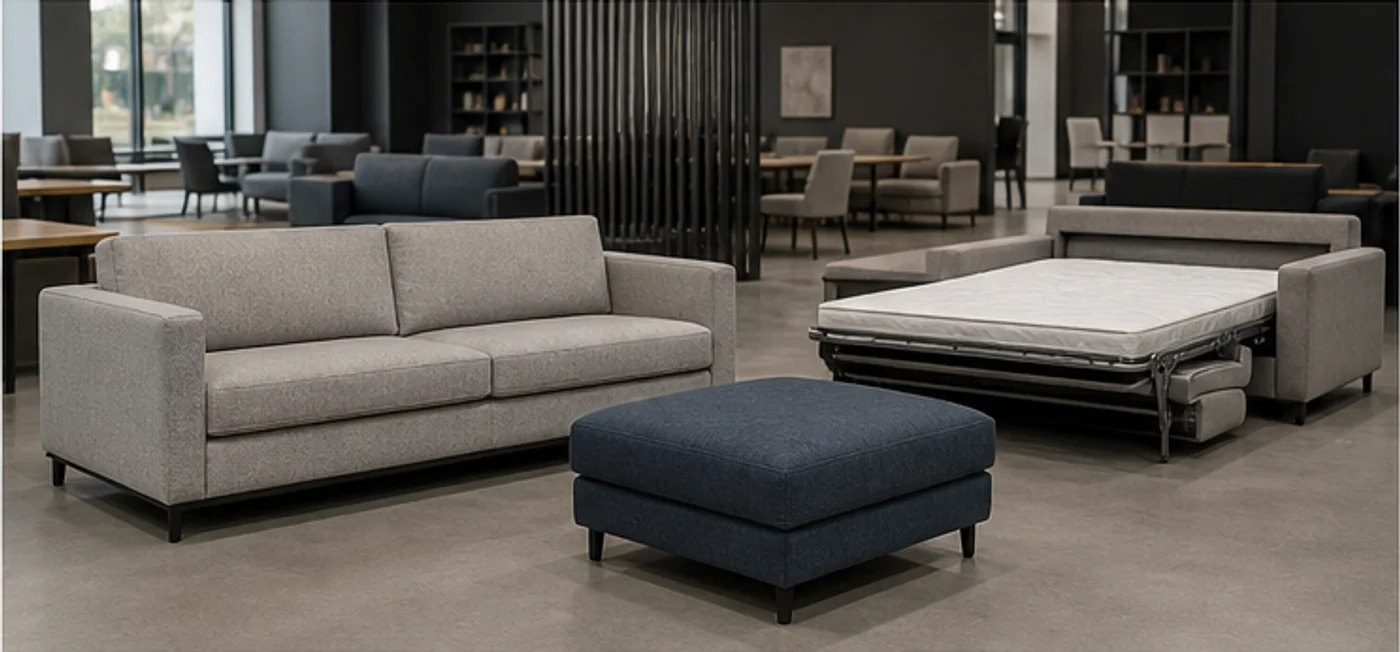
Contract upholstered furniture is seating specified for a commercial project and controlled through project documents. It may include hotel lobby sofas, hotel guestroom chairs, office reception sofas, office lounge chairs, breakout seating, waiting-area chairs, commercial sofa beds, benches and ottomans. The word contract describes the procurement context; it does not prove a particular strength, test result or certification. Evidence must relate to the exact offered product and the project’s destination requirements.
Residential buying often allows a customer to choose one finished model by appearance and general dimensions. Contract purchasing must coordinate many units, zones, material codes, delivery phases and approval parties. A change to seat depth, fabric backing or leg finish can affect a whole schedule. Buyers comparing product families can review custom commercial sofa references, upholstered chairs for project use and hotel and commercial sofa beds, while keeping this document focused on specification control.
Start with Product Use and Project Zone
State where each item goes and what people do there. A hotel lobby sofa supports public-area turnover and varied groups; a guestroom chair works within a smaller room and access route; office reception seating prioritizes clear capacity and rising; a breakout sofa may support informal meetings; a commercial sofa bed needs both sitting and opening information. The zone gives meaning to every later field.
| Project zone | Furniture type | Main specification priorities |
|---|---|---|
| Hotel lobby | Sofa, loveseat or lounge chair | Group size, public appearance, cleaning and replacement |
| Hotel guestroom | Lounge chair or compact sofa | Room clearance, doorway access and fabric direction |
| Office reception | Sofa and reception chair | Upright posture, capacity and circulation |
| Office breakout | Modular sofa, chair and ottoman | Configuration, connectors and reordering |
| Waiting area | Chair, bench or compact sofa | Easy rising, visible capacity and maintenance |
| Informal meeting | Facing sofas or lounge chairs | Table reach, posture and power |
| Serviced apartment | Sofa or commercial sofa bed | Dual use, open size and operating instructions |
| Commercial guest accommodation | Sofa bed and occasional chair | Sleep surface, mechanism operation and packing |
Dimensions and Layout Information
Record overall width, depth and height, usable seat width and depth, finished seat height, back height, arm dimensions and leg height. For sofa beds add closed and open dimensions plus sleeping-surface dimensions. Place these values on the plan with table positions, operating envelopes and room clearance. Confirm door, corridor, stair and lift access before production, not when a complete sofa reaches the site.
Use the seat-depth measurement guide to separate outside depth from usable depth, and the sofa access measurement guide for the delivery route. Sofa-bed teams should record both modes using the sofa bed dimensions guide. For room-specific context, the hotel room sofa guide explains how a compact seating choice relates to the guestroom plan.
Dimensions must identify the measurement condition. State whether seat height is measured to the cushion crown and whether the value is loaded or unloaded. Show detachable legs or backs if removal affects access. Identify left- and right-hand modules from a defined viewpoint. A dimensioned drawing is more reliable than adjectives such as compact, deep or standard.
Frame and Support Specification
Request declared frame materials, reinforced areas, seat and back support, leg material and attachment, connectors, modular connections and detachable parts. The purpose is traceability, not an unsupported claim that one material is always stronger. Different shapes and spans need different reinforcement. Ask the supplier to identify what will be used in the quoted construction and what is visible or serviceable after upholstery.
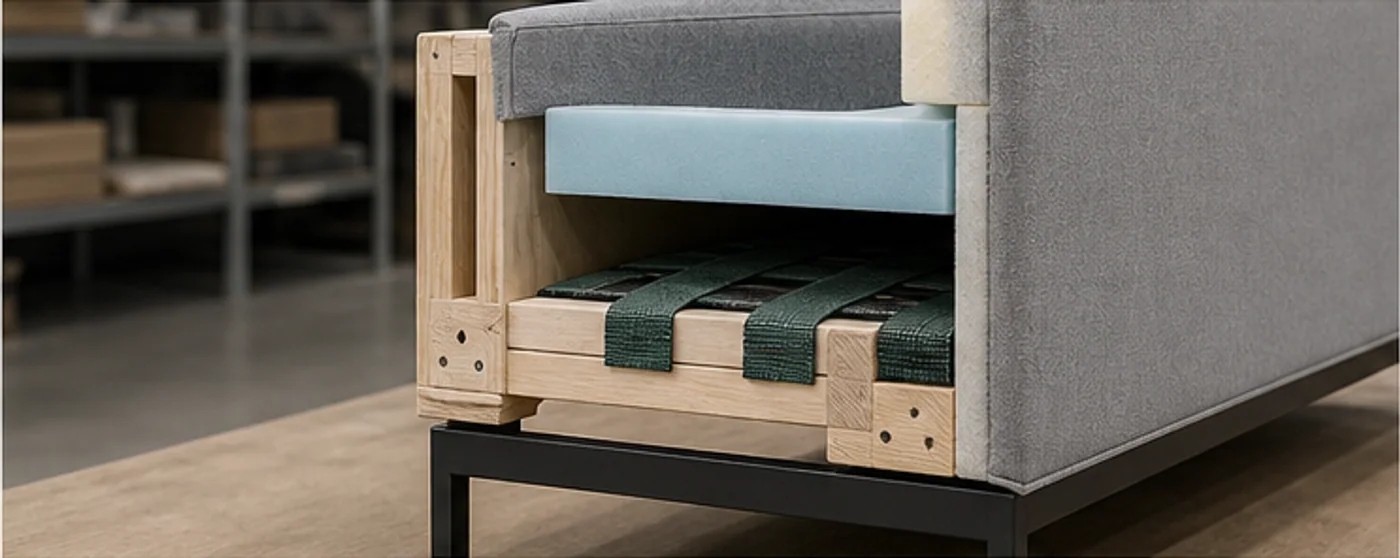
For a deeper construction discussion, link the approved item to the sofa frame and foam guide. Do not copy an unrelated wood grade, load figure or test result into the schedule. If the buyer requires a test, define the applicable method and acceptance criteria for the exact product and destination, then retain the resulting evidence with the approval record.
Foam, Cushion and Sitting Comfort
Specify the foam construction or layer direction, cushion fill, seat support, recovery expectation, back angle and intended sitting duration. Density and firmness are not the same property, and neither one number nor a hand press predicts the complete seat. Webbing or spring support, layer thickness, wraps, cushion size, upholstery tension and frame geometry all influence comfort. Approve the assembled sample in the intended posture.
Use the cushion filling guide for layer and fill terminology. Office buyers can use the office lounge sofa ergonomics guide to relate posture, usable depth and table height. The specification should describe the desired direction—upright, balanced or relaxed—and record the approved sample rather than promise one comfort level for every body.
Upholstery Specification
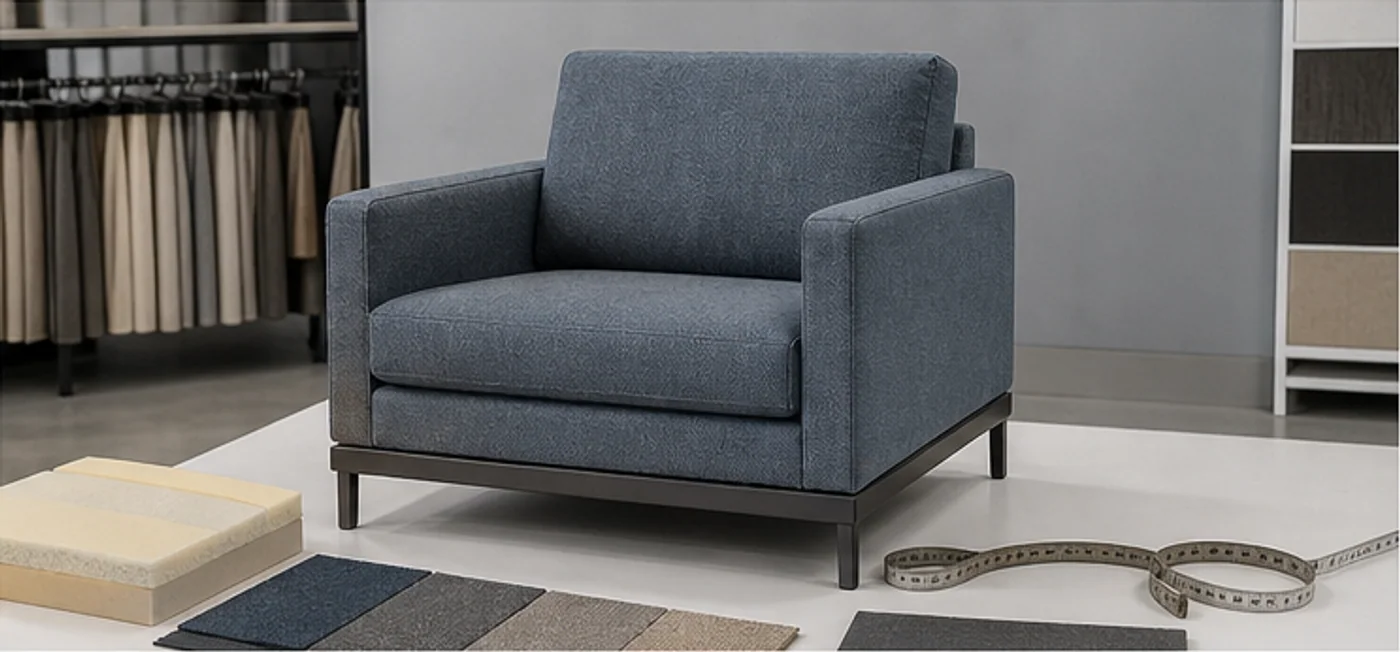
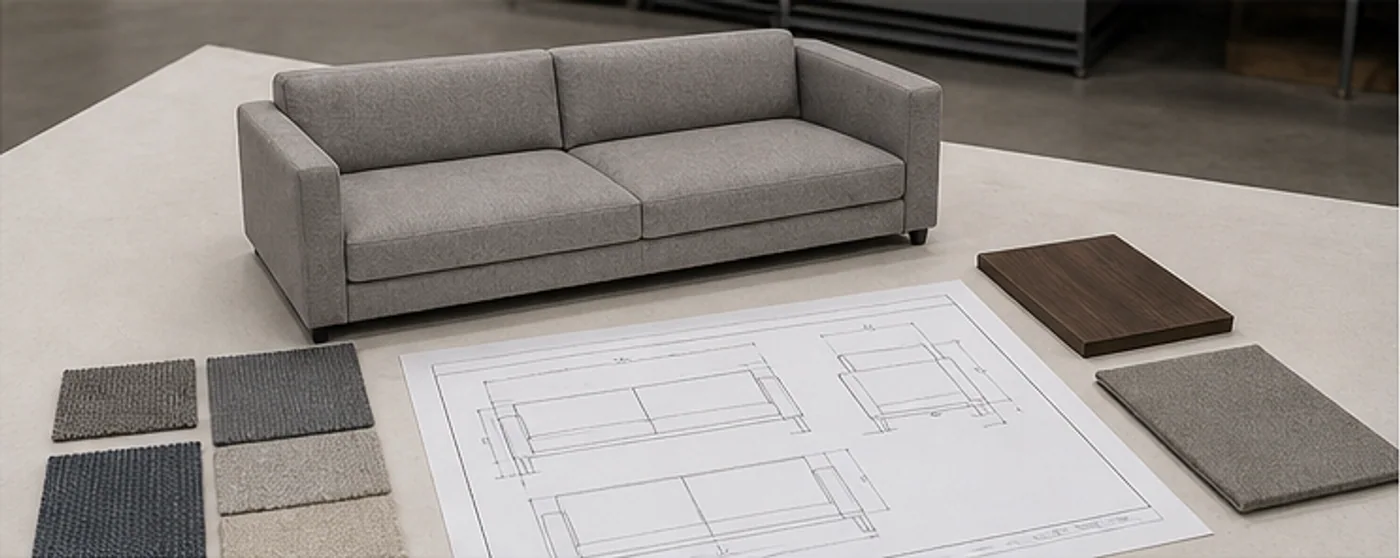
Name the material supplier and code, color code, declared composition, backing where relevant, cleaning method, pattern or pile direction and physical swatch reference. Add batch consistency, piping, thread, stitching and removable-cover requirements. If a customer-owned material is used, clarify who confirms suitability, required quantity, cutting direction and handling of remaining material. Screen images can communicate direction but should not be the final color approval.
The project can use the materials and finishes reference to organize upholstery and finish choices, while the stitching and upholstery guide supports visible detail review. Do not invent abrasion, flammability or other test values. The buyer should state which evidence is required for the target market and exact application.
Additional Sofa Bed Specifications
A sofa bed needs all normal sofa fields plus mechanism type, closed size, open size, sleeping size, mattress or sleep-surface construction, cushion handling, support legs, opening sequence, intended use frequency, sample operation and packing requirements. Show the complete movement envelope and any furniture that must move before opening. Record whether loose cushions are stored, removed or repositioned.
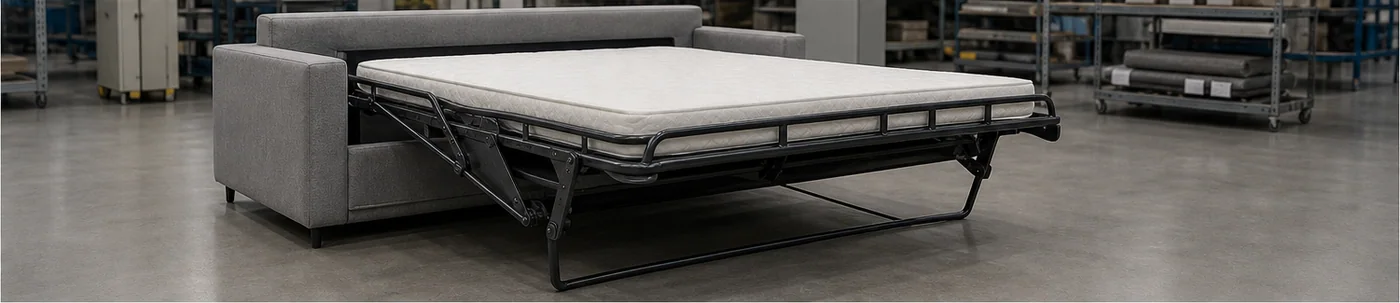
Use the general sofa bed mechanism guide and the more specific pull-out mechanism guide when selecting an operating direction. The sofa bed load-planning guide explains why capacity claims require product-specific evidence, and the sofa bed inspection checklist covers operation and checks. These links support one subsection; they do not turn this article into a sofa-bed buying guide.
Visual Details and Workmanship
Define stitching type, piping size and location, tufting or channel details, cushion gaps, upholstery tension, pattern matching, leg finish, visible hardware and the appearance of backs and sides. A sofa placed against a wall and an island sofa may need different rear detailing. Mark the drawing or reference image with numbered callouts so the supplier does not guess which seam or edge matters.
Workmanship approval should be observable. Replace words such as premium or perfect with a signed sample, a close-up reference and a clear tolerance or acceptance statement where the buyer has established one. Photograph the approved front, side, rear and detail views and tie them to the product code and revision.
How to Build a Commercial Seating Specification Sheet
Use one controlled row or sheet per product code, even when products share a design family. The example below is a preparation framework for RFQ and approval. It is not a signed HUAXUAN inspection report, certificate or formal project approval document. Buyers should adapt it to their own contracts, destination requirements and document-control system.
| Field | Example entry type | Why it matters |
|---|---|---|
| Product code | SF-LBY-01 | Connects every drawing, quote, carton and revision |
| Project zone | Lobby social group A | Explains use and packing destination |
| Reference image | Approved marked image | Controls visible direction without replacing dimensions |
| Dimensions | Overall, seat and access dimensions | Supports layout and delivery review |
| Seat construction | Declared support and cushion build | Provides a repeatable comfort reference |
| Upholstery and color | Supplier/code/swatches | Controls material identity and direction |
| Legs | Material, finish and attachment | Controls appearance and site assembly |
| Quantity | Units by room or zone | Connects BOQ, order and packing |
| Sample requirement | Full sample or material panel | Defines the approval evidence |
| Packing mark | Project/zone/item/carton | Supports receiving and installation |
| Revision | R03 dated record | Prevents obsolete documents from governing |
| Approval status | Pending/approved/approved with note | Makes release status visible |
Follow a Controlled Specification Workflow
First, issue the product list and zone use. Second, close dimensions and access constraints on drawings. Third, attach construction, comfort and upholstery directions. Fourth, compare quotations against the same revision. Fifth, approve physical swatches and the representative sample. Sixth, close every correction and mark the governing reference. Finally, release bulk production, packing and inspection documents with the same product codes.
Maintain a revision log showing what changed, who requested it and whether price, schedule or sample approval is affected. Never replace an old attachment without changing the revision reference. A controlled workflow helps designers, buyers and suppliers discuss one current set of requirements.
Sample Approval Before Bulk Production
Approve drawings and physical swatches before reviewing the complete sample. On the sample, check dimensions, sitting comfort, structure, upholstery, stitching, color, legs and visible hardware. Operate a sofa bed through its full sequence where applicable. Record changes, issue a corrected reference and close the revision before authorizing production. Keep the final approved sample, drawing and swatch connected to the product code.
The site’s sample approval process and detailed seating sample checklist can support this stage. The project may also define its inspection plan using the quality-control overview. These resources do not replace the buyer’s signed requirements or destination-market obligations.
Bulk Consistency and Export Packing
Carry product codes, batch references, room or zone labels and carton marks into production and packing. Identify detachable parts, hardware packs and assembly instructions. State protection needs for upholstery, legs, corners and mechanisms. Record approved intentional variations so they are not mistaken for defects, and keep replacement records for damaged or future repeat-order items.
The export packing reference shows the information buyers should coordinate before shipment. Reorder consistency depends on retaining material codes, finish references, drawings and the approved sample record; a product name alone is insufficient when several revisions have existed.
What to Send for a Contract Upholstered Furniture Quotation
- Product list and quantities by room, floor or project zone.
- Floor plans, dimensioned drawings and product reference images.
- Required overall and seat dimensions, materials, colors and comfort direction.
- Destination, delivery schedule and any target-market evidence requirements.
- Sample, revision, packing, carton-mark and zone-label requirements.
Provide the BOQ, product codes, quantities, reference images, dimensions and material direction for a comparable quotation.
Common Specification Mistakes
Frequent mistakes include sending only Pinterest or reference images, omitting dimensions, using no product codes, and failing to split quantities by room or zone. Screen-only color approval, no comfort direction and no revision control leave important decisions open. Sofa-bed requests often omit open size or operating sequence. Buyers also create ambiguity by mixing several fabric references, leaving left/right orientation undefined, or releasing a batch without sample approval.
Correct these issues before asking suppliers to finalize price and lead time. A quotation based on assumptions is difficult to compare with another quotation based on confirmed specifications. If a field remains undecided, mark it pending and state who will close it. That is more reliable than allowing a placeholder to become an accidental approval.
How HUAXUAN Supports Upholstered Furniture Projects
HUAXUAN Furniture can review product references, discuss custom dimensions, upholstery and finish direction, develop samples, coordinate batch production and prepare export packing for sofas, lounge chairs, reception seating and commercial sofa beds. Buyers remain responsible for the approved specification, applicable standards and project decisions. Send the current revision rather than mixed documents so the discussion begins from a controlled brief.
FAQ
What should a contract upholstered furniture specification include?
Include product code and zone, dimensions, declared construction, comfort direction, upholstery and finish codes, quantity, sample requirement, revision, approval status and packing mark. Product-specific additions should be recorded rather than assumed.
Is a reference image enough for a commercial furniture quotation?
No. It can show visual direction but not exact size, internal construction, comfort, material identity, quantity, access, packing or approval requirements. Attach the image to a written schedule and dimensioned drawing.
How are BOQ and RFQ documents different?
A BOQ organizes items and quantities, while an RFQ asks suppliers to quote against the defined commercial and technical information. They should share product codes so price, samples and later revisions remain traceable.
Should foam density be used as the comfort specification?
Density does not equal firmness and cannot describe the complete seat. Record the layer and support direction, desired posture and sitting duration, then approve comfort on the complete representative sample.
What extra information does a commercial sofa bed need?
Add mechanism type, closed and open dimensions, sleeping surface, cushion handling, support legs, opening sequence, intended frequency, sample operation and packing. Show the movement envelope on the room plan.
How should upholstery color be approved?
Use the supplier and color code plus a signed physical swatch under suitable viewing conditions. Record pattern or pile direction, piping and thread. Screen images can support communication but should not govern final color.
Why is revision control important for contract seating?
Dimensions, materials and details often change during development. A dated revision log and approval status prevent an obsolete drawing or swatch from controlling quotation, production, inspection or replacement orders.
What should buyers verify before bulk production?
Confirm the governing drawing, physical swatches, complete sample, dimensions, comfort, upholstery, workmanship, function, quantity and packing references. Close corrections in writing and identify the final approved product code and revision.
Conclusion
A useful specification connects the BOQ and product list with quotation, drawing, swatch, sample, production and packing records. Send the BOQ, reference images, dimensions, upholstery requirements, quantities, destination and schedule, together with known sample and labeling needs. HUAXUAN can review the information for the relevant upholstered furniture scope, but final approval and destination requirements remain with the buyer and project team.