
The distinction matters when reading a product listing. “Side” usually helps describe the chair’s form; “dining” tells you its intended activity; “accent” describes a decorative role. Check the actual design and dimensions before assuming that two catalog names identify different products.
Why Is It Called a Side Chair?
In dining-room usage, side chairs are associated with the seats along the sides of a table, traditionally contrasted with armchairs at its ends. That arrangement explains the familiar name, but it is not a placement rule. An armless chair at a round table or a table end can still be described as a side chair.
Collins’ American English entry defines a side chair by its lack of arms and its usual dining-table context. US retailer Living Spaces also uses the term for armless dining and additional seating. The name helps shoppers recognize a familiar form, rather than prescribing one frame material or exact dimension.
Some catalogs group side chairs with occasional, guest or accent seating. In those contexts, the proposed room role can be broader than dining. Look for a clear description of the arm profile and intended use; a category heading alone cannot settle both.
Side Chair vs Dining Chair vs Armchair vs Accent Chair
| Furniture type | Typical arms | Common application | Key difference |
|---|---|---|---|
| Side chair | Usually none | Dining table, additional or occasional seating | Commonly identifies an armless chair with a back |
| Dining chair | With or without arms | Seating for dining at a table | Identifies the intended activity rather than one arm design |
| Armchair | Has armrests | Dining, living rooms, lounges or reception areas | Identifies the presence of arms; does not by itself establish dining suitability |
| Accent chair | With or without arms | A decorative or visually distinctive seating position | Identifies a visual role that can overlap with other chair types |
Read across these categories rather than treating them as four mutually exclusive boxes. “Green upholstered dining side chair” can be an accurate description of one product. That same chair might serve as an accent in an entrance hall. Its structure has not changed because the room role has changed.
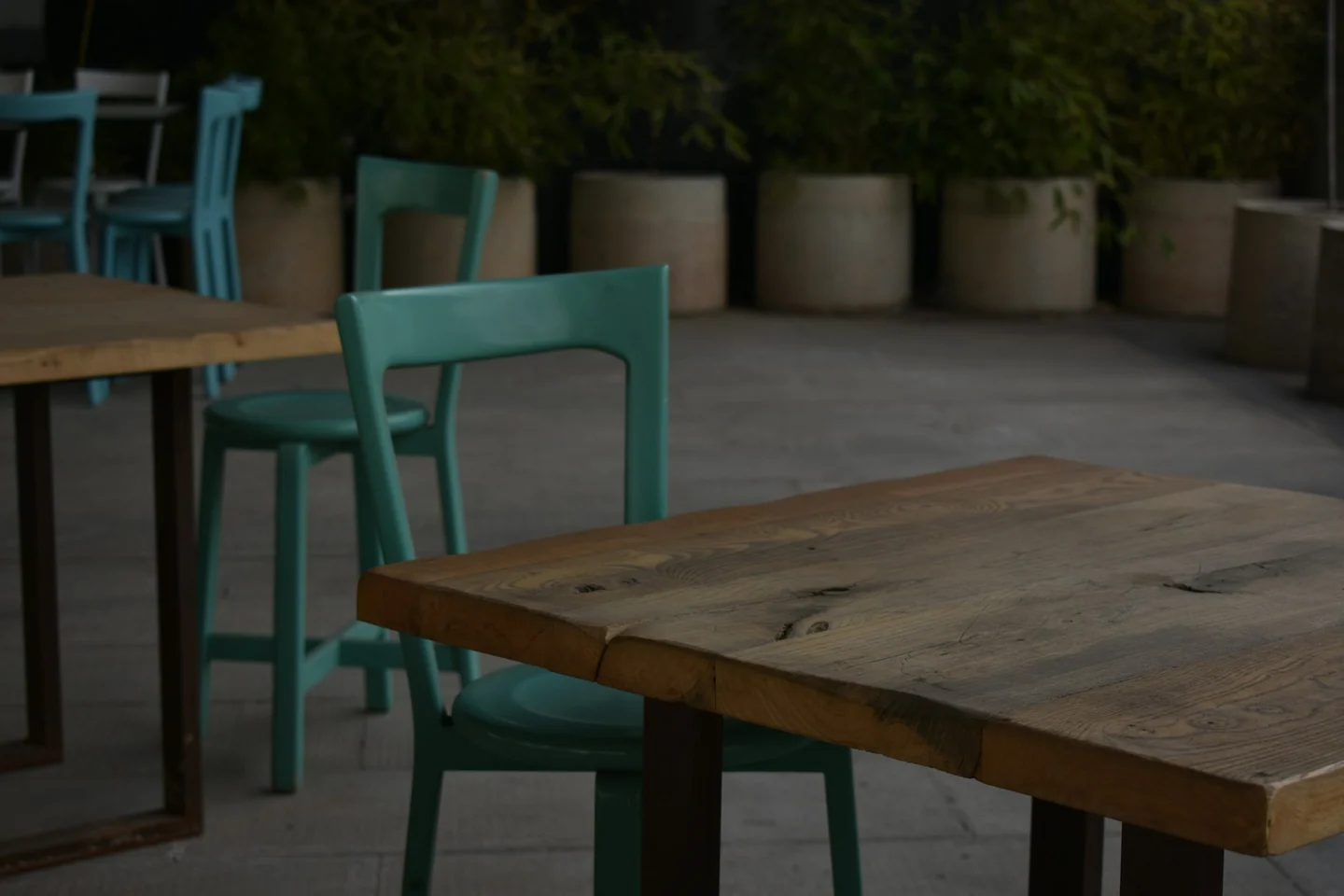
Is a Side Chair Always a Dining Chair?
No. Dining is the most familiar context, but an armless chair may provide an extra seat in a bedroom, a guest chair beside a small table or an occasional seat in a living area. The side-chair label does not guarantee the height or posture needed for eating at your table.
Conversely, a dining chair may have full arms, short arms or no arms. All can be part of dining furniture. An upholstered dining armchair remains a dining chair even though it would not normally be called a side chair in a conventional dining set.
Imagine a retailer offering matching chairs with two arm options. The armless version may be listed as the side chair and the version with arms as the armchair. Both belong to the dining collection. For selection, compare the actual variants instead of assuming that “side” means a smaller or lower-quality product.
Side Chair vs Armchair: Check the Arm Profile
The practical distinction is the presence of armrests. A classic side chair leaves the seat entrance open on both sides. An armchair provides surfaces beside the sitter’s arms, whether those surfaces are upholstered or part of an exposed frame.
Modern wraparound backs can make naming less obvious. A back may curve around the upper torso without extending into a usable armrest, or it may continue forward into short arms. Use front and side views and the supplier’s description to clarify the design. Do not silently relabel a short-arm chair as armless to make it fit a product filter.
For a home, the choice can affect how you approach a seat or move sideways. For restaurants, it also affects table compatibility and the feel of the arrangement. The Dining Chairs with Arms vs Armless guide compares those layout and use tradeoffs in detail.
Side Chair vs Accent Chair: Form and Visual Role
An accent chair contributes a distinctive color, texture, shape or focal point. It may be an armchair, a lounge chair or an armless chair. “Accent” does not tell you whether it is low, deep, upright or suitable for a dining table.
A patterned armless dining chair can act as an accent beside a bedroom console. A low upholstered lounge chair can also be an accent, but should not become a dining side chair simply because both are occasional seats. Its seat height, depth and relationship with the table still need review.
The Accent Chair Guide explains that visual role. When comparing listings, retain both descriptions where useful: “armless side chair, selected as a color accent” says more than forcing the product into one category.
What Can an Upholstered Side Chair Look Like?
Upholstery does not create a single side-chair style. A chair may have only a padded seat, a padded seat and back, or a more fully upholstered upper body. The frame may be visible or largely concealed. None of those choices automatically adds arms.
Plain padded backs can make upholstery color the main feature. Button details create a different surface rhythm, while an open back leaves a visible gap between the seat and upper support. Taller backs can produce a stronger vertical line around a dining room. These are design directions rather than verified comfort or durability rankings.
Likewise, wooden and metal legs both appear beneath upholstered side chairs. An exposed leg finish does not prove the material of the whole internal frame. Request the selected construction when it matters to the order, and keep the arm classification separate from the material description.
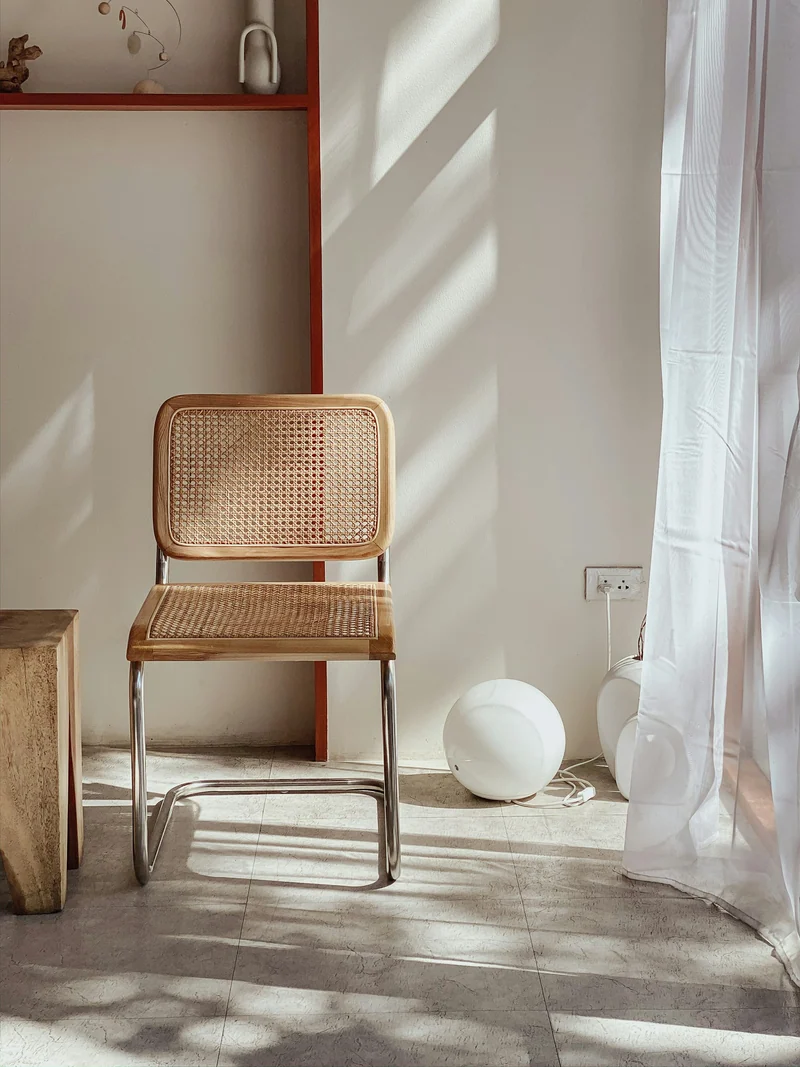
Where Are Side Chairs Used?
At a home dining table, an open-sided chair can make approaching the seat convenient, especially where the arrangement is compact. That does not guarantee more seats: overall width, leg spread, table supports and the space needed to pull out still count.
In a restaurant or hotel breakfast area, upholstered side chairs can provide a repeatable dining-room format. Staff should try moving, resetting and cleaning the selected sample. The armless form alone does not establish stackability, light weight or suitability for heavy commercial use.
For additional bedroom or reception seating, check the actual activity. An upright dining-format side chair may suit a brief visit or a small table, but someone seeking a relaxed lounge position may prefer another format. Match the chair to the task rather than assuming “occasional” means comfortable for every duration.
Side Chair Dimensions and Table Compatibility
There is no single dimension implied by the name. Ask for overall width and depth, usable seat size and finished seat height for the chosen version. A narrow seat can still sit above widely splayed legs, so outside footprint and sitting width should be recorded separately.
Check the chair with the actual table, including its underside and supports. Without armrests, one obstruction disappears, but the seat, back, legs or table base can still prevent the chair from moving into the expected position. Upholstered seat compression also changes the seated relationship with the tabletop.
Use the Dining Chair Seat Height and Table Clearance guide for the measurement procedure. A side-chair classification should not be used as a substitute for that compatibility check.
Real HUAXUAN Side Chair Examples
These four published HX-DCH references show armless dining forms in their available photographs. They can illustrate upholstered side chairs without treating every model in the dining collection as armless.
| Reference | Visible design | What the classification does not establish |
|---|---|---|
| HX-DCH-002 | Green padded seat with an open, double-rail upholstered back; no arms | Numerical dimensions or the performance of a selected fabric |
| HX-DCH-005 | Ivory button-back upholstered dining chair; no arms | Cleaning suitability or a tested comfort rating |
| HX-DCH-006 | Blue upholstered dining chair with a tall, simple back; no arms | Table fit or a confirmed structural specification |
| HX-DCH-009 | Teal high-back dining chair; no arms | Finished seat height, stackability or certified load capacity |
The HUAXUAN upholstered chair range also includes chairs with arms and other seating formats. The real product cards below preserve the model identities and images. External dining-room photographs illustrate applications; they are not additional HUAXUAN products or completed projects.
A Clear Buying Brief for Restaurants, Hotels and Distributors
Specify “armless upholstered dining side chair” when all three descriptions matter. Add the reference code, dimensions to confirm, cover preference, quantity and intended room. If your brief includes a matching armchair, list that as a separate variant rather than letting the supplier infer it from a room photograph.
Request front and side views when a curved back makes the arm profile ambiguous. Verify the complete chair and table together before approving a repeated dining-room layout. Keep any structural, upholstery and cleaning requirements attached to the exact selected model; an attractive application photograph cannot establish those facts.
For a broader style shortlist, see Top Upholstered Dining Chair Styles. Send the final reference list and table information through the B2B chair quotation form.
Frequently Asked Questions
Can a side chair have arms?
Conventional dining terminology uses side chair for the armless version. If a catalog uses the term more broadly, confirm its actual arm design instead of relying on the category label.
Can a side chair go at the end of a dining table?
Yes. Its position does not require it to become an armchair. Check the fit and intended sitting experience.
Is a side chair always smaller than an armchair?
No. Compare the dimensions of the specific models. An armless chair can still have a broad seat or wide leg spread.
Can a side chair be an accent chair?
Yes. Side chair can describe the armless form while accent describes its visual role in the room.
Image sources and permissions
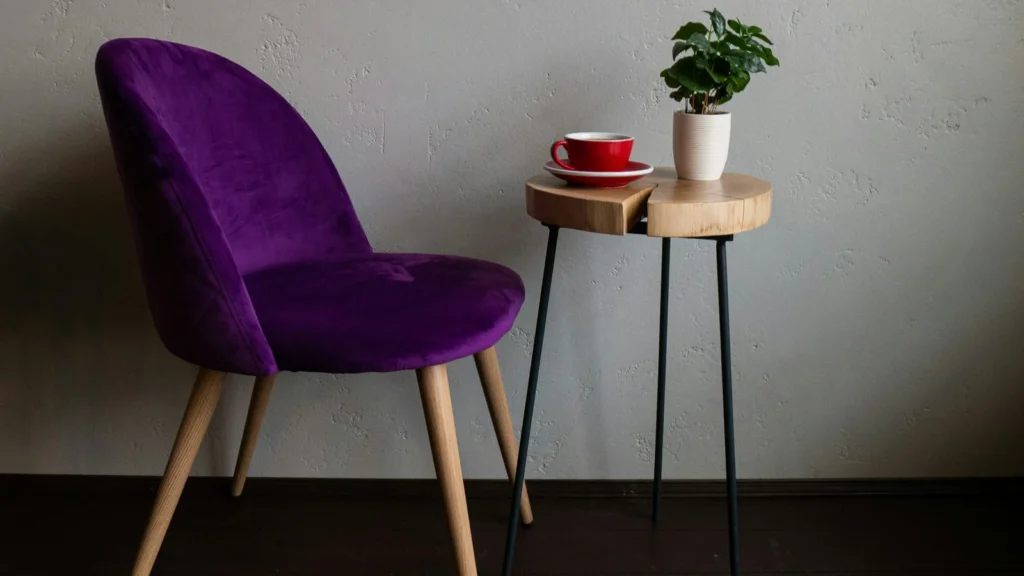
- Tati Visual / Unsplash: Armless upholstered chair by Tati Visual / Unsplash. Type illustration, not a HUAXUAN product or project. Source license.
- Navid Rahimi Danesh / Unsplash: Dining application by Navid Rahimi Danesh / Unsplash. The open sides illustrate an armless chair form; not a HUAXUAN installation. Source license.
- Nattanich Vichaidit / Unsplash: Armless woven-panel chair by Nattanich Vichaidit / Unsplash. The side-chair label does not require a padded back. External type illustration, not a HUAXUAN SKU. Source license.