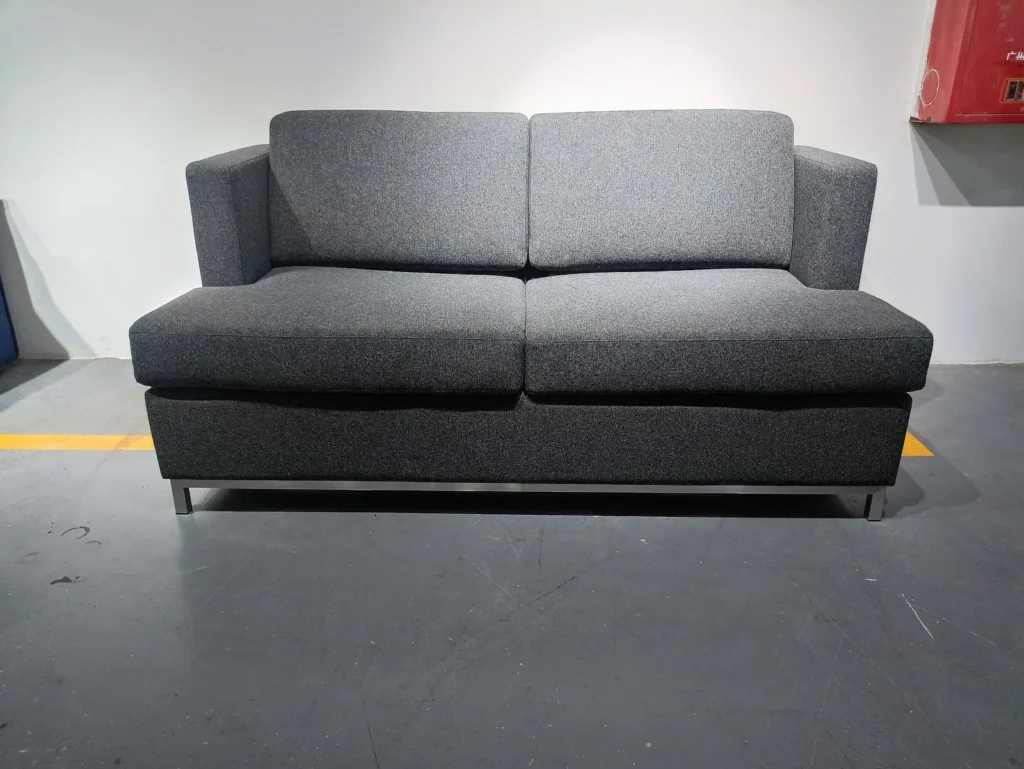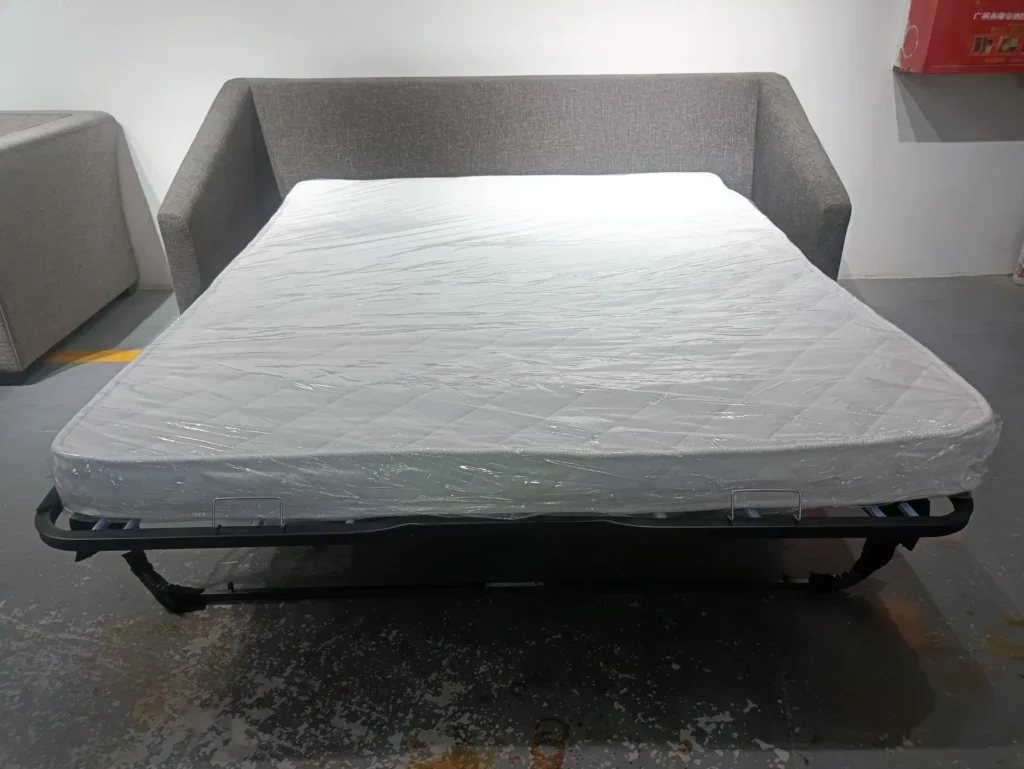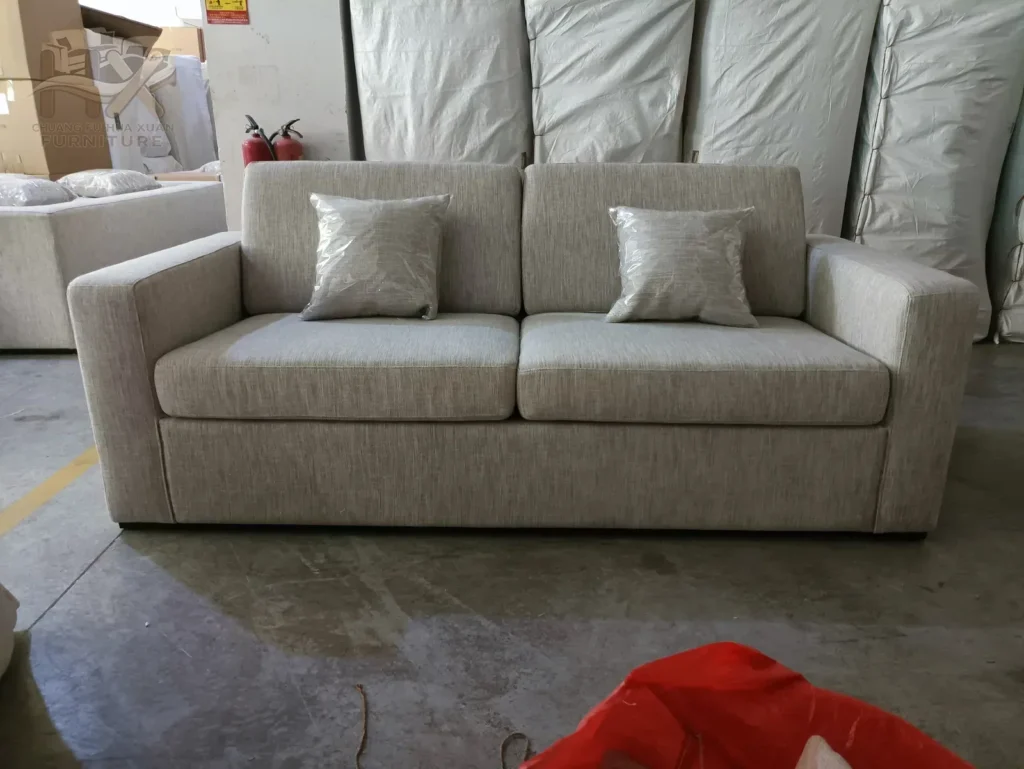

Why are sofas so expensive? A sofa price normally combines its size, frame and support system, foam specification, upholstery consumption, sewing and upholstery labor, hardware, design complexity, customization, order quantity, quality control and protective packing. Two sofas can look similar in a photograph yet contain different materials, different amounts of skilled work and very different production risks. The useful comparison is therefore not price alone. It is price against a controlled specification, quantity, delivery basis and approved sample.
Comparing sofa quotations for a hotel, office or apartment project? Send the drawings, upholstery codes, quantities and destination so the specifications can be aligned first.
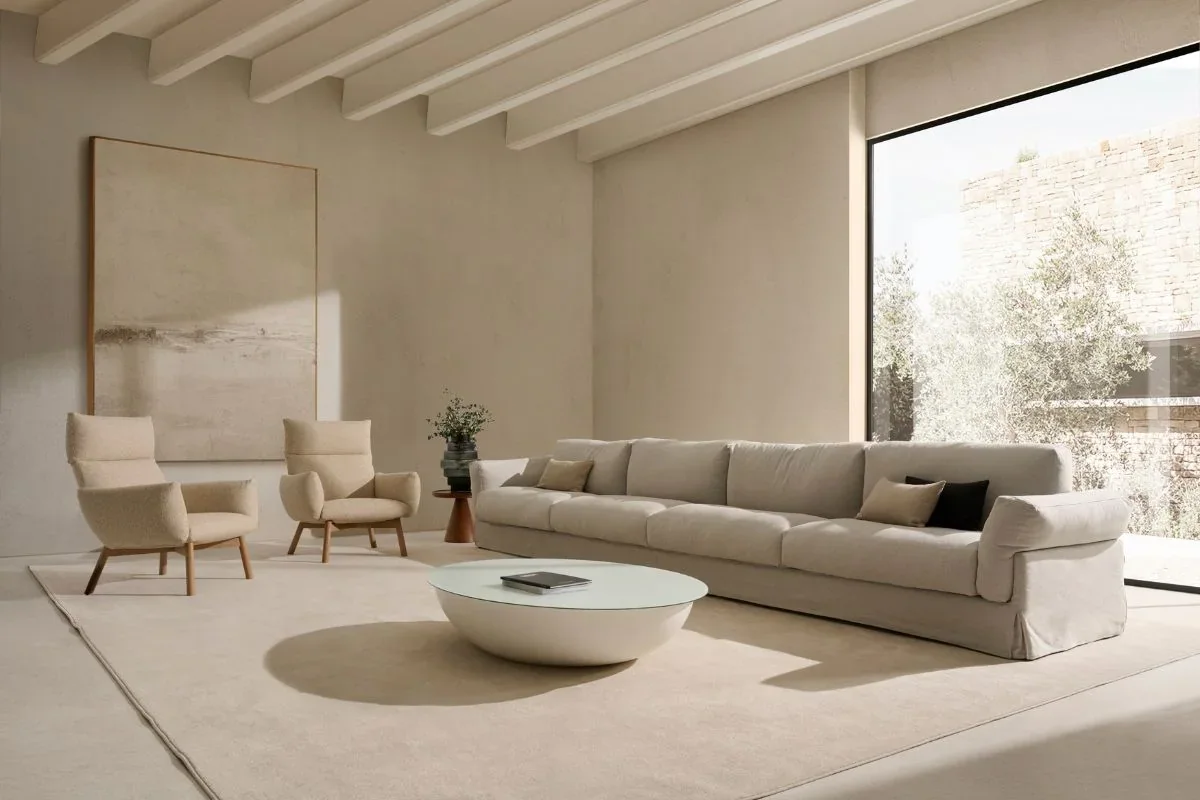
Quick Answer: The Main Sofa Price Factors
| Cost factor | Why it changes price |
|---|---|
| Frame | Material selection, geometry, joints and construction time |
| Support | Webbing, springs or engineered support components |
| Foam | Volume, thickness, layering and specified performance |
| Upholstery | Material price, consumption, cutting loss and pattern matching |
| Size | More frame, foam, cover material, labor and packing volume |
| Design | Curves, tufting, piping, quilting and special bases |
| Quantity | Material ordering and production setup efficiency |
| Customization | Drawings, sourcing, samples, prototypes and revisions |
| Quality control | Inspection, testing, correction and documentation |
| Packing | Protection appropriate to the product and route |
Sofa Price Is More Than the Exterior Fabric
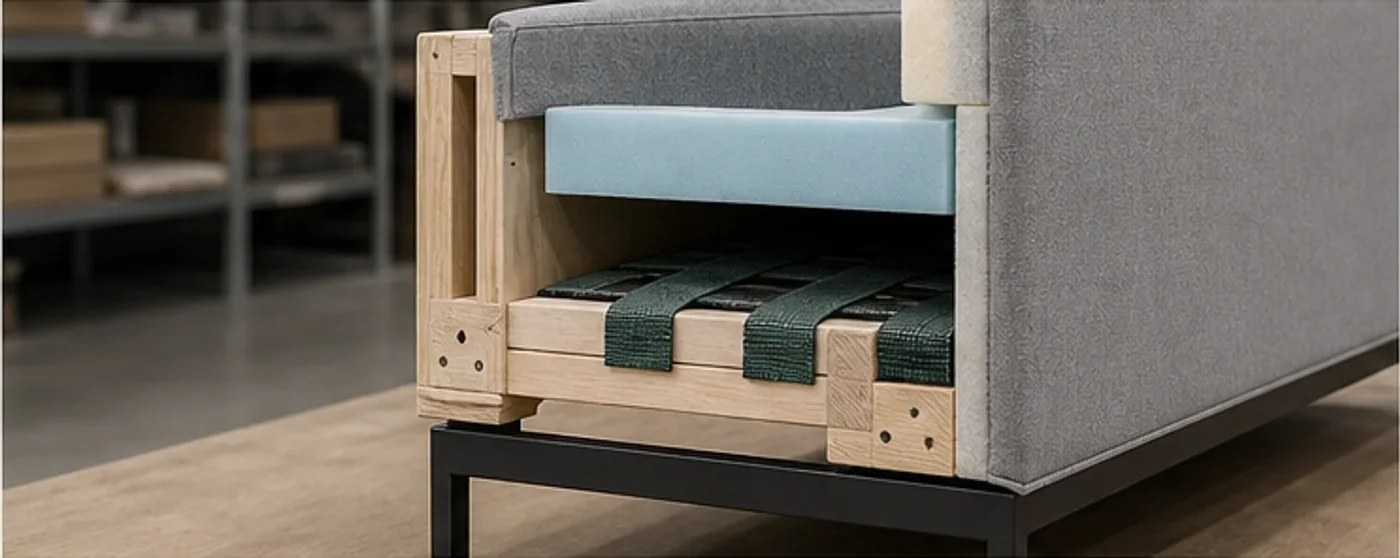
Upholstery is the first thing a buyer sees, so it is easy to assume the cover explains most of the price. Under that cover are the frame, suspension or support system, foam, batting, structural panels, hardware, seams, zippers, legs and base. Each part has its own specification and labor sequence. A low quotation may simply leave some of those details undefined rather than producing the same sofa more efficiently.
Photographs also hide construction differences. A tightly upholstered seat and a loose-cushion seat can share a silhouette but use different foam volumes, sewing patterns and assembly steps. A sofa intended for a private apartment, a hotel lobby and an office reception may need different decisions about posture, cleaning, repeatability and replacement. Buyers should request a section drawing, material schedule or sample instead of treating the exterior as the entire product.
Frame Construction Changes Sofa Cost
Sofa frames may combine timber, plywood, engineered panels and metal components where the design requires them. No single label proves quality. Solid wood is not automatically superior in every location, and plywood is not automatically a shortcut. Appropriate engineering, controlled material selection, joint design and consistent workmanship matter more than a marketing phrase.
Complex arms, long unsupported spans, modular junctions and curved backs can require additional templates, reinforcement or processing. Moisture control, accurate cutting and secure joints also add production discipline. The related How Are Sofas Made? guide explains the manufacturing sequence; this article focuses on how those choices create cost rather than repeating the full process.
Foam Specification Is a Major Cost Driver
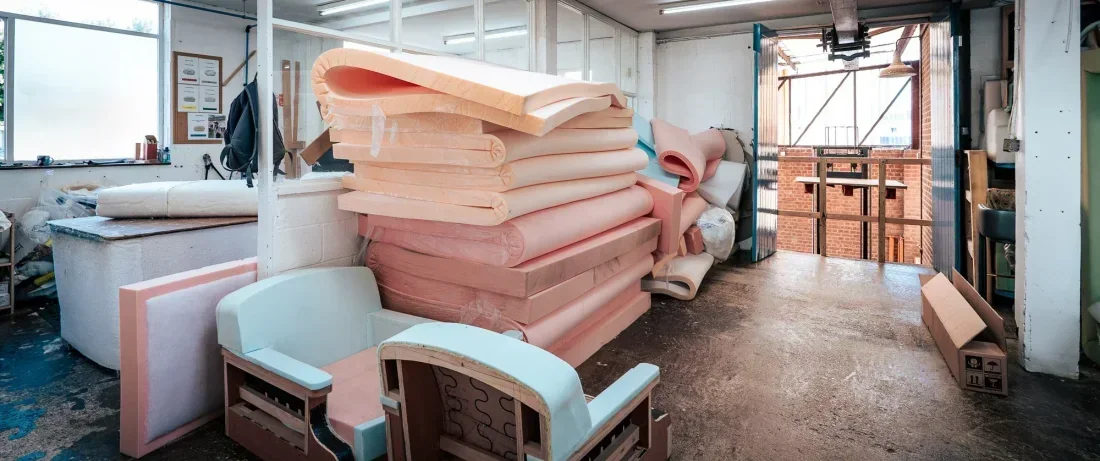
Foam cost is affected by the amount used, the thickness of each part, the selected specification and the number of layers. A deep seat, thick arm and generously padded back can consume much more foam than a visually similar compact sofa. Layered constructions may combine different materials to shape the edge, provide support and create the intended surface feel.
Density is only one part of a foam specification and should not be invented as a universal quality number. Comfort also depends on firmness, thickness, support beneath the cushion, seat depth, upholstery tension and how the layers work together. Project buyers should state the required comfort direction, review the proposed build-up and approve a physical sample before a bulk order.
Upholstery Can Change Sofa Cost Significantly
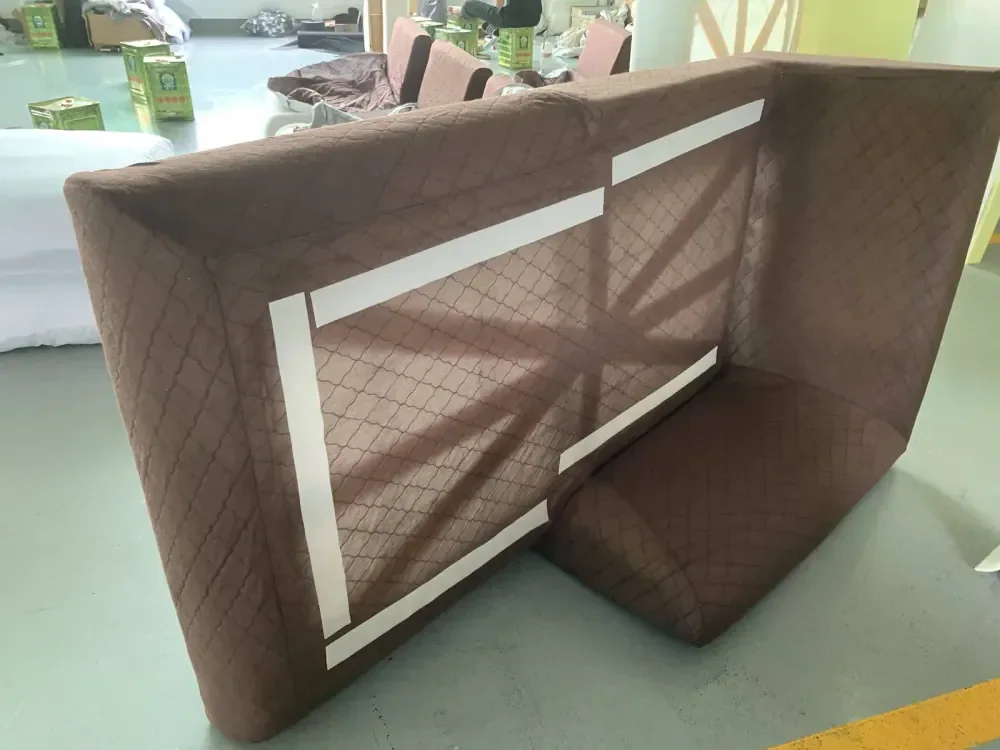
Standard woven fabric, project-specified performance fabric, velvet, PU, PVC and genuine leather can sit at very different material costs. Consumption also varies with usable roll width, sofa dimensions, nap direction, pattern repeat and the need to match panels. Cutting loss is real: a large repeat or one-way velvet cannot always be nested as efficiently as a plain fabric.
Finish details add labor. Piping, twin-needle seams, topstitching, channel work, quilting and fitted corners require accurate patterns and controlled sewing. A low material price does not guarantee a low installed cover cost if it creates extra waste or handling. Ask for the upholstery supplier, collection, code, color and any project performance requirement so competing quotations use the same basis.
Why Genuine Leather Sofas Usually Cost More
Genuine leather is normally purchased as hides rather than uniform rolls. Natural variation, usable area, grading and the need to position visible panels influence consumption. Large clean panels can require selective cutting, while color and grain must be coordinated across the sofa. Skilled cutting and sewing are therefore part of the cost, not only the leather price.
Leather, PU and PVC should not be treated as interchangeable. Each has different sourcing, appearance, maintenance and project implications. Buyers who need help distinguishing materials can use the real-leather sofa identification guide, then record the selected material precisely in the quotation request.
Sofa Size and Cost
A loveseat, two-seater, three-seater, sectional, modular sofa and curved sofa do not scale through one fixed price formula. A larger sofa usually needs more frame material, foam, fabric and labor, and it occupies more packing volume. However, a compact design with heavy tufting or complex hardware can cost more than a larger, simpler model.
Seat count is also an imprecise comparison. Two suppliers may call products three-seaters while quoting different overall widths, depths, arm sizes and cushion structures. Compare the approved overall dimensions and component specification. For planning terminology and measurement points, see the sofa measurement guide.
Design Complexity and Skilled Labor
Curves, tufting, piping, quilting, channel stitching, complicated arms, custom metal bases and modular connectors all influence time and risk. The effect is not limited to one department. A curve can change frame templates, foam shaping, cover patterns, cutting yield and upholstery technique. A custom base may require drawings, finish samples, welding control and additional protection during packing.
Labor cost also reflects consistency. Making one attractive sample is different from reproducing the same seam alignment, cushion shape and leg position across hundreds of pieces. Production teams need controlled patterns, jigs, approved references and inspections. A sofa with fewer decorative features may be more economical because it removes repeated operations, not because the factory simply works faster.
Why Curved Sofas Can Cost More
Curved sofas illustrate why shape matters. Their frame geometry may require templates or segmented construction, and their foam must follow the curve without creating flat spots. Upholstery panels need to wrap the form smoothly, while seam positions must remain consistent across modules. Small deviations are more visible when several curved sections meet.
The result is not that every curved sofa is expensive. A standardized curve produced in volume may be efficient, while a one-off sculptural design can require development. Buyers can review HUAXUAN’s custom sofas and curved upholstered sofas for commercial project context, then submit the exact plan radius, module arrangement and reference direction for assessment.
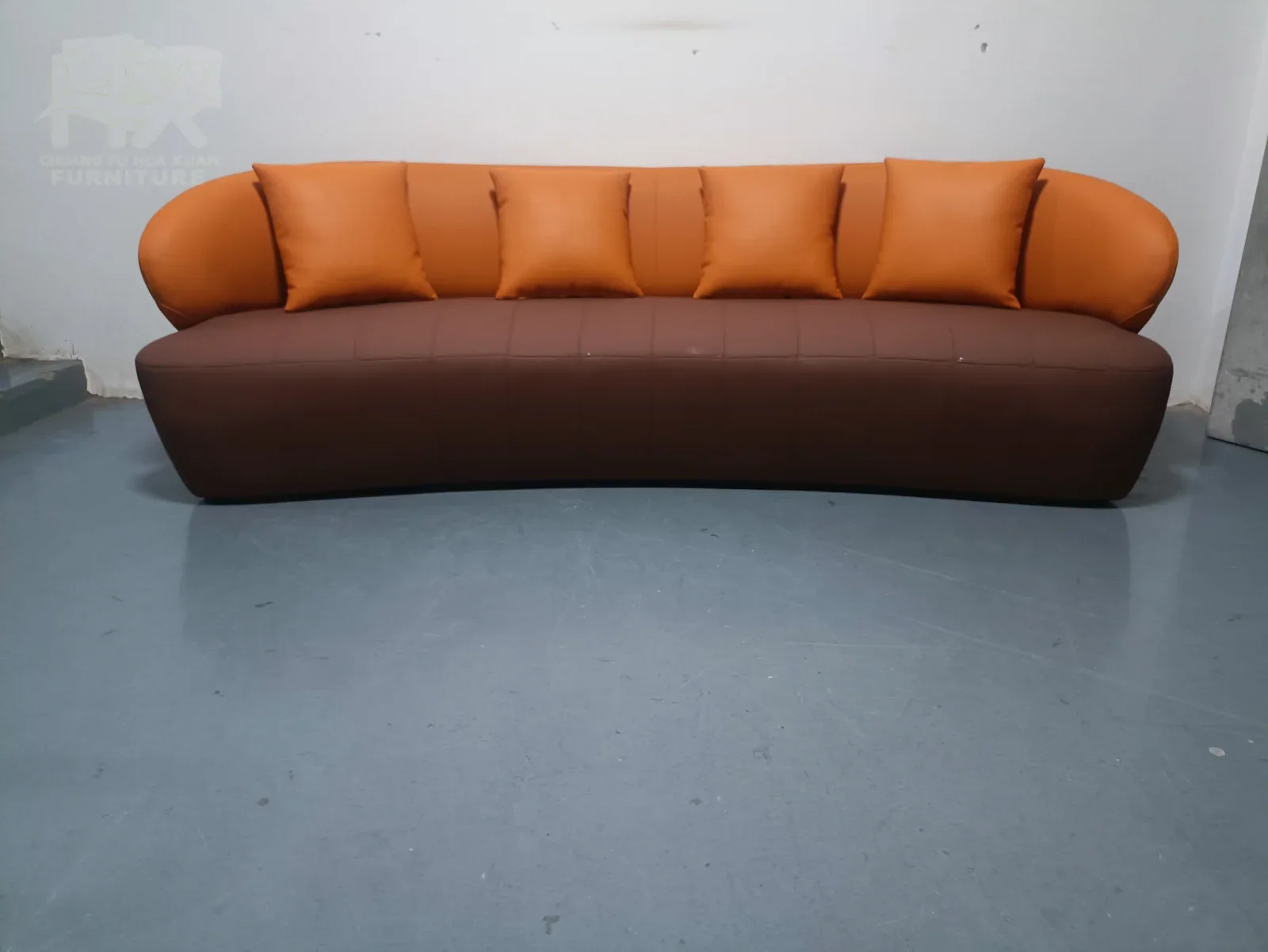
A reference photo alone cannot define a custom sofa. Add overall dimensions, seat dimensions, fabric direction, base finish, quantity and project use for a quotation that can be compared.
Custom Sofa vs Standard Sofa Pricing
A custom order may add technical drawings, material sourcing, prototype work, sample review, pattern development and small-batch setup. Those activities happen before efficient repetition begins. If the project changes dimensions or upholstery after sampling, revised drawings and another approval cycle may be required. That development effort should be visible rather than hidden inside a vague unit price.
Standard models can reduce development because patterns and construction are already known, but standard does not mean suitable for every room. A hotel corridor, apartment lift or office reception plan may require a different module size. For a large rollout, an approved custom design can become efficient once specifications are frozen and production repeats under the same controls.
Why Quantity Affects Unit Price
Ten sofas and three hundred sofas do not use the same manufacturing efficiency. Material ordering, cutting markers, sewing setup, production scheduling, jigs, labeling and packing preparation can be spread across more units in a repeat order. Larger fabric orders may also align better with supplier minimums. These factors change the cost structure without implying a fixed percentage discount.
Quantity only creates efficiency when the products genuinely repeat. A three-hundred-piece order split across many dimensions, fabrics and room labels may behave like several smaller runs. Send quantities by model, room type and upholstery code. Ask whether replacements or attic stock must match the main production and whether those units should be manufactured in the same material batch.
Hotel Sofa Pricing
Hotel sofa pricing depends on room quantity, repeated specifications, upholstery, dimensions, mock-up requirements and the role of the sofa. A guestroom loveseat, suite sleeper and lobby sectional solve different problems. Floor access, installation sequence and replacement planning can also affect product and packing decisions, although they should not turn the quotation into an unrelated logistics exercise.
The mock-up room is especially valuable. It reveals whether the sofa fits the bed, desk, curtains, TV unit and circulation route, and whether the selected comfort and appearance suit the room. HUAXUAN’s hotel furniture project page shows the broader package context for buyers coordinating sofas with casegoods and beds.
Office Sofa Pricing
Reception, lounge, waiting and executive-office sofas often prioritize different postures and layouts. An upright waiting sofa may use a compact depth, while an informal lounge needs a more relaxed seat. High backs, acoustic wings, integrated tables, power modules or modular connectors can change construction and cost. The quotation should identify which features are included.
Buyers planning a workplace can review office furniture for reception and lounge spaces. Provide the floor plan, intended groupings and expected use instead of requesting a generic three-seater. This helps align sofa width, seat depth and table relationships before sampling.
Does a More Expensive Sofa Always Mean Better Quality?
No. Price can include brand positioning, distribution, retail overhead, marketing and design complexity as well as materials and workmanship. A higher price does not prove that a sofa fits a hotel, office or apartment specification. Conversely, an unusually low price may omit details rather than represent an equivalent product.
Project buyers should compare the drawing, frame and support proposal, foam build-up, upholstery code, cushion construction, sample and quality-control plan. Ask what is excluded and how changes are handled. The objective is not to select the highest or lowest number; it is to select a clear, repeatable specification at an appropriate total cost.
Factory Price vs Retail Price
A manufacturer quotation and a consumer retail price use different structures. Retail prices may include inventory holding, showroom operation, regional distribution, sales service, delivery arrangements and returns. A factory quotation for a project may instead depend on quantity, customization, sample development, packing and a defined delivery basis. Neither structure is automatically misleading; they answer different purchasing situations.
Compare quotations only after confirming the same scope and Incoterm. A factory unit price that excludes destination costs cannot be placed beside a delivered retail price without adjustment. Keep the comparison neutral and documented, and separate the furniture specification from commercial terms.
What Should Buyers Compare Between Two Sofa Quotes?
- Overall, seat and arm dimensions.
- Frame materials, joint approach and support system.
- Foam build-up, cushion construction and comfort direction.
- Upholstery supplier, code, color, roll width and pattern direction.
- Legs, plinth, connectors and other hardware.
- Quantity by model and finish.
- Sample, mock-up and approval requirements.
- Quality-control scope and agreed records.
- Packing method, labels and replacement units.
- Incoterm, delivery destination and stated exclusions.
Two quotations shown only as a currency amount per unit are not necessarily comparable. Put these fields into one comparison sheet and mark every assumption. If a supplier proposes an alternative, record it as an option rather than allowing the original specification to disappear. Request a revised total when one specification changes, because changing fabric, foam or packing in isolation can also alter labor, consumption and volume. Keep the base quotation and alternative side by side, with revision dates, so purchasing, design and quality teams approve the same scope. This prevents a later low price from being mistaken for the originally reviewed sofa.
What Information Should You Send for a Sofa Quotation?
- Quantity by model or room type.
- Overall dimensions and key seat dimensions.
- Reference photo and controlled drawing where available.
- Upholstery type, supplier code or performance brief.
- Project type and intended location.
- Destination and required commercial basis.
- Floor plan where sofa scale or access matters.
- Target sample and production schedule.
- Required labels, packing and replacement strategy.
State which details are fixed and which are open to a manufacturer’s engineering proposal. For a commercial inquiry, use the commercial sofa manufacturer and custom upholstered sofa page as the product starting point, then send a complete brief rather than requesting a price from one photograph.
Need comparable pricing for custom upholstered sofas? Send the quantity, dimensions, reference design, upholstery, project type, destination and schedule.
Frequently Asked Questions
Why are couches so expensive?
Couches and sofas combine many hidden components and skilled operations: frame, support, foam, cover material, sewing, upholstery, hardware, quality control and packing.
What makes a sofa expensive?
Material specification, size, upholstery consumption, design complexity, customization, quantity and production controls are common cost drivers.
Does solid wood always make a sofa better?
No. Material suitability, engineering, joints and workmanship matter more than a single material label.
Why do custom sofas cost more?
Custom work can require drawings, sourcing, prototypes, pattern development, sample approval and small-batch setup before repeated production.
Why does sofa quantity change the unit price?
Repeated quantities can improve material ordering, cutting, sewing setup, scheduling, quality control and packing efficiency.
Conclusion
Why are sofas so expensive? The answer is a cost structure, not one premium feature. Frame engineering, support, foam, upholstery, skilled labor, size, design, customization, quantity, inspection and packing all contribute. Buyers get a more reliable result when they compare controlled specifications and samples rather than appearances or unit prices alone. A transparent quotation should make those decisions clearly visible, preserve agreed revisions and show exactly what will be repeated in production.