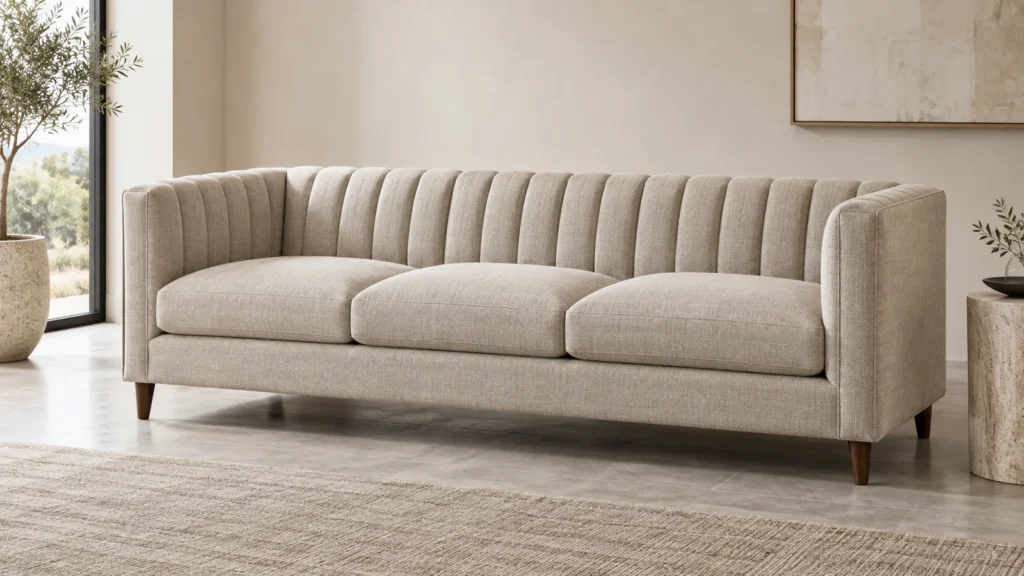
A tufted sofa is defined by more than a decorative surface. Every pulled stitch, channel or button changes how the upholstery lies over the foam, how shadows break across the back, how seams must align and how consistently the same appearance can be repeated across a bulk order. Tuft depth can also affect cleaning access, fabric consumption, labor time and the way the padding feels beneath the cover.
For wholesalers, importers, distributors, retailers and commercial buyers, the useful question is therefore not simply whether tufting looks formal or modern. The practical decision is which tufting method fits the selected sofa, upholstery, target market, maintenance expectation and order quantity. This guide moves from the visible pattern to the specification a manufacturer needs for sampling and pricing.
What Is a Tufted Sofa?
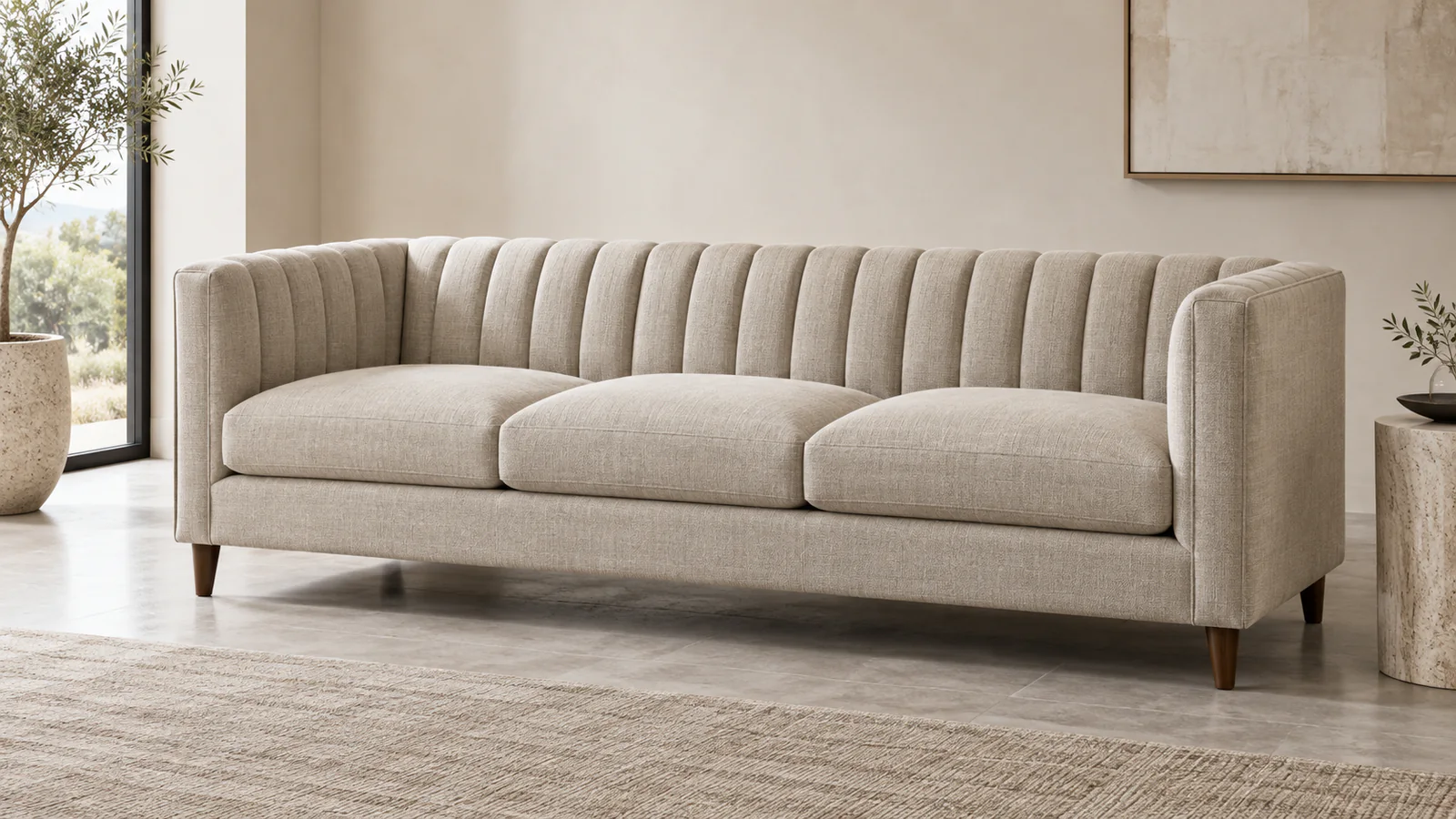
Tufting controls an upholstered surface by pulling the cover toward the padding or backing at planned points or along sewn lines. The pull may be held by an upholstery button, a concealed stitch, a tied fixing or a seam that forms a continuous channel. The result is a pattern of raised and recessed areas rather than one uninterrupted padded panel.
The visible depth varies widely. Deep tufting creates stronger folds and a pronounced relief. Shallow tufting can add a small amount of definition without changing the sofa into a heavily traditional design. Some sofas apply the pattern across the back and arms, while others restrict it to a back panel, seat, loose cushion or narrow accent band. The exact coverage belongs in the product specification.
Tufting should not be used as a generic label for every stitched sofa. Piping around a cushion, a topstitched seam or a quilted cover may create visual divisions without pulling the upholstery deeply into the padding. Buyers should use photographs and a written pattern description together so the intended construction is clear.
Main Types of Sofa Tufting
Button Tufting
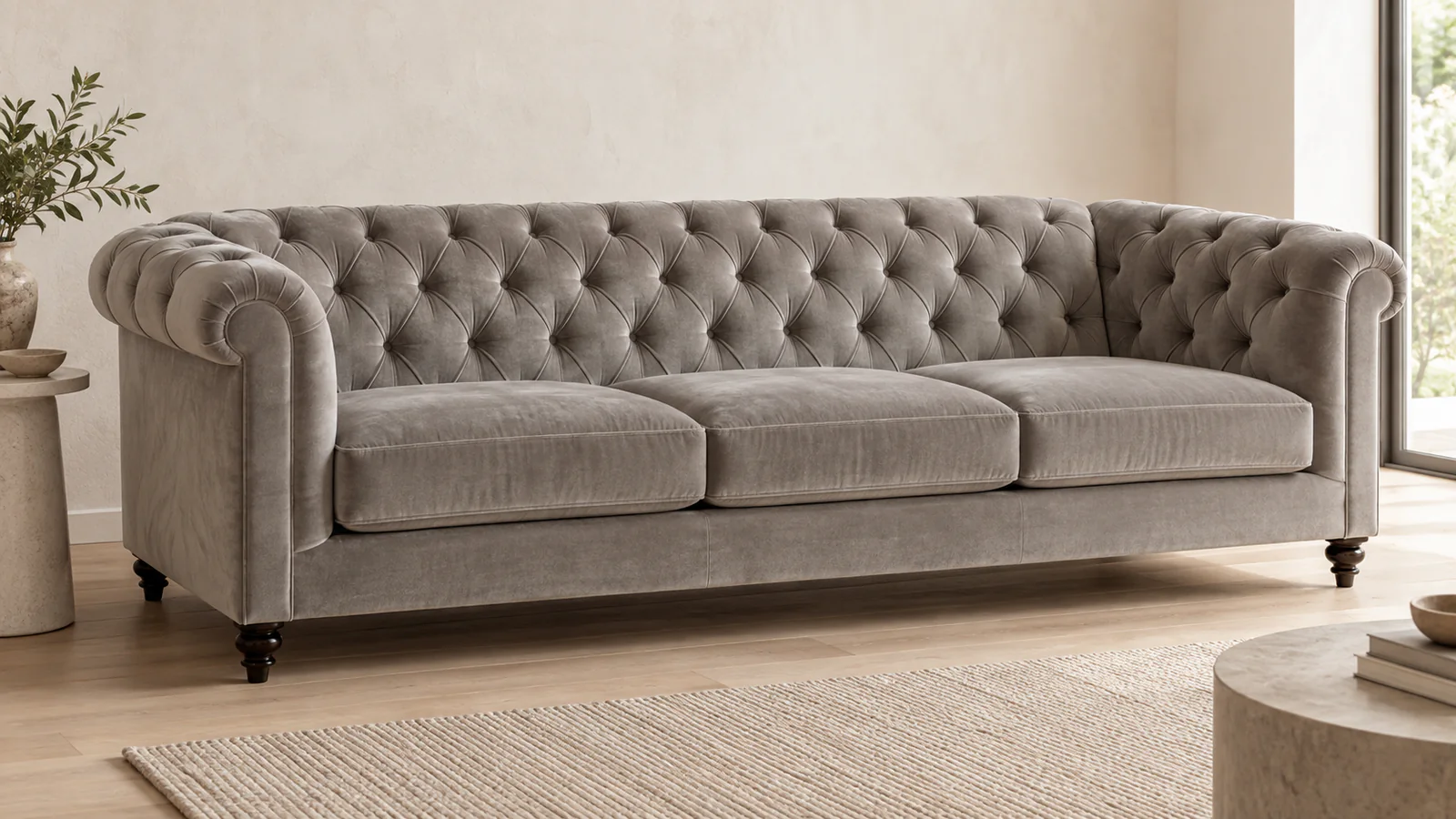
Button tufting anchors the cover at repeated points with covered or contrasting buttons. Deep versions create folds that radiate from each fixing; shallow versions can look cleaner and less ornamental. Button diameter, covering material, spacing, pull depth and fixing method all influence the result. A button tufted sofa may reference traditional upholstery, but it should not automatically be called a Chesterfield: that name usually describes a broader combination of rolled arms, low back, deep buttoning and a particular silhouette.
Channel Tufting
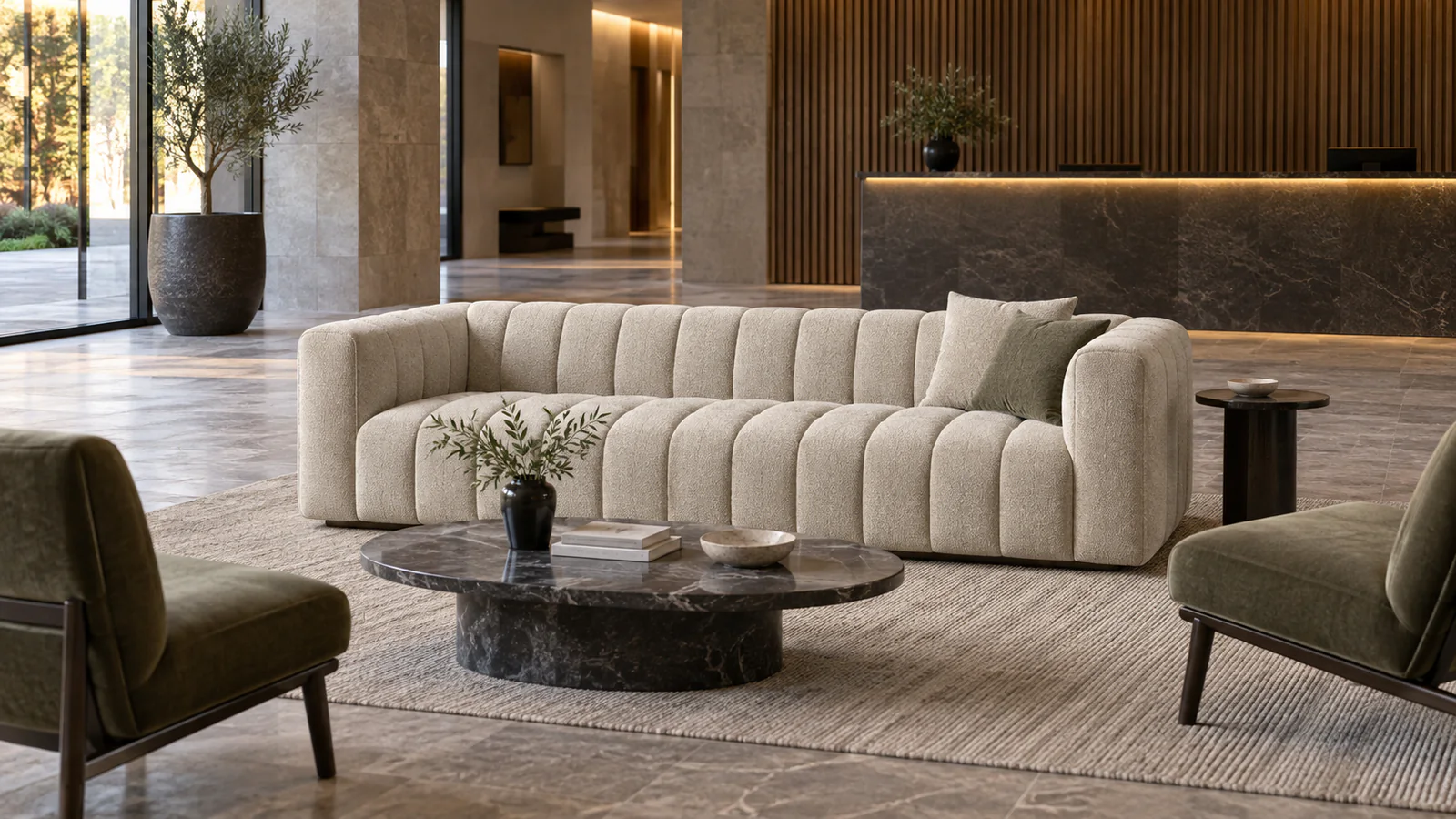
Channel tufting creates parallel raised sections, commonly vertical or horizontal. Each channel may be formed by stitched divisions, controlled padding and pulled seam lines. Wide channels feel softer and more architectural; narrow channels create a denser rhythm. Because the eye quickly detects drifting lines, channel position should relate to the centerline, arm transitions, cushion divisions and total back width.
Grid or Square Tufting
Grid tufting divides the surface into squares or rectangles. It can be deep and padded or relatively flat, depending on the foam and pull. The pattern suits modern sofas when the geometry is regular and the surrounding form is restrained. On removable cushions, the grid also needs to stay visually aligned after the cushion is used or reversed.
Diamond Tufting
Diamond tufting uses diagonal folds or seams to create repeated diamond shapes, often with a button at each intersection. The method creates more directional fabric movement than a simple grid and usually demands tighter control of marking and folding. Velvet and leather-look materials can make the shadows especially visible, which also makes irregular spacing easier to notice.
Light Decorative Tufting
Light decorative tufting uses modest pull points, shallow buttons or short stitched details to break up a plain surface. It can preserve the easier maintenance and quieter styling of a smooth sofa while adding recognizable detail. Buyers should still state the number and location of pulls; a reference image alone may not show the intended depth.
| Tufting type | Appearance | Production complexity | Maintenance | Suitable sofa styles | Commercial suitability |
|---|---|---|---|---|---|
| Button | Point pulls with shallow or deep folds | Moderate to high | Deep folds need closer cleaning attention | Traditional through transitional and selected modern forms | Suitable when buttons, folds and replacements are controlled |
| Channel | Parallel vertical or horizontal ribs | Moderate; alignment is highly visible | Open channels are generally accessible; depth still matters | Modern, curved and hospitality seating | Good for repeat programs with approved spacing |
| Grid / square | Regular geometric panels | Moderate | Seams and recesses collect more debris than a plain panel | Contemporary sofas and sofa beds | Useful where a graphic surface is wanted |
| Diamond | Diagonal folds and stronger relief | High when deep and buttoned | Most detailed cleaning among these options | Formal and statement sofas | Best where appearance justifies added labor and care |
| Light decorative | Subtle points or short stitched details | Low to moderate | Closer to a plain surface | Minimal and mid-century-influenced designs | Practical for wider commercial collections |
Channel Tufted Sofa: Alignment and Batch Control
A channel tufted sofa depends on rhythm. Vertical channels usually run from the upper back toward the seat line, emphasizing height. Horizontal channels make the back read wider and can suit low lounge forms. The pattern may continue around a curved inside arm or stop at a defined seam. That termination point should be decided during development rather than left to an upholsterer to interpret unit by unit.
Spacing begins with the usable upholstered width, not with an arbitrary number of channels. The maker must account for side borders, curves, centerlines and any separate cushion panels. If a buyer changes the sofa width, the supplier needs to decide whether channel count stays fixed and spacing grows, or spacing stays fixed and the count changes. Either choice alters the visual identity.
For bulk consistency, an approved sample should record channel count, nominal spacing, seam direction, pull depth and key alignment points. Upholstery stretch and foam recovery can change the apparent width after assembly. Inspection should therefore compare the complete back from a consistent viewing distance instead of measuring one seam while ignoring the overall rhythm.
Button Tufted Sofa: Deep and Shallow Treatments
A button tufted sofa can range from deep traditional upholstery to a restrained line of shallow covered buttons. Deeper pulling compresses more foam and creates larger folds. It generally uses more upholstery labor, and the fold direction must be managed at edges, corners and transitions. Shallow buttons reduce the relief and can sit comfortably within a modern tufted sofa design.
The button itself is a component that needs approval. Specify its diameter, whether it is covered in matching fabric, how the covering grain or pile is oriented and whether a contrasting material is acceptable. The fixing must resist ordinary use without creating a hard or exposed point. If replacements may be needed, the buyer should ask how the back of the fixing can be reached.
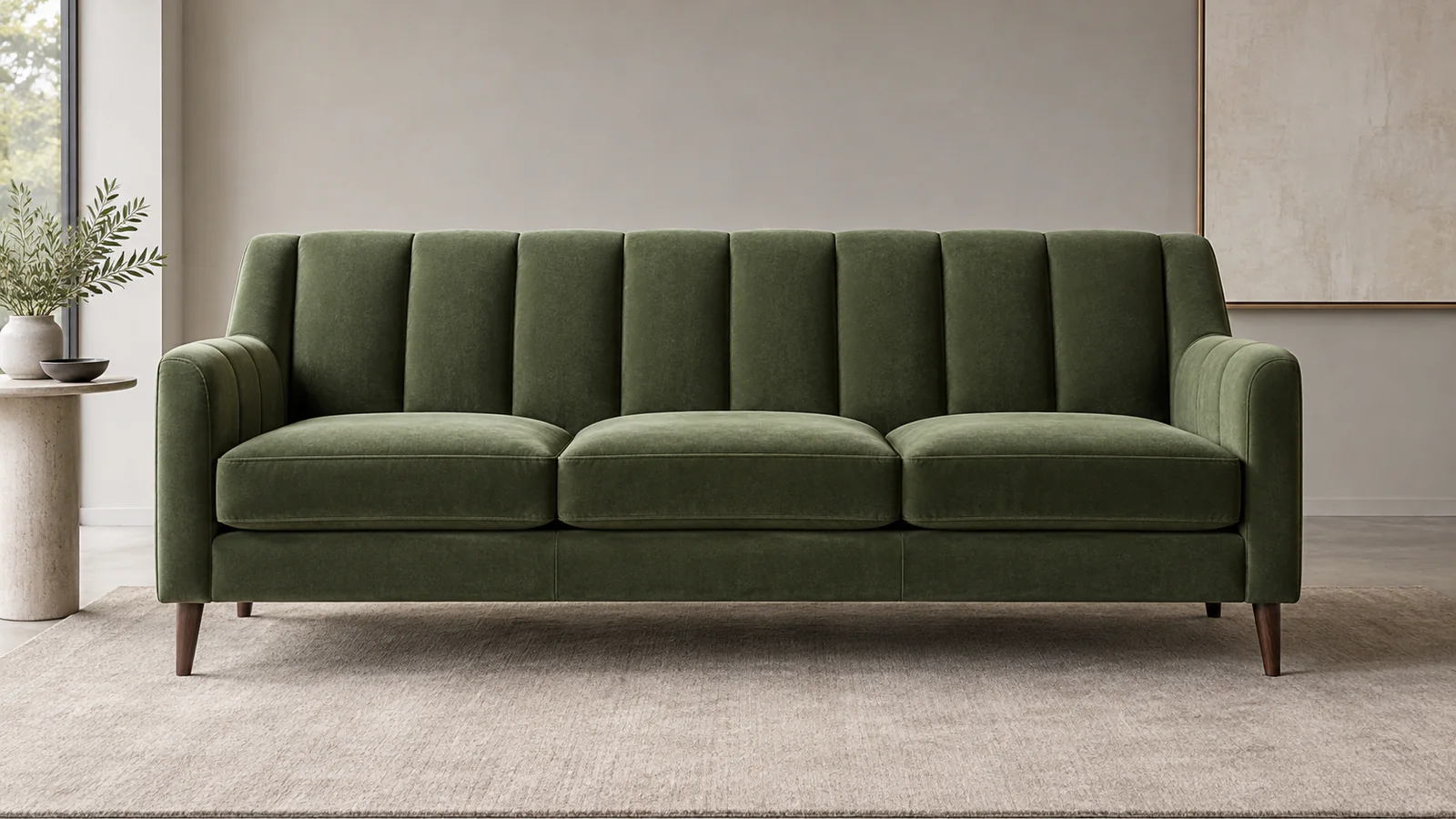
Color changes the visual weight of buttoning. A grey tufted sofa can make the shadows restrained, while a green tufted sofa or saturated velvet can make every recess more prominent. That is a styling observation, not a material performance claim; color, fabric and tuft depth should be sampled together.
Tufting and Sofa Construction
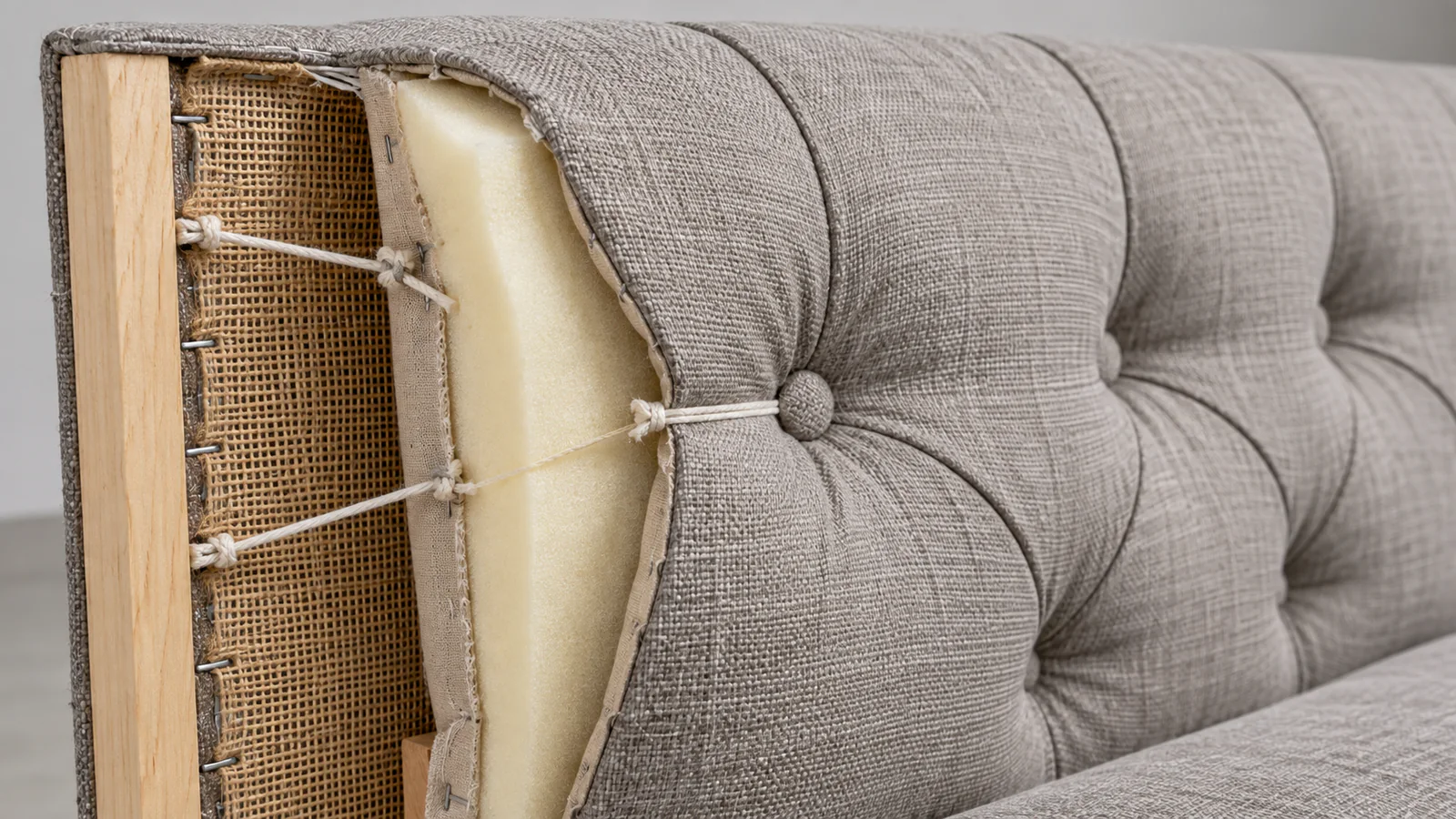
Tufting begins with the structure beneath the cover. The frame or backing panel needs stable fixing locations, the foam needs enough recovery to form the intended relief, and the cover must be cut with allowance for the pulled geometry. If one layer changes after sample approval, the surface can change even when the visible pattern dimensions remain the same.
Foam behavior is especially important. Softer padding may produce rounded channels and deeper-looking buttons but can lose crispness. Firmer or laminated foam can hold sharper divisions, provided the surface does not feel unnecessarily hard for the intended seating position. Review the full cushion construction through the sofa cushion filling guide, then approve comfort on the assembled model.
Upholstery tension must be balanced across the panel. Too little tension leaves loose areas between pulls; too much can distort seams, expose backing contours or place excessive stress on fabric and buttons. Stitch length, reinforcement and thread choice should suit the approved cover. The sofa stitching and upholstery details guide provides a broader inspection framework.
Cushion structure affects whether the tufting remains stationary. A tight back is fixed to the frame and can keep a continuous pattern. A loose tufted cushion must retain its shape after handling and sit in the correct position. Buyers comparing these formats can use the sofa back styles guide without turning this article into a general back-style comparison.
Fabric Choices for Tufted Sofas
Woven fabric is versatile because its texture can soften small variations in the surface. Stable weaves often show seam lines clearly, while looser or highly textured fabrics can blur fine folds. Ask for the exact upholstery code on the approved sample and confirm any required cleaning or performance documentation for the destination market.
Velvet emphasizes depth through pile direction and light. It is effective for deep buttons and broad channels, but adjacent panels can appear different if the pile is cut or upholstered in conflicting directions. A batch specification should freeze direction as well as color. Brushing and cleaning method also need to suit the pile.
Textured fabrics can make a tufted sofa feel less formal and can support apartment or wholesale collections. Heavy texture, however, may make narrow folds bulky. Leather and leather-look covers create crisp highlights and can suit button or grid details, but the material must bend into recesses without cracking, excessive wrinkling or surface damage. Material category alone does not prove suitability; the proposed cover should be trialed at the intended tuft depth.
Where Tufted Sofas Work Best
Hotel Lobby
In a lobby, tufting can give a sofa enough surface identity to anchor a waiting or conversation zone. The buyer should balance that identity with cleaning access, traffic, fabric selection and repeatability across all units. The model, not a complete lobby design service, remains the starting point.
Office and Reception Lounge
Shallow channel or grid details can add structure to reception seating without becoming overly formal. Specify the intended use, upholstery requirement and quantity, then evaluate the selected sofa at the actual width. Long backs make alignment variations more visible.
Apartment and Residential Collection
Modern channel tufting, light buttons and textured covers can differentiate an apartment collection. Retail buyers should decide which colors and sizes belong to the range instead of allowing unlimited combinations that complicate sampling and reorders.
Wholesale Furniture Collections
A wholesale tufted sofa range works best when pattern options are controlled. Offer defined channel counts, button layouts or approved fabrics by model. That keeps product photography, cartons, replacement parts and repeat orders connected to a recognizable specification.
What Wholesale Buyers Should Specify
A manufacturer can assess price and feasibility more accurately when the request starts with a selected design. Send one line per model, size and color with the following details:
- Selected sofa model: HUAXUAN code and URL, or a clearly identified custom reference.
- Tufting type: button, channel, grid, diamond or light decorative treatment.
- Pattern: channel direction, spacing or count, button layout and intended depth.
- Dimensions: overall width, depth and height, plus relevant seat dimensions.
- Upholstery and color: fabric, velvet, leather or leather-look direction with a code or swatch where available.
- Foam and cushion structure: target feel, tight or loose back, and removable components.
- Legs or base: selected shape, material and finish.
- Quantity: units by model, size and color.
- Packaging: carton, labeling, handling or access requirements.
- Destination: country, city or port context for the quotation.
The concise quotation path is model + quantity + required changes. A full floor plan is not needed to begin. Use the sofa sample approval checklist after a model and specification have been selected.
HUAXUAN Tufted Sofa References
These are real, live HUAXUAN Product References. Their titles, codes, images and URLs belong to the actual product records; the five editorial images above are separate visual explanations and do not represent these model codes.
HX-SOF-020 — Beige Tufted Sofa for Hotel Lobby Seating Projects
HX-SOF-020 uses deep button detailing across a broad upholstered body. It is the relevant reference for buyers considering a more formal button-tufted direction for lobbies, villas or club-style lounges. Use the live product page to review the real images before discussing fabric, comfort, dimensions, quantity and coordinated batch production.
HX-SOF-013 — Green Channel-Tufted Sofa for Restaurant Lounge Areas
HX-SOF-013 uses visible vertical upholstery channels and a saturated green direction. It provides a real starting point for restaurant lounges, commercial waiting areas and branded furniture collections. A quotation request should state any changes to color, fabric, channel treatment or size rather than assuming they are included.
Browse the broader Sofa Product References for alternative forms. Only products with an actual tufted feature have been listed in this section.
Frequently Asked Questions
What is a tufted sofa?
It is a sofa whose upholstery is pulled and secured at planned points or seams to create buttons, channels, grids, diamonds or lighter decorative recesses. The pattern affects appearance and production, not decoration alone.
What is the difference between channel and button tufting?
Channel tufting forms parallel raised sections separated by sewn or pulled lines. Button tufting anchors individual points, often producing radiating folds. Their alignment, labor, cleaning access and visual character differ.
Is tufting suitable for commercial sofas?
Yes, when the exact model, upholstery, tuft depth, fixing method and maintenance needs suit the application. Commercial suitability should be evaluated on the specified product rather than inferred from the pattern name.
Can tufting patterns be customized for bulk orders?
Pattern changes can be evaluated from a real model. Send the code, quantity, dimensions, upholstery and requested channel or button layout. Feasibility and price depend on how the change interacts with the frame and padding.
What information is needed for a tufted sofa quotation?
Provide the selected model, quantity, dimensions, tufting type and spacing, upholstery, color, foam or cushion preference, base, packaging requirement and destination.